Inspiration
Climate change is no longer a knowledge problem. Almost everyone knows it is happening and what drives it, yet far too little changes in how we act. That gap is the real dilemma: the consequences are shared, but every decision is made by someone looking at their own goal, here and now.
VR can do something that is hard in real life: let you switch perspective in seconds and stand on the other side of your own decision. Our assumption is simple. If you can feel that a choice made in one place causes damage somewhere else, climate awareness shifts, and perhaps behaviour does too.
Two findings shaped the idea. In a collective-risk experiment by Milinski et al. (2008), groups had to invest enough to avoid a simulated climate disaster. At a 90% risk of loss, half of the groups reached the target; at 50%, only one in ten did; at 10%, none did. Spence et al. (2012, N = 1,822) showed that people perceive climate change as psychologically distant: it happens later, somewhere else, to someone else.
So we asked: what if the "someone else" who pays for your decision is you?
What it does
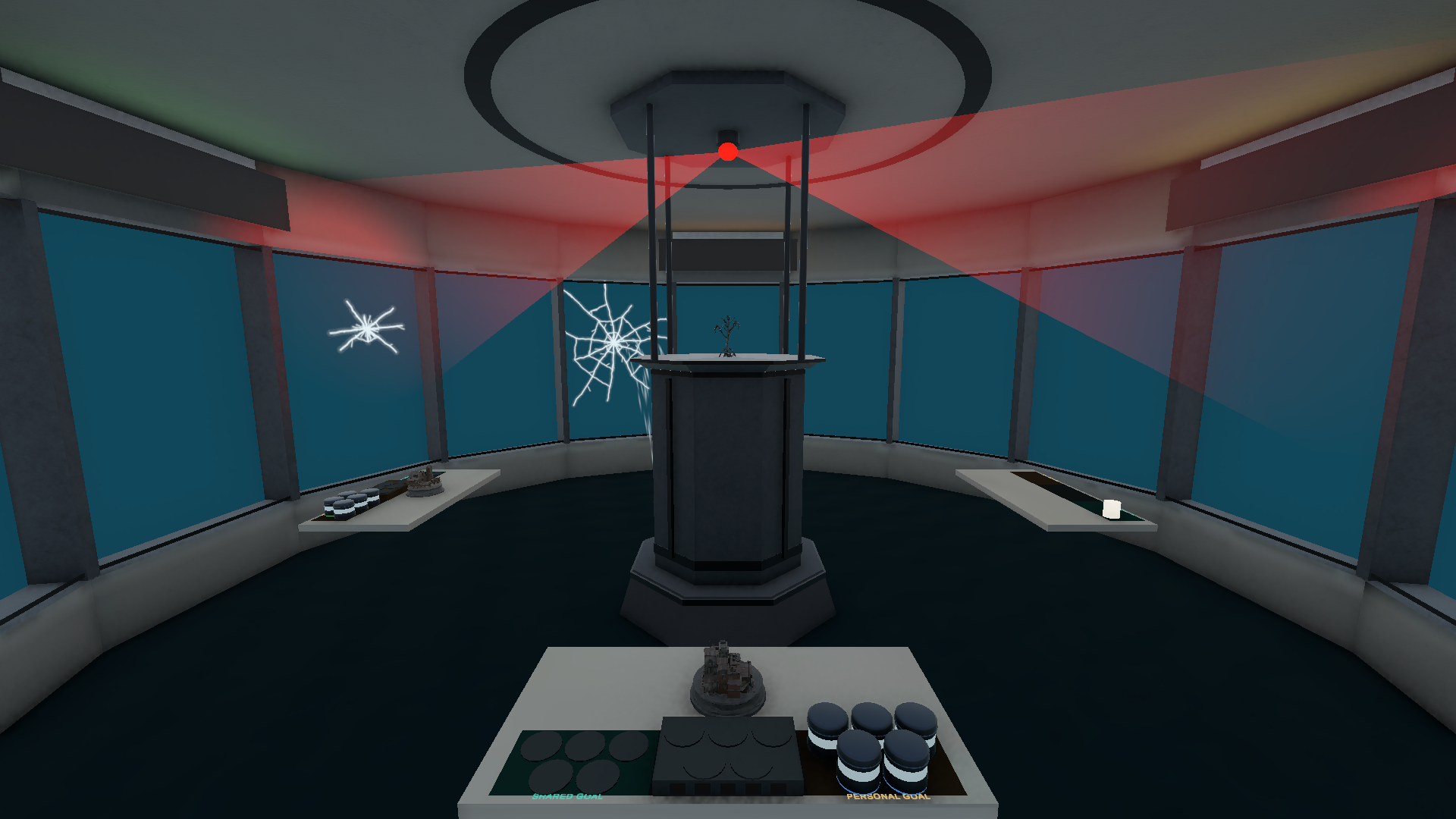
The Tipping Point is a single-player VR experience for Meta Quest 3, built as a 15-minute module for corporate workshops (8–12 minutes in the headset). You sit in a round control room surrounded by a rising sea and live through three decades:
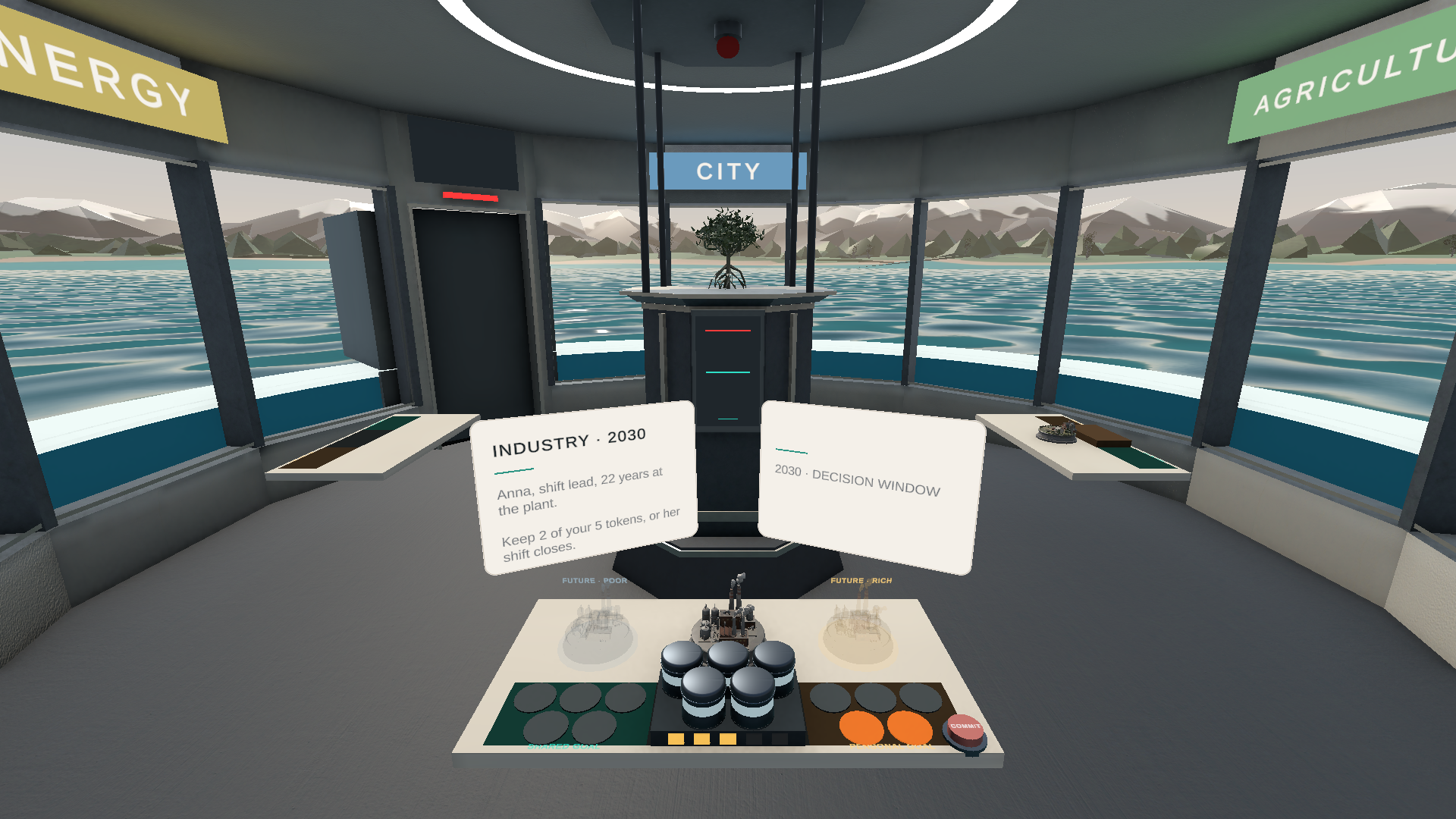
- 2030 – Industry. Anna, shift lead at the plant.
- 2040 – Agriculture. Jonas, the third generation farming the same land.
- 2050 – City. Mira, planner for 40,000 people in the harbour quarter.
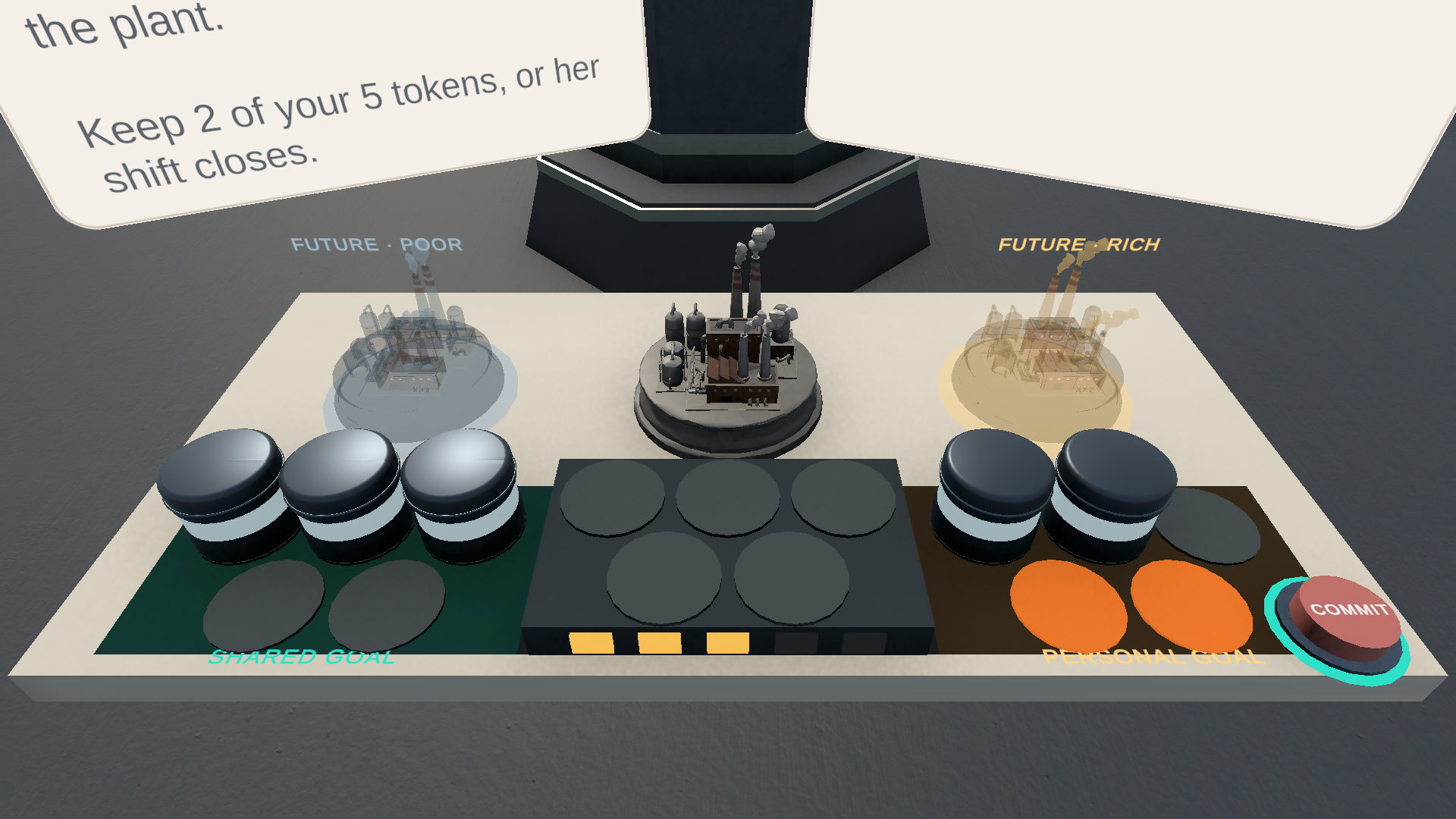
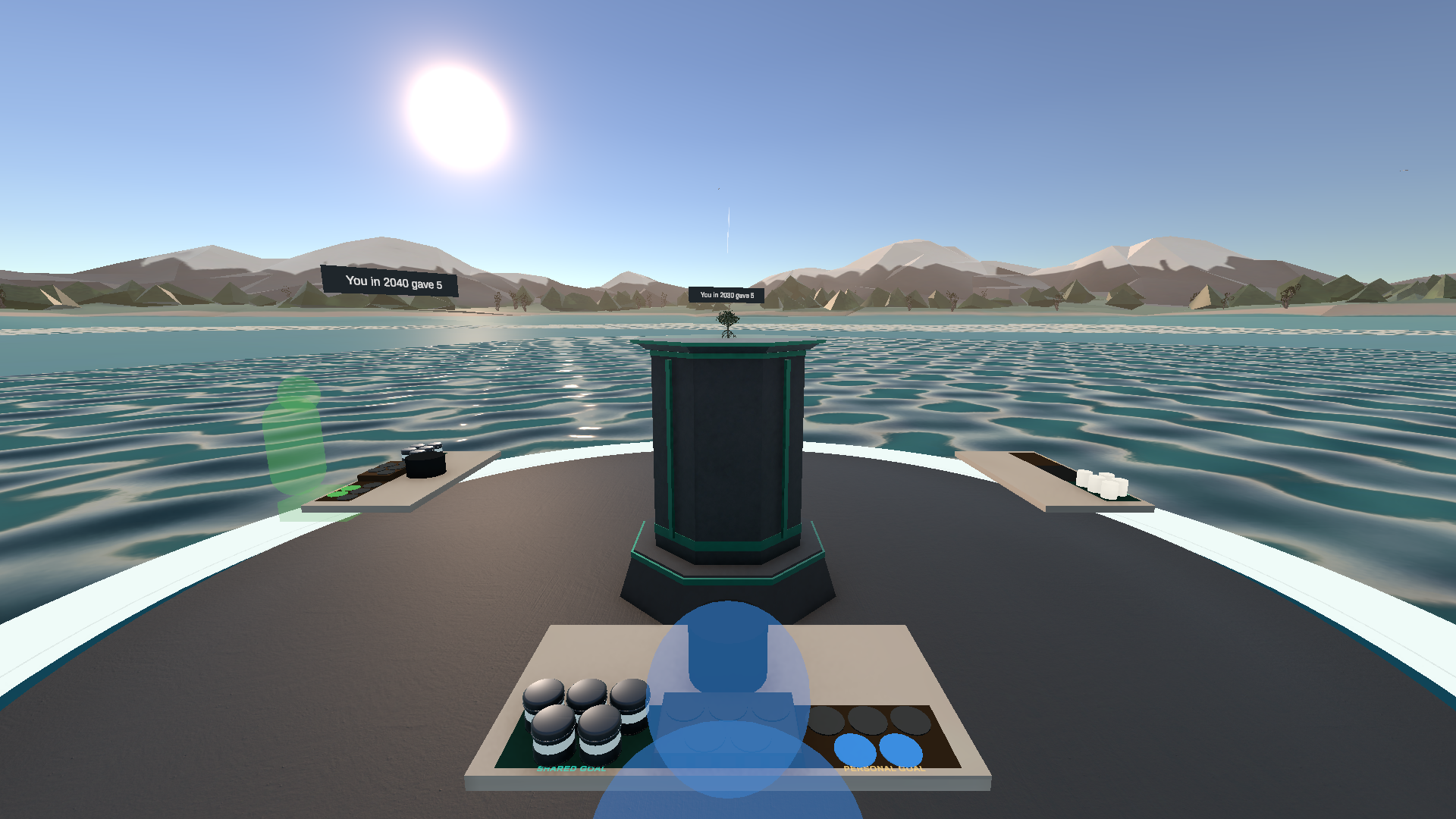
In each decade you get five tokens. Dock them into the shared goal, which protects everyone from the sea, or keep them for your own unit's target. The rising water is the clock: press COMMIT before it reaches the mark. The sea responds, and you become the next role. Your earlier self stays in the room as a translucent figure, showing exactly what you gave. In 2060 comes the verdict: "The wall held. You can leave." or "The water is inside."
The logic underneath is a simple dilemma. Every token you keep helps your own unit reach its target but is missing from the shared goal. Every token you give protects everyone but leaves your own unit short. Seen from one role alone, keeping always looks like the smarter move. Our twist: all three roles are you, so the cost you push onto "the next team" lands on you ten years later.
How we built it
- Unity, OpenXR and the XR Interaction Toolkit, so the build is not tied to one headset vendor.
- Seated play, no artificial movement. You grab tokens and press physical buttons, which keeps first-time VR users comfortable.
- A role-switch system that brings your own earlier choices back into the room as your "past self".
- Two fully built endings: one where the wall holds and one where the room floods.
- A guide panel and a short practice step, so no facilitator is needed during play.
- Beyond the build: a business case (market size, competitors, pricing) and a launch trailer cut from real gameplay footage.
Challenges we ran into
- Cooperation with one player. A cooperation dilemma normally needs other people. We replaced them with your own past and future selves, which meant designing the role switch and the past-self replay with care.
- A real dilemma in 15 minutes. The rules had to be learnable in seconds yet still create tension. We simulated all 216 possible
Built With
- c#
- claude
- git
- github
- meshy
- unity
- visual-studio
