-
-
project title
Here is a ready-to-use description template for your VirtualWeelo project details page on Devpost:
## Inspiration
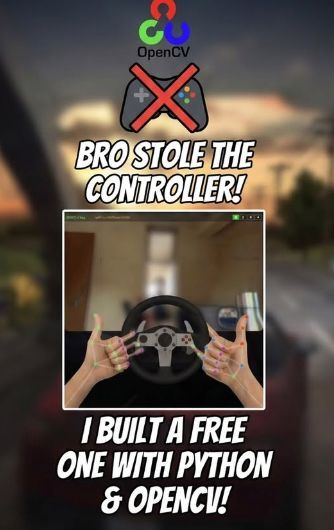
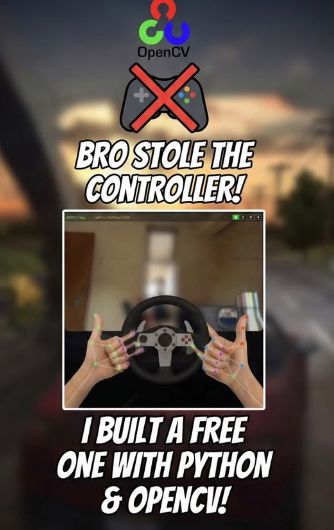
Traditional interfaces often rely heavily on physical controllers or mouse/keyboard setups, which aren't always accessible or hygienic in hands-free environments. The vision behind VirtualWeelo was to build an intuitive, low-latency computer vision pipeline that lets users interact with applications naturally using simple hand gestures.
## What it does
VirtualWeelo tracks hand movements in real time through a standard webcam, translating specific gestures into precise navigational commands. It provides a touchless, highly responsive control mechanism for digital workflows without requiring any specialized hardware.
## How we built it
- Languages & Frameworks: Built using Python for core logic and processing.
- Computer Vision: Utilized OpenCV for frame capture, image processing, and rendering.
- AI/ML Tracking: Integrated MediaPipe for robust, real-time hand-landmark detection and gesture classification.
## Challenges we ran into
- Reducing latency to ensure smooth, real-time tracking without lagging behind fast hand movements.
- Fine-tuning gesture thresholds to prevent false triggers under varying lighting conditions.
## Accomplishments that we're proud of
- Achieving fluid, high-frame-rate tracking using standard webcam hardware.
- Creating a clean, plug-and-play architecture that runs seamlessly locally.
## What we learned
- Gained deeper insights into optimizing computer vision pipelines and handling landmark coordinate normalization in MediaPipe.
## What's next for VirtualWeelo
- Expanding the gesture vocabulary for more complex multi-directional controls.
- Integrating cross-platform event dispatchers so users can control desktop applications directly.
Quick Suggestions for the Rest of the Form:
- Built with tags:
Python,OpenCV,MediaPipe,Git - Try it out links: Add your GitHub repository link.

Log in or sign up for Devpost to join the conversation.