-
-

Cover Page of Virtual Vanity project with 2 screen mockups
-
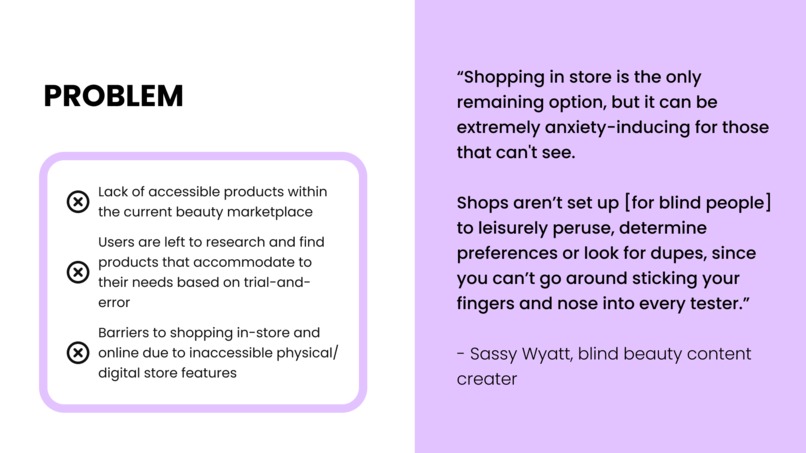
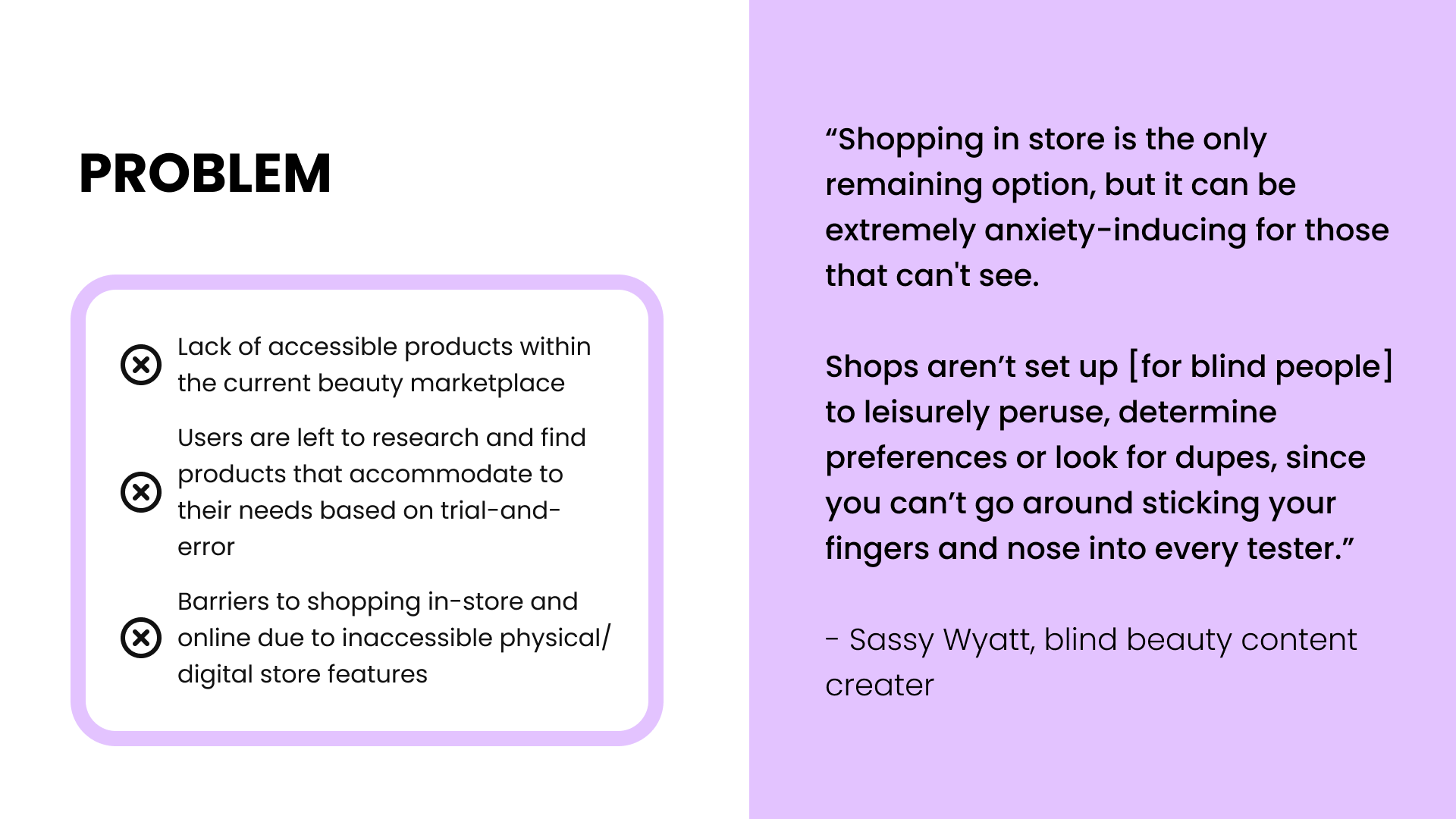
3 key problems we aimed to solve with Virtual Vanity
-

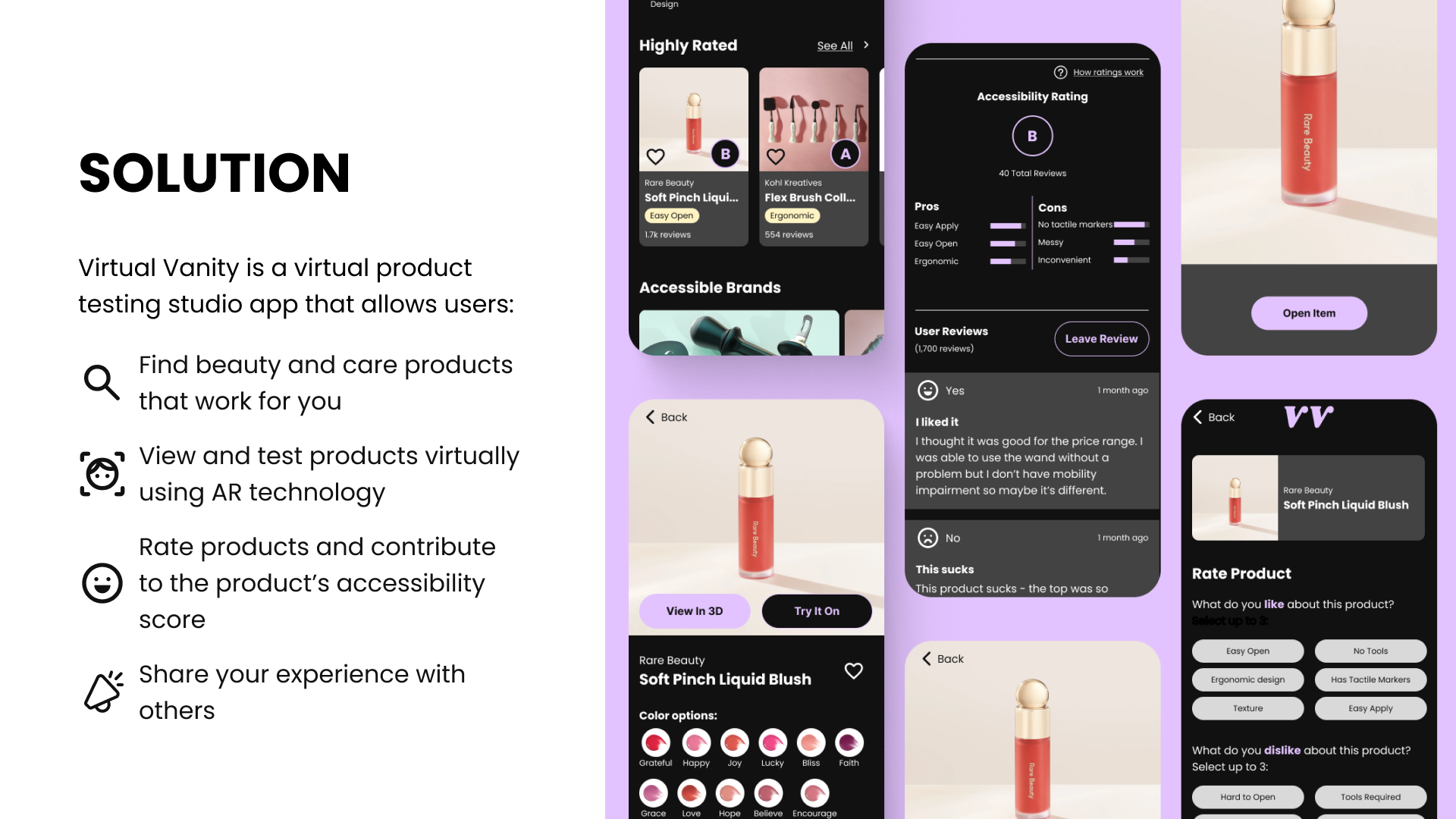
Virtual Vanity covers 4 key features tied to user pain points
-
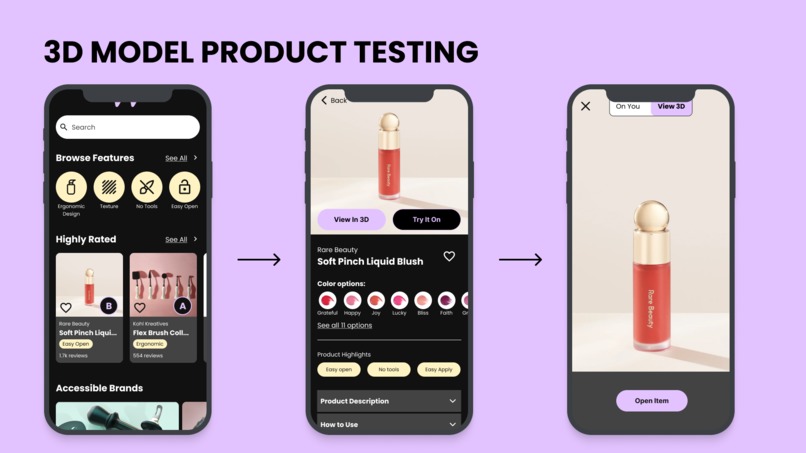
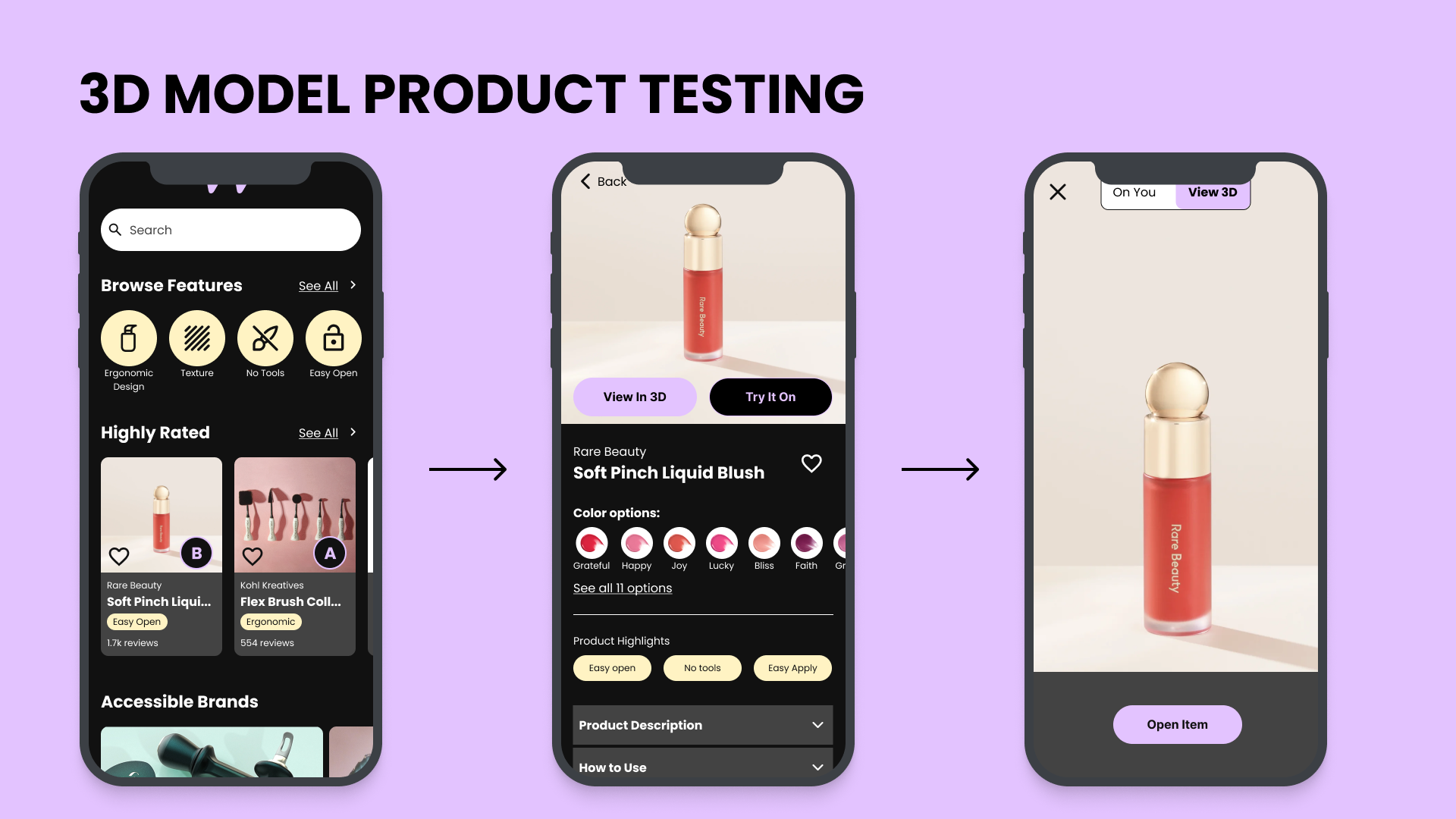
Screen prototypes for 3D model product testing
-
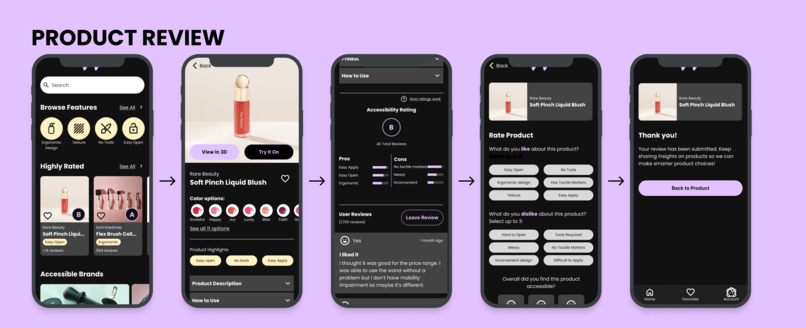
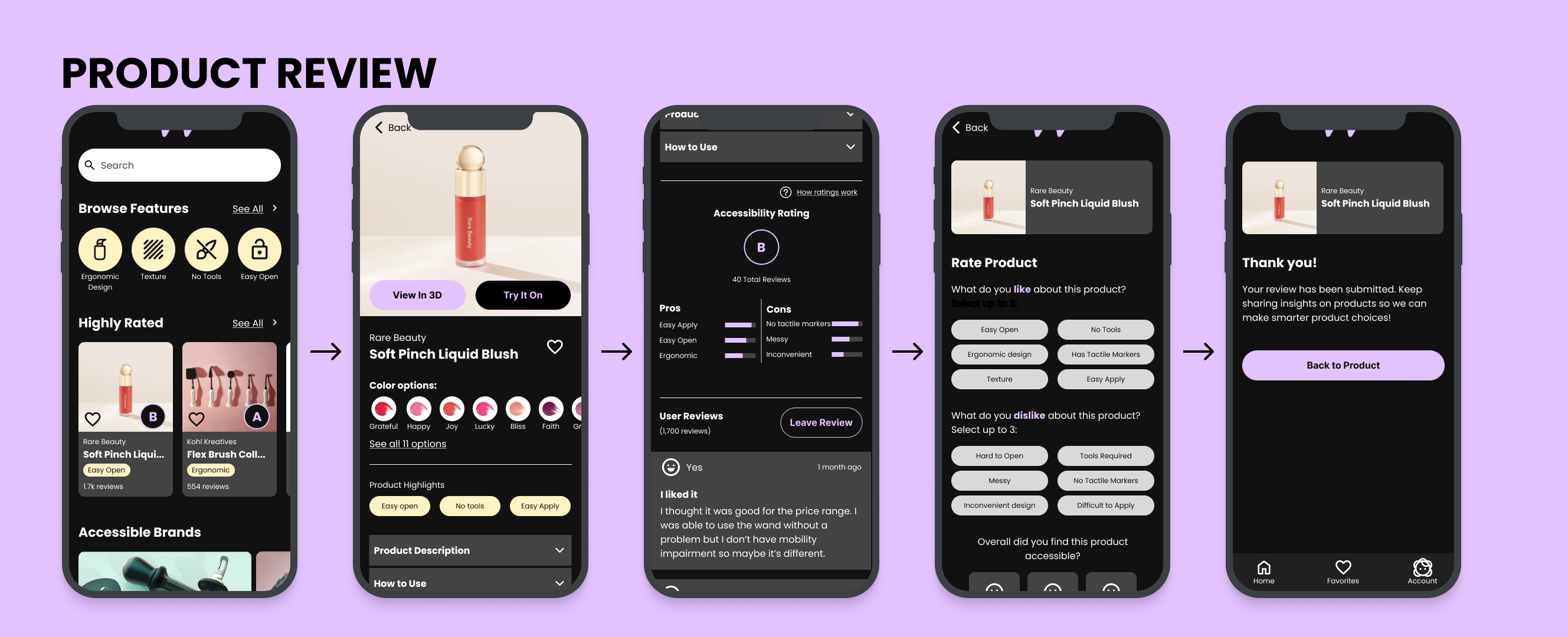
Screen prototypes for product review
-
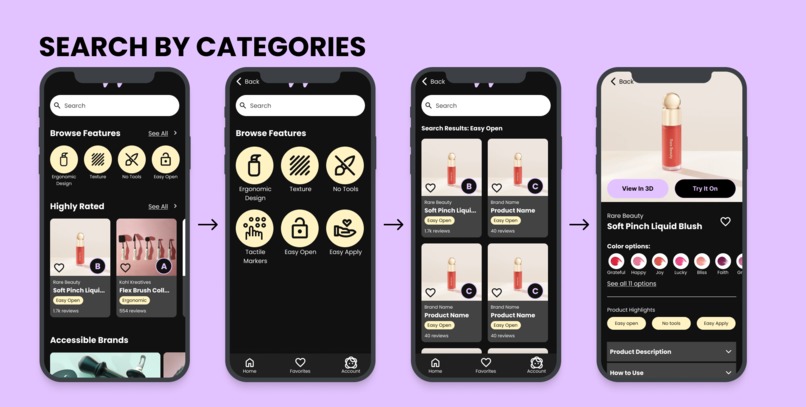
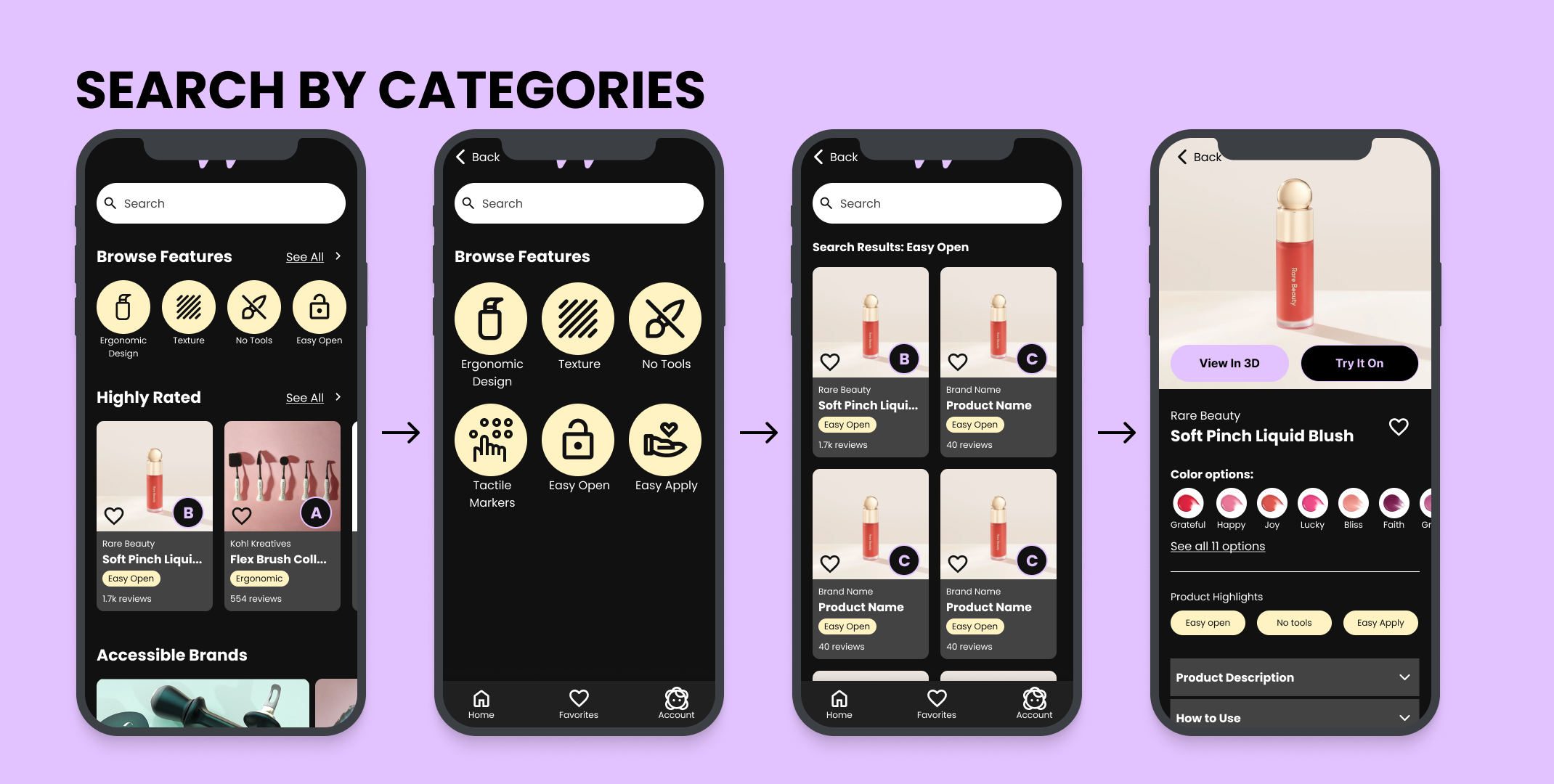
Screen prototypes for product search
-
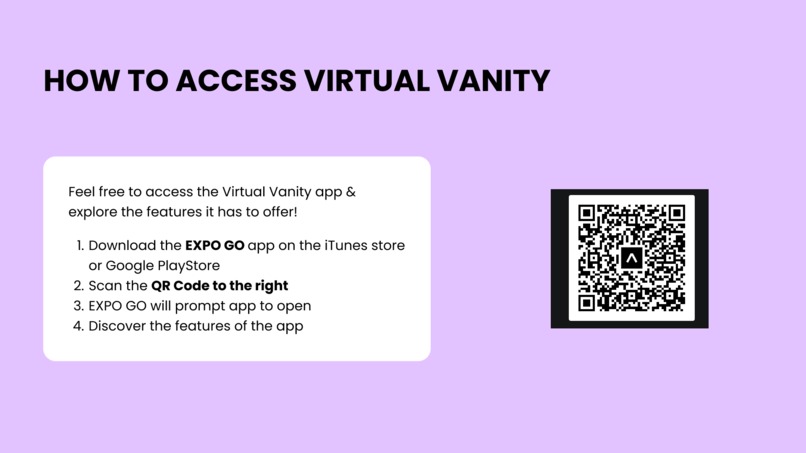
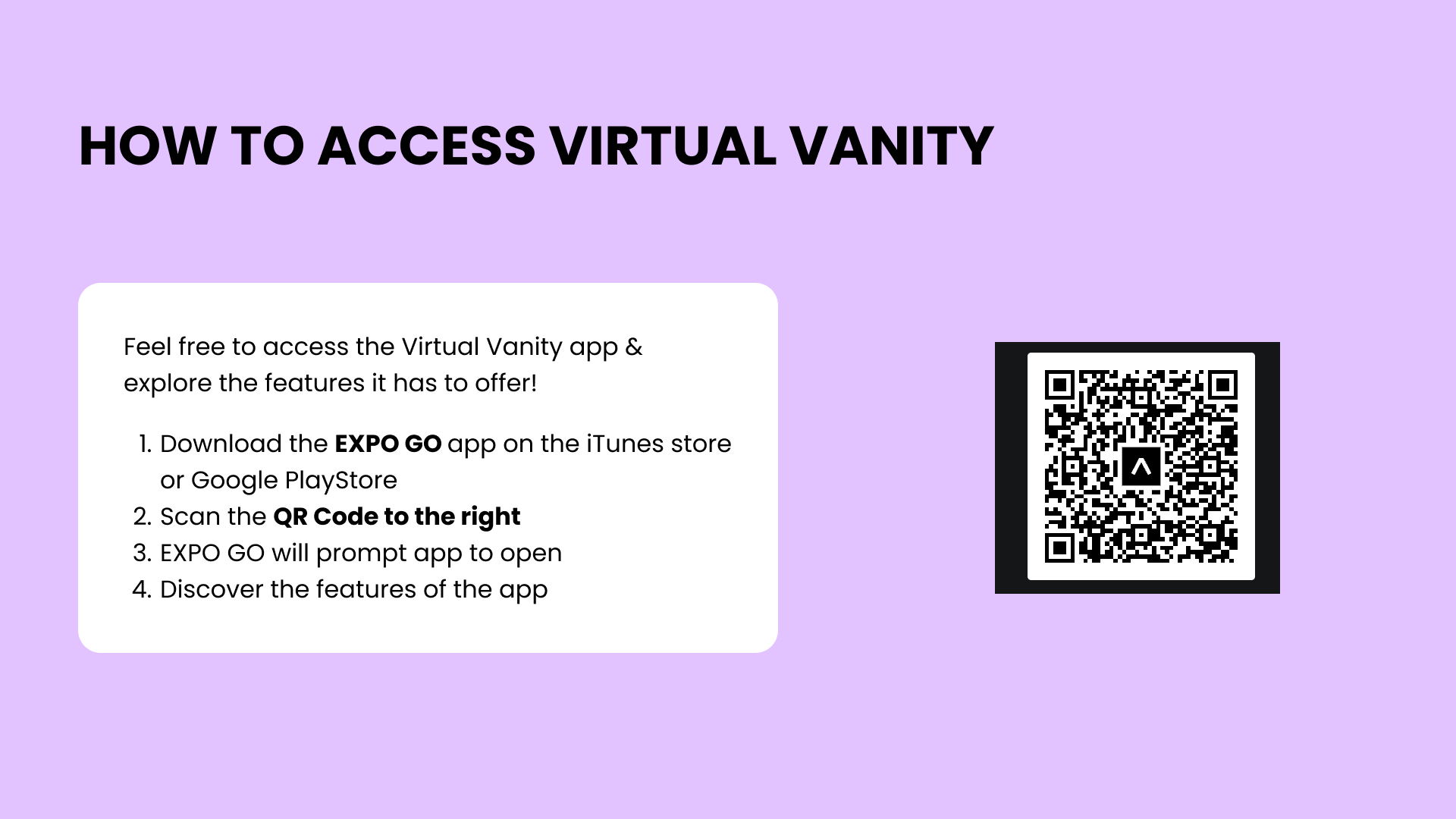
How to access Virtual Vanity app on mobile

Inspiration
Virtual Vanity Pitch Deck (HTML version)
Despite an estimated 16% of the world’s population having a disability, only 4% of beauty and personal care brands create products that cater to physical disabilities (Proctor & Gamble 2019). Because of this barrier to entry, disabled users are left to find accommodations out of beauty products on their own, oftentimes having to navigate through pain points such as limited product testing and inaccessible shopping options.
After conducting user surveys and interviews with disabled users, we identified 3 key pain points that were unaddressed in current product offerings:
- Lack of accessible products
- Users are left to research & find products that accommodate their needs based on trial-and-error
- Barriers to shopping in-person (i.e. stairs, narrow aisles) & online (lack of alt text, limited product description)
The goal was to lower the amount of trial-and-error that disabled users currently face when buying beauty products.
What it does
Virtual Vanity is a virtual product testing studio app that allows users:
- Search beauty and care products that accommodate their needs
- View and test products using 3D Model Technology
- Rate products and contribute to the product’s accessibility score
- Share product experience with others through user reviews
How we built it
UX Design
To better understand the pain points of disabled users and the beauty experience, we utilized 3 research methods:
- User Surveys - to screen for applicable interview candidates and get an initial understanding of beauty experiences
- User Interviews - gain a deeper insight into users' pain points, goals, motivations, and habits
- Competitive Analysis - understand what assistive technology and features currently exist in the marketplace and identify areas of opportunity
Taking the research insights, we identified the target user as someone who:
- Wants to try new products and is independent when shopping
- Wants to find and share products that work well with them
- Has to test products and conduct research to check product accessibility
- Has limited access to in-person shopping due to disability
With a thorough understanding of the target user and their pain points, we focused on the user journey to identify touch points and areas of opportunity. We compiled wireframes based on our solution ideation and prototyped a high-fidelity for usability testing.
High Fidelity Prototype in Figma
We conducted usability testing and made iterations on the prototype before handing off to developers for frontend/backend development.
Deployment Virtual Vanity was built using:
- React Native
- GraphQL
- Firebase
- MongoDB
- Vectory (3D Modeling)
We used the React Native framework for our front-end development, GraphQL API for our back-end, Firebase MongoDB for our database and authentication, and Vectory for data visualization.
Challenges we ran into
Throughout the hackathon, we ran into a couple challenges that tested our collaboration and critical thinking skills:
- User Research - we had challenges recruiting participants for the user survey/interviews and relied heavily on interest groups and social media communities. Screening participants to those with disabilities relevant to the project topic was also difficult, due to the limited access to audiences.
- Ideation - we wanted to come up with innovative ideas but had to balance being user-focused.
- Teamwork and collaboration - we navigated through communication differences between designers vs. developers, time differences for stand-in meetings, and overall project expectations. We also had 2 team members drop out unexpectedly and had to return to recruitment efforts.
- Development - Testing and trying various AR implementations from FRAPP, Camera Kit SDK, Snapchat Lens, Lens Studio. Time constraints also proved hard for getting approvals for using APIs from companies such as Amazon and SnapChat. The lengthy process of obtaining permission hindered our ability to demonstrate the full potential of the app.
Accomplishments that we're proud of
We're proud of keeping a user-centric design at the forefront of the product and including thorough user research to support any design decisions. It helped to connect with users to hear about their personal experiences and their pain points, foster empathy, and refute biases/assumptions we may have had on the topic. We wanted to make sure the solution we designed and developed addresses the core problem statement.
Despite all the hurdles and challenges we faced throughout the hackathon, we were always communicative and pivoted quickly to stay on track, without compromising quality. We also pushed through constraints with time, manpower, and resources collectively as a team.
What we learned
After this hackathon experience, we learned that accessibility considerations need to be included from the beginning of the product life cycle, and inclusive methodologies should always be considered within each step. We gained insight into how people with disabilities interact with their world and the barriers that they face on a daily basis.
Within the agile-like workflow, we learned how to identify ways to streamline communication and avoid bottlenecks, while understanding where roles complement each other.
What's next for Virtual Vanity
Beyond this hackathon and if constraints are removed, we would consider iterating on the below items:
- UPC/Barcode Scanner to allow users to upload and review products they own
- Add AR technology to expand virtual try-on capabilities
- Add “expert reviews” for products from accessibility specialists
Built With
- figma
- firebase
- graphql
- mongodb
- notion
- react-native
- vectory


Log in or sign up for Devpost to join the conversation.