-

Mode Selection (Learning/Experiment/Assessment)
-
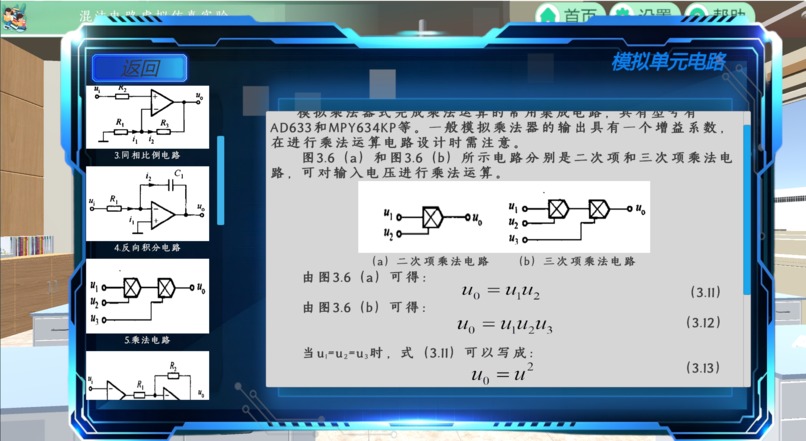
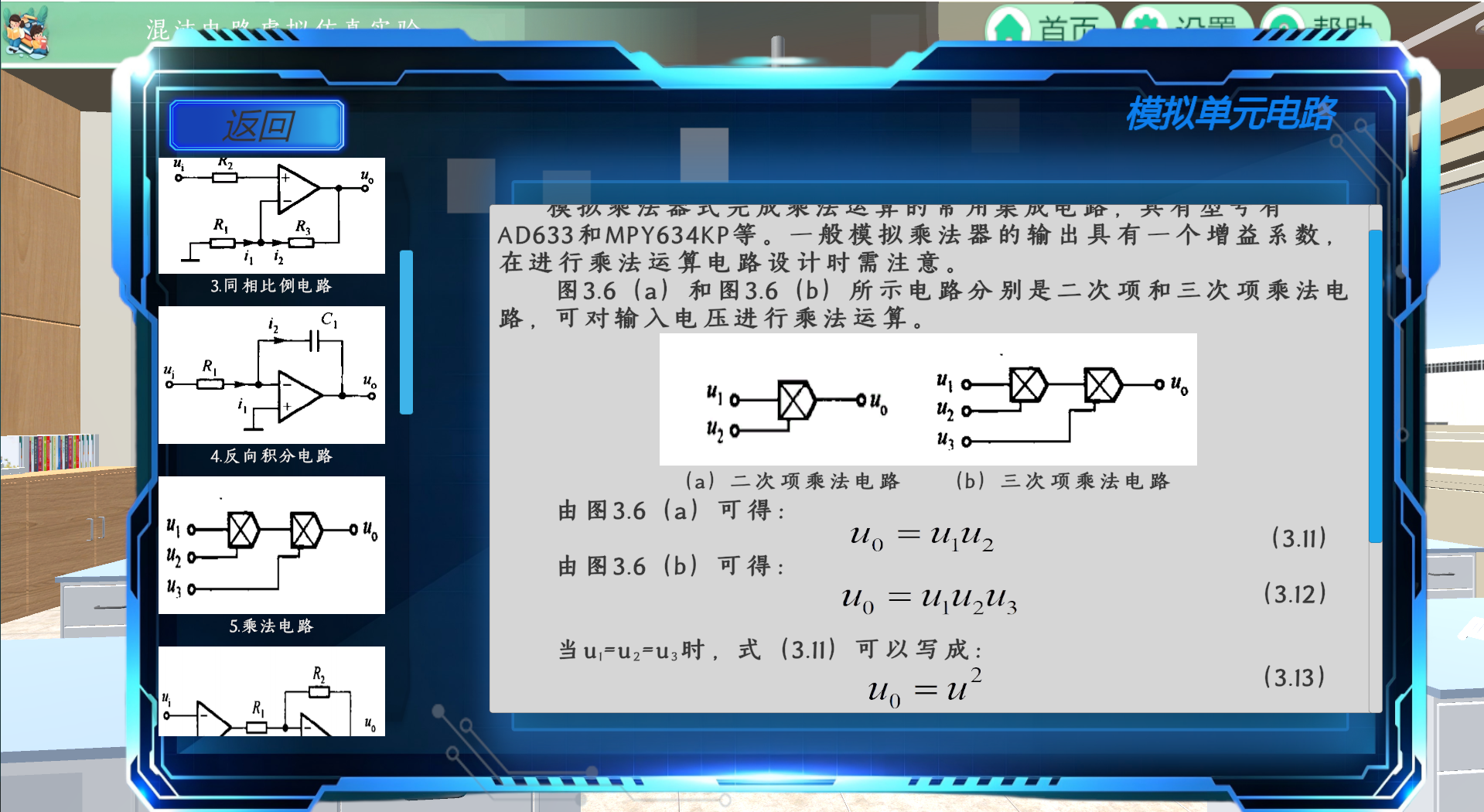
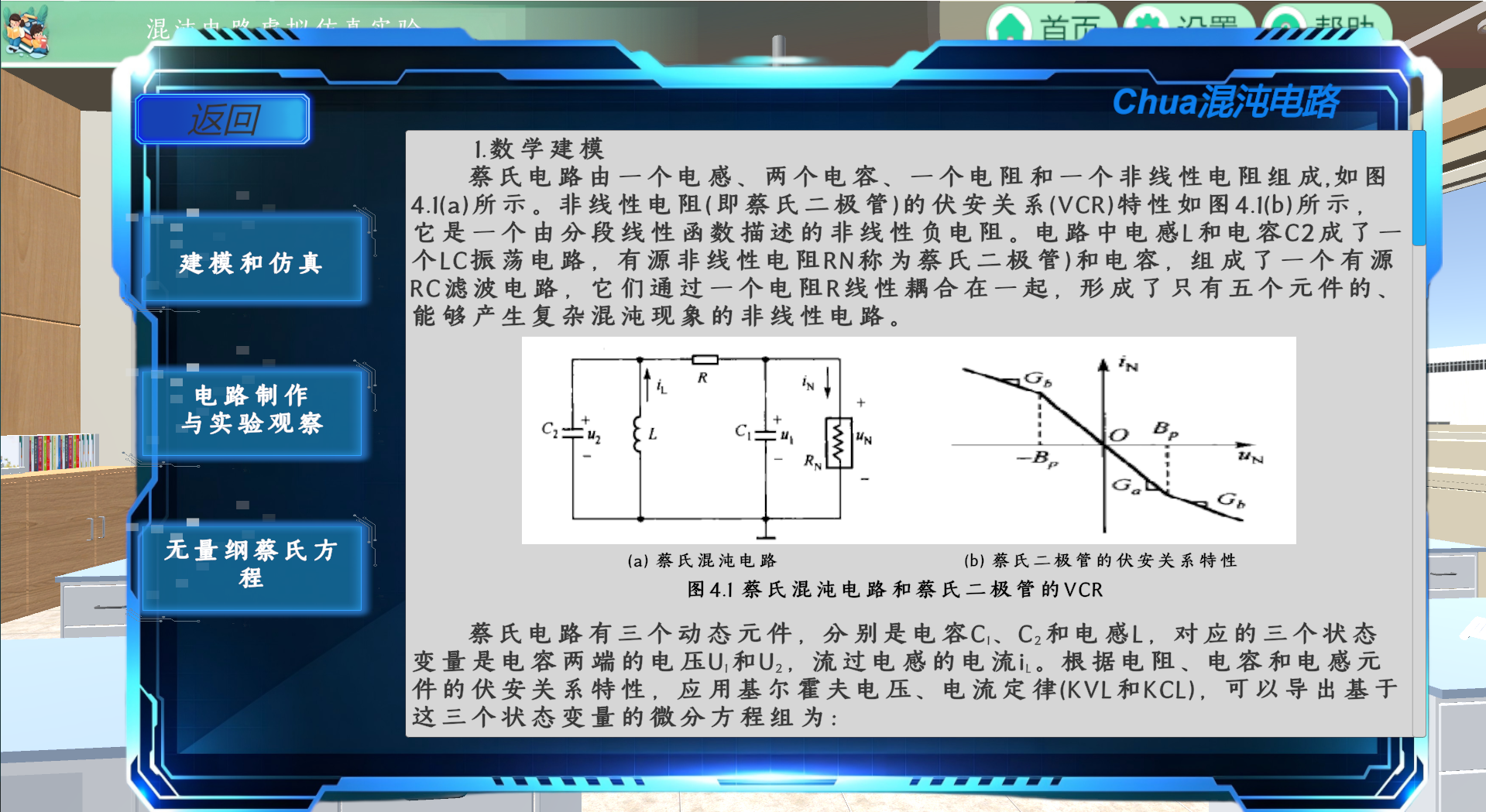
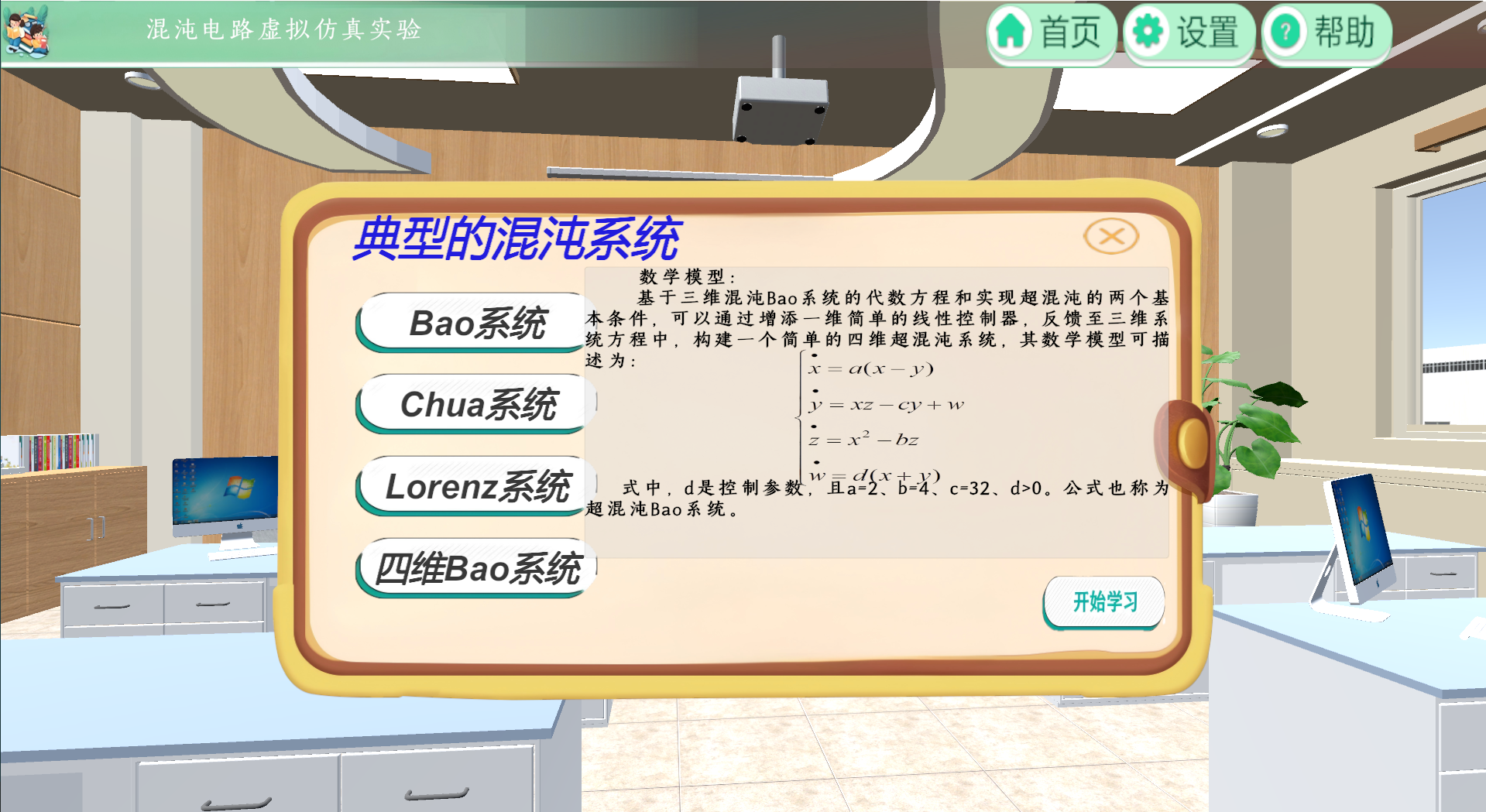
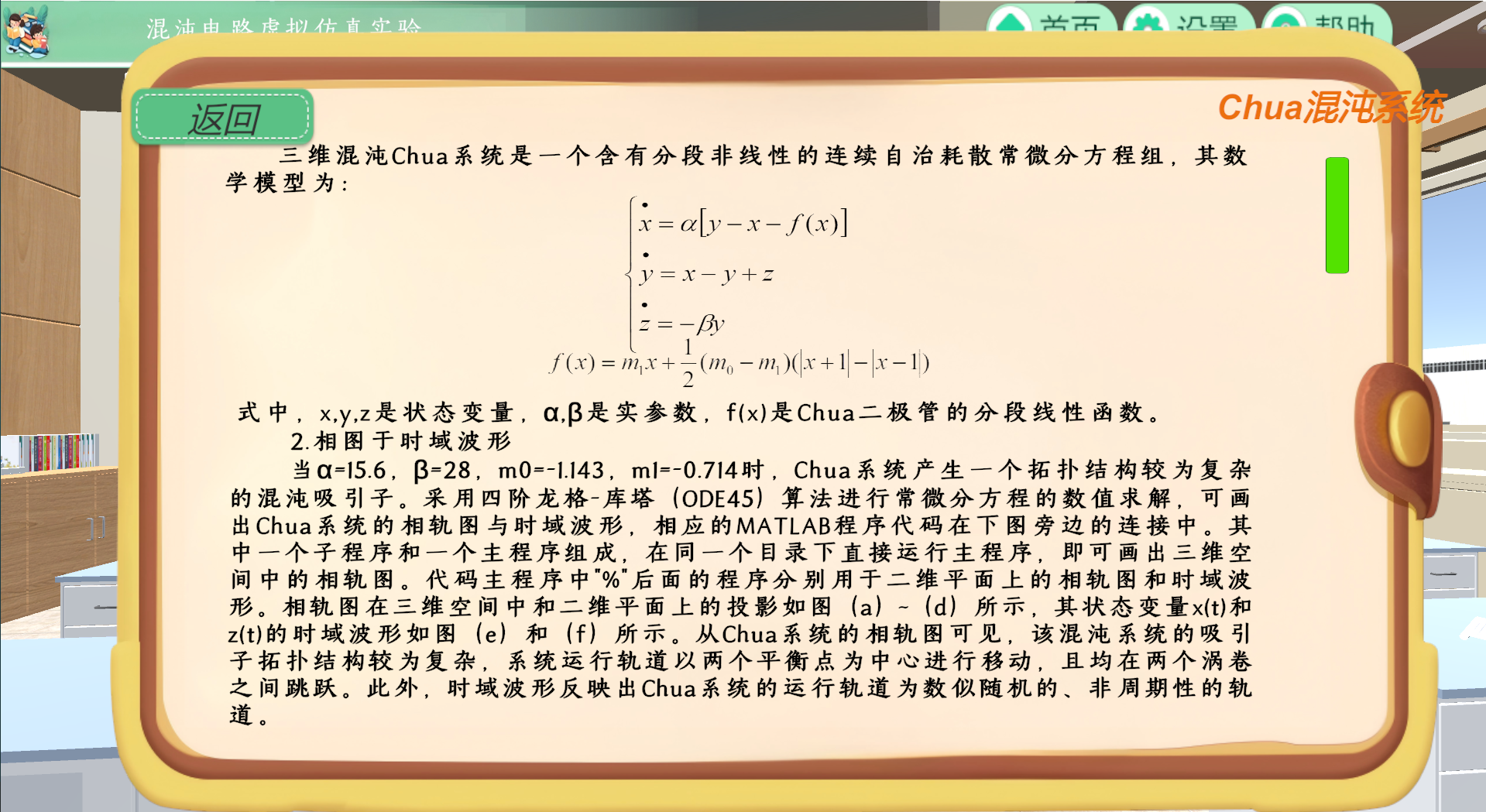
Learning Mode: Study related theoretical knowledge.
-
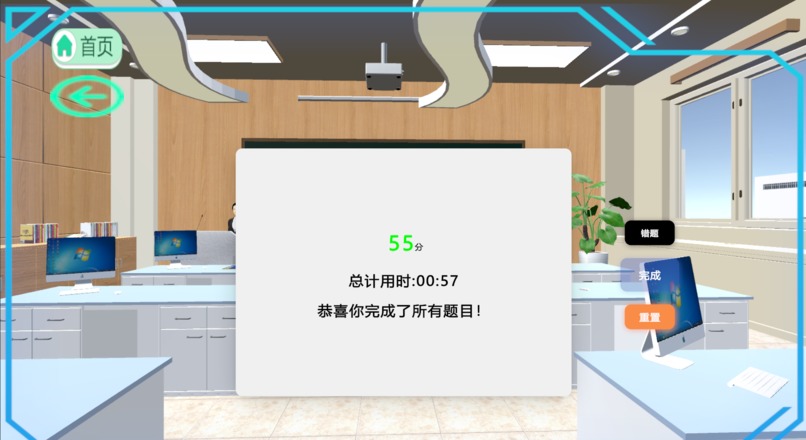
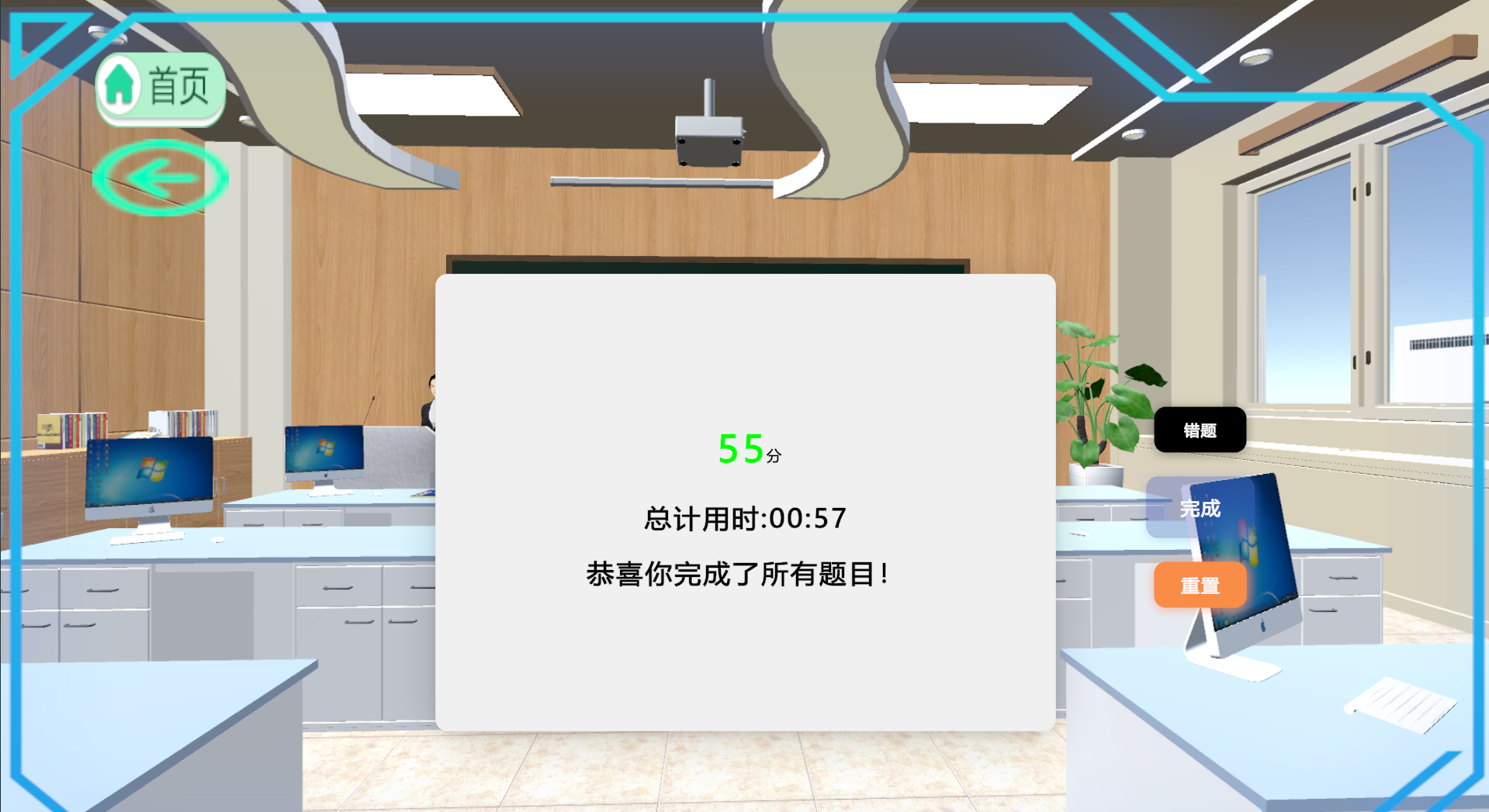
Generate assessment results
-
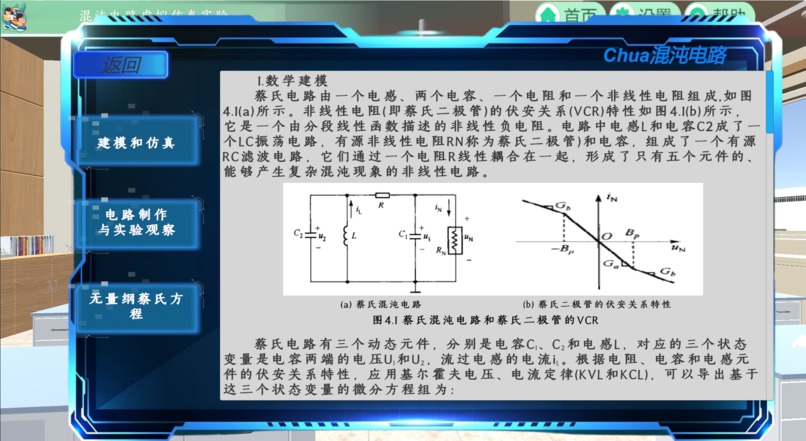
Learning Mode: Study related theoretical knowledge.
-
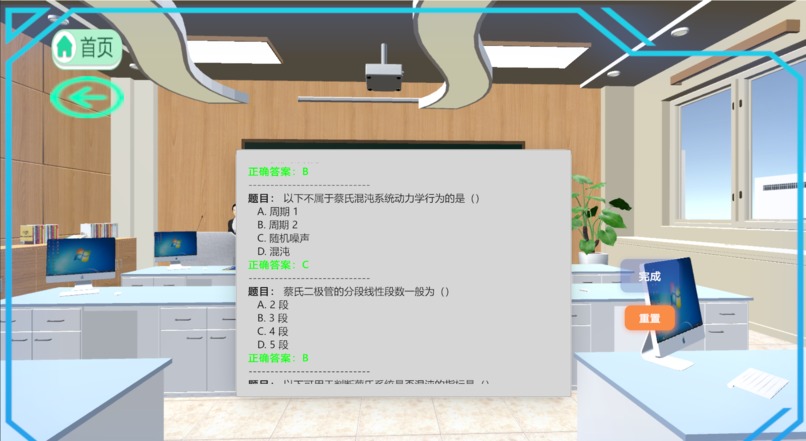
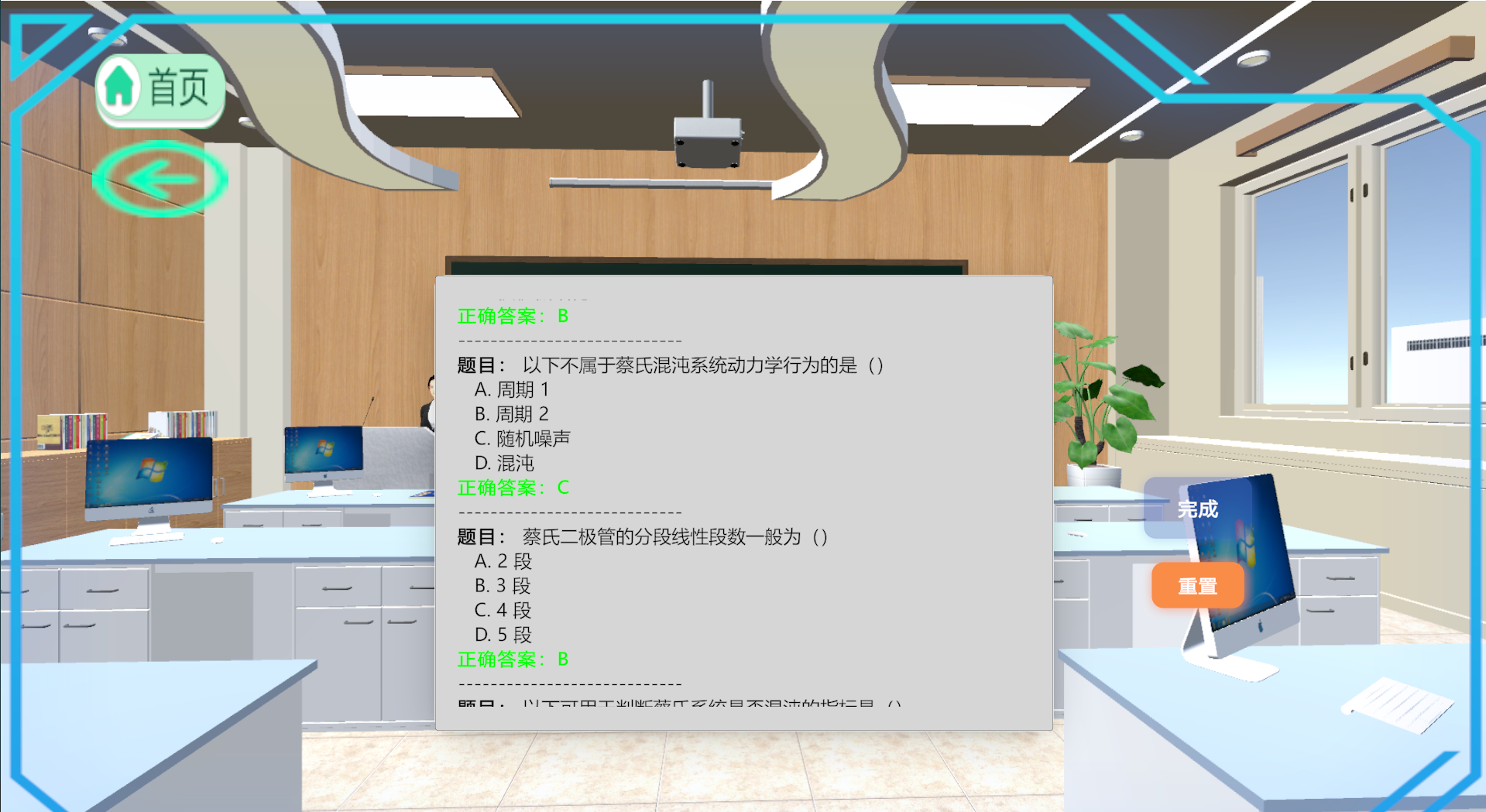
View wrong questions
-
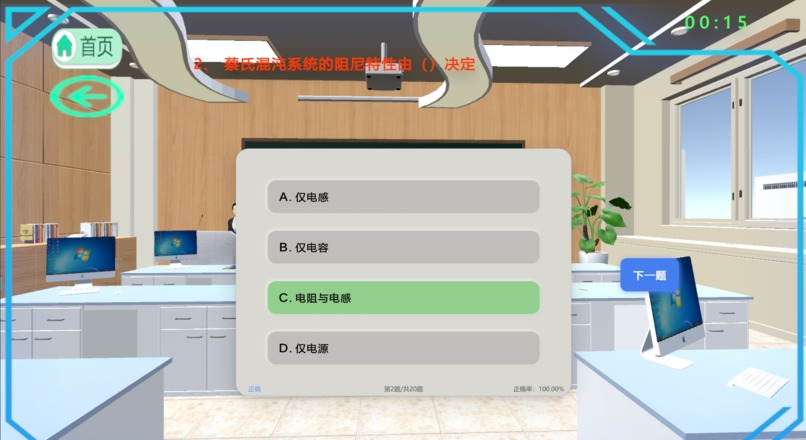
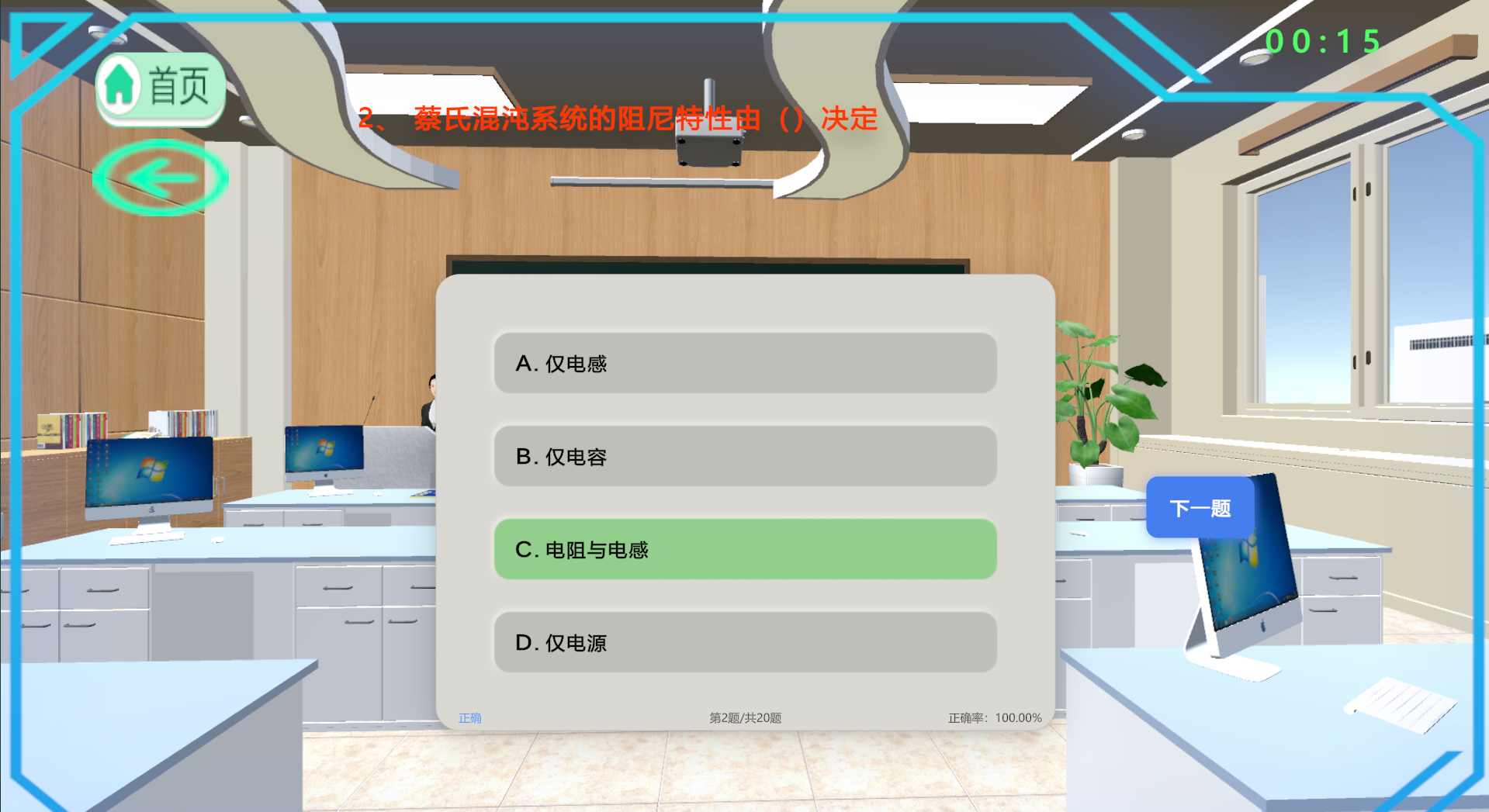
Answer interface
-
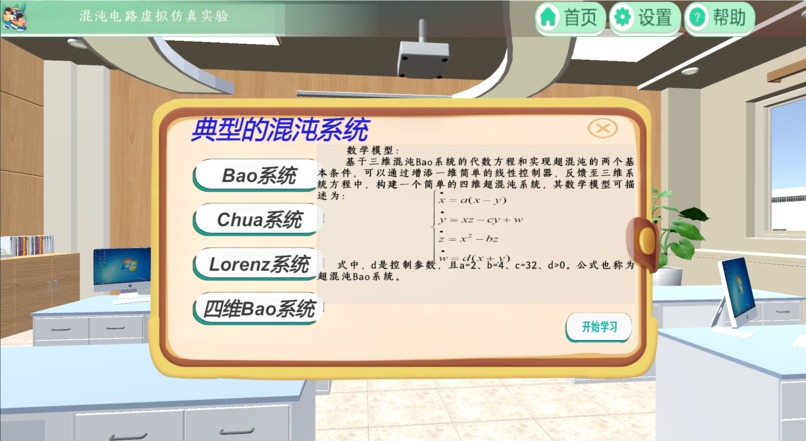
Learning Mode: Study related theoretical knowledge.
-
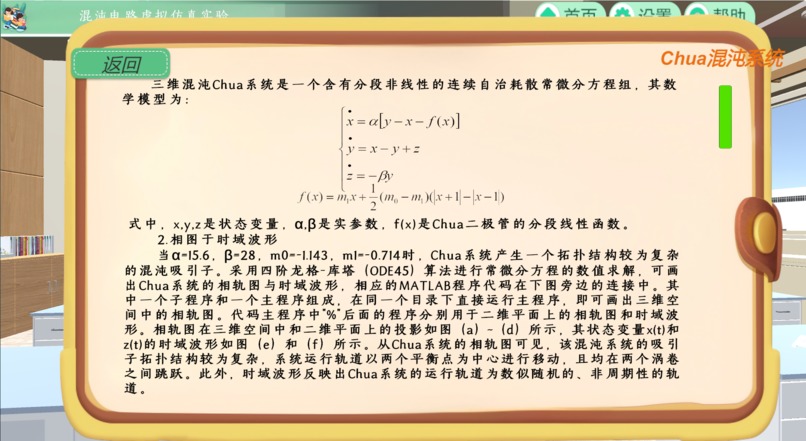
Learning Mode: Study related theoretical knowledge.
-
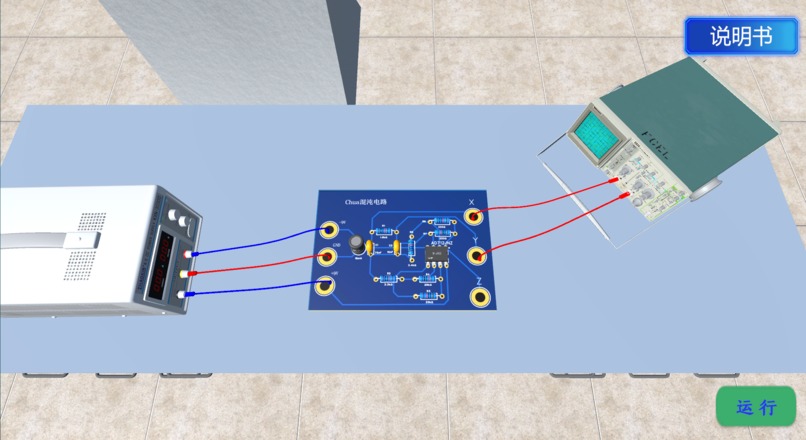
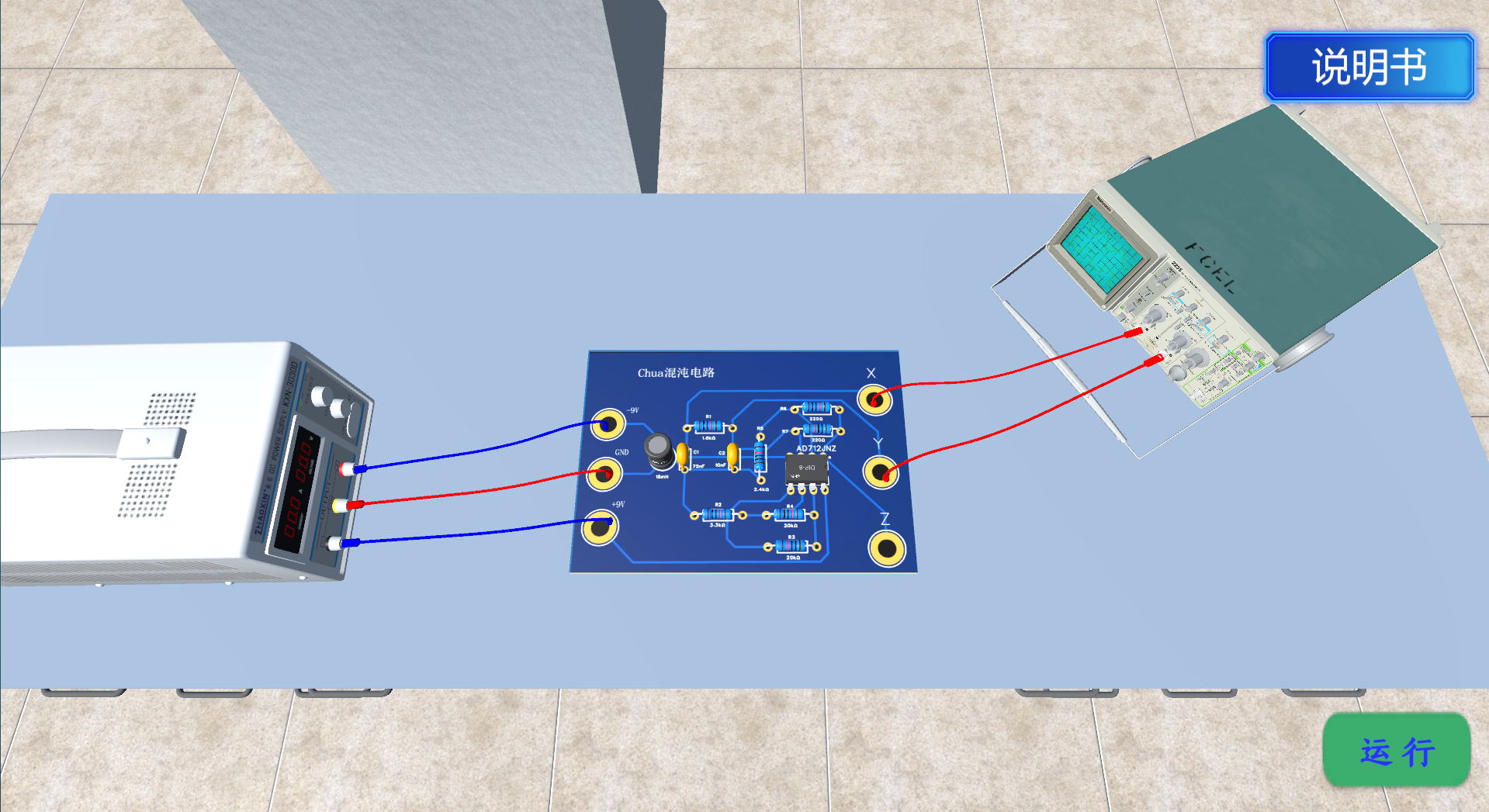
Power on the circuit board and perform testing with an oscilloscope.
-
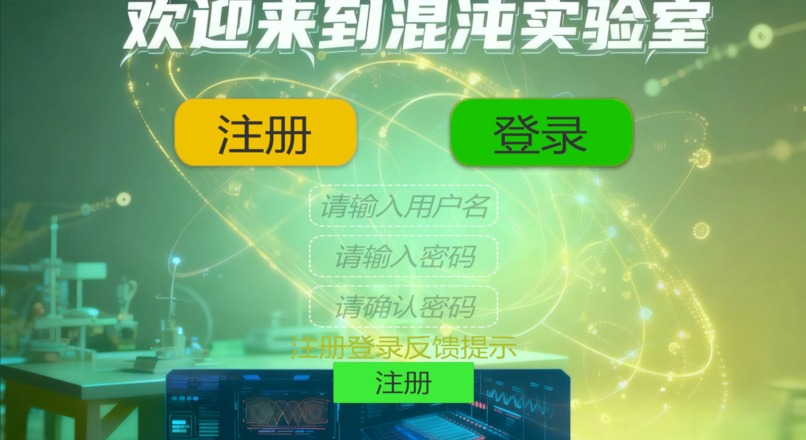
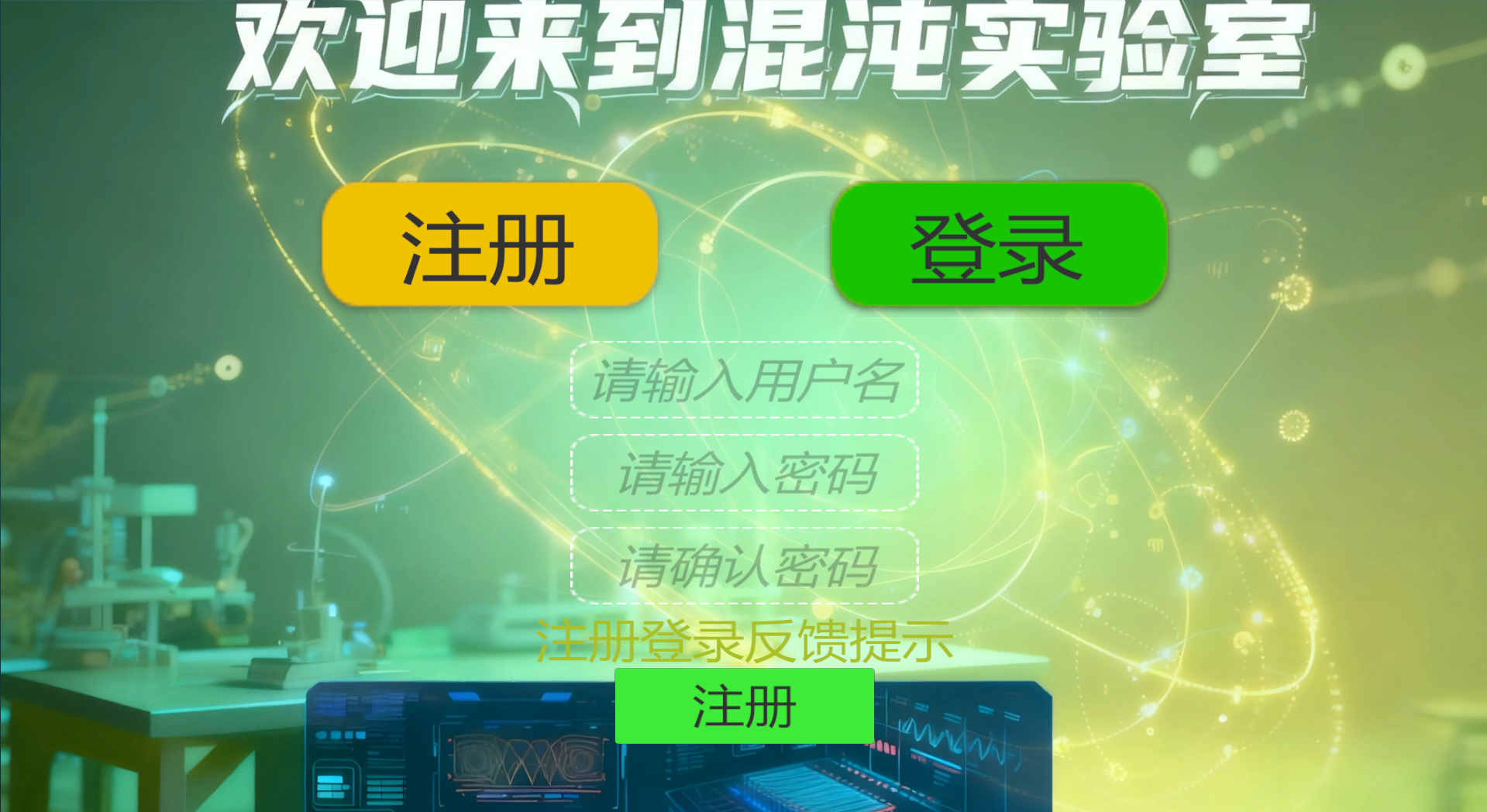
Register & Login Interface
-
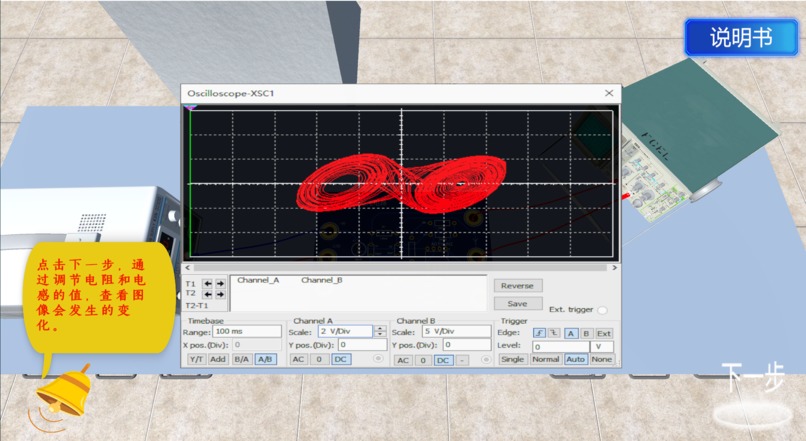
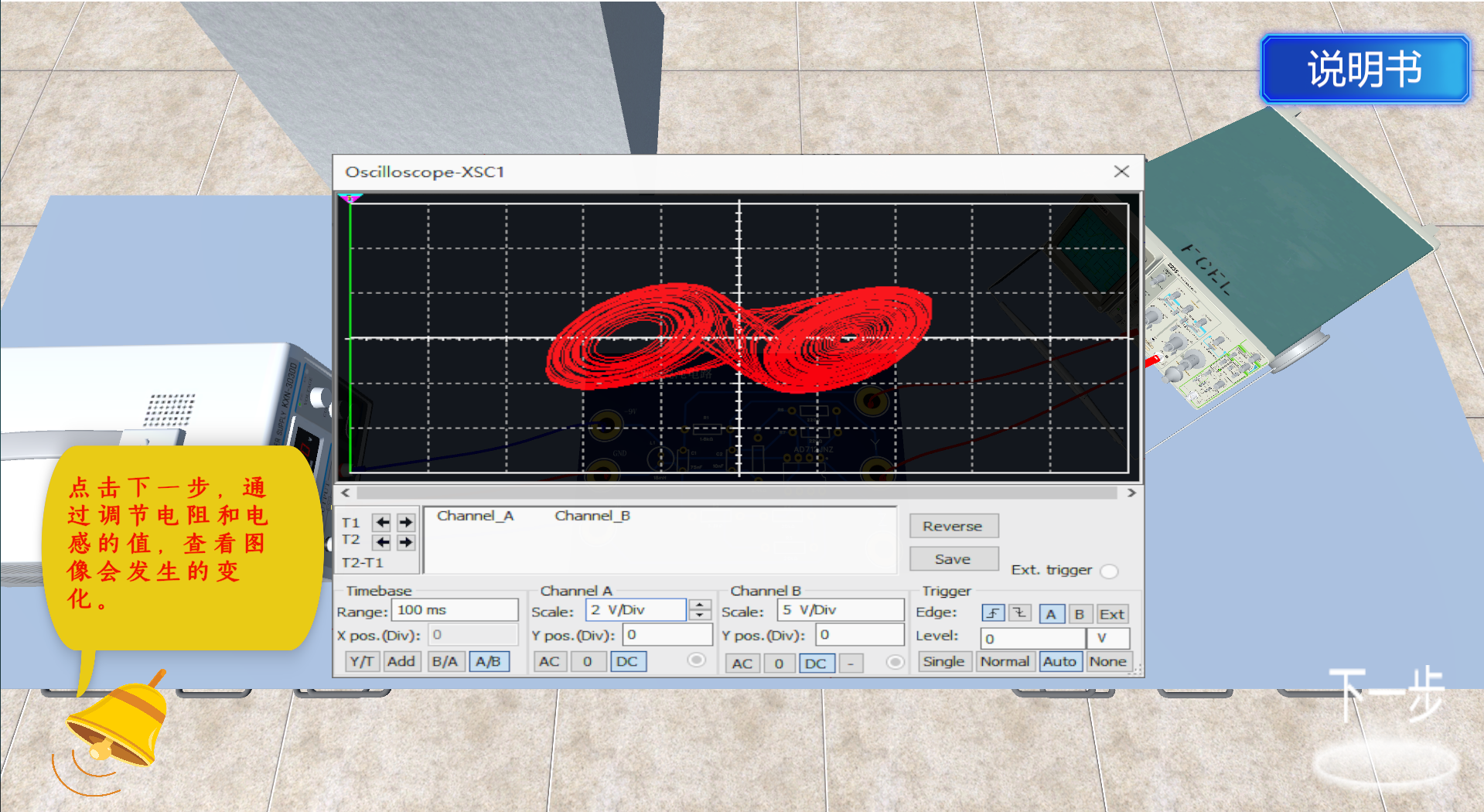
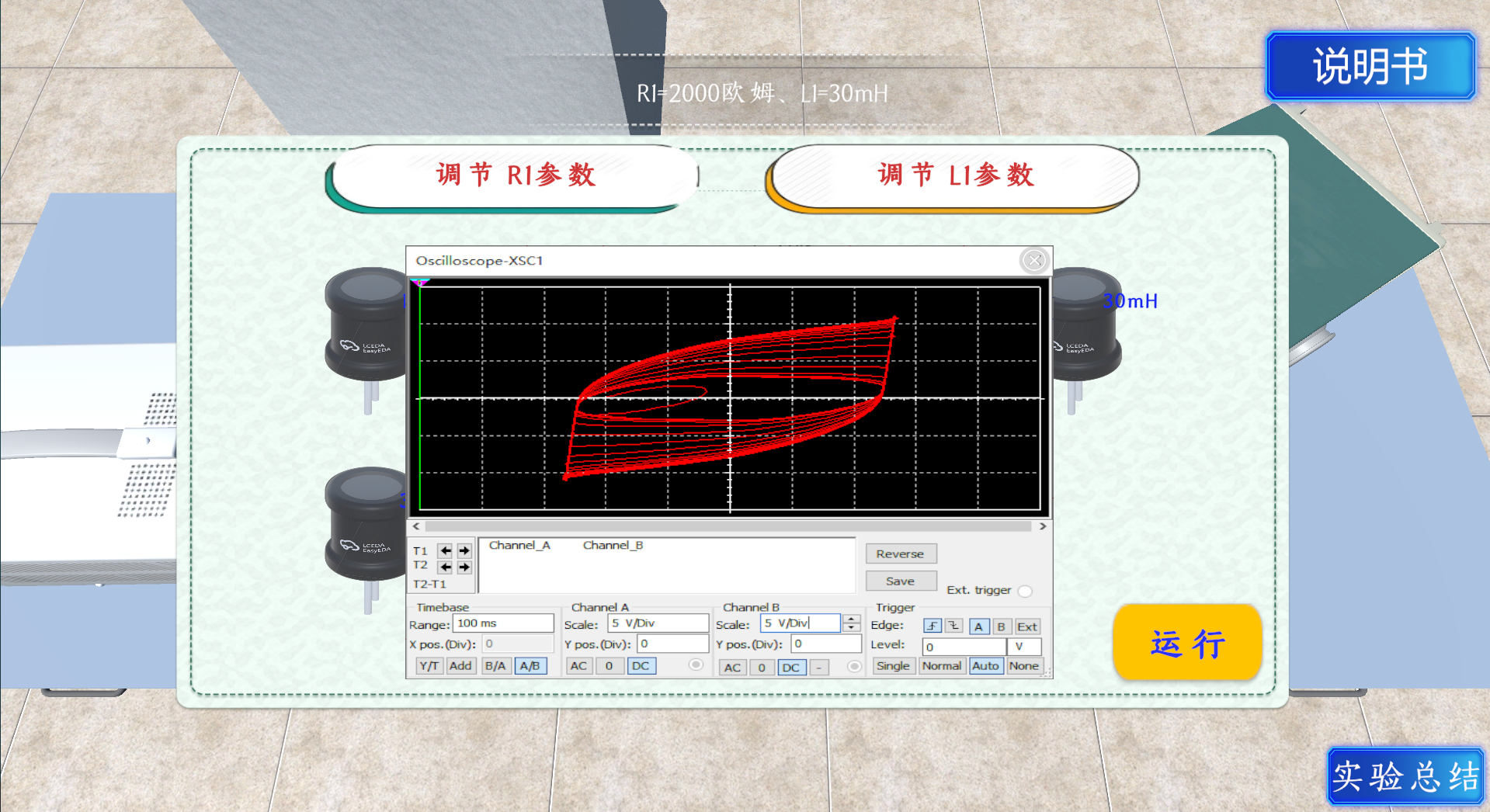
Observe the oscilloscope results.
-
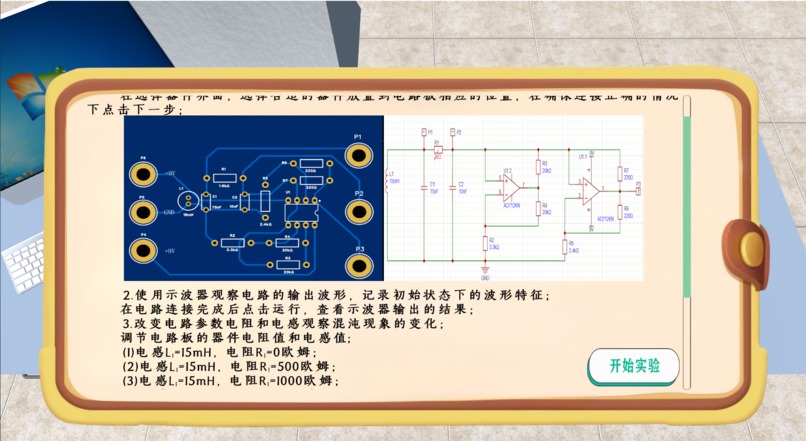
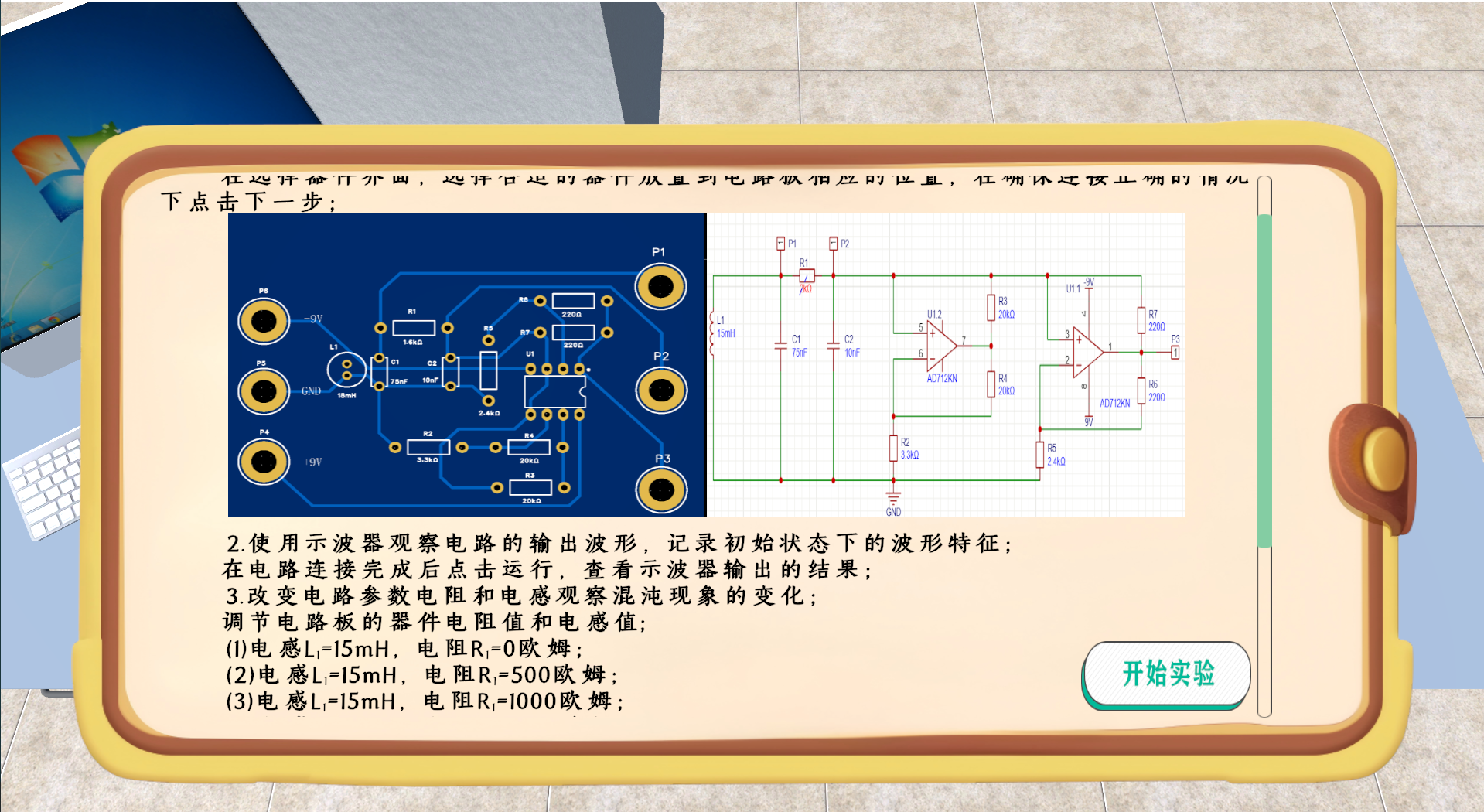
Introduction and overview of the selected experiment.
-
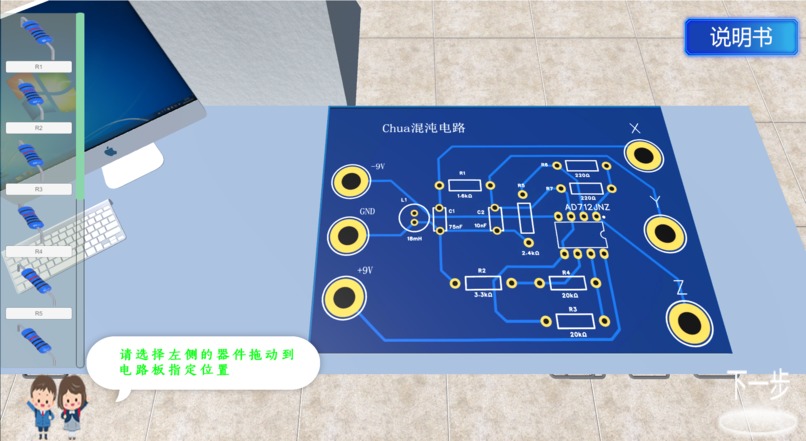
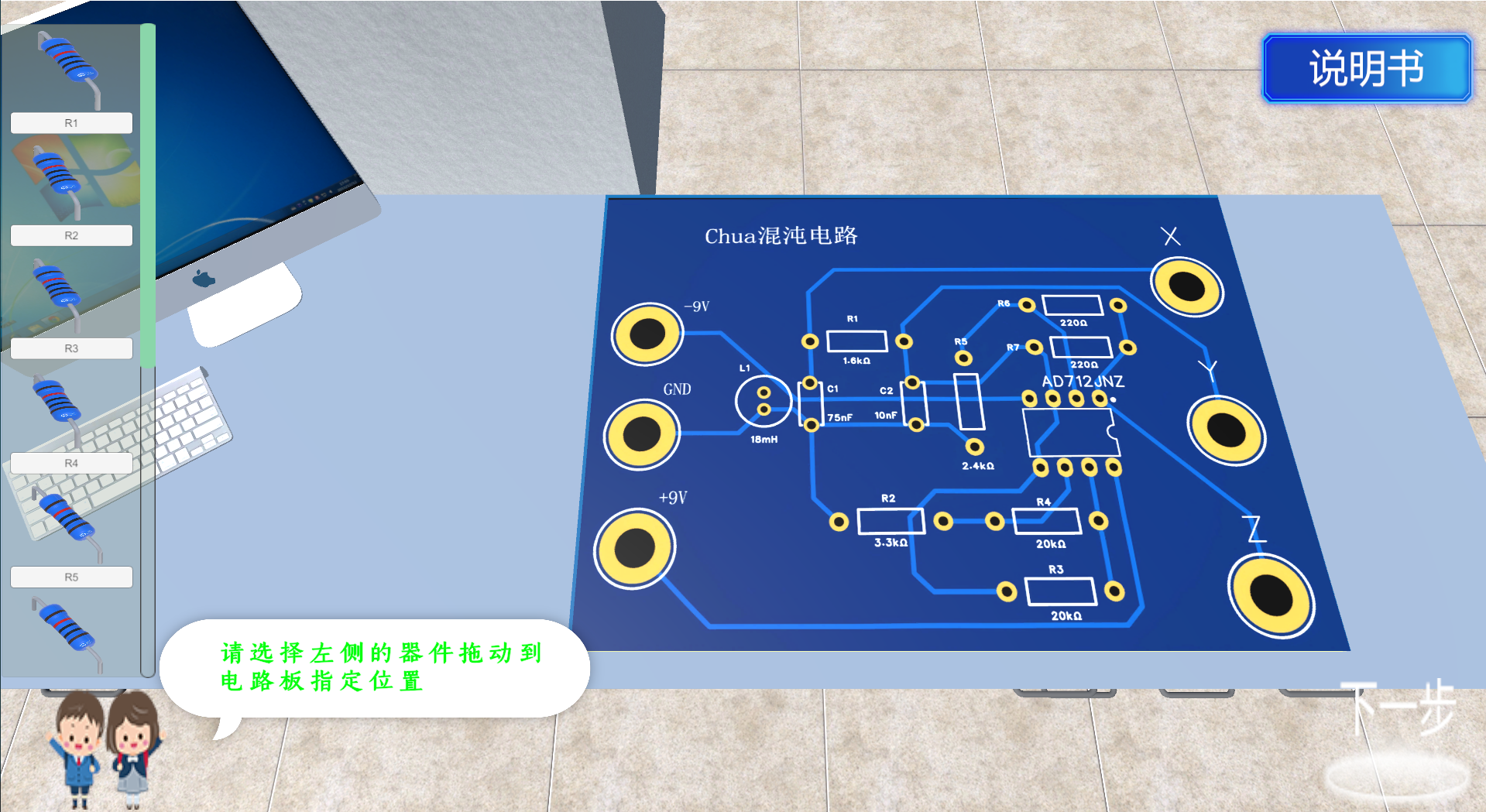
Experimental operation environment: Drag the electronic components from the left panel to the designated position using the mouse.
-
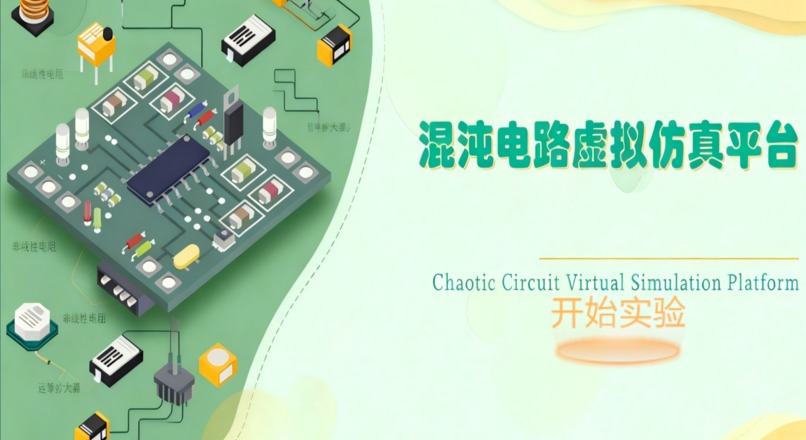
Start Experiment Interface
-
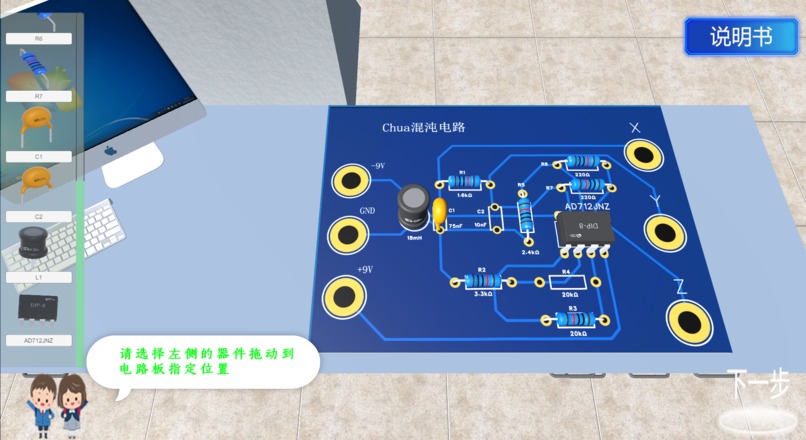
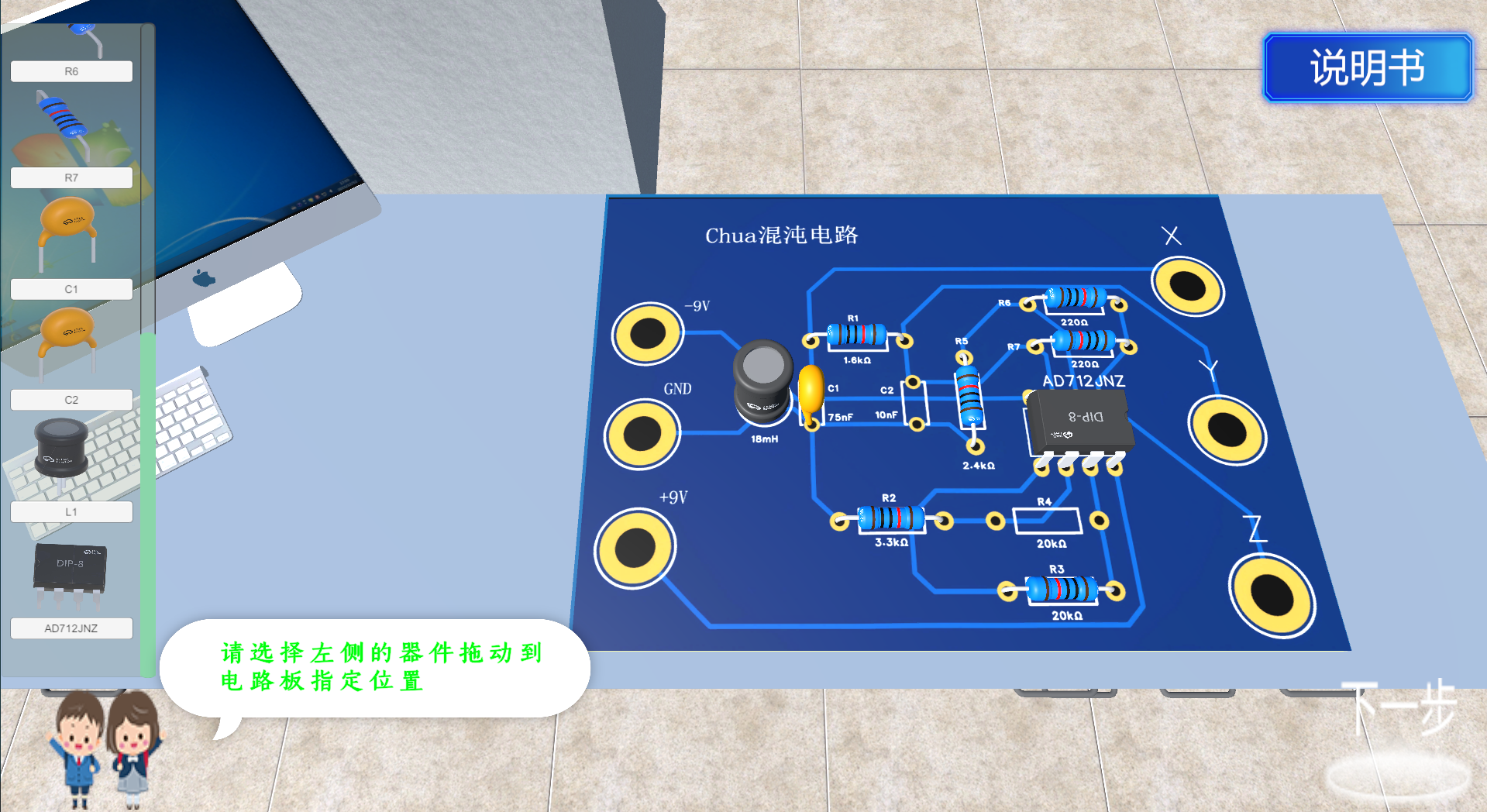
Circuit board after welding completion
-
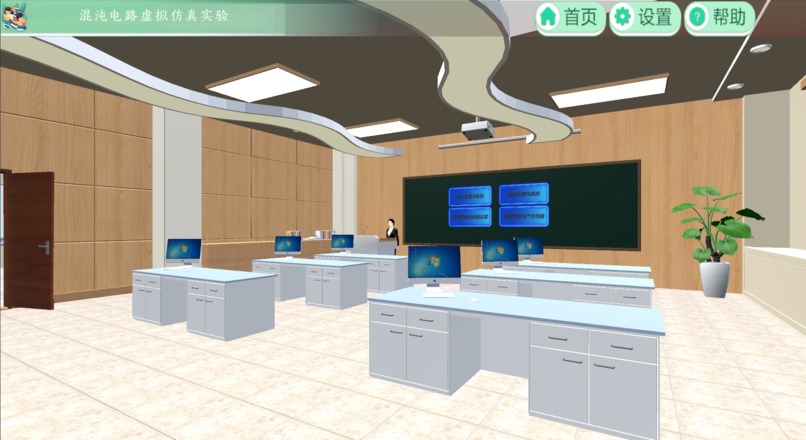
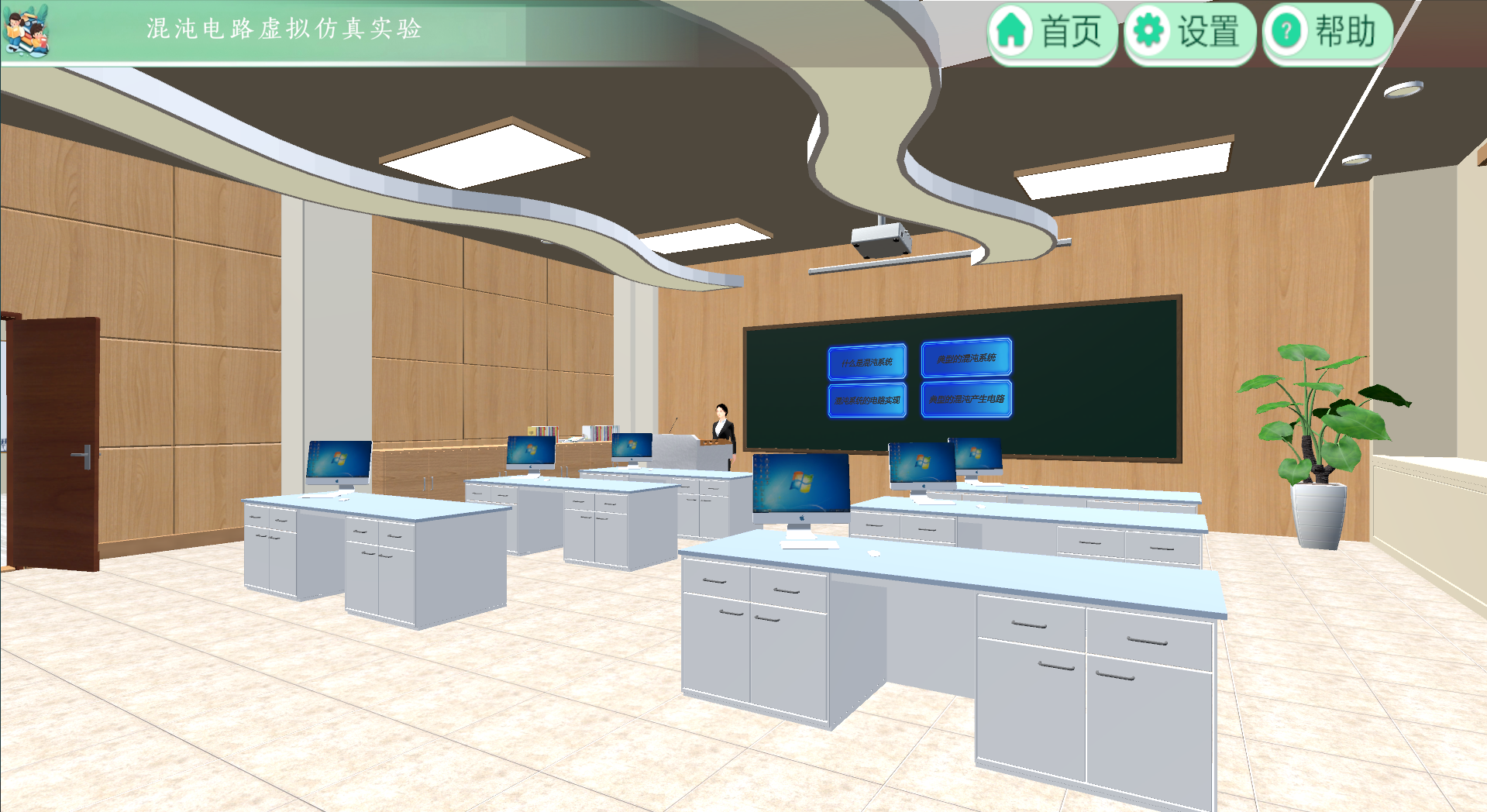
Scene Navigation: 360° movement and observation of the entire experimental environment via WASD keyboard controls
-
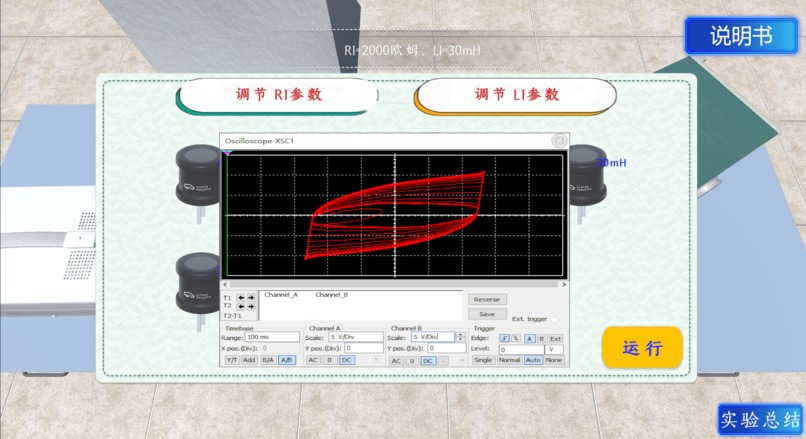
Change the parameters of components and observe different waveform results.
-
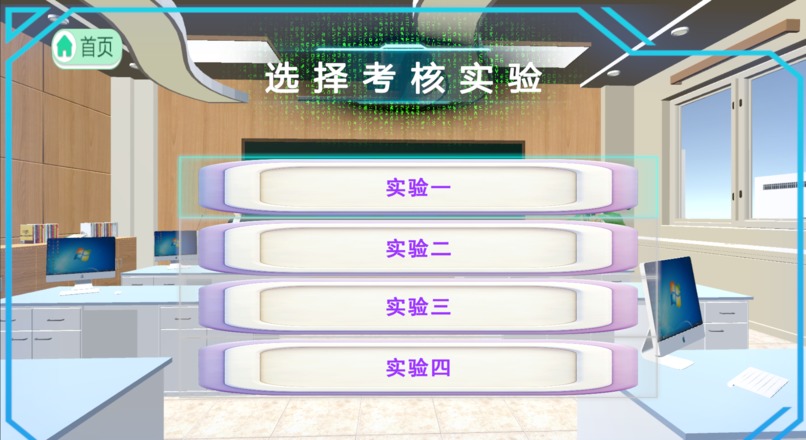
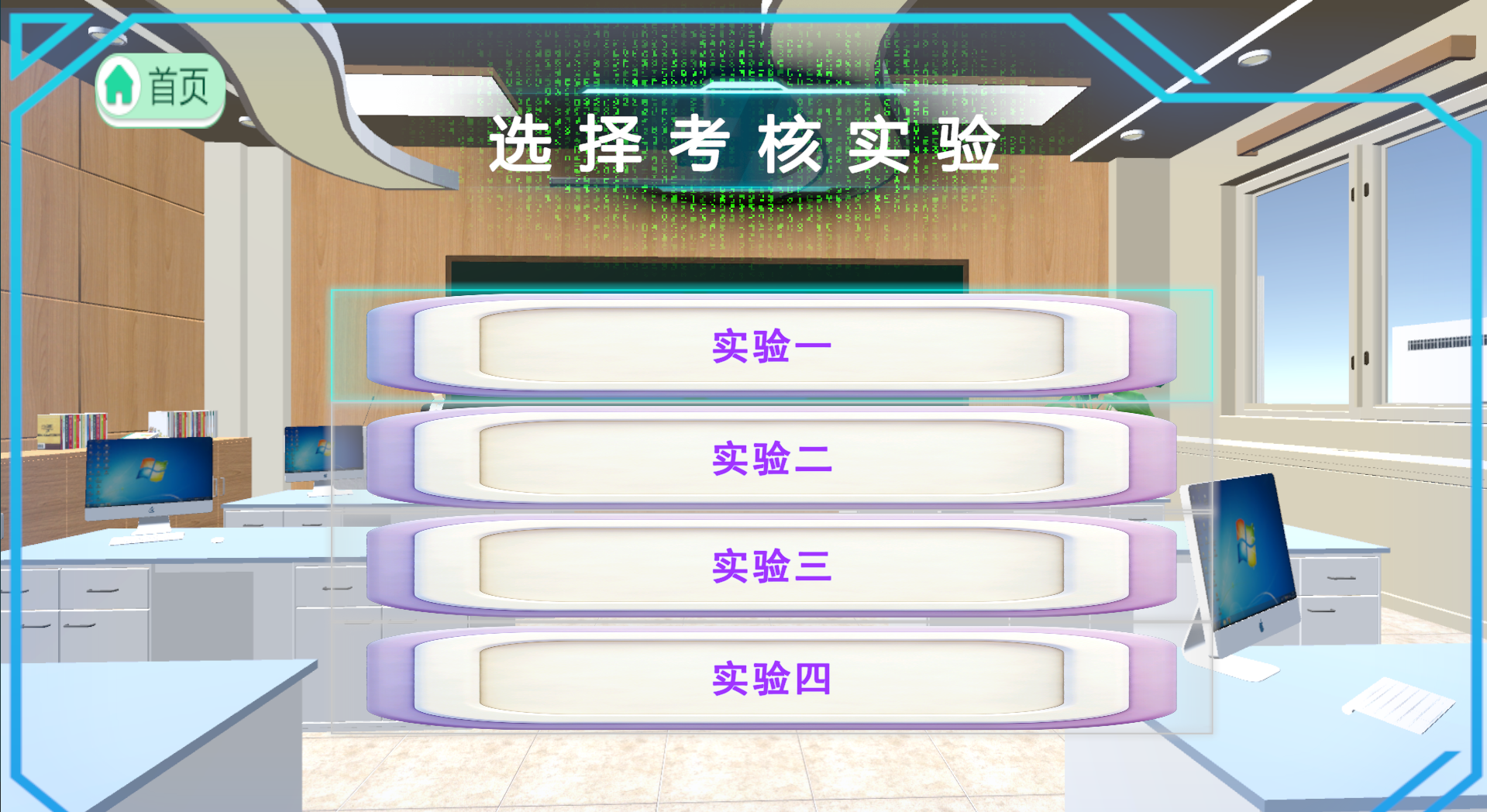
In assessment mode, select the corresponding experiment to take the test.

Inspiration
As an electronic engineering student, I was always fascinated by the counterintuitive beauty of chaos—how simple nonlinear circuits could generate unpredictable yet deterministic dynamics. But traditional physical labs came with unavoidable barriers: components burned out, circuit parameters drifted with temperature, and students could never pause, replay, or safely experiment with extreme configurations. I saw peers struggling to connect abstract math equations to real-world behavior, so I set out to build a tool that would make chaos theory accessible, safe, and visually intuitive for learners worldwide.
What it does
The Virtual Simulation Laboratory of Chaotic Circuit is a Unity3D-based interactive platform that lets users design, simulate, and analyze chaotic circuits in a fully immersive 3D environment. Students can drag-and-drop components, adjust parameters in real time, and instantly observe the resulting waveforms, phase portraits, and attractors on virtual oscilloscopes—no physical hardware required. It supports classic chaotic circuit simulations, with expandable modules for additional systems, bridging the gap between abstract theory and hands-on experimentation.
How we built it
We developed the project in three core phases using Unity3D as the main engine:
- Core Simulation Engine: Implemented a high-precision numerical solver in C# to replicate chaotic circuit behavior, separating the simulation thread from the main render thread to maintain both accuracy and smooth frame rates.
- 3D Interactive Lab: Built a fully functional virtual lab environment with workbenches, components, and measurement tools using 3ds Max for modeling and Unity’s UGUI for interactive controls. We added drag-and-drop assembly, wire connection logic, and real-time parameter adjustment.
- Visualization & Deployment: Developed dynamic 3D attractor rendering and oscilloscope screen simulation, then optimized the project for both PC and WebGL builds to ensure accessibility across devices.
Challenges we ran into
Performance vs. Accuracy: Balancing the high-precision calculations needed for education with Unity’s rendering performance was a major hurdle. We resolved this by optimizing core computation workflows and offloading simulation tasks to a background thread, cutting computational load by 40% while preserving accuracy. Connecting Math to Visuals: Students struggled to see how changing circuit parameters affected the resulting system behavior. We added color-coded visualizations, real-time parameter displays, and interactive highlights to make this relationship explicit. Safe Guided Learning: In physical labs, wrong wiring can damage hardware. We built a rule-based validation system that checks connections in real time and provides targeted feedback without breaking the simulation.
Accomplishments that we're proud of
Created a fully functional, cross-platform virtual lab that accurately reproduces chaotic circuit behavior. Developed an intuitive 3D interface that makes complex nonlinear dynamics accessible to students with no prior lab experience. Achieved high simulation accuracy validated through peer testing and instructor feedback, with results closely matching physical experiments. Made the lab accessible via WebGL, allowing students worldwide to use the tool without installation or expensive hardware.
What we learned
This project taught us far more than just Unity development or circuit simulation. We learned how to translate abstract mathematical concepts into engaging, interactive educational experiences, and how to balance technical rigor with user experience for learning tools. Most importantly, we learned that the best educational platforms don’t just show users results—they let them experiment, fail safely, and discover complex concepts on their own.
What's next for Virtual Simulation Laboratory of Chaotic Circuit
We plan to expand the lab’s capabilities in three key ways:
- Add support for more classic chaotic systems to enrich the learning module library.
- Integrate VR support for fully immersive lab sessions, allowing users to interact with the circuit and observe attractors in 3D space.
- Add multiplayer collaboration features, so students can work together to design and test circuits in the same virtual lab environment, regardless of their physical location.


Log in or sign up for Devpost to join the conversation.