-
-
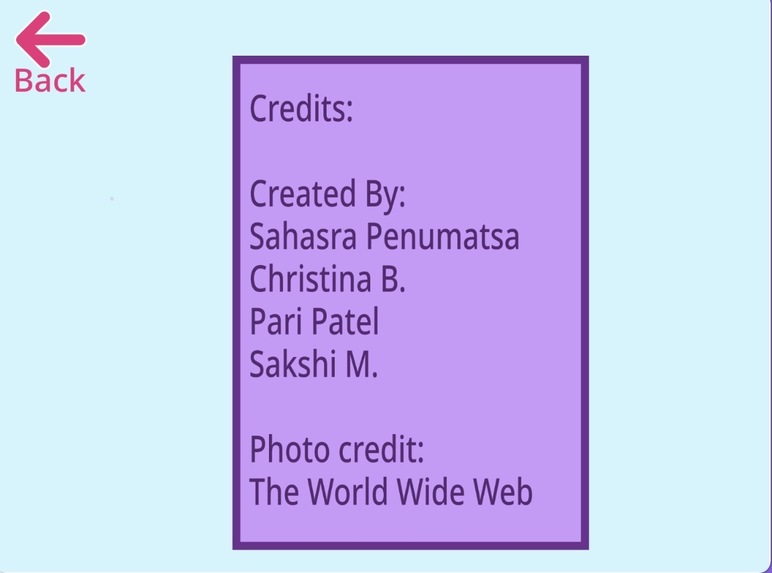
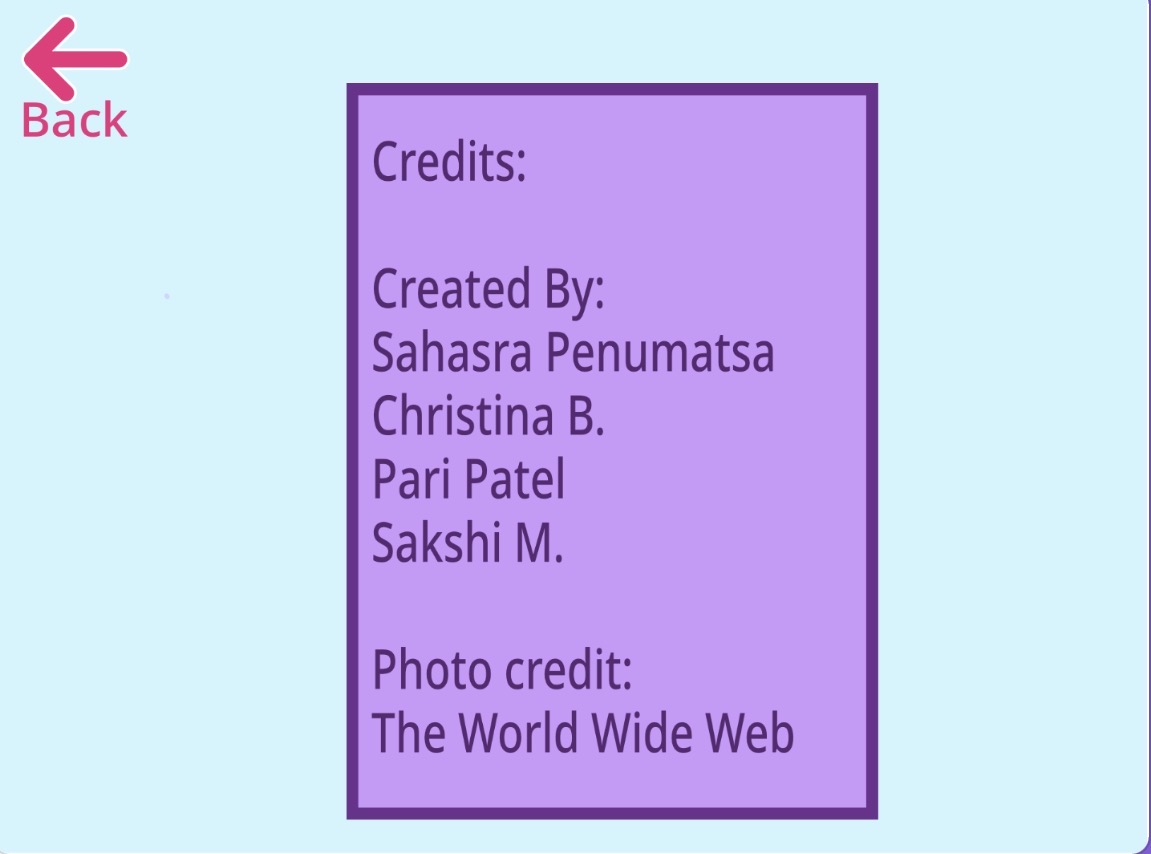
The page that holds all the credit information.
-
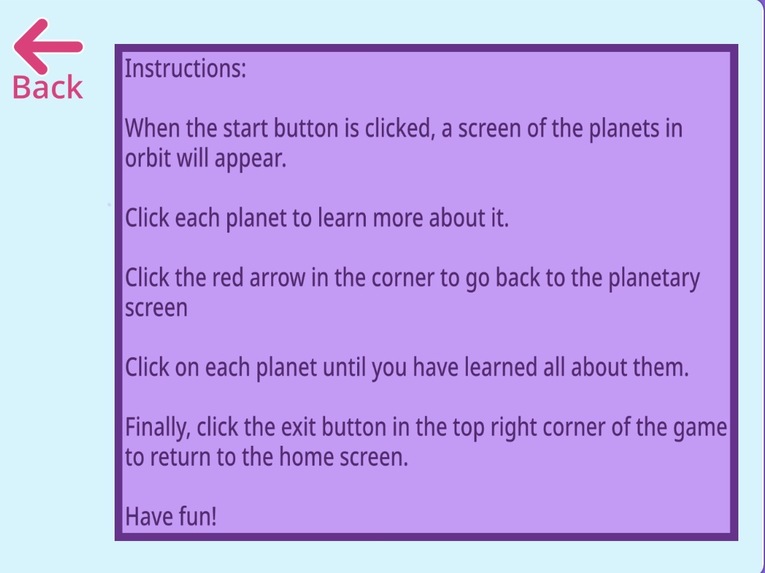
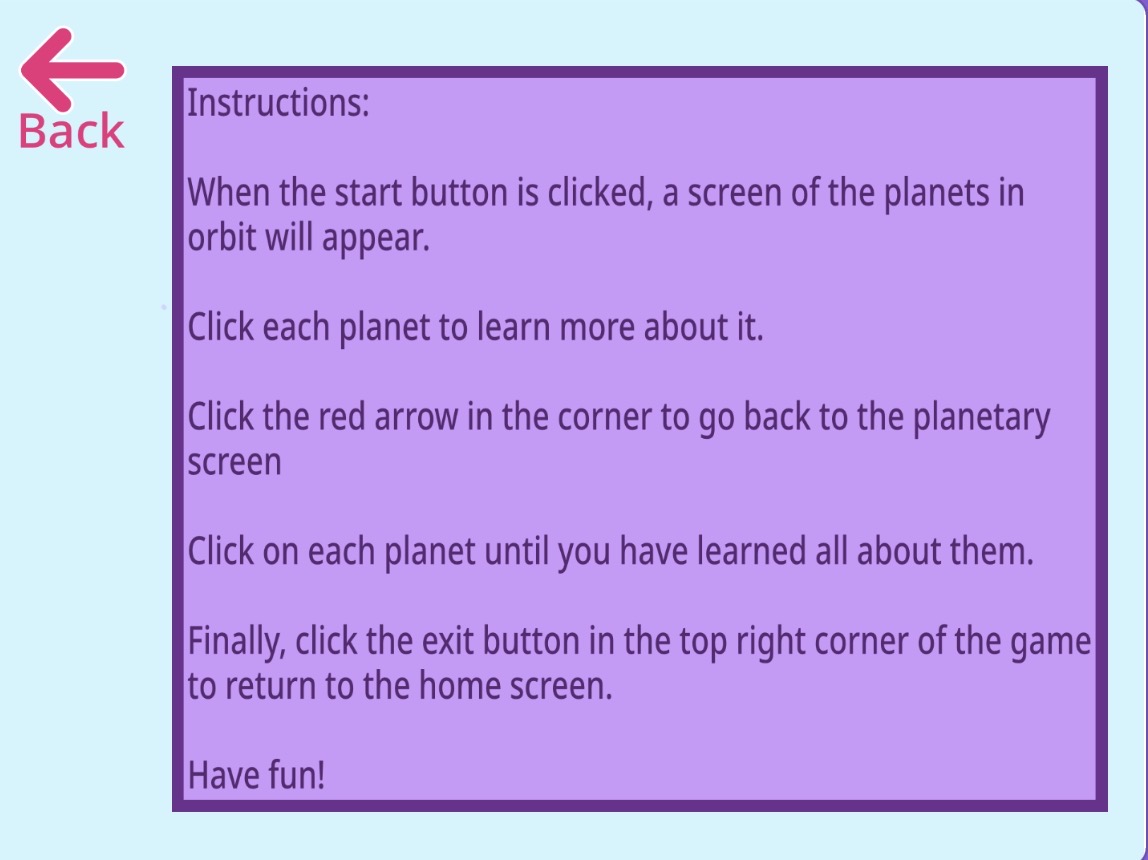
The page that has the instructions on how to play the game and how the mechanics work.
-
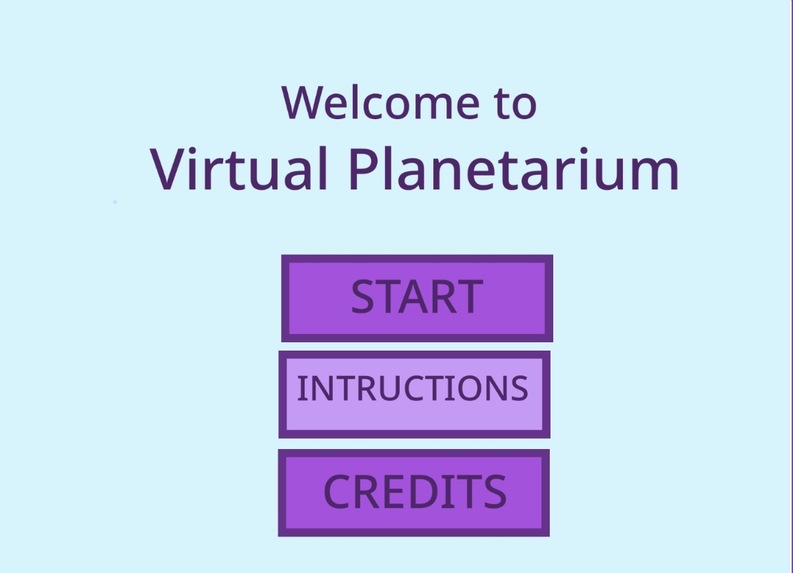
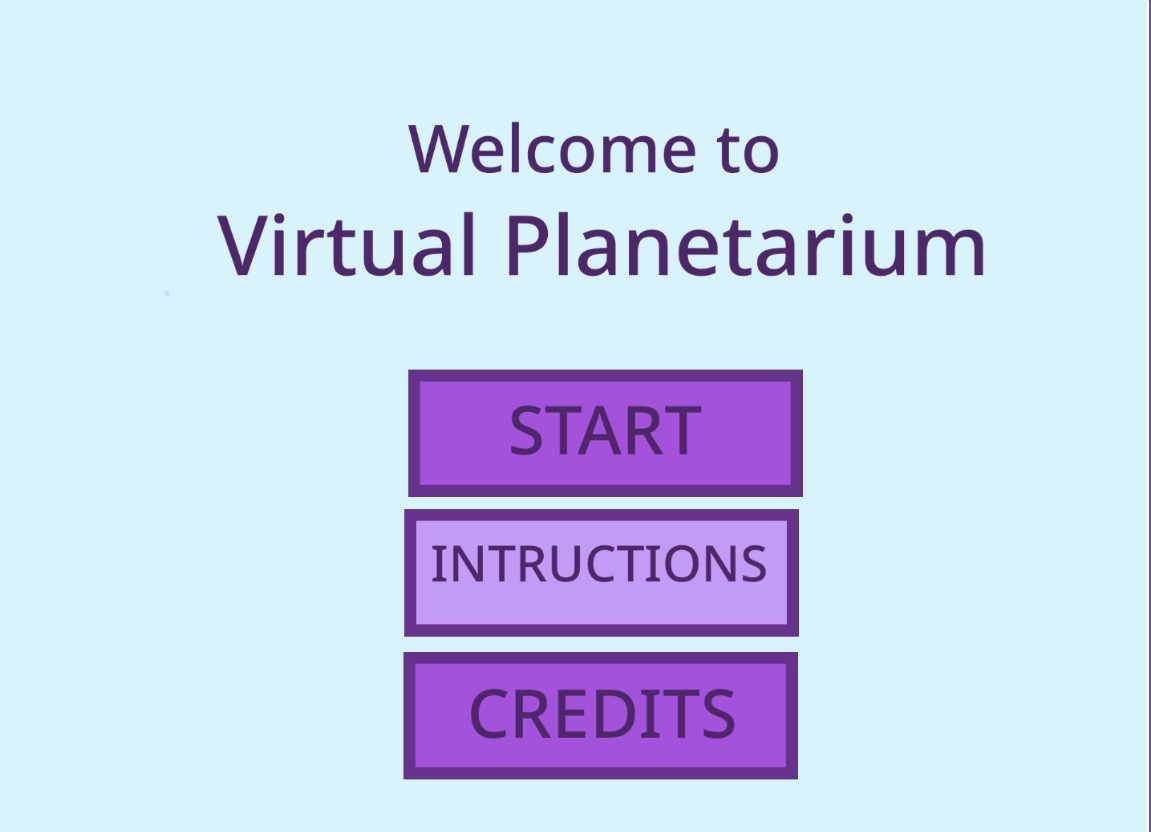
The title page that contains links to the credit, instructions, and main page
Inspiration:
We set out to create an engaging educational tool that helps children explore the wonders of our solar system. Our goal was to transform complex astronomical data into a fun, interactive experience for young learners. By making science accessible, we hope to spark a lifelong curiosity about the universe beyond our Earth.
What It Does:
This informational project allows users to journey through the planets in our orbit through a clean, interactive interface. Each planet features a dedicated section filled with clear descriptions and surprising fun facts to keep students engaged. It serves as a digital guide that simplifies space exploration while maintaining scientific accuracy.
How We Built It:
Our team worked in specialized roles to bring the project to life: Sakshi handled the technical coding while Pari developed the underlying logic. Christina designed all the visual elements to ensure an immersive look, and Sahasra researched the facts to ensure quality content. Together, we blended these distinct skills to create a cohesive and functional educational platform.
Challenges We Faced:
One of our biggest hurdles was the repetitive process of copying and pasting code while meticulously updating names for each planet. We had to be extremely careful with the logic governing each click to ensure the correct data appeared at the right time. Debugging these navigational transitions required patience and a sharp eye for detail to avoid technical glitches.
Accomplishments:
We are incredibly proud of the overall visual presentation and the organized structure of the final application. The way the graphics and information flow together creates a professional and polished user experience. Seeing our individual efforts merge into a functional, aesthetic project was the most rewarding part of the process.
What We Learned:
This project taught us the immense value of effective teamwork and clear communication during a technical build. We also discovered how to successfully integrate scientific data into a coding environment to create meaningful content. Ultimately, we learned that combining logic with creativity is the key to building successful educational software.
What’s Next:
Moving forward, we plan to expand the Virtual Planetarium into a broader series of science-related digital projects. We want to take the lessons we learned here and apply them to other fields, such as biology or physics, to help kids learn more. Our mission is to keep evolving this platform into a comprehensive virtual laboratory for students everywhere.
Built With
- scratch

Log in or sign up for Devpost to join the conversation.