-
-
App Logo
-
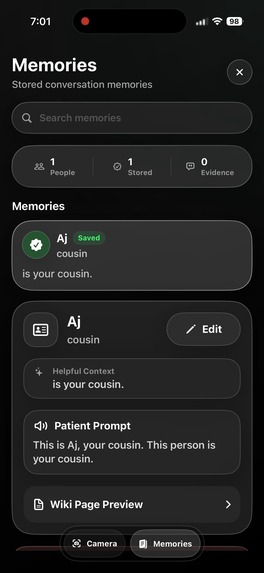
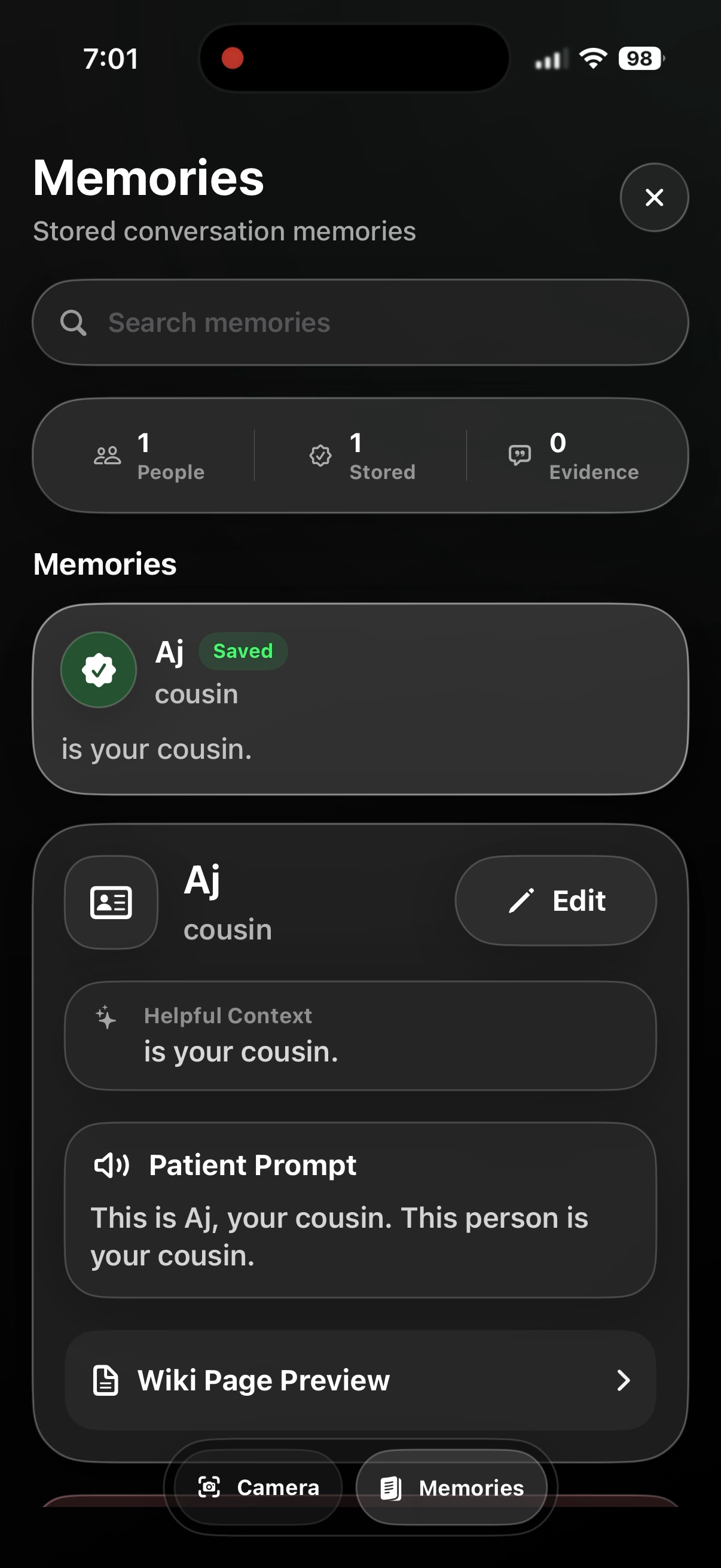
Memories page of the app, showing what was from the conversation
-
-
Inspiration
One of our team members had a grandfather in India living with dementia, and watching him struggle to recognize loved ones was deeply personal. We wanted to explore how AI—especially edge AI—could help people preserve meaningful connections, even in low-connectivity environments.
What it does
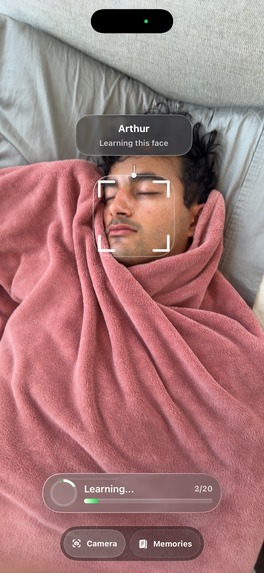
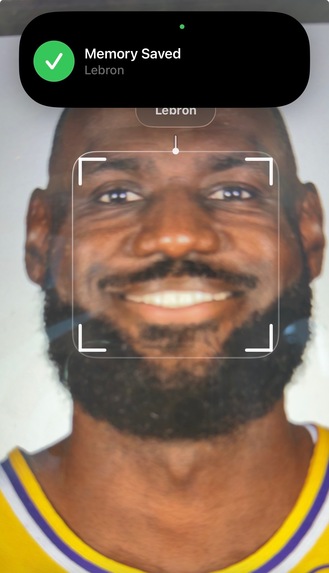
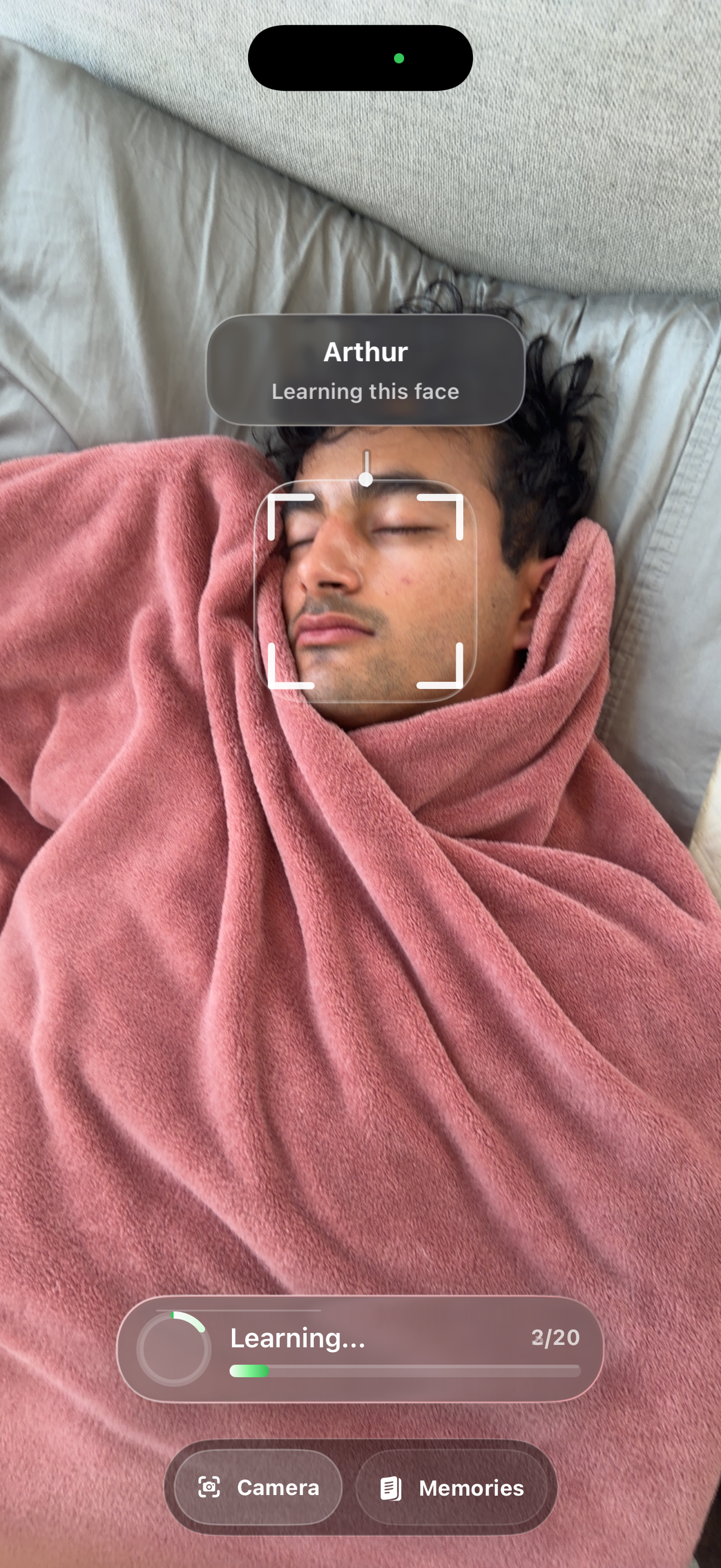
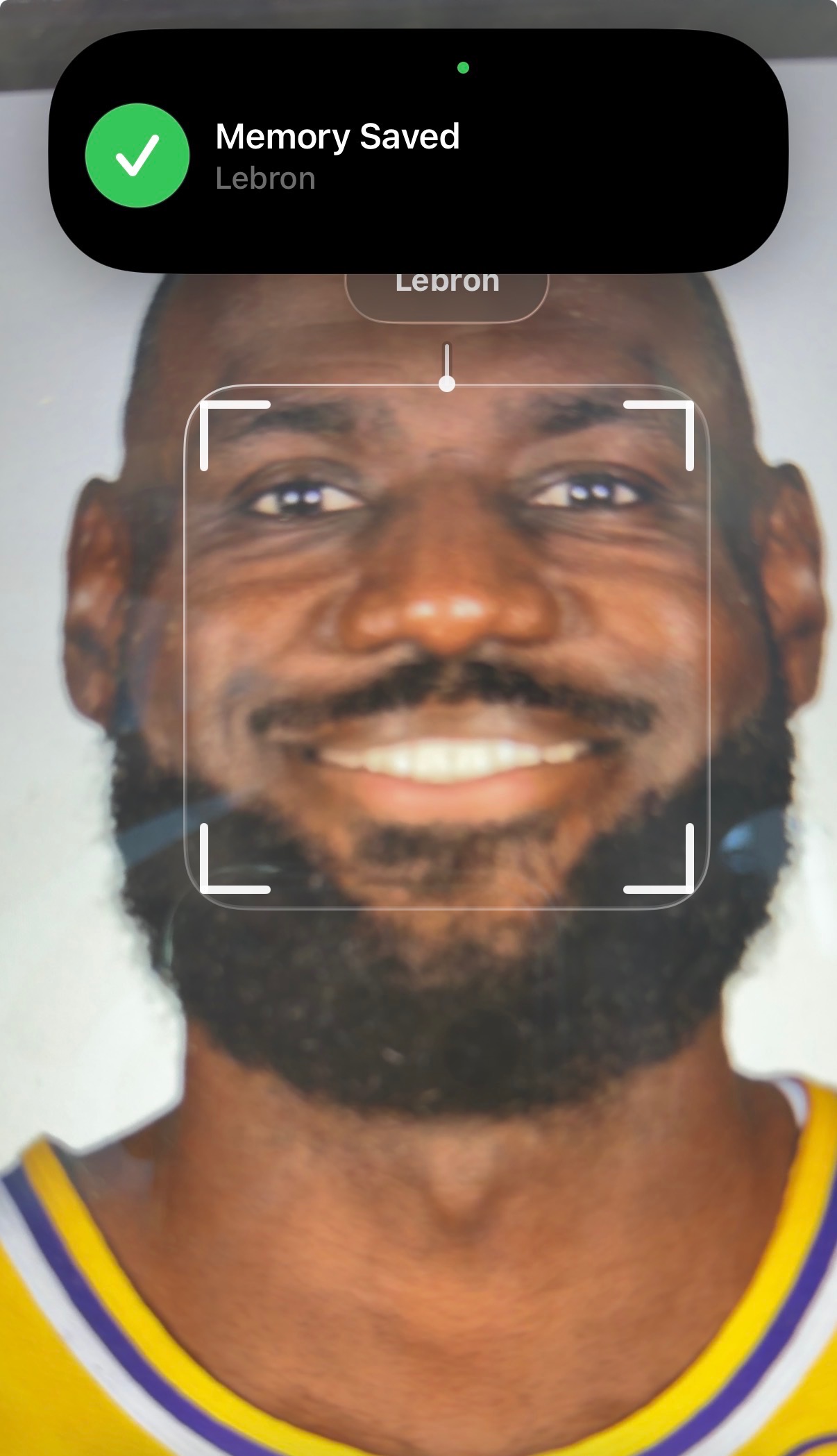
Virtual Memory is an iOS app that passively supports people with dementia by listening to natural conversations and identifying what information matters. Instead of requiring manual note-taking, it automatically summarizes key details, stores them in a personal “memory wiki,” and uses facial recognition to provide real-time context about the people they’re interacting with.
How we built it
We built Virtual Memory as a native iOS app using Xcode and Swift. Under the hood, we integrated on-device AI models from Zetic, leveraging their Melange SDK for speech summarization and facial recognition. Our focus on edge AI ensures the app works reliably even without consistent internet access.
Challenges we ran into
Getting LLMs to run efficiently on iOS devices was a major hurdle. We also struggled with streaming live speech into models for accurate summarization—context would sometimes degrade, leading to unreliable outputs. On top of that, designing a polished and intuitive iOS UI was a learning curve that required significant iteration and effort.
Accomplishments that we're proud of
We’re proud of delivering a fully functional and polished product that meaningfully addresses a real-world problem. The app feels smooth, intuitive, and genuinely helpful from a user experience standpoint, which was a major goal from the beginning.
What we learned
This was our first time building a full iOS application, so we gained a lot of hands-on experience with Swift and Apple’s development ecosystem. We also learned how to work with on-device AI models, design effective prompts, and integrate tools like the Zetic Melange SDK into a cohesive product.
What's next for Virtual Memory
We plan to integrate with Meta smart glasses to enable seamless input and output, reducing friction for users. We also want to expand beyond conversations—helping users track events, objects, and important life details so they can more easily recall and navigate their daily lives.


Log in or sign up for Devpost to join the conversation.