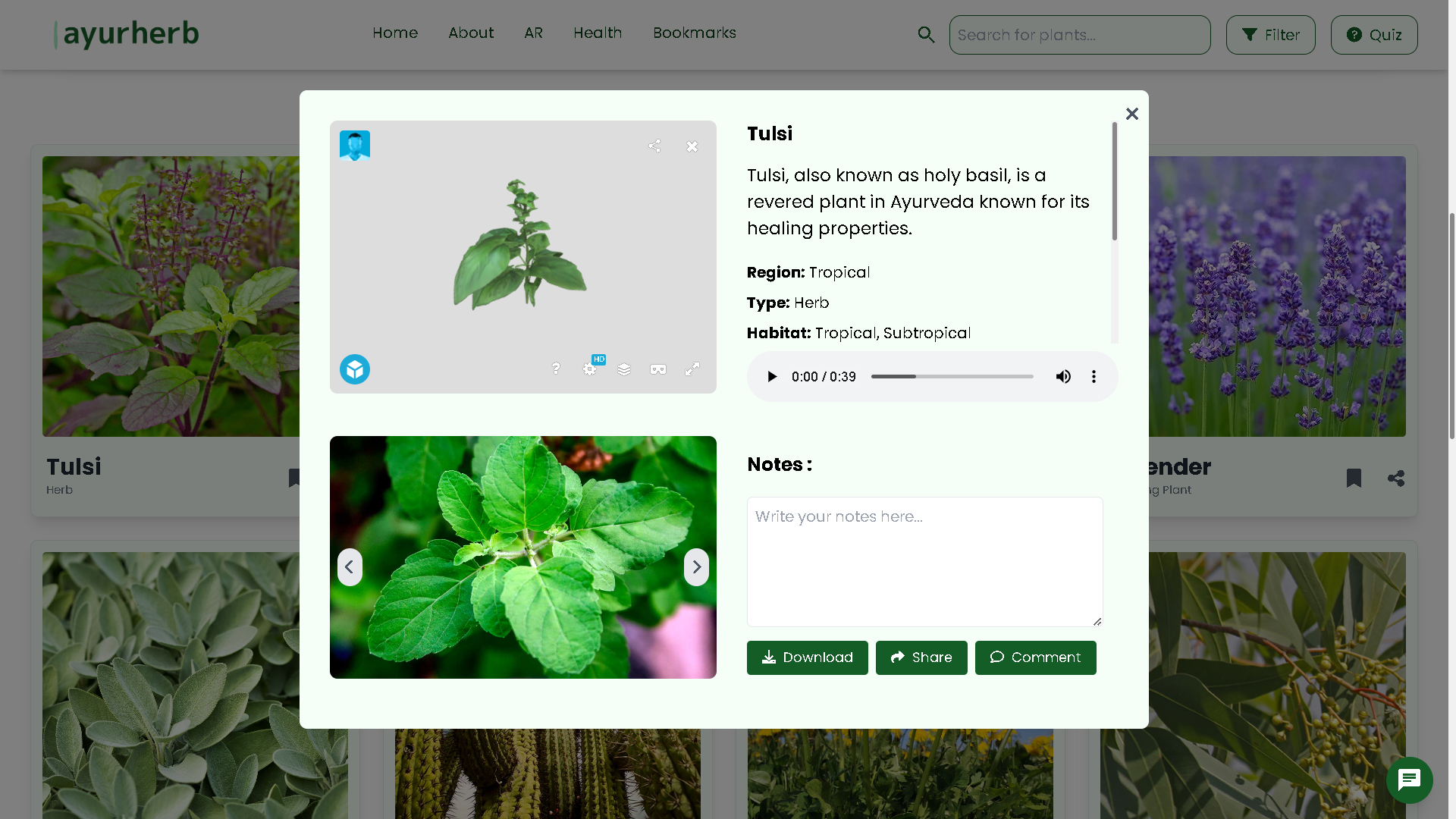
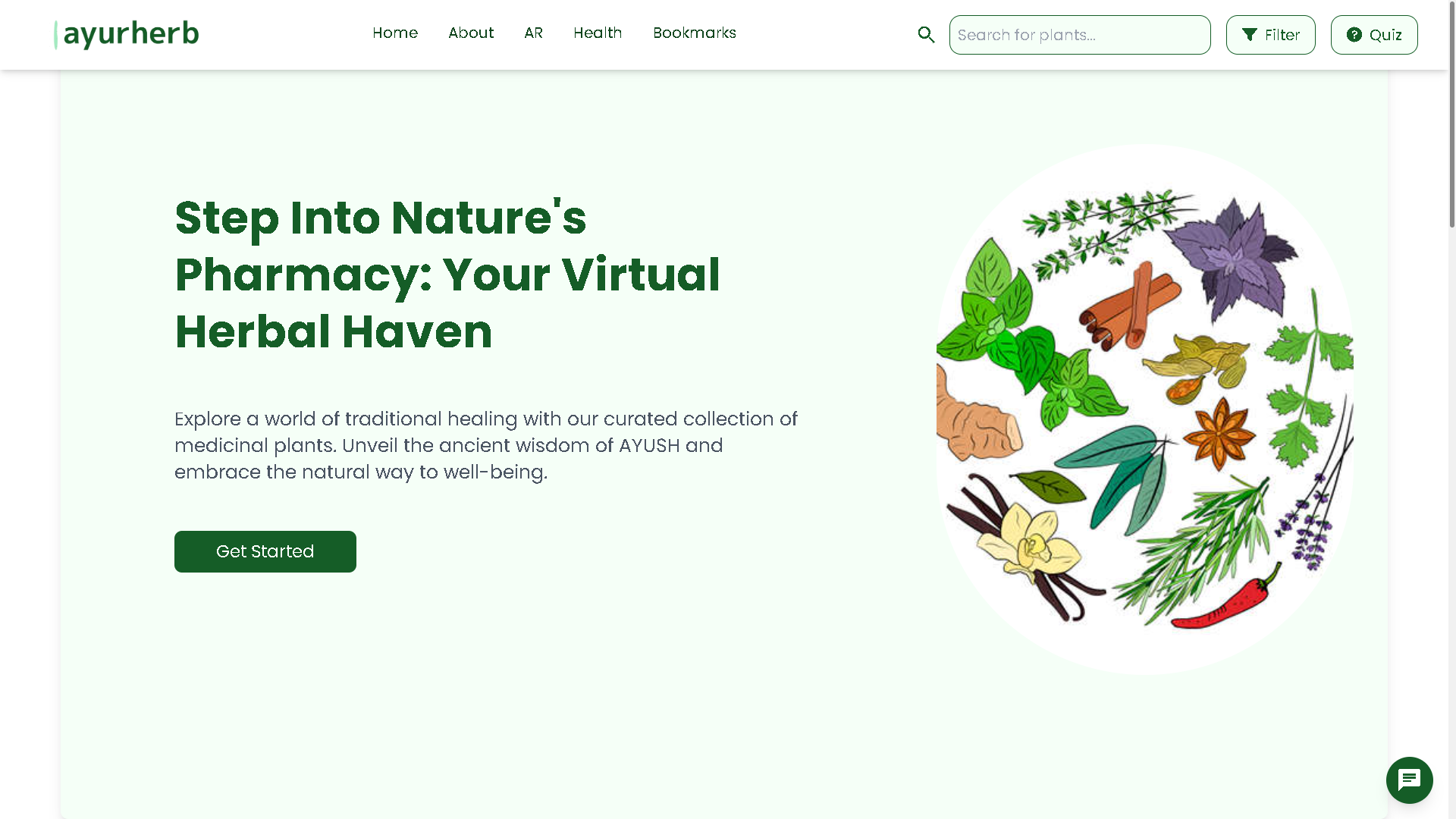
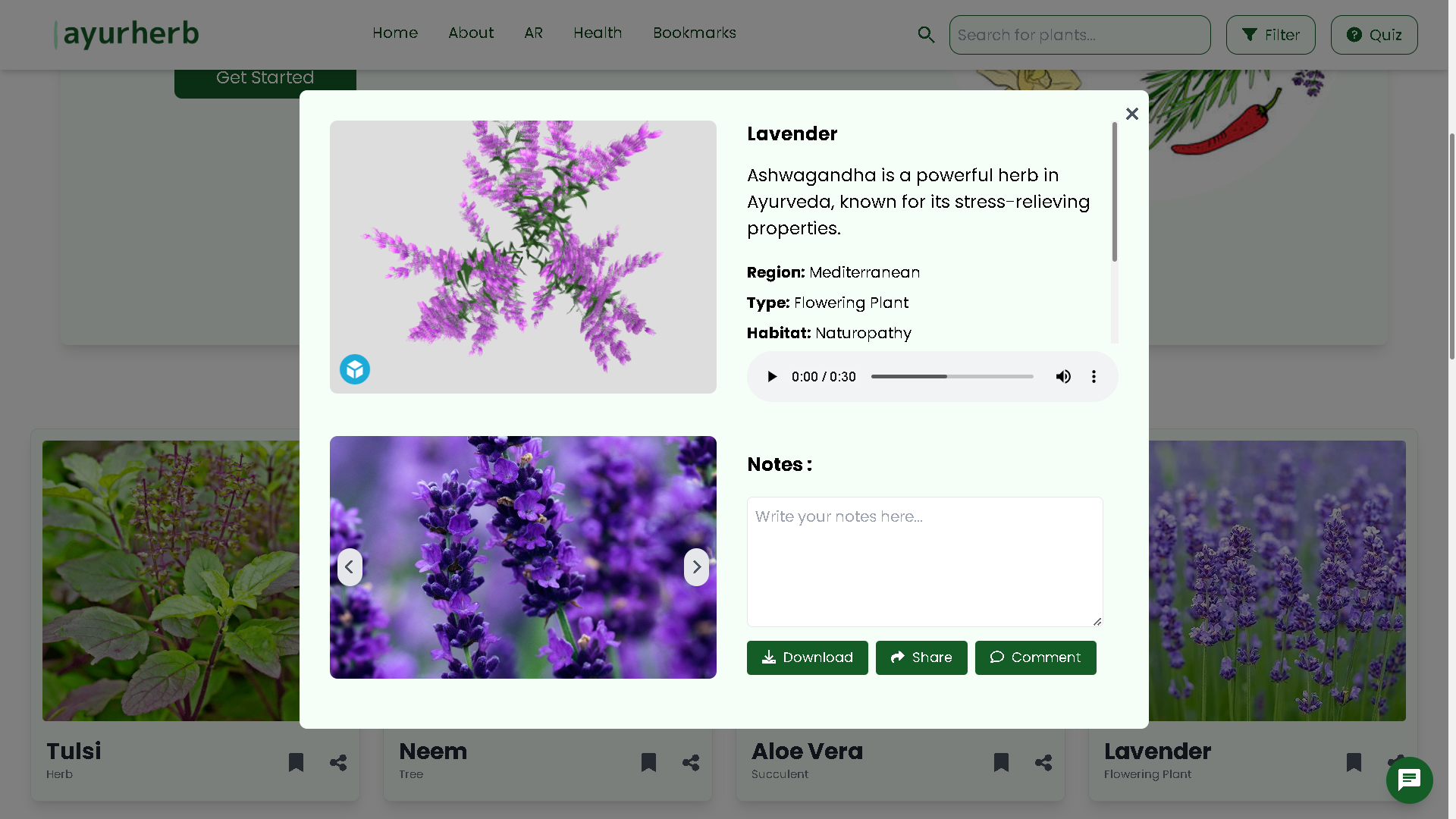
Deployment of a Virtual Herbal Garden Enriched with Interactive 3D Plant Models and Superior User Engagement Features, Designed to Work in Environments with Low Connectivity. The Virtual Herbal Garden is an innovative digital platform that bridges the accessibility gap by offering a virtual experience of exploring medicinal plants used in the AYUSH (Ayurveda, Yoga & Naturopathy, Unani, Siddha, and Homeopathy) systems.
This virtual herbal garden will feature realistic 3D models of medicinal plants, allowing users to rotate, zoom, and explore each plant from different angles. Comprehensive information, including botanical names, common names, habitats, medicinal uses, and cultivation methods, will be provided to enhance the learning experience. The platform will incorporate multimedia elements such as high-quality images, videos, and audio descriptions, as well as advanced search and filter options to help users easily locate plants based on specific criteria like medicinal use, region, or type. Additionally, guided virtual tours will highlight themes such as digestive health, immunity, and skin care.
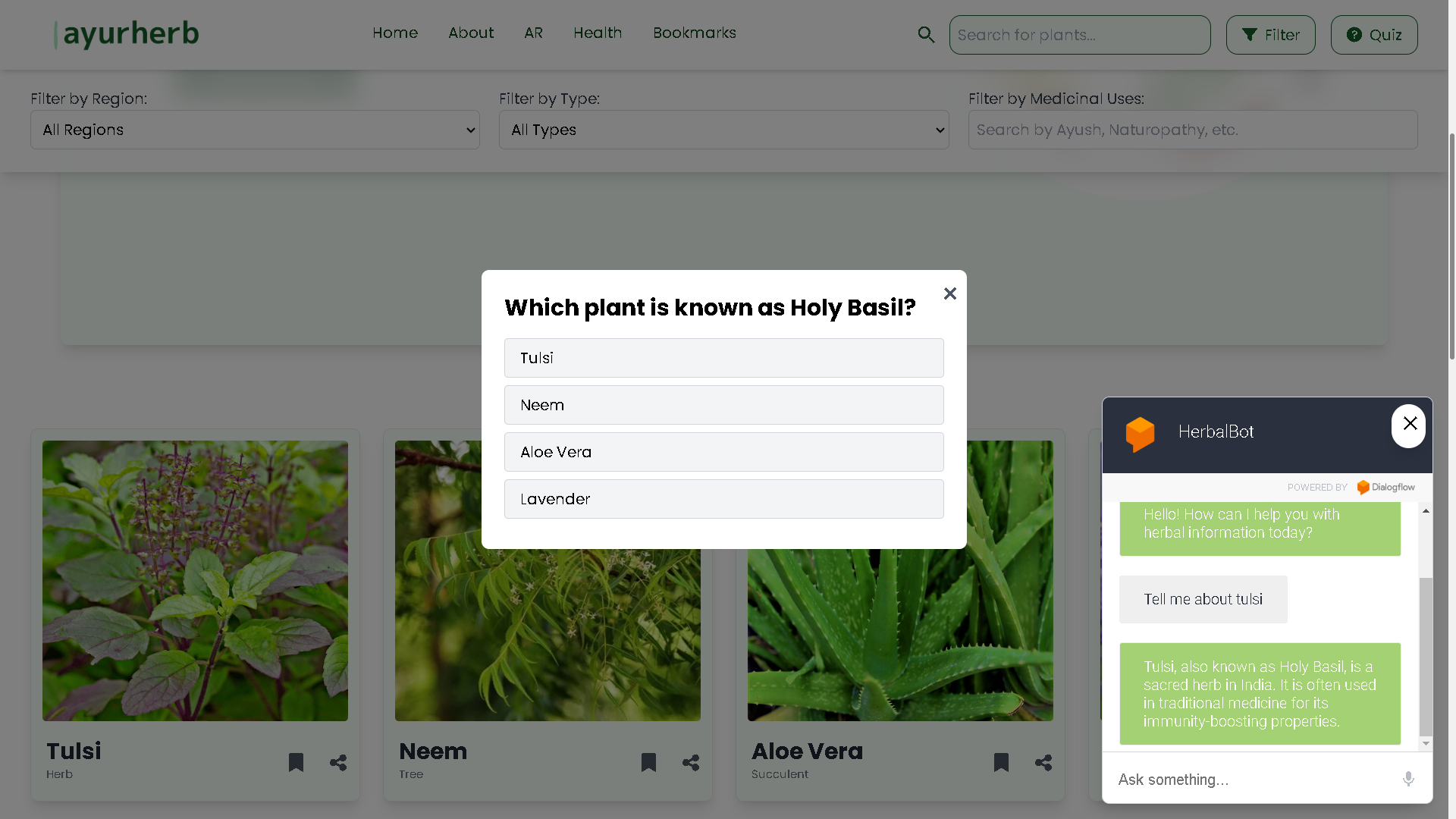
Unique features include an AI-powered herbal assistance chatbot to answer user queries, an augmented reality option to scan real-world plants and access detailed 3D models, and a notes section with bookmarking and sharing capabilities. Users can also engage with the community through a comment section to share experiences, remedies, and traditional knowledge. This project promotes health and wellness by providing in-depth knowledge of medicinal plants, empowering users to explore natural remedies and integrate traditional herbal practices into their daily lives.
Unique Value Propositions (UVP): • Immersive 3D Plant Exploration • Augmented Reality Integration Scan Plants, View 3D Models • AI-Powered Herbal Assistant • Streamline your bookmarks and notes with a shareable, downloadable solution • Real-time discussions via a comment section on herbal remedies.
FEASIBILITY AND VIABILITY Feasibility Analysis: • Availability of 3D modeling software (e.g., AR.js, Three.js) • Webdevelopment capabilities • Effective database and multimedia support for AR content
Potential Challenges: • Complexity of AR development and accurate plant modeling • Limited user devices supporting AR functionality • Connectivity issues in low-network areas
Overcoming Strategies: • Partner with experienced developers • Ensure cross-platform support and device optimization • Use offline AR catching and optimize content for low bandwidth environments


Log in or sign up for Devpost to join the conversation.