Inspiration
The inspiration behind the Virtual Health Record (VHR) project was rooted in the need to transform healthcare management. Faced with the shortcomings of traditional health record systems, we aspired to create a solution that enhances accessibility, efficiency, and security in patient-doctor interactions.
What it does
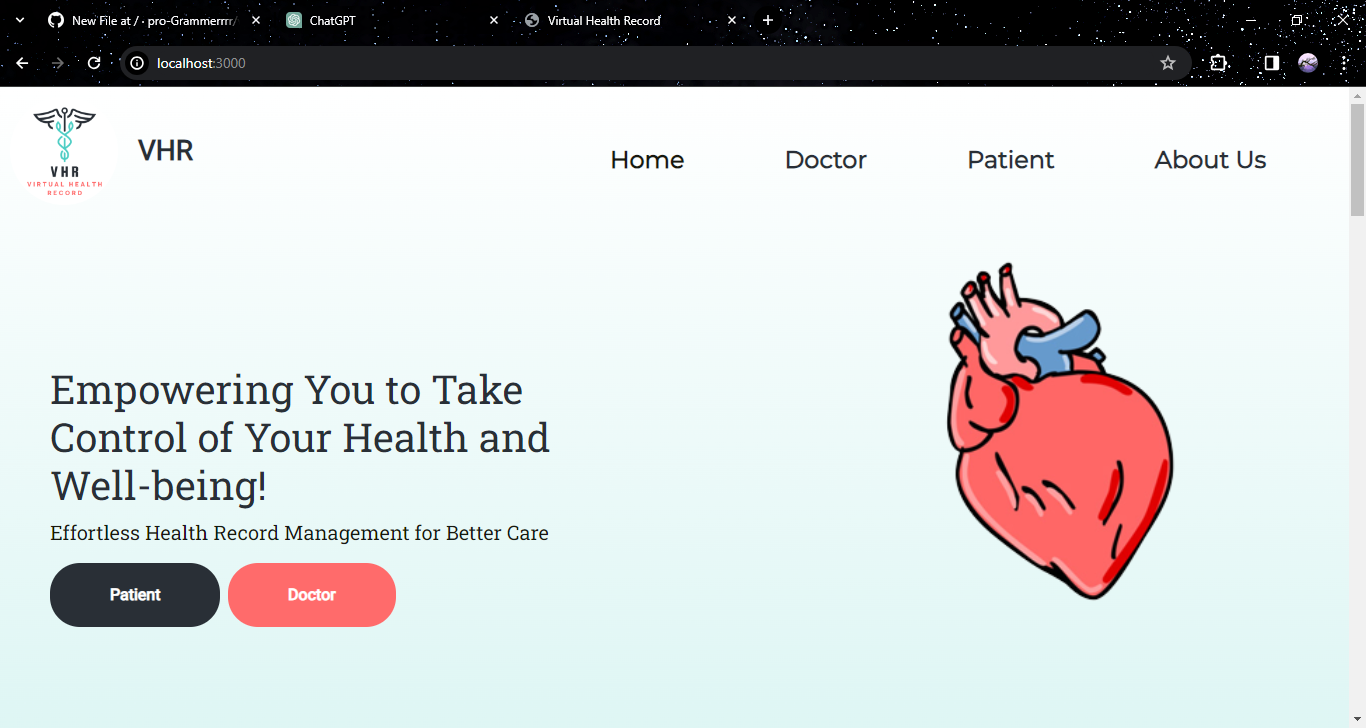
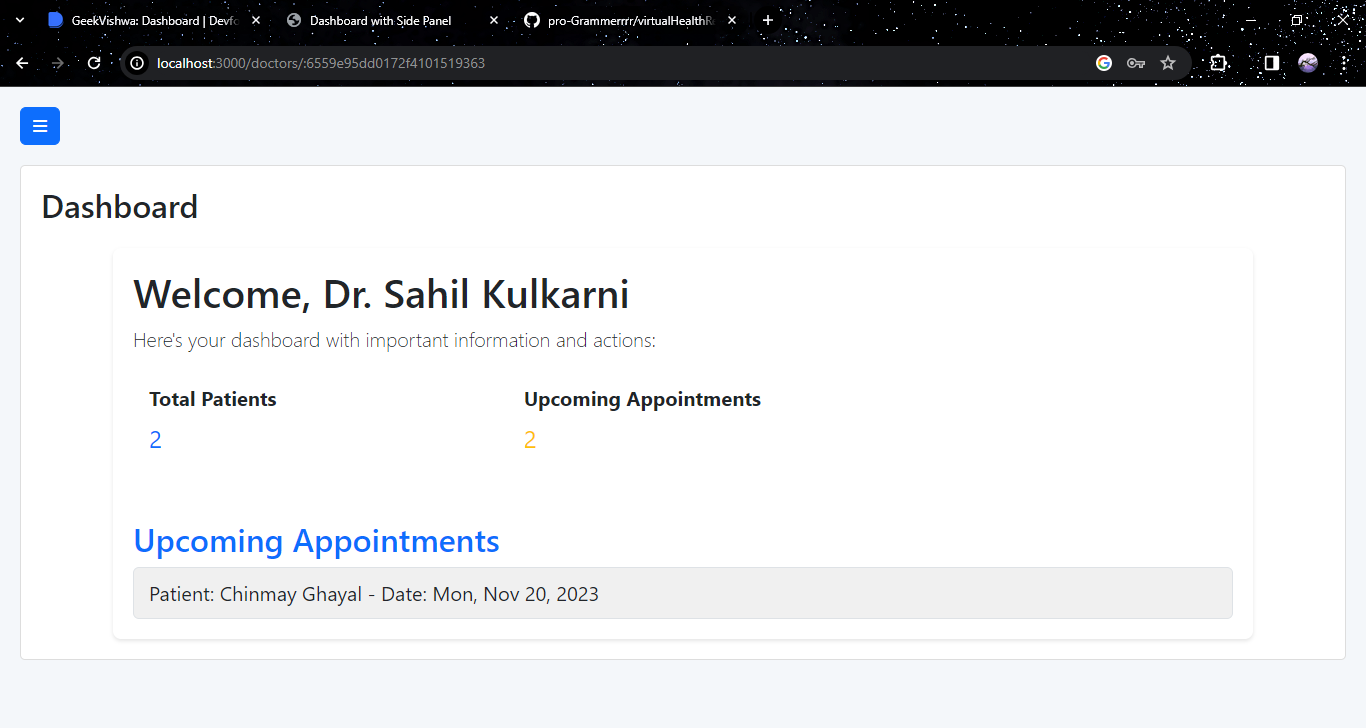
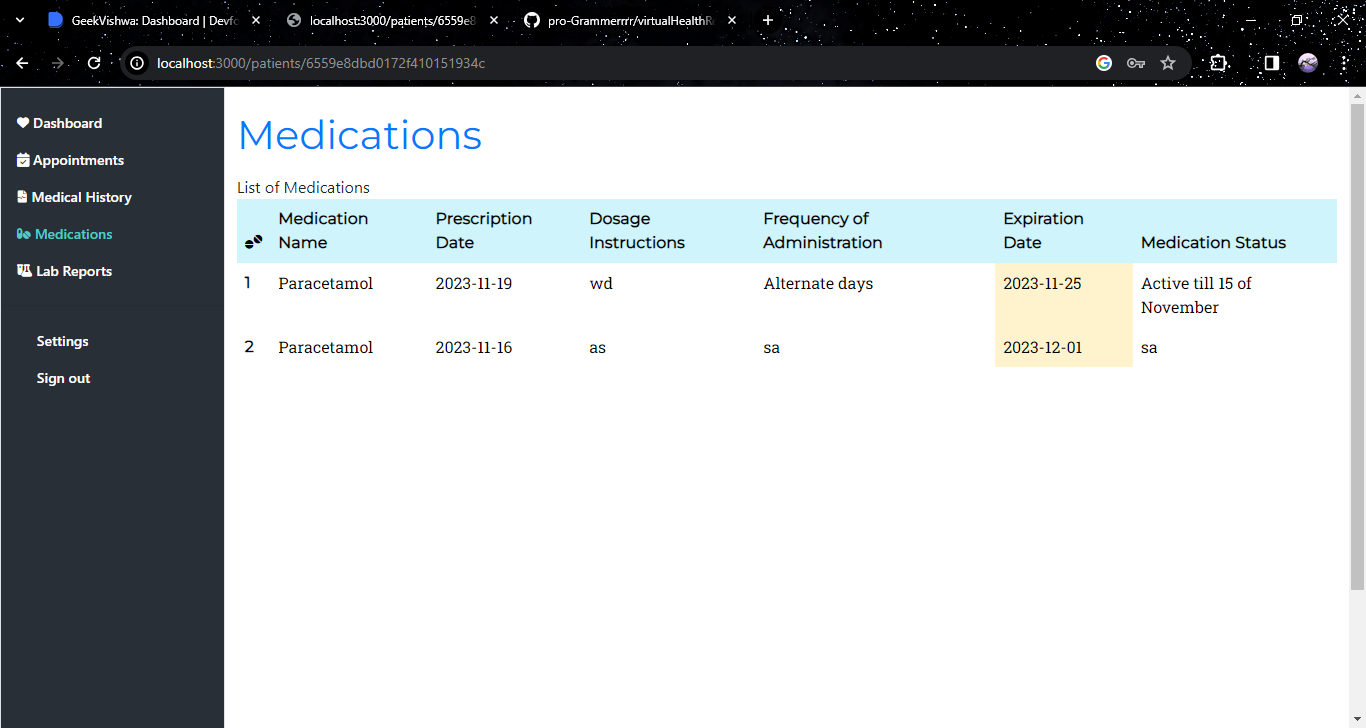
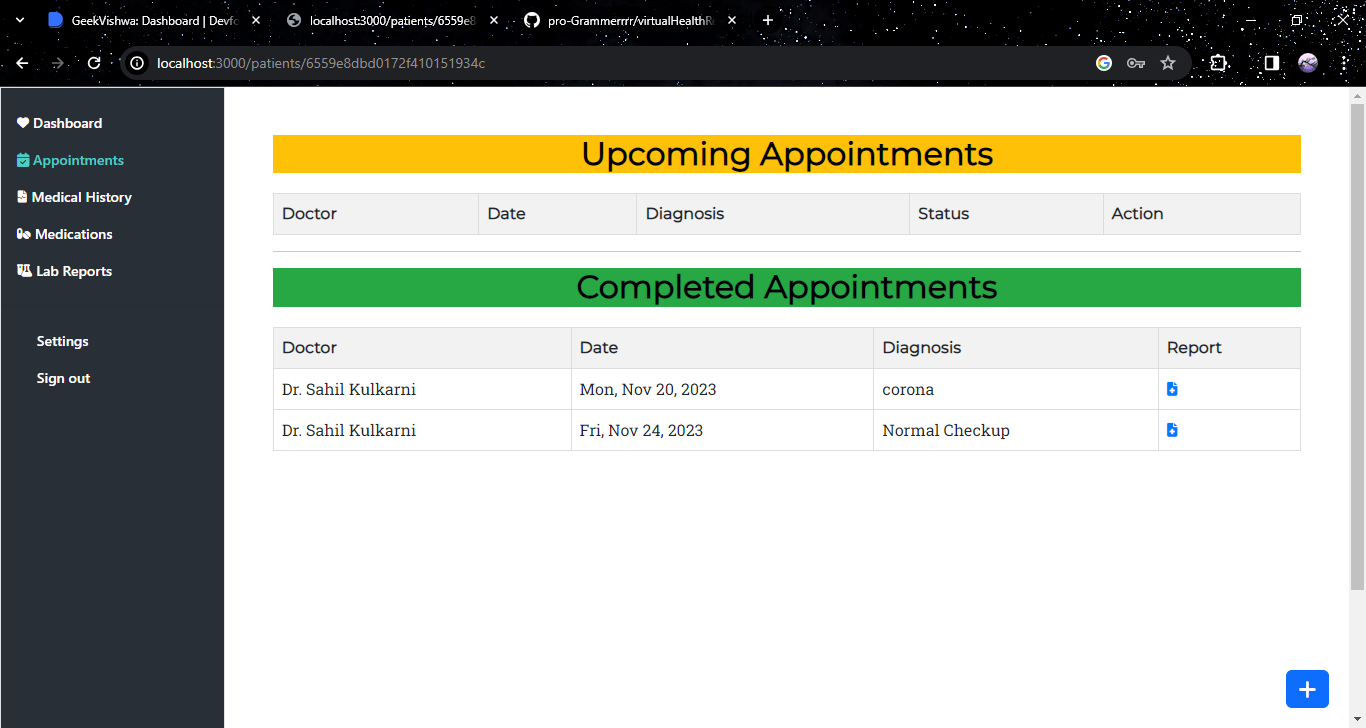
The Virtual Health Record serves as a comprehensive platform connecting patients and doctors. It facilitates efficient health management, secure appointment scheduling, and meticulous tracking of medical history. The system aims to simplify the healthcare experience for both patients and healthcare providers.
How we built it
The project was built using a technology stack centered around Node.js and Express.js for the server-side architecture. MongoDB, with the assistance of Mongoose, provided a scalable and flexible database for storing patient records. Passport.js ensured secure user authentication, while the front end was crafted using HTML, CSS, and JavaScript. This amalgamation of technologies resulted in a dynamic and user-friendly Virtual Health Record system.
Challenges we ran into
Building the Virtual Health Record system came with its set of challenges. Notably, integrating a seamless appointment scheduling feature between patients and doctors required meticulous debugging and refinement. The process demanded collaborative problem-solving, ultimately leading to the successful implementation of this critical feature.
Another significant challenge arose during the implementation of robust data encryption and decryption processes for handling sensitive patient information. Striking the right balance between data security and accessibility posed a delicate task, but through continuous research and iterative development, we achieved a robust solution.
Accomplishments that we're proud of
We take pride in overcoming the challenges presented during the development of the Virtual Health Record. Successfully implementing features like appointment scheduling and ensuring the security of sensitive patient data showcased our team's resilience and problem-solving capabilities.
What we learned
The journey of creating the Virtual Health Record provided valuable insights into healthcare data management, user authentication, and the complexities of integrating different technological components. The challenges encountered not only honed our technical skills but also emphasized the importance of teamwork and adaptability in the face of complex problems.
What's next for Virtual Health Record
Looking ahead, the Virtual Health Record project is poised for continuous improvement and expansion. Future developments may include enhanced features such as AI-driven health insights, real-time collaboration between healthcare professionals, and integrations with emerging technologies to further elevate the healthcare experience for users.

Log in or sign up for Devpost to join the conversation.