-
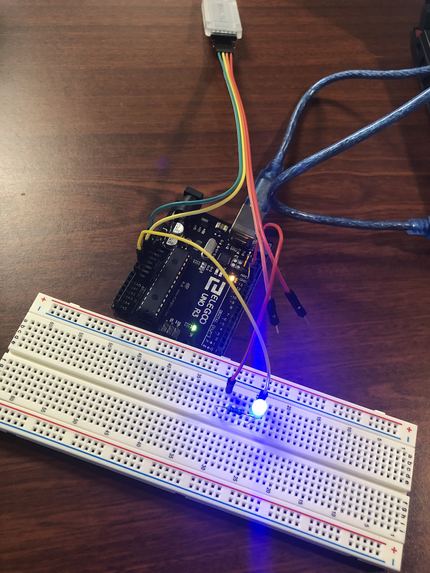
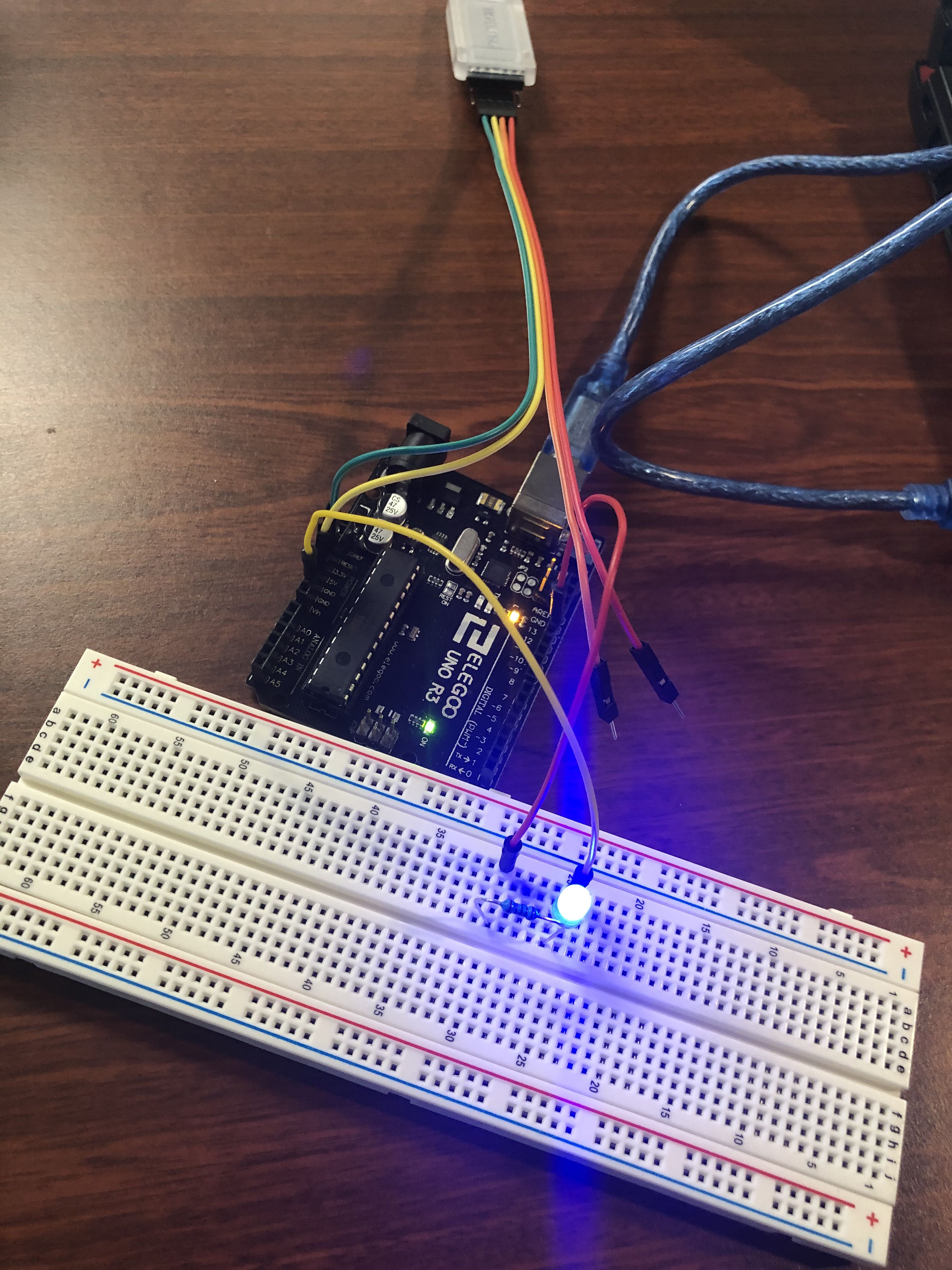
Bluetooth Module with LED to indicate that it is outside the allowed range.
-
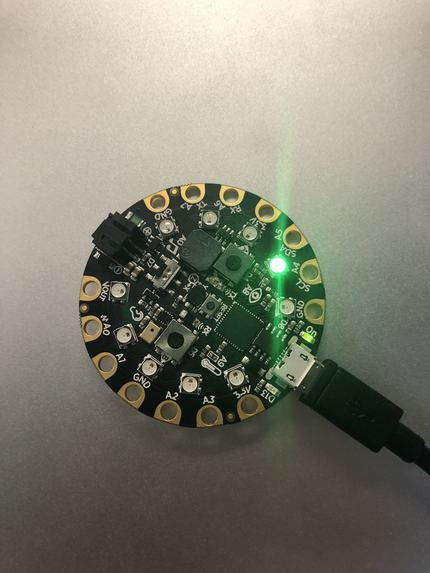
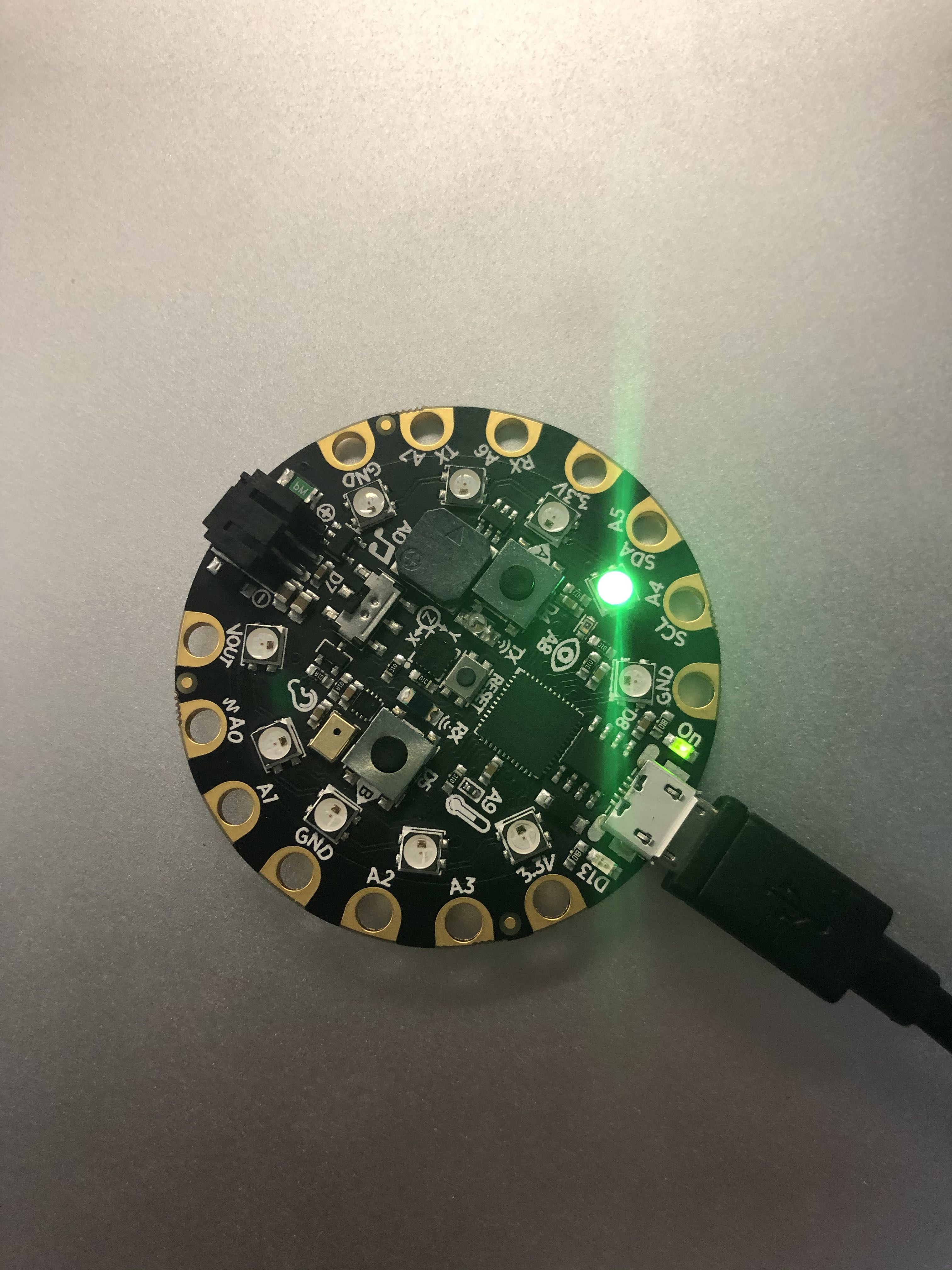
The Circuit Playground that is The Virtual Caretaker.
Inspiration:
Our team has two members with grandparents in elderly care homes. Both of them have had instances where they almost lost their lives due to caretakers at the facility not having enough information available to them. Even the most active caretaker can not ensure the well being of every patient inside a care home. As the number of elderly in care homes increases at a much higher rate than caretakers, the potential for a patient to have a lethal episode without the presence of a caretaker increases significantly. We want to prevent needless grief.
What it does:
The Virtual Caretaker is a passive monitoring system that provides caretakers at an facility the information necessary to catch any deterioration in health and step in to fix it. The Virtual Caretaker passively monitors four variables and forwards the information to facility caretakers. It measures the patient's body temperature and notifies caretakers if the patient's temperature rises or falls outside of a healthy range. Its monitors the patient's heartbeat and notifies caretakers if the patient's heartbeat does anything abnormal. It uses a built in Bluetooth module and a wall mounted Bluetooth receiver to track indoor location of the patient, and notifies caretakers if the patient goes somewhere dangerous. If there is an acceleration in a downward direction, it will notify caretakers of a potential fall. Alongside of sending data to a server, there is a physical alarm that goes off any time the Virtual Caretaker notices any health issue with the patient.
How we built it:
We used a piece of hardware called "Circuit Playground" to monitor the temperature, heartbeat, and free fall (potential fall). We used an Arduino connected to an HC - 05 Bluetooth module and a micro controller to monitor the indoor location. We worked together to write four separate sketches, one for each implementation, and then combined them all into one file.
Challenges we ran into:
Throughout this process there were many challenges that we ran into. One challenge was that nobody on the team has ever used a circuit playground board before. It had all the required sensors in order to complete our project such as a temperature sensor, a light sensor, a pulse reader, and a free fall system. We did a lot of research and coding, and worked to over come our lack of knowledge. Another challenge we ran into was that the HC - 05 Bluetooth module that we had used low frequency ble and we all had iPhone. After more research and attempting to use Android Emulators, we borrowed an Android with a RSSI monitor and succeeded in getting everything to work.
Accomplishments that we are proud of:
Some accomplishments that we are proud of is being able to work with complex code and hardware. We had no idea what to expect since this our first hackathon. We are very proud of how we tackled this problem. We worked together as a team, doing research, and using critical analysis to complete our project.
What we learned:
Twenty four hours is a lot of time to spend with four people. In all seriousness, we came as a group of four friends who had never participated in a hackathon, and had very limited experience in Arduino. We did a lot of research and learned a lot about Arduino code. We learned about pins and ports and some little hardware tips and tricks. We learned way more than we wanted to about Bluetooth, and why having four people all with iPhone is not good.
What's next for The Virtual Caretaker:
We need to improve our wristband from a 3D printed brick to something flexible and wearable. We need to fine tune our code to be variable with each individual person who may wear the device. We need to make the system as a whole smaller so that it can fit on anyone's wrist. What we are most excited for, is talking to our network in the healthcare system and spreading The Virtual Caretaker to them.
Built With
- arduino
- bluetooth-module
- circuit-playground

Log in or sign up for Devpost to join the conversation.