Project Story for Mosaic Virtual Assistant

Inspiration
Our primary inspiration for Mosaic was the incredible potential of the Nylas API. We were captivated by how Nylas provides a unified layer for emails, calendars, and contacts. We aimed to build an assistant that could supercharge the Nylas API with advanced AI technologies like natural language processing, image generation, and speech-to-text recognition to make people's lives easier—whether they are busy professionals, entrepreneurs, or anyone in need of digital organization.
What it does
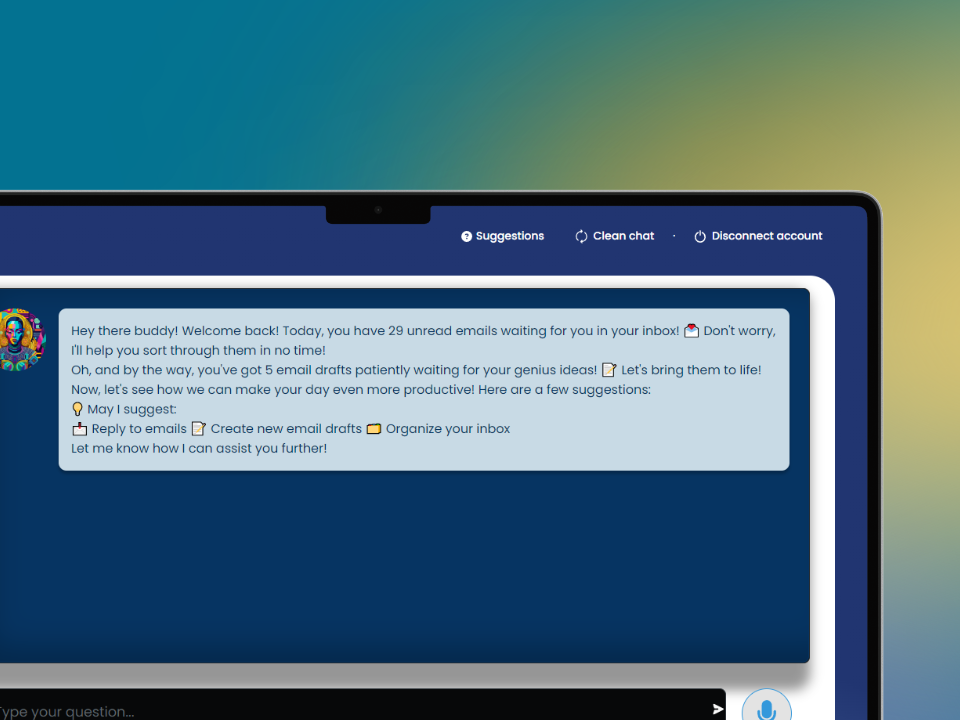
Mosaic is an AI-powered virtual assistant that goes beyond the typical features. It fully leverages the capabilities of the Nylas API, Langchain, and OpenAI's GPT-4 to offer you an unparalleled experience in managing your digital communications. Alongside intelligent email categorization, calendar management, and contact organization, Mosaic also provides image generation and speech-to-text recognition functionalities. These features make Mosaic not just an assistant but a comprehensive tool that integrates deeply with Nylas to make your life easier.
How we built it
The heart of Mosaic lies in its seamless integration with the Nylas API, which is central to all its functionalities:
- Backend (Node.js): Developed specifically around the Nylas API, this backend fetches and manipulates email, calendar, and contact data.
- Backend (Python): Houses the Langchain Framework and connects to OpenAI's API, adding layers of intelligence for natural language processing, image generation, and speech-to-text recognition.
- Frontend (React): Crafted to provide an intuitive interface, making the Nylas-driven features easily accessible.
- Nginx Proxy: Manages web traffic, directing it to the appropriate services.
We orchestrated these components using Docker Compose for smooth interoperability.
Challenges we ran into
- Nylas API Integration: Ensuring a flawless integration with Nylas was both challenging and rewarding.
- Natural Language & Multimedia Processing: Achieving seamless interaction between Nylas and GPT-4 for natural language queries, image generation, and speech recognition.
- Security: Implementing secure access to sensitive email and calendar data via Nylas.
- User Experience: Designing an interface that makes complex Nylas functionalities simple to use.
Accomplishments that we're proud of
- Nylas-Centric Design: Successfully building an application centered around enhancing Nylas API capabilities.
- Multimedia Capabilities: Incorporating image generation and speech-to-text recognition to offer a richer user experience.
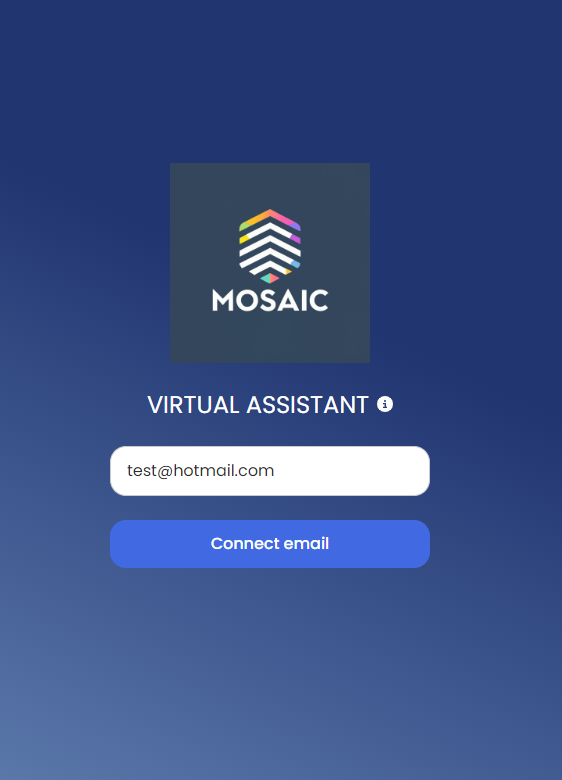
- User Experience: Creating a user-friendly, intuitive interface.
- Video Tutorial: Generating a comprehensive guide to help users navigate through the Nylas-powered features of Mosaic.
What we learned
- Mastering the intricacies and full potential of the Nylas API.
- Achieving seamless integration between different advanced technologies, including multimedia processing.
- Creating a secure and scalable architecture around Nylas functionalities.
What's next for Mosaic Virtual Assistant
- Nylas Memory: Introduce a feature to remember user preferences and activities through Nylas.
- Multi-language Support: Expand Nylas API capabilities to a wider, global audience.
- Mobile App: Bring the power of Nylas to mobile platforms.
- Further Nylas Integrations: Extend functionalities by integrating with other services compatible with Nylas, like Slack and Microsoft Teams.
PS: There's a jingle song AI generated as a bonus track
Built With
- docker
- langchain
- node.js
- nylas
- openai
- python
- react
- speech-to-text
- websockets


Log in or sign up for Devpost to join the conversation.