Inspiration
Engineering students often struggle when a circuit doesn't work and no teacher is immediately available. We wanted to recreate that “lab partner” experience digitally so students can experiment, make mistakes, and understand them instead of simply following instructions.
What it does
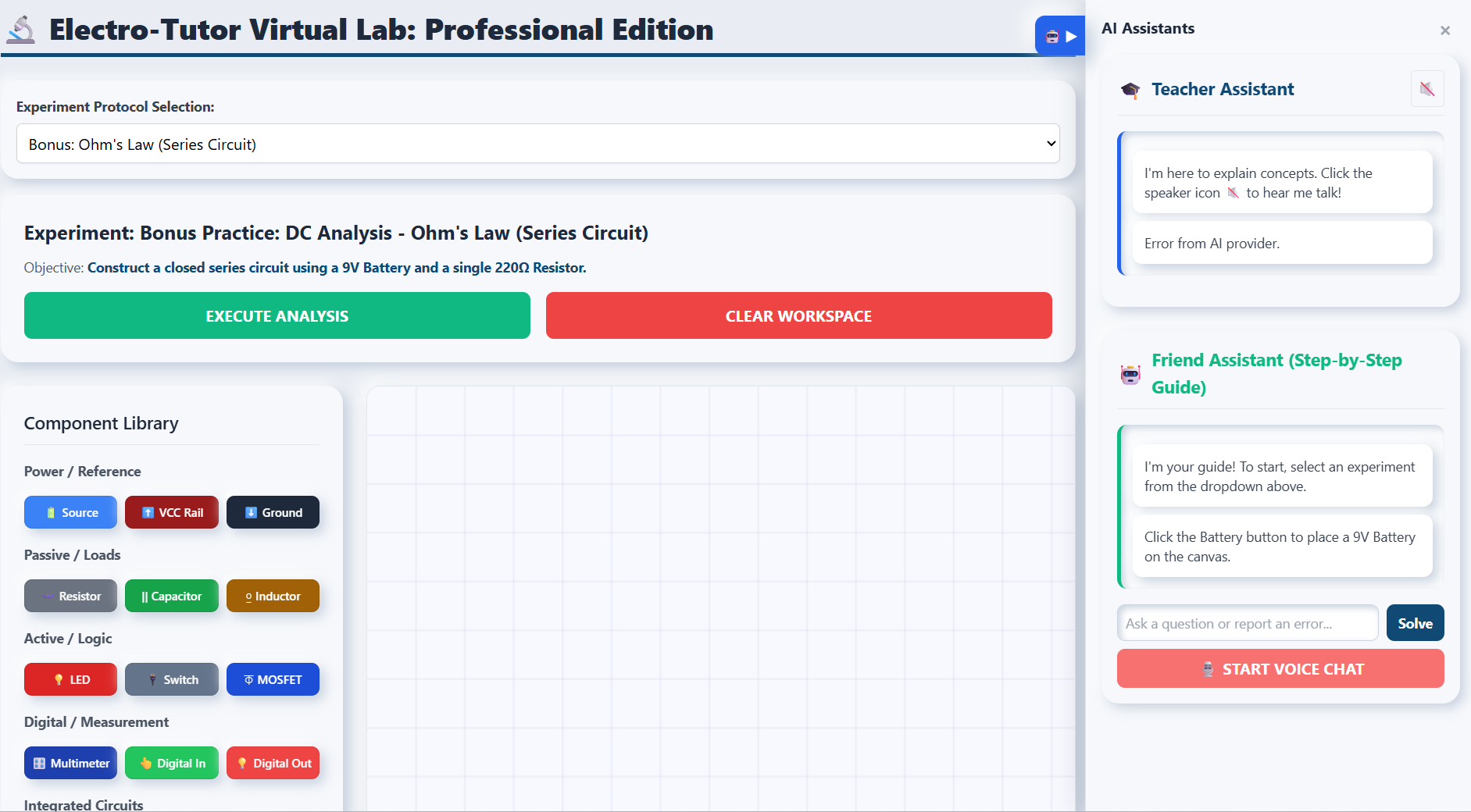
Virtual AI Lab Assistant is a browser-based electronics laboratory where students can build and experiment with circuits using virtual components.
It provides two AI assistants:
AI Teacher — explains concepts, theory, components, and experiments. AI Friend — guides students step-by-step, helps troubleshoot difficulties, and suggests what to do next.
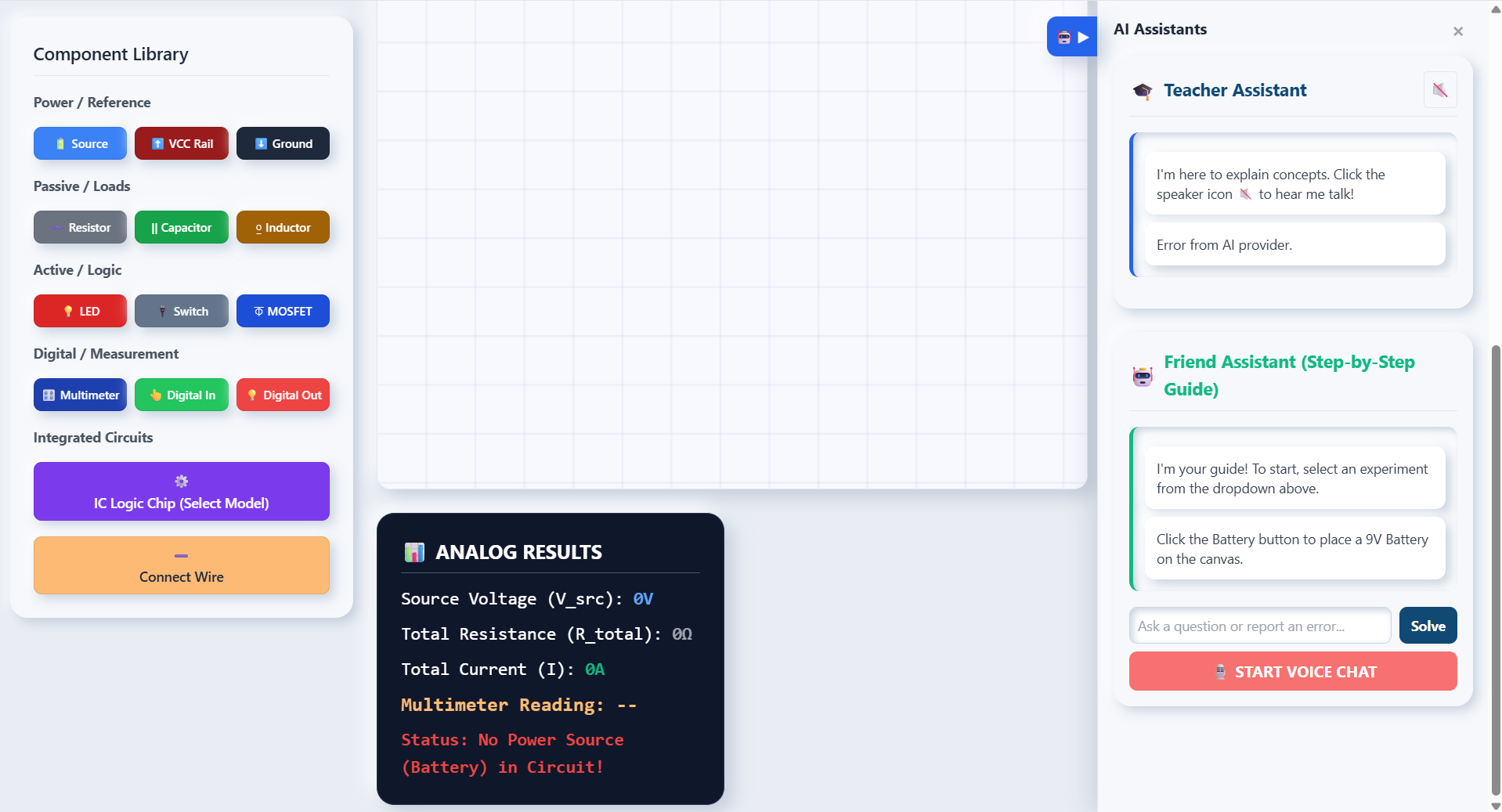
A calculation and results dashboard helps students understand their experimental outcomes.
How we built it
We built a web-based interactive electronics environment with a component library, circuit-building interface, experiment workflows, AI-powered conversational assistance, and a results/calculation dashboard.
The platform is deployed on the web, making the laboratory accessible directly through a browser without requiring specialized hardware or installation.
Challenges we ran into
The biggest challenge was designing AI assistance that is useful during an experiment rather than behaving like a generic chatbot. We had to connect explanations and guidance with the student's actual experiment and keep the experience simple enough for beginners.
We also had to make circuit interaction intuitive while handling different components, connections, calculations, and experiment states.
Accomplishments that we're proud of
We built and deployed a working prototype instead of stopping at the idea stage.
Students can interact with a virtual electronics laboratory, work with different components, receive AI-based guidance, and view experiment calculations and results—all from a browser.
What we learned
We learned that effective AI education is not just about giving answers. Students need context, guidance, and the freedom to make mistakes.
Building this project also taught us how to combine interactive simulation, AI assistance, and educational workflows into a single user experience.
What's next for Virtual AI lab assistant
Our next step is to make the AI more deeply connected to the circuit itself—enabling smarter error detection, personalized guidance, AI-generated viva questions, and automatic experiment evaluation.
We also plan to expand beyond electronics into IoT, embedded systems, electrical engineering, physics, and other practical engineering labs.
Our long-term vision is to build an AI-powered virtual laboratory ecosystem where every student can experiment anytime, anywhere.
Built With
- ai
- css
- html
- javascript
- llm
- react
- tailwind-css
- vercel
- vite
- web

Log in or sign up for Devpost to join the conversation.