-
-
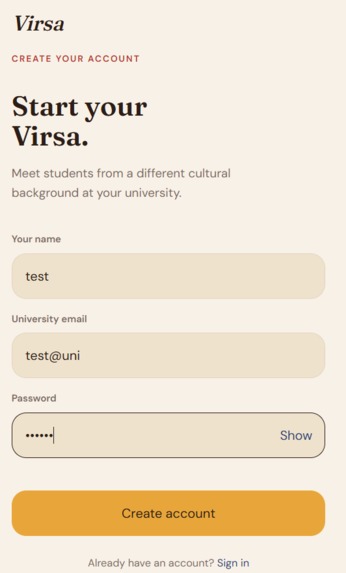
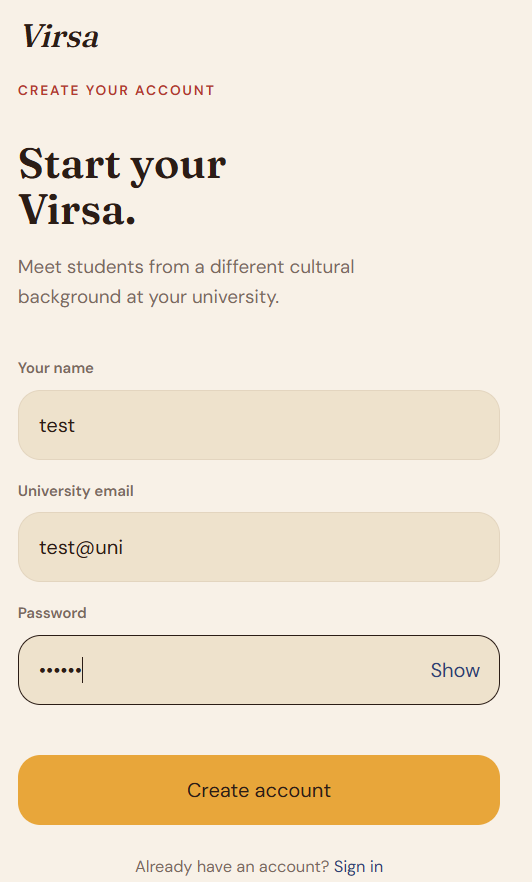
Create your Virsa profile with your name, university email and password.
-
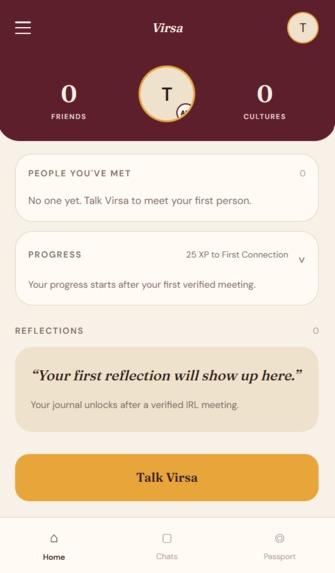
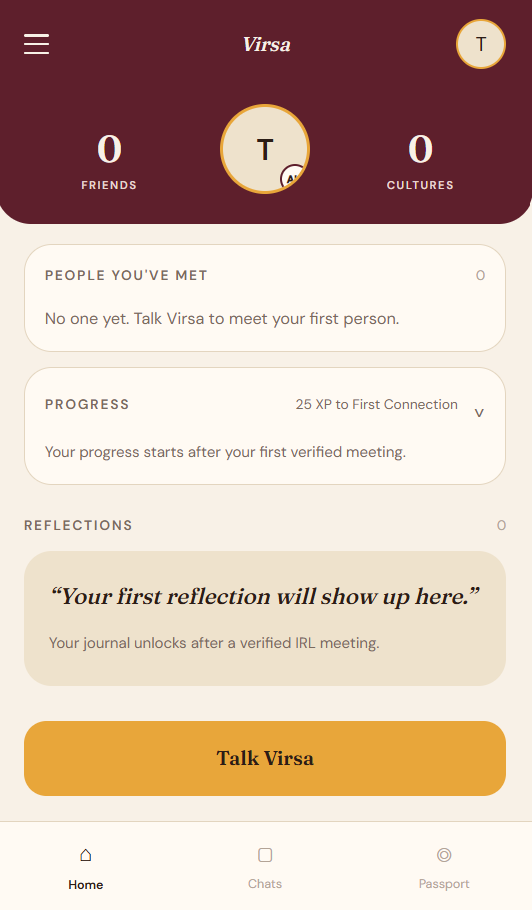
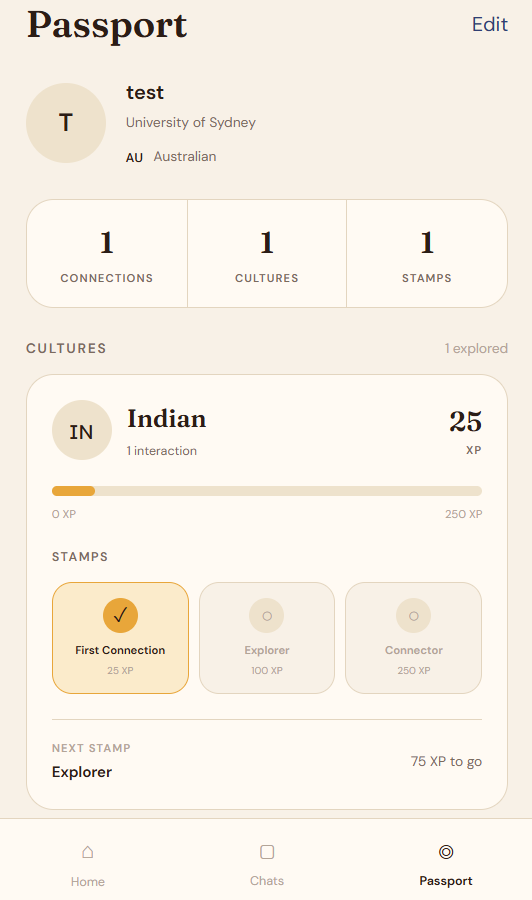
See people you’ve met, cultural XP, reflections and your next Virsa connection.
-
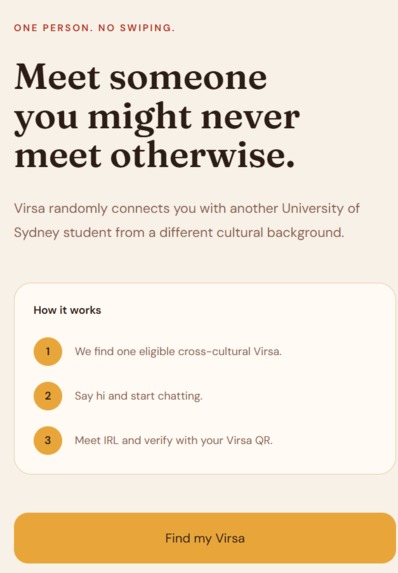
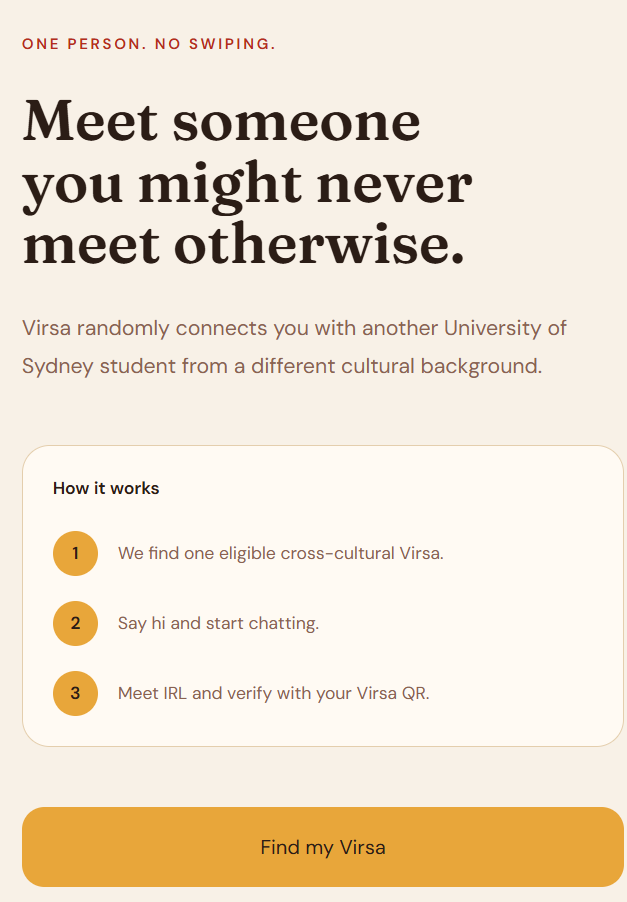
Get one random cross-cultural match from the same university. No swiping
-
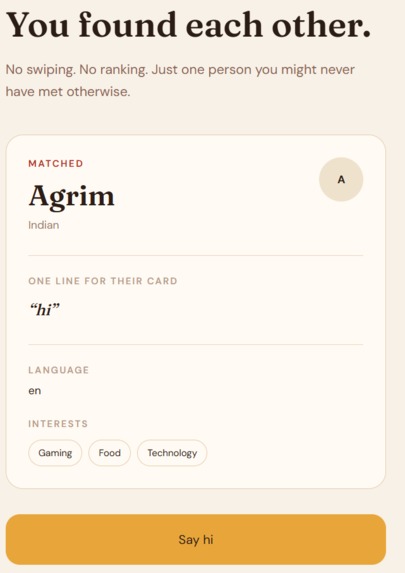
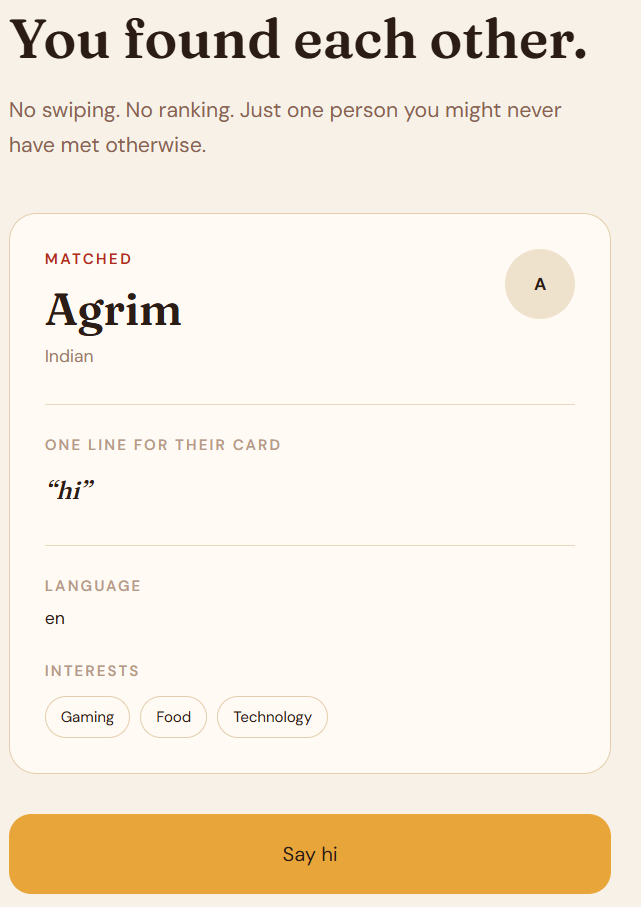
Meet one person, see their culture, interests and profile line, then start chatting
-
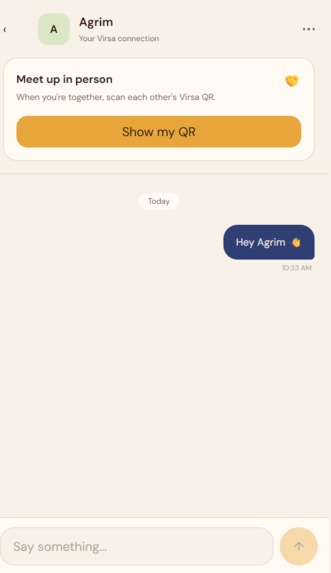
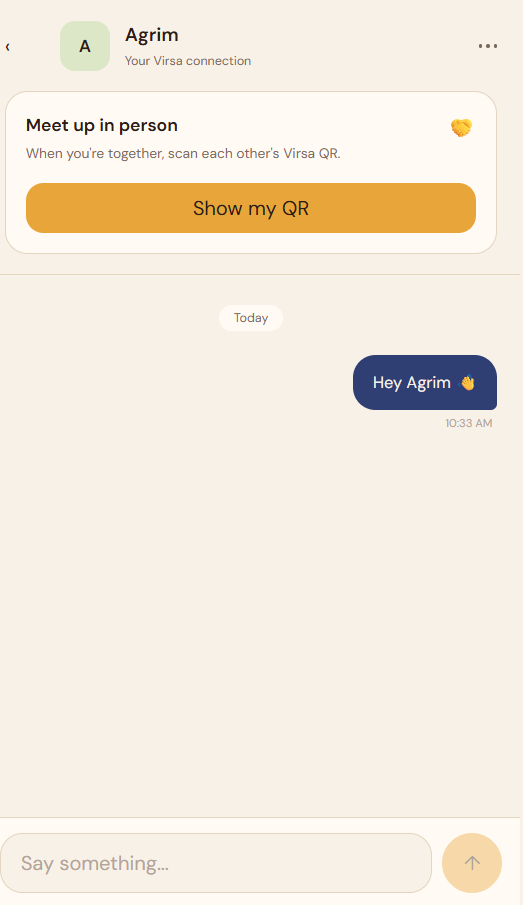
Message your Virsa, get to know each other and organise an in-person meeting.
-
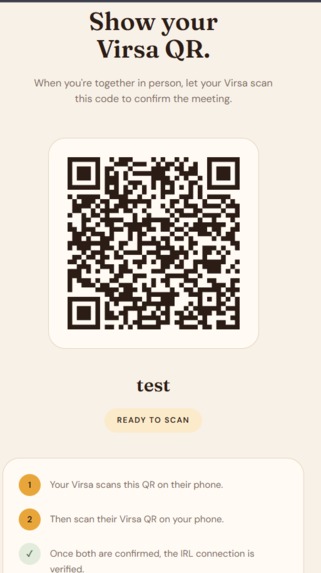
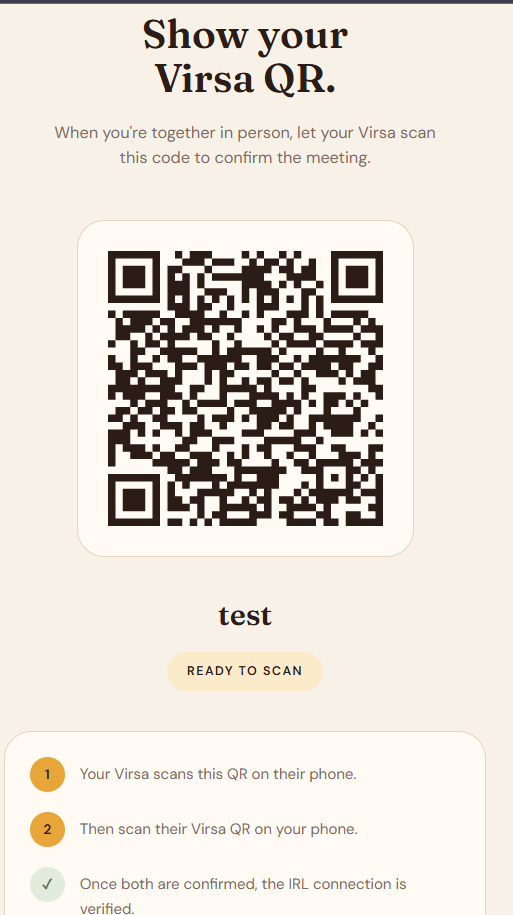
Show your unique QR so your Virsa can confirm the in-person meeting.
-
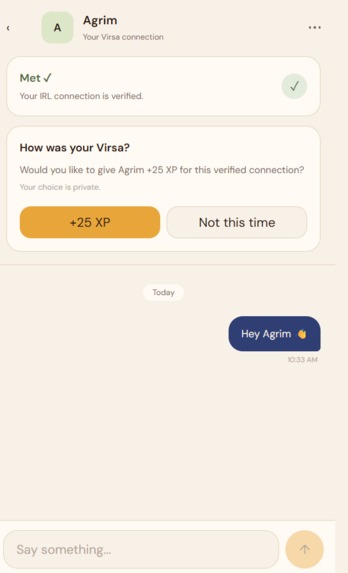
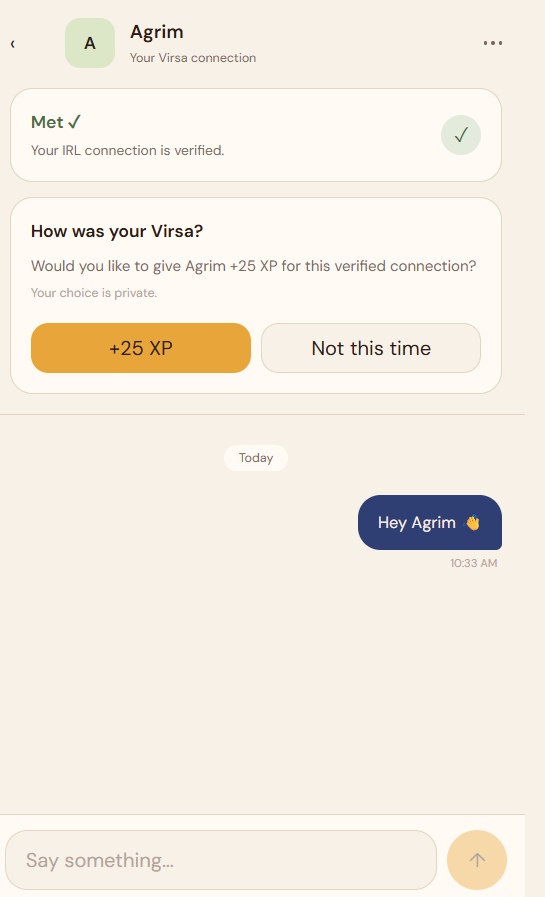
Once both QR scans confirm the meeting, privately choose whether to award +25 XP.
-
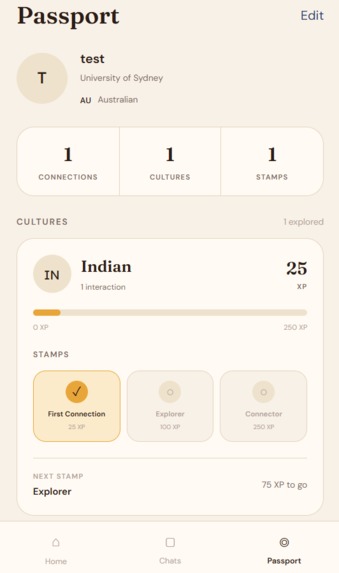
Track XP by culture and unlock stamps through verified real-world connections.
-
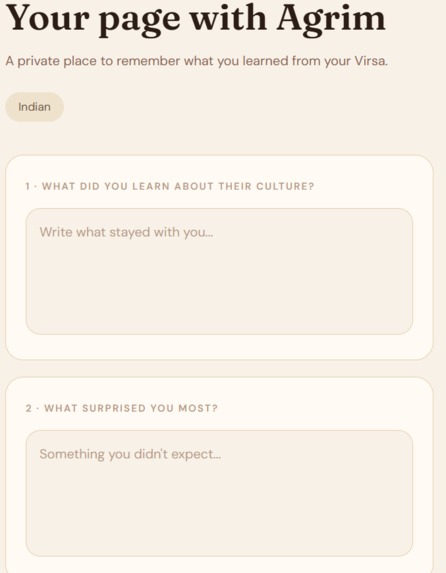
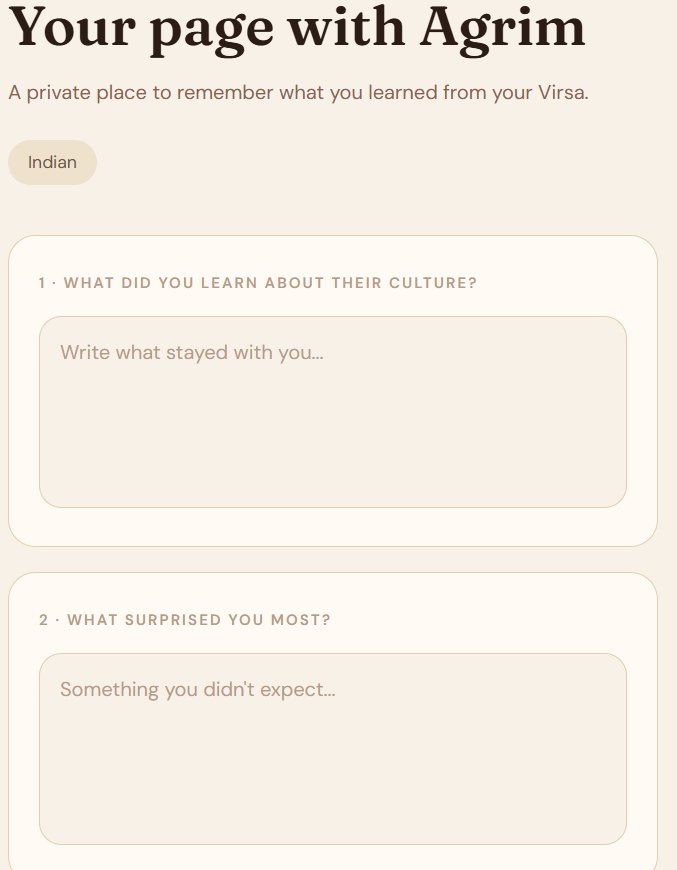
Reflect privately on what you learned, what surprised you and what you shared in common.
Inspiration
We were inspired by a simple question: What if every meaningful connection could unlock a new perspective?
In a world where it has never been easier to communicate across borders, we noticed that many social platforms still tend to connect people based on what they already have in common. We wanted to create a solution that would encourage people to step outside of their usual social circles and broaden their worldview.
While brainstorming, we realised that by giving people an opportunity to learn more about different cultures, we could in turn help them develop a deeper understanding of their own. This became the foundation of our project: a platform where users can connect across cultures, build friendships, and unlock new perspectives while discovering more about themselves.
What it does
Virsa is designed for university students who are curious about the world and want to form meaningful connections with people from different cultural backgrounds.
Our prototype focuses on the core experience of the app. Users can press “Talk Virsa” to be randomly matched with another student from the same university and a different self-declared cultural background. Rather than swiping through profiles or being matched based on shared interests, Virsa gives users one person they may not have otherwise met.
Once matched, users can chat and get to know each other before meeting in person. When they meet, both users scan each other’s Virsa QR code to independently verify the interaction.
After the meeting is verified, each person privately decides whether they would like to give the other user +25 XP for the interaction. This XP contributes to the recipient’s progress in the giver’s culture and builds their personal Cultural Passport. As users gain XP, they unlock milestones such as First Connection, Explorer and Connector.
Users can also complete a private journal-style reflection after a verified meeting, creating a personal record of what they learned, what surprised them and what they discovered they had in common.
How we built it
We started by identifying the core experience we wanted users to have: meet someone different from you → have a meaningful conversation → meet in person → reflect on what you learned → be encouraged to make another connection.
From there, we designed the app around this interaction loop. To make meeting new people simple and spontaneous, we implemented the “Talk Virsa” feature, which randomly matches users with an eligible student from the same university and a different cultural background. Rather than relying on users to search for people themselves, this encourages users to step outside their usual networks and connect with someone they may not have otherwise met.
We built the frontend using Next.js, TypeScript and Tailwind CSS, while Supabase handles authentication, our PostgreSQL database and backend logic. Matching rules, QR meeting confirmation, XP decisions, cultural progress and security are handled through Supabase database functions, triggers and Row Level Security. The app is deployed using Vercel.
We focused on making the process of discovering people and cultures feel approachable, while using progression and gamification to encourage continued engagement without making the interactions themselves feel transactional.
Challenges we ran into
Scope. We wanted Virsa to encourage real in-person interactions, but this becomes difficult to guarantee if the app is open to users worldwide. For our prototype, we therefore focused on university students, where there is a shared physical space for people to meet and a naturally diverse community. Staying true to our purpose. We had to be careful not to let features designed for engagement, such as XP and passport stamps, overshadow the core purpose of Virsa: sharing and learning about different cultures. We wanted our rewards to encourage meaningful interactions rather than make people or cultures feel like things to collect. Verifying real-world interactions. We wanted the progression system to represent actual meetings rather than just online activity. This led us to introduce mutual QR verification, where both users must independently scan each other before the interaction is recognised as an in-person connection. Accomplishments that we're proud of
We are proud of turning our initial concept into a functional prototype with a clear and engaging user experience. We successfully brought the full Virsa journey to life, including random cross-cultural matching, private chat, mutual QR meeting verification, private XP decisions, Cultural Passport progression and post-meeting reflections.
We are also proud of how our team adapted and refined our ideas throughout the process, turning early concepts into a cohesive prototype within a limited timeframe.
What we learned
We learned that designing for cultural diversity requires nuance. We don't want to reduce people to their nationality or assume that everyone from the same country has the same experiences. This challenged us to think carefully about how we represent cultures within the app and how we can celebrate differences without turning them into stereotypes.
We also learned the importance of balancing meaningful engagement with gamification. Rewards can motivate people to interact, but we don't want users to treat people or cultures as things to collect. The challenge is designing rewards that recognise genuine experiences rather than encouraging interactions purely for points.
We also learned that some of the most important rules in an app like Virsa should not exist only in the interface. Features such as matching eligibility, meeting verification and XP awarding are validated through the backend so that users cannot simply bypass them from the frontend.
What's next for Virsa — Meet the World
One of the features we hope to introduce in the future is automatic chat translation. This would allow users to communicate with people who speak different languages, with messages automatically translated into each user's preferred language. By reducing language barriers, we hope to make Virsa more accessible and open up opportunities for even more meaningful connections.
We would also like to improve our in-person verification system with temporary or rotating QR codes, introduce real-time messaging, and continue developing tools that make cross-cultural conversations feel safe and meaningful.
Our long-term vision is to expand Virsa beyond Sydney and make it accessible to university communities around the world. By growing the community internationally, we hope to create a diverse network where users can connect with people from different backgrounds, wherever they are.
Built With
- javascript
- next.js
- sql
- supabase
- vercel


Log in or sign up for Devpost to join the conversation.