Virama
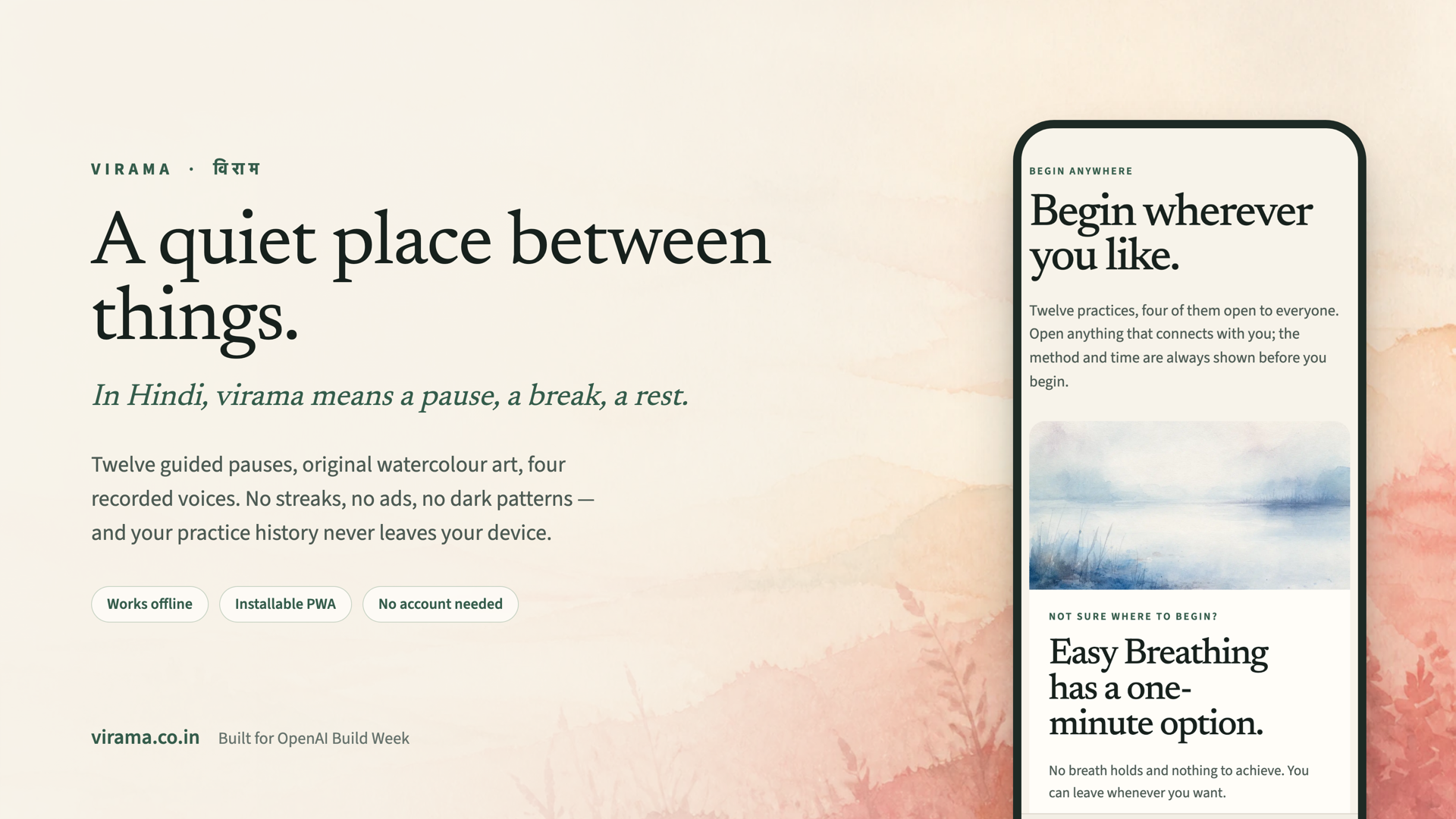
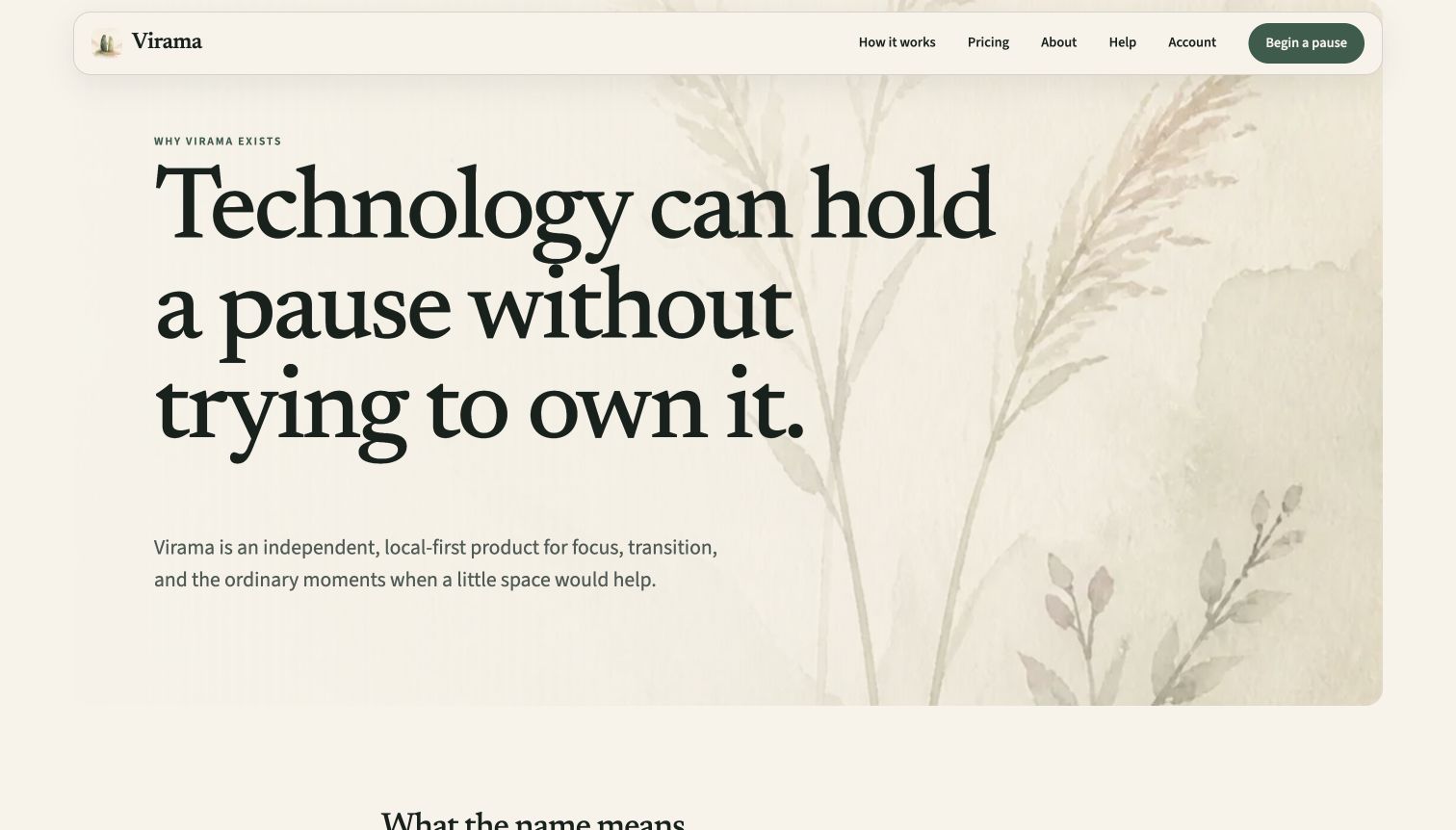
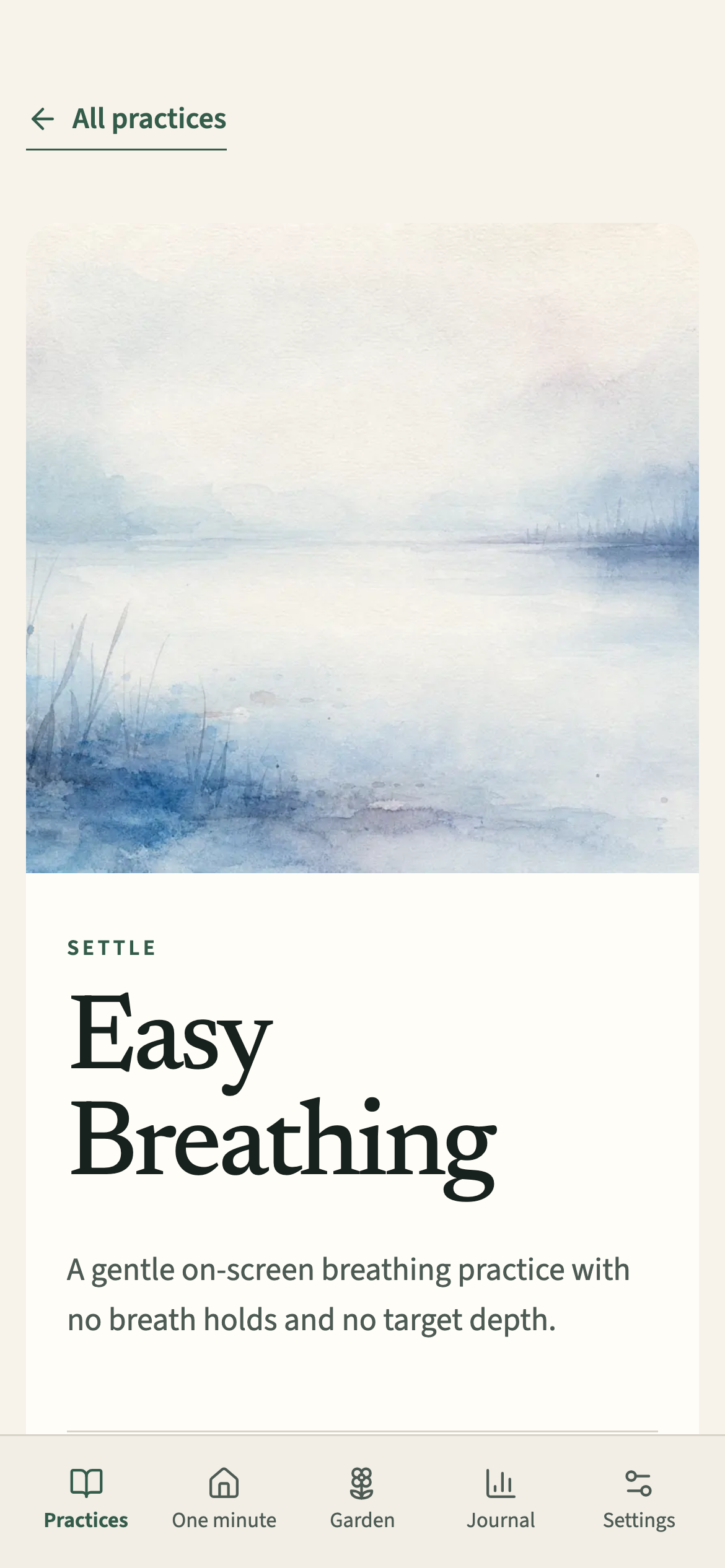
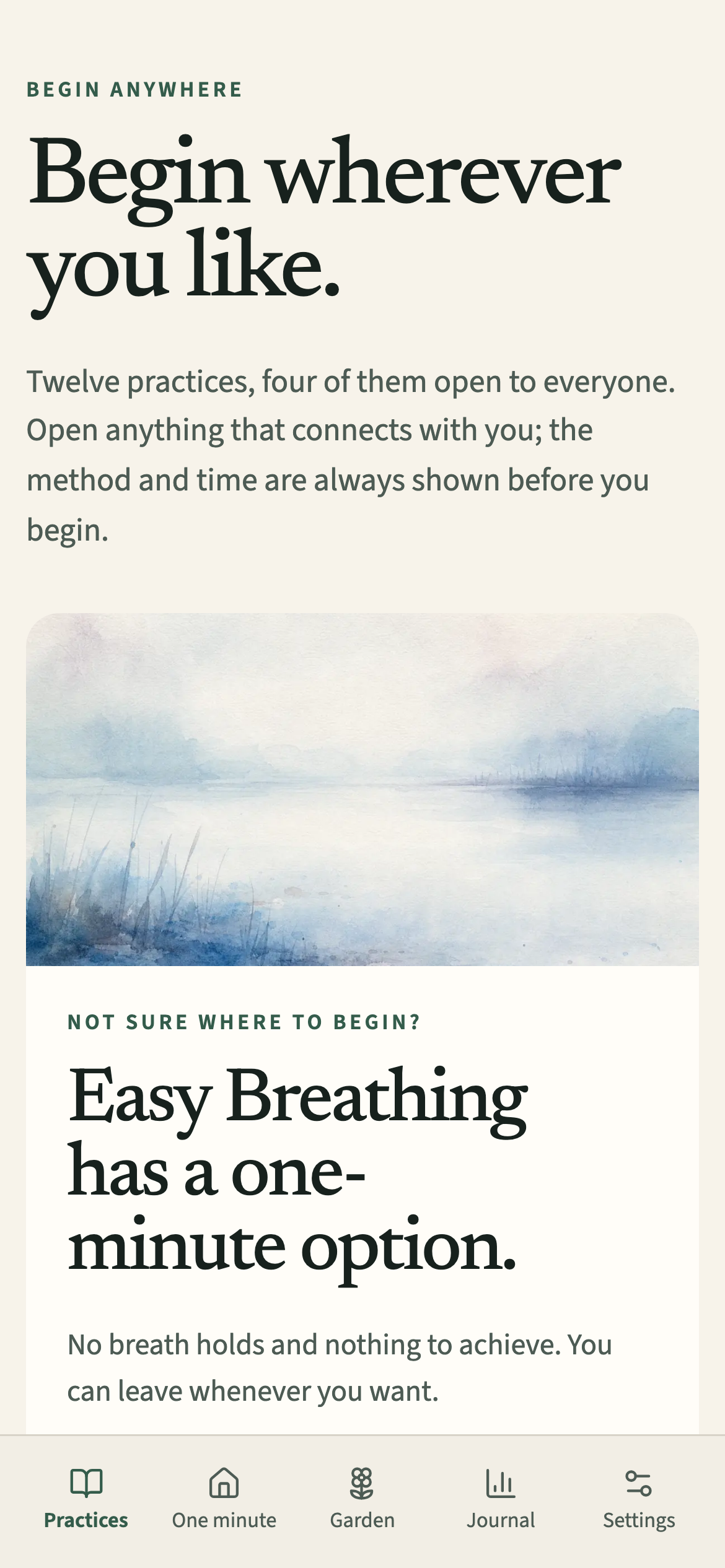
Virama, Hindi for pause, is a private, offline-first wellbeing app designed to help people step away from their screens, not spend more time inside another app.
It runs entirely in the browser, installs as a PWA, and works without an internet connection.
Why I Built It
Many wellbeing apps promise calm while using product mechanics that create pressure: streaks that punish missed days, badges that turn rest into achievement, notifications designed to pull users back, and paywalls that appear halfway through an exercise.
Virama takes the opposite approach.
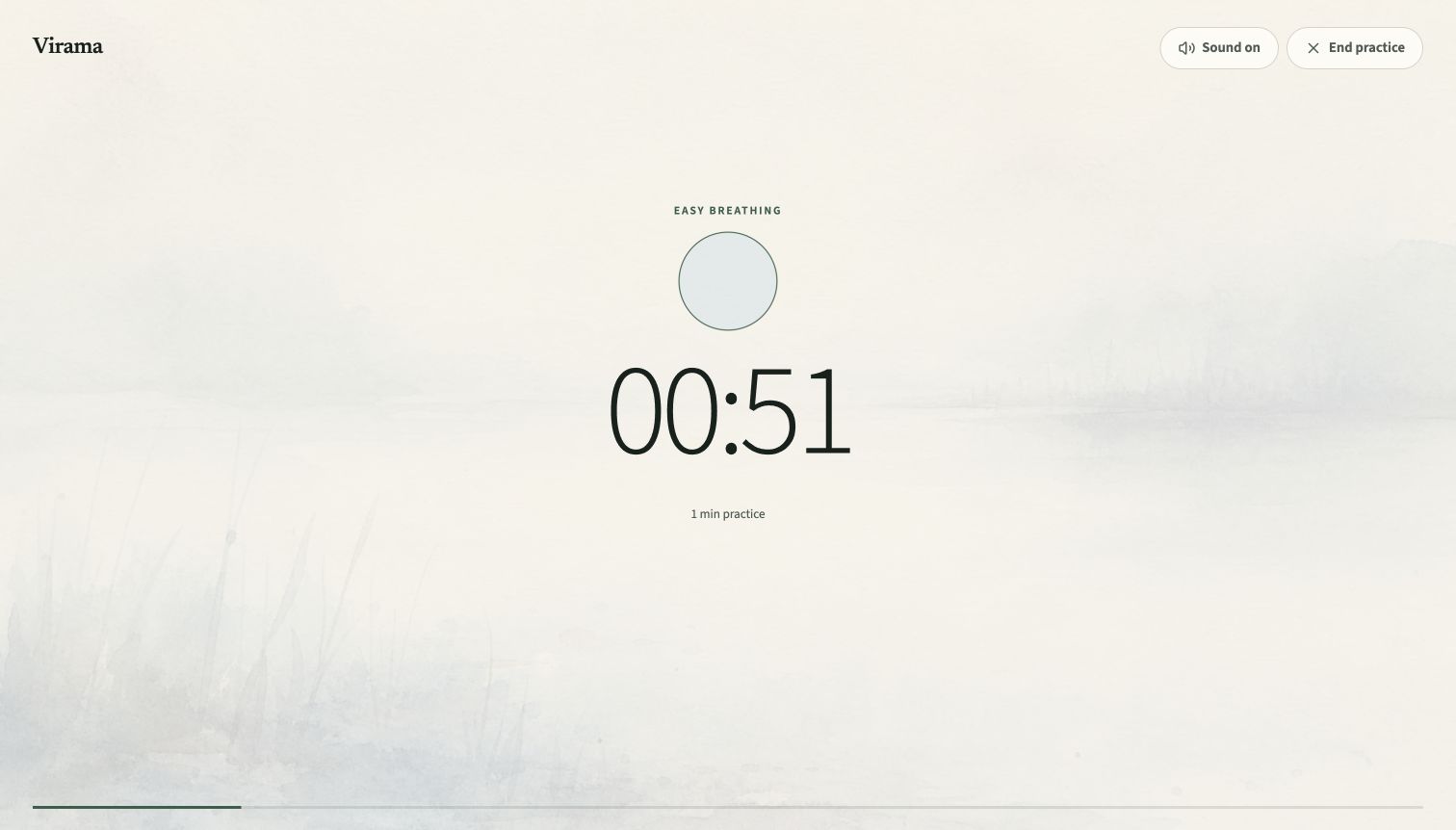
There are no streaks to maintain, no reminders, no engagement targets, and no penalties for leaving. The product succeeds when someone completes a practice and closes the app feeling better.
What It Does
Virama includes twelve guided practices lasting between one and thirty minutes, organized around four needs:
- Find focus
- Settle
- Release tension
- Close the day
Four practices are free forever, with no account, trial, or payment card required.
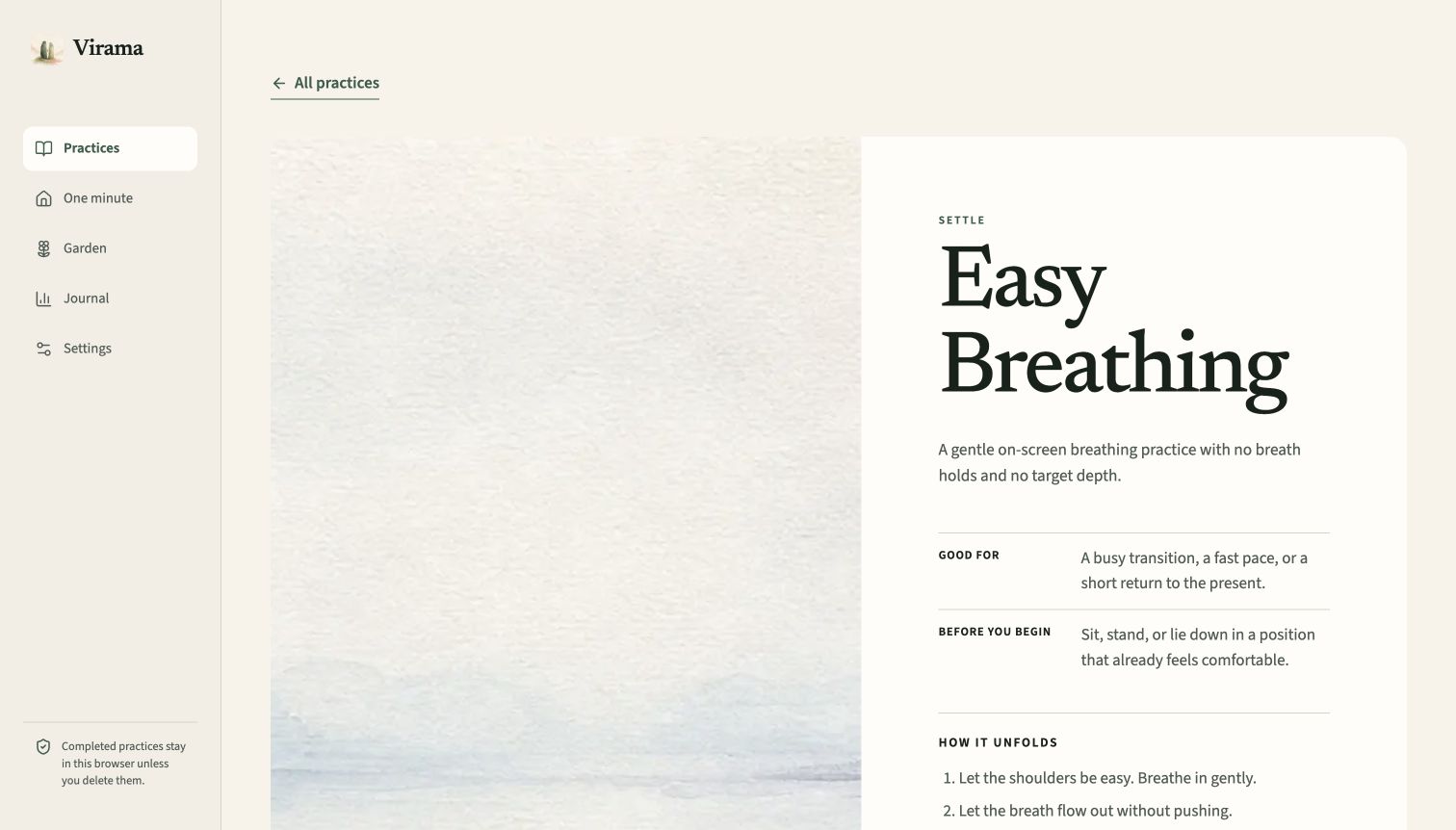
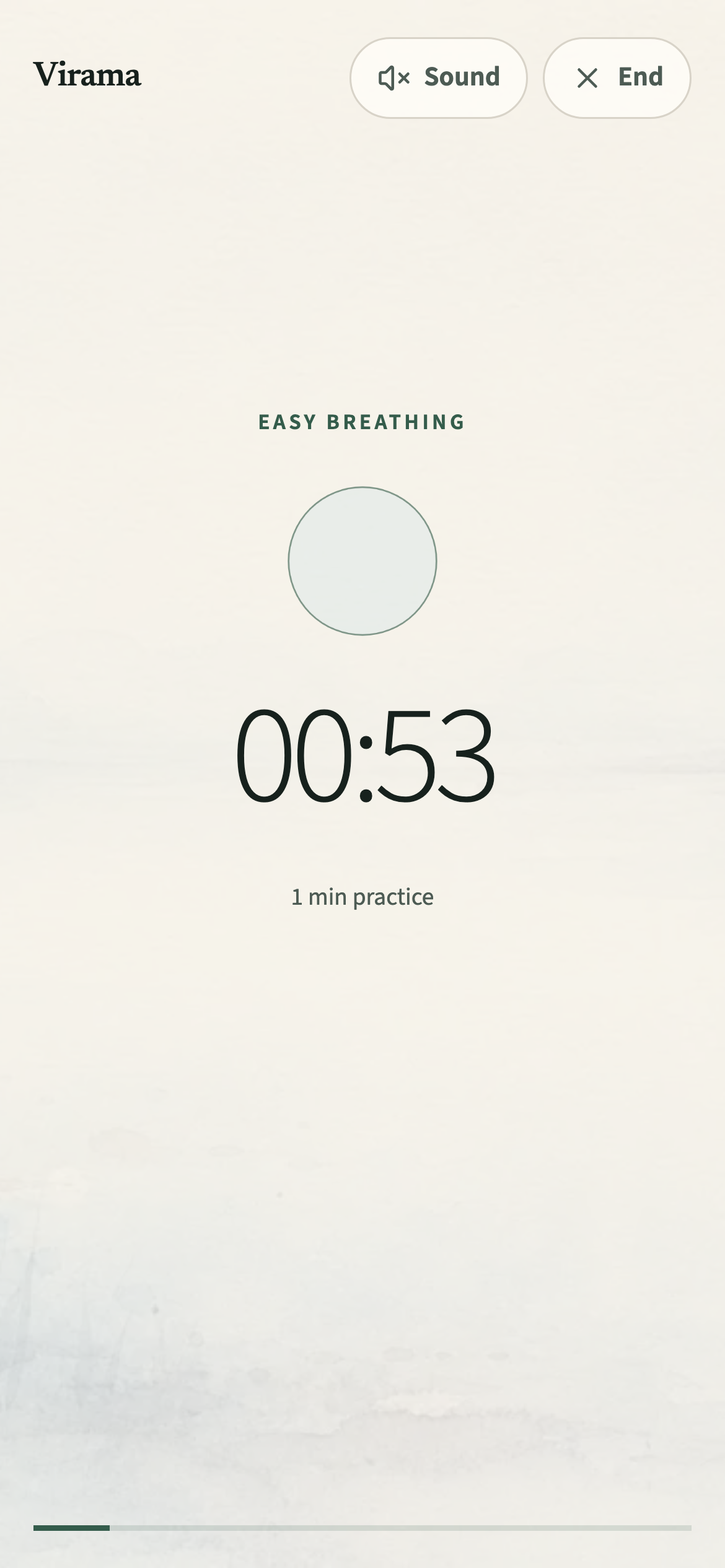
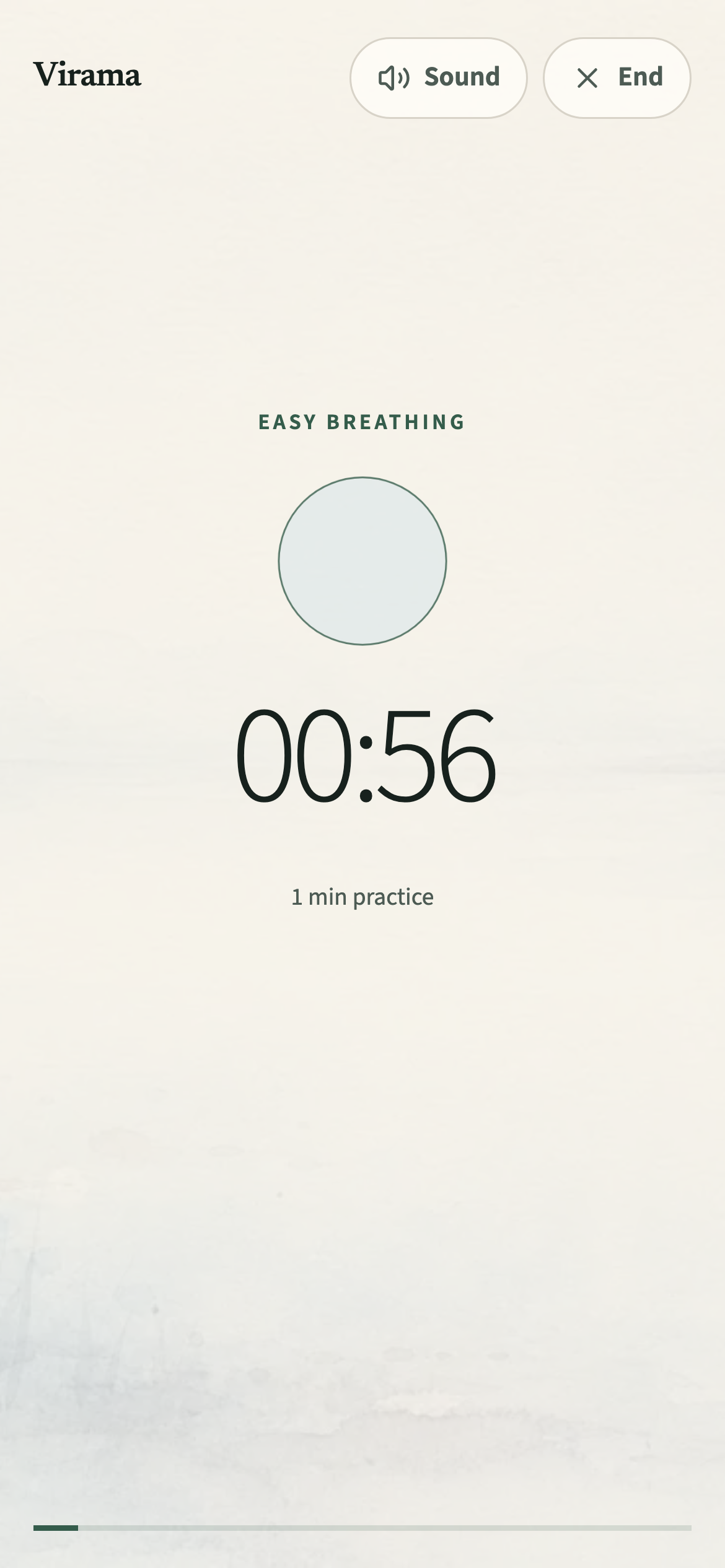
Every practice shows its method and duration before it begins. Users can leave at any time without warnings, guilt, or lost progress.
The experience includes:
- Four recorded voices
- Sixty-six soundscapes
- Twenty-two awareness bells
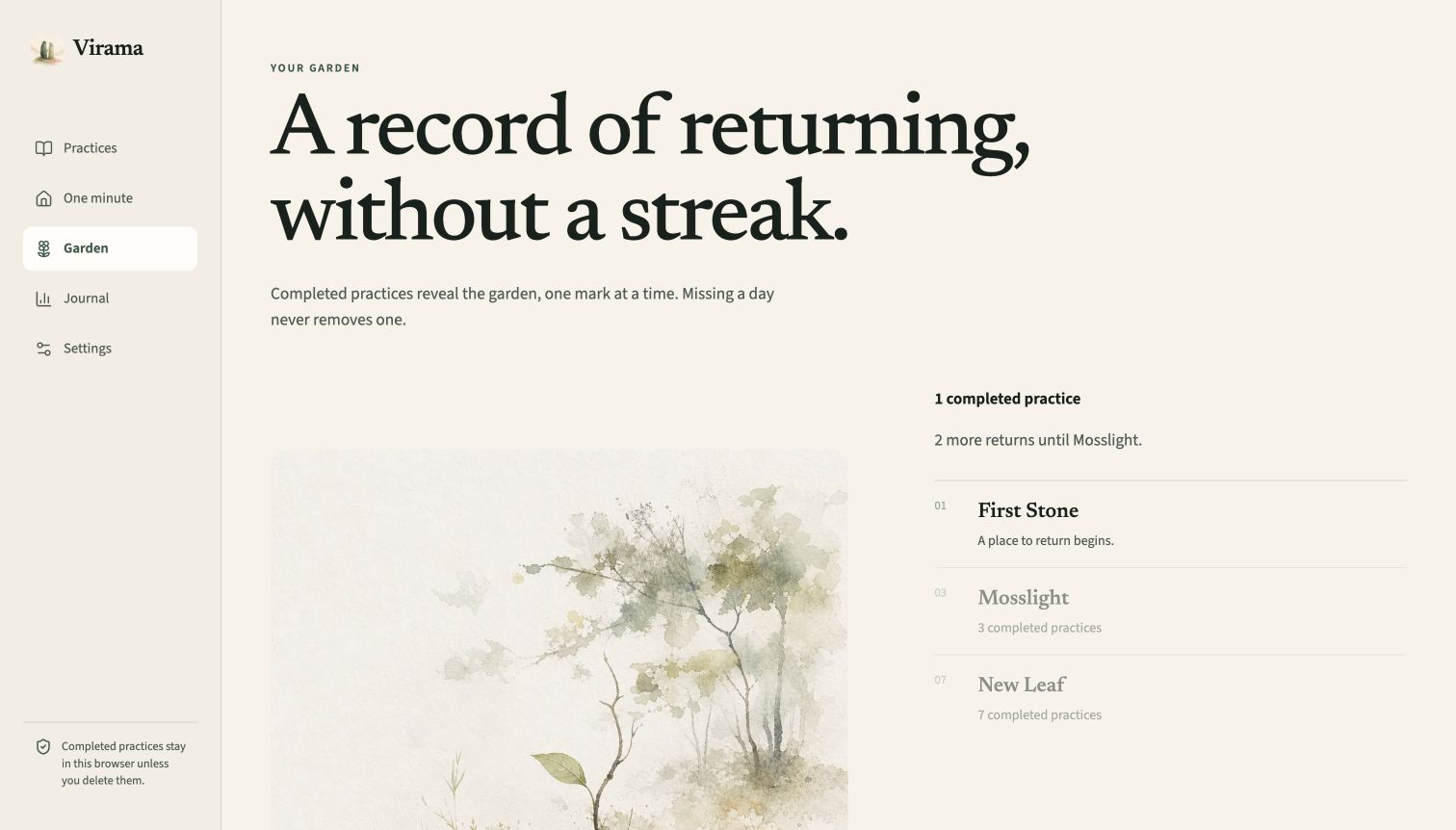
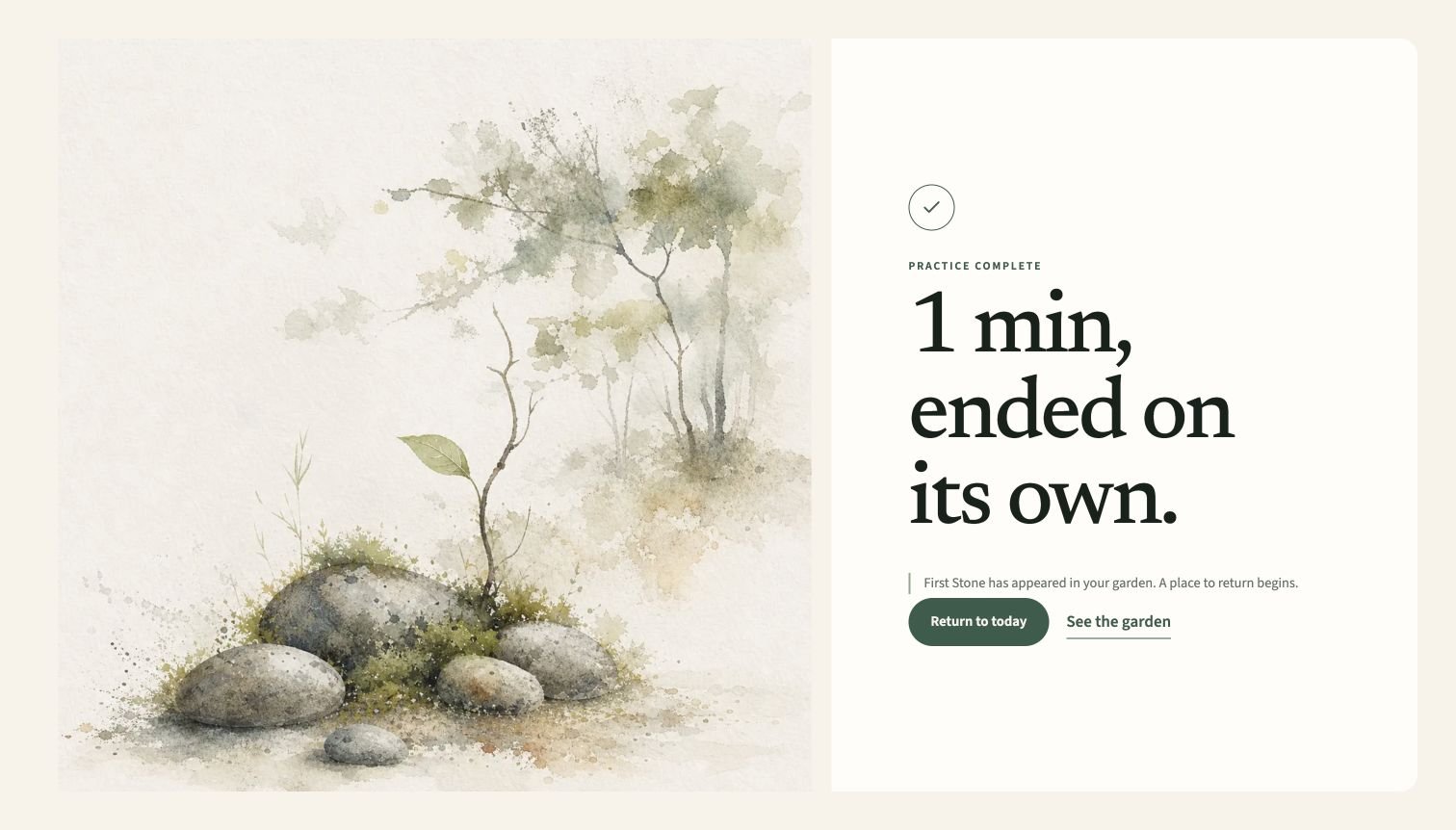
- Seven watercolour garden marks
The garden grows after 1, 3, 7, 14, 30, 60, and 100 completed practices. Each mark is earned once and never taken away. There is no streak to break or repair.
Privacy by Design
By default, practice history stays inside the browser using IndexedDB, organized across four tables.
Users can export their data as JSON or erase it in one action. No account is required.
Virama contains:
- No analytics
- No tracking scripts
- No advertising SDKs
- No behavioural profiling
- No third-party JavaScript, except Razorpay during checkout
There is no notification code anywhere in the repository. Virama is structurally incapable of sending reminders or trying to pull users back.
When a user creates an account, practice data is encrypted before it reaches the server. The server stores only ciphertext and a 12-byte nonce, so it cannot read the underlying history.
How I Built It
I did not begin by asking an AI model to generate an application.
I first used Codex to study how major meditation products use engagement, language, progression, and monetisation. That research became a PRD, written before implementation began.
Two sections became central to the product.
Monetisation Without Manipulation
Section 25 forbids seven common monetisation patterns:
- Weekly subscriptions
- Countdown timers
- Crossed-out prices
- Hidden trial conversions
- Confusing pricing tiers
- Paid streak repair
- Advertising in the free plan
These are enforced product constraints, not marketing promises.
The PRD was followed by a technical specification and architecture decision records documents. Several ADRs are marked as superseded because early decisions were challenged and replaced rather than quietly erased.
Codex with GPT-5.6 sol then helped implement the product incrementally, one feature at a time, alongside unit and end-to-end tests. This was not a one-prompt code generation project.
AI-Assisted Asset Production
GPT image generation created the seven watercolour garden marks.
Voice and ambient audio were generated offline using local models:
- Qwen TTS for spoken guidance
- ACE-Step for music and ambient sound
- 346 authored audio cues
- 1,738 rendered audio files
- Approximately 208 MB of audio
No AI Inside the App
AI was used to design and build Virama, but there is deliberately no AI in the production experience.
Codex, GPT-5.6, Qwen TTS, ACE-Step and Claude code were development tools. They are not features users interact with.
Technical Architecture
Virama is a pnpm and Turborepo monorepo containing:
- Next.js 16 web application and PWA
- Expo mobile application
- Fastify API
- TypeScript across the stack
- IndexedDB for offline browser storage
- Razorpay for payments
Virama Pro costs ₹169 per month or ₹1,699 per year. The free version remains available without an account, trial, card, or advertising.
Current Status
The mobile application compiles and has to be submitted for store review. Because app-store publishing requires significant compliance and administrative work alongside my full-time job, the web app and installable PWA are currently the primary shipping products.
Virama is live at https://virama.co.in.
It works in the browser, installs like an app, functions offline, and is built around one principle:
A wellbeing product should give people their attention back, not compete for more of it.
Built With
- better-auth
- codex
- expo.io
- express.js
- gpt-5.6
- next.js
- postgresql
- razorpay
- react-native
- revenuecat
- typescript


Log in or sign up for Devpost to join the conversation.