Viralfy ADs Studio — Devpost project page
Inspiration
Performance marketers don't fail because they can't make an ad. They fail because they can't make enough ads to find the one that works.
Creative volume is the actual bottleneck in paid social. One winning video out of thirty is a normal ratio, which means the job is producing thirty testable variations cheaply — not producing one beautiful one expensively. Every agency I talked to was solving this with freelancers and a shared drive, and it was slow and inconsistent.
Viralfy ADs Studio turns a product link into ad creative, so the constraint moves from "how many can we afford to make" to "how many can we afford to test."
What it does
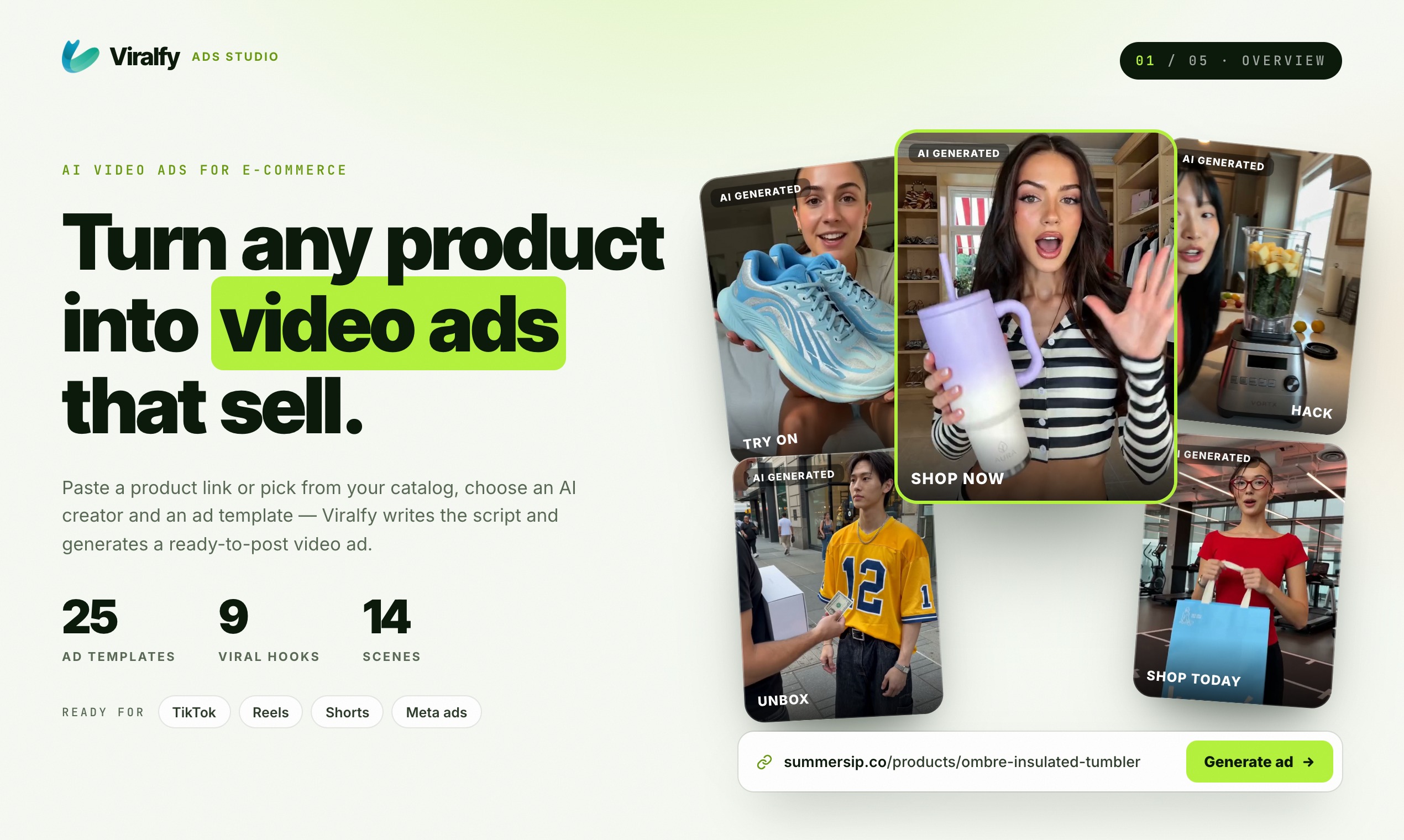
Paste a product URL, get video ads ready for Meta, TikTok, and YouTube.
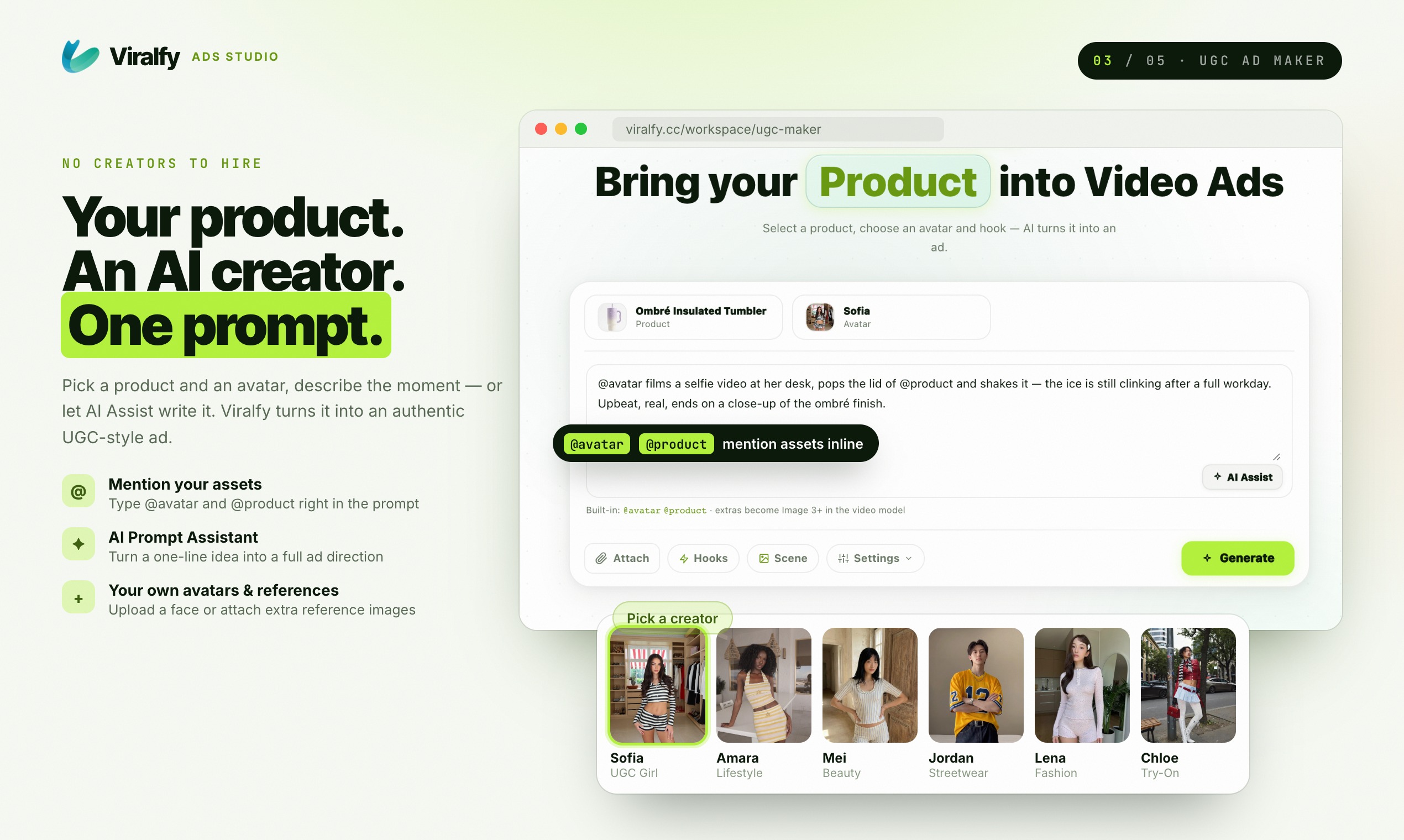
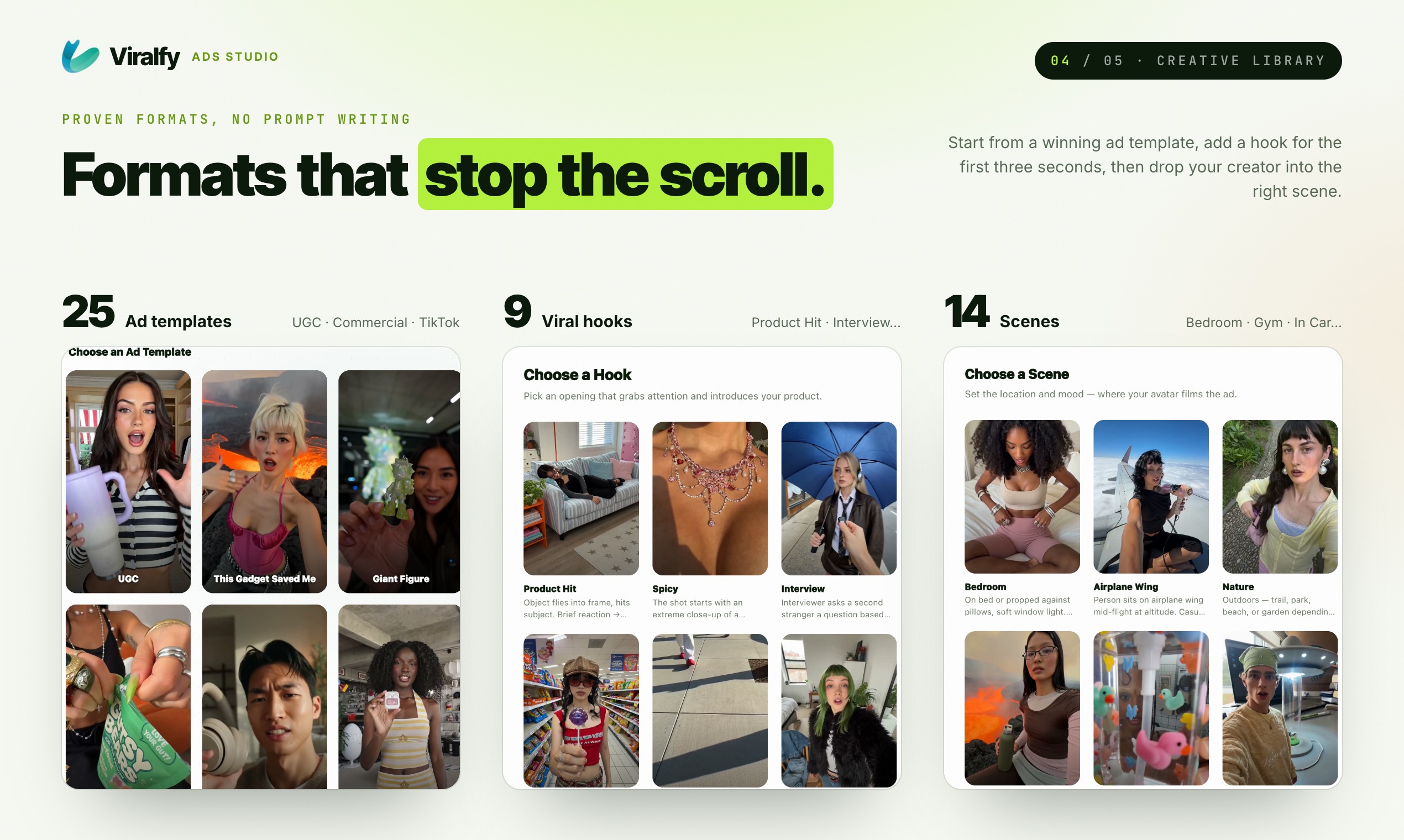
- Turns a product page into a UGC-style ad
- Generates multiple creative variations per product
- Can mirror the structure of an ad that is already trending
- Outputs in the aspect ratios each platform wants
How I built it
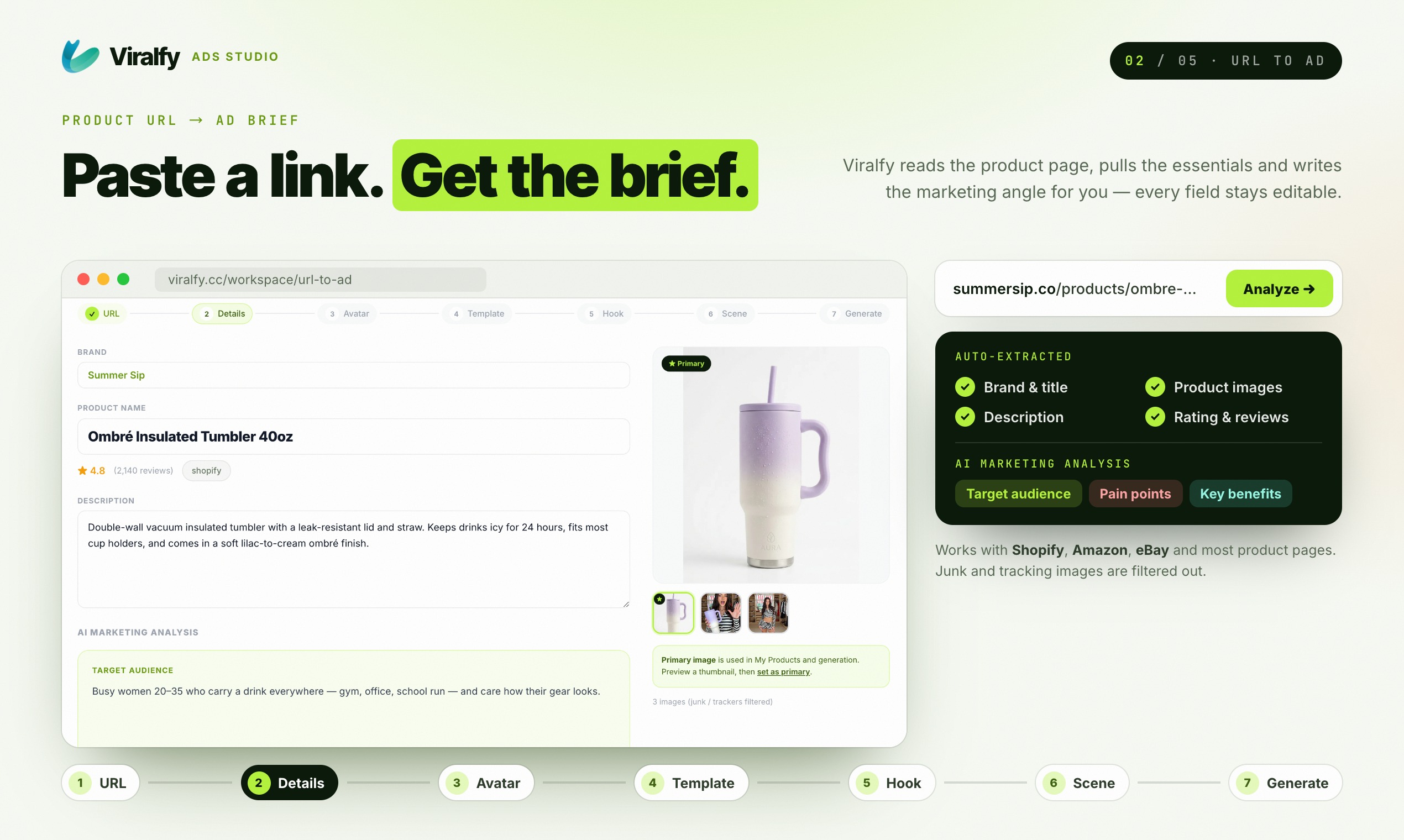
1. Product understanding. Scrape the product page for title, images, price, and description. The hard part is not the scrape, it is choosing which of the page's images is actually the product versus a logo, a lifestyle photo, or a banner. I score images by their position in the DOM, dimensions, and whether alt text matches the product title.
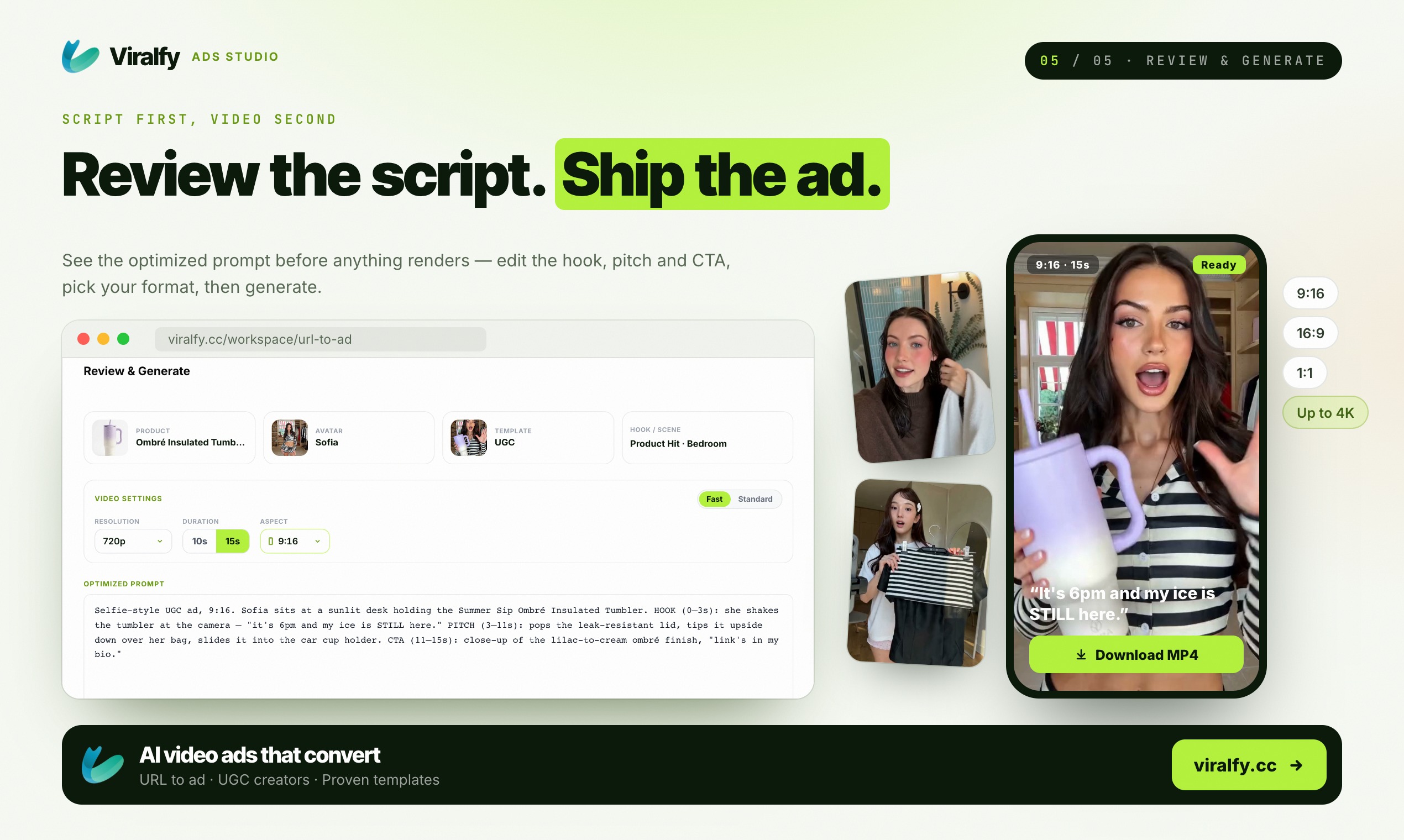
2. Script generation. Given the product facts, generate a short script with a hook, a benefit, and a call to action. Hooks are their own problem — the first two seconds decide everything, so the script generator produces several hook alternatives rather than one and picks the sharpest.
3. Asset assembly. Product images become the visual spine. Where motion is generated, it is generated from the product image so the item stays recognisable — a hallucinated version of the product is worse than a still.
4. Composition and export. The final video is assembled server-side with ffmpeg: images, generated clips, text overlays, and audio, composited into 9:16, 1:1, and 16:9 variants from the same timeline.
5. Viral clone. Given a reference ad, extract its structural pattern — cut cadence, text placement, hook type — and apply that pattern to the user's product. This is pattern transfer, not content copying.
Challenges I ran into
Generated video does not preserve the product. My first approach generated video from a text description of the product. The result looked great and was the wrong product — logos morphed, packaging changed colour. For an ad, that is fatal: you are advertising something you do not sell. Switching to "generate motion from the real product image" fixed it. The product stays accurate, the background and motion carry the novelty.
Aspect ratio is not a resize. Cutting a 16:9 composition to 9:16 crops out the text overlay. I had to build the composition as a timeline that renders separately per aspect ratio, with layout rules per format rather than one render and a crop.
Text overlays get hidden by platform UI. The bottom fifth of a TikTok video is covered by captions and buttons. Every template now reserves that safe area. This is obvious in hindsight and cost me several rounds of "why is the CTA invisible."
Accomplishments that I'm proud of
- Moving the bottleneck from creative production to creative testing. That is the actual business value.
- Keeping the product visually accurate while the surrounding scene is generated.
- One timeline rendering to three aspect ratios without manual re-layout.
What I learned
Volume beats polish in paid social, but only if the volume is genuinely varied. Generating thirty near-identical ads is worthless. The variations have to differ in hook, structure, and opening frame, or you learn nothing from the test.
Brand accuracy is a hard constraint, not a quality preference. Users will tolerate an unrealistic background. They will not tolerate the wrong product. Once I understood that, the architecture got simpler — generate everything except the thing being sold.
What's next for Viralfy ADs Studio
- Performance feedback loop. Pull results from the ad platform and use which creatives won to bias future generation.
- Batch mode. Upload a catalog and generate a full set of testable creatives at once, rather than one product at a time.
- Voice and music library. Licensed audio, so the output is publishable without the user sourcing it separately.
- Brand kit. Lock colours, fonts, and logo placement so an agency's output is consistent across clients.
Built With
- and-viral-clones-for-meta
- react
- tiktok
- ugc-style-clips

Log in or sign up for Devpost to join the conversation.