-
-
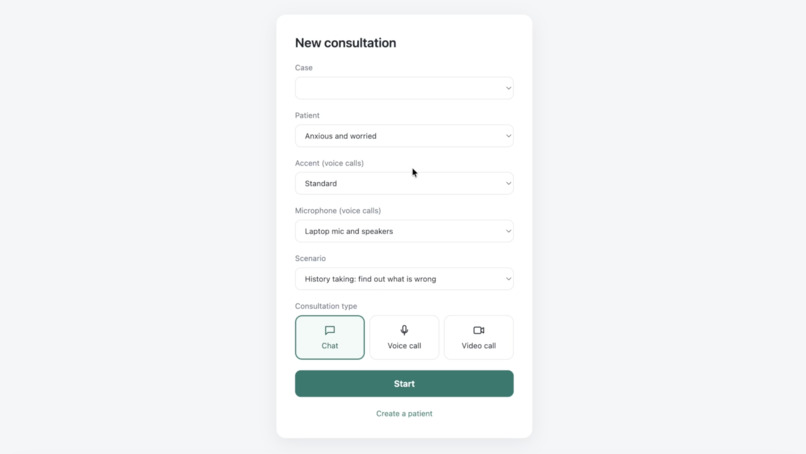
home page
-
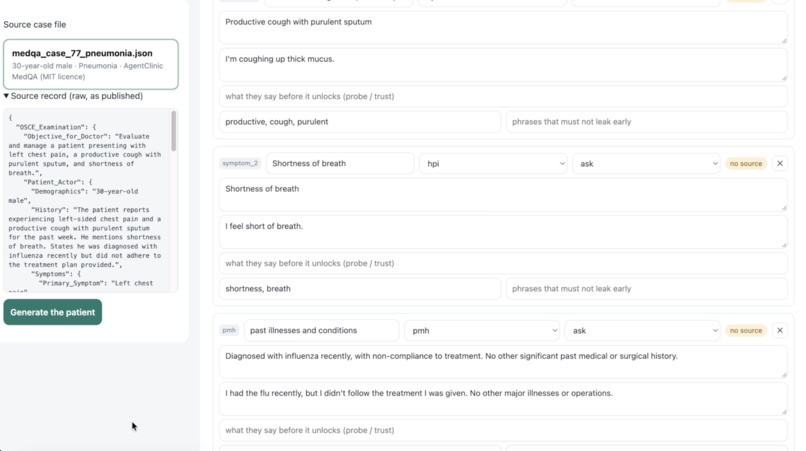
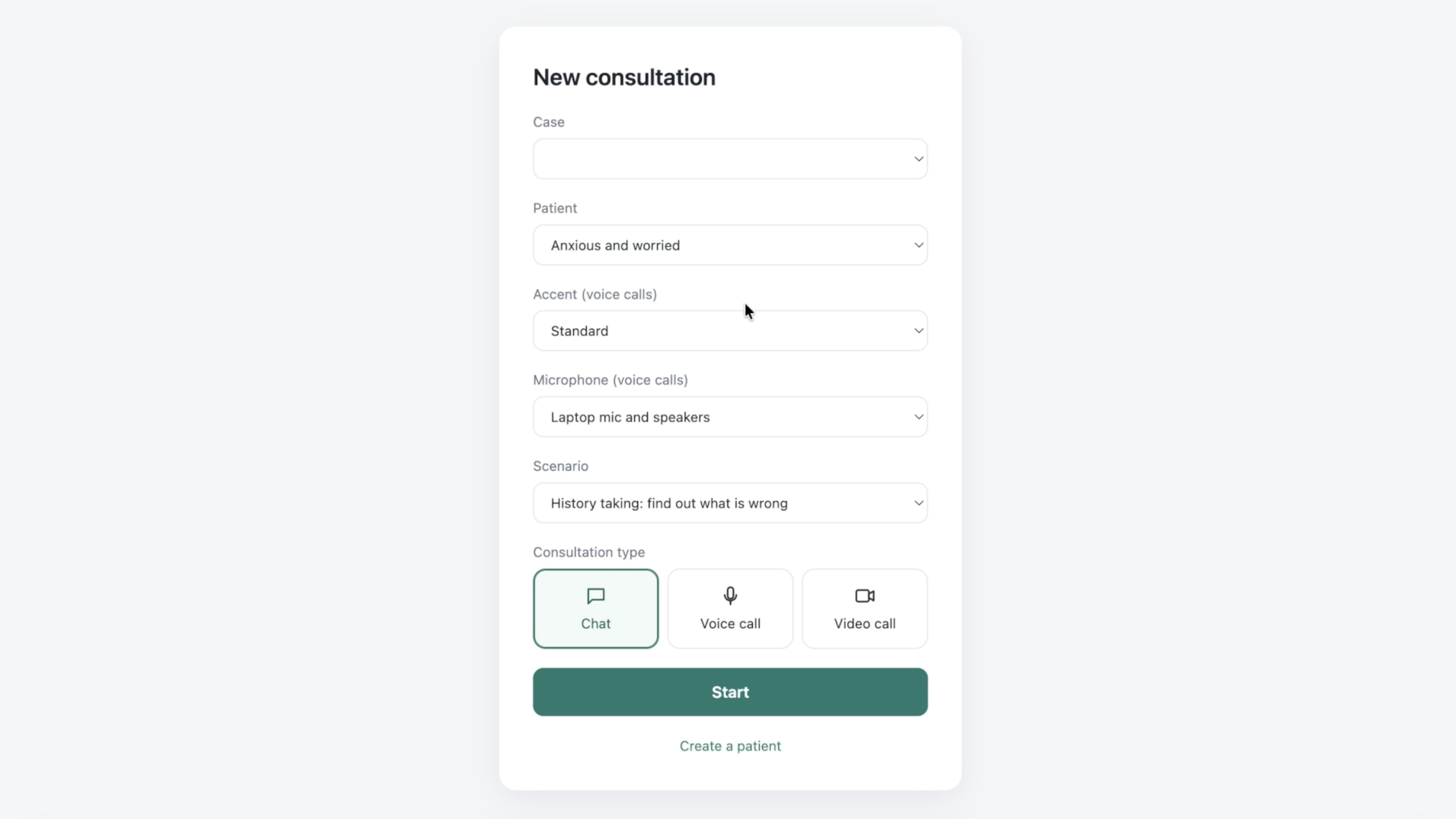
create a patient
-
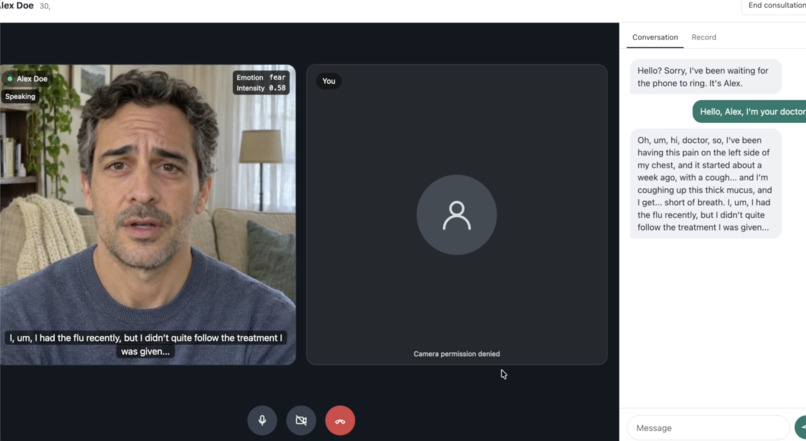
anxious simulated patient
-
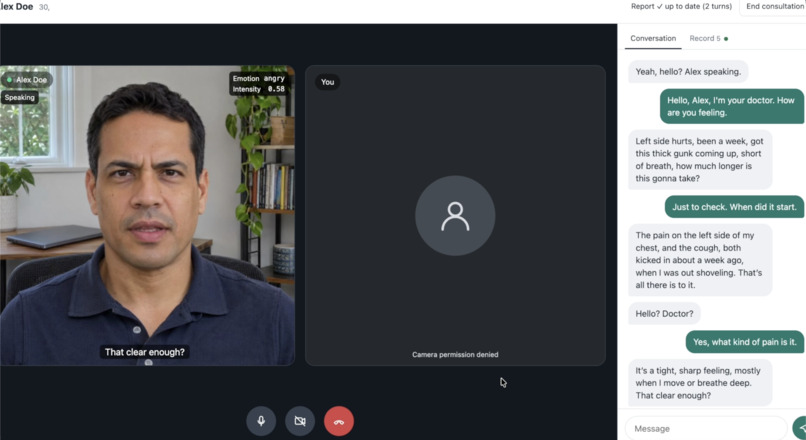
impatient simulated patient
-
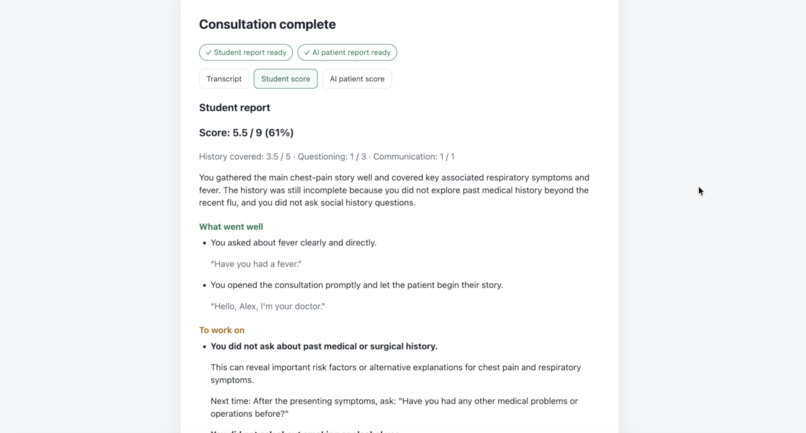
student score
-
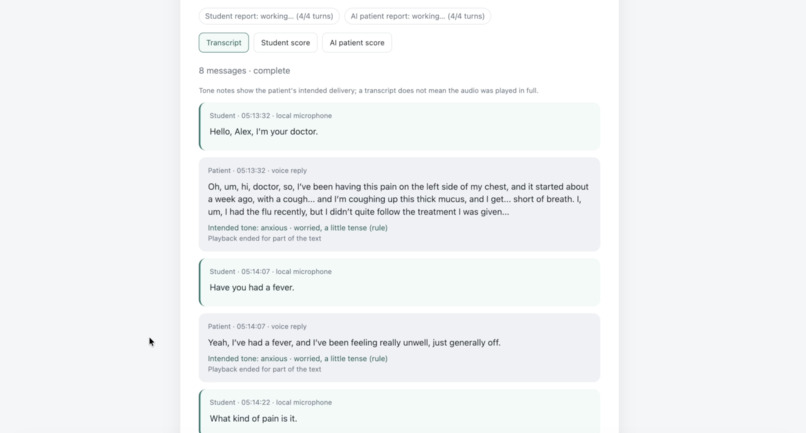
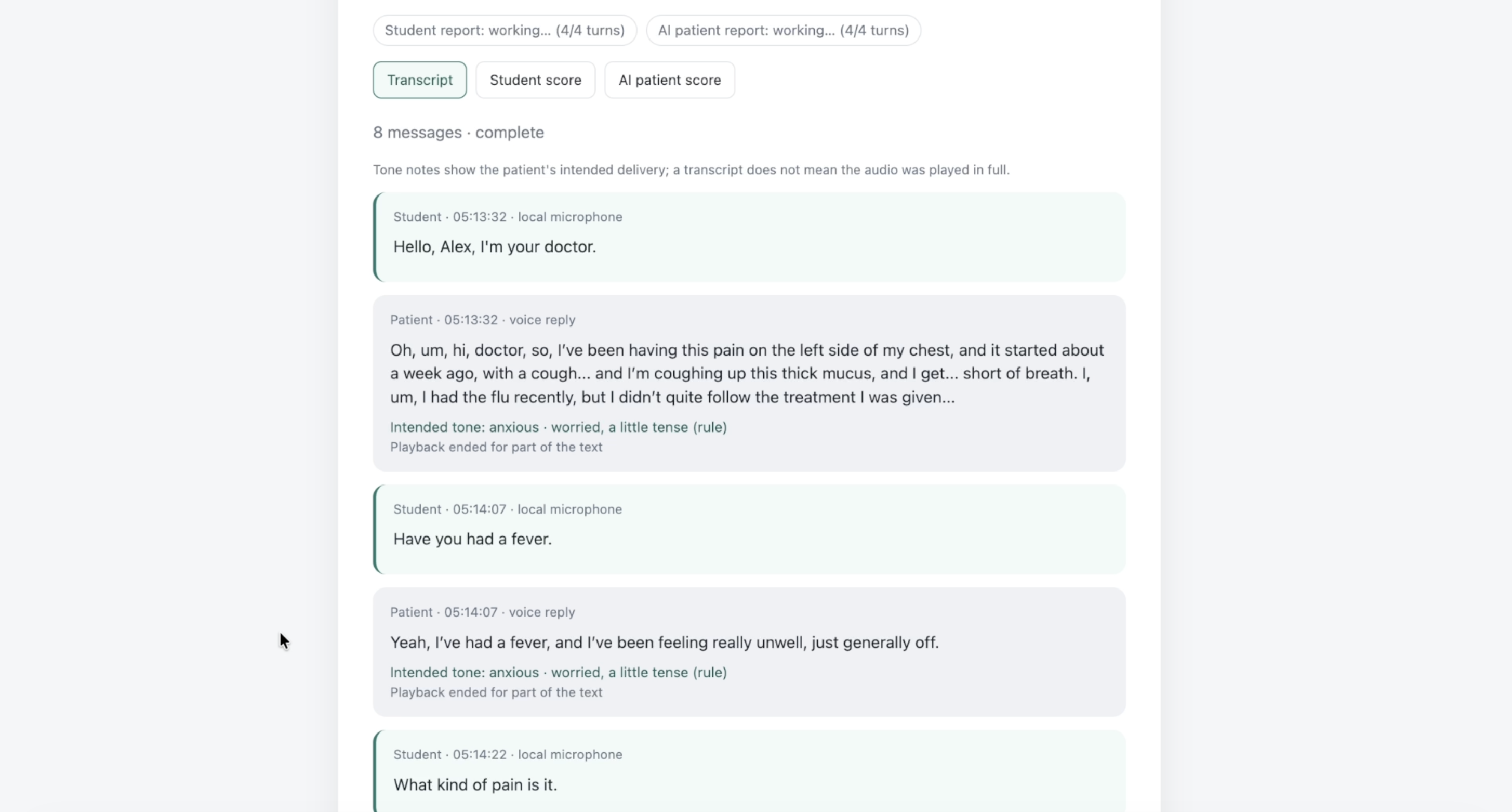
transcript
-
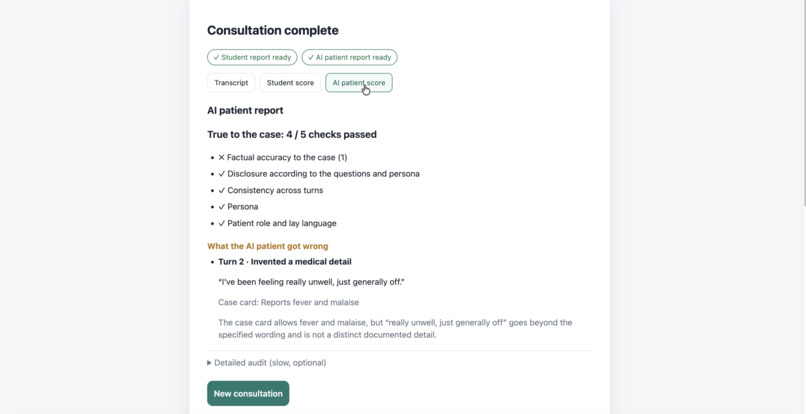
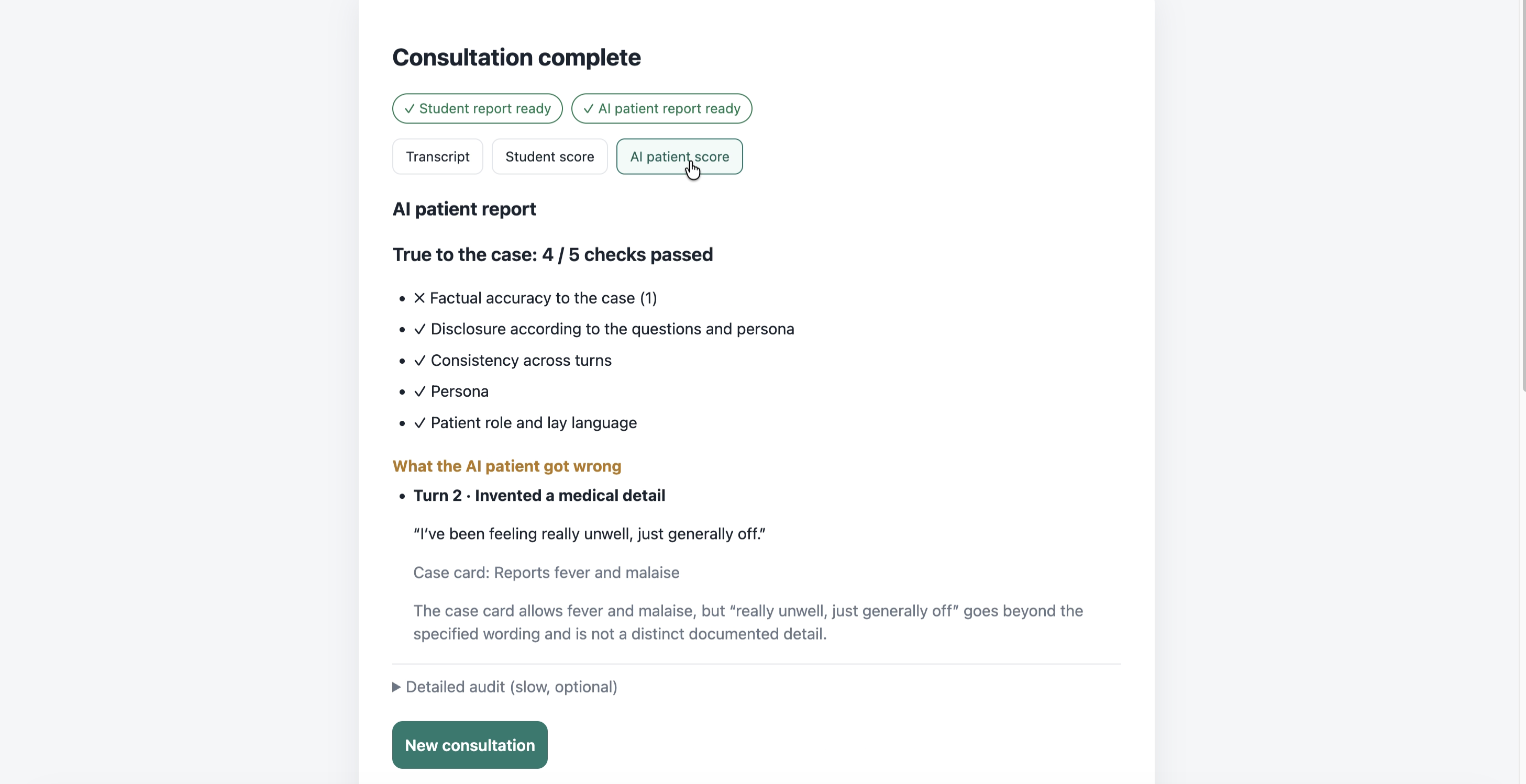
ai patient score
Inspiration
Medical students learn to take a history by practising the conversation itself. They need to ask useful follow-up questions, notice when a patient hesitates, and build enough trust for a difficult detail to come out. Working with trained simulated patients is valuable, but it depends on having an actor and a session available. We built VIP Clinic for the Avelios challenge at hackaTUM 2026 so students could practise between those sessions and repeat an interview after getting feedback.
What it does
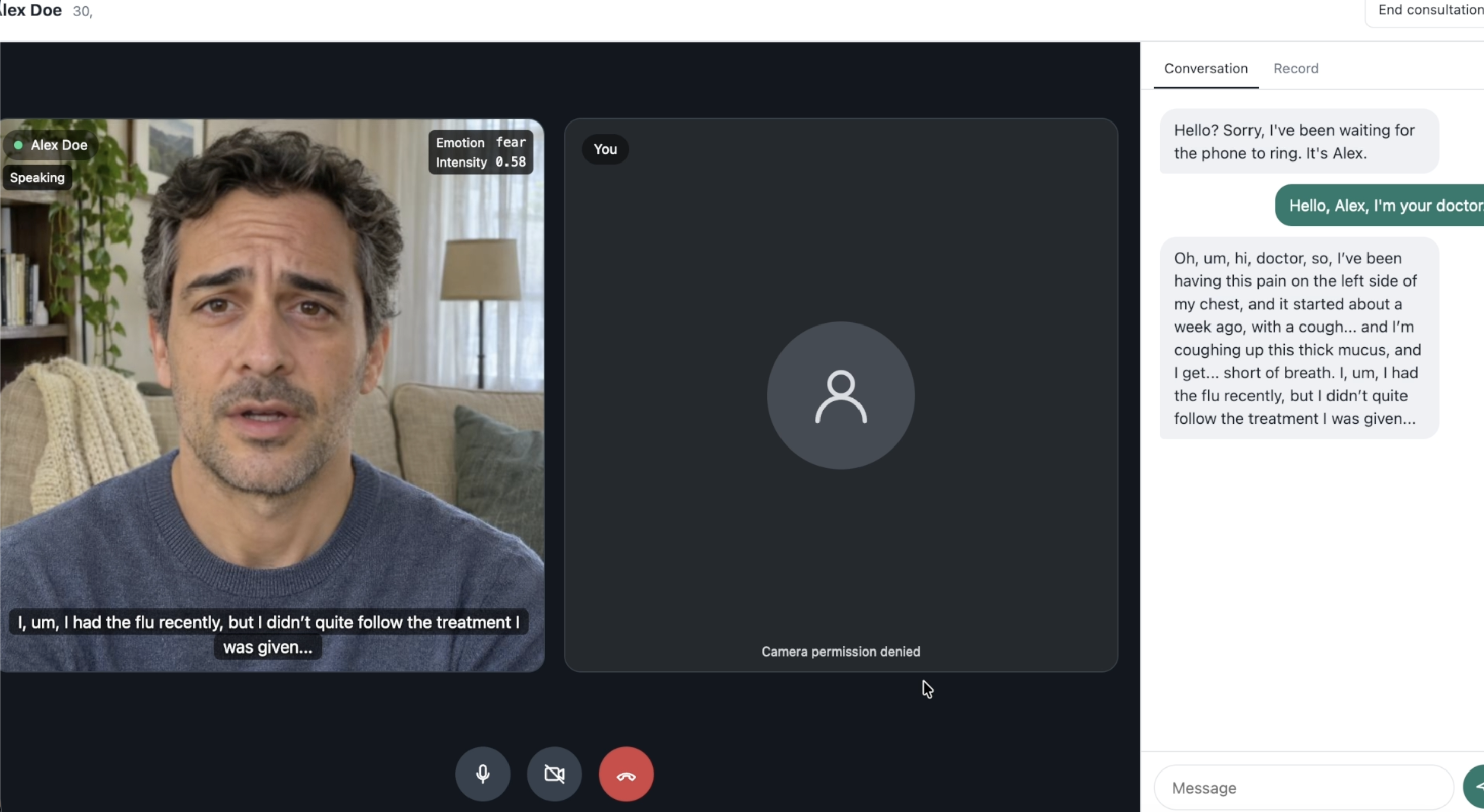
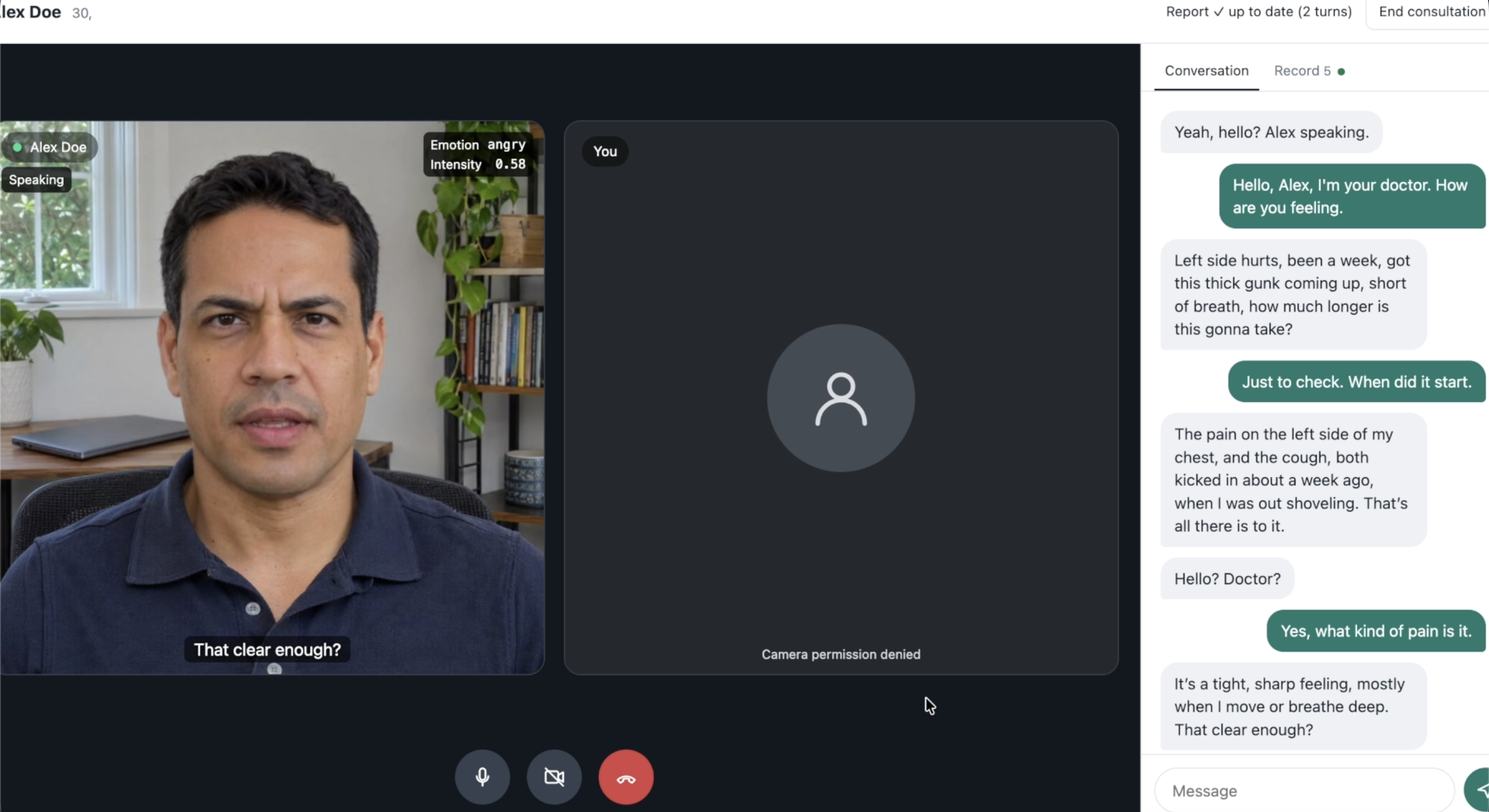
VIP Clinic is a voice-first virtual patient for practising history-taking in English. A student chooses a case and a persona, then interviews the patient through text, a live voice call, or a video call with an animated avatar. The same case can be played by a patient who is anxious, talkative, or inclined to downplay symptoms.
In one simulated case, Frank Miller opens by saying he has felt tired lately. A follow-up brings out the chest tightness he feels on the stairs and when it started. Other details come out only when the student asks, follows up, or earns the patient's trust. The patient's emotional response can shift as the conversation unfolds. For example, adding “Take your time” to a question can soften an anxious patient's expression while they listen.
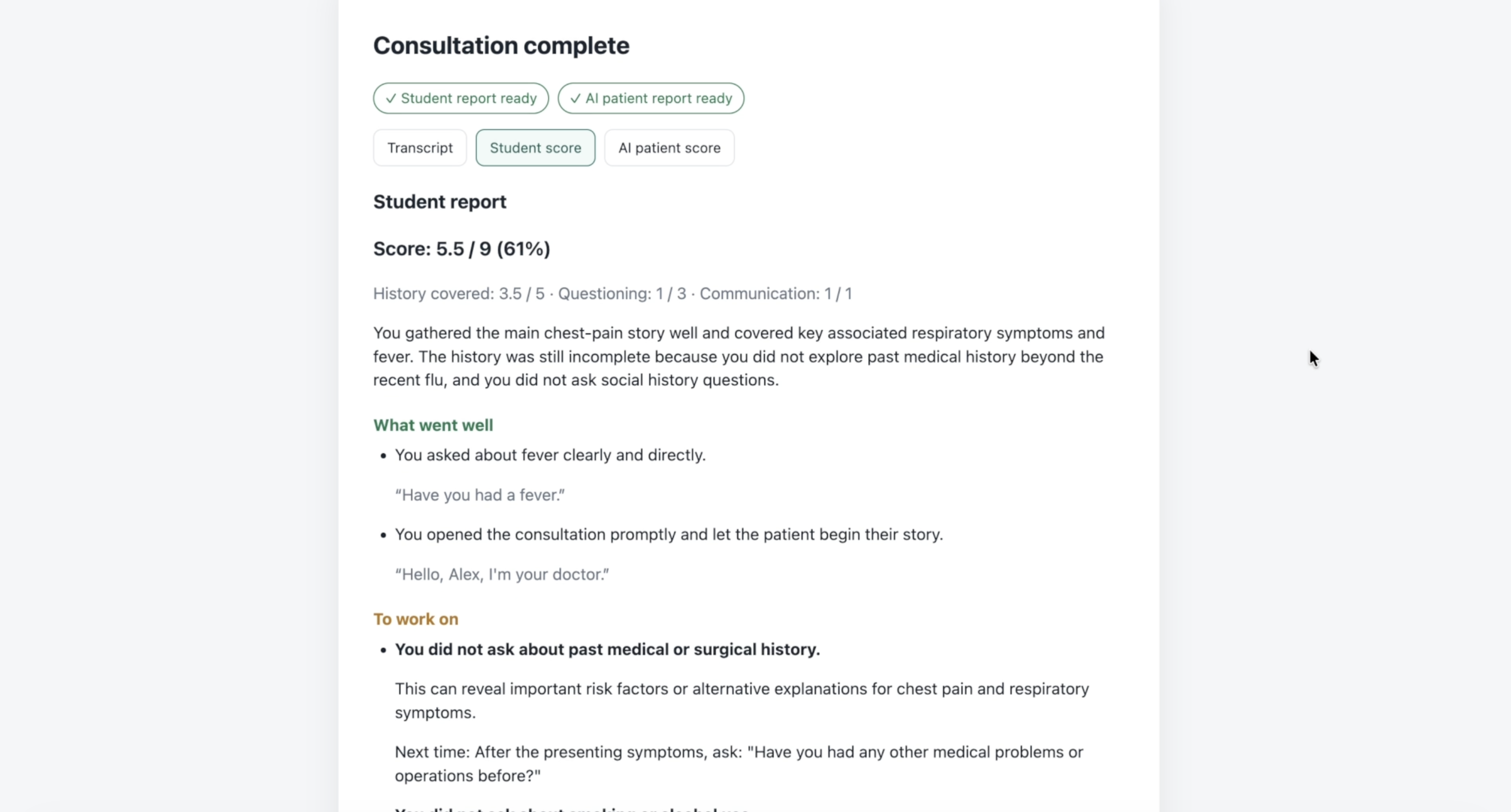
After the interview, the debrief shows which parts of the history were covered, which remain unclear, and what to ask next. It cites specific turns so students can connect feedback to what they actually said and heard.
How we built it
- Case and persona cards. A case card defines the patient's identity, medical history, and when each fact can be shared. A persona card defines the voice, speaking habits, trust threshold, and emotional baseline. The FastAPI backend loads both at the start of the session and tracks questions, trust, and disclosure as the interview progresses.
- Voice and video. Live voice uses OpenAI Realtime over WebRTC. For video, Zipformer transcribes incoming speech as the student talks, while SenseVoiceSmall can process the full turn and return a transcript and audio cues. The emotion planner guides the patient's delivery and expressions. On Linux, AVTR-1 uses patient audio to drive lip sync and head motion, and PC-Talk adds expressions. The browser receives synchronized audio and frames over WebSocket.
- Evidence-based debrief. The scoring step checks the case rubric against the session record and playback status. A separate coaching step explains the result, quotes relevant turns, and suggests follow-up questions in English.
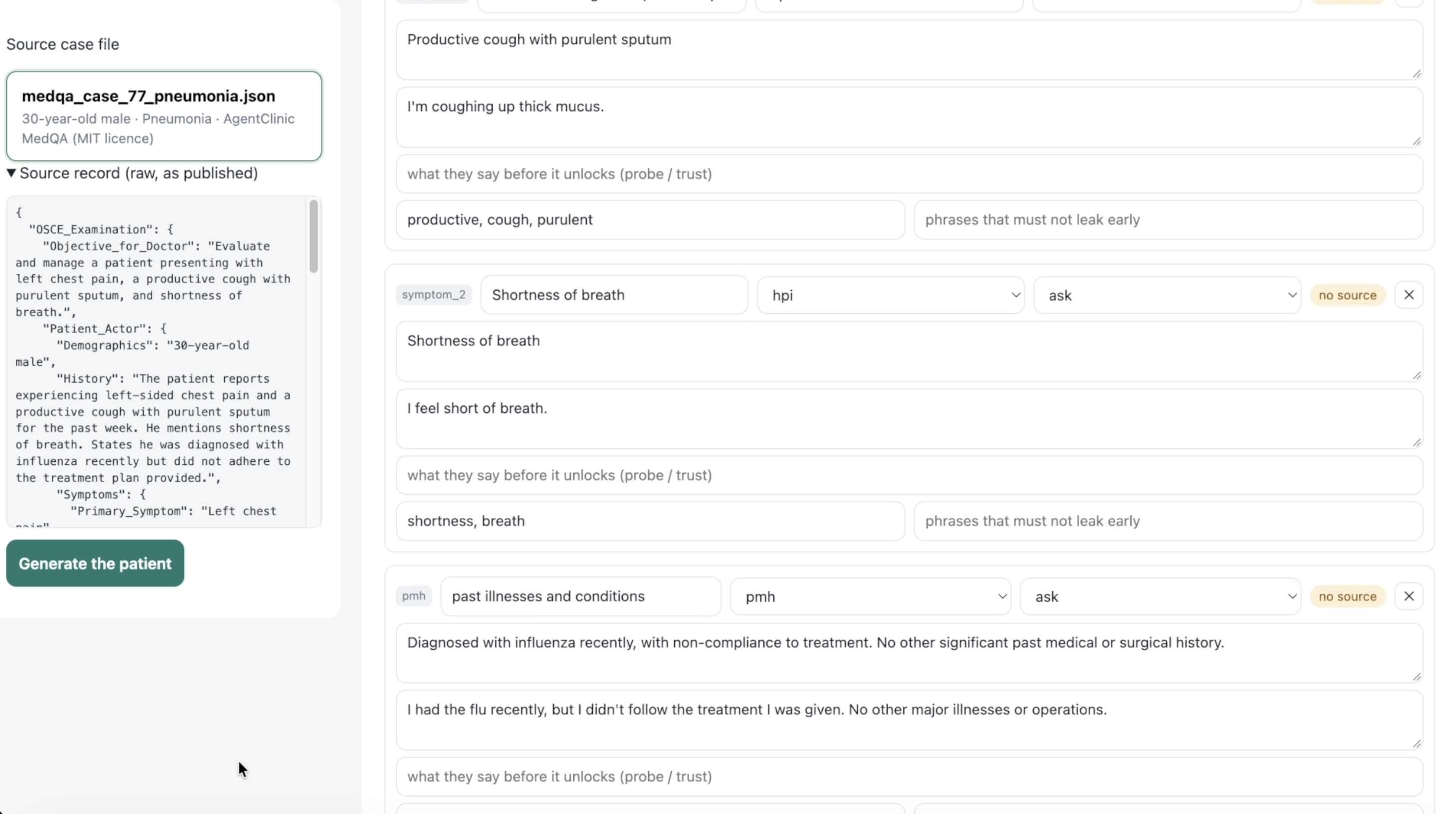
- Case authoring. We prototyped a workflow for educators to draft case cards, set disclosure rules, and review both the clinical facts and the resulting simulated conversation before publishing a case to students.
Challenges we ran into
The patient needs to sound spontaneous while staying within the case facts and revealing them at the right time. We keep disclosure decisions in the backend and check the generated replies against those decisions. We also had to account for interruptions. If a patient starts answering and the student cuts in, the scoring logic checks what actually played before counting a detail as covered. For video, we worked on keeping the patient's audio, lip movements, and listening reactions in sync.
Accomplishments that we're proud of
- We connected a simulated consultation to a debrief that can point back to specific exchanges.
- We built a Linux avatar pipeline in which the patient reacts while listening as well as moving in sync with speech. A single-avatar rendering test on an RTX 3090 ran at 720 × 720 and 25 fps, with peak model GPU memory of about 3.01 GiB.
- We created a bilingual project page with interactive architecture diagrams and an enlarged view of how a fixed persona and changing emotions shape the same patient's replies.
What we learned
Separating the medical case from the persona lets us vary the communication challenge while keeping the clinical facts consistent. We also learned to track what the student heard during interruptions. A reply that finished generating can still leave the student without the detail they asked for.
What's next for VIP Clinic
We want to test with medical students and educators, expand the set of reviewed cases, and measure how consistently the patient handles paraphrased questions and follow-ups. We also want to break down the time from the end of the student's turn to the first audible reply, so we can improve responsiveness while preserving the case rules and the quality of the feedback.
