-
-

Makes you blazing fast and your enemies furious
-
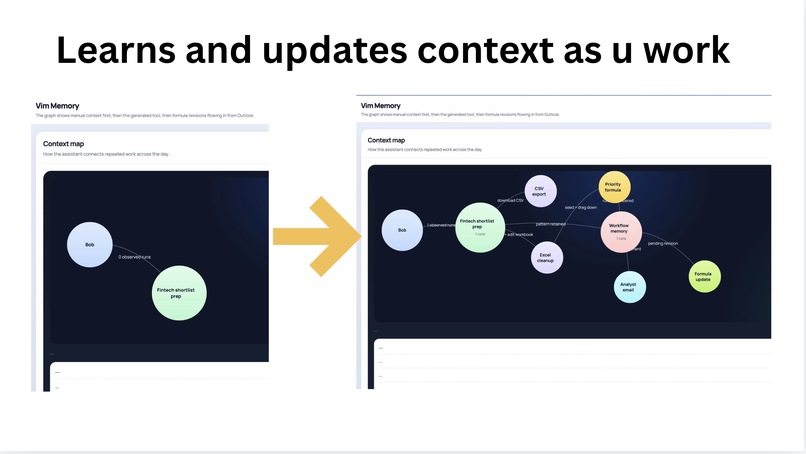
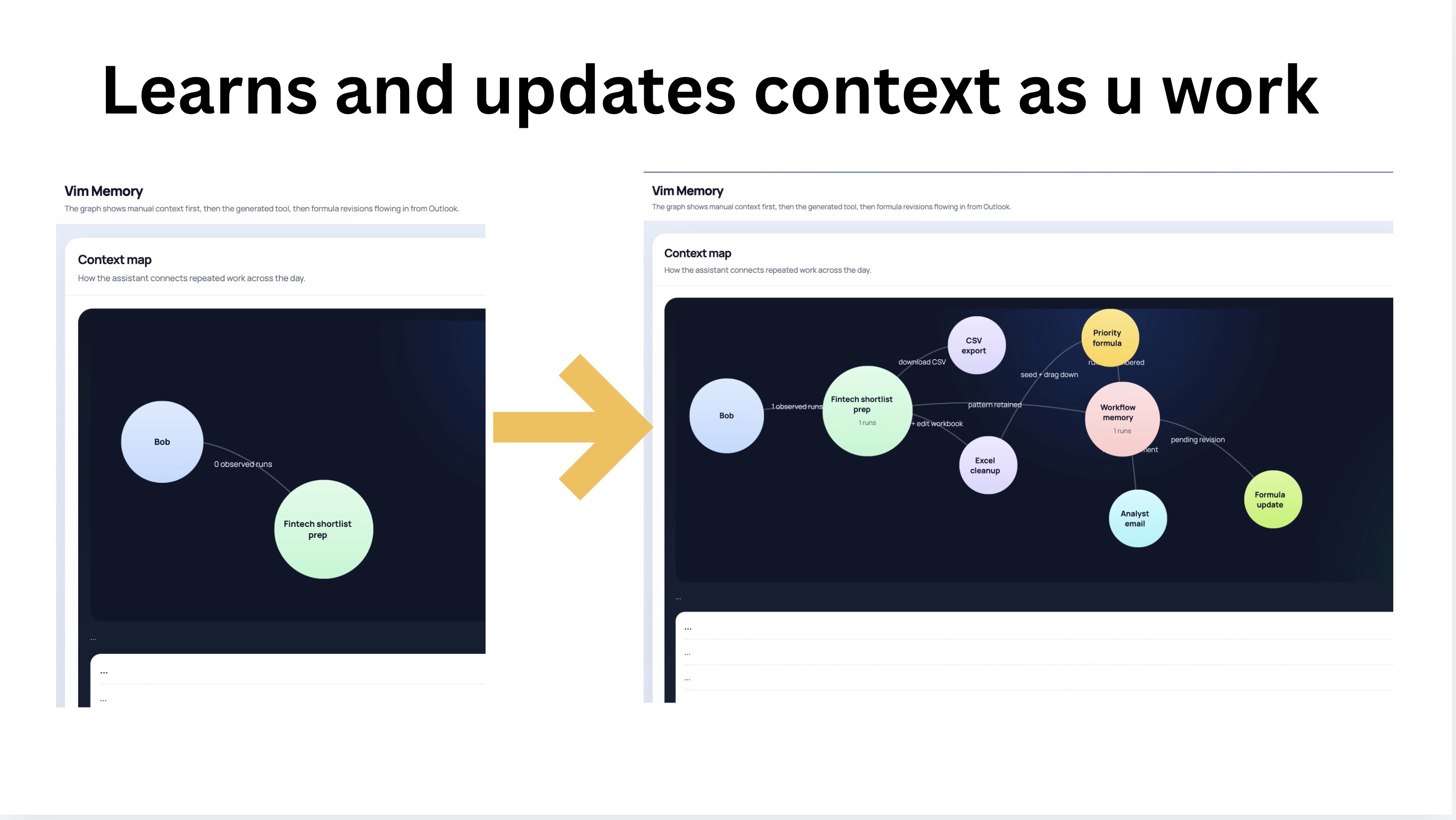
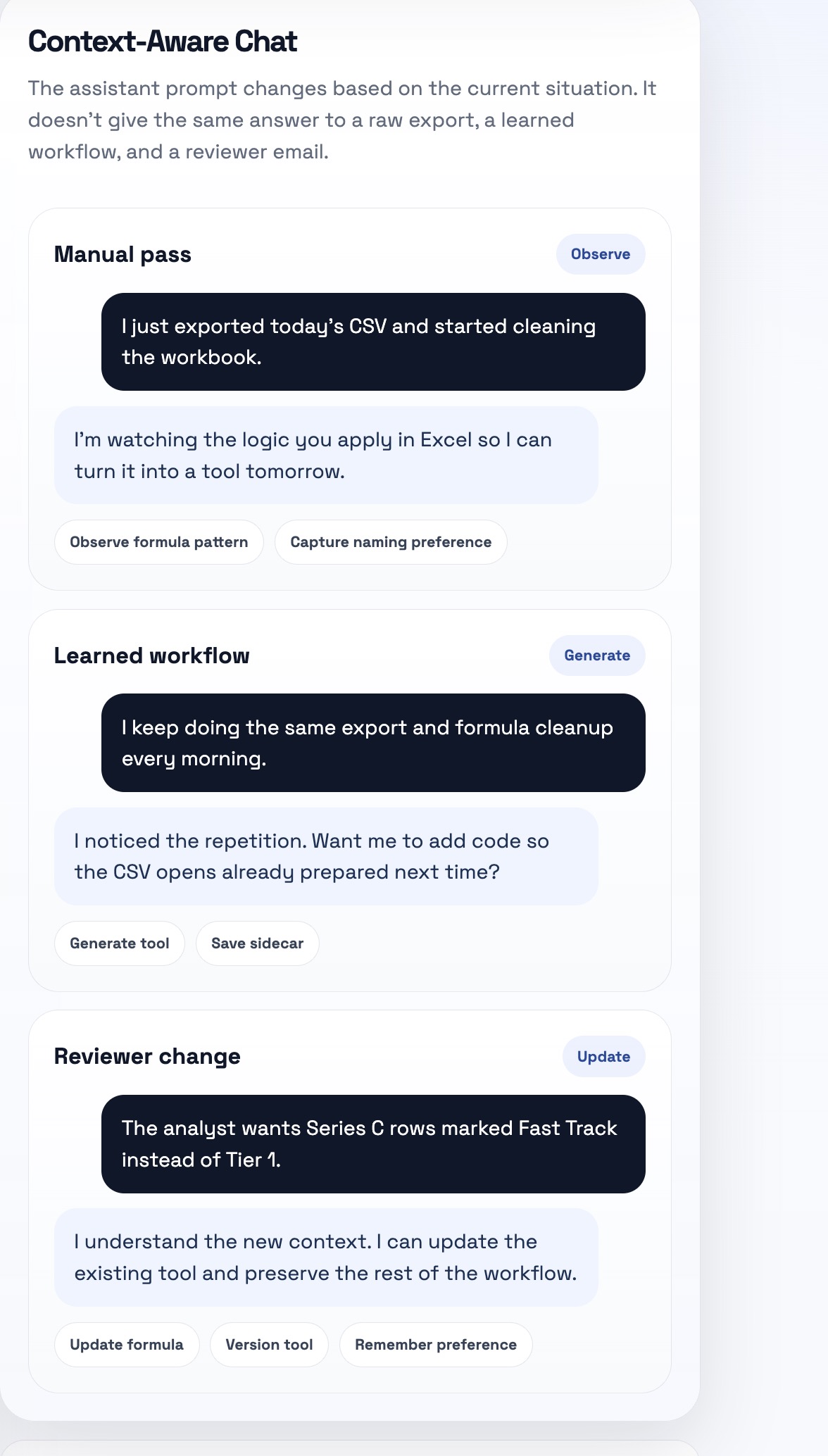
Task specific context that updates in real time
-
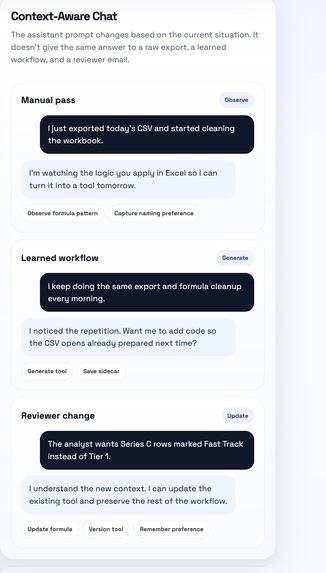
Maintains your automations for you
-
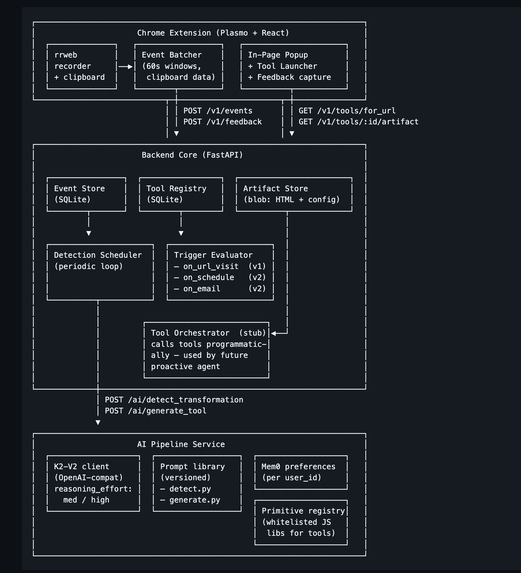
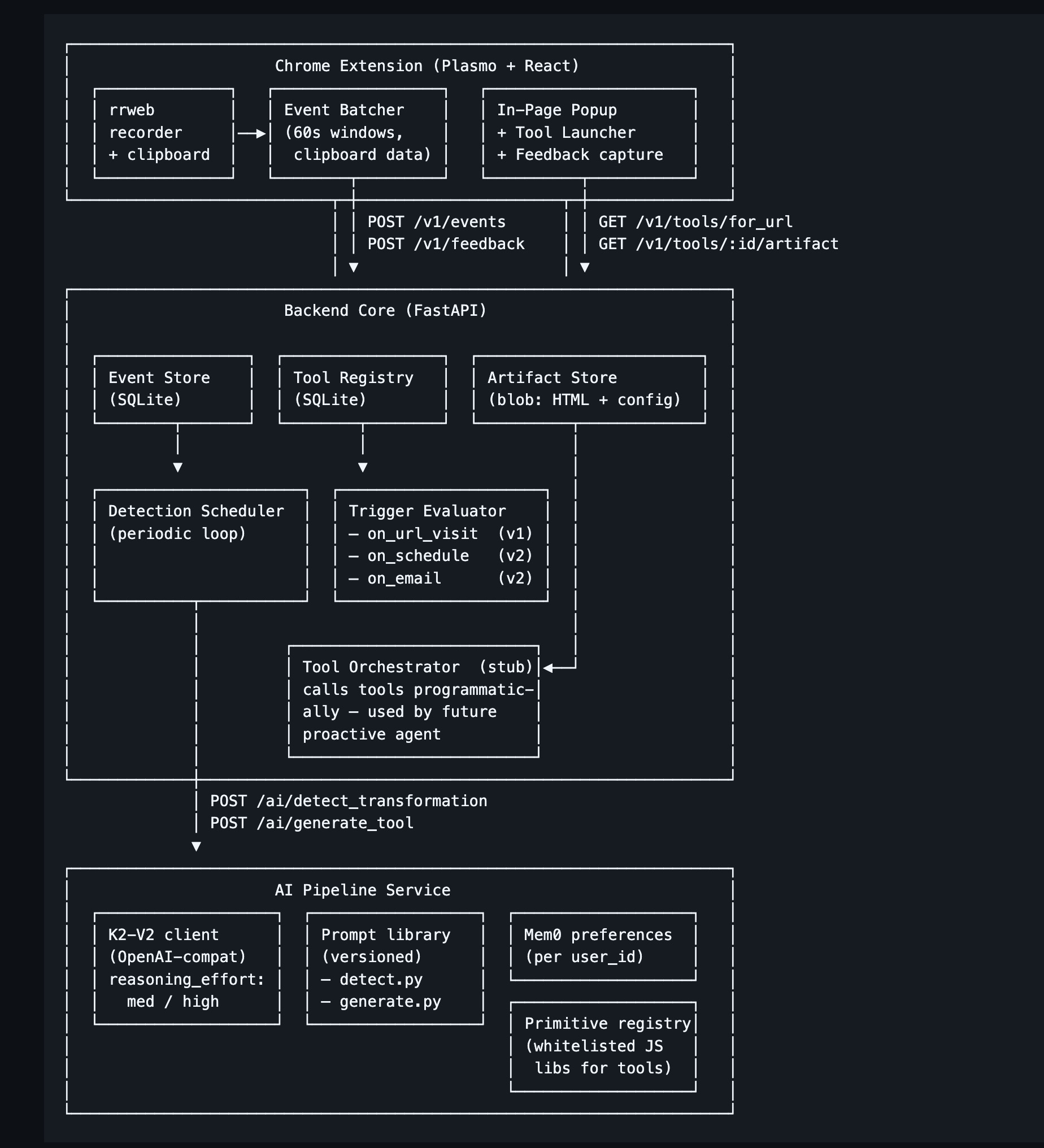
System Architecture

Inspiration
At the start of this hackathon, Professor Arvind challenged us to think differently about AI and work. He introduced the task model — the idea that AI doesn't replace jobs, it takes over tasks. The real productivity gap isn't AI vs. humans. It's humans who use AI well vs. humans who don't. That stuck with us. Big companies are rushing to roll out AI tools, some even measuring employees by token usage. But every worker is different. Standardized tools create new friction instead of removing it. We built Vim Diesel to fix that.
What it does
Vim Diesel is a Chrome extension that passively observes how you work, detects repetitive patterns in your behavior, and automatically generates personalized tools tailored to your specific workflow — without you having to ask for it. It observes silently in the background by recording how the webpages get manipulated in a time period, builds automation tools customized to each individual, and surfaces them contextually, exactly when and where you need them. A stock broker who runs the same calculations every morning gets a one-click tool that fills his spreadsheet automatically. An operations employee who receives similar email requests every week gets her documents updated without lifting a finger. No setup. No prompts. No learning curve.
How we built it
We built Vim Diesel as a Chrome extension that monitors user interactions within the browser. A pattern Vim Diesel is a Chrome extension built on Plasmo + React/TypeScript, backed by a FastAPI Python service and a separate AI microservice.
Observation layer: A content script intercepts browser events — clicks, inputs, copy/paste, form submits, file downloads — with a privacy-aware observer that redacts sensitive fields before anything leaves the page. Events are batched by a background service worker and sent to the local backend.
Pattern detection: A DetectionScheduler polls buffered events and runs them through two stages: a heuristic classifier checks URL/domain patterns and filters for high-signal events, then escalates to a live LLM call if needed. We support OpenAI, Gemini, and custom providers, with Mem0 for lightweight user preference memory.
Tool generation: When a pattern crosses the confidence threshold, the AI generates a self-contained HTML artifact — a functional mini-tool with defined inputs, outputs, and trigger rules — stored in SQLite and indexed by URL context.
Surfacing: On navigation, the extension queries the backend and renders matching tools as non-intrusive overlays exactly where the user is working.
Challenges we ran into
The hardest problem was defining what counts as a pattern. Human behavior is noisy — people rarely do things in exactly the same way twice. We had to build a detection system flexible enough to recognize intent across variation, without generating false positives that would feel intrusive or annoying(thanks to our great sponsor). Balancing passive observation with a non-disruptive user experience was also a constant tension throughout the build.
Accomplishments that we're proud of
We're proud that it actually works. Vim Diesel can observe real user behavior, detect genuine repetition, and produce a functional, usable tool all without the user having to configure anything. The end-to-end loop from observation to suggestion to automation is live and demoed. We're also proud of holding firm on our ethical line: the personalized tools belong to the worker, not the company.
What we learned
We learned that the best AI products are the ones that disappear into your workflow rather than demanding you change it.
What's next for Vim Diesel
We want to expand pattern detection across more complex, multi-step workflows and bring Vim Diesel to enterprise teams as a B2B product. The roadmap includes deeper integrations with tools like Gmail, Google Sheets, and Salesforce, and a privacy-first architecture that keeps all personal workflow data on-device. The goal is simple: every worker gets their own AI — one that learns them, not the other way around.
Built With
- fastapi
- k2thinkv2
- mem0
- openai
- plasmo
- python
- react
- sql
- typescript


Log in or sign up for Devpost to join the conversation.