-
-
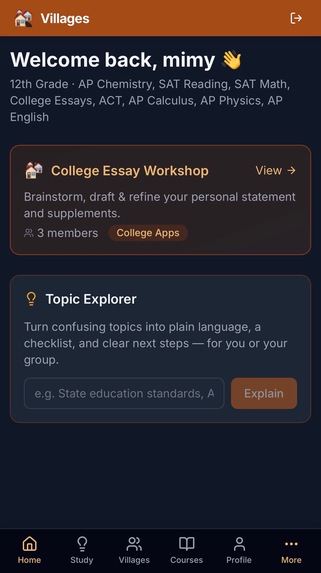
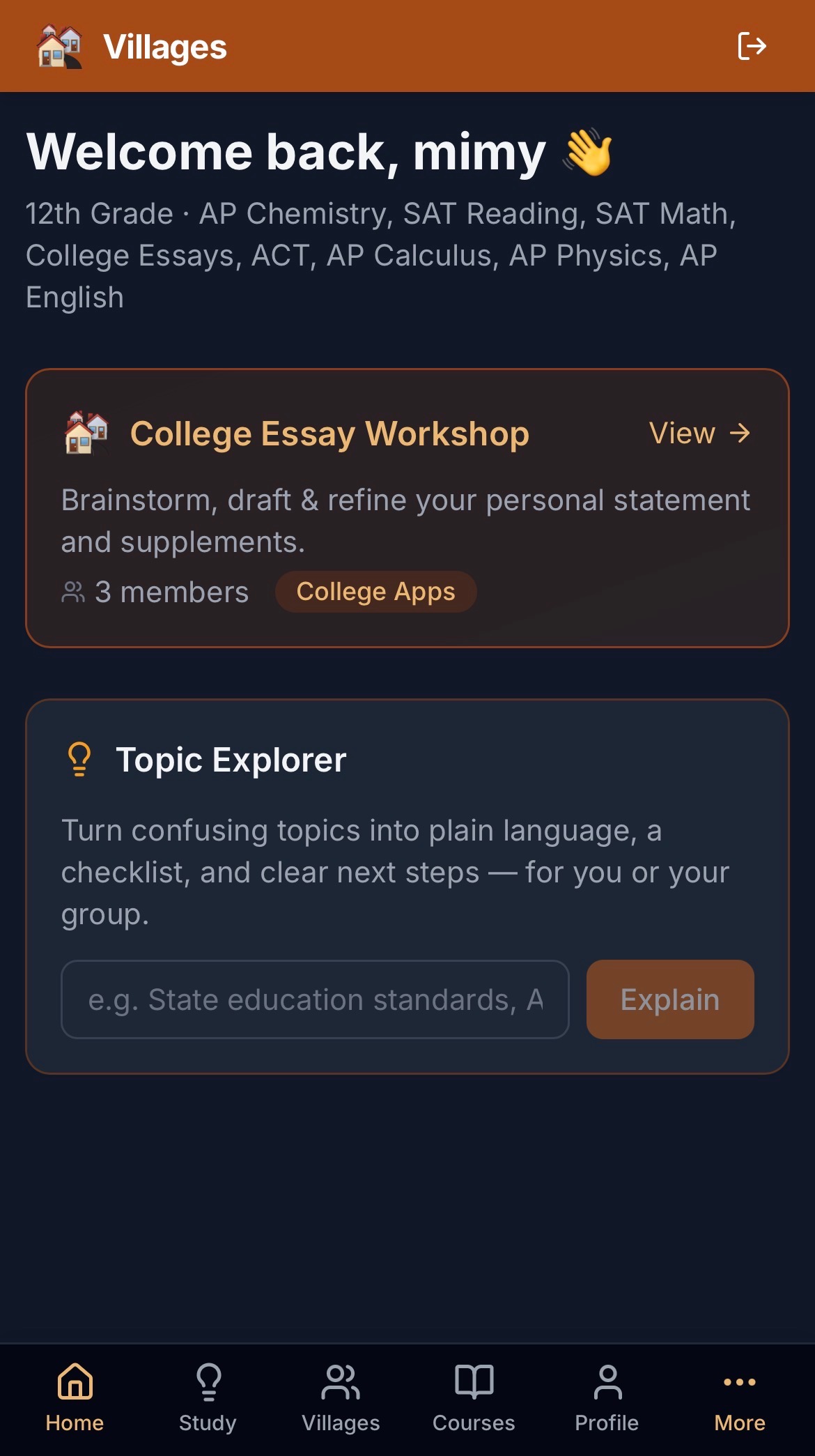
Profile page
-
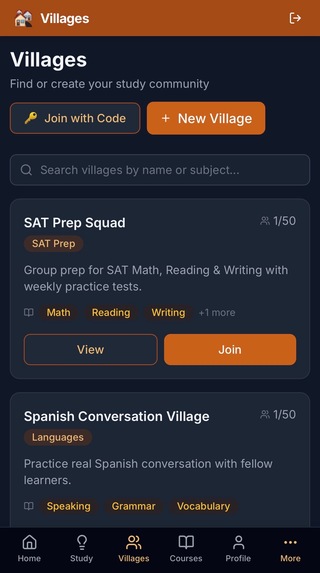
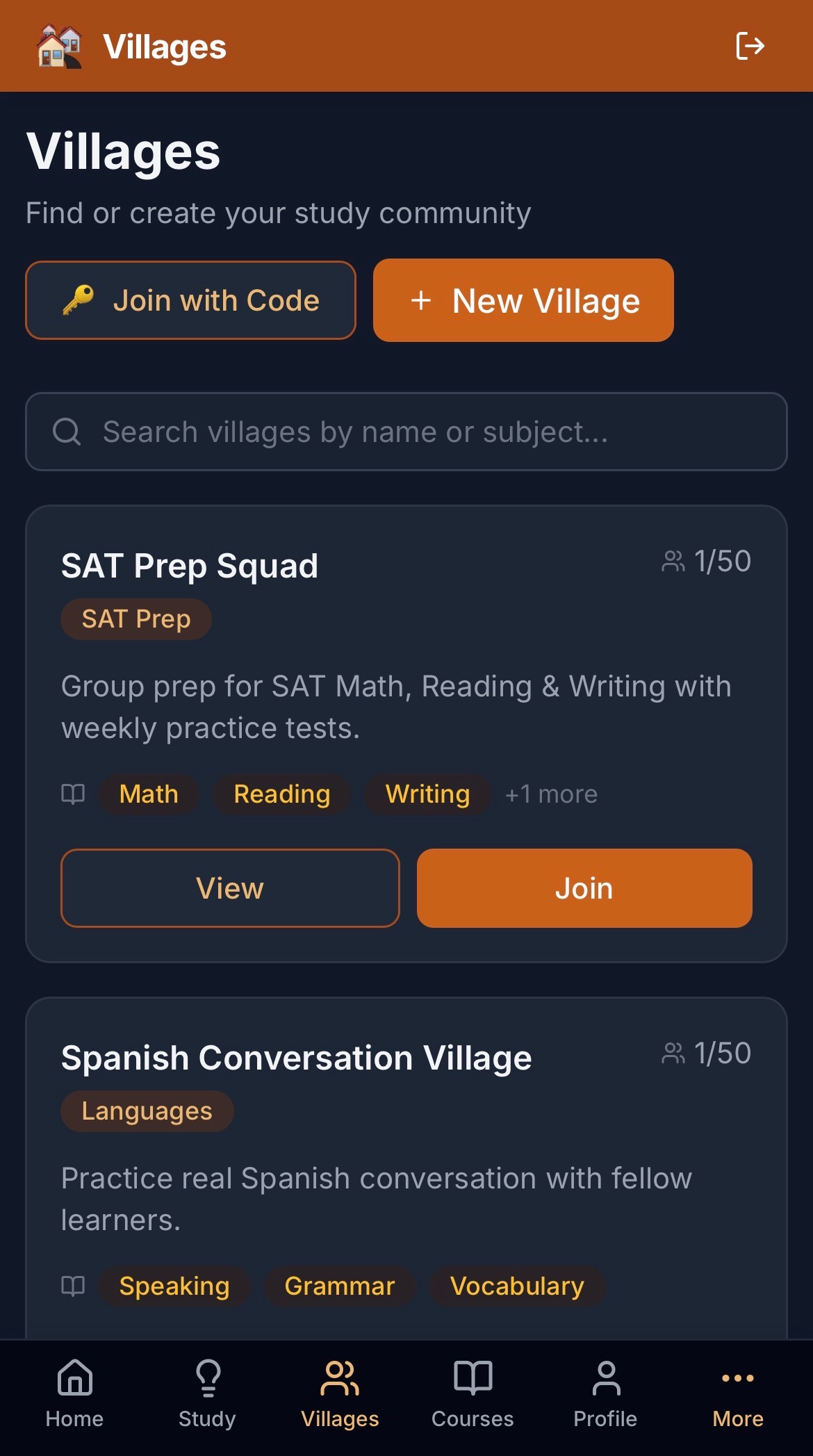
Main Villages page
-
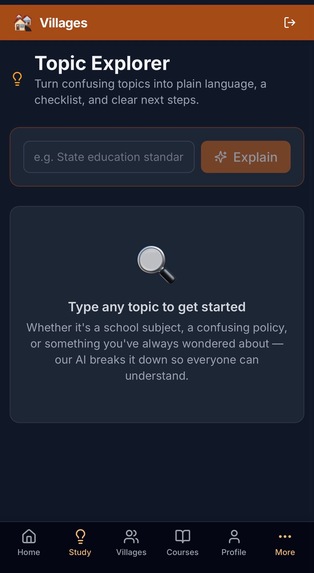
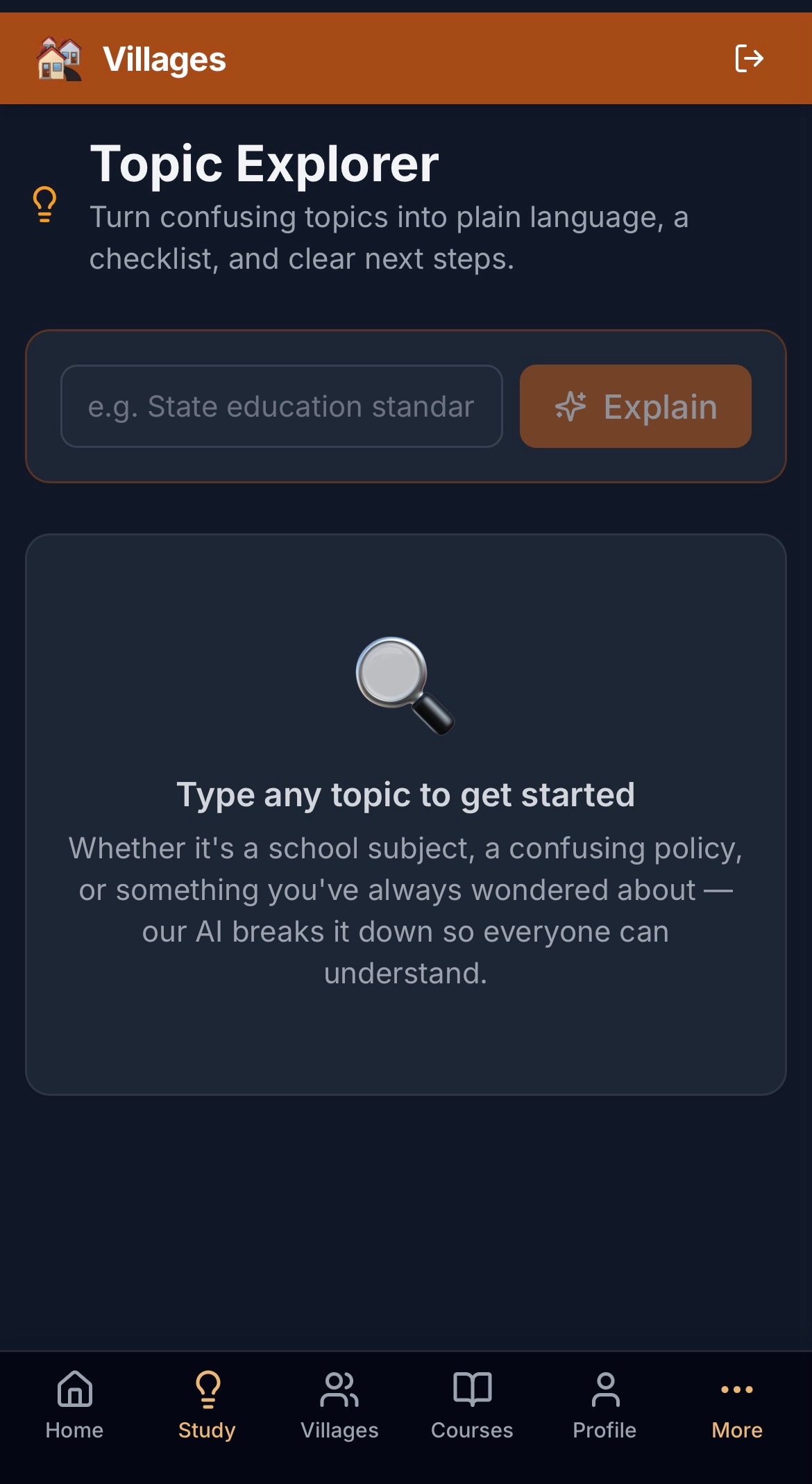
Topic Explorer
-
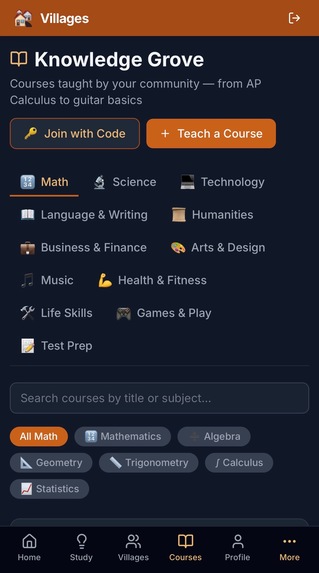
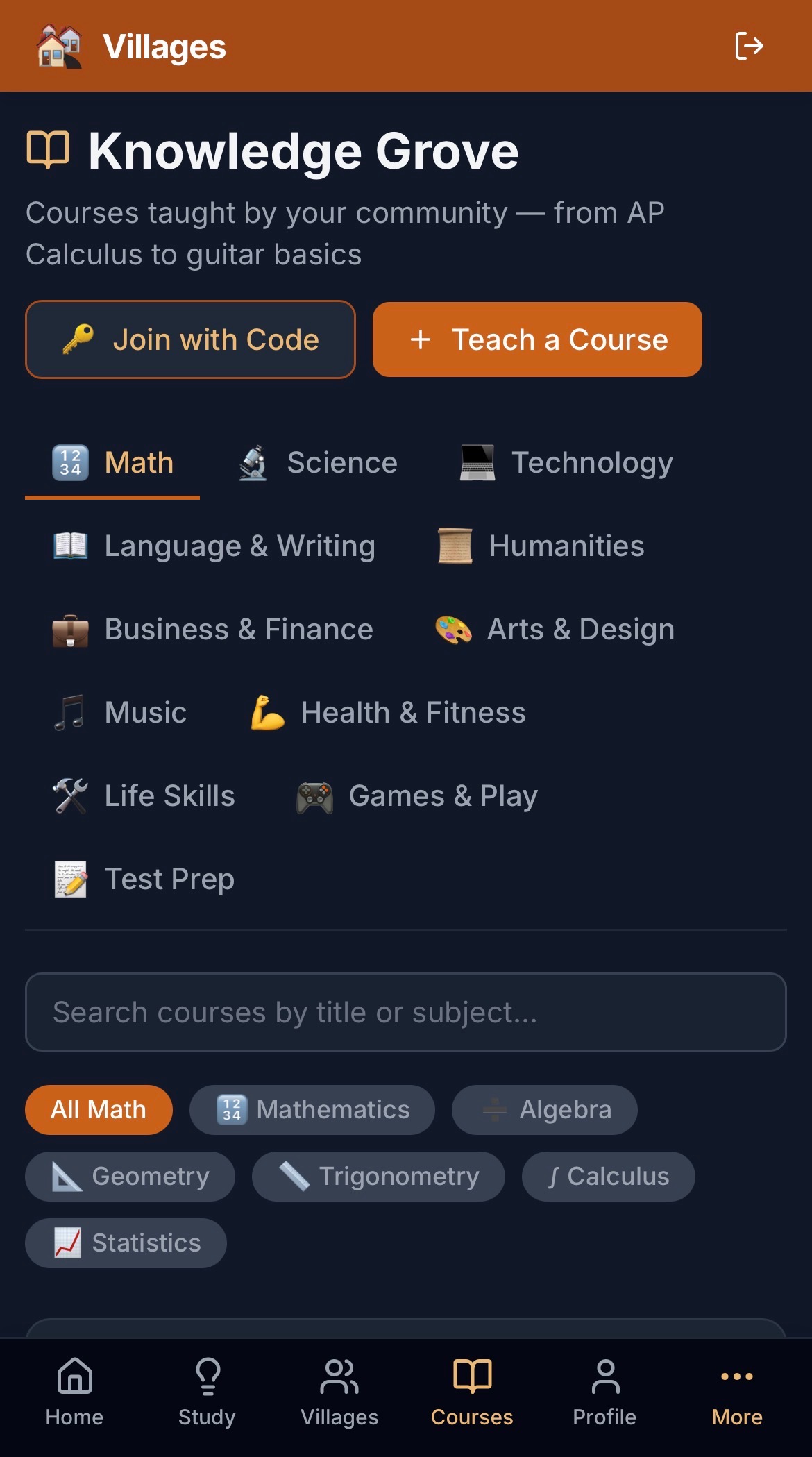
Knowledge Grove, courses taught here
Inspiration
Our project was inspired, in part, by our own frustrations. As rising seniors, there is a lot of pressure to get into a good college and perform well throughout high school. However, too often we have struggled to find good resources that are accessible and streamlined. Resources were either too expensive, or were limited in the features that they offered. This project was created with the inspiration of helping our peers and others with what we struggled with: finding a streamlined and inexpensive source for learning support, growth, and help in the college admissions process. Through conversations with classmates and other students preparing for college admissions, we found that many struggled to access affordable tutoring, personalized feedback, and reliable college application guidance. Students often switched between multiple platforms for studying, essay support, and college planning, creating unnecessary complexity and expense.
What it does
Our project is an AI based framework for learning; the main intention of the project is making higher level education more accessible to people from all backgrounds. Villages includes features such as the “Campfire” that allow people to communicate easily and get help and support fast. It helps lifelong learners, specifically students and people seeking higher education in the United States education system, gain access to free resources. The AI is meant to be very specialized in order to present students with applicable and appropriate questions and question difficulty, while also being a streamlined platform to help rising high school seniors get all the help they need in one location. Students provide inputs such as practice test results, academic goals, or college essays. The AI analyzes these inputs to identify learning gaps, recommend resources, generate appropriately challenging practice questions, and provide feedback on written work. All recommendations are presented to the student for review, allowing users to decide which suggestions to accept while maintaining full control over their learning and application materials. Students can upload practice questions, essays, or assessment results. The AI analyzes performance patterns, identifies areas of weakness, and generates personalized study plans and practice questions tailored to the student's current skill level. For college essays, the AI provides feedback on structure, clarity, and organization while leaving final editing decisions to the student.
How we built it
Through our own experiences and conversations with our peers, we identified common difficulties students encountered when using existing AI models to study. Difficulties included image uploading limits, incorrect answers and explanations from AI, untailored responses to college essays, and expensive subscriptions. After identifying the problems, we built “Villages”. During the development process, our team used a variety of AI tools to assist with the different stages of constructing the website. Models like Claude, Gemini, Manus, and Opencode assisted our designing process. We reviewed, tested, and adjusted the results to ensure the website was performing well and the results were aligned with our goals. Members in our team tested each feature as if we were actually students studying for these tests and using the college preparation features. We then gathered feedback and evaluated the website from a student perspective. This ensures our website addresses the real challenges faced by students on a day to day basis. To reduce inaccurate responses, we tested the AI across multiple academic subjects and college preparation scenarios. Team members compared generated explanations against trusted educational resources and evaluated whether recommendations were useful, accurate, and age-appropriate before incorporating them into the platform.
Challenges we ran into
One of the main challenges our team encountered was designing the website to be as inclusive as possible for a wide variety of students and learners. Since every student has their own methods of studying and their own preferences, we felt the need to include features that would make the learning process effective and personalized. Our team researched and explored accessibility tools such as dyslexia friendly fonts and text to audio features to cater to people with learning difficulties. By doing so, we learned that creating an effective education platform requires understanding the diverse needs of users in order to design an experience where every student has equal opportunities to learn and succeed.
Another challenge we faced is the slow AI responses in certain models which affected our workflow and required us to adjust our response to that. Additionally AI generated random fonts, colors, text size, and styles which our team had to carefully review and refine to ensure the organization and professionalism of the website. Another challenge involved balancing personalization with reliability. While highly personalized AI responses can be helpful, they can also introduce inaccurate recommendations. To address this, we designed the platform so that AI-generated suggestions are presented as recommendations rather than final answers, encouraging students to evaluate information critically.
Accomplishments that we're proud of
Our team felt that an accomplishment of this project was to successfully build a functioning website that is directly applicable to our lives. The website tackles specific issues we face as students and is a tool that we can share with peers and fellow students. Another accomplishment we are proud of is creating a feature with a creative name called “Villages Campfire” where students can communicate in voice channels. The name itself fits with the website theme of camping and community. It allows for student engagement and makes the project feel very community oriented. We are especially proud that the platform combines community support, college preparation resources, and AI-powered study assistance in a single location, reducing the need for students to navigate multiple disconnected services.
What we learned
This process demonstrated the worth of critical thinking. We meant to create the model in order to help people, yet we also wanted to create a model that had new and refreshing features that kept people engaged when dealing with topics such as school that can tend to be tiresome. Another lesson we learned was that AI vastly expands the opportunities we have to make life better for those around us. This project was largely driven and created with the use of AI, and the resulting website is very applicable to our lives. We learned that because of the advancements of AI, we can now more easily provide people with the tools they need - in our case, tools being college essay aid, study plans, and building community with others who can help them learn. We learned that effective educational AI is not simply about generating answers. It requires personalization, transparency, and human oversight. Throughout development, we found that students benefited most when AI acted as a learning assistant that explained reasoning and suggested next steps rather than providing direct solutions.
What's next for Villages
The next step in implementing this model would be to promote the website in order to equip people with the tools they need to succeed. Promotion would likely be heavily focused on groups of American high school students, especially rising juniors and seniors ready to begin the college search. Another step going forward would be to develop and improve courses on the site in order to help people find a study path that is best suited to them individually. Future development will focus on improving personalization by refining how the AI adapts study plans based on student progress over time. We also plan to expand feedback systems that allow students to flag inaccurate responses, helping us continuously improve the quality and reliability of AI-generated guidance.
Built With
- daily.co
- javascript
- openrouter
- python
- react
- supabase

Log in or sign up for Devpost to join the conversation.