Inspiration
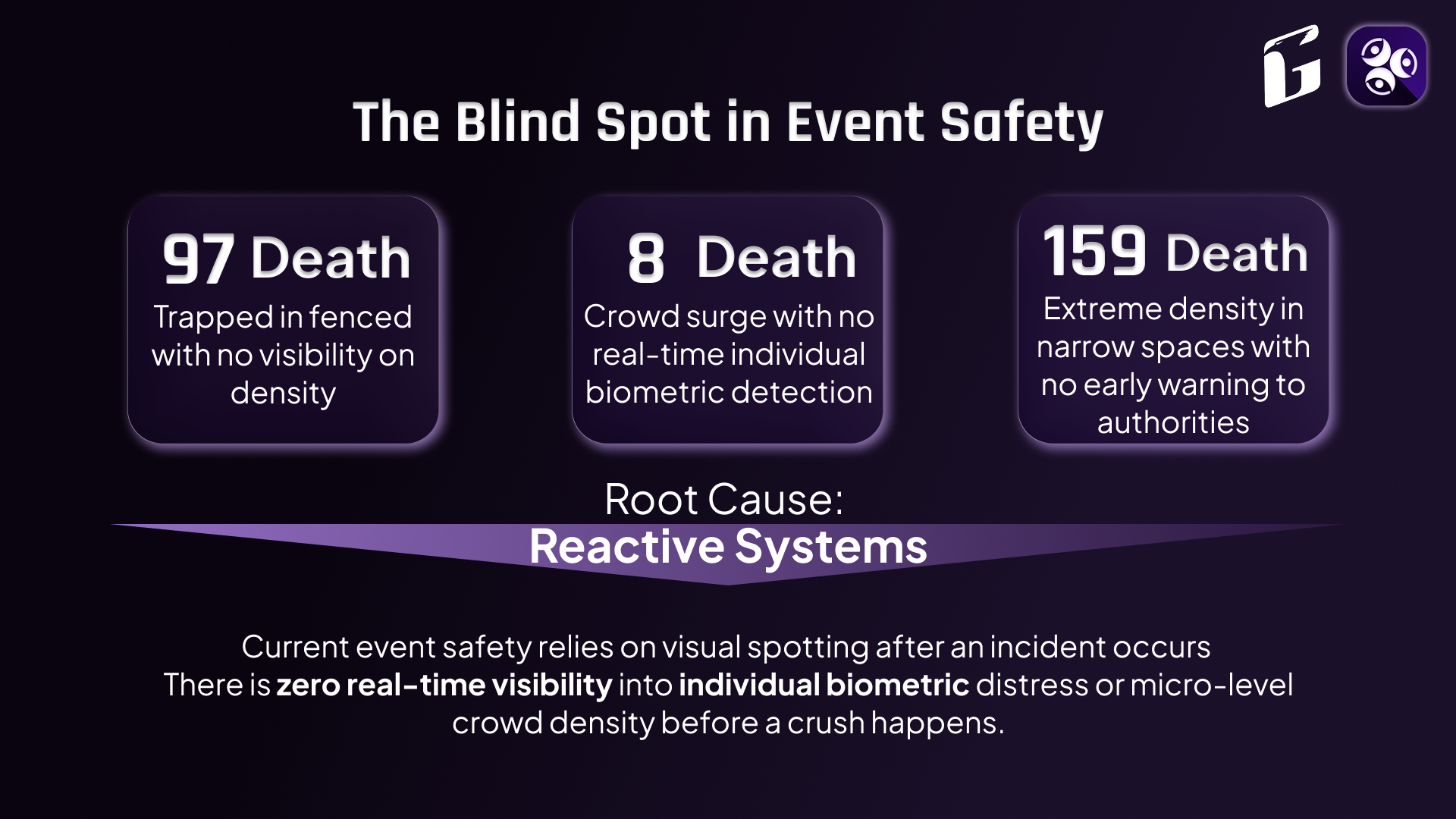
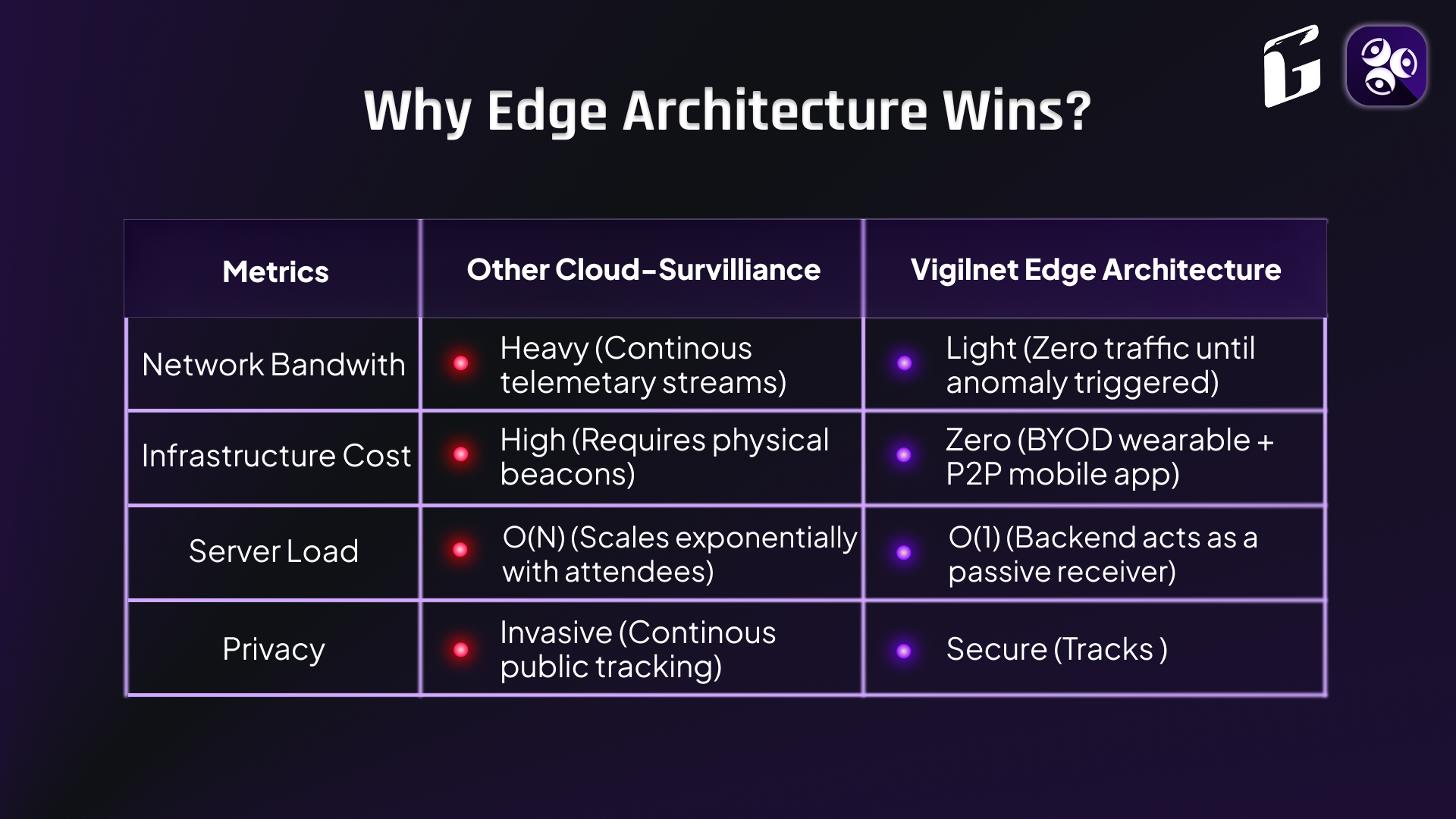
Every year, event crowd crushes claim lives in tragedies like Itaewon and Astroworld. The root cause? Current event safety systems are dangerously reactive. Event organizers have zero real-time visibility into micro-level crowd density or individual distress until a crush has already happened. Furthermore, standard centralized tracking systems inevitably crash under massive server loads when thousands of attendees connect simultaneously at crowded venues. We realized that to truly secure our future (aligning with Garuda Hacks Track 2: Safety), we couldn't rely on centralized cloud tracking. We needed to flip the architecture upside down. That is how VigilNet was born
What it does
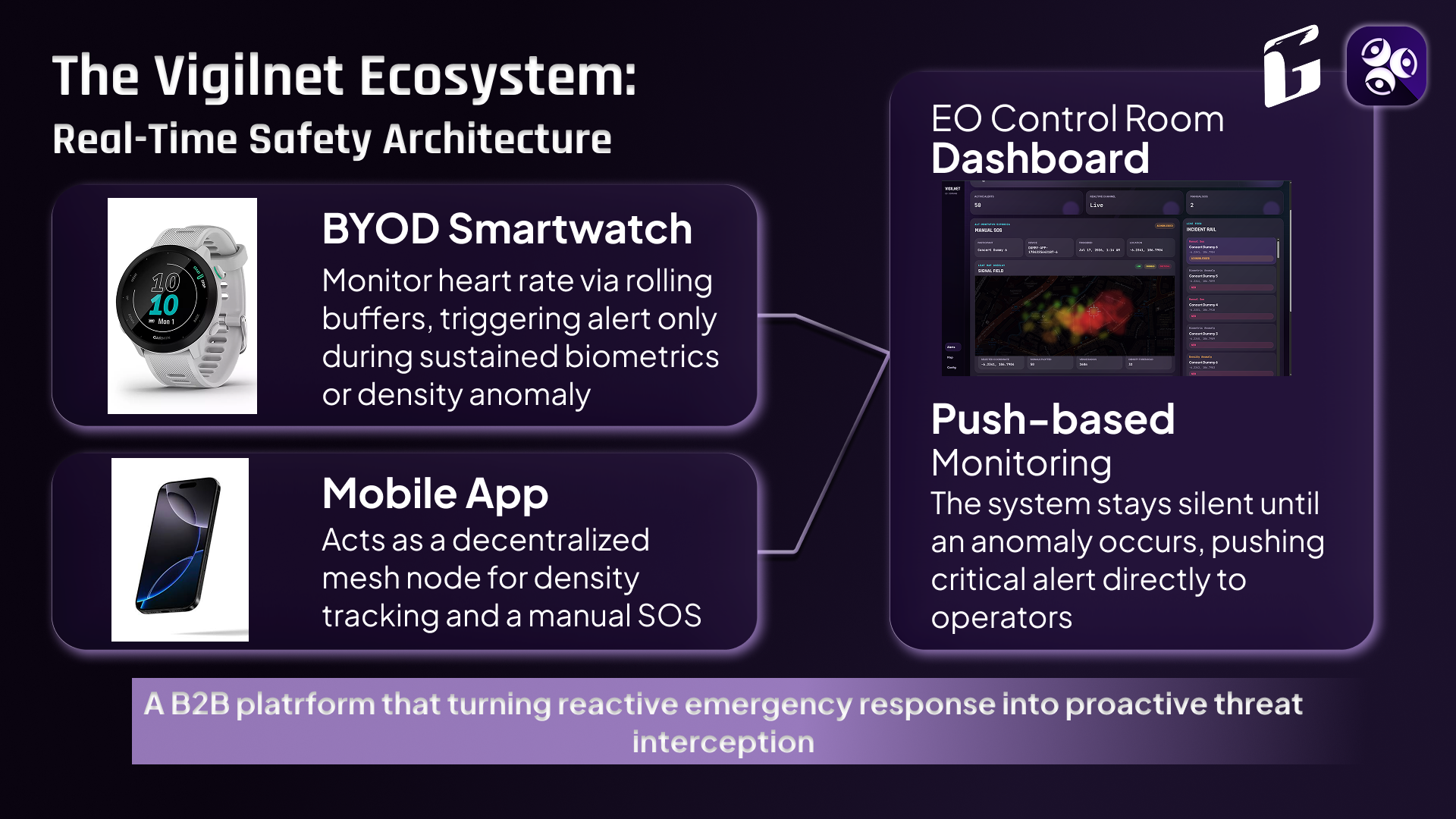
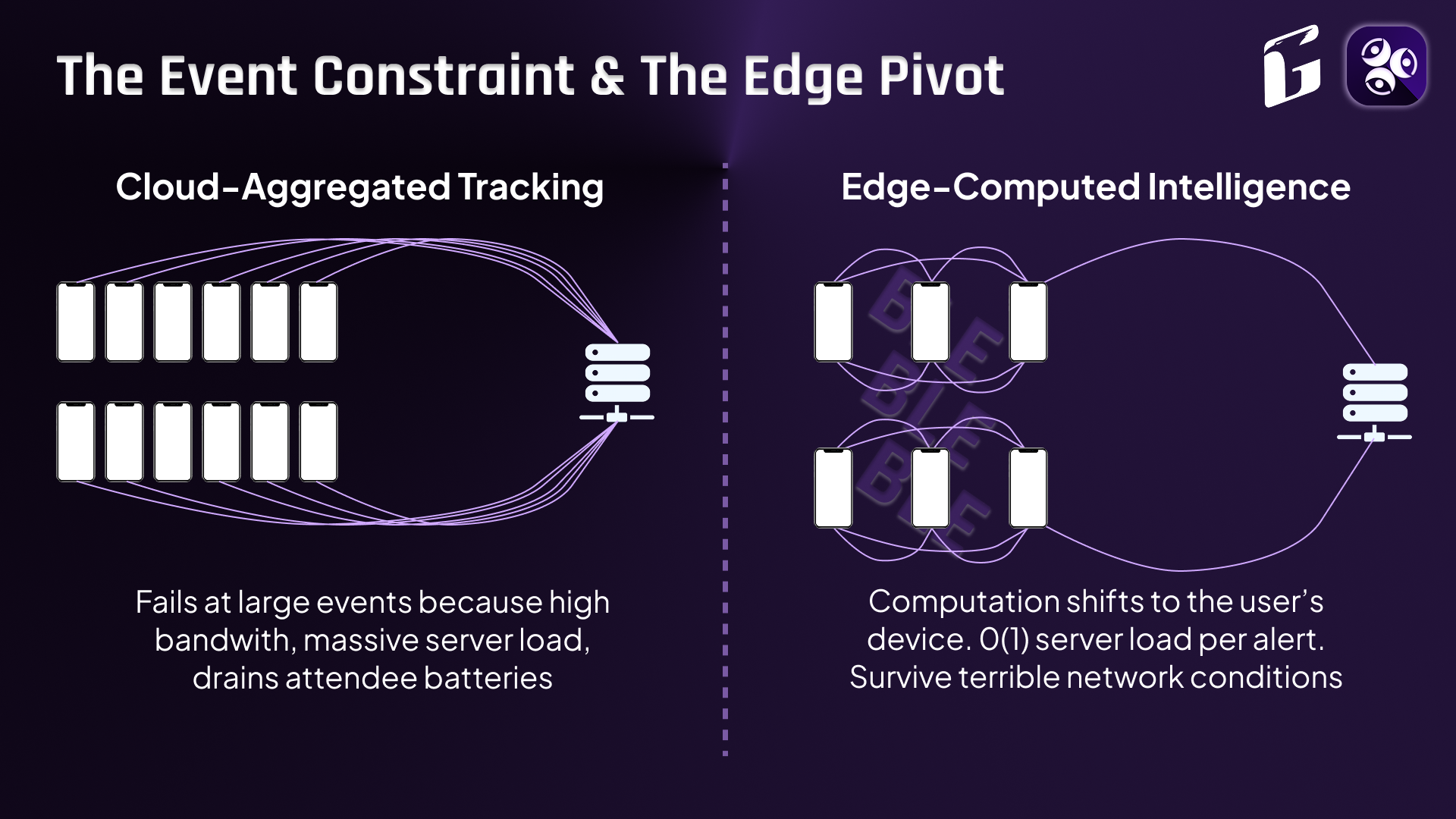
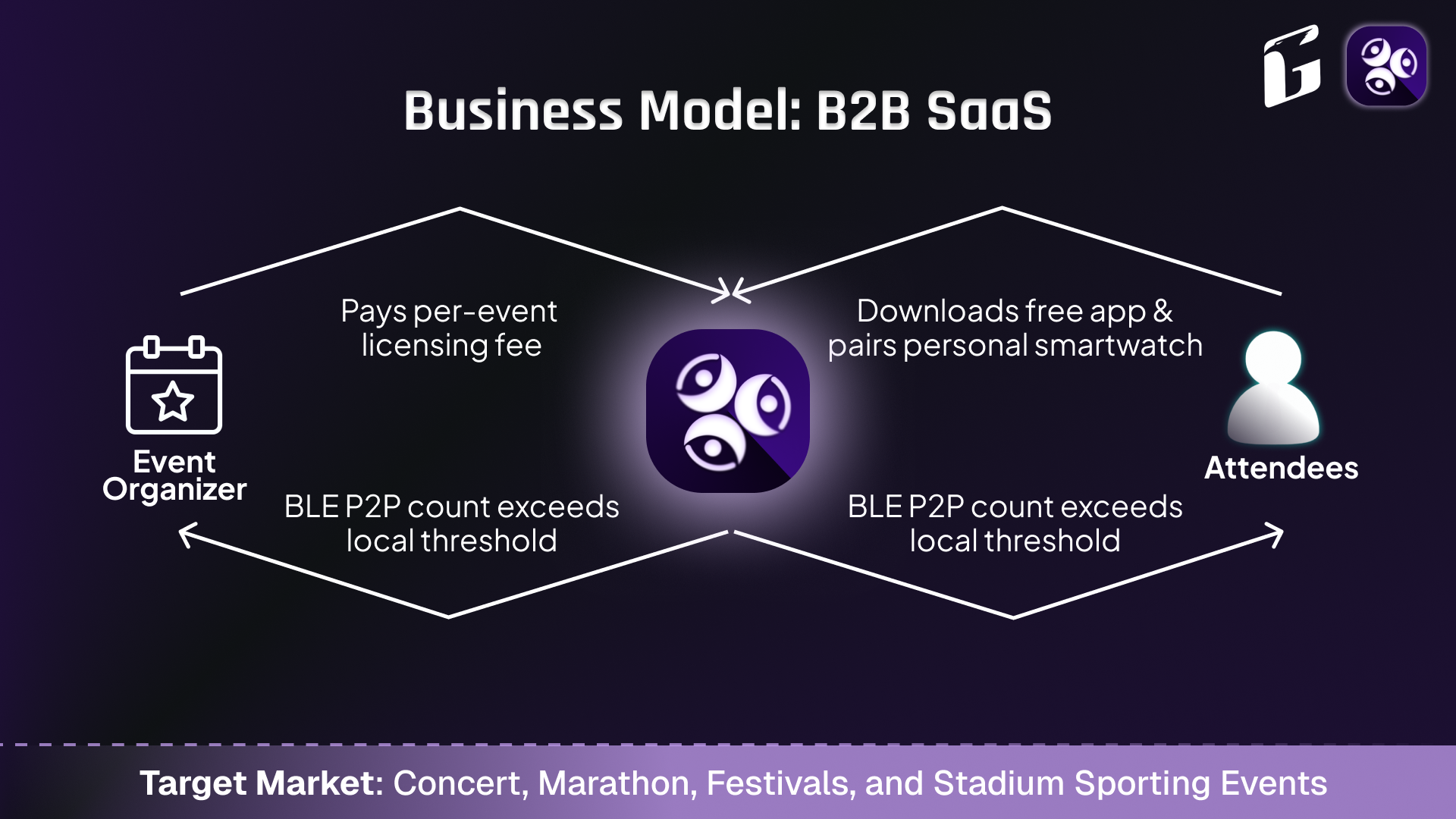
VigilNet is a proactive event safety ecosystem powered by Edge-Computed Intelligence. Instead of pulling continuous data from thousands of phones and crashing the server, VigilNet waits for attendees' devices to evaluate and report anomalies locally.
Our MVP features:
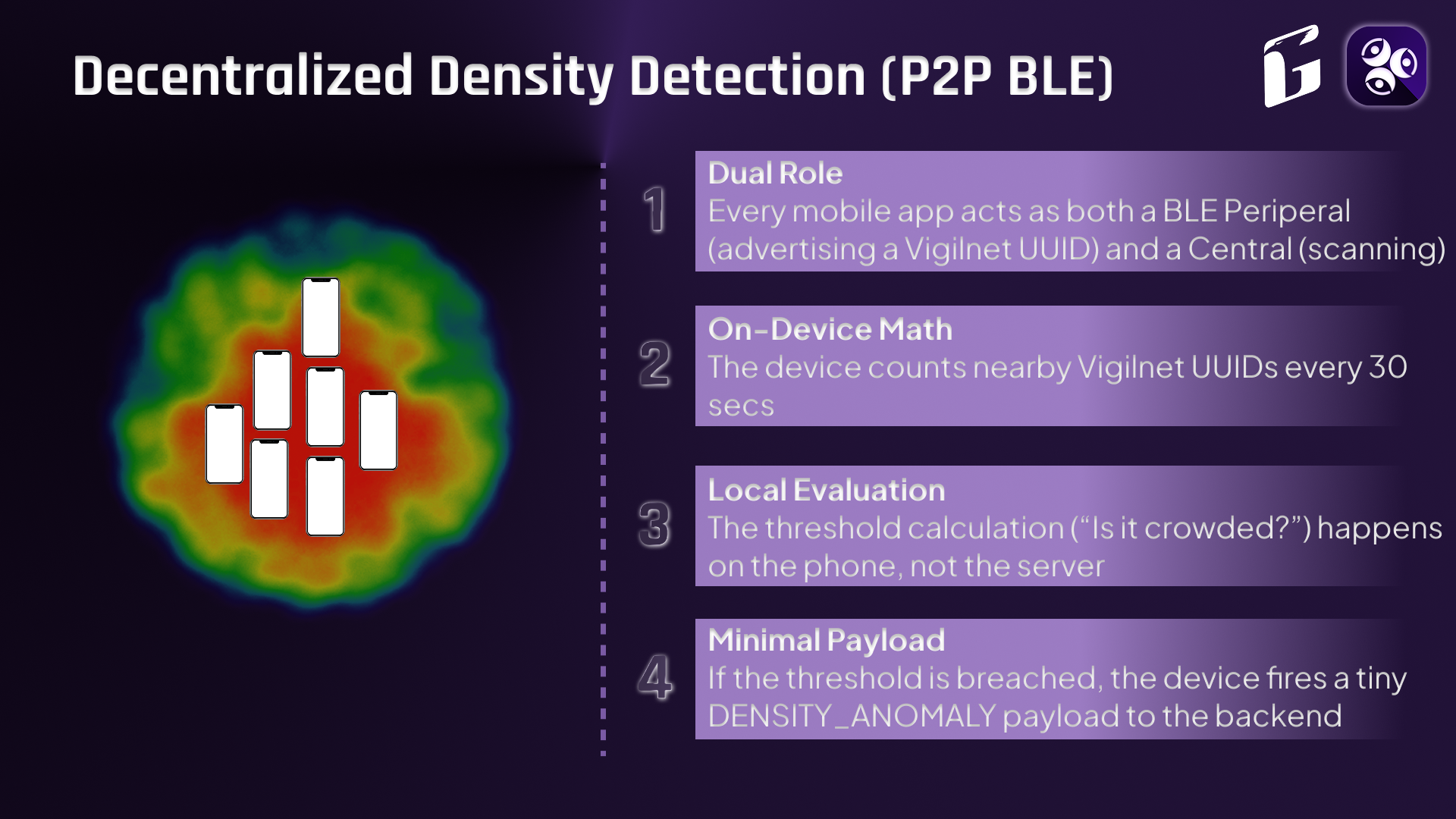
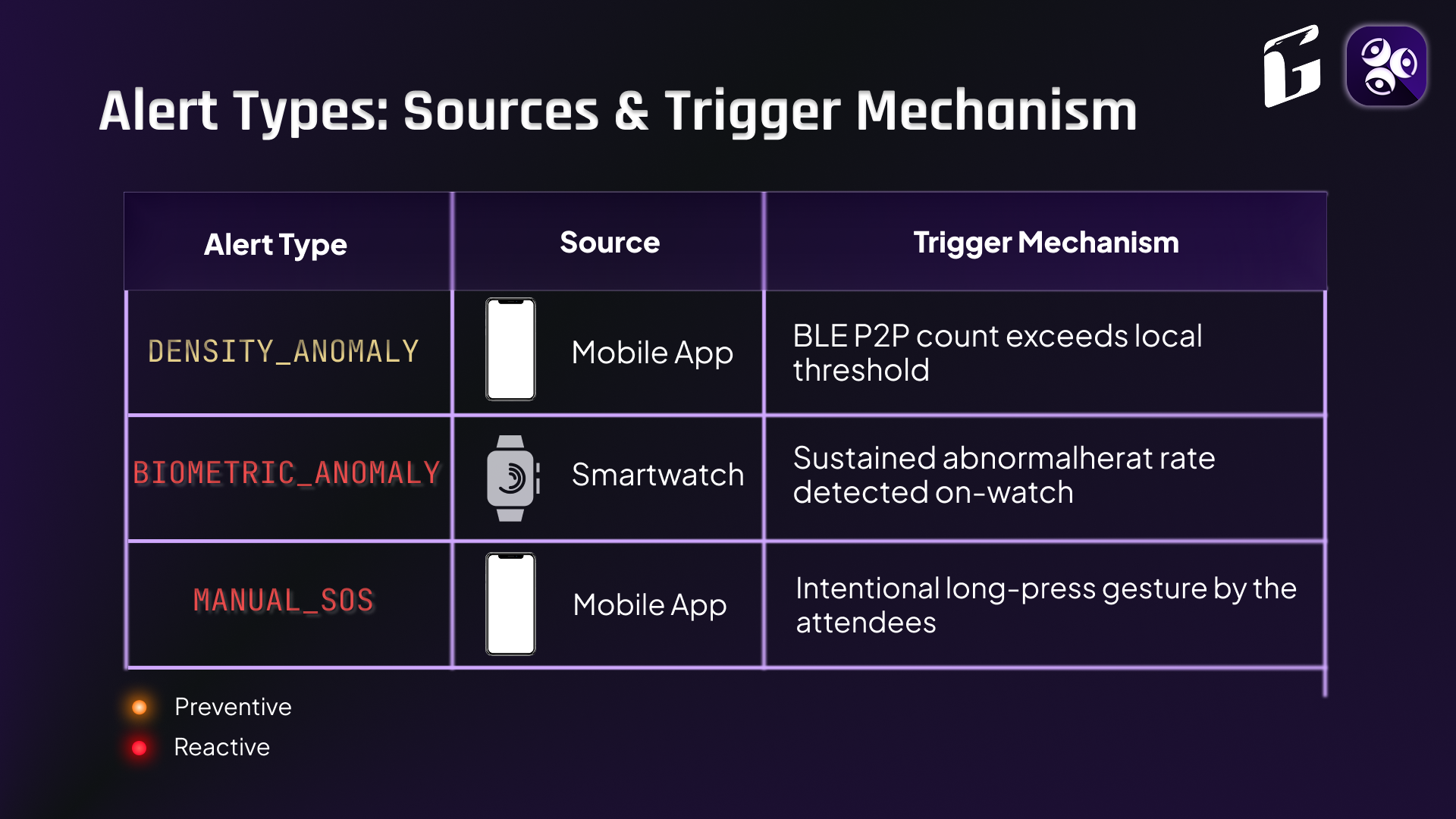
- Peer-to-Peer Density Anomaly: The mobile app silently runs BLE (Bluetooth Low Energy) advertising and scanning in the background. It counts nearby VigilNet devices peer-to-peer. The density threshold is evaluated entirely on the user's device. If an area is too crowded, the device fires an alert to the dashboard.
- Hardware Manual SOS: For immediate physical distress, users can long-press the volume-down button for 5 seconds to trigger a silent, instant SOS, pushing their exact GPS coordinates to the medical team.
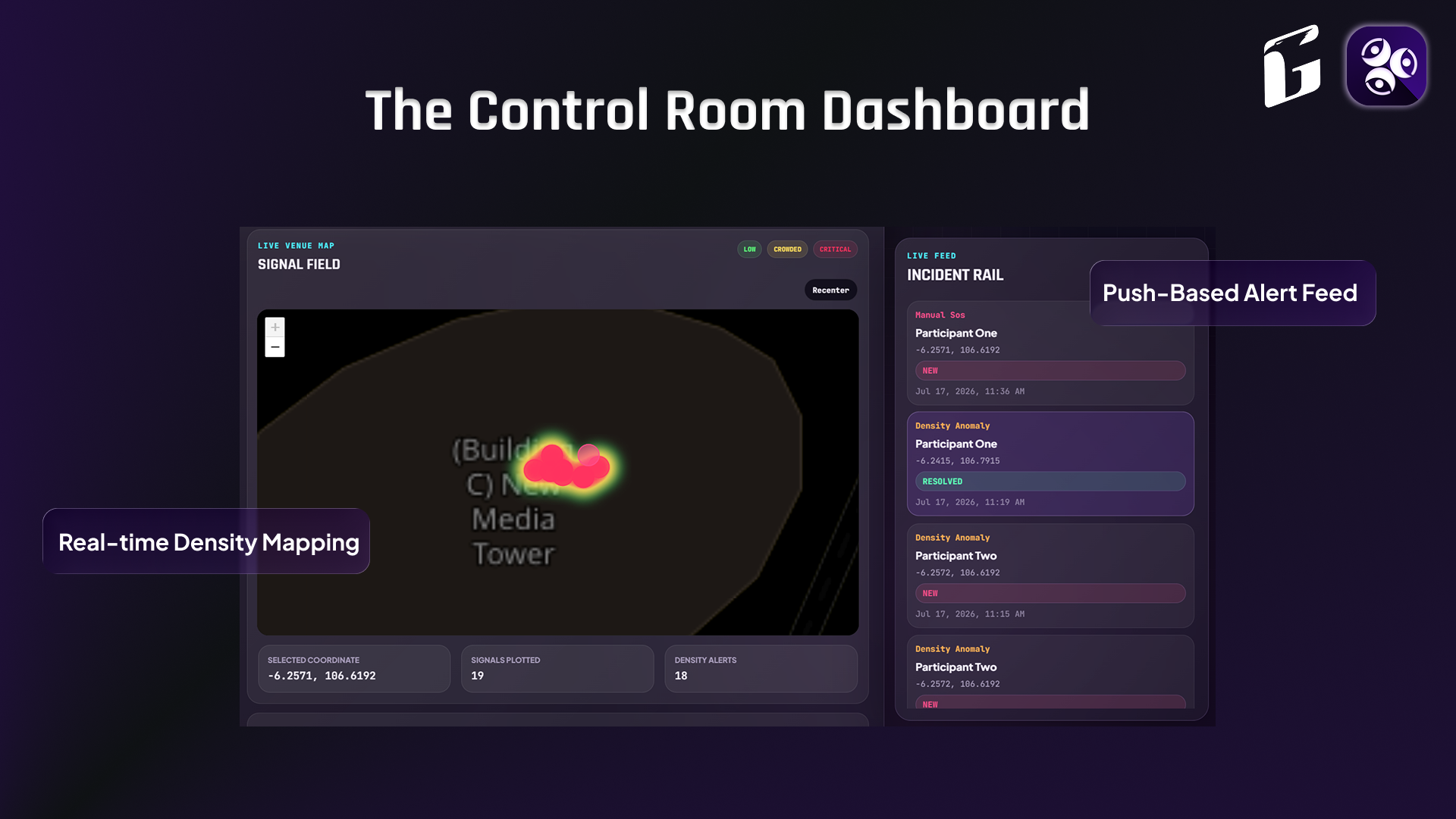
- EO Control Room: The Event Organizer receives a real-time tactical map that only plots points when a localized anomaly is reported, ensuring an O(1) server load per alert.
How we built it
We built VigilNet in just 30 hours using a highly scalable tech stack:
- Mobile App (Edge Node): Built with React Capacitor to tap into native hardware features, specifically for the background BLE scanning and hardware volume-button listeners.
- Backend Engine: Built using Fastify for lightning-fast, scalable API routing, connected to a PostgreSQL database for secure event and alert logging.
- Frontend Dashboard: Developed using React to create a sleek, dark-mode push-based monitoring interface for Event Organizers.
Challenges we ran into
Our biggest challenge was shifting the computation paradigm from the cloud to the edge. Initially, we considered a cloud-aggregated GPS tracking approach, but we quickly realized it would drain attendee batteries and crash the server due to high bandwidth. Implementing the BLE peer-to-peer scanning in React Capacitor was a major hurdle. We had to make the app act as both a BLE peripheral and a central scanner simultaneously while running in the background. Ensuring that the density threshold calculation happened on-device—rather than on the backend—took a lot of debugging, but it was essential to keep our backend scalable. Furthermore, hardware integration during testing posed unexpected roadblocks. We initially utilized Garmin smartwatches to debug our biometric edge-node capabilities. However, we encountered strict proprietary ecosystem constraints. We discovered that these devices restrict direct data transmission to independent, third-party applications without an official companion app bridge or an active Garmin subscription. Navigating this closed-ecosystem limitation required us to heavily adapt our debugging strategy to ensure our local biometric evaluation engine could still be tested and function independently.
Accomplishments that we're proud of
We are incredibly proud of successfully architecting a fully decentralized, Edge-Computed intelligence system in under 30 hours. By shifting the density computation to the edge via BLE peer-to-peer scanning, we achieved an architecture with an O(1) server load per alert, ensuring the backend won't crash during a real emergency.
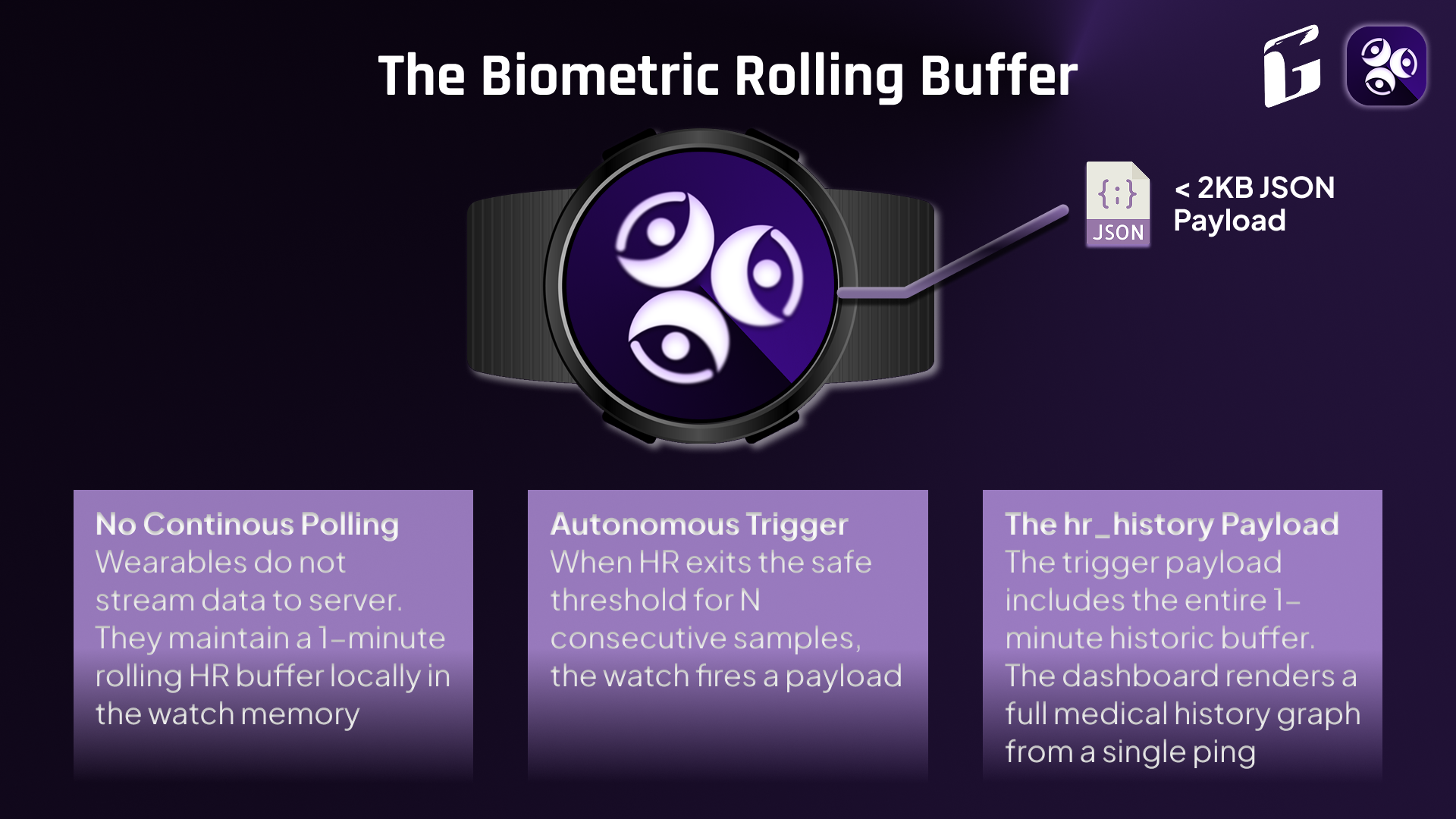
Furthermore, we are extremely proud of our team's adaptability. When faced with the strict closed-ecosystem restrictions of commercial wearables like Garmin during testing, we quickly pivoted our debugging strategy to successfully validate our on-device biometric evaluation engine independently. Lastly, our Manual SOS hardware bypass stands out as a highly practical, life-saving feature that guarantees attendees can trigger an alert even in a panic situation without needing to look at their screens.
What we learned
Our biggest technical takeaway was that shifting computation to the edge requires navigating complex hardware-level roadblocks. We learned that while the Bring Your Own Device (BYOD) approach is highly scalable, we have to deal with strict, closed-ecosystem restrictions from commercial wearables. Many smartwatches restrict direct data transmission to third-party apps without proprietary companion bridges, which forced us to adapt our debugging and integration strategies.
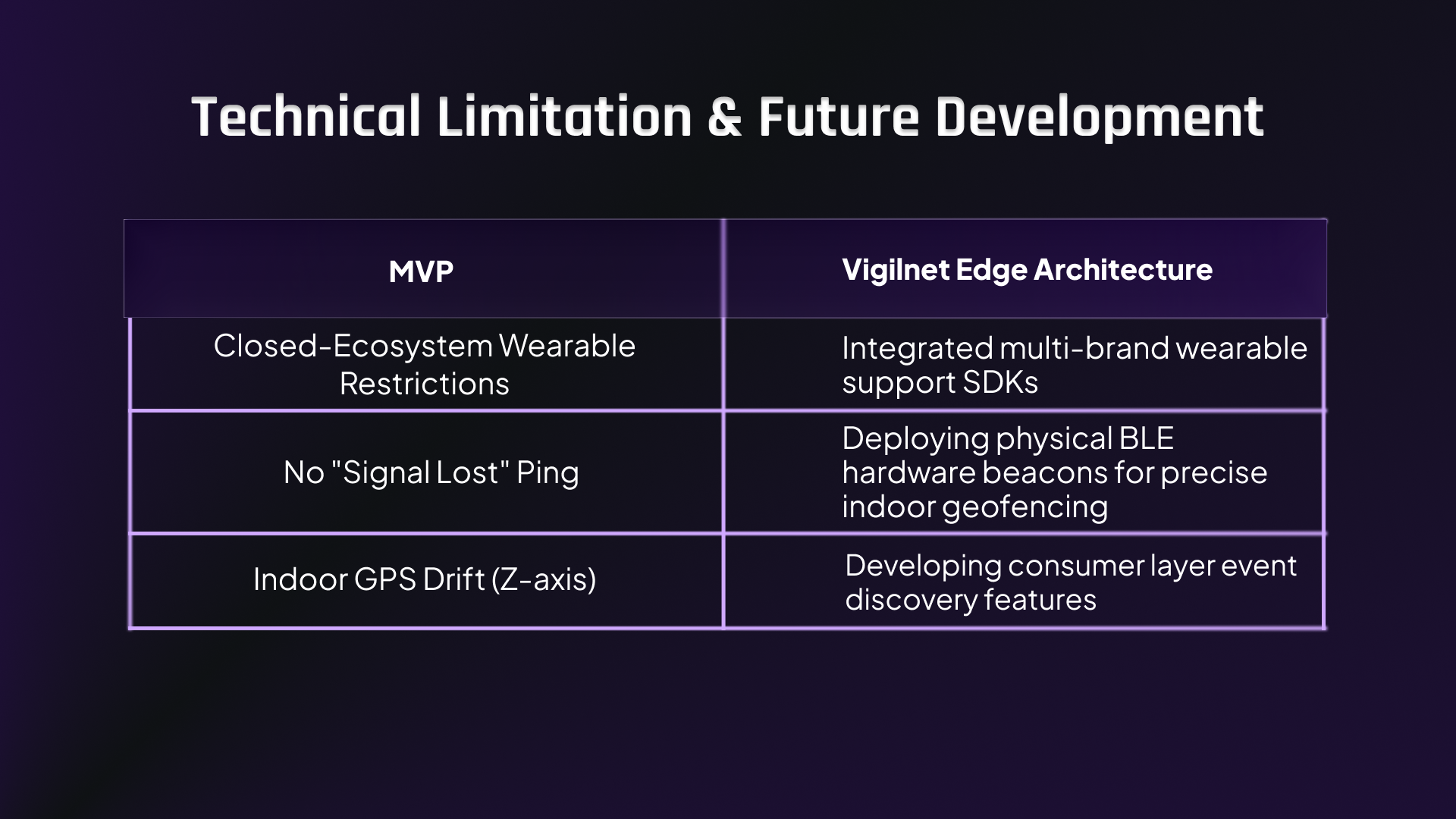
We also learned the hard trade-offs of decentralized architecture. To achieve zero server load and preserve attendee batteries, we had to eliminate continuous heartbeat pings. This taught us how to design a system that fully trusts the edge nodes to report anomalies, even if it means accepting that we cannot distinguish a "dead battery" from a "safe user" during the event.
What's next for Untitled
This MVP is just the foundation of our proactive safety ecosystem. For our Phase 2 production roadmap, we are focusing on resolving our MVP constraints through three main pillars:
- Wearable SDK Integration: To break through proprietary closed-ecosystem limits, we will integrate multi-brand wearable support SDKs, ensuring seamless biometric anomaly tracking for any BYOD smartwatch.
- Hardware BLE Beacons: To solve the indoor GPS drift and the lack of Z-axis (floor-level) precision at multi-story venues, we plan to deploy physical BLE hardware beacons for highly precise indoor geofencing.
- Consumer-Layer Expansion: We will expand our platform beyond a B2B safety tool by developing consumer-layer event discovery features, turning VigilNet into a daily-use companion app for event-goers across Indonesia.
Built With
- ble
- capacitor
- fastify
- postgresql
- react


Log in or sign up for Devpost to join the conversation.