Inspiration
In emergency situations, every second counts. We noticed that traditional 911 systems often struggle with two things: information overload on the dispatcher side and panic-induced communication barriers on the caller side. We wanted to build a bridge—a "Smart City" solution that uses AI to calmly guide citizens through a crisis while simultaneously arming responders with verified, real-time intelligence.
What it does
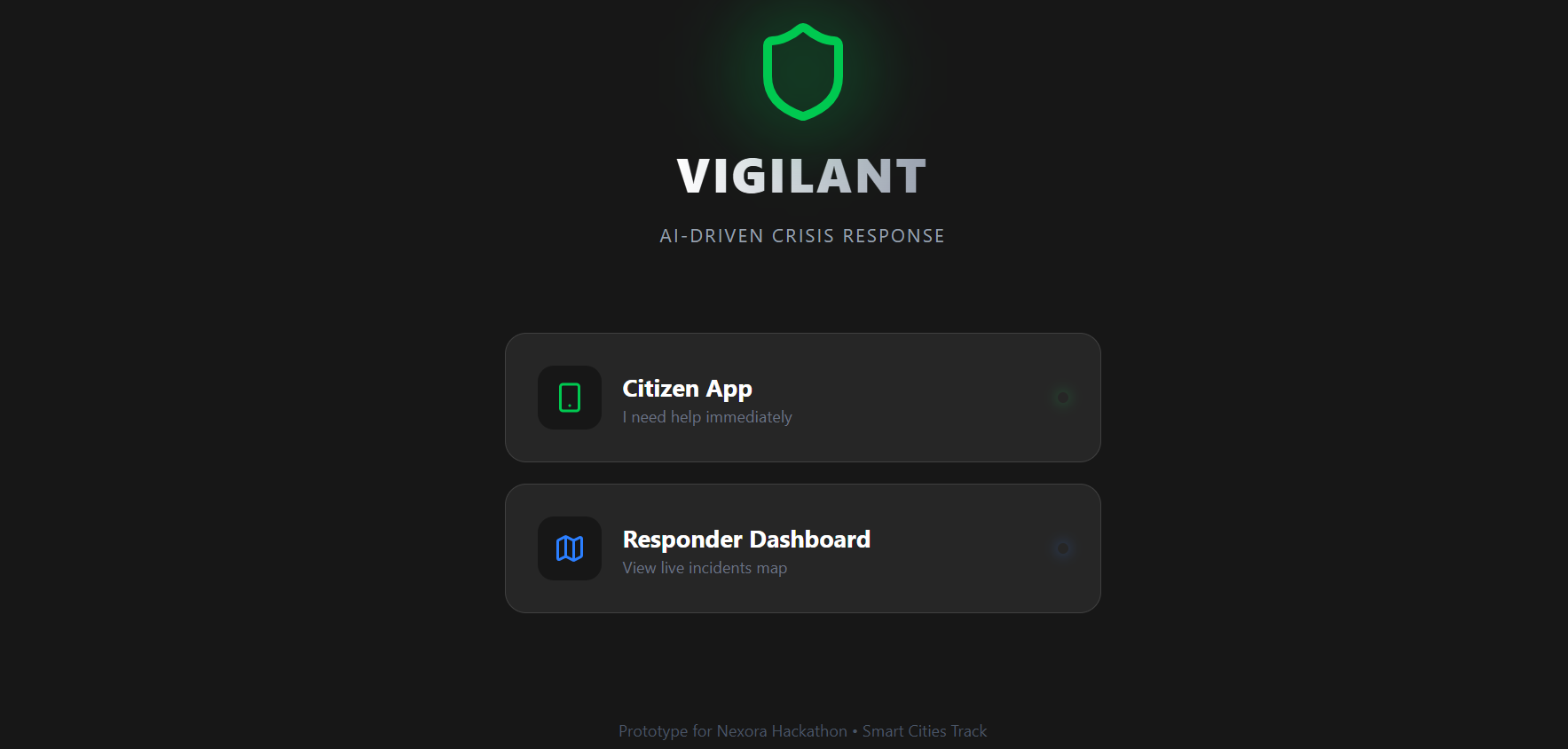
Vigilant is a dual-interface crisis response platform:
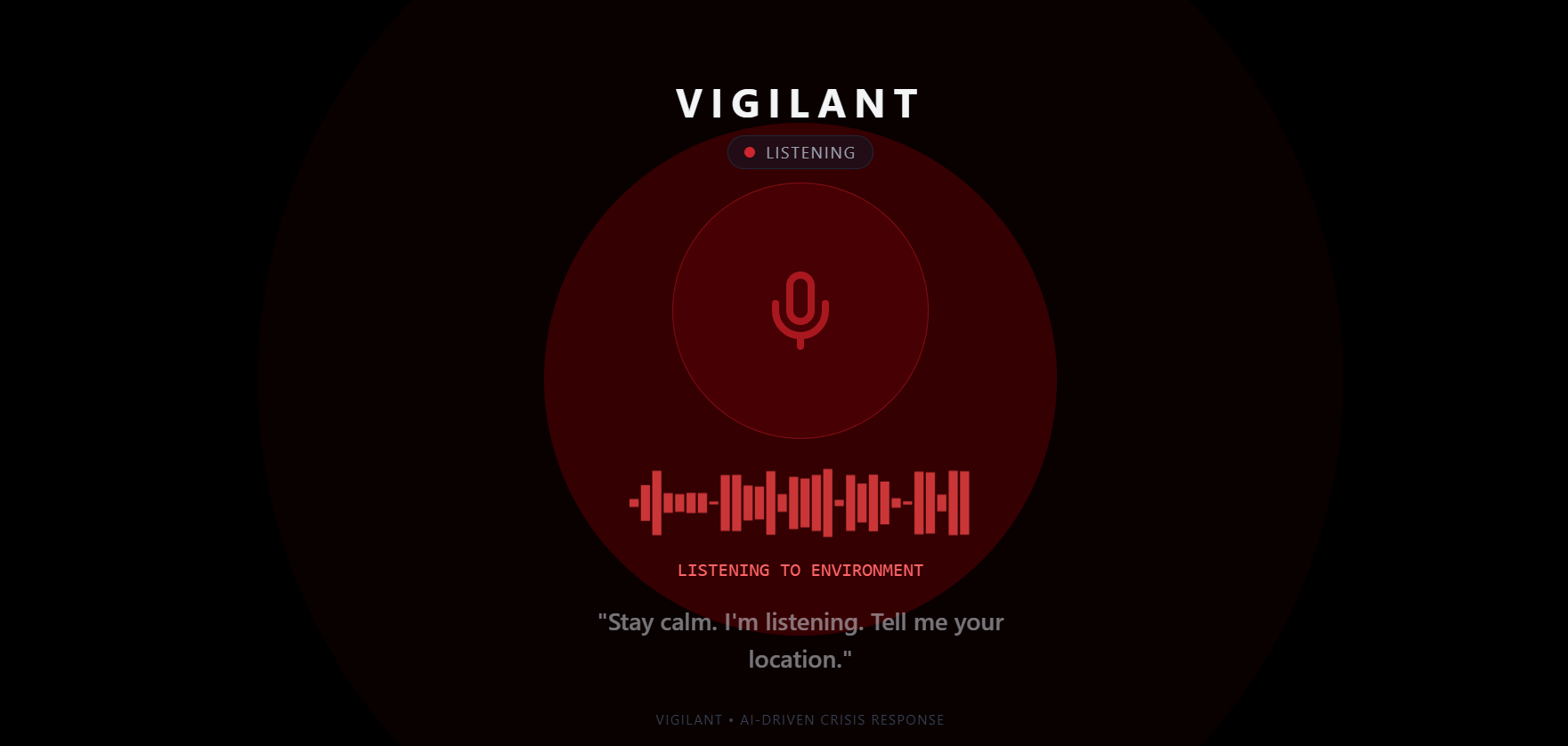
- For Citizens: A voice-first mobile web app (PWA) that acts as an "AI First Responder." It listens to the user's distress call, provides calming visual feedback, and (in our roadmap) uses LLMs to triage the situation instantly.
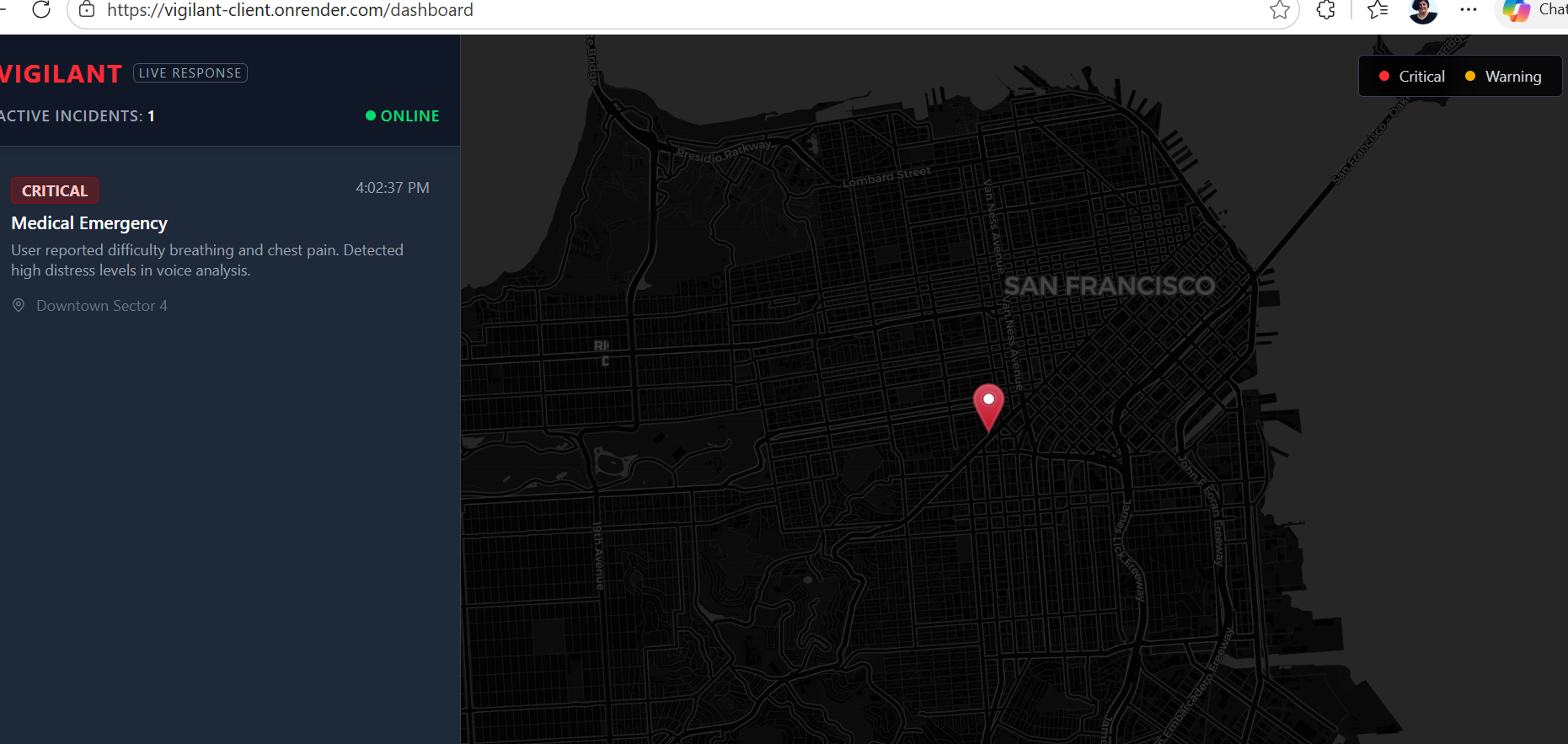
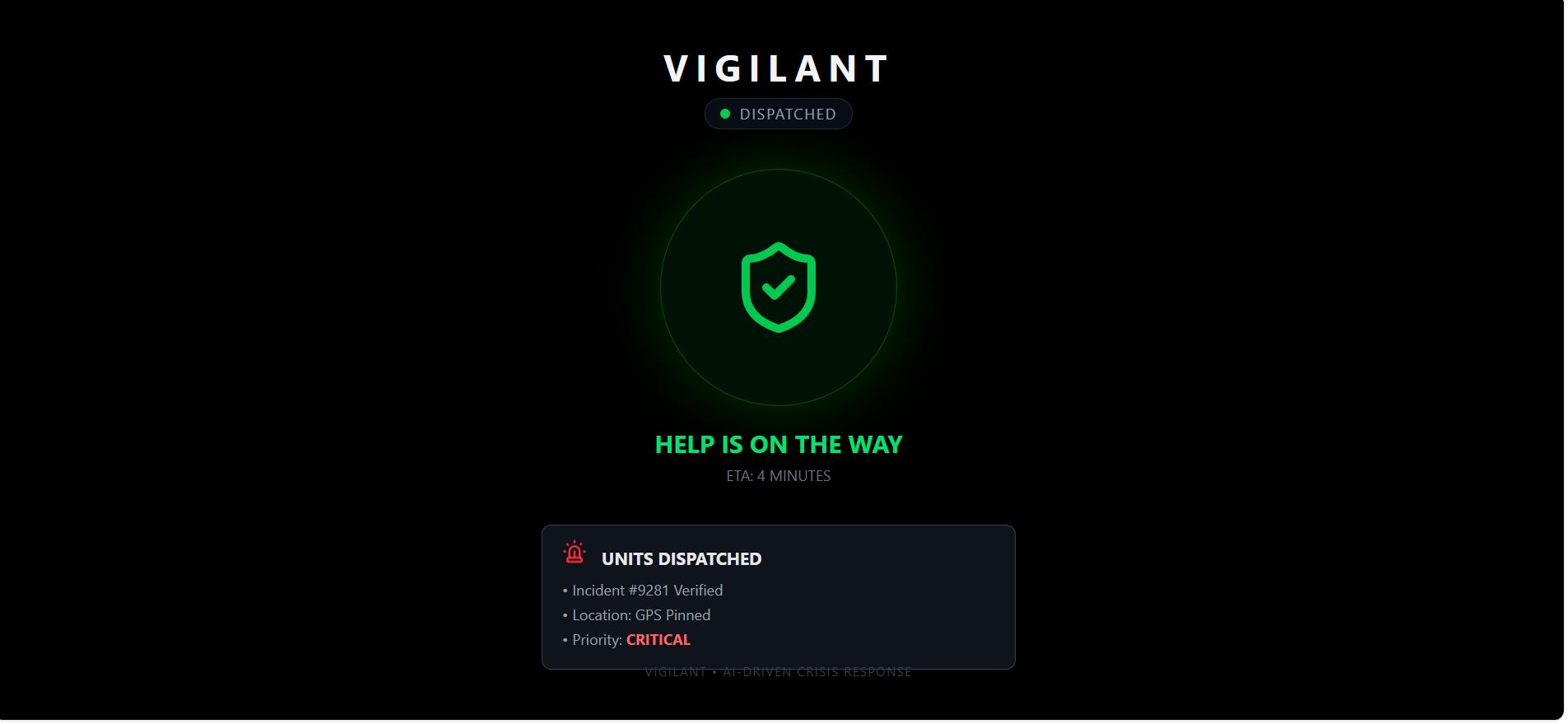
- For Responders: A real-time command dashboard. As soon as a call is verified, it appears on a shared map with a severity score. Data is synced instantly using WebSockets, ensuring help is dispatched to the exact GPS location without delay. ## How we built it We approached this problem with a full-stack real-time architecture:
- Frontend: We built two distinct React applications. The Citizen App focuses on accessibility and psychology (dark modes, calming animations), while the Responder Dashboard focuses on data density and map visualization using Leaflet.
- Backend: We used Node.js and Express to handle API requests.
- Real-Time Data: The heartbeat of Vigilant is Socket.io. It handles the bi-directional communication, allowing us to push incident updates to the dashboard with under 100ms latency.
- Design: We used Tailwind CSS to rapidly prototype a high-contrast, professional UI suitable for emergency contexts. ## Challenges we ran into
- Handling Latency: Ensuring that the map updates instantly when a user triggers an alert required careful tuning of our WebSocket events.
- Designing for Panic: Creating a UI that is usable when someone is shaking or terrified is difficult. We iterated on the "Panic Button" interface multiple times to make it big, clear, and reassuring.
- Deployment: Configuring the dual-build process (Client + Server + Static Site config) on Render took some debugging, but we learned a lot about "Infrastructure as Code" in the process. ## Accomplishments that we're proud of We are most proud of the end-to-end simulation. Seeing a distress call triggered on a phone and appearing instantly on a laptop screen miles away (simulated) felt like magic. We also successfully deployed a functioning prototype that anyone can test live in their browser. ## What's next for Vigilant The current version is a powerful prototype, but we have big plans:
- True AI Integration: Connecting the voice visualizer to ElevenLabs for speech-to-speech interaction.
- Nexos.ai Intelligence: Using LLMs to categorize complex medical emergencies automatically.
- IoT Integration: Ingesting heart rate data from smartwatches to give responders vital signs before they even arrive.
Built With
- express.js
- javascript
- node.js
- react
- socket.io
- tailwind-css
- vite

Log in or sign up for Devpost to join the conversation.