Inspiration
Small businesses run visual compliance checks — is the workstation complete, clean, correctly labelled? — from memory. Checks get skipped, and when something is wrong there is no record of what was seen or decided. We wanted an inspector that behaves the way a careful human does: look, doubt, look again differently, and ask for help when it cannot be sure.
What it does
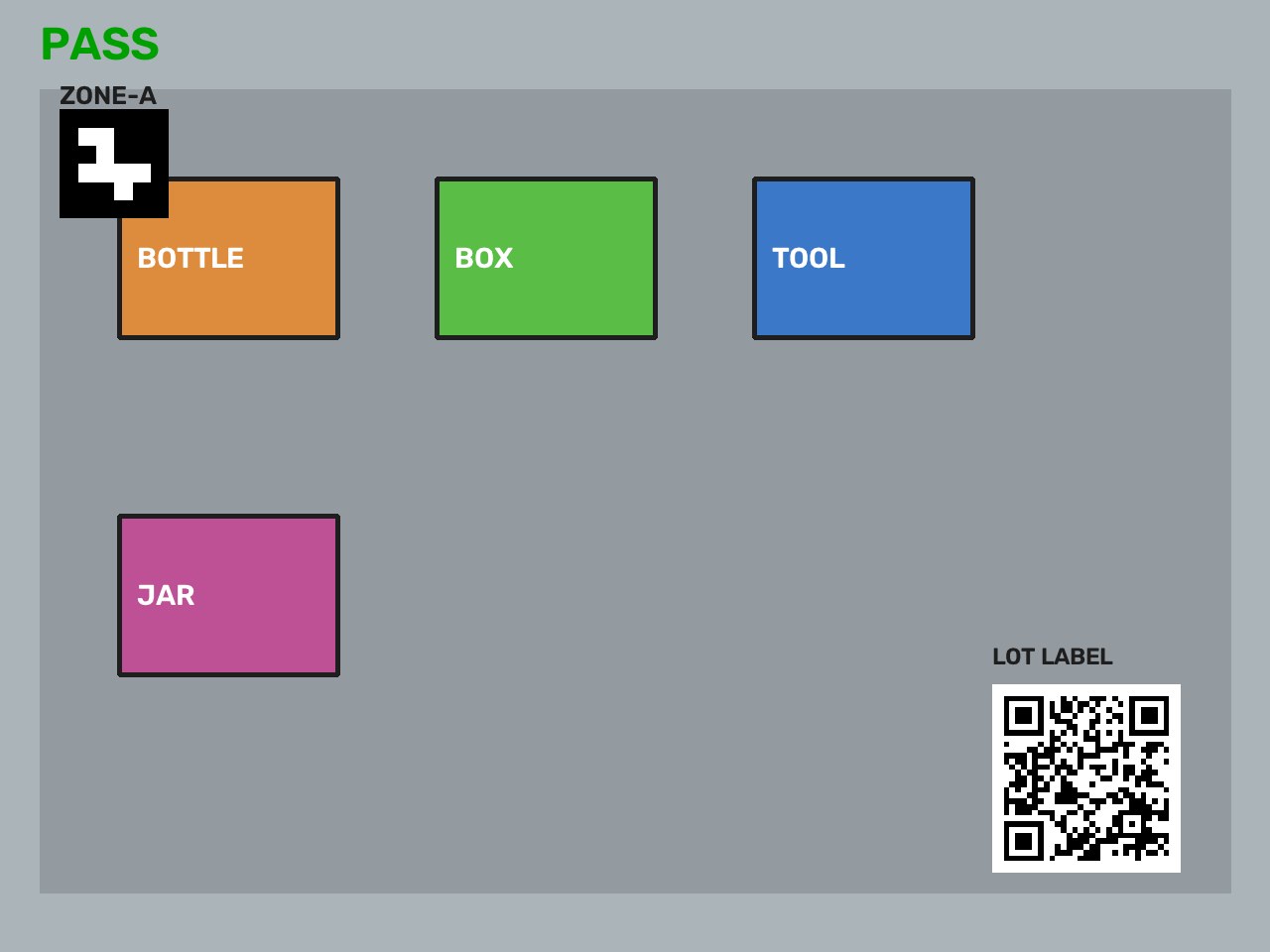
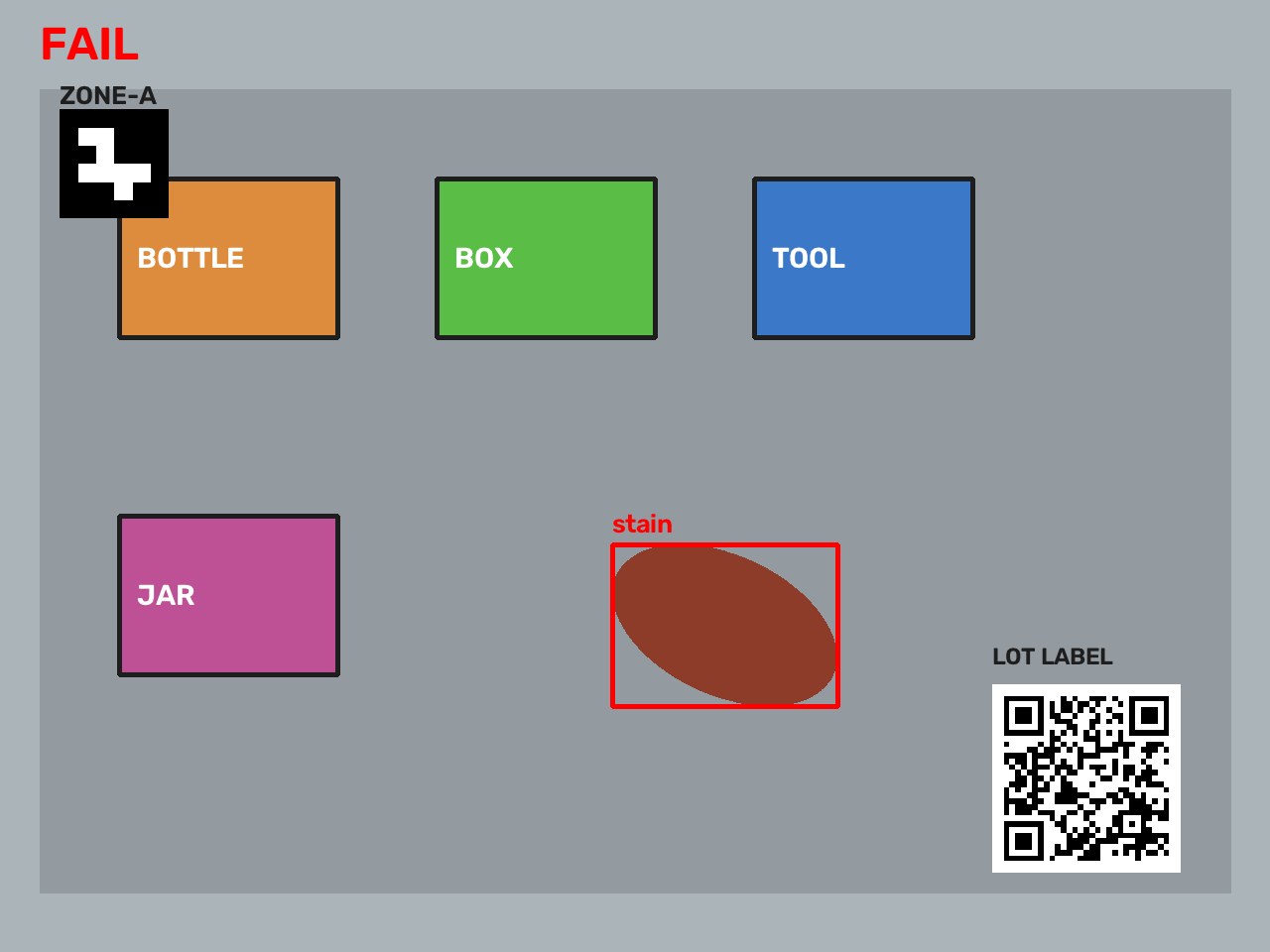
VigilAgent inspects a photograph of a workstation or storage zone and returns a verdict — PASS, FAIL, or HUMAN_REVIEW — with visual evidence and a complete decision trace.
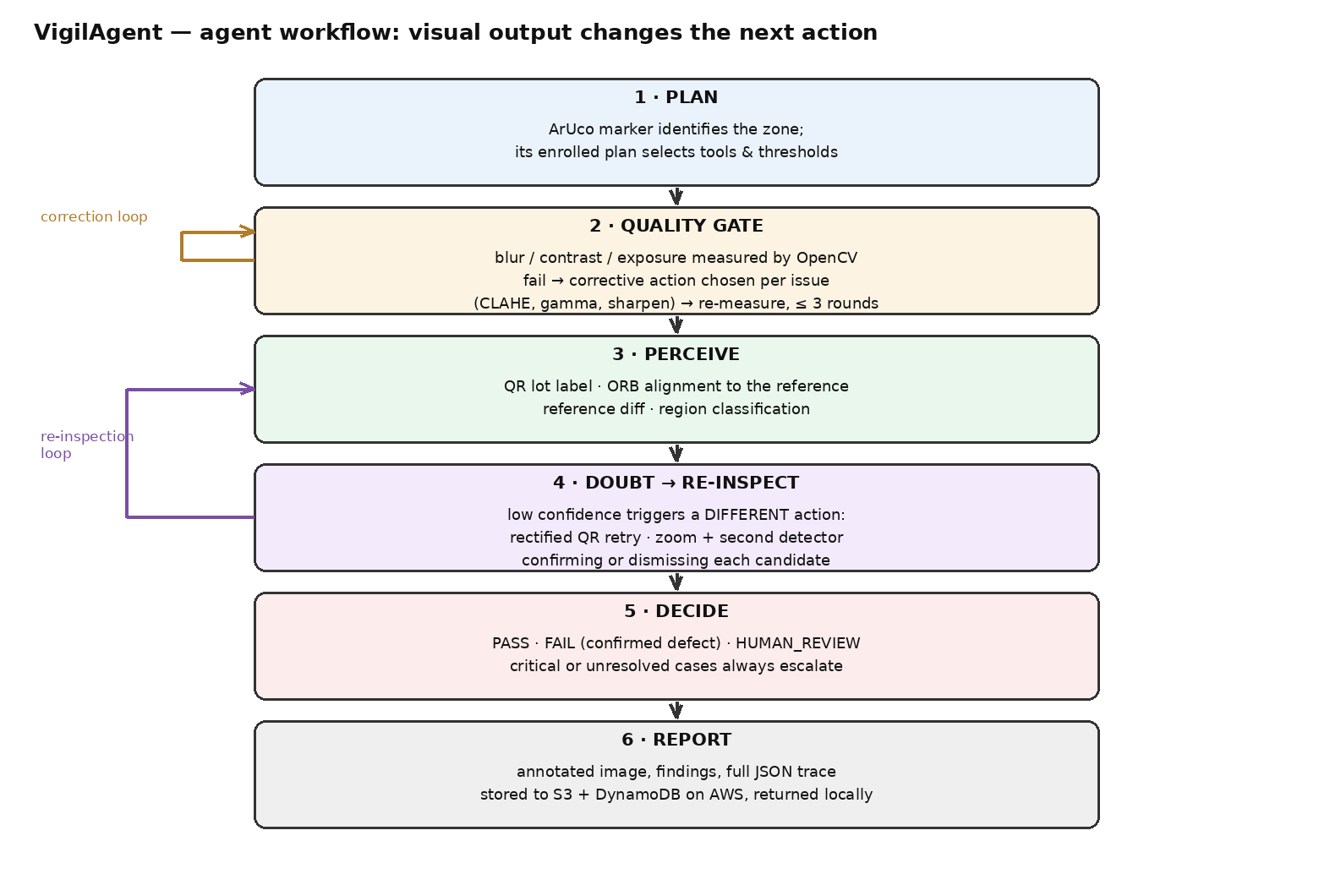
- An ArUco marker identifies the zone; the zone's enrolled plan selects the inspection tools and thresholds.
- A quality gate measures blur, contrast and exposure. A failing image is corrected with the action matching the measured problem (CLAHE, gamma, sharpening) and re-measured — up to three rounds. An image that stays unusable is never judged.
- The agent decodes the QR lot label, aligns the photo to the enrolled reference (ORB + homography), differences it, and classifies candidate defects: missing item, displaced item, stain, foreign object, wrong label.
- Every candidate must survive a second, independent zoomed look before it can fail the station. A label that will not decode is retried after rectification.
- Unresolved or critical cases escalate to a human, with the reason written in the trace.
How we built it
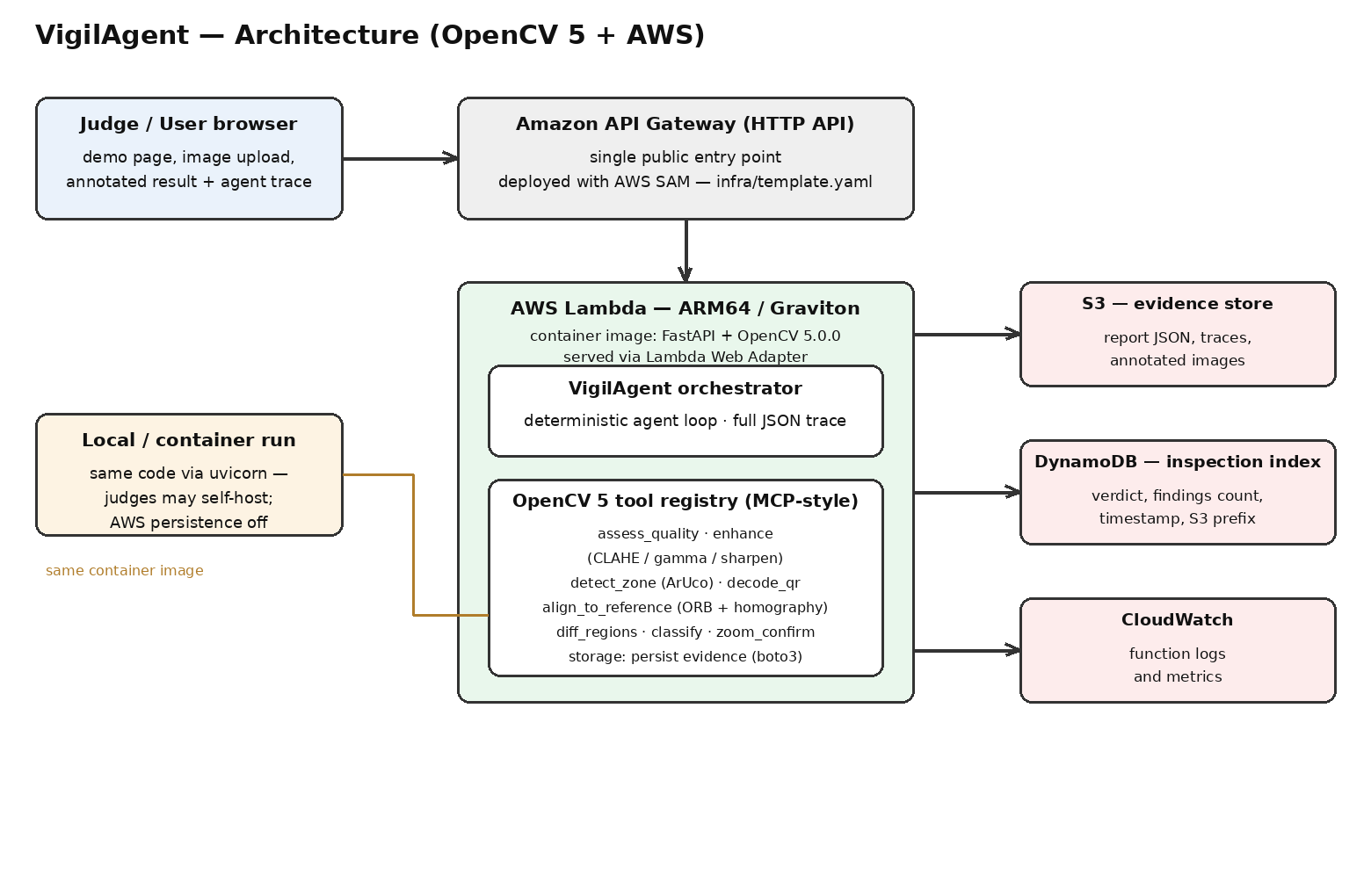
OpenCV 5.0.0 is the only vision engine — no trained model, no external AI API, fully reproducible from pinned dependencies. The agent is a deterministic orchestrator invoking OpenCV tools through an MCP-style registry; every tool call and branch is logged to a JSON trace, which is how judges can verify that visual output changed the agent's next action.
The web endpoint is FastAPI in a container that runs identically in three places: locally under uvicorn, stand-alone in Docker, and on AWS Lambda (ARM64/Graviton) behind API Gateway, deployed with AWS SAM. On AWS, each report and its annotated evidence persist to S3 with a DynamoDB index and CloudWatch observability.
Evaluation is generated, not cherry-picked: our own code builds workstation scenes with ground truth by construction, injects four defect families and five degradations, and scores the agent end-to-end — 10/10 cases on set v1, 8/8 core and 2/2 challenge cases on the harder set v2, including the failure cases we found and fixed (phantom defects from rotation borders, and sharpening artifacts that fooled the quality metric — both documented in the report).
Challenges we ran into
- Rotation borders produced large phantom "foreign objects" — fixed by restricting the reference difference to a valid-area mask warped with the same homography.
- Catastrophic blur could be sharpened until it scored as sharp while containing no evidence — fixed with an evidence guard: candidates resting on catastrophic input escalate instead of failing the station.
- Aggressive photometric correction shifted colours and caused a false FAIL — the shipped agent corrects conservatively, one action per round, re-measuring between rounds.
Accomplishments that we're proud of
An inspection agent whose caution is measurable: it recovers borderline images, refuses to judge destroyed ones, and never lets a single detector fail a workstation alone.
What's next
Video-stream inspection, multi-zone enrolment from a phone walkthrough, and an on-device variant for stations without connectivity.
Built With
- amazon-api-gateway
- amazon-dynamodb
- amazon-web-services
- aruco
- aws-lambda
- aws-sam
- clahe
- docker
- fastapi
- homography
- numpy
- opencv
- orb
- python
- qr-code

Log in or sign up for Devpost to join the conversation.