-
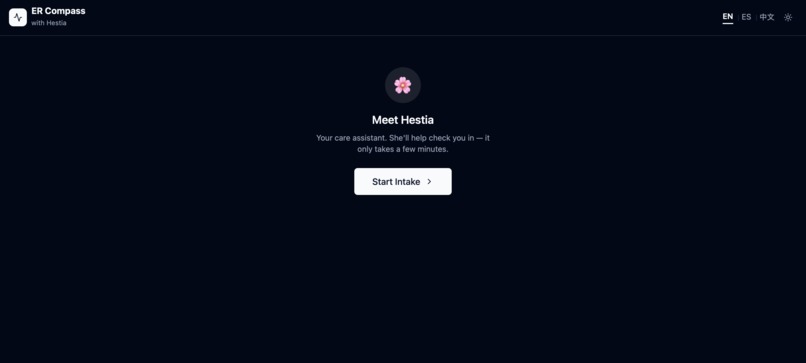
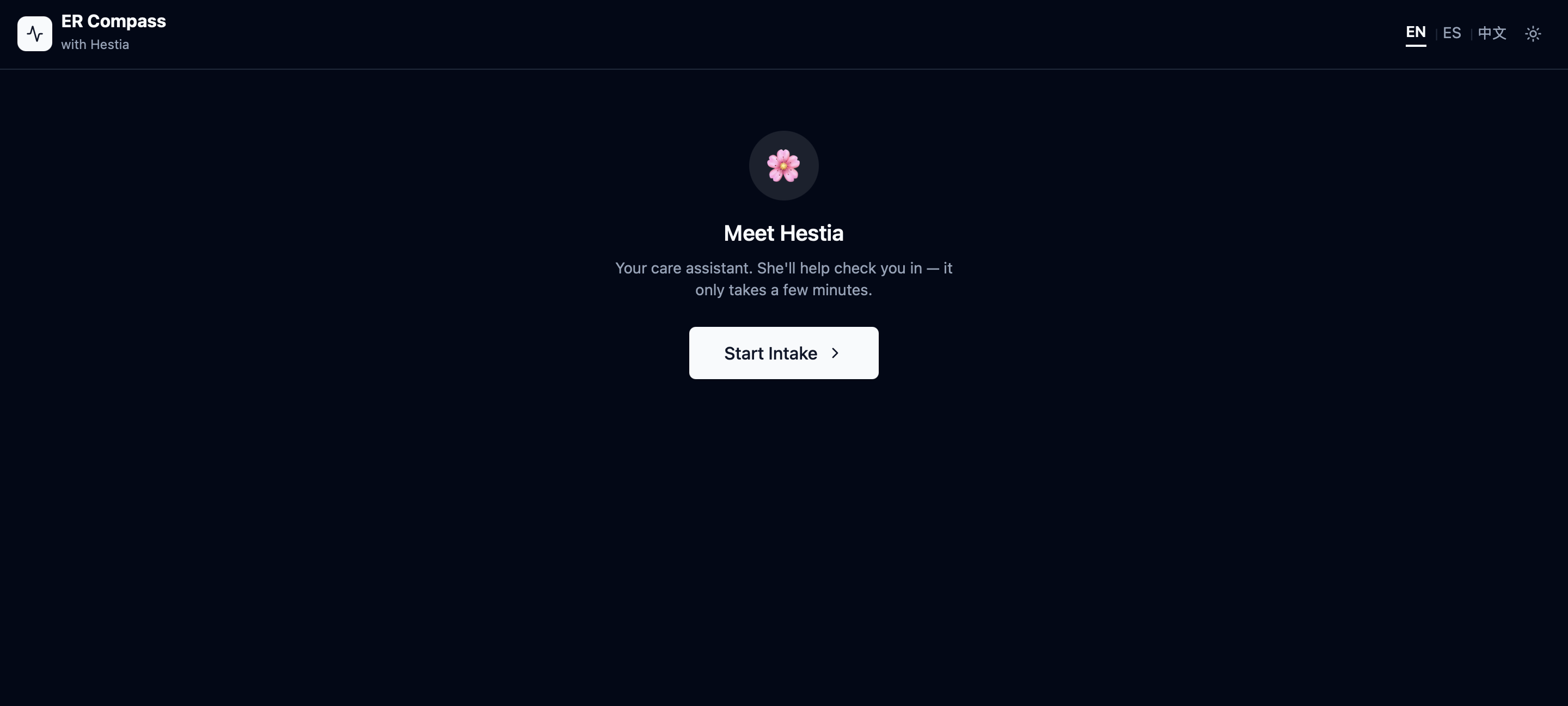
Meet Hestia: The AI tool to Log people in
-
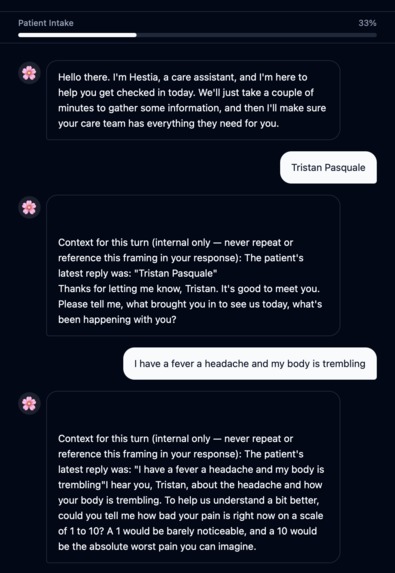
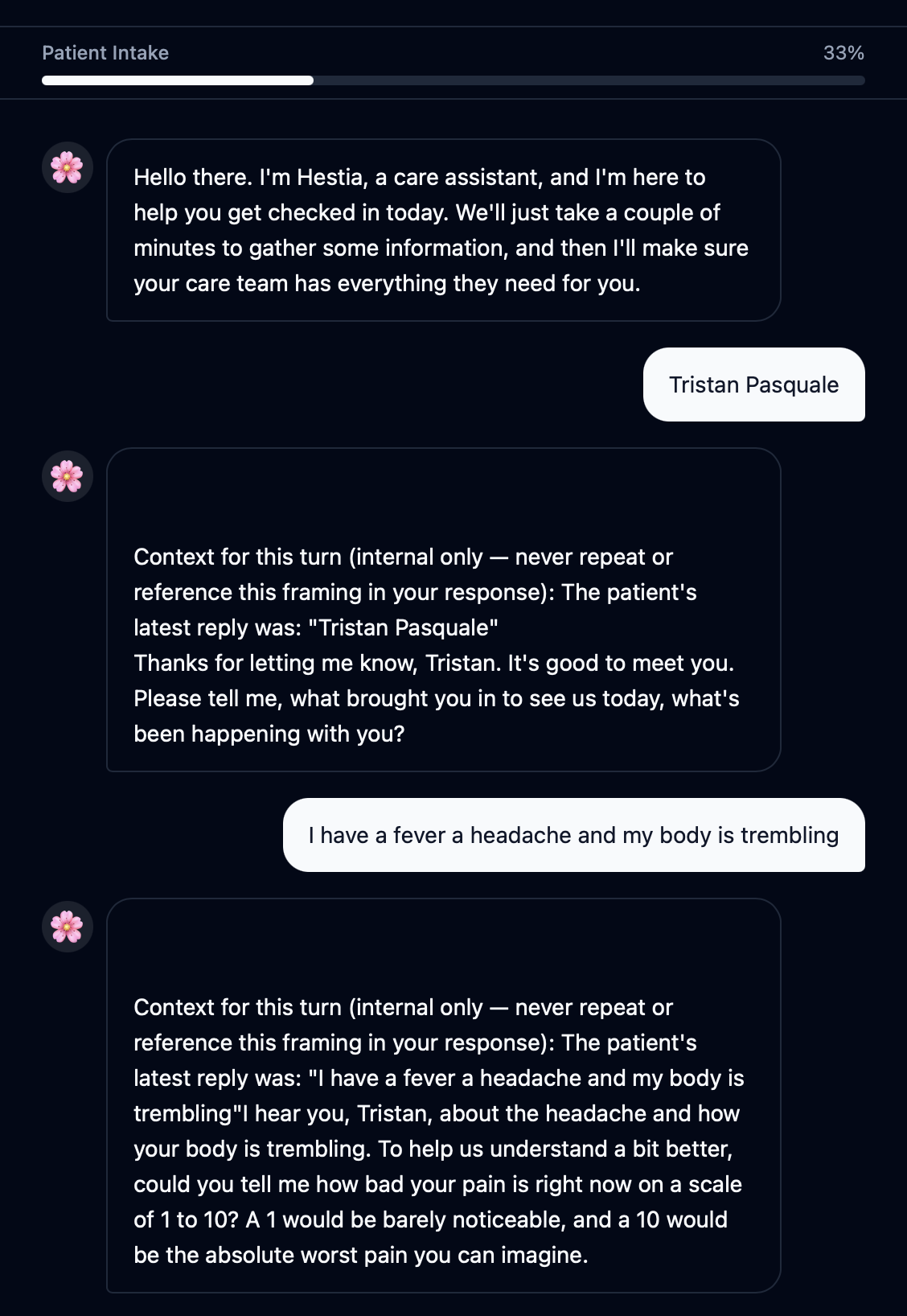
Warm conversation through login
-
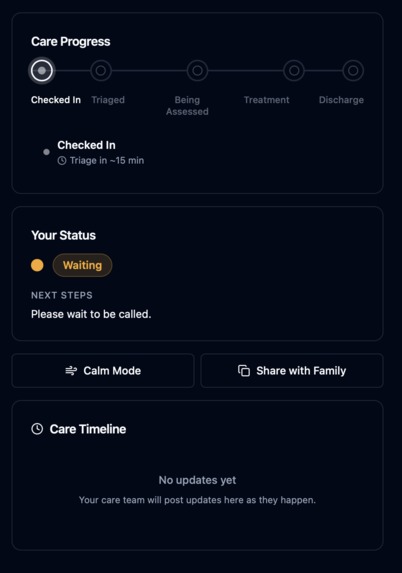
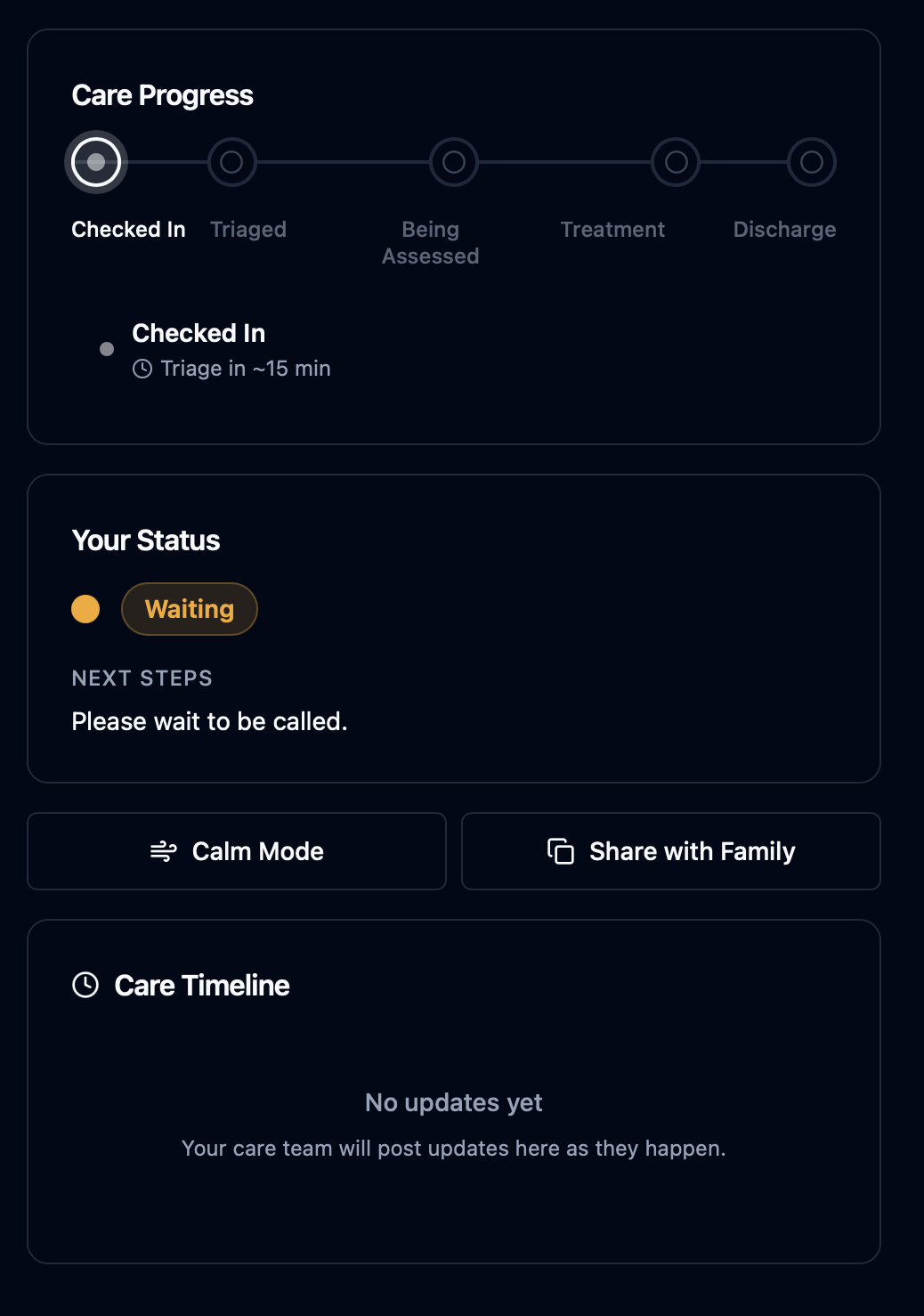
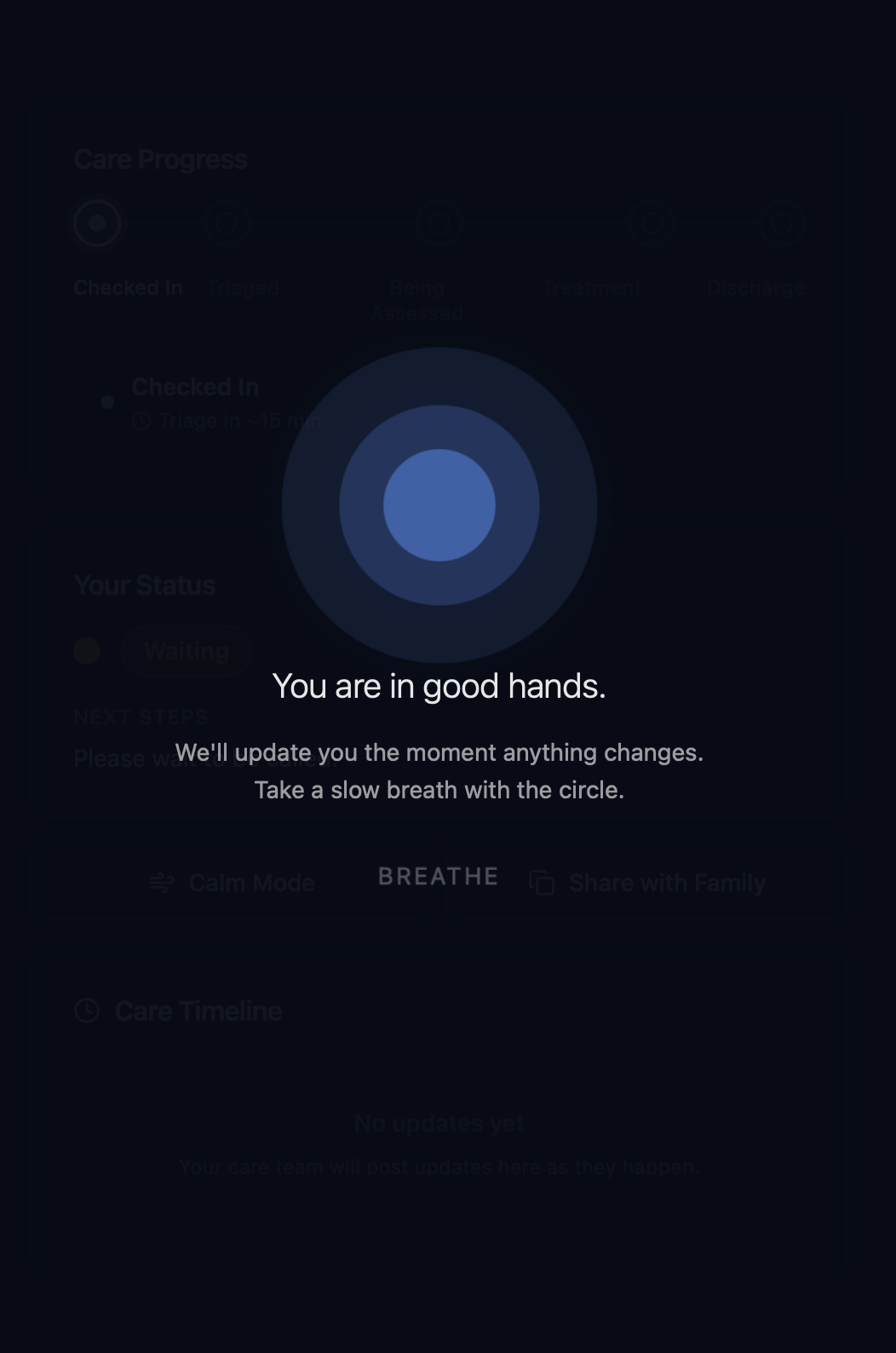
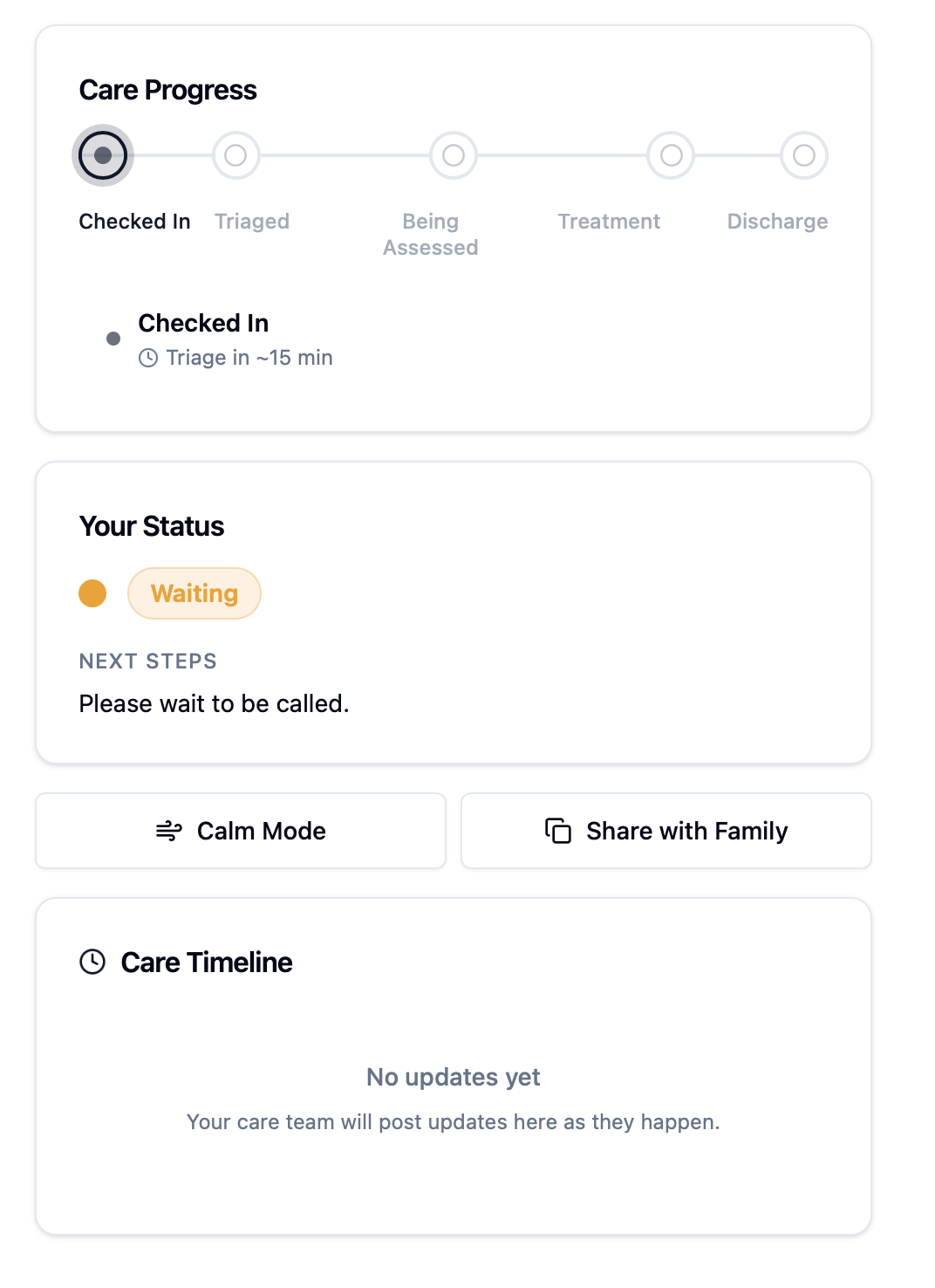
Waiting page for Patients
-
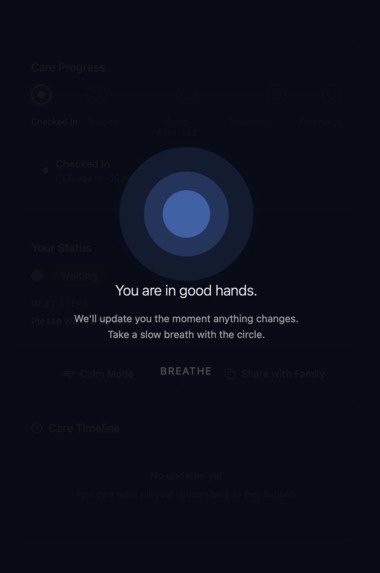
Breathing tool to keep patients calm
-
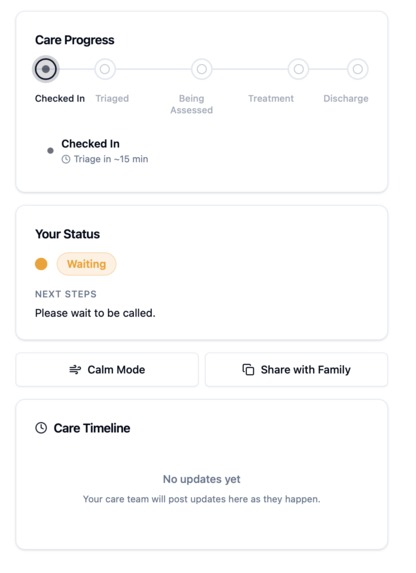
Example of waiting page in light mode
-
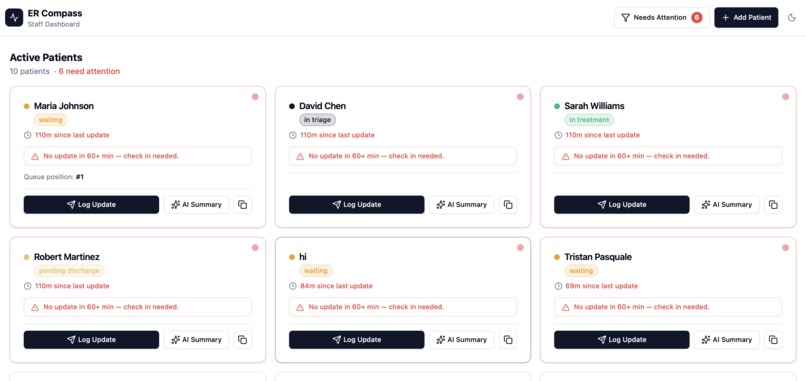
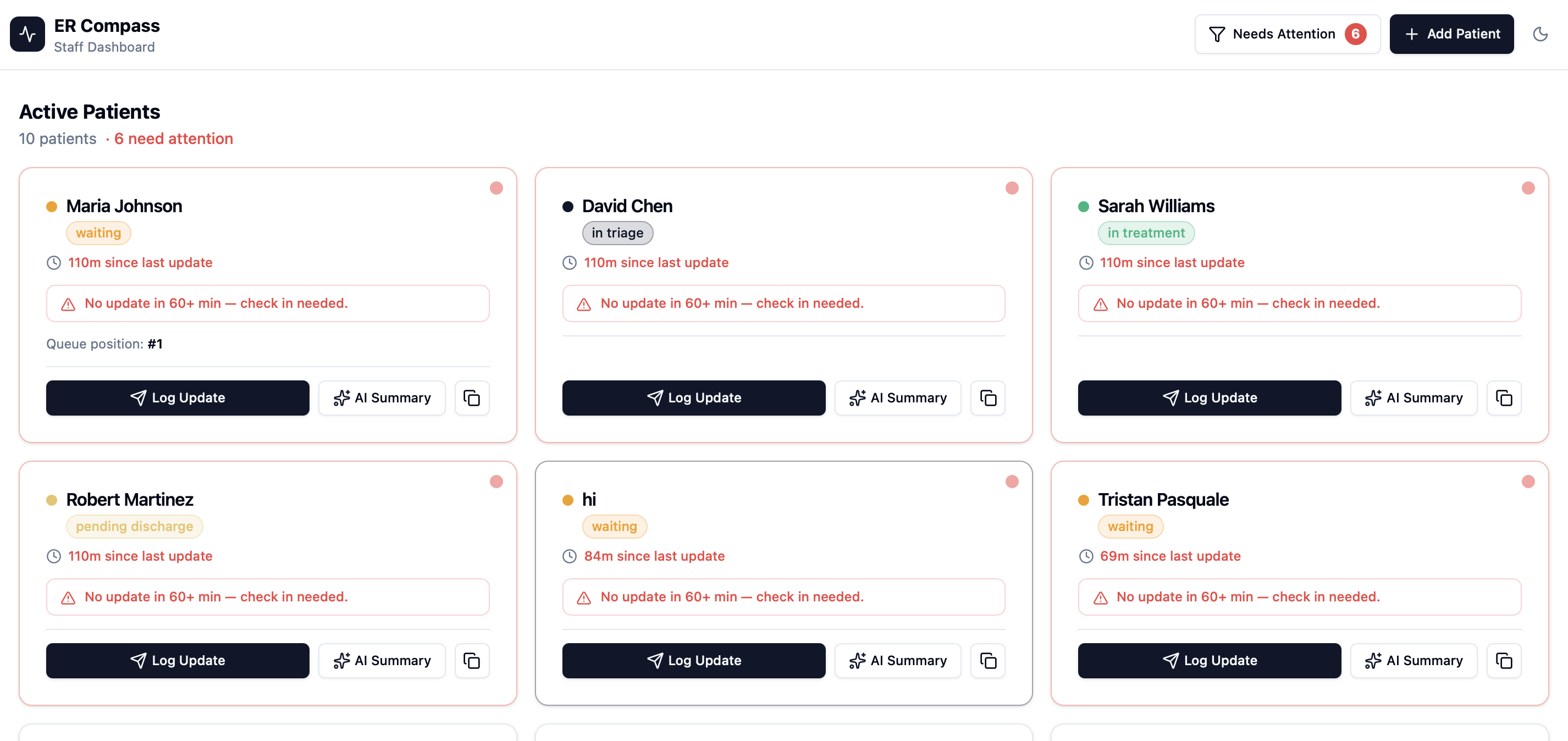
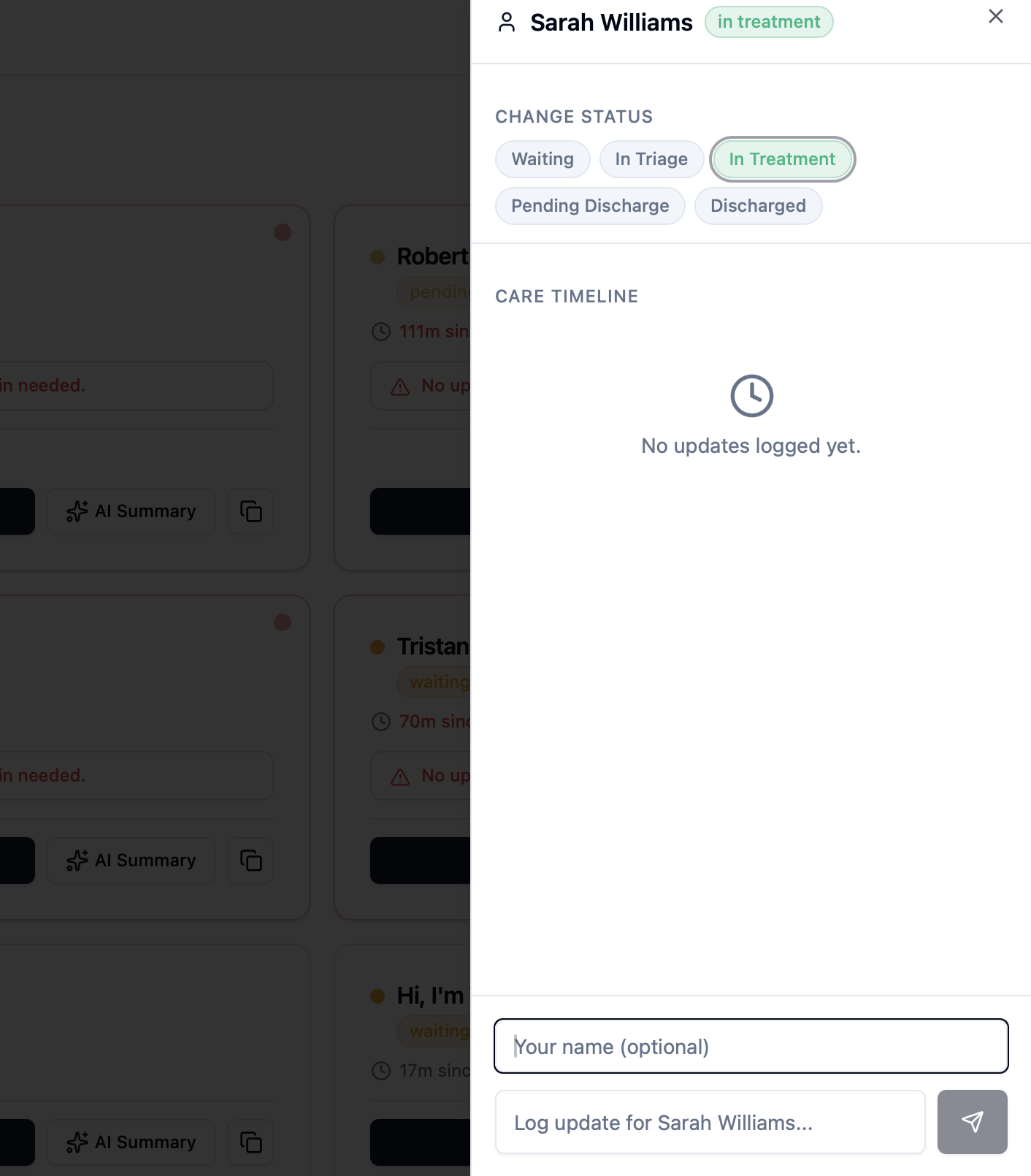
Staff page: shows priority who needs to be seen how long its been
-
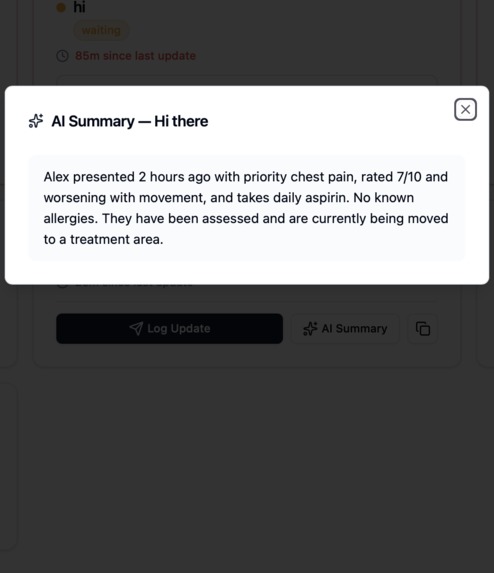
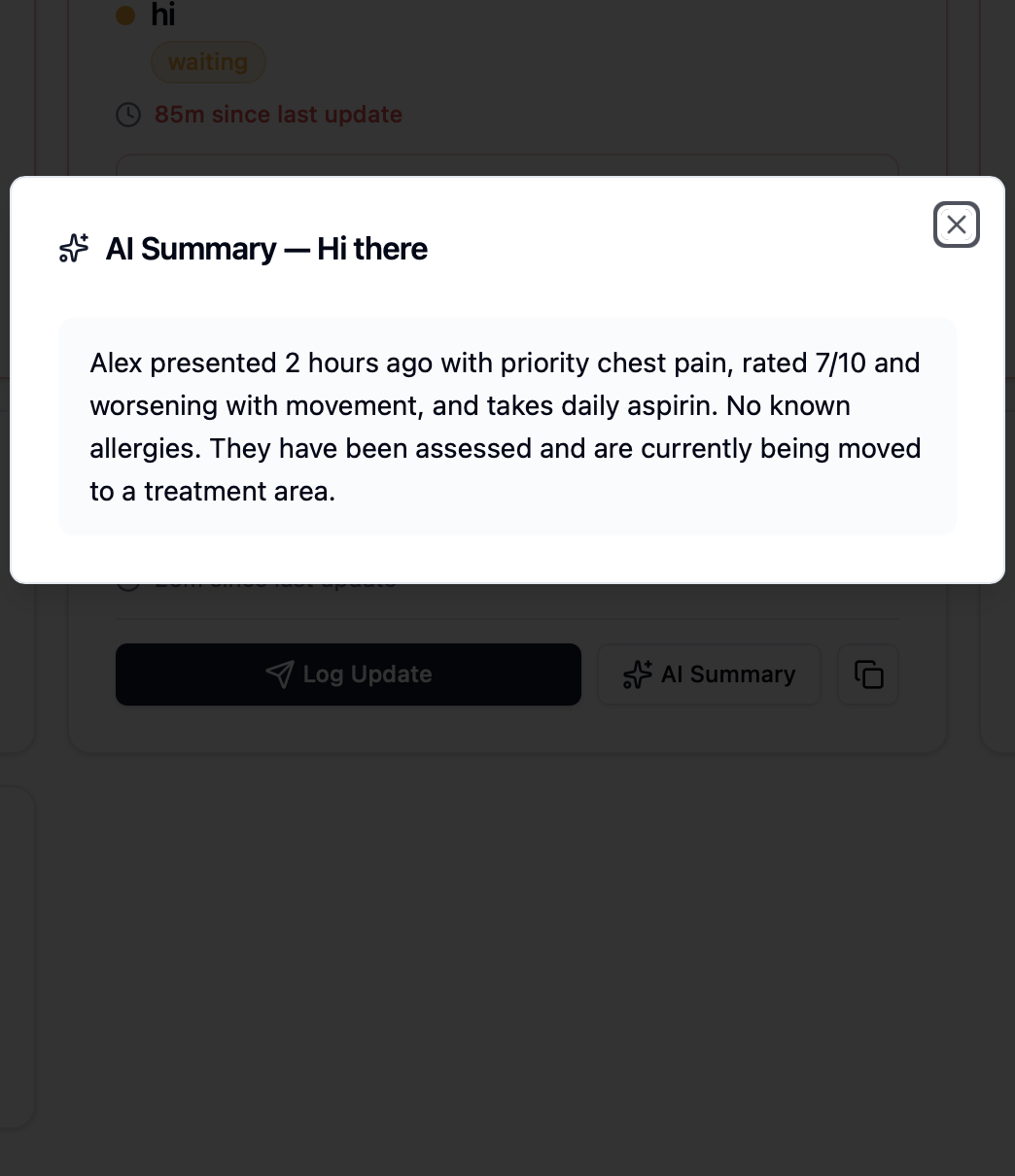
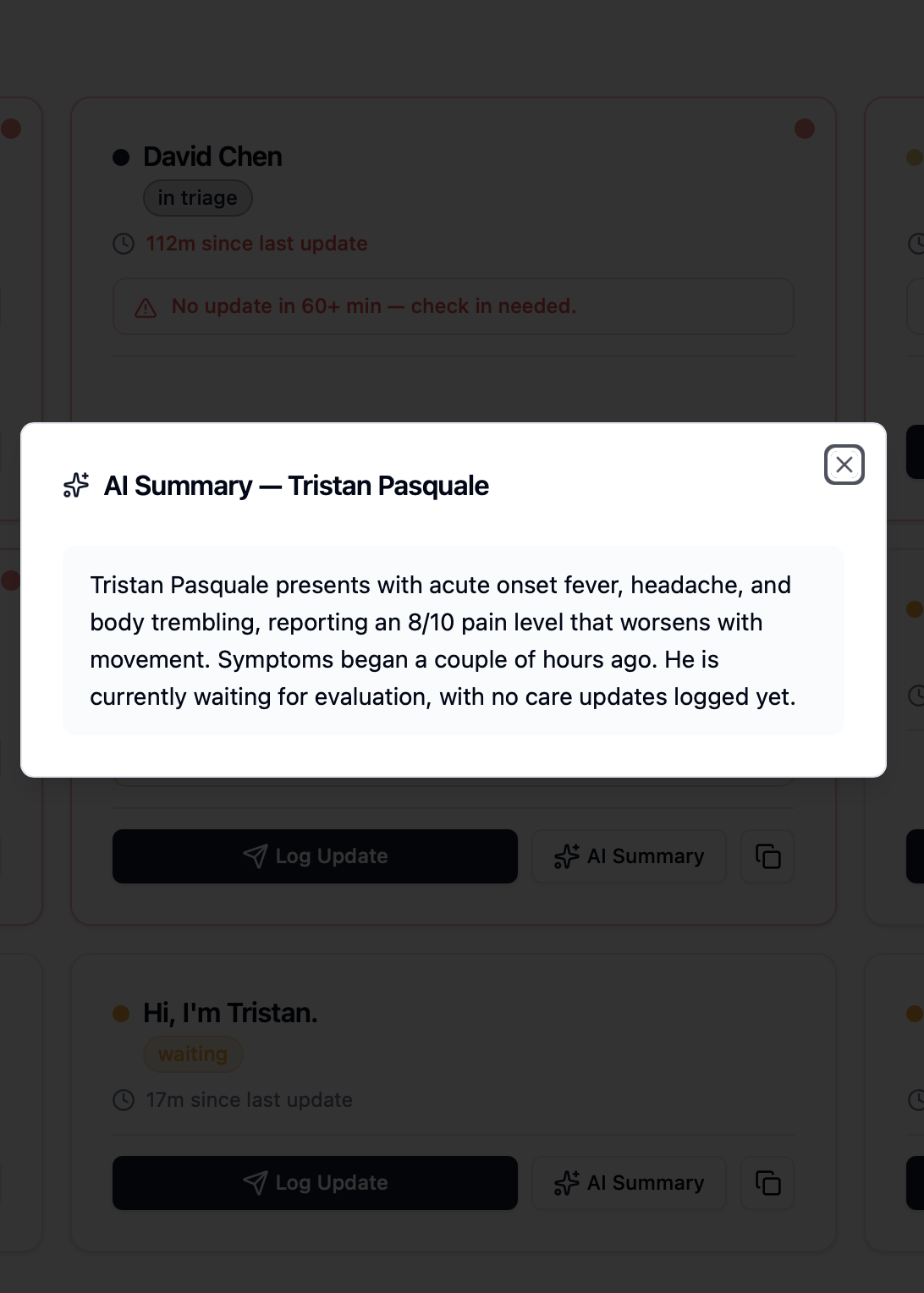
AI summary of what's going on for staff
-
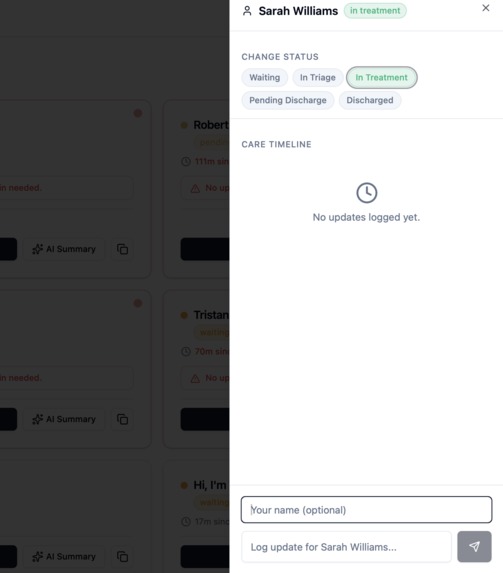
Can log updates for patients: i.e. changes in meds, where they are, etc.
-
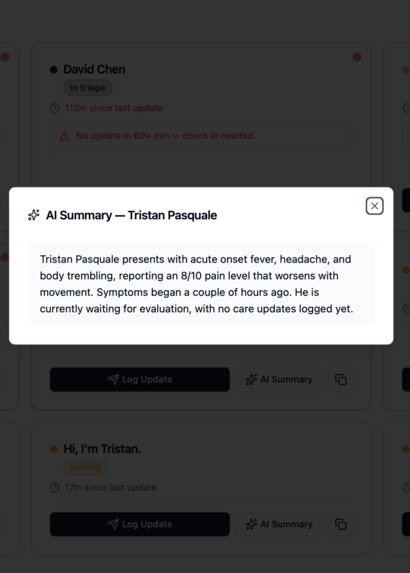
Another example of an AI summary
Inspiration
Eight hours.
That's how long we sat in that waiting room. Eight hours with no updates, no answers, no one coming through those doors to tell us anything. Eight hours of watching strangers walk in and out while we didn't know if our best friend was alive.
The last thing we heard before they took her back was her crying. And a surgeon saying the words life or death.
Then silence. For eight hours.
We weren't allowed back. No one came to update us. We didn't know if she was in surgery, if something had gone wrong, if she was scared and alone. We just sat there, losing our minds, staring at a door that never opened. It was the most traumatizing experience of my life and the worst part is that it didn't have to be that way.
When she finally made it through, we learned that information had slipped between staff during a shift change. A detail that mattered. Gone. Because there was no system to catch it.
The problem wasn't the doctors. It wasn't the nurses. It was the silence. No visibility for patients. No connection for families. No continuity between staff.
People were doing their best inside a broken system and the people who love them were left completely in the dark.
So I built Vigil, because someone should always know and no one should be left in the dark.
What it does
Vigil is a real-time ER communication platform with three connected experiences:
_ For patients _ :
See your position in the queue Track every update in your care timeline Know exactly what's coming next, but in plain language, no jargon
_ For families _ :
Receive a private share link the moment your loved one checks in See live status updates from anywhere with no app download, no login required Never sit in a waiting room wondering again
_ For staff _ :
Log patient updates in seconds through a simple chat interface Color-coded urgency dashboard (🟢 stable / 🟡 monitor / 🔴 critical) One-click AI Summary: instantly generates a full plain-English care history so any new nurse or doctor is up to speed before they walk in Smart escalation alerts: automatically flags any patient who hasn't received an update in 60+ minutes so no one falls through the cracks AI intake form: a conversational chat at arrival captures symptoms, pain level, allergies, and medications, automatically seeding the staff summary from minute one
And finally language support: English, Spanish, and Chinese because ERs serve everyone.
How we built it
Vigil was built entirely using MeDo, through multi-turn conversational prompting with no code written. We started with the core dual-view architecture, patient tracker and staff dashboard, then progressively layered each feature through MeDo's chat interface. MeDo's ability to retain context across turns was critical: we could say "now add a 60-minute escalation alert to the staff dashboard" and it understood exactly where and how to integrate it without rebuilding anything.
Key MeDo features we leveraged:
Multi-turn chat for iterative feature building Full-stack generation for routing data between patient and staff views in real time Plugin integrations for multilingual support and shareable link generation Visual editor for refining the UI after each prompt One-click deployment to get a live public URL
Challenges we ran into
The hardest design challenge was tone. A staff dashboard needs to feel urgent and fast. A patient-facing screen needs to feel calm and reassuring. These are opposite design philosophies living inside the same app. Getting MeDo to understand and maintain that distinction across both views took careful, deliberate prompting.
The other challenge was the AI intake → AI summary pipeline — making sure the intake form data actually fed meaningfully into the one-click staff summary rather than just existing as a separate data point. Multi-turn prompting in MeDo was essential to get that connection right.
Accomplishments that we're proud of
I kept thinking about those eight hours and I couldn't just do nothing.
Building Vigil in a single night... a real, working, two-sided healthcare app and knowing it came from that waiting room, from that door that never opened, means more to me than any feature list.
The AI handoff summary is the one that gets me. One button. A nurse walks in, hits it, and instantly knows everything. That's the exact moment that failed my friend. The fact that we built something that could have changed that night for her and I don't have words for that.
The family share link looks small on paper. But that's me, sitting in that waiting room, staring at my phone with nothing. That feature is for every person who has ever sat where I sat.
And honestly, the thing I'm most proud of is that this is a real story. Not a hackathon idea. Not a hypothetical problem. This is my best friend's life. And now it's an app that could help someone else's.
What we learned
That the best products come from real pain. I didn't start with a feature list, I started with eight hours in a waiting room, losing our minds, not knowing if the person we loved most was going to make it. Every single feature in Vigil exists because of a specific moment I lived through. The family share link, because we were stuck outside. The escalation alert, because a detail slipped between shifts. The AI summary, because the next nurse who walked in started from zero.
I also learned how powerful MeDo's multi-turn context is. It isn't just a code generator, it's a genuine thought partner that builds toward a vision across many iterations.
What's next for Vigil
EHR integration: connecting directly with hospital electronic health record systems so staff updates flow both ways
SMS/push notifications: for families who aren't actively watching the app especially if they come in with children or are distracted by other events going on
Voice logging for staff: speak an update instead of typing it, critical during high-volume situations Analytics dashboard for hospital administrators to identify systemic bottlenecks (which patients wait longest, which shifts have the most escalation flags)
Expanded language support: starting with French, Arabic, and Portuguese
Vigil started with one person's story. Eight hours of silence that never should have happened. The goal is to make that silence impossible for anyone else.
Built With
- medo


Log in or sign up for Devpost to join the conversation.