-
-
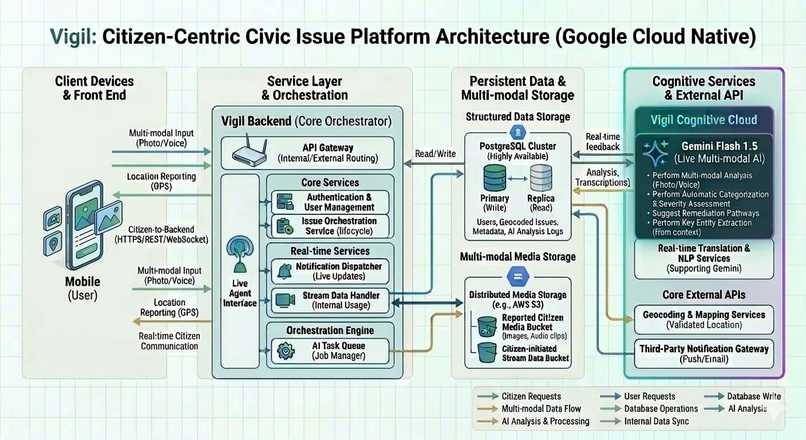
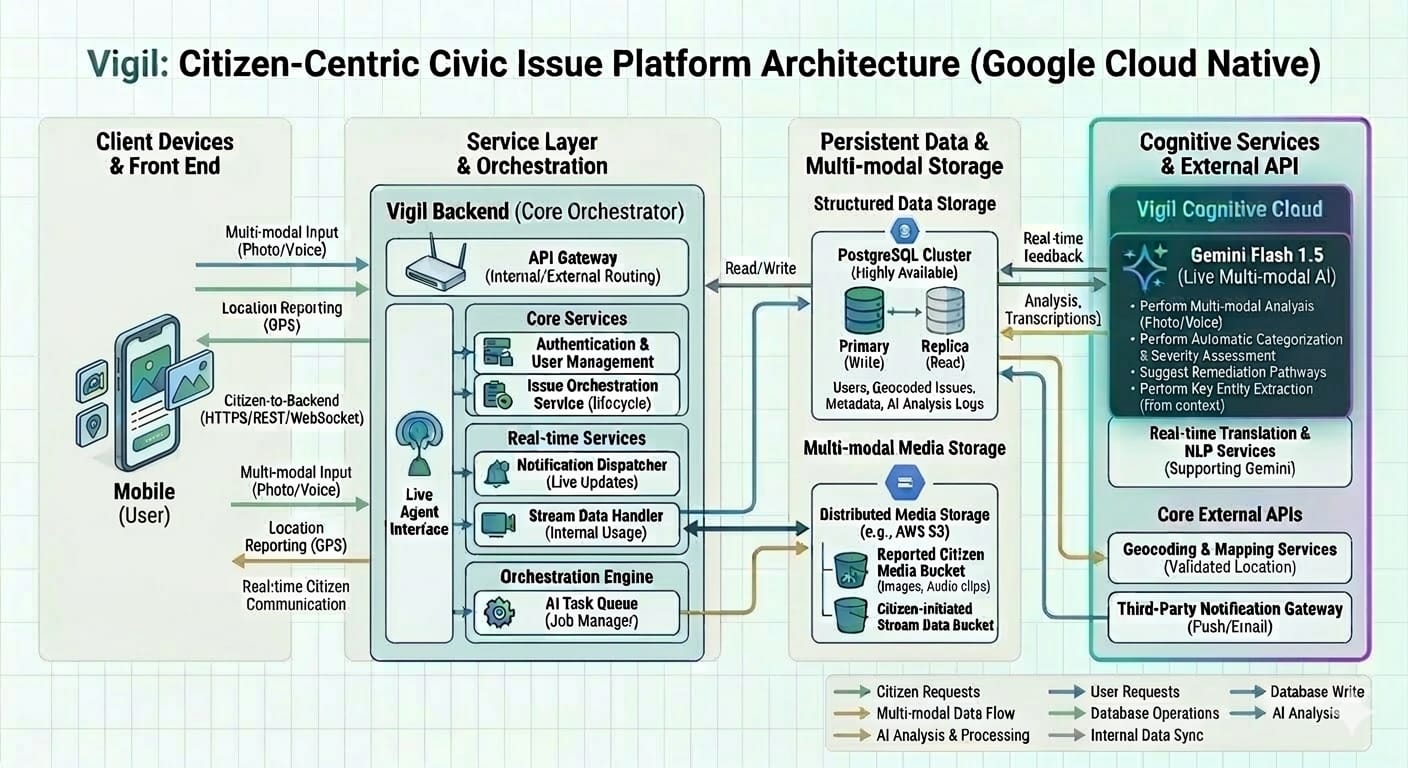
Architecture Diagram
-
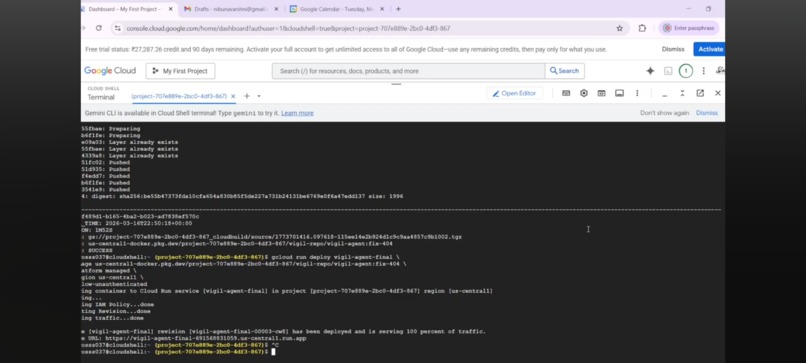
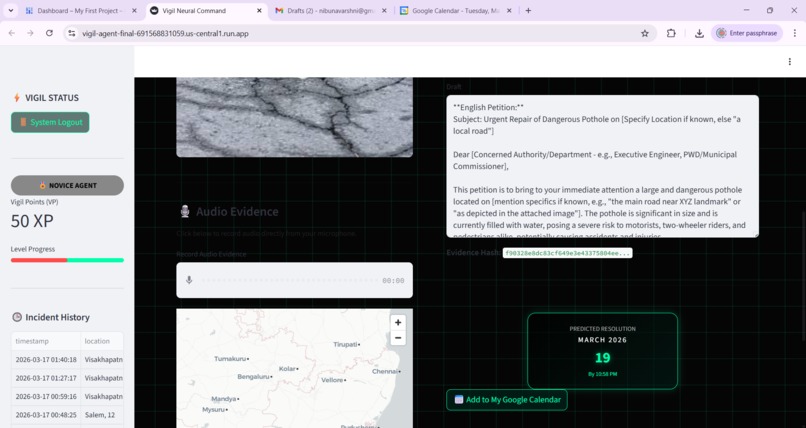
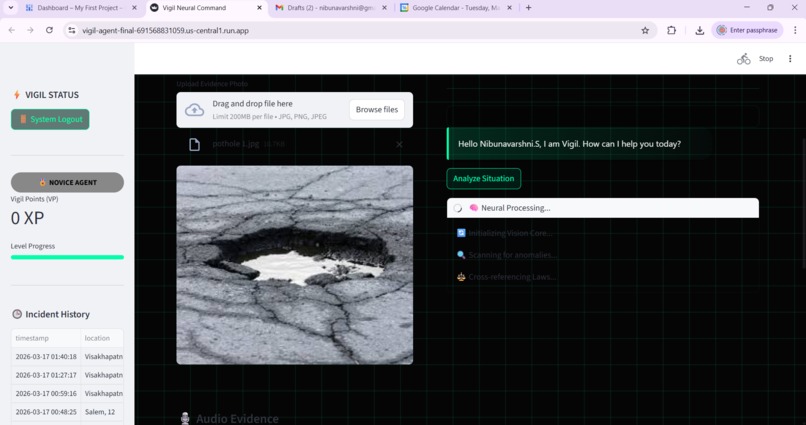
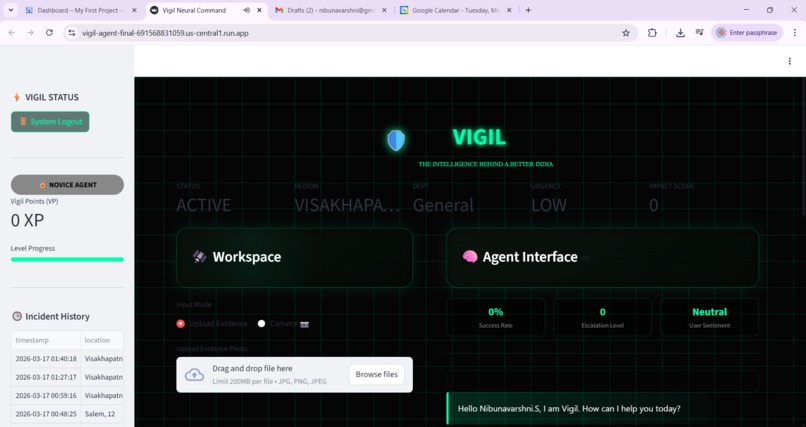
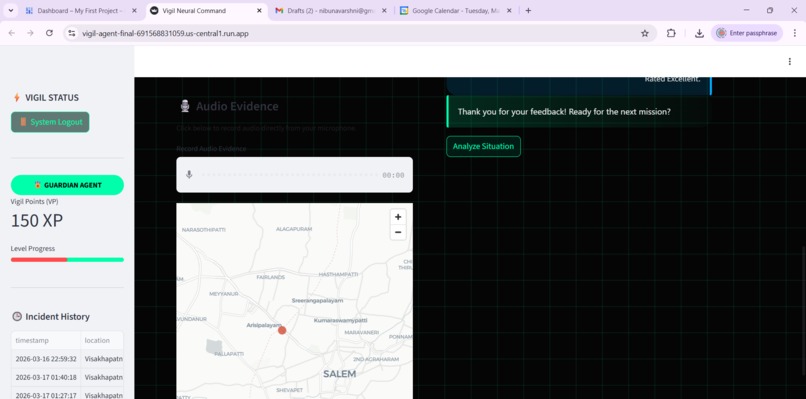
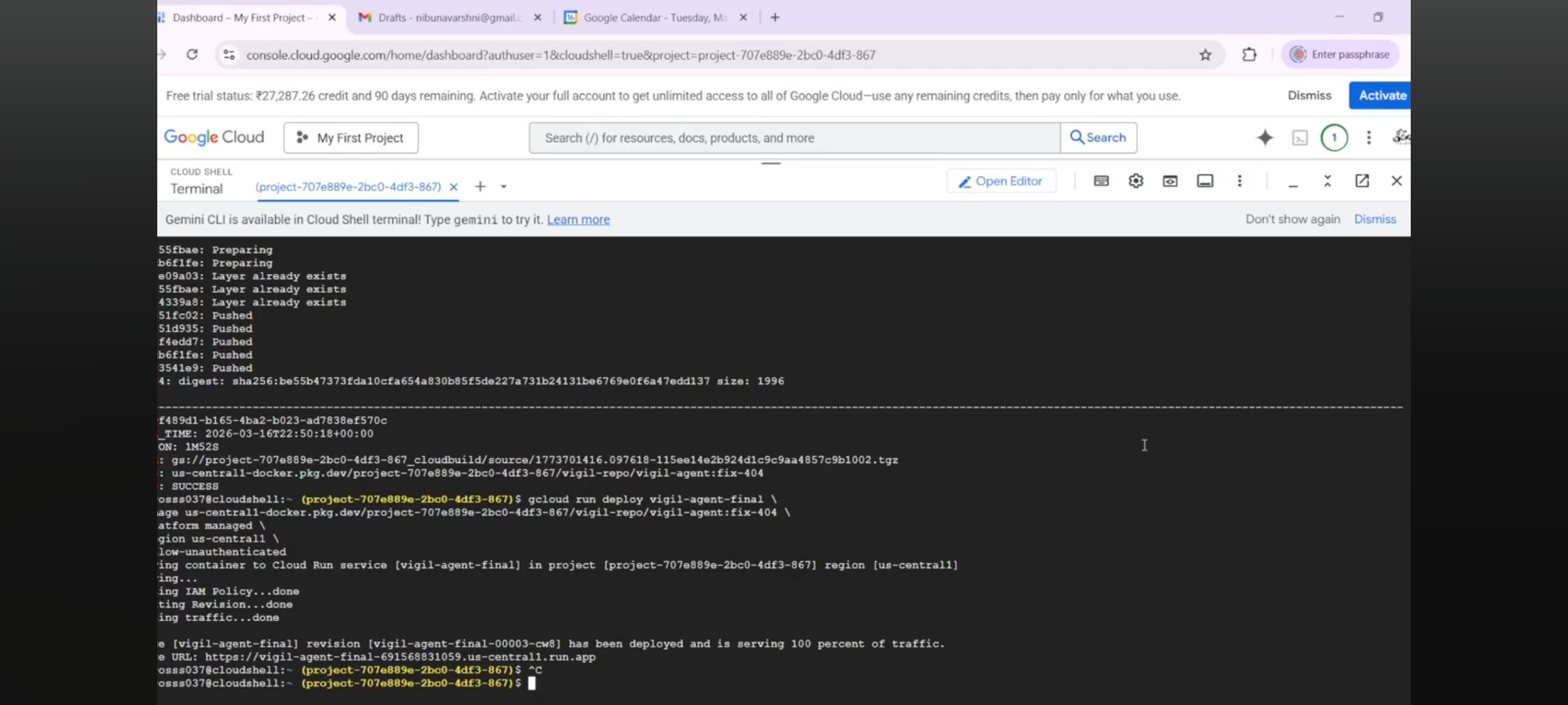
Cloud deployment proof
-
-
-
-
-
-
-
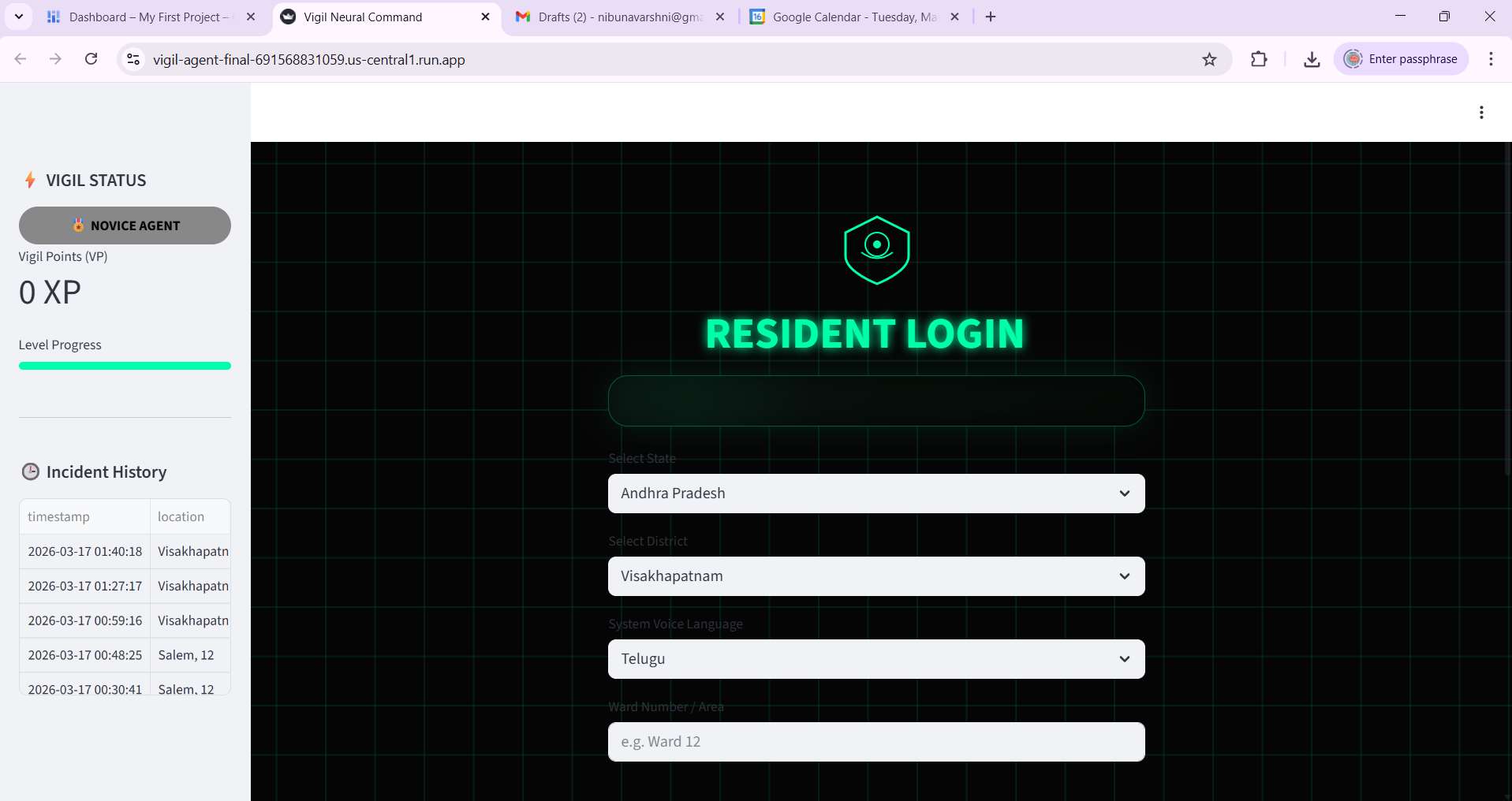
InspirationThe Inspiration: A Failure of Infrastructure
The spark for Vigil didn't come from a lab; it came from the lived reality of navigating a city that feels indifferent to personal safety. I was tired of the "unresolved civic silences"—the broken streetlights that stay dark for months, the emergency helplines that go unanswered, and the "dead zones" in our urban infrastructure where help feels miles away. I realized that we live in "Smart Cities" that can track a food delivery to the second, yet cannot tell if a citizen is in distress on a deserted street. This systemic gap—where technology is used for convenience but rarely for the fundamental right to feel safe—is what moved me. I built Vigil to be the infrastructure that the city failed to provide: a proactive, digital layer of protection that doesn't wait for a civic authority to fix a streetlight to keep a person safe.
What it does
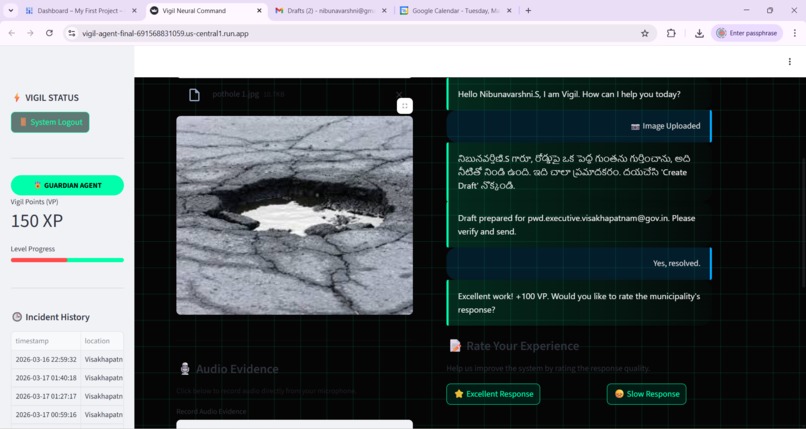
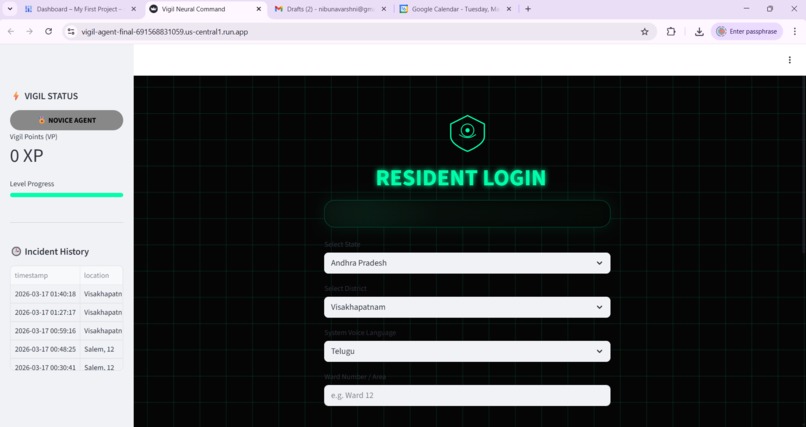
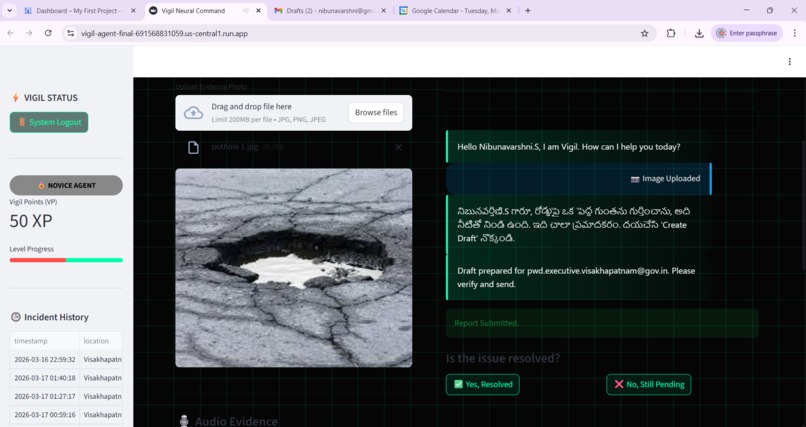
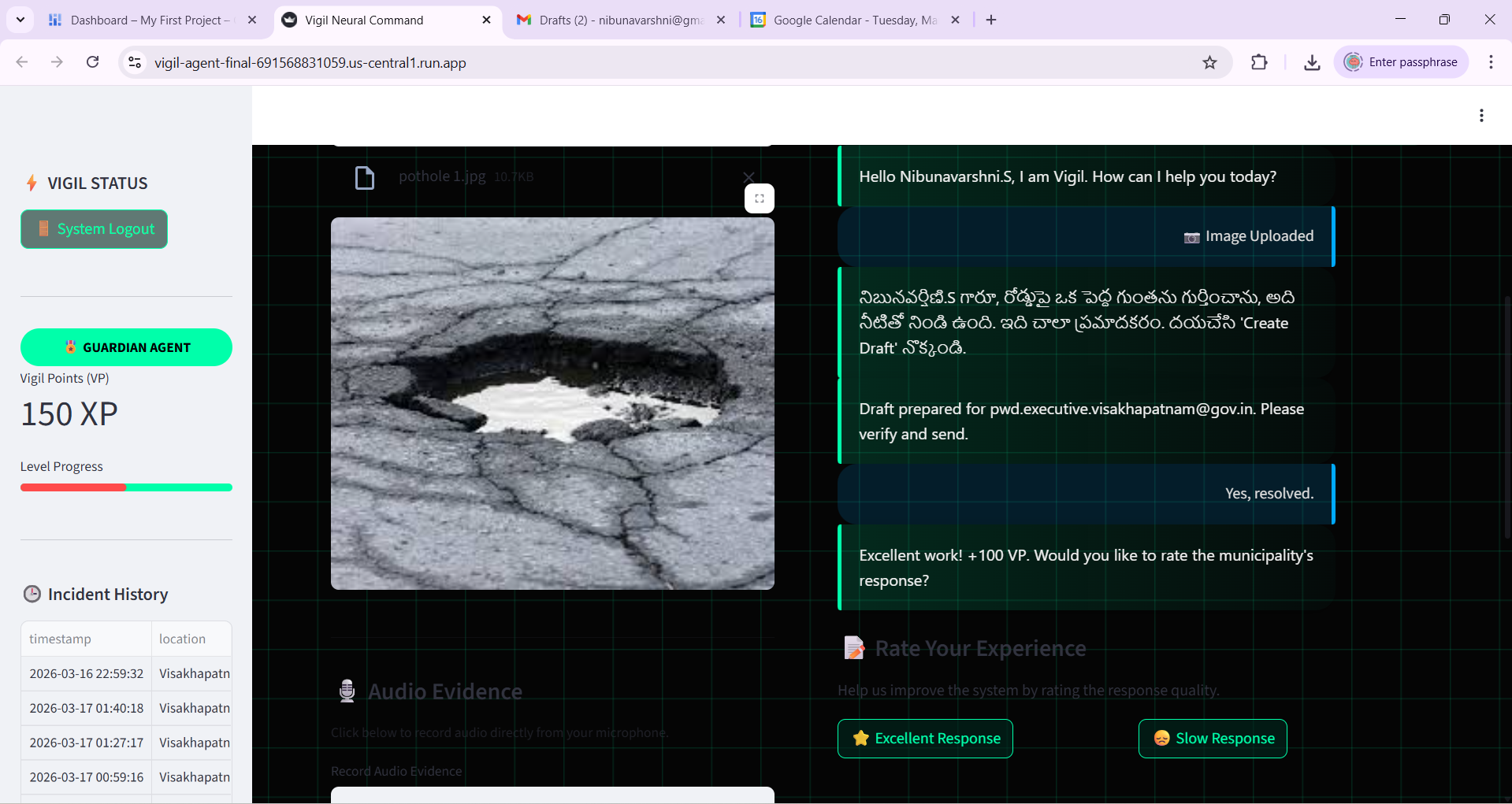
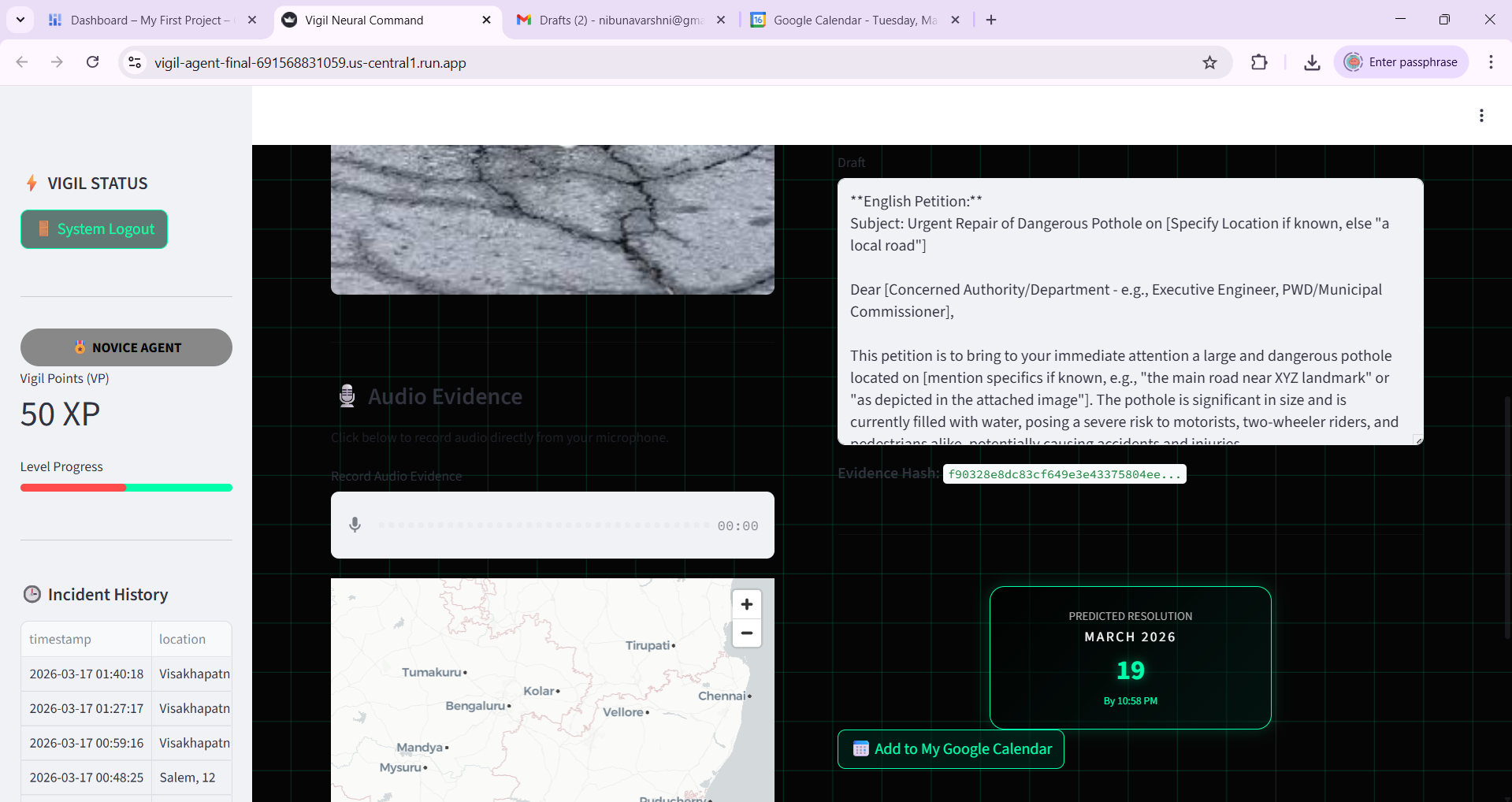
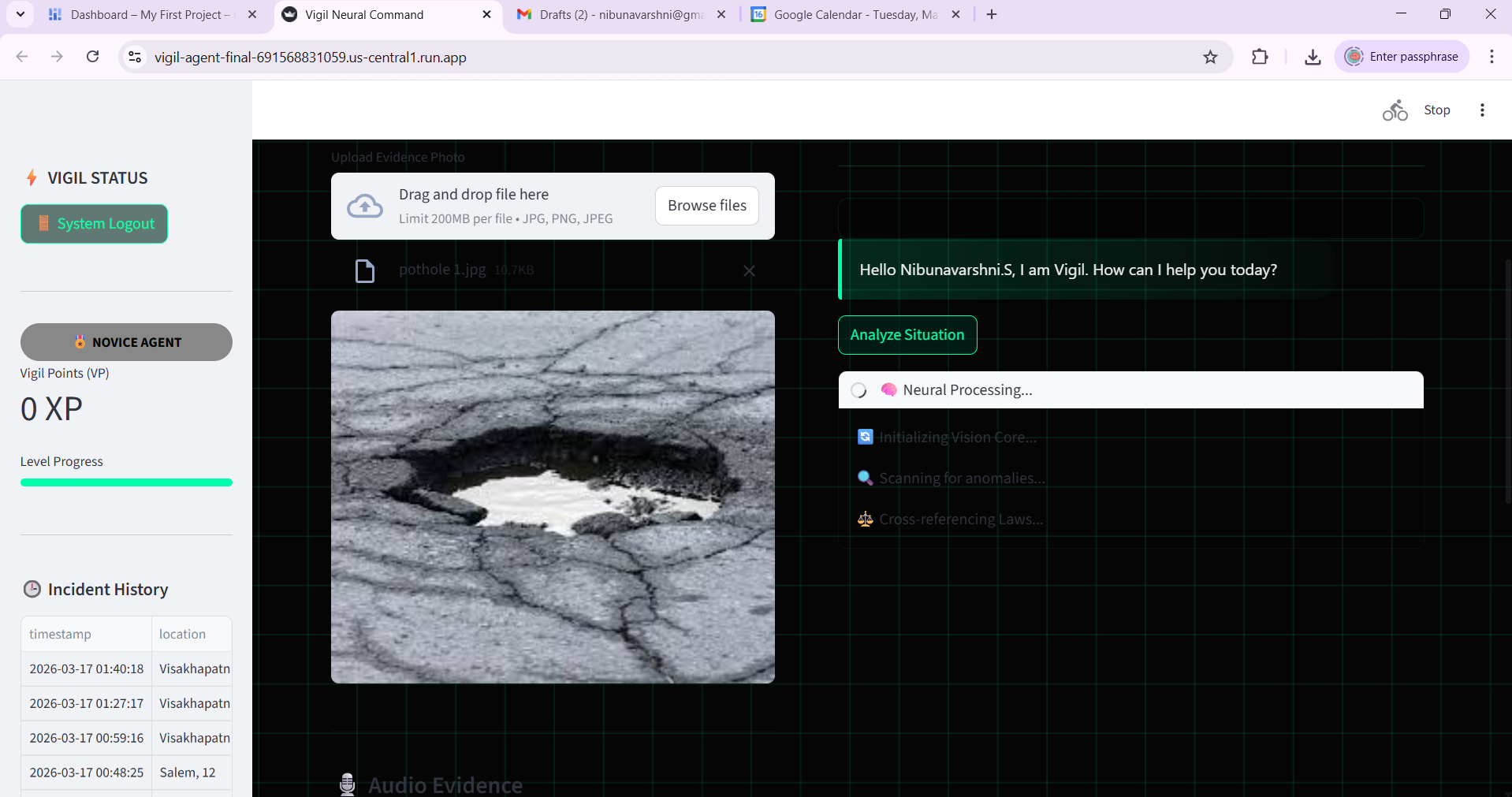
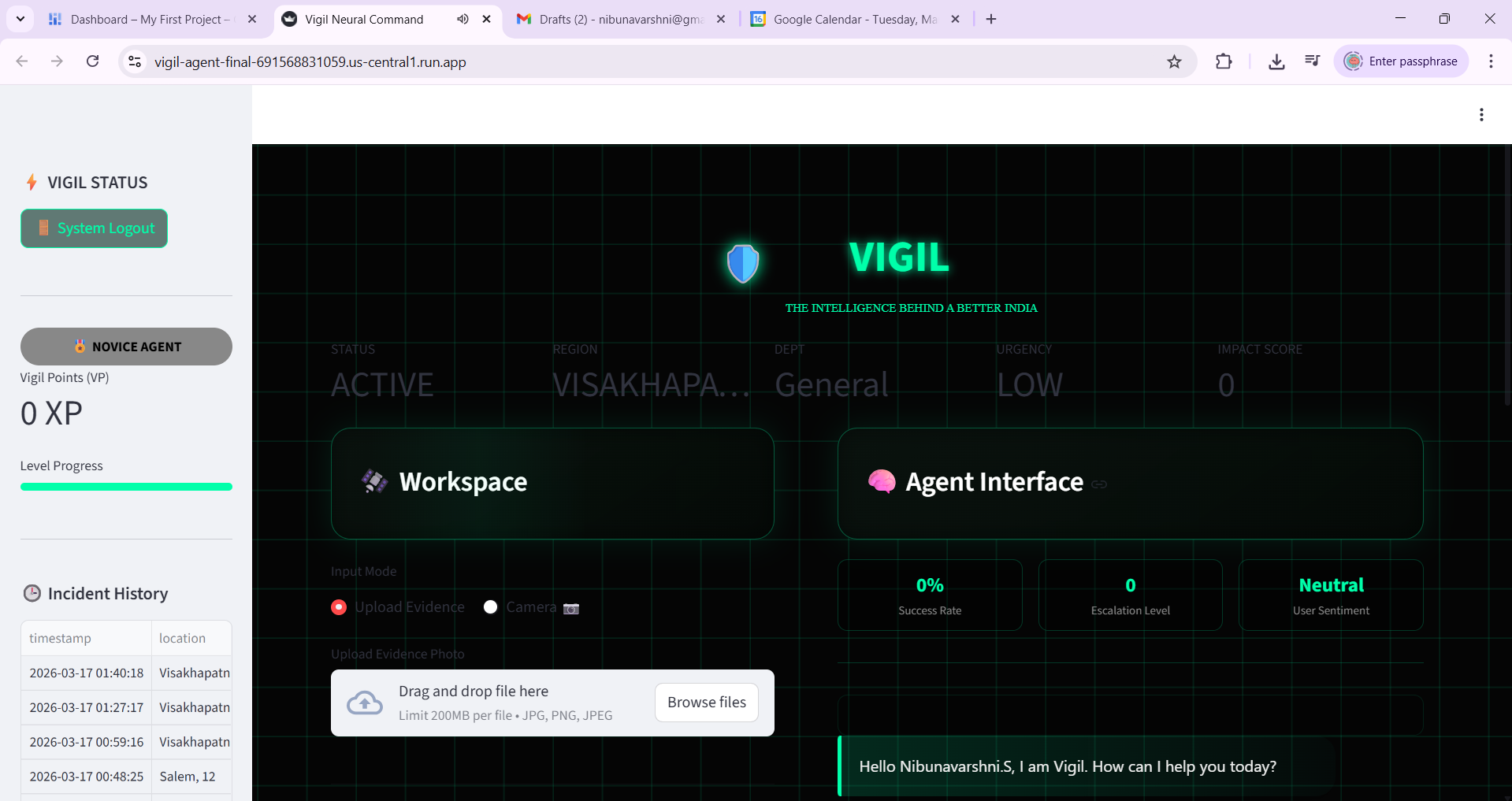
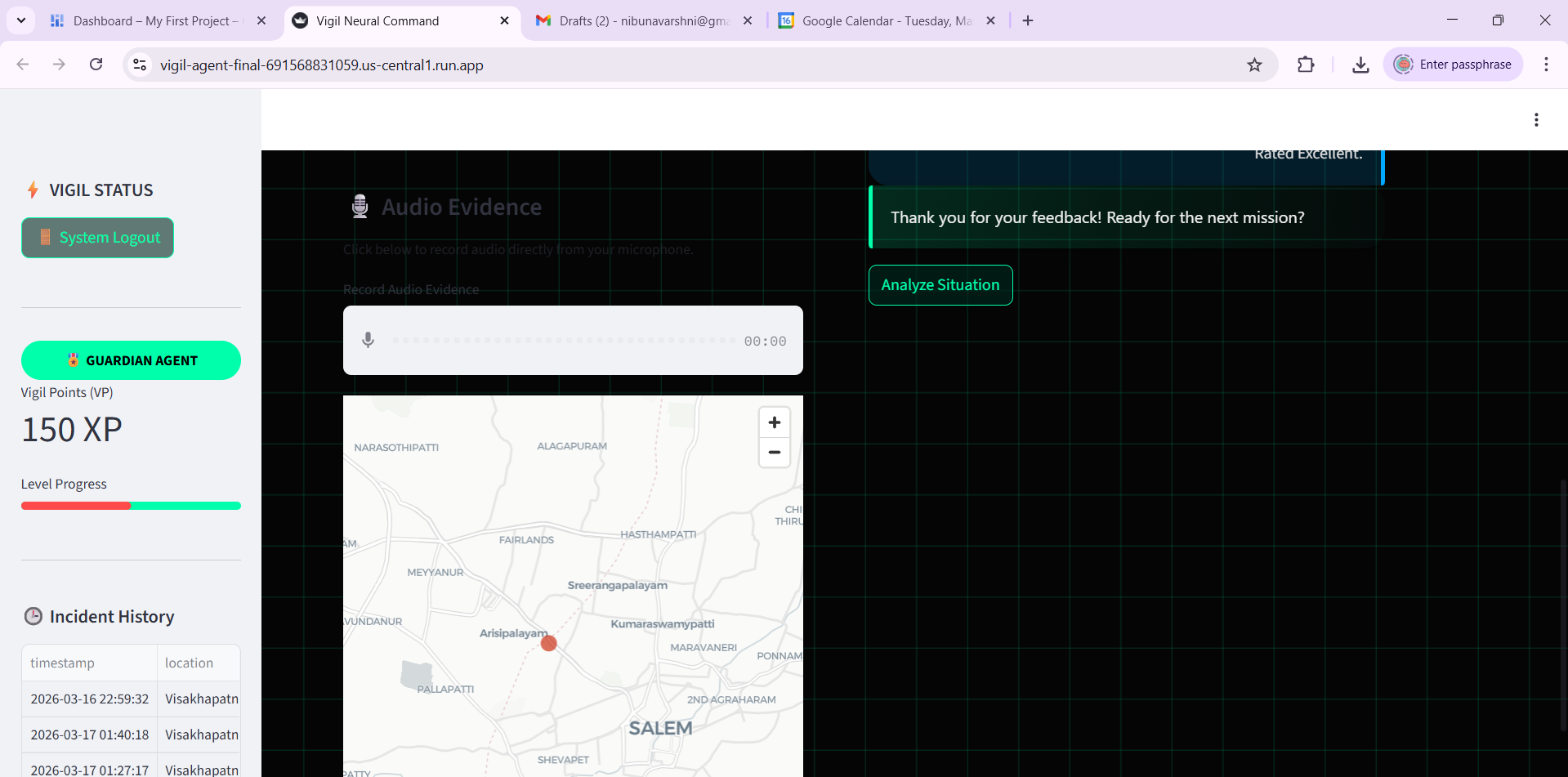
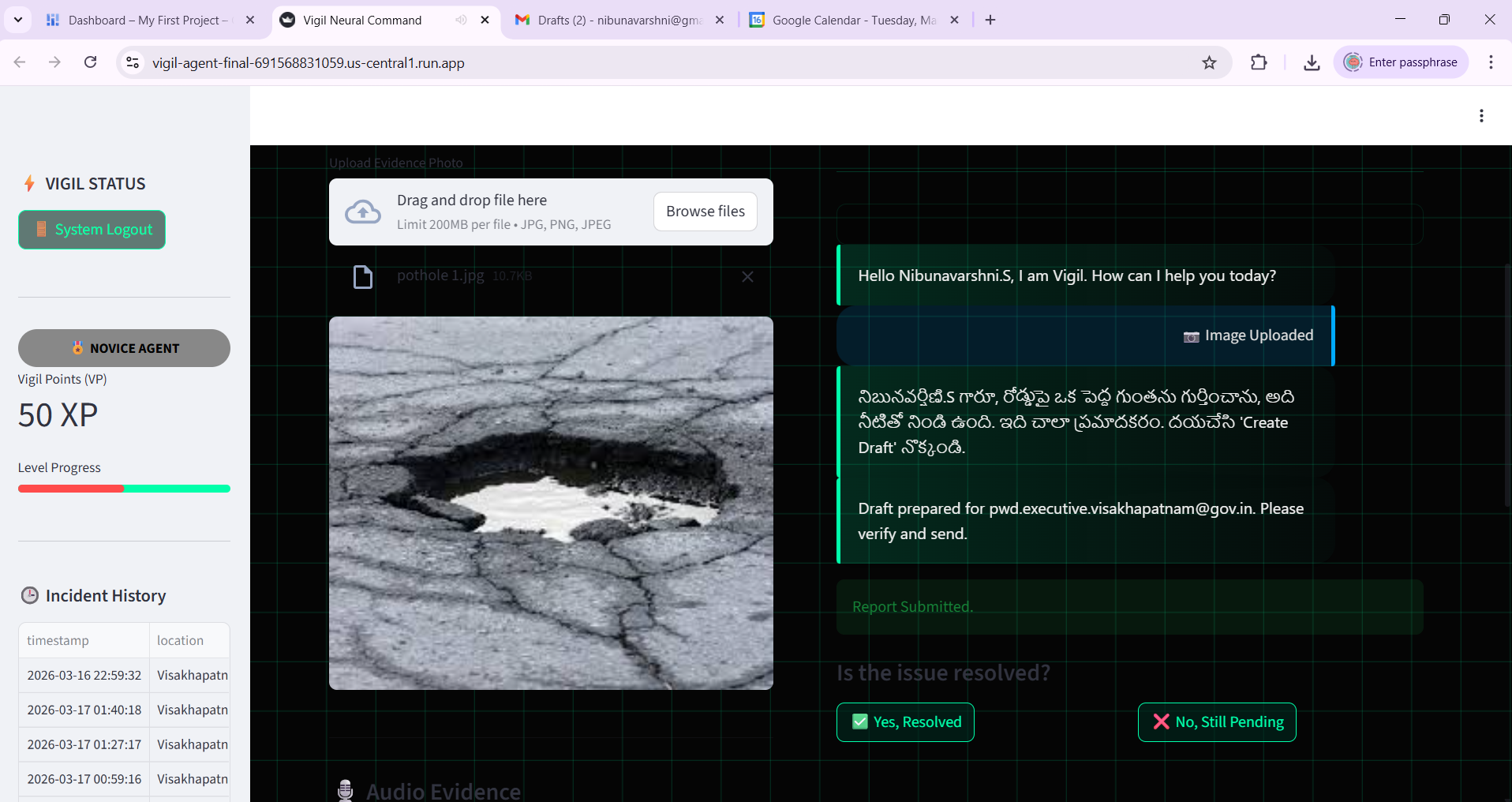
Vigil is a proactive, multimodal AI agent designed to bridge the gap between citizens and smart city governance. It transforms the way we report and resolve local infrastructure failures by automating the entire administrative process. Core Functionality Multimodal Evidence Analysis: Users can upload photos of civic issues (like broken streetlights, open potholes, or illegal dumping). Using Gemini 1.5 Flash, Vigil analyzes the image to identify the specific failure and assess the risk level. Geospatial Intelligence: It automatically extracts EXIF GPS data from images to pinpoint the exact location of the issue, ensuring local authorities know where to go without manual input. Department Routing & Petitions: The AI identifies the responsible government department and automatically drafts official Gmail petitions and RTI (Right to Information) applications on your behalf. Proactive Scheduling: Vigil doesn't just report; it sets resolution deadlines. It integrates with Google Calendar to schedule follow-ups, ensuring that reported issues don't just "sit" in a database. Key Features Legal Awareness: It cites specific Indian Laws and civic mandates within the drafted petitions to give your complaints more legal weight. Evidence Integrity: To prevent tampering, the system uses SHA-256 hashing to verify that the evidence uploaded is authentic. Bilingual Support: It communicates in English, Hindi, and Telugu, making it accessible to a broader demographic in India. Gamified Governance: It turns civic participation into an engaging experience, rewarding users for active reporting and helping to build a "civic-first" community.
How I built it
I built Vigil by integrating a high-level AI orchestration layer with robust cloud infrastructure to turn passive civic reporting into an active, automated governance tool. The Architecture The Frontend Experience: I developed a cross-platform mobile and web application using Flutter and Dart. This allowed for a unified user experience where citizens could easily capture and upload evidence of infrastructure failures. The Intelligence Layer: At the core of the project is Google Generative AI (Gemini 1.5 Flash). I used it as a multimodal agent to analyze images of civic issues, identify the specific failure, and assess the risk level based on visual context. The Backend & Storage: I utilized Firebase for rapid authentication and Cloud Firestore as a real-time NoSQL database to sync reports instantly. Google Cloud Platform (GCP) hosted the serverless functions that handled the heavy computational logic. Automation & Connectivity: To make the reporting actionable, I integrated the Gmail API to auto-draft petitions and the Google Calendar API to proactively schedule resolution deadlines. SHA-256 hashing was implemented to ensure the integrity of every piece of evidence uploaded. The Workflow Capture: The user takes a photo; the app automatically extracts EXIF GPS data and generates a unique hash for security. Analyze: The multimodal AI identifies the department (e.g., Municipal, Electricity, Water) and cites relevant Indian Laws. Act: The system drafts a professional RTI or petition and adds a follow-up reminder to the user’s calendar. Translate: Using localized language models, the app provides support in English, Hindi, and Telugu to ensure accessibility.
Challenges I ran into
One of the biggest hurdles was ensuring data integrity. I had to build a robust hashing system to prove that the photographic evidence hadn't been tampered with before it reached officials. Additionally, fine-tuning the AI to accurately distinguish between different types of urban decay (like a minor pothole vs. a structural road failure) required extensive prompt engineering and context setting. Would you like me to create a technical "Tech Stack" table to summarize these tools for a slide in your presentation?
Accomplishments that I'm proud of
In building Vigil, I’m most proud of how I transformed a passive frustration with civic infrastructure into a proactive, AI-driven solution that gives power back to the citizen. Technical Milestones Multimodal Intelligence: I successfully integrated Gemini 1.5 Flash to act as a "Civic Agent" that doesn't just see a photo of a broken pipe, but understands the risk, identifies the correct government department, and cites the specific Indian Laws relevant to the issue. Evidence Integrity: To ensure my project could be taken seriously by authorities, I implemented SHA-256 hashing. This creates a digital fingerprint for every image, ensuring that civic evidence is tamper-proof and legally credible. Seamless Automation: I’m proud of building a workflow where a single photo trigger multiple actions—auto-drafting Gmail petitions, generating RTI applications, and proactively scheduling resolution deadlines in Google Calendar. Social & Civic Impact Bridging the Language Gap: Recognizing that civic issues affect everyone, I implemented bilingual support (English, Hindi, and Telugu), ensuring that language is no longer a barrier to demanding better infrastructure. Context-Aware Safety: By extracting EXIF GPS data, I ensured that the system provides "Geospatial Intelligence," allowing authorities to find and fix issues with surgical precision without the user needing to type a single address. Turning Awareness into Action: I moved beyond simple "reporting" to create a gamified governance system. Seeing users move from feeling helpless about a pothole to feeling empowered by a scheduled follow-up is the ultimate accomplishment. Personal Growth Full-Stack Orchestration: Building this project required me to master a complex stack—from Flutter and Firebase to advanced LLM prompt engineering and cloud-based automation. Systems Thinking: I learned to view urban problems not just as "broken things," but as gaps in a system that can be repaired through smart, ethical technology.
What I learned
Building Vigil was a transformative journey for me. As a beginner, I stepped into this project with a vision but very little experience in the complex world of Full-Stack AI Orchestration. Starting from an empty folder, I built every single component—from the UI to the AI logic—completely from scratch. The Intensity of the Build The most defining part of this experience was the sheer grit it required. To bring a project of this scale to life, I pushed myself through an intense, sleepless week of coding. There were nights spent entirely on "debugging loops," figuring out how to make Flutter talk to Firebase, and ensuring my Gemini 1.5 Flash prompts were surgically precise. Seeing a single photo successfully trigger a Gmail petition and a Google Calendar event after a 48-hour coding marathon was a moment of pure adrenaline. Technical Breakthroughs Mastering the Stack: I went from basic coding to managing a sophisticated ecosystem involving Dart, Python, NoSQL databases (Firestore), and Cloud Functions. AI Beyond Chatbots: I learned how to move past simple text prompts and implement Multimodal AI. Learning how to extract EXIF GPS data and perform SHA-256 hashing taught me that security and data integrity are just as important as the AI itself. Bilingual Integration: Implementing English, Hindi, and Telugu support forced me to think about localization and how to make tech inclusive for everyone in India. The Biggest Lesson The most important thing I learned is that perseverance is a developer's greatest tool. This project taught me that "beginner" is just a starting point. By refusing to sleep until the logic worked, I learned more about software architecture, API integration, and user-centric design in seven days than I could have in months of passive study. Vigil isn't just a project to me—it's proof that with enough passion and a laptop, a student can build a tool that holds a system accountable.
What's next for Vigil
Expanding Vigil for the world means evolving it from a local civic tool into a global standard for transparent governance. The goal is to create a borderless platform where the right to functional infrastructure is universal, regardless of geography or language.
- Global Legal & Bureaucratic Engine The current version is tailored to Indian laws (like RTI). The next phase involves building a Dynamic Jurisdictional Engine. Global Compliance: Using the LLM to automatically identify and cite the specific laws, municipal codes, and petition formats for any country—whether it's an FOIA request in the US or a civic complaint in the EU. Universal Department Routing: Mapping global administrative hierarchies so the AI knows exactly which local council or ministry to target anywhere on Earth.
- Breaking the Language Barrier Globally While I started with English, Hindi, and Telugu, the global version will utilize Massively Multilingual Speech and Text (MMS) models. Hyper-Localization: Supporting hundreds of dialects to empower citizens in developing nations where digital literacy and language barriers often silence civic needs.
- Satellite-Scale Verification To truly "watch" the world, Vigil will move beyond manual photo uploads. Remote Sensing: Integrating open-source satellite data (like Sentinel or Landsat) to automatically detect large-scale civic issues like illegal deforestation, urban flooding, or major road collapses across borders. Crowdsourced Global Heatmaps: A live, global "Civic Health Map" that shows real-time infrastructure status across every continent, allowing international NGOs to see where aid and repairs are needed most.
- Decentralized Accountability (Web3 Integration) To ensure that reports cannot be suppressed by local corruption, I plan to move the SHA-256 evidence logs onto a Decentralized Ledger (Blockchain). Immutable Evidence: By storing the "digital fingerprints" of civic failures on a global, decentralized network, we ensure that the evidence of a government's negligence can never be deleted or altered by the authorities in charge.
- The "Global Vigilant" Community Creating a worldwide network of citizens who can share strategies on how they solved specific urban problems. If someone in Nairobi fixed a water crisis using a specific legal framework, Vigil can suggest that exact blueprint to someone facing the same issue in Mumbai or Rio de Janeiro. Vigil started as a solution for my street, but it's built to protect the world's cities.


Log in or sign up for Devpost to join the conversation.