-
-
Landing Page
-
The Challenge
-
The Solution
-
How it works
-
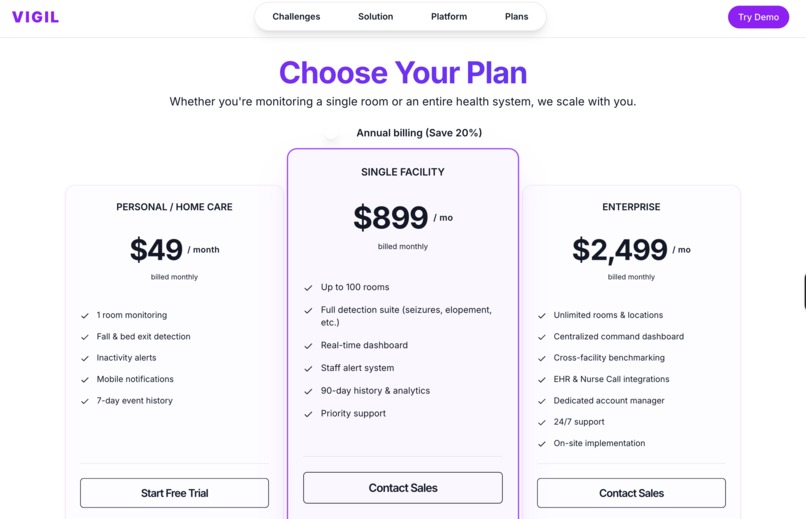
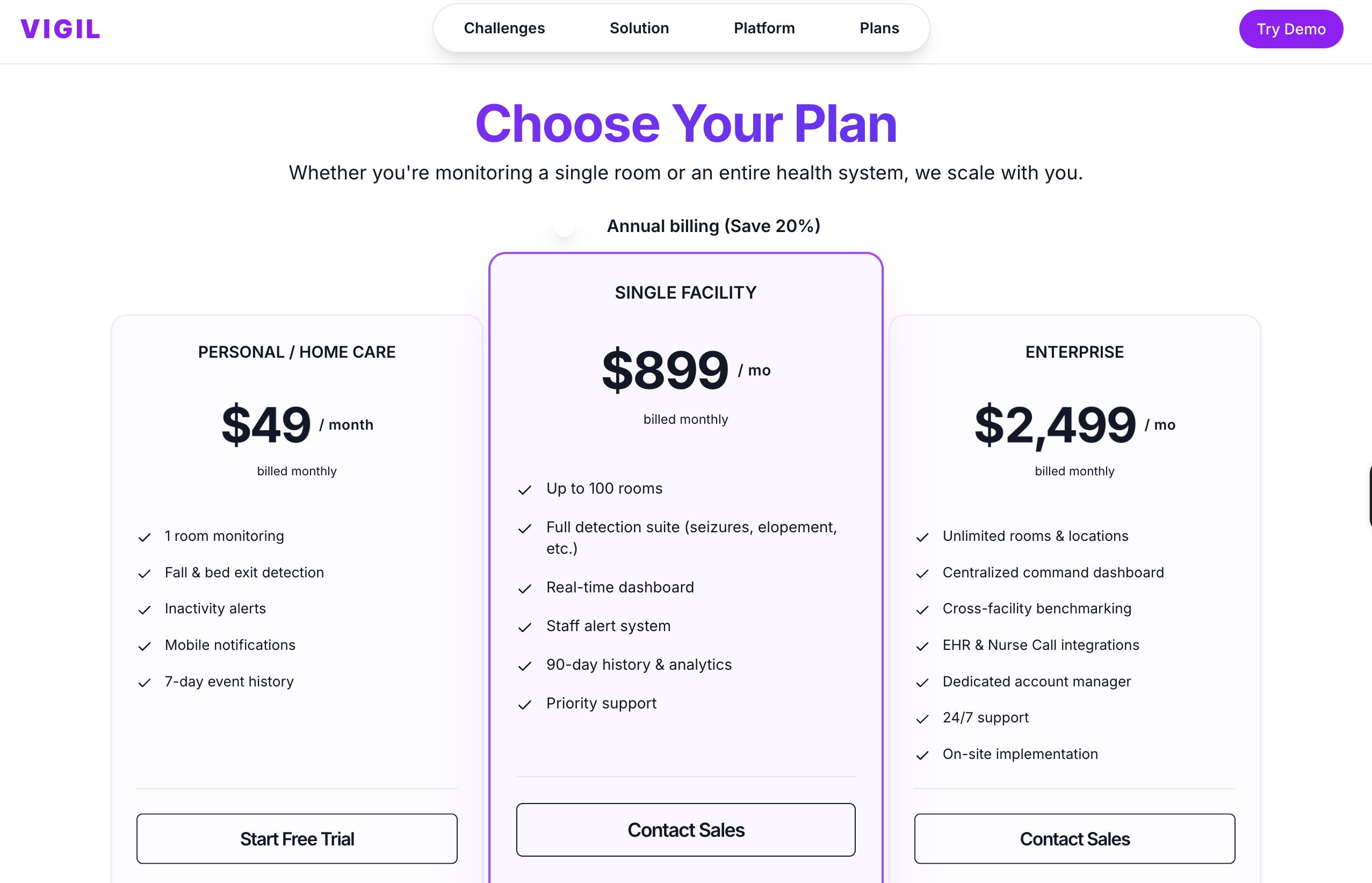
Plans
-
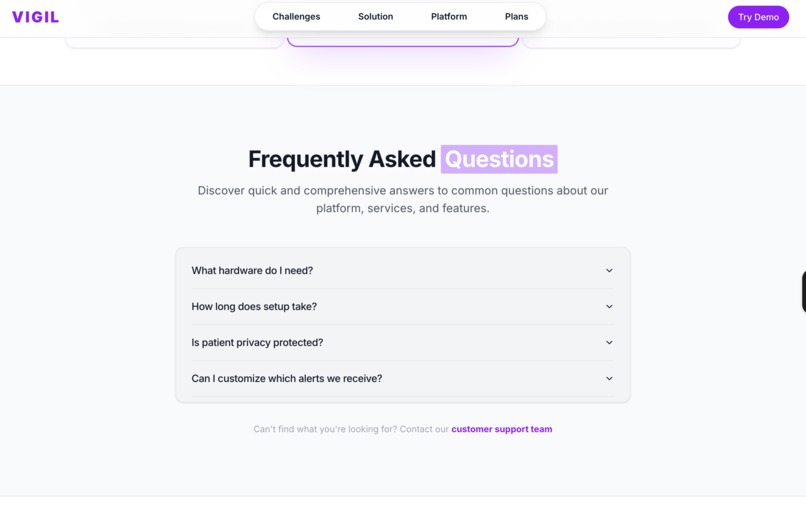
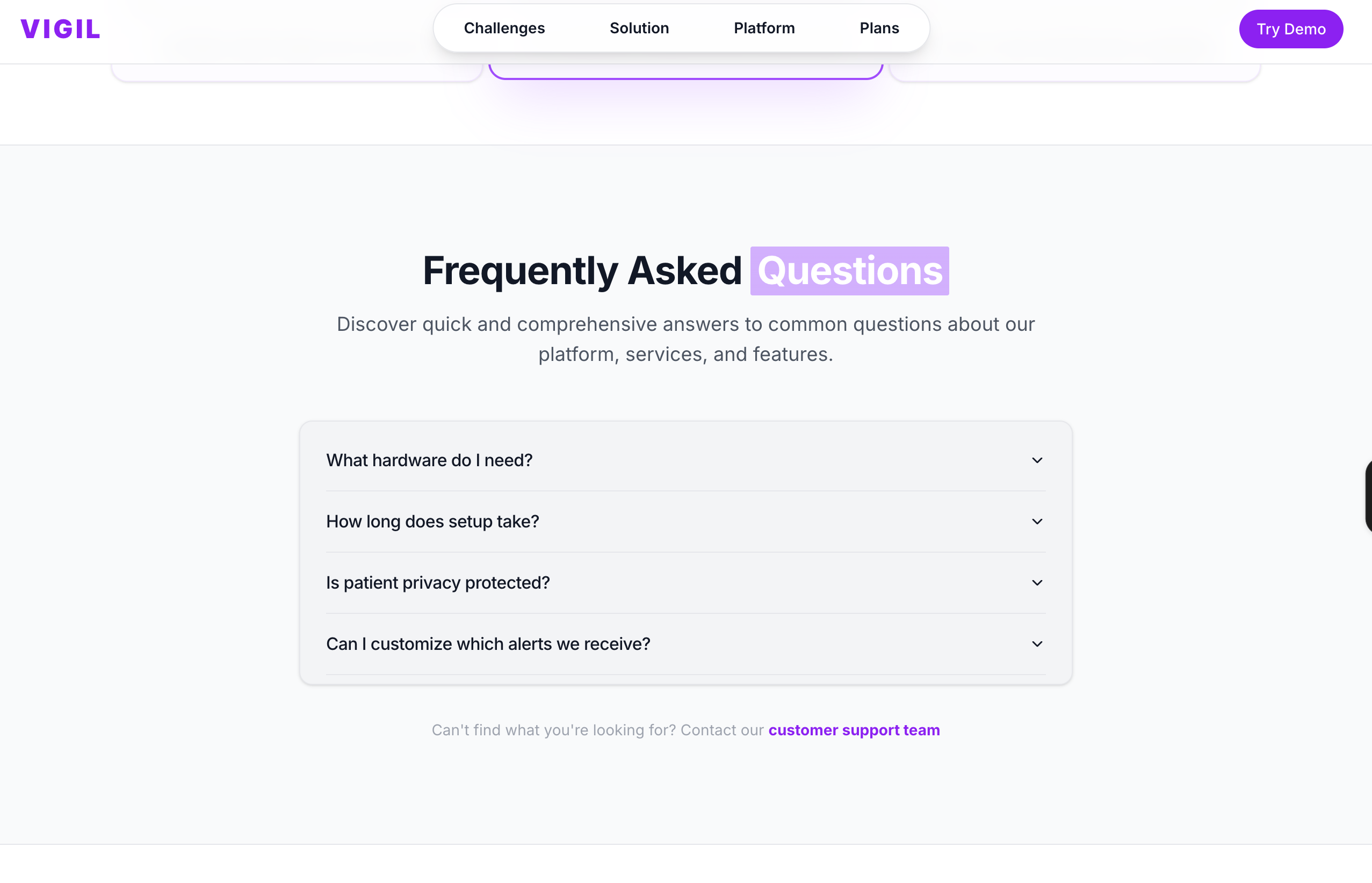
FAQs
-
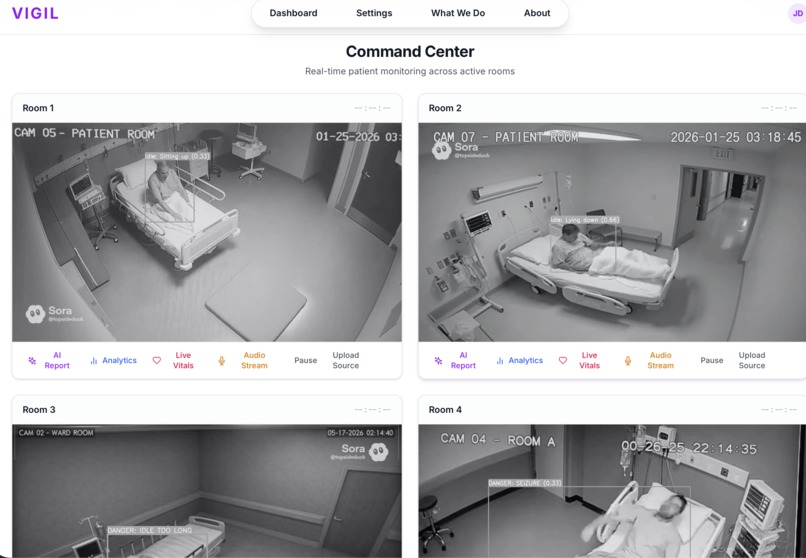
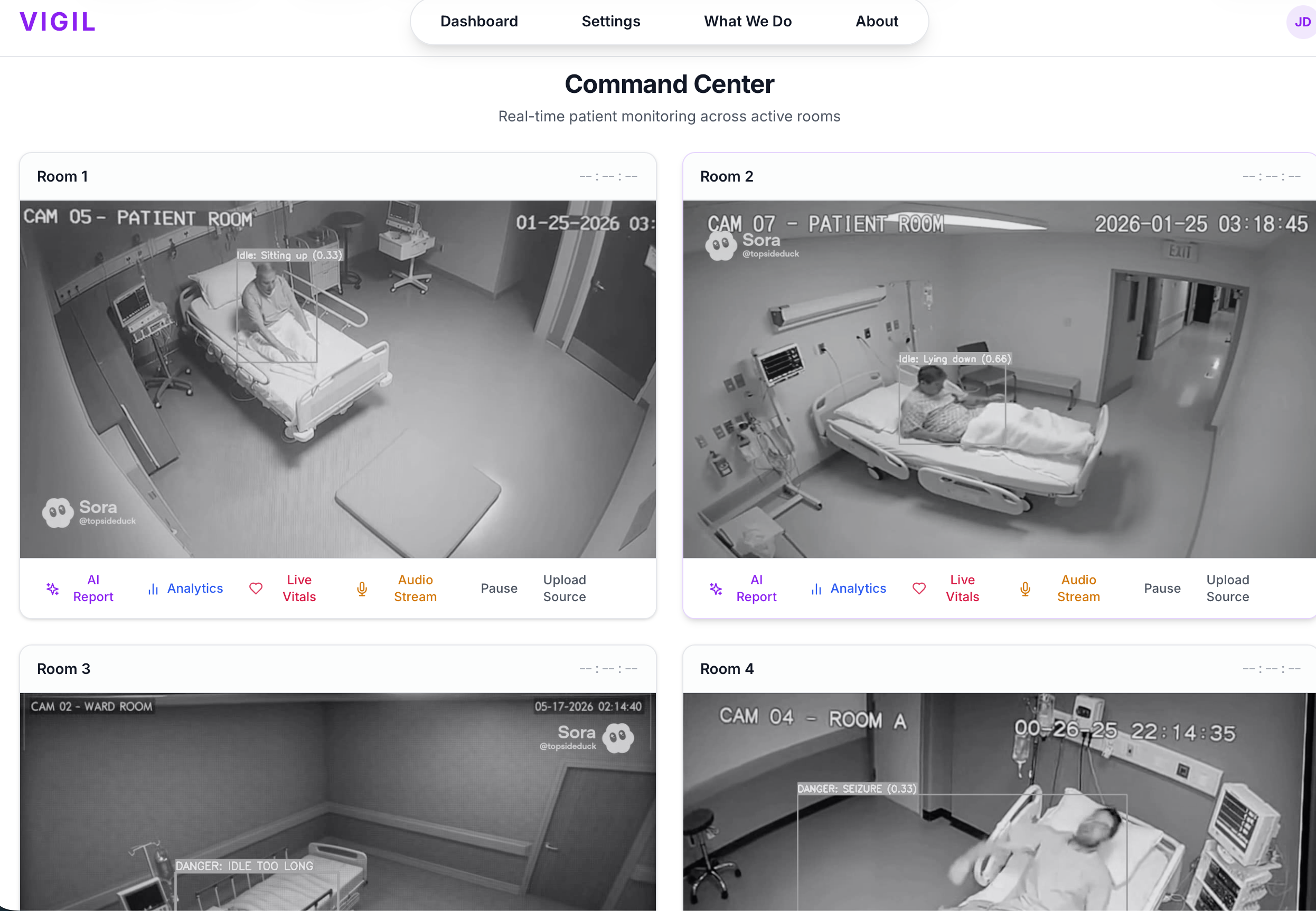
Command Center
-
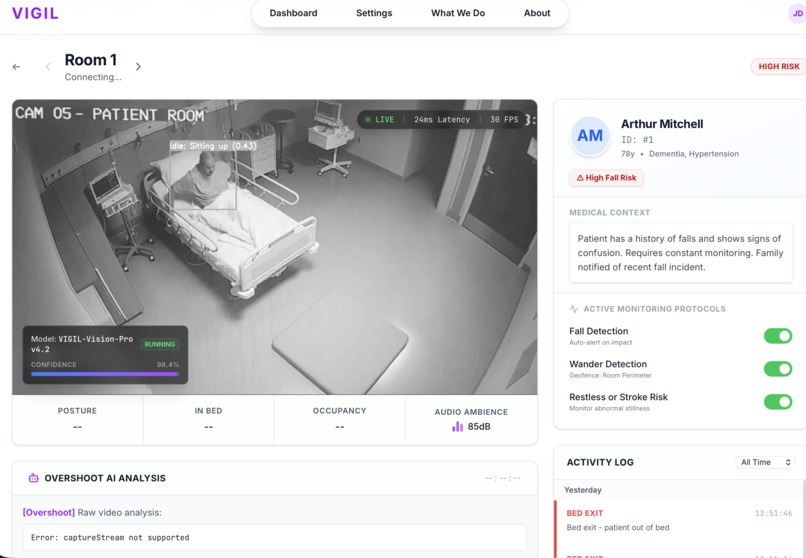
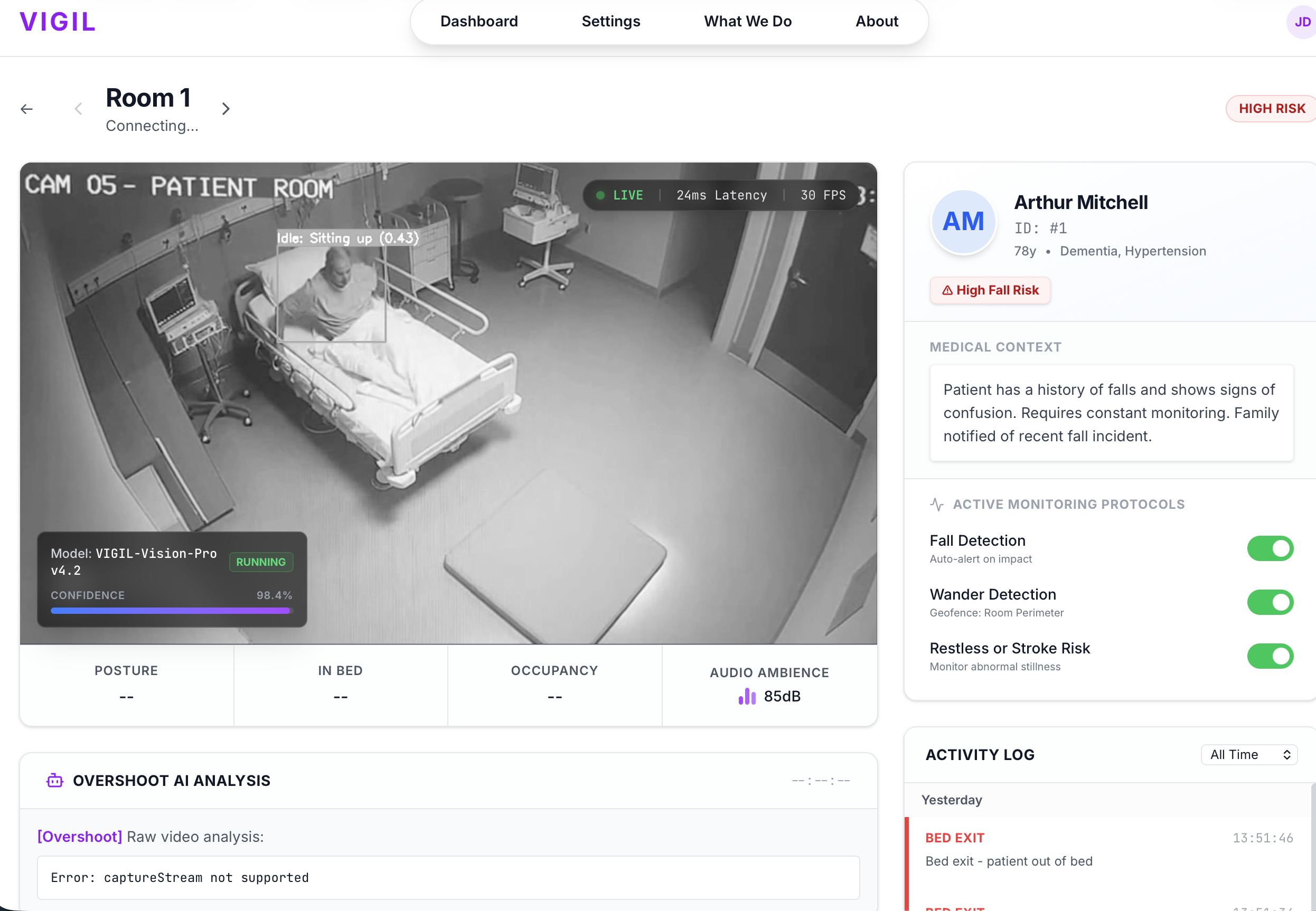
Room View
Vigil - Software Track
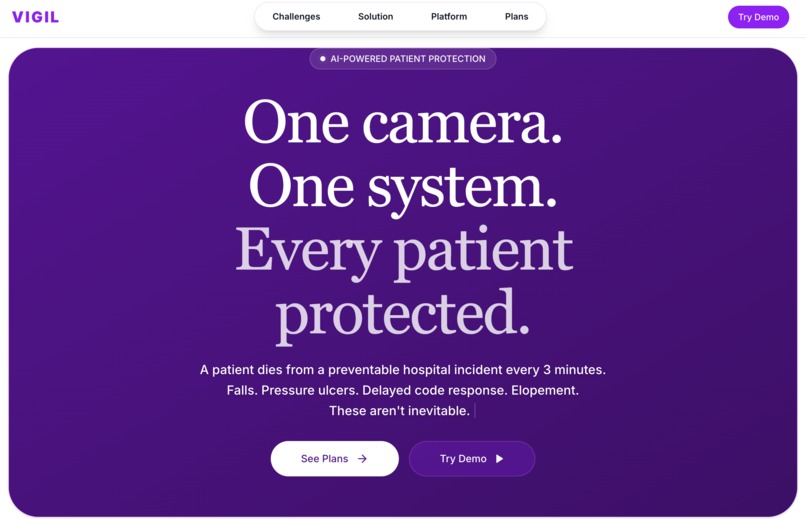
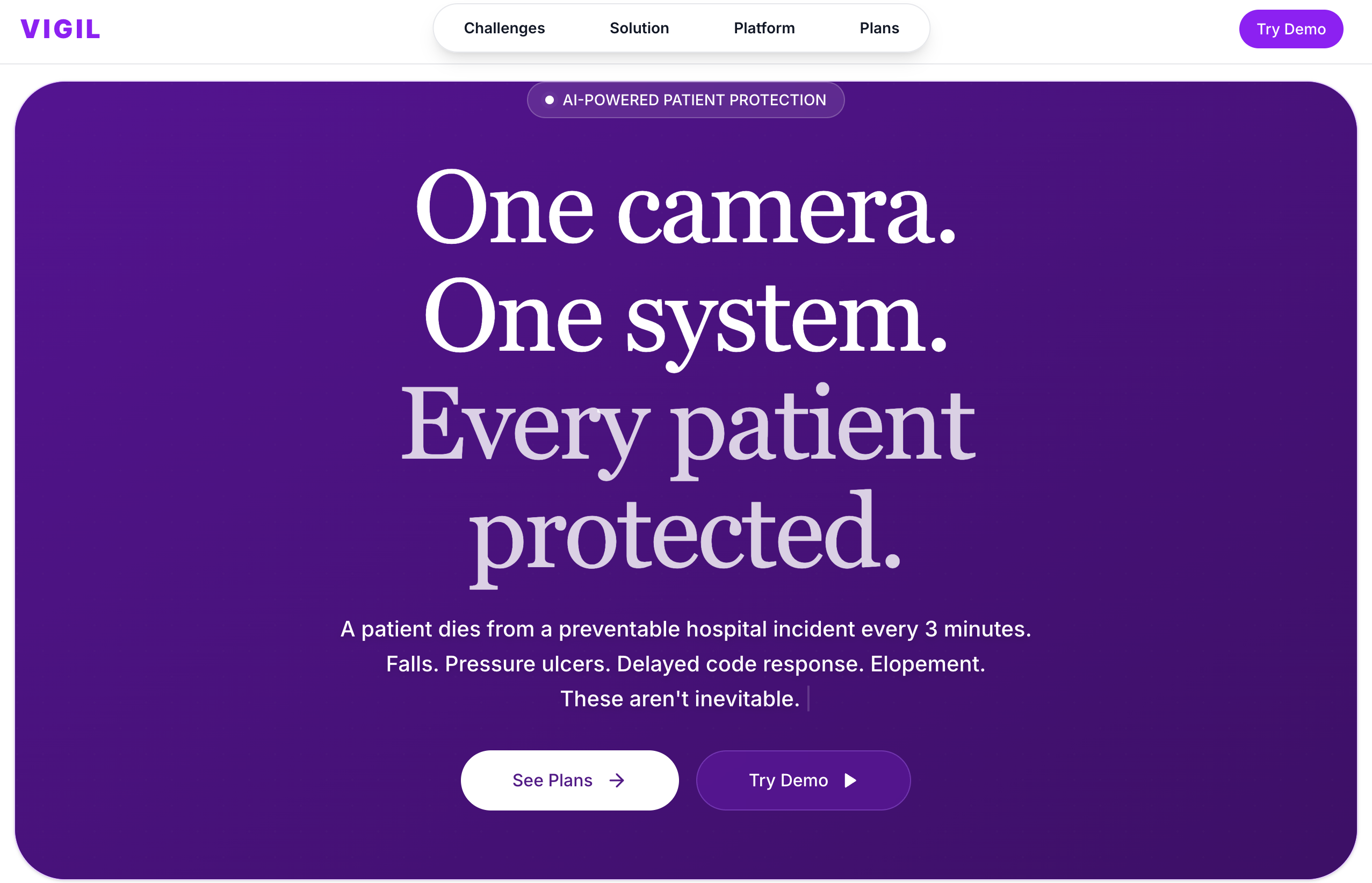
One camera. One system. Every patient protected.
A patient dies from a preventable hospital incident every 3 minutes. Falls. Pressure ulcers. Delayed code response. Elopement. These aren't inevitable—they're detectable.
The Story Behind Vigil
It started with a phone call.
My sister had popped her knee playing tennis. I drove to the ER to meet her and my parents, not knowing what to expect.
What I found when I walked through those doors stuck with me. Nurses sprinting between rooms. Doctors being pulled in three directions at once. Alarms going off that no one had time to answer. Patients waiting, some in visible distress, while staff did everything they could with what they had. Noise everywhere.
It wasn't negligence. It wasn't lack of caring. The hospital was simply understaffed—not by choice, but by circumstance. Funding constraints. Nurse shortages. An aging population requiring more care than the system was built to handle.
I sat in that waiting room watching the chaos unfold and kept asking myself: Is there anything I can do to take something off their plate?
That question became Vigil.
What if the constant watching—the eyes-on-every-room that nurses physically cannot provide—could be handled by something that never gets tired? What if dangerous situations could be caught the moment they begin, not minutes later when someone finally has time to check?
Vigil isn't about replacing healthcare workers. It's about giving them the one thing they don't have enough of: presence. The ability to be everywhere at once.
The Problem
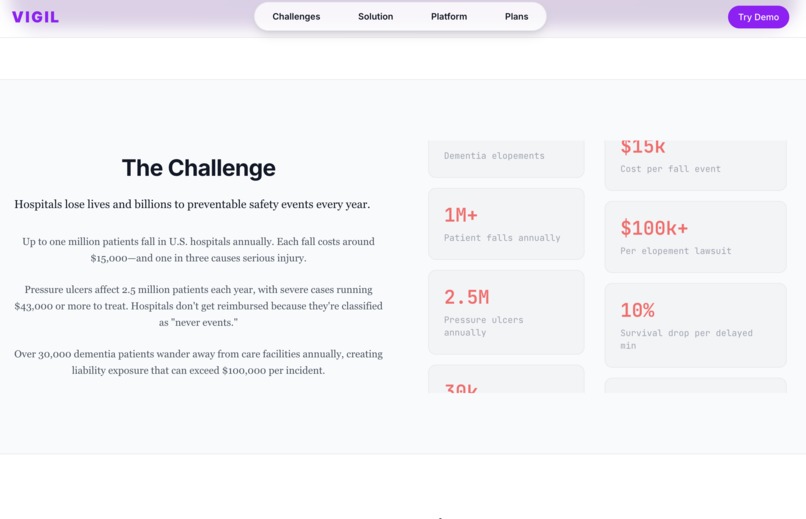
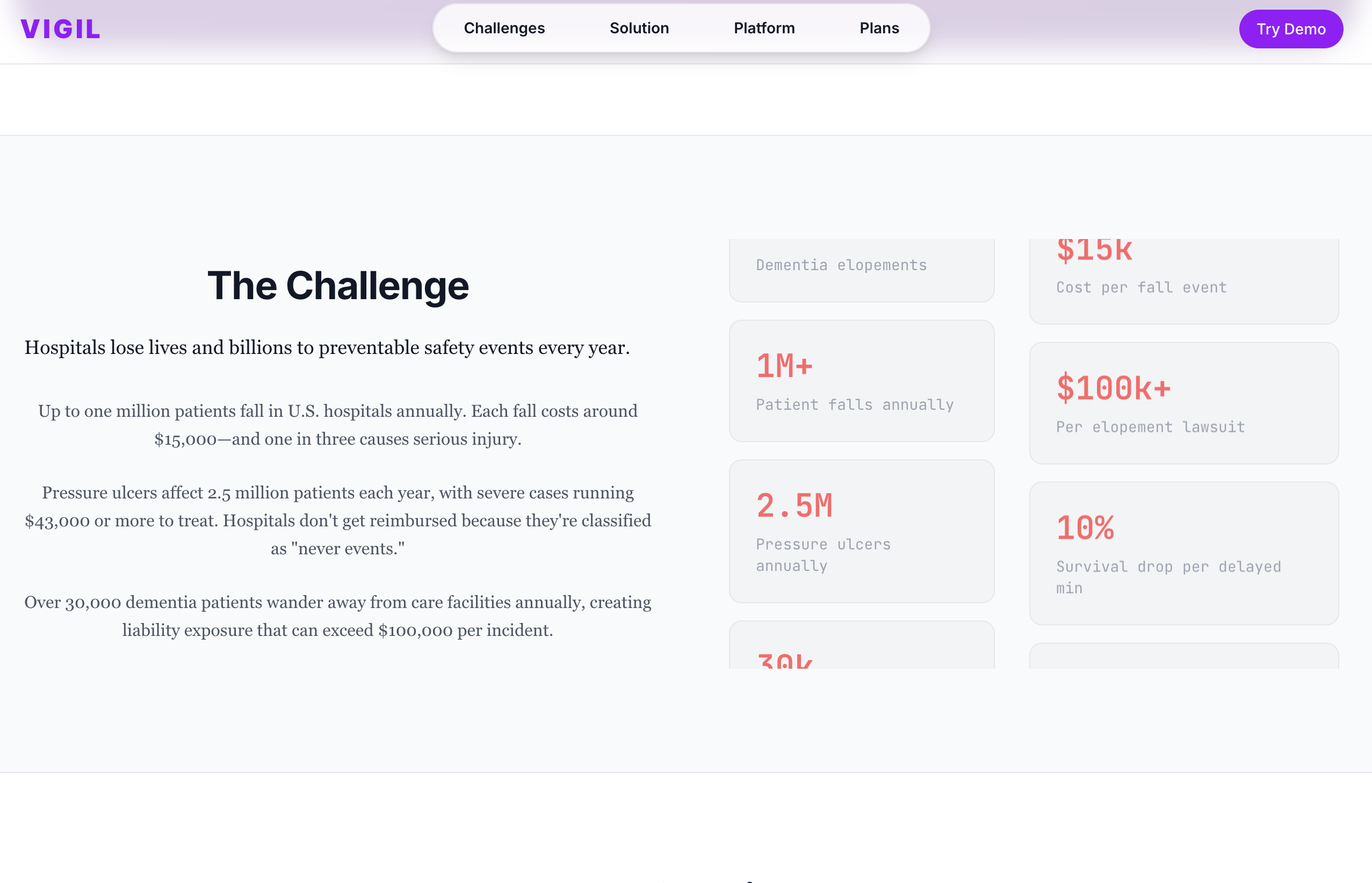
Hospitals face a cascade of preventable safety events that cost lives and billions annually:
- Up to 1 million patients fall in U.S. hospitals each year, costing ~$15,000 per incident
- 2.5 million patients develop pressure ulcers annually, with severe cases costing $43,000+ to treat
- Over 30,000 dementia patients wander away from care facilities each year
- Every minute without intervention reduces cardiac arrest survival by 10%
The root cause is simple: staff can't be everywhere at once.
The Solution
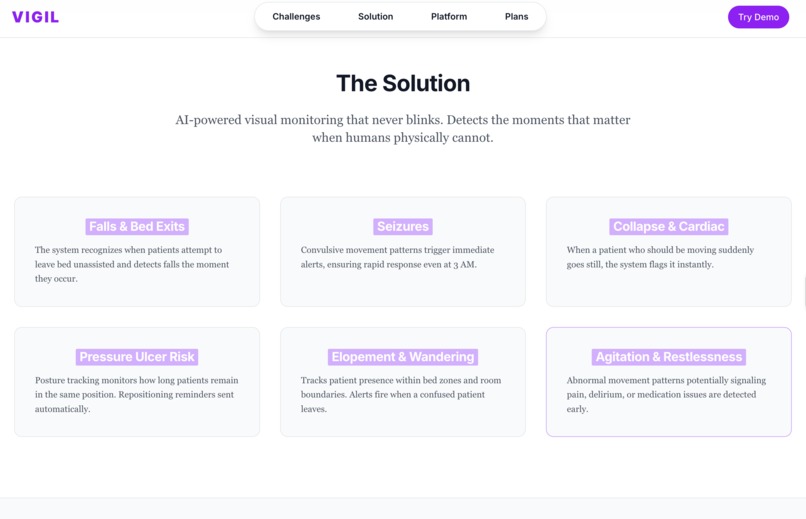
Vigil uses AI-powered computer vision to monitor patient rooms in real time, detecting dangerous situations and alerting staff before incidents become emergencies.
No wearables. No bed sensors patients can remove. No buttons to push. Just continuous, passive monitoring that watches when humans can't.
How We Built It
Architecture Overview
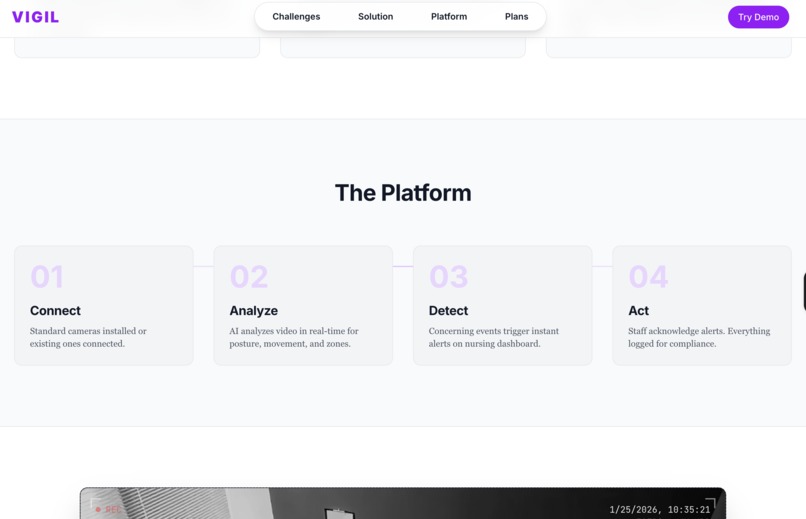
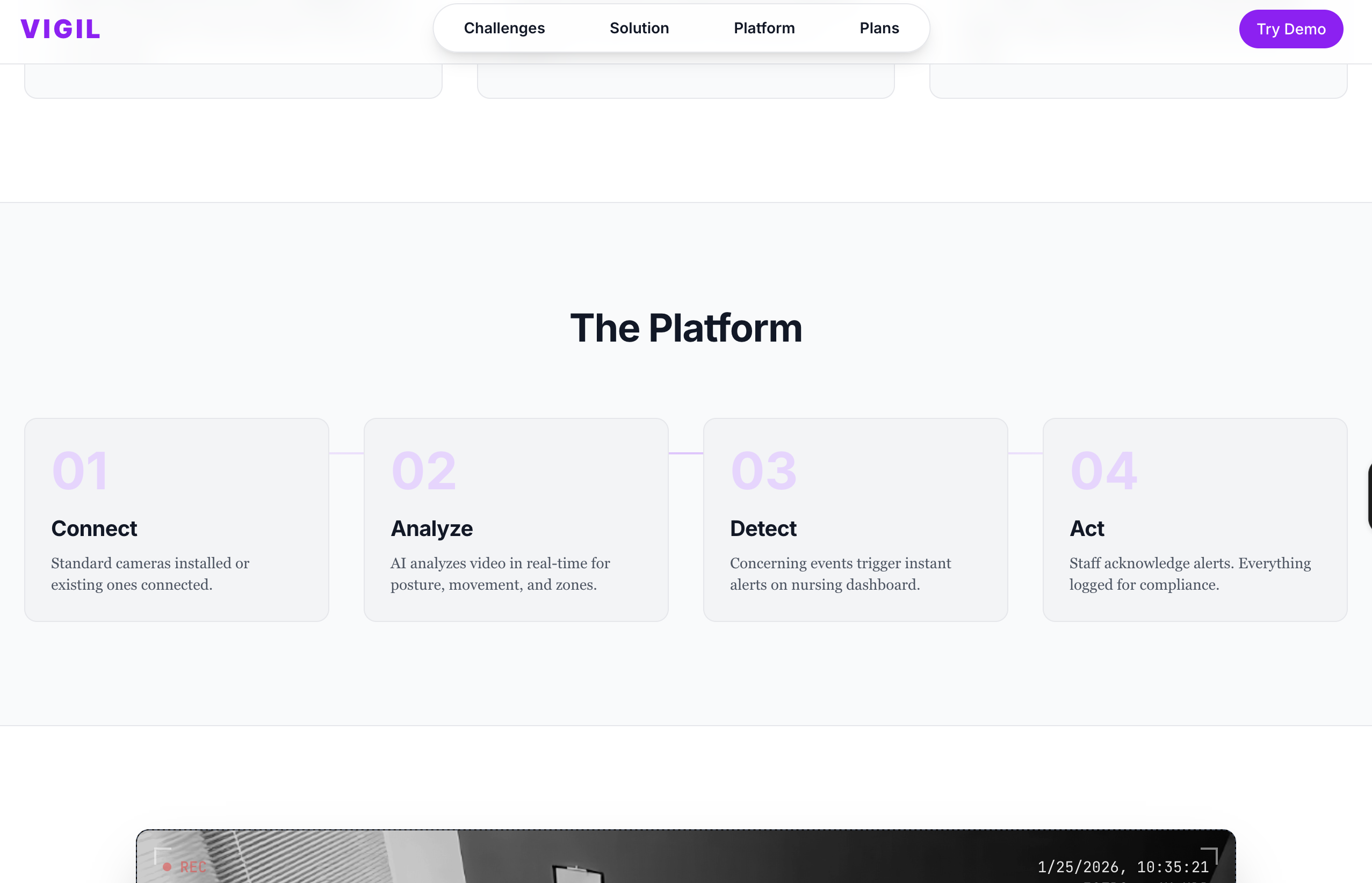
Vigil operates across four layers:
- Edge Layer — Camera + local detection running in the hospital room
- Verification Layer — Overshoot API for intelligent event validation
- Backend Layer — Supabase for data persistence and real-time sync
- User Layer — Dashboard for nurses and medical staff
Edge Detection (Local)
Each room runs lightweight computer vision models locally to protect patient privacy and reduce latency. The edge layer acts as a sensitive trigger—it catches potential events and passes them to the cloud for verification.
Detection types:
- Fall Detection — Pose estimation tracking head velocity and body orientation
- Immobility Monitoring — Motion history analysis for pressure ulcer prevention
- Wandering Detection — Geofencing with centroid tracking during night hours
Verification (Overshoot)
The edge layer is intentionally sensitive. Overshoot acts as the "judge"—it prevents false alarms (like a patient dropping their phone) from paging nurses unnecessarily.
When a potential event is detected, a short video clip is sent to Overshoot, which returns structured data including event type, confidence score, patient status, and whether immediate danger is present.
Backend (Supabase)
Supabase handles data persistence, real-time alerts, and semantic search:
- PostgreSQL stores patient data, alert history, and event metadata
- Realtime broadcasts high-severity alerts to all connected dashboards via WebSockets
- Vector Search enables doctors to query past events semantically (e.g., "show me all seizure-like incidents")
Dashboard (React + TypeScript)
The nursing dashboard displays:
- Live video feeds from all monitored rooms
- Real-time alerts with acknowledge/dismiss functionality
- Event history and analytics per room
- Patient status indicators (posture, movement level, time in position)
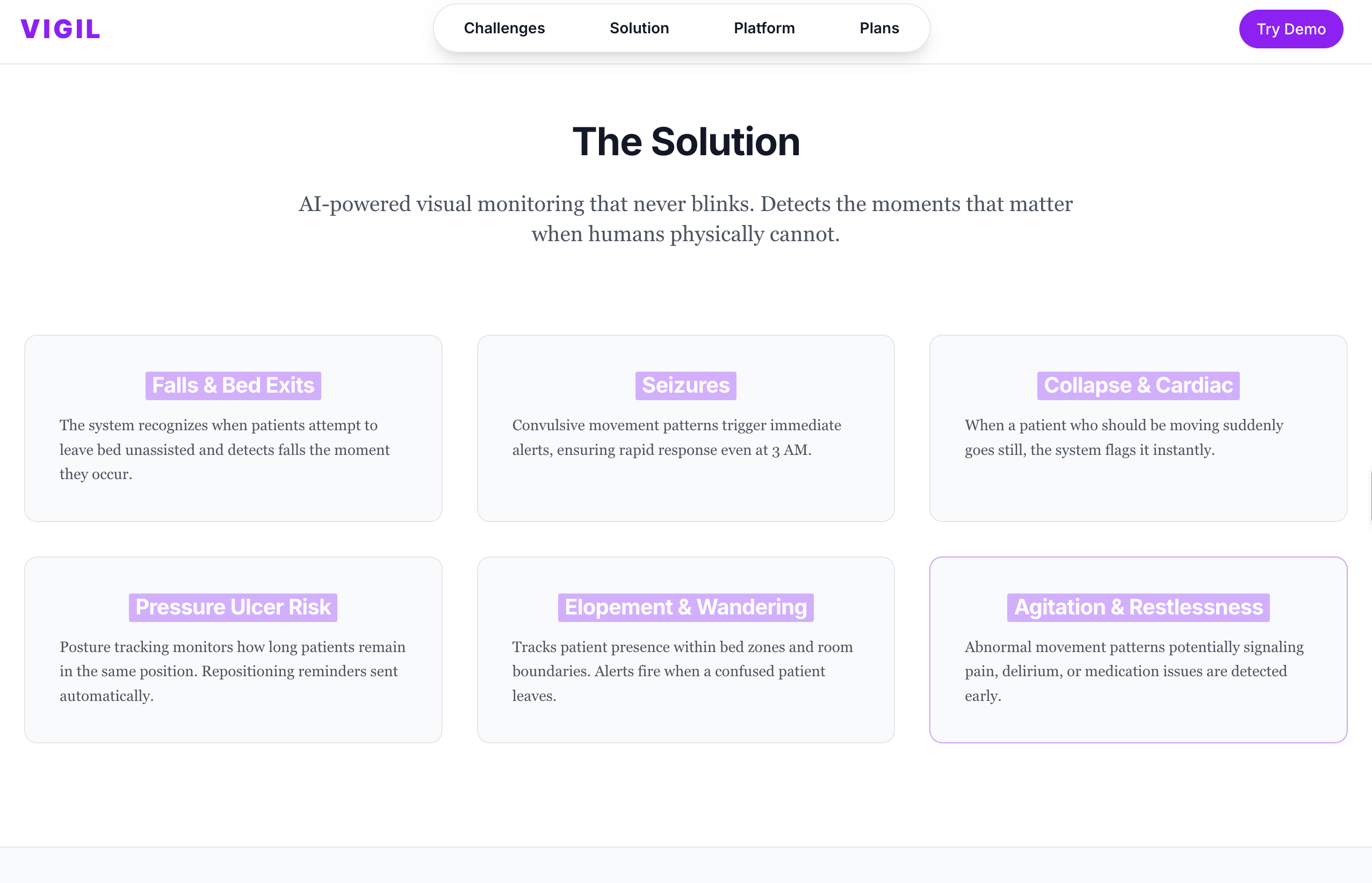
What Vigil Detects
- Falls & Bed Exits — Detected the moment they begin, cutting response time from minutes to seconds
- Seizures — Convulsive movement patterns trigger immediate alerts
- Collapse & Inactivity — Abnormal stillness flags potential stroke or cardiac events
- Pressure Ulcer Risk — Posture tracking prompts repositioning before skin breakdown
- Elopement — Alerts when patients leave designated safe zones
- Agitation — Abnormal movement patterns signal pain, delirium, or medication issues
Tech Stack
- Frontend: React, TypeScript, Vite, Tailwind CSS, Framer Motion
- Backend: Node.js, Express
- Database: Supabase (PostgreSQL, Realtime, Storage)
- Computer Vision: Overshoot SDK, OpenCV, YOLOv8
- Edge Hardware: NVIDIA Jetson Orin Nano (production) / Webcam (demo)
The Impact
Smart monitoring can prevent 20–30% of falls. For a 200-bed hospital:
- Preventing 30 falls saves $450,000
- Preventing one Stage IV pressure ulcer saves $43,000
- Avoiding one elopement lawsuit saves hundreds of thousands
And the lives saved from faster response to seizures and collapse are beyond calculation.
Why "Vigil"?
The name means watchful. That's what we do.
Vigil keeps watch over the patients who need it most—around the clock, without fatigue, without distraction. When something goes wrong, Vigil sees it first and makes sure the right people know immediately.
Your staff provides the care. Vigil provides the eyes.
Built With
- express.js
- framer
- node.js
- react
- recharts
- supabase
- tailwind
- typescript
- vite


Log in or sign up for Devpost to join the conversation.