-
-
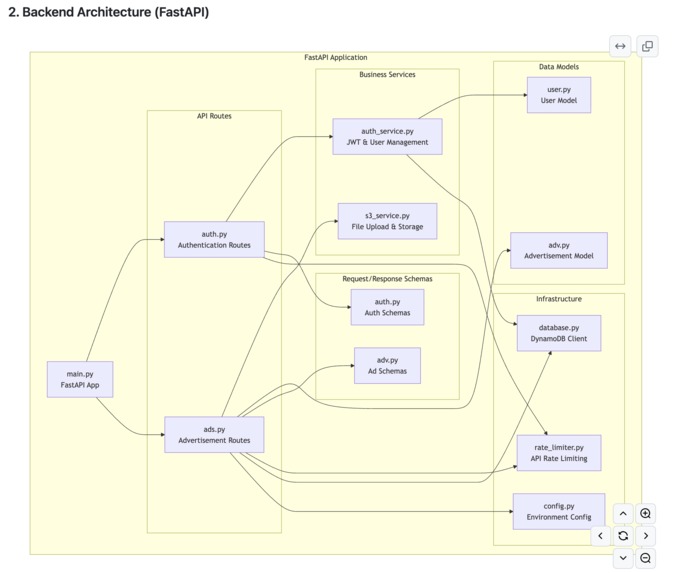
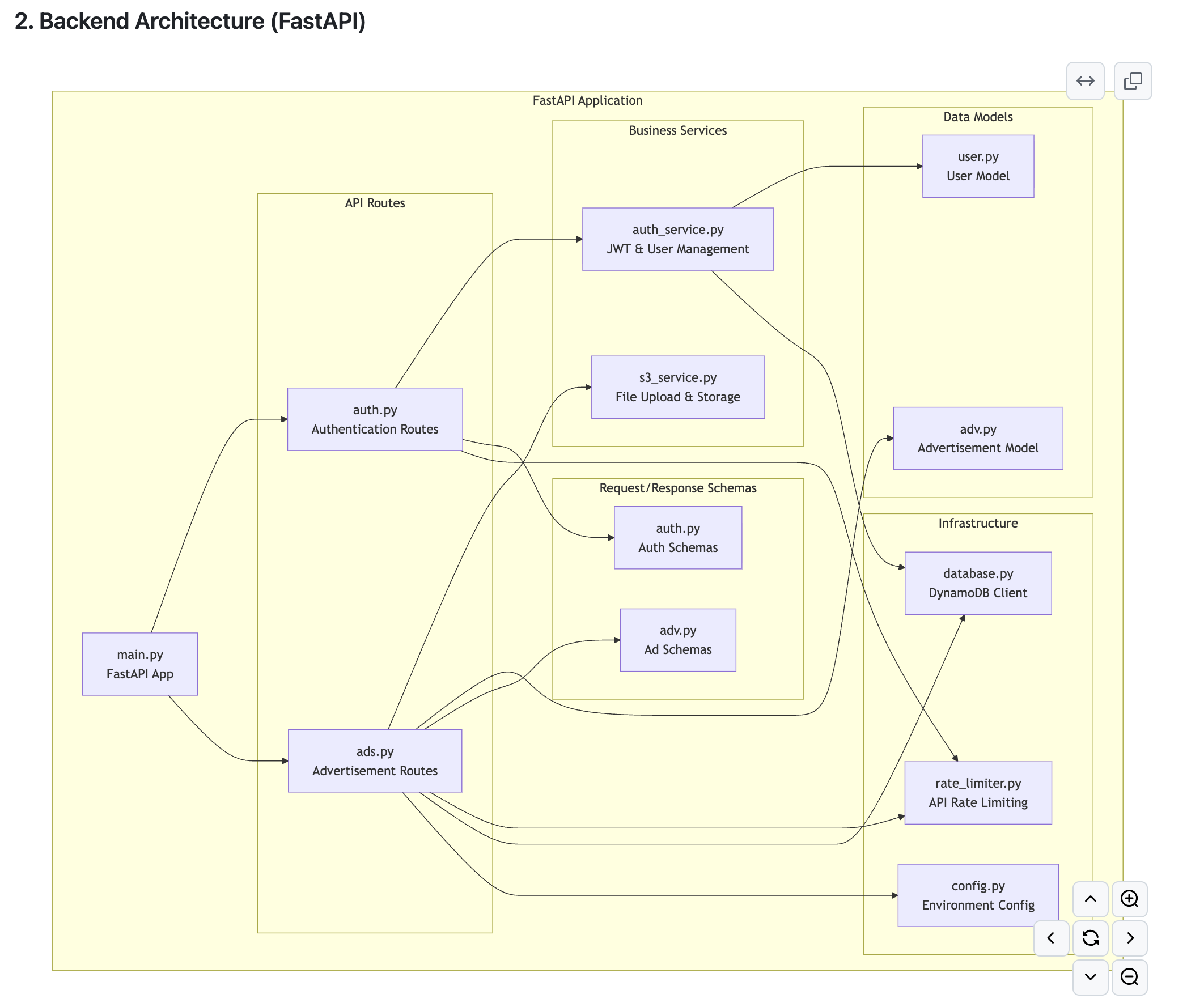
Backend
-
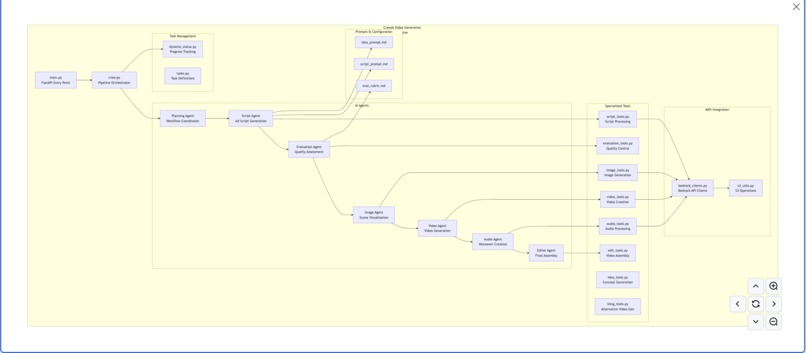
Crew API
-
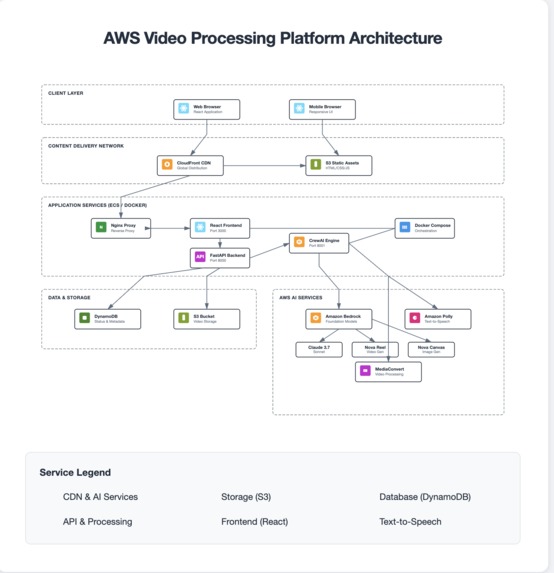
High level Architecture
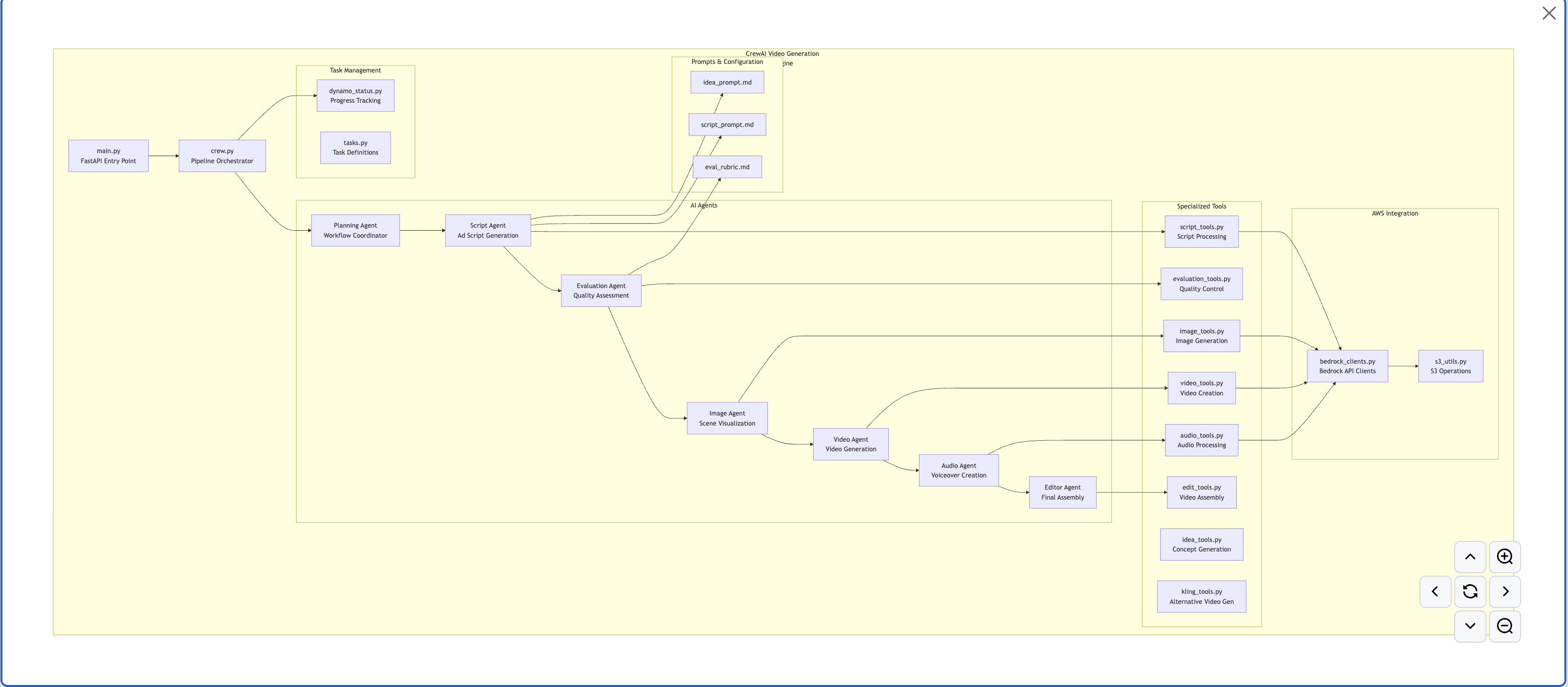
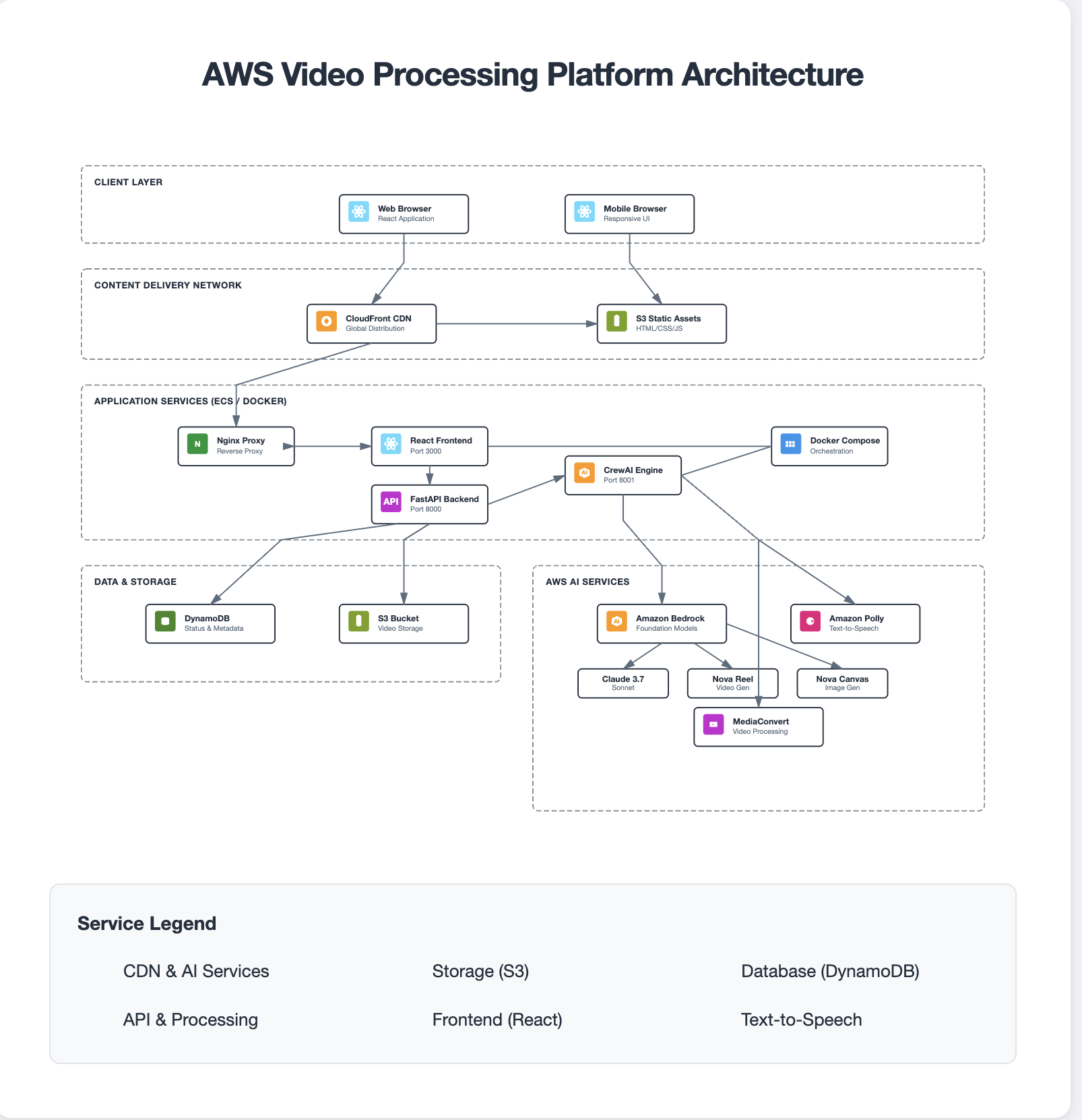
ViGen - AI-Powered Video Advertisement Generator Inspiration: In today's digital-first world, small businesses and entrepreneurs struggle to create professional video advertisements due to high costs, technical complexity, and time constraints. Traditional video production can cost thousands of dollars and take weeks to complete. We were inspired to democratize video advertising by leveraging AWS's powerful AI services to create a solution that generates professional-quality video ads in seconds, not weeks. Our goal was to empower anyone—from startups to individual creators—to compete with enterprise-level marketing without breaking the bank.
What it does: ViGen is an end-to-end AI-powered platform that transforms simple product descriptions into professional video advertisements instantly. Users simply enter their product name and a detailed description, and within 30 seconds, ViGen delivers a complete video ad with:
AI-generated video scripts tailored to highlight key product features and benefits Professional voiceover narration with natural-sounding speech Dynamic visual elements and text overlays showcasing product details Optimized formatting ready for social media, websites, and digital advertising platforms
The entire process is automated, requiring zero technical knowledge or video editing skills. What traditionally takes days or weeks of production time now happens in under a minute, making professional video advertising accessible to everyone.
How we built it: ViGen is built on a modern serverless architecture leveraging multiple AWS services: Frontend:
Built with React for a responsive, intuitive user interface Hosted on Amazon S3 as a static website Delivered globally via Amazon CloudFront with HTTPS encryption Styled with TailwindCSS for a modern, professional appearance
Backend:
Python FastAPI/Node.js Express REST API Containerized with Docker and deployed on AWS App Runner for auto-scaling serverless compute Container images stored in Amazon ECR for secure, efficient deployment
AI & Media Processing:
Amazon Bedrock with Claude 3 Sonnet for intelligent video script generation from product descriptions Amazon Polly for high-quality text-to-speech conversion with natural-sounding voices Amazon S3 for scalable storage of generated videos and media assets Amazon DynamoDB for fast, serverless NoSQL database storage of video metadata and generation history
DevOps & Monitoring:
Amazon CloudWatch for real-time logging, monitoring, and performance metrics Docker containerization for consistent deployment across environments Infrastructure as code principles for reproducible deployments
Architecture Flow:
User submits product information via the web interface Frontend sends request to App Runner backend API Backend calls Bedrock to generate an optimized video script Script is converted to speech using Polly Video is assembled with audio, visuals, and text overlays Final video is uploaded to S3 and URL is returned Metadata is stored in DynamoDB for tracking and retrieval User can instantly view, download, or share their video ad
Challenges we ran into: IAM Permissions & Service Control Policies: Working within an AWS Organization account with strict SCPs was our first major hurdle. We couldn't create custom IAM roles initially, which blocked our ECS Fargate deployment. We pivoted to AWS App Runner, which streamlined deployment and automatically handled many IAM complexities. CORS Configuration: Cross-Origin Resource Sharing between the S3-hosted frontend and App Runner backend required careful configuration across multiple services. We had to properly configure CORS policies on S3, CloudFront, and the backend API to ensure seamless communication. Video Generation Quality: Fine-tuning the Bedrock prompts to consistently generate high-quality, compelling video scripts that matched various product types took significant iteration. We experimented with different prompt engineering techniques to achieve optimal results across diverse product categories. Container Orchestration: Pushing Docker images to ECR and managing container deployments required understanding AWS authentication flows and ECR lifecycle policies. Learning the AWS CLI commands and best practices for container management was a learning curve. Performance Optimization: Balancing video generation speed with quality required optimization at multiple levels—from Bedrock token limits to video processing algorithms to S3 upload strategies. We implemented caching strategies and parallel processing where possible. State Management: Handling asynchronous video generation while providing real-time feedback to users required careful state management and WebSocket considerations for progress updates.
Accomplishments that we're proud of Built a fully functional, production-ready application from concept to deployment in the hackathon timeframe Achieved sub-30-second video generation times, making the experience feel instant and magical Successfully integrated five different AWS services into a cohesive, scalable architecture that showcases the power of AWS's AI and cloud ecosystem Implemented enterprise-grade security with HTTPS, IAM roles, and least-privilege access principles throughout the stack Created an intuitive, beautiful user interface that requires zero technical knowledge—anyone can create professional videos Solved complex DevOps challenges including Docker containerization, serverless deployment, and CDN configuration Demonstrated cost-effectiveness with a pay-per-use model that makes professional video creation accessible to businesses of all sizes Built with scalability in mind—the architecture can handle everything from individual users to enterprise-level traffic with App Runner's auto-scaling
What we learned: AWS Service Mastery: We gained deep hands-on experience with modern AWS services, particularly Amazon Bedrock's generative AI capabilities and how to effectively prompt large language models for specific creative tasks. Serverless Architecture: Understanding the power and simplicity of serverless computing through App Runner, which eliminated the need to manage servers, load balancers, and scaling policies—allowing us to focus purely on application logic. AI Prompt Engineering: Learned the art and science of crafting effective prompts for generative AI. Small changes in prompt structure dramatically affected output quality, teaching us the importance of iterative prompt refinement. Cloud-Native Development: Experienced the benefits of cloud-native architecture with managed services handling infrastructure concerns, letting us focus on building features rather than managing servers. Container Orchestration: Mastered Docker containerization, ECR workflows, and the deployment pipeline from local development to production cloud environments. Security Best Practices: Implemented proper IAM roles, CORS policies, and secure communication patterns—learning that security must be designed into every layer, not bolted on afterward. Real-World DevOps: Gained practical experience with the complete software development lifecycle—from local development to containerization to cloud deployment and monitoring. Performance Optimization: Learned to balance quality with speed, optimizing API calls, video processing, and content delivery for the best user experience.
What's next for ViGen: Enhanced Customization:
Custom brand logo integration and placement Brand color scheme application throughout videos Multiple video template styles (modern, corporate, playful, luxury) Background music selection from licensed libraries Custom font choices for text overlays
Advanced AI Features:
Multi-language support with automatic translation and localized voiceovers A/B testing capabilities to generate multiple video variations Sentiment analysis to optimize messaging for target audiences Image generation with Amazon Bedrock Stable Diffusion for custom product visuals Video style transfer for consistent brand aesthetics
Platform Integration:
Direct publishing to social media platforms (YouTube, Instagram, Facebook, TikTok) Integration with e-commerce platforms (Shopify, WooCommerce, Amazon) Marketing automation tool connections (HubSpot, Mailchimp) Analytics dashboard showing video performance metrics Webhook support for workflow automation
Collaboration Features:
Team workspaces with role-based access control Video review and approval workflows Comment and feedback systems Version history and rollback capabilities Shared asset libraries for brand consistency
Enterprise Capabilities:
White-label solution for agencies API access for programmatic video generation Bulk video generation from CSV/spreadsheet imports Advanced analytics with conversion tracking SLA guarantees and priority processing queues
Technical Improvements:
Real-time progress updates via WebSockets Video preview before final generation Advanced video editing capabilities (trim, merge, effects) 4K video output options Longer video format support (up to 5 minutes)
Monetization:
Freemium model with tiered pricing (5 free videos/month) Pay-per-video option for casual users Subscription plans for businesses and agencies Enterprise custom pricing with dedicated support Marketplace for premium templates and assets
Business Development:
Partner with digital marketing agencies Integration with AWS Marketplace Educational content and video marketing resources Customer success program with best practices Community forum for users to share tips and results
Technical Specifications Summary Tech Stack:
Frontend: React, TailwindCSS Backend: Python FastAPI / Node.js Express Containerization: Docker Cloud: AWS (App Runner, S3, CloudFront, ECR, Bedrock, Polly, DynamoDB, CloudWatch)
Performance Metrics:
Video generation: < 30 seconds 99.9% uptime (App Runner SLA) Global CDN delivery via CloudFront Auto-scaling from 1-25+ concurrent instances
Security:
HTTPS encryption end-to-end IAM role-based access control No hardcoded credentials VPC isolation available Audit logging with CloudWatch
Cost Efficiency:
Pay-per-use serverless model Estimated $0.05-0.15 per video generated No idle infrastructure costs Auto-scaling prevents over-provisioning
Built With
- amazon-web-services
- apprunner
- claude
- crewai
- dynamo
- fastapi
- polly
- python
- react
- s3


Log in or sign up for Devpost to join the conversation.