-
-
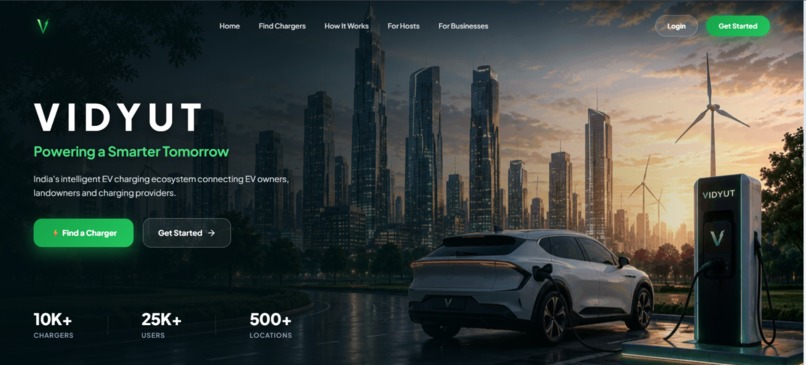
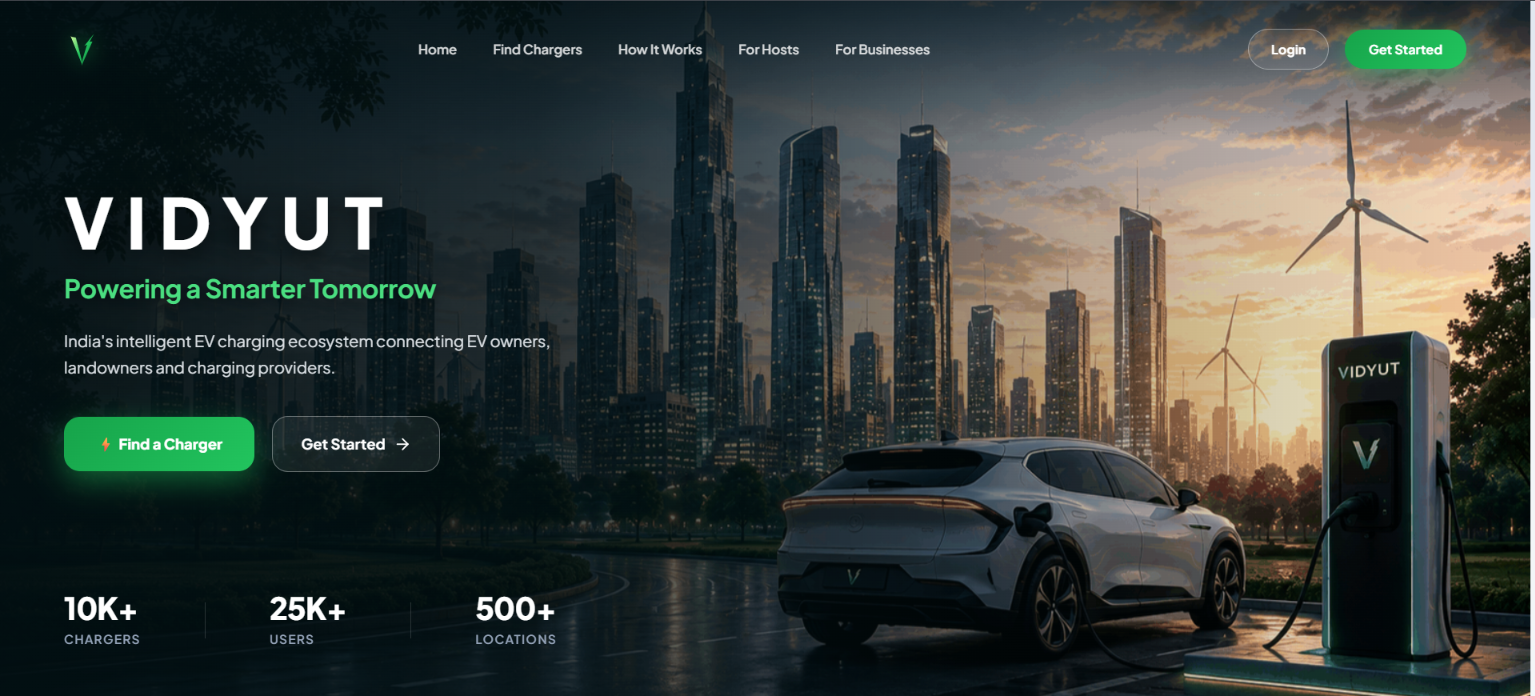
Landing Page
-
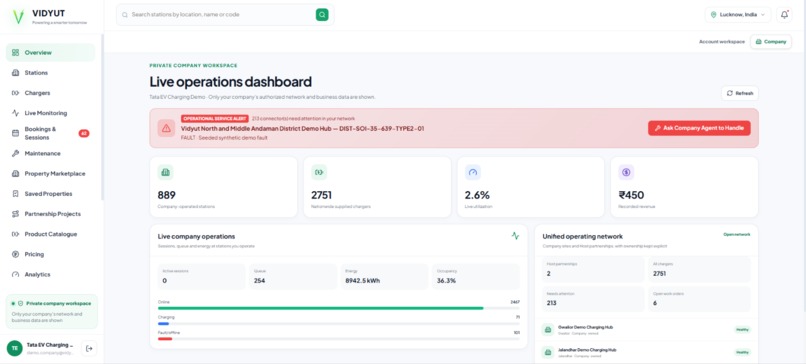
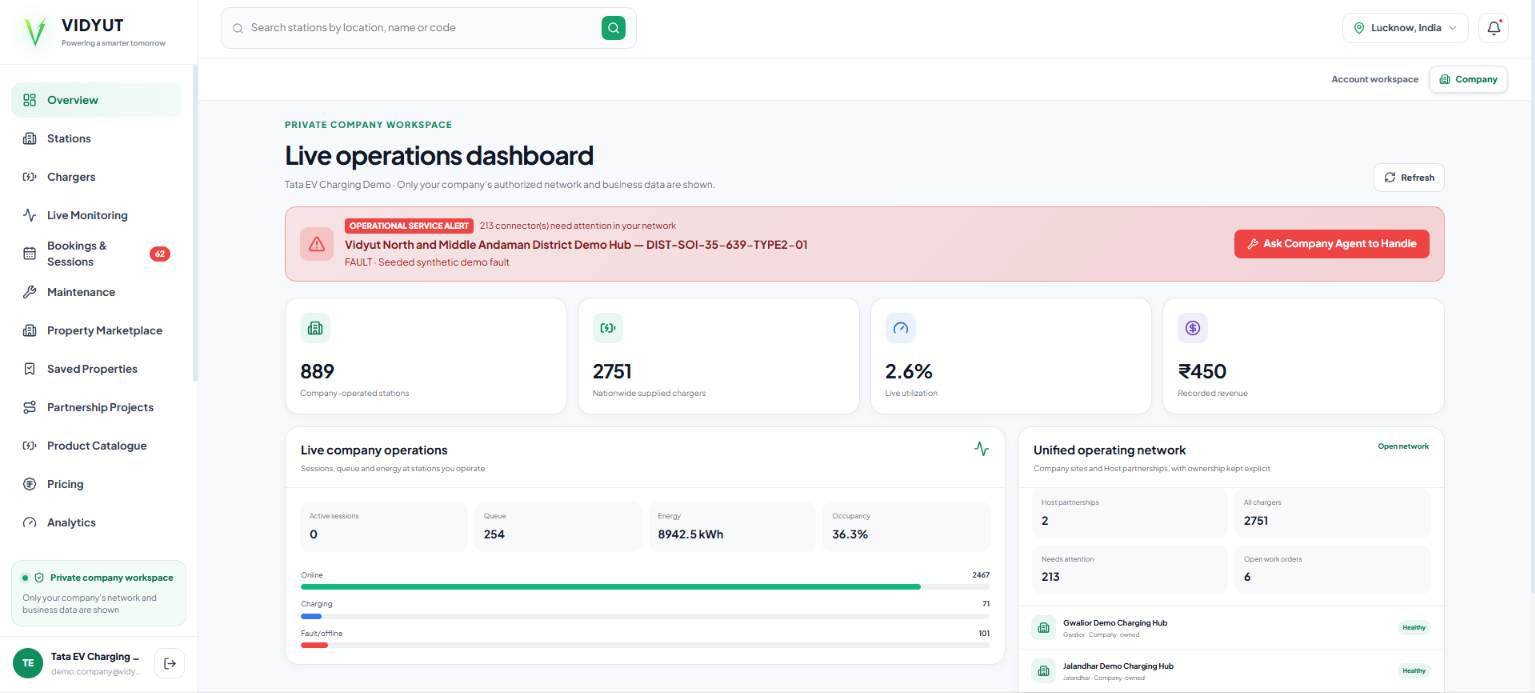
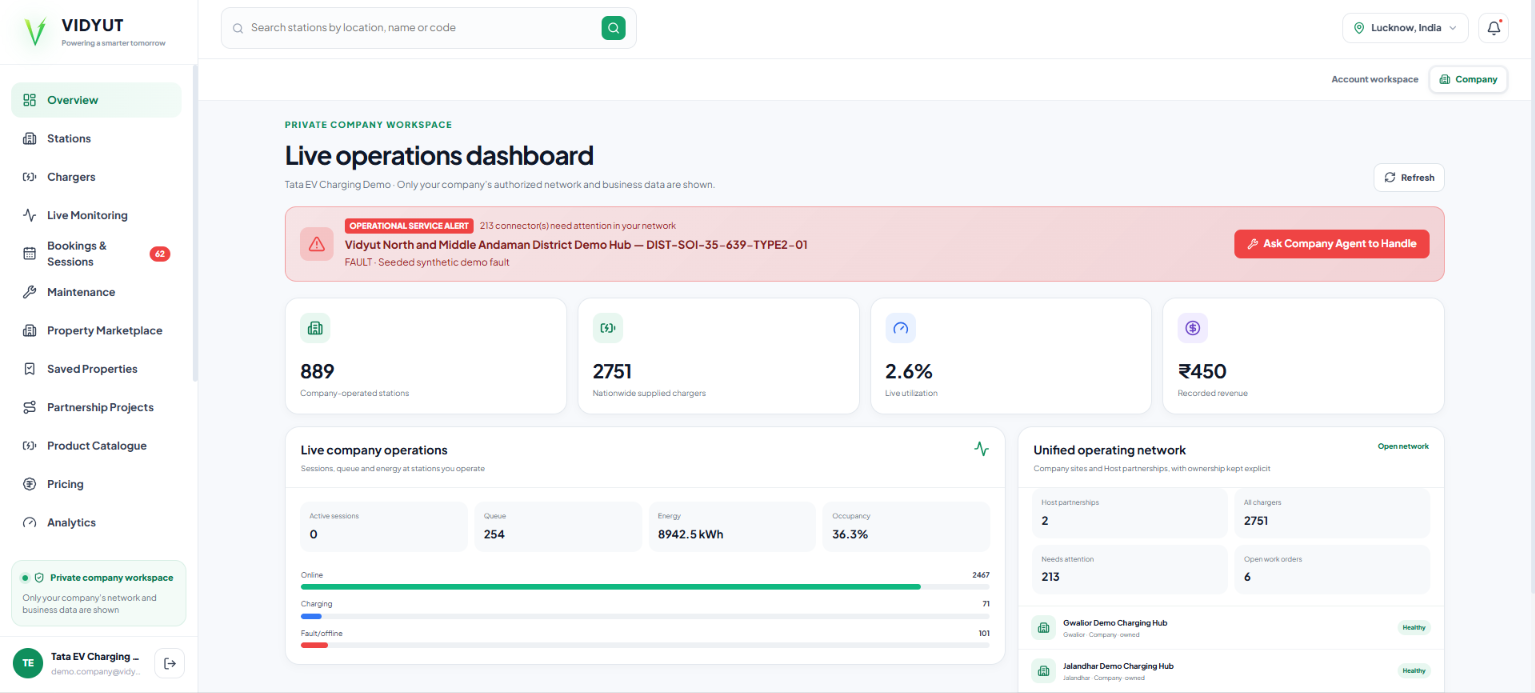
Company's Dashboard
-
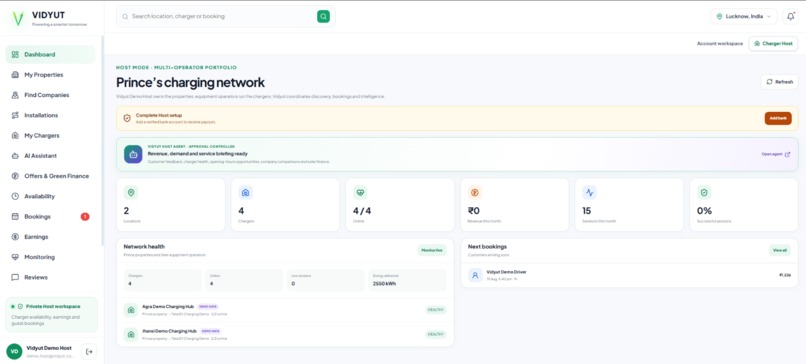
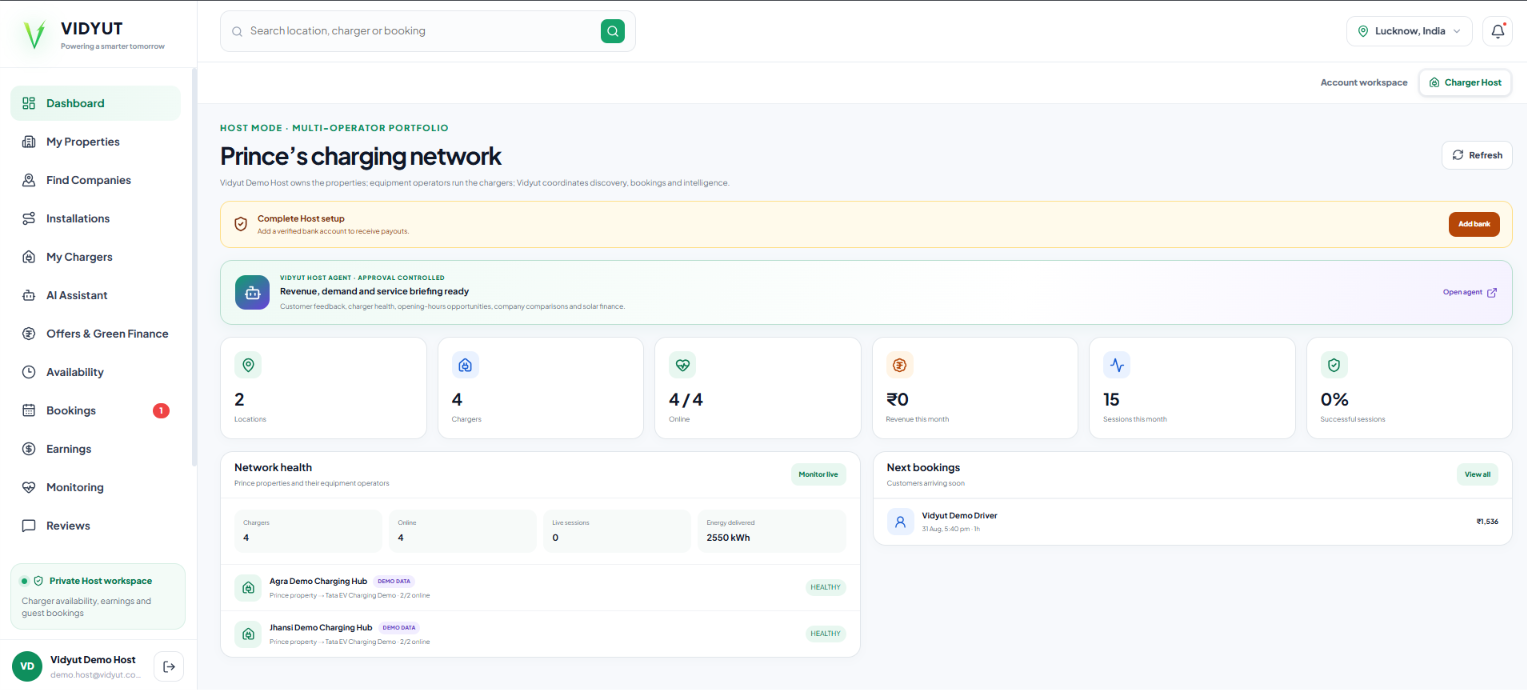
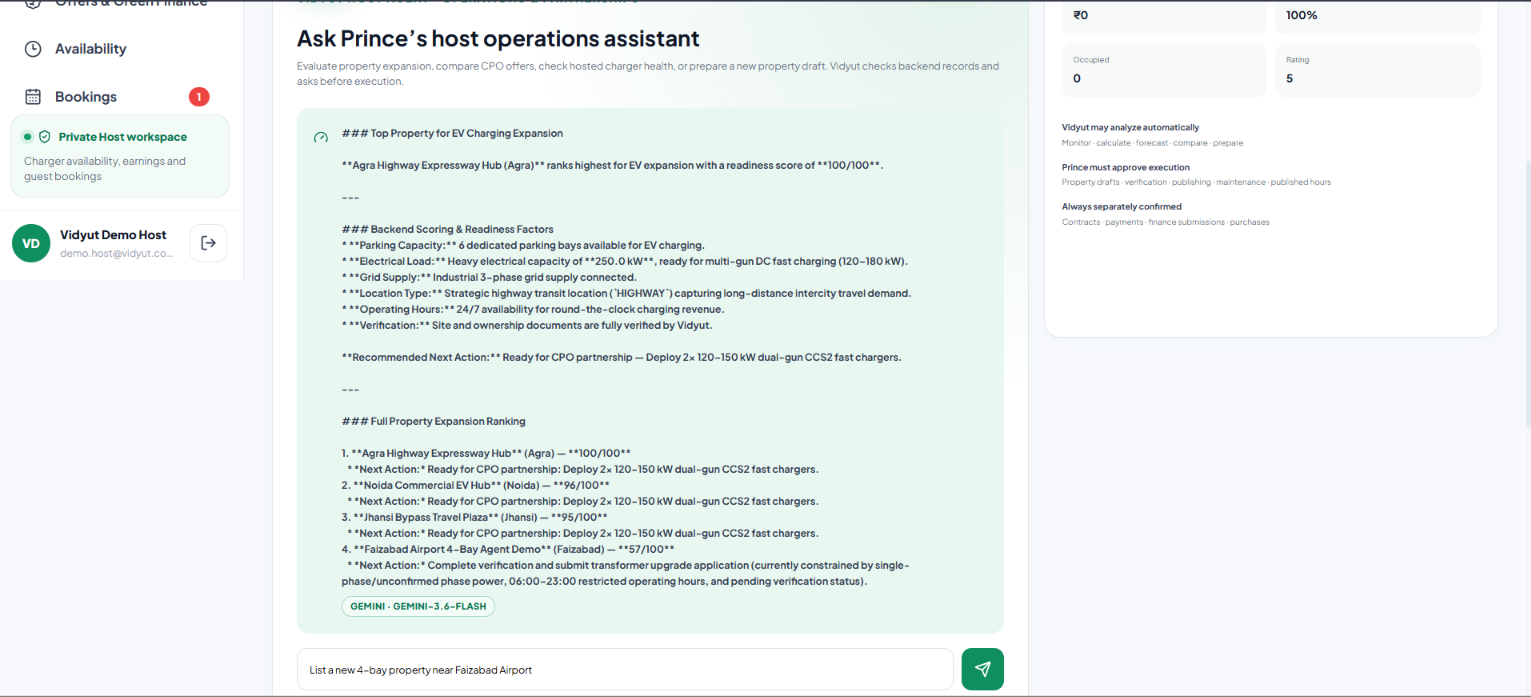
Host's Dahsboard
-
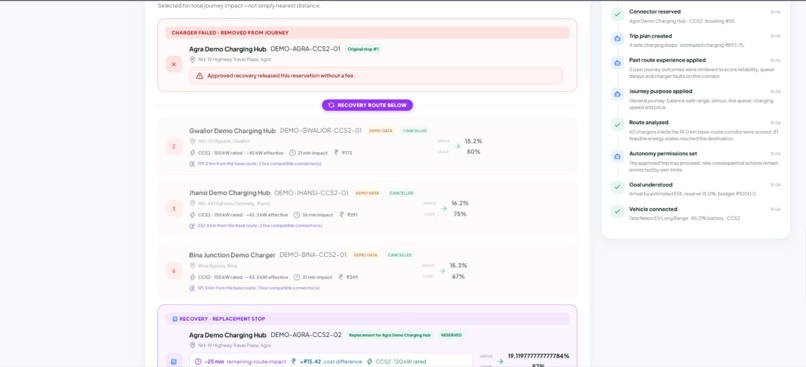
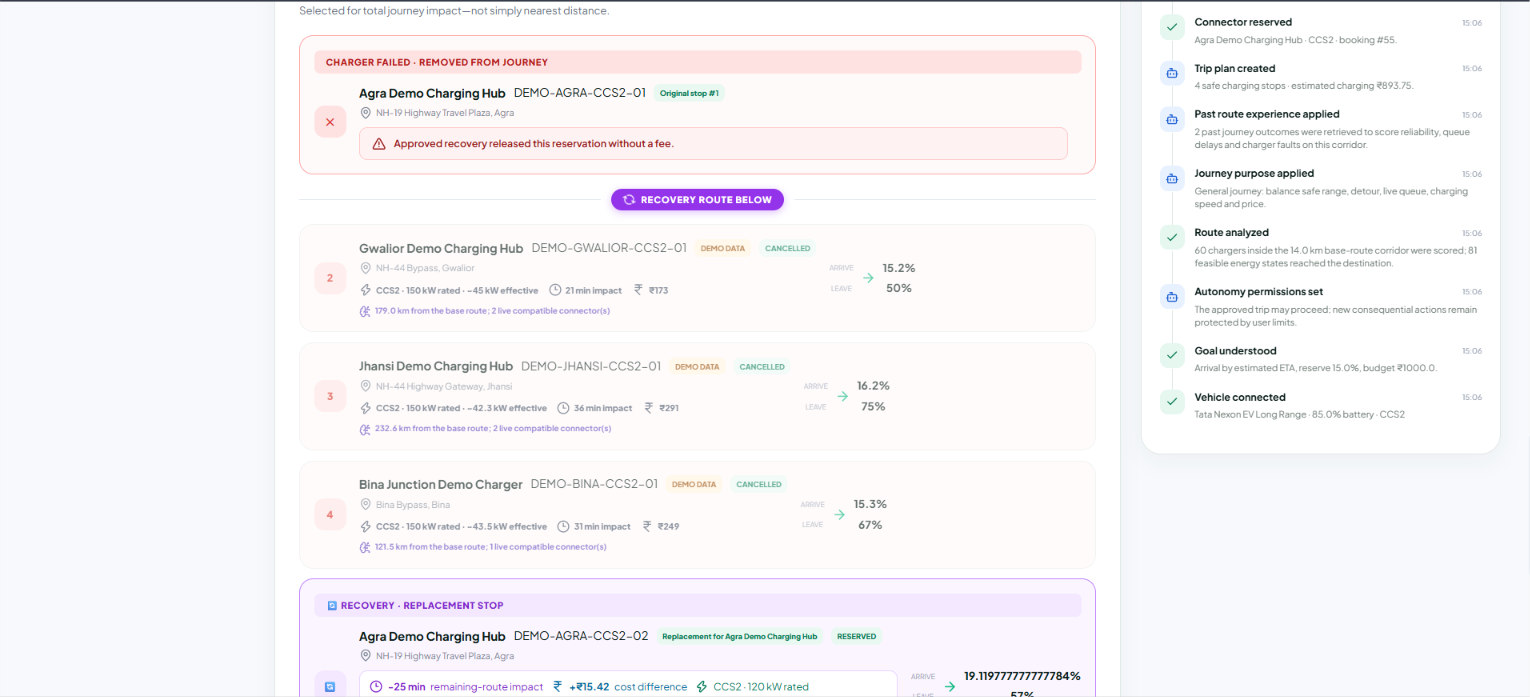
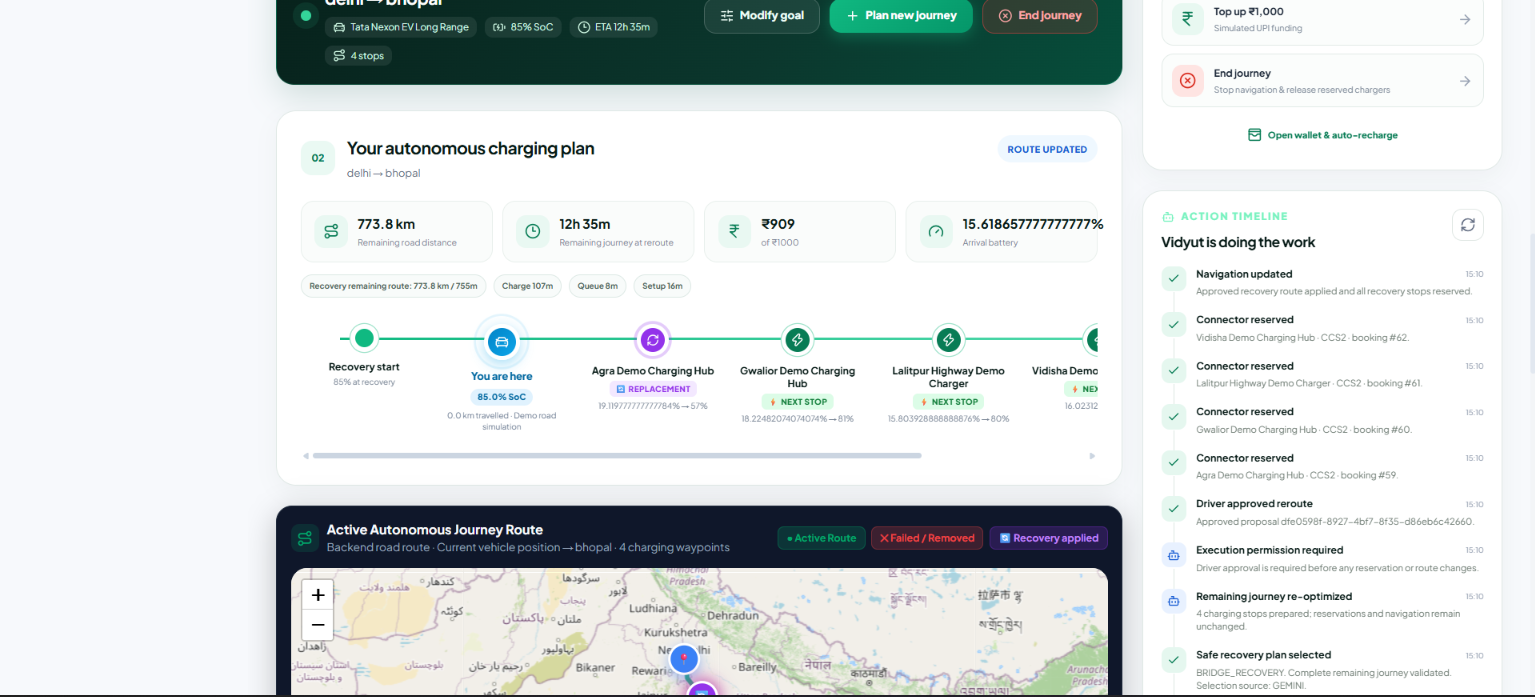
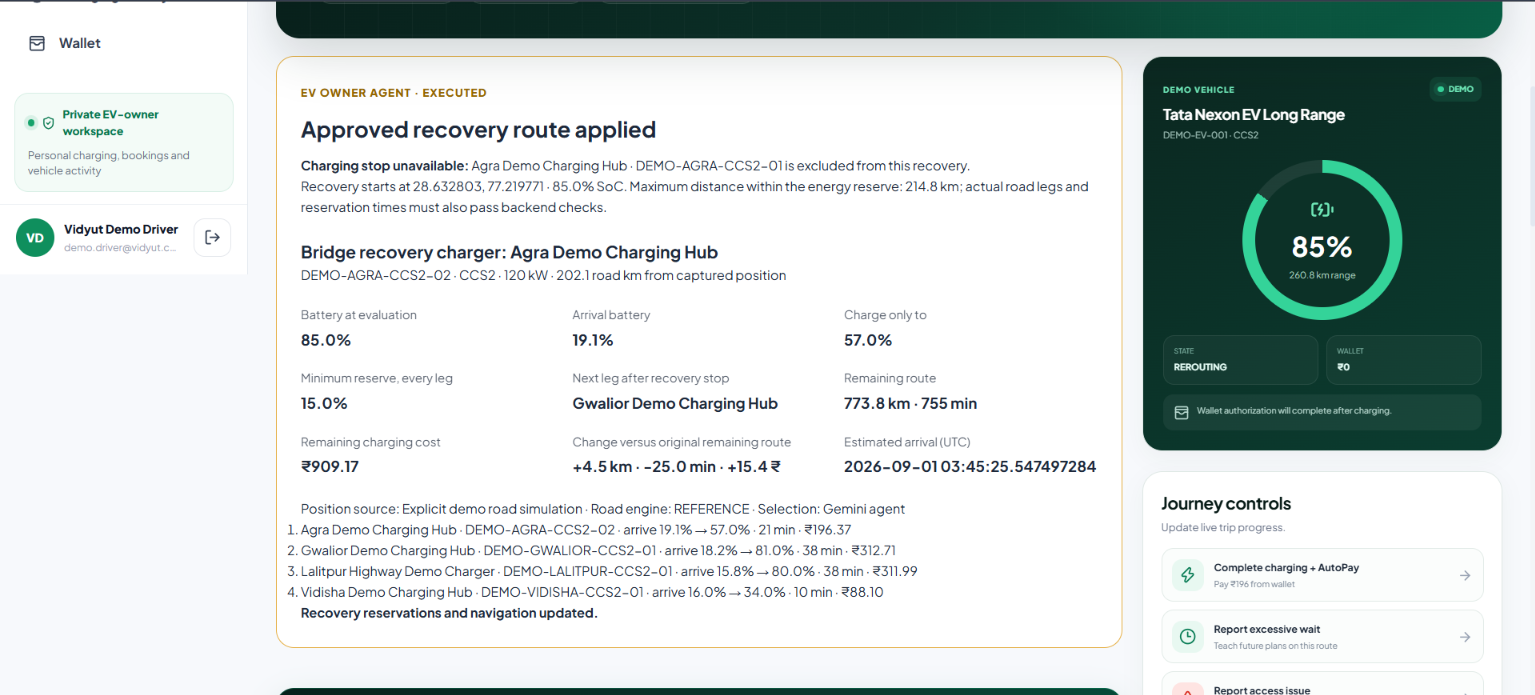
Rerouting Mechanism
-
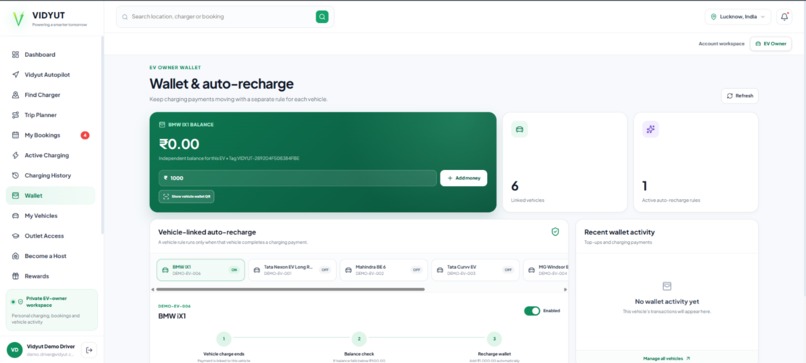
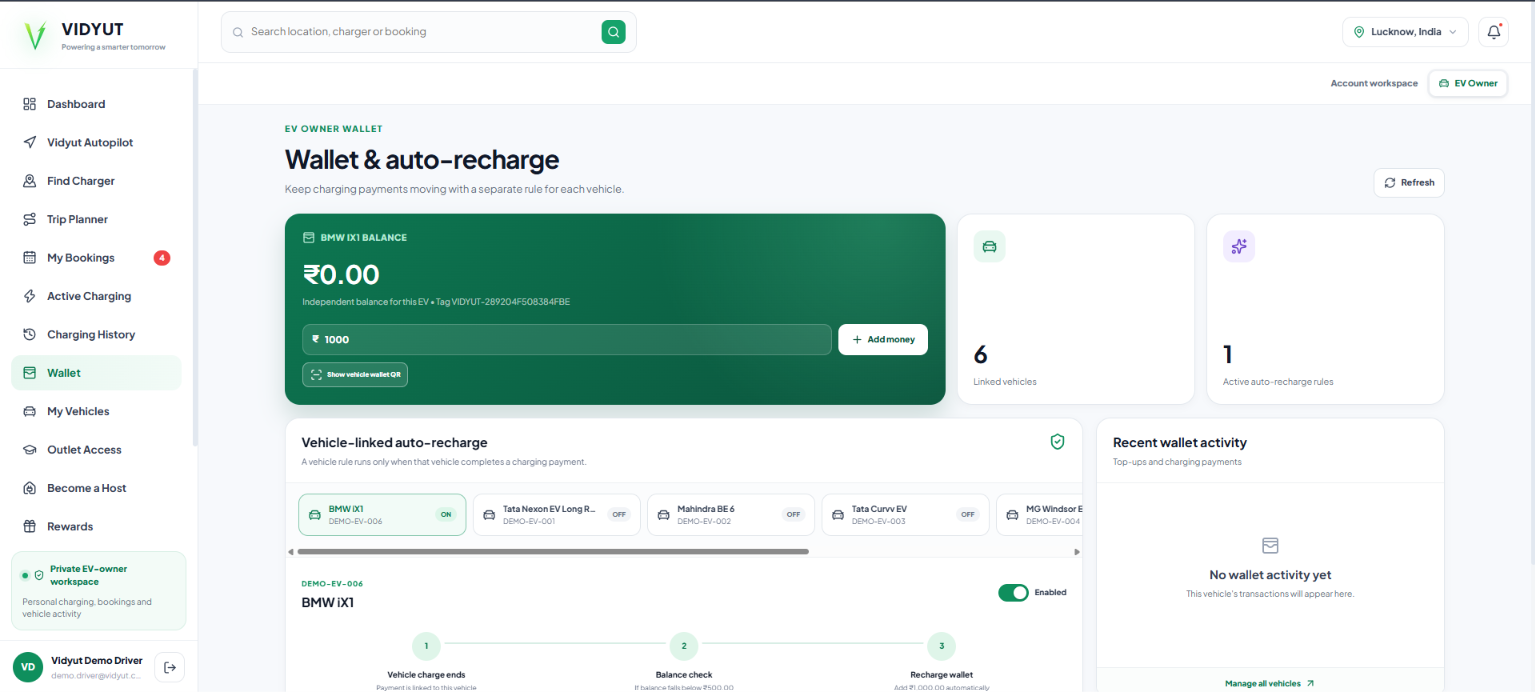
Wallet + QR(Fastag like ) Integration
-
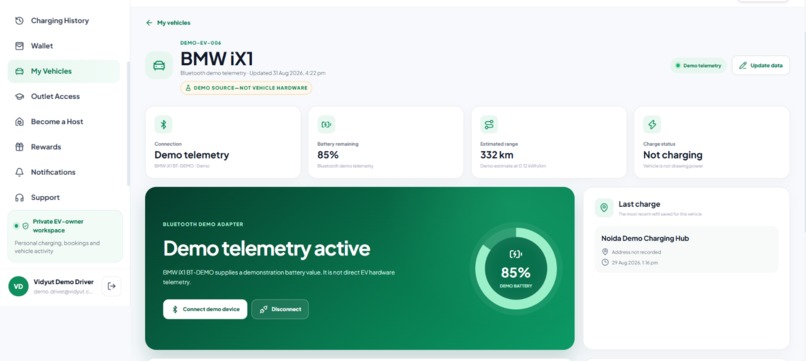
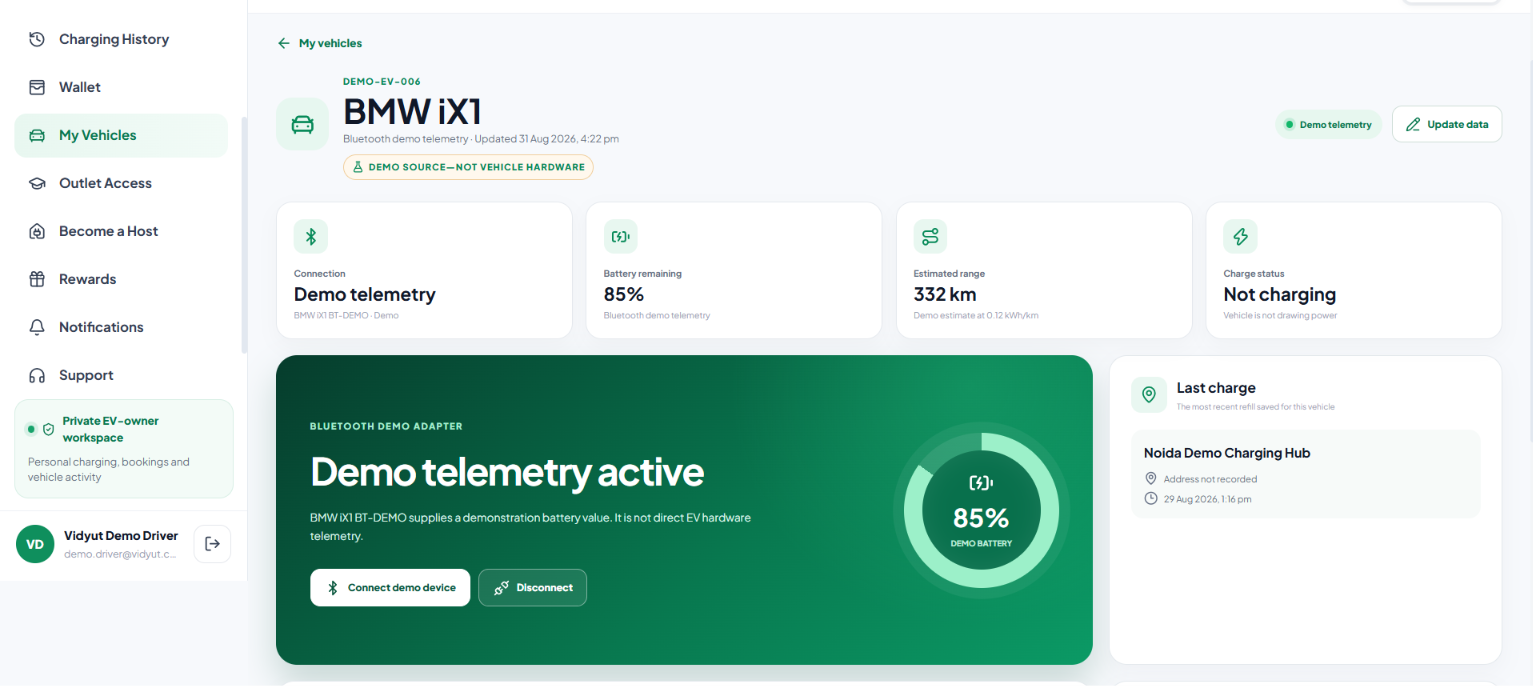
Vehicle Telemetry using Android Auto/Apple CarPlay
-
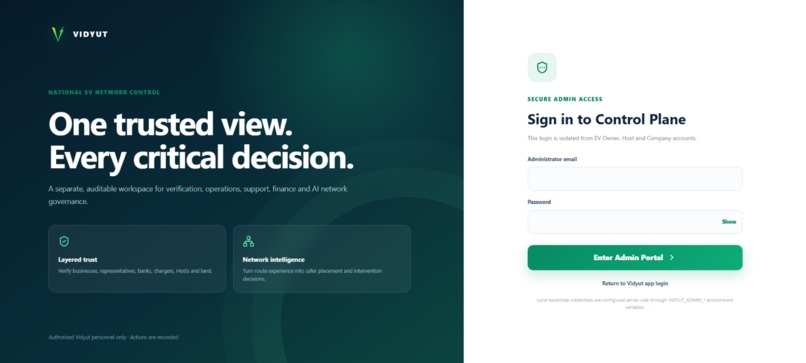
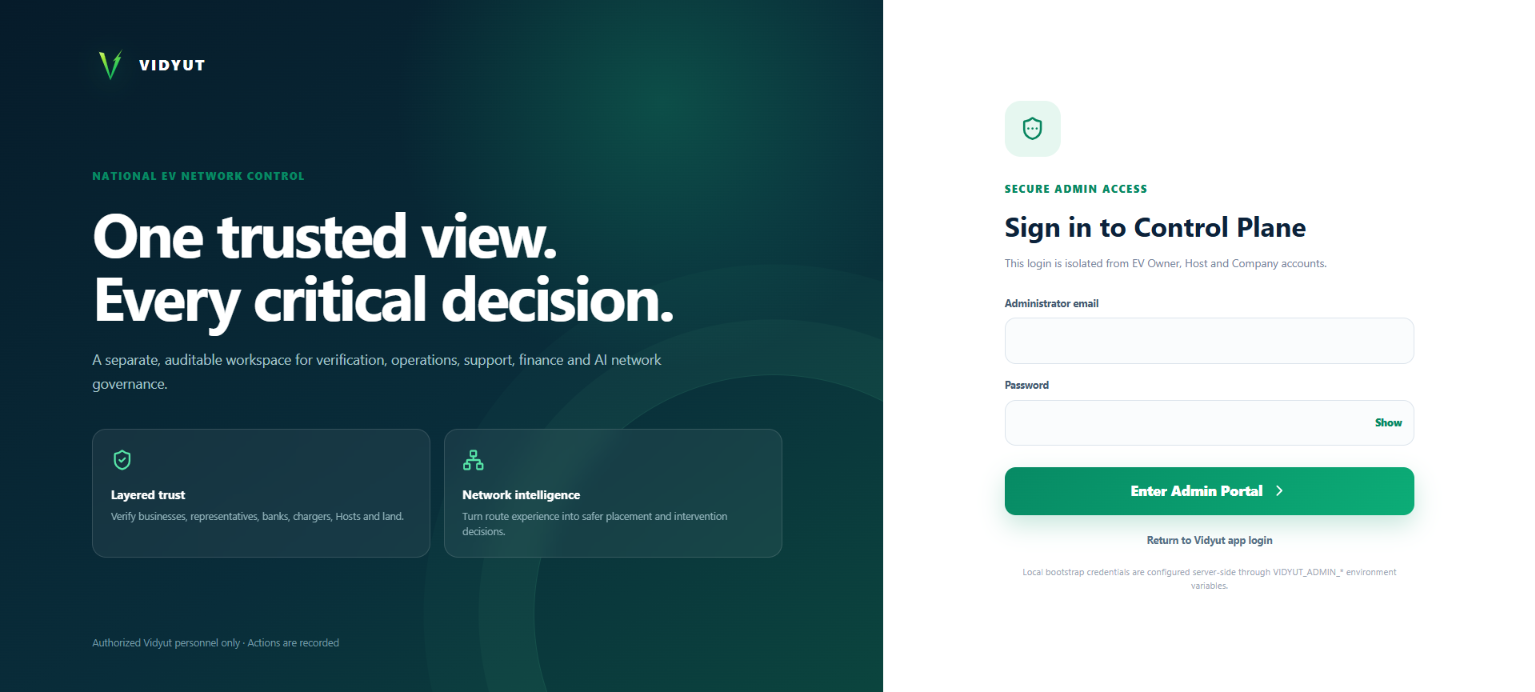
Admin Panel
-
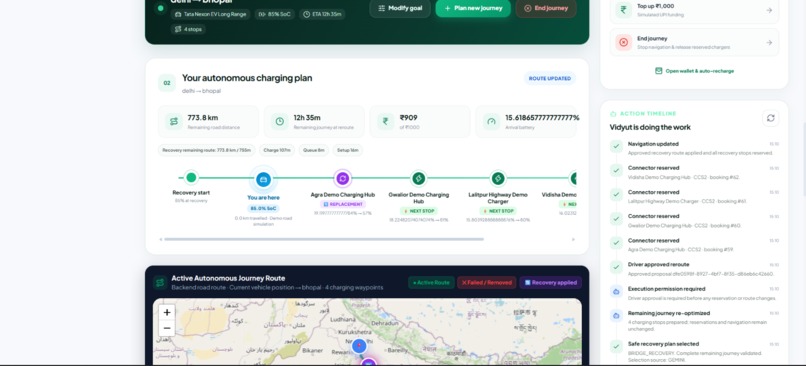
Live teleremetry
-
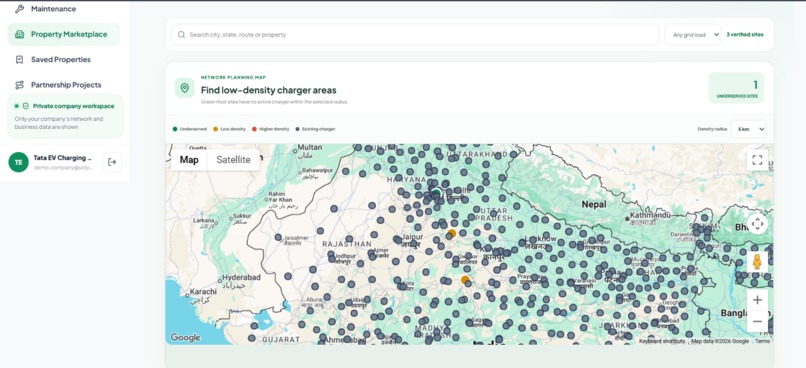
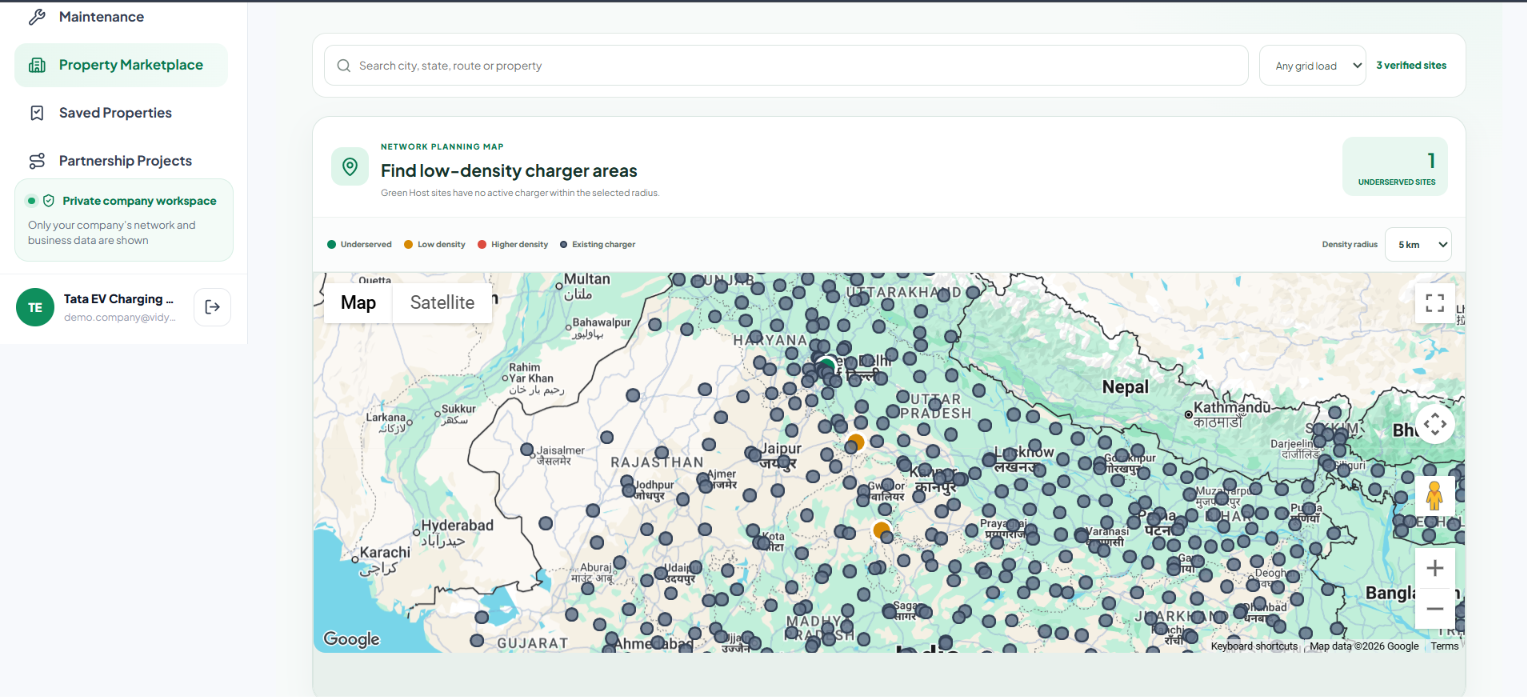
Density Analyzer
-
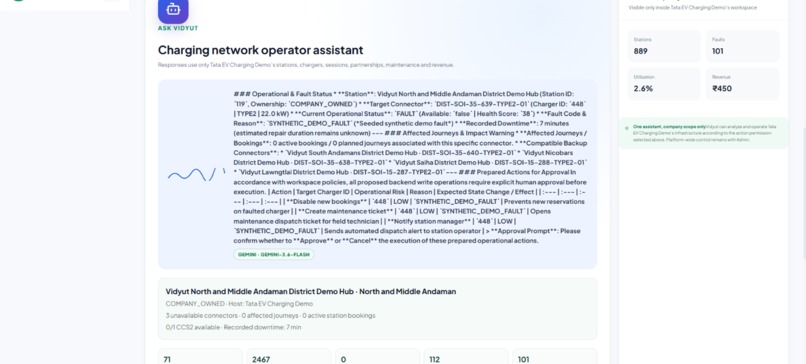
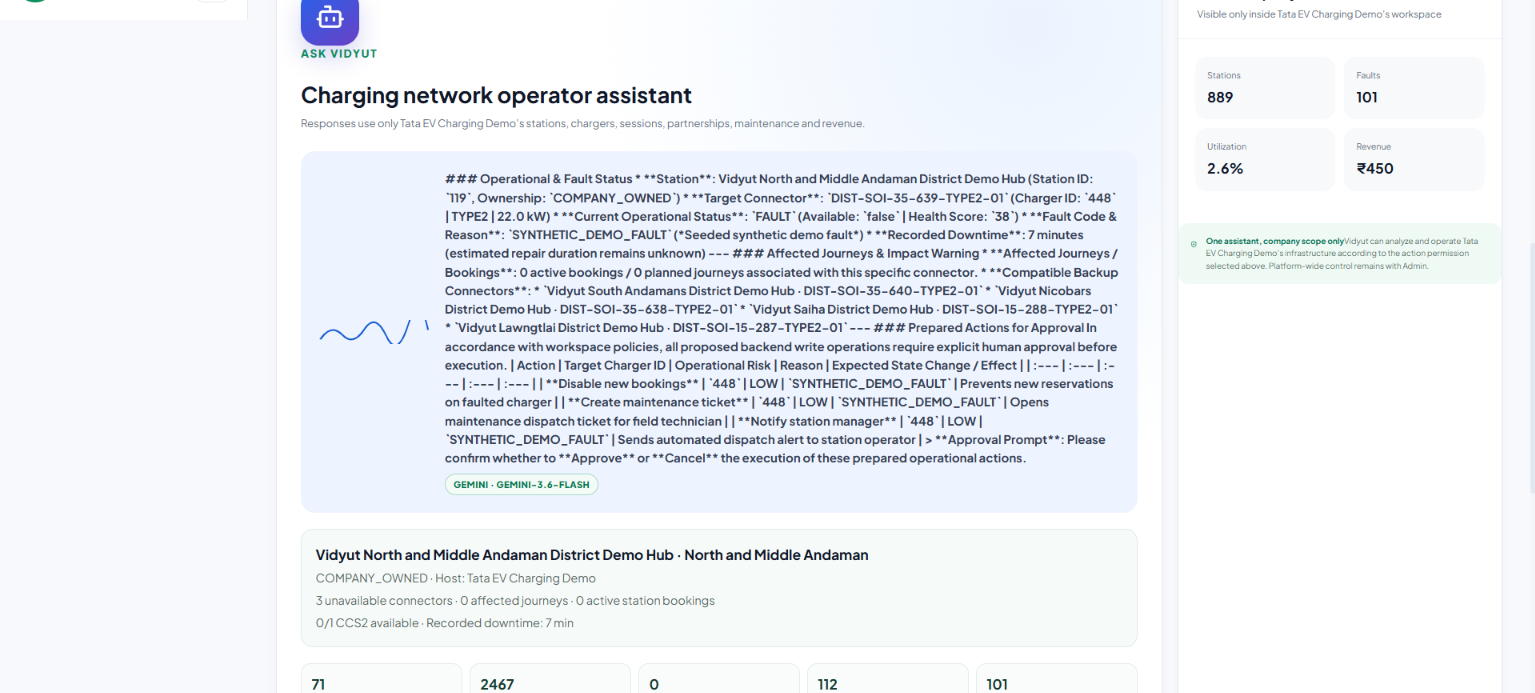
companys assistant using Gemini 3.6 Flash
-
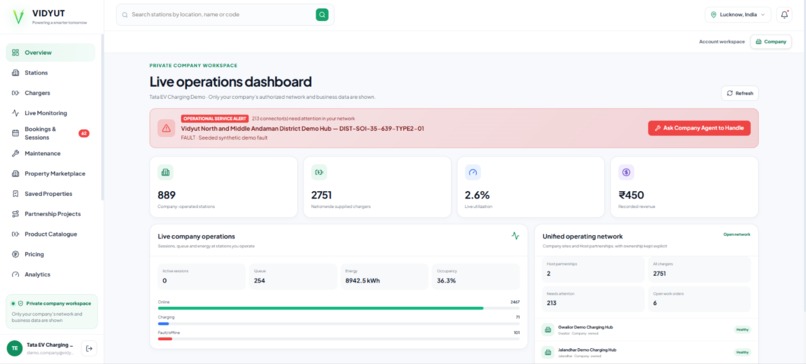
Live operation dashboard form company
-
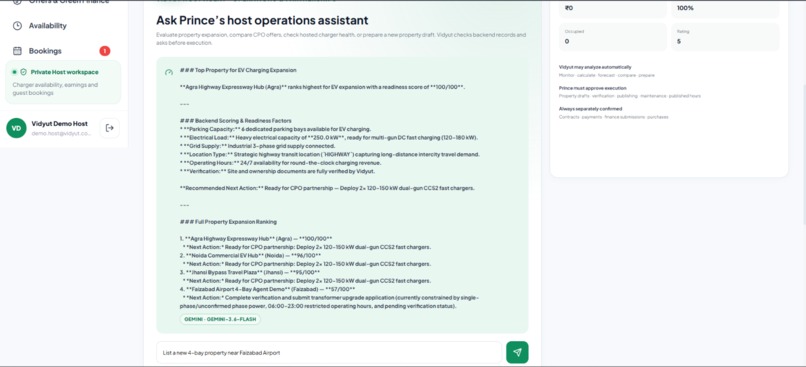
Host's agents using Gemini 3.6
-
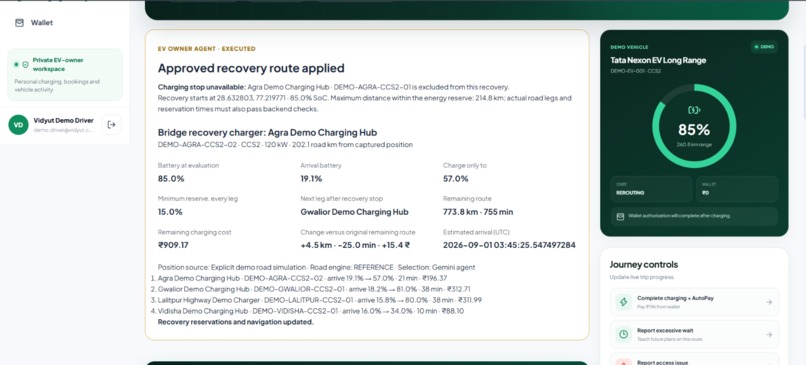
Rerouting approved from user because it uses "Ask Me " mode
-
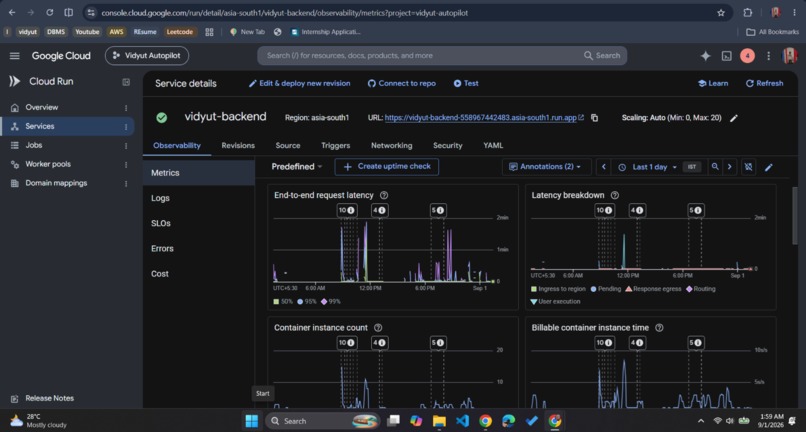
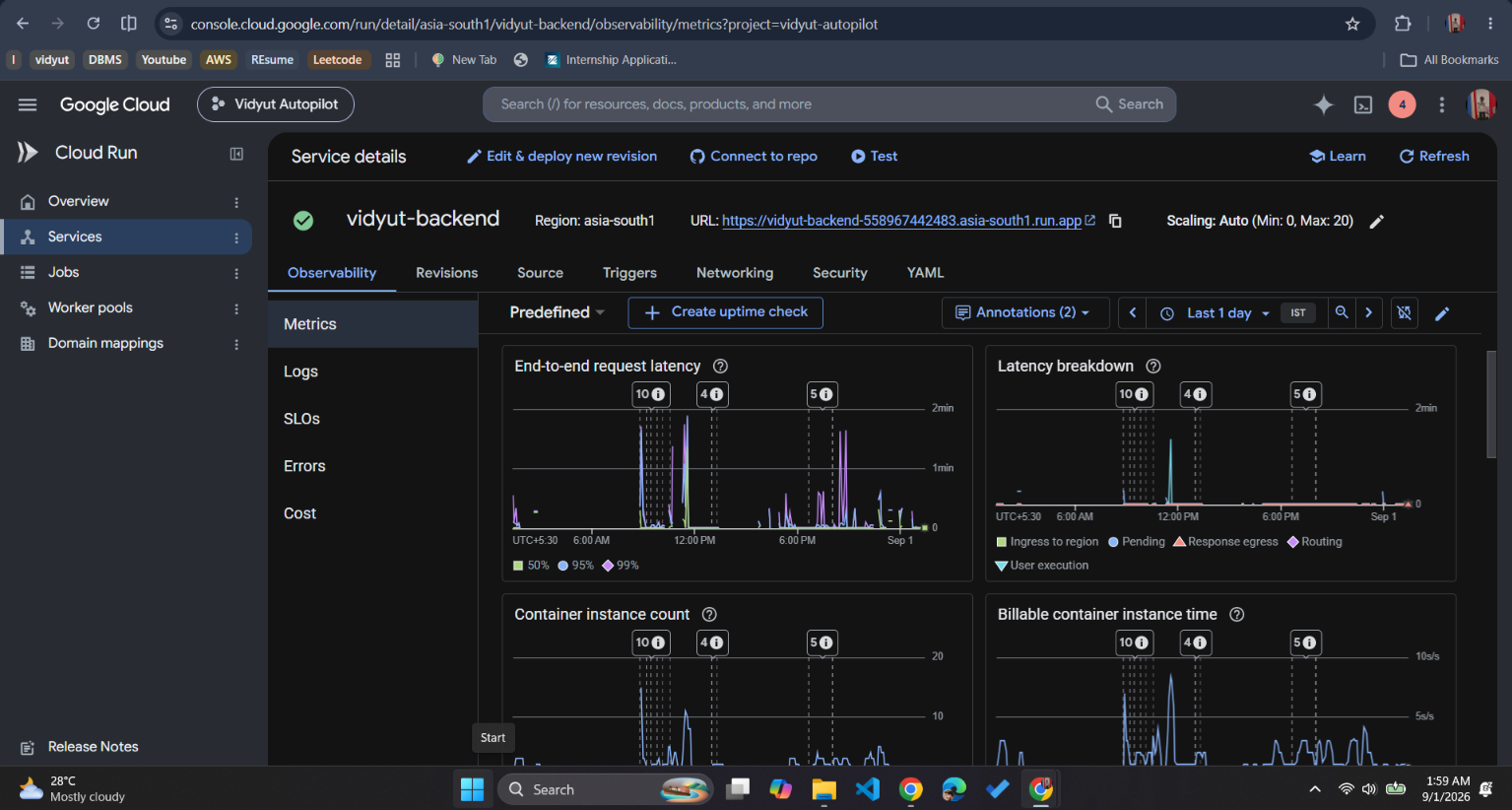
vidyut's backend
-
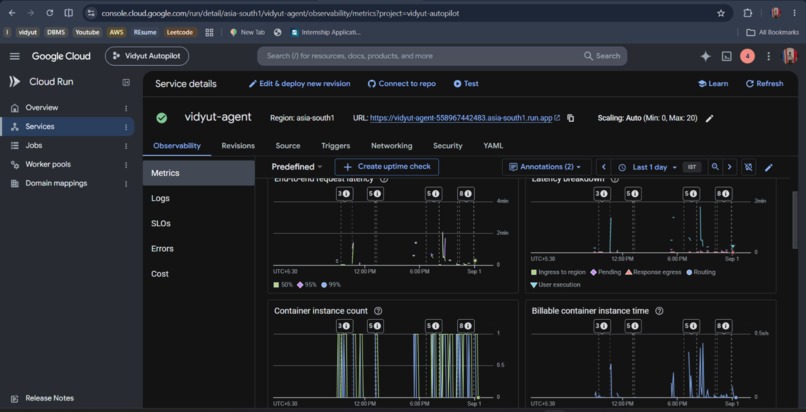
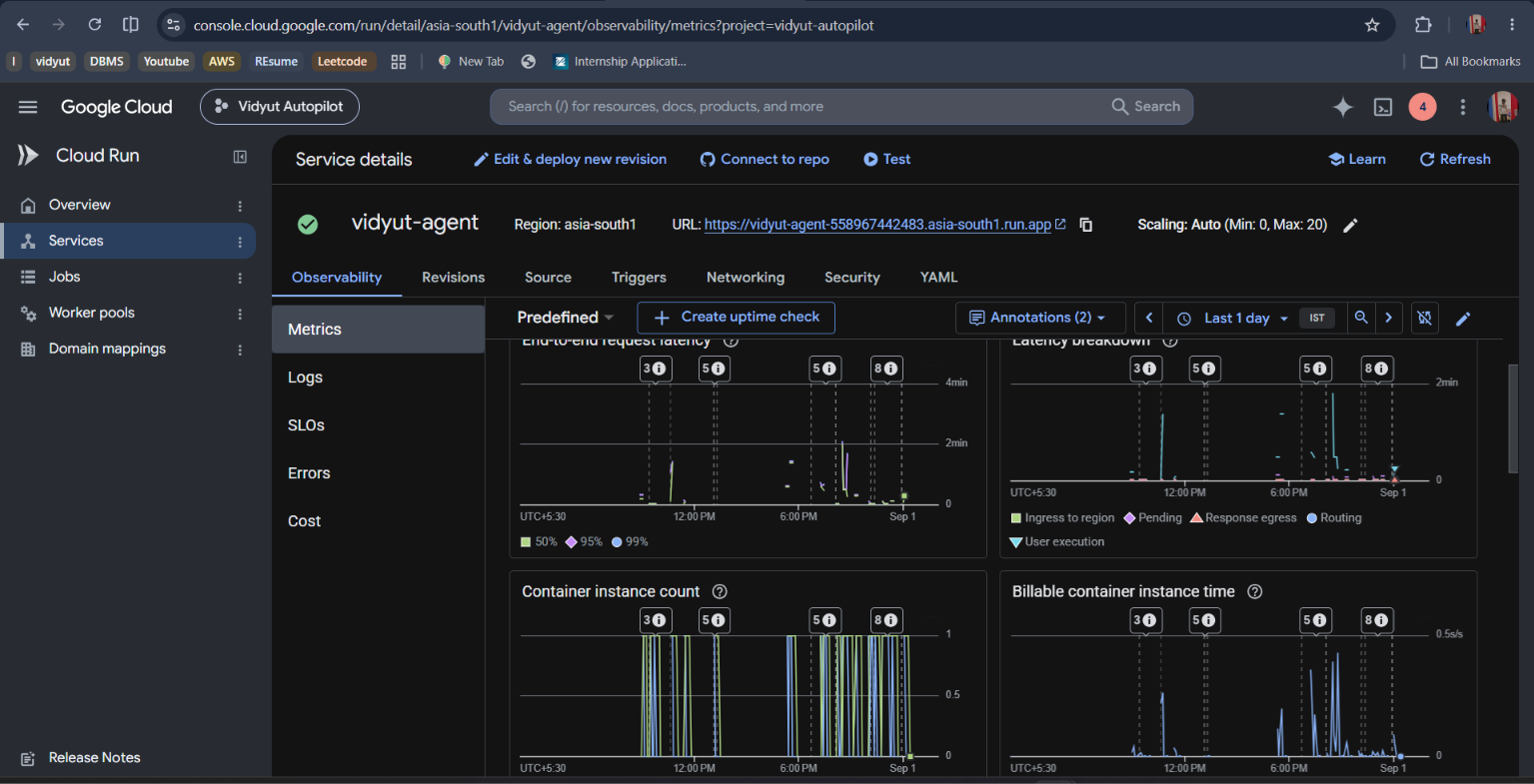
vidyut's agent
Inspiration
As EV adoption grows in India, reliable charging infrastructure remains a major challenge, especially during long-distance journeys and in smaller cities. Finding a charging station does not always guarantee that it will be available, compatible with the vehicle, or reachable with the remaining battery.
Inspired by Airbnb's approach to utilizing underused properties, we envisioned a platform where landowners could host EV charging infrastructure, charging companies could expand their networks without purchasing additional land, and EV owners could access a more connected charging ecosystem.
This inspired us to build Vidyut — an agentic EV charging platform that combines a three-sided marketplace with intelligent journey planning and autonomous recovery from charging-station failures.
Instead of simply recommending charging stations, we wanted AI agents that could help users plan journeys, react to unexpected failures, and make decisions within clearly defined safety constraints.
What it does
Vidyut connects three stakeholders:
- EV Owners
- Hosts / Landowners
- Charging Companies
EV owners can discover charging stations and generate personalized journey plans based on:
- Current battery percentage
- Destination
- Charging requirements
- Travel time
- Budget
- Minimum battery reserve
- Connector compatibility
The EV Owner Agent evaluates available charging options and recommends suitable stops while checking whether each charger is reachable and compatible with the vehicle.
One of Vidyut's key features is self-healing journey planning.
If a charging station fails or becomes unavailable, the AI agent can:
- Detect the failed charger
- Exclude it from the available options
- Recalculate the journey from the vehicle's current location
- Preserve the user's battery, budget, and safety constraints
- Generate an alternative charging plan
Hosts can register potential charging locations and manage their listings, while charging companies can manage charger availability, pricing, and maintenance status.
Vidyut also supports three levels of AI autonomy:
- Recommend Only — the agent only suggests actions
- Ask Before Actions — the agent requests user approval before important actions
- Full Autopilot — the agent can execute supported actions automatically
This allows users to control how much decision-making authority they give to the AI system.
How we built it
We built Vidyut using Google ADK, Gemini, Java Spring Boot, PostgreSQL, React, and Google Cloud, combining agentic AI with a modular full-stack architecture.
Backend
The backend is built using Java Spring Boot and provides REST APIs for:
- Authentication
- Charger management
- Journey planning
- User-role management
- Marketplace workflows
We implemented JWT authentication and role-based access control for EV Owners, Hosts, and Charging Companies.
AI and Agents
For the AI layer, we integrated Gemini with Google ADK.
The EV Owner Agent uses tools for:
- Route planning
- Charger lookup
- Charging-stop selection
- Constraint validation
- Journey replanning
The agent evaluates multiple factors including:
- Battery state
- Charger availability
- Travel time
- Charging price
- Connector compatibility
- Minimum safety reserve
- User budget
Instead of relying only on LLM-generated decisions, we also implemented deterministic safety checks for:
- Battery reserve
- Connector compatibility
- Charger reachability
- Budget constraints
Routing
We integrated:
- Google Maps JavaScript API
- Google Routes API
for route calculation, location discovery, and charger visualization.
We also implemented OpenStreetMap and OSRM fallback routing to improve resilience when the primary routing service is unavailable.
Frontend
The web application is built using:
- React
- TypeScript
- Vite
We are also developing a mobile application using:
- React Native
- Expo
Cloud Deployment
The backend and AI services were deployed using:
- Google Cloud Run
- Cloud SQL
- Firebase
- Cloud Build
- Artifact Registry
PostgreSQL is used as the main application database.
Challenges we ran into
One of our biggest challenges was transforming an AI journey planner into an agentic system capable of reacting to real-world disruptions.
A route may appear efficient but become impractical if:
- A charging station fails
- The vehicle cannot reach the next charger
- The connector is incompatible
- Charging costs exceed the user's budget
- The remaining battery would fall below the safety reserve
Because of this, our system could not rely only on shortest-path routing.
Another major challenge was maintaining journey state during replanning.
When a charger fails, the system must consider:
- The vehicle's updated location
- Current battery percentage
- Previously completed charging stops
- Failed charger exclusions
- User budget
- Minimum reserve requirements
We also had to coordinate three completely different user roles while keeping the architecture modular.
Other challenges included:
- Google Maps API integration
- Routing accuracy
- Authentication and authorization
- Cloud deployment
- Synchronizing the frontend, backend, database, and AI agent
- Designing fallback routing mechanisms
These challenges pushed us to introduce explicit safety validation, role-scoped agent workflows, fallback routing services, and configurable human approval.
Accomplishments that we're proud of
We developed a functional prototype showing how agentic AI can go beyond conversational assistance and perform practical journey-planning and recovery tasks.
One of our biggest accomplishments was integrating Google ADK with Gemini to create an EV journey-planning agent capable of:
- Tool-based route planning
- Charger selection
- Constraint validation
- Safety checks
- Failure-aware replanning
We also implemented a self-healing workflow where a Charging Company can report a faulty station and the EV Owner Agent automatically generates a revised plan that excludes the failed charger.
In one prototype test, Vidyut generated an approximately 601 km journey with:
- 6 charging stops
- Estimated charging cost of approximately ₹985
- Budget constraint of approximately ₹1000
- Battery reserve validation
- Automatic charger-failure rerouting
We also successfully brought together three different stakeholder experiences within a single platform and deployed the integrated system using Google Cloud infrastructure.
What we learned
Building Vidyut taught us that an autonomous AI agent needs much more than access to an LLM.
A reliable agent needs:
- Well-defined tools
- Clear responsibilities
- Safety constraints
- Validated outputs
- State management
- Failure recovery
- Human approval mechanisms
We gained practical experience with:
- Google ADK
- Gemini
- Agent orchestration
- Java Spring Boot
- PostgreSQL
- REST APIs
- JWT authentication
- Google Maps
- Google Routes API
- Google Cloud Run
- Cloud SQL
- Firebase
One of our most important lessons was understanding the balance between AI autonomy and user control.
Some decisions can be automated, while others should require explicit user approval depending on their impact.
We also learned that solving EV charging problems requires more than software alone. It requires coordination between drivers, infrastructure providers, property owners, and charging companies.
What's next for Vidyut
Our next goal is to evolve Vidyut from a functional prototype into a pilot-ready EV charging platform.
We plan to add:
- Verified charging-station information
- Live charger availability
- Reliable booking
- Integrated payment workflows
- AI-based occupancy prediction
- Estimated waiting times
- Personalized charger recommendations
- Dynamic charging prices
- Vehicle-linked payment wallet
For Hosts and Charging Companies, we plan to develop:
- Simplified charger onboarding
- Revenue-sharing models
- Property-owner incentives
- Charging network analytics
- Better maintenance workflows
Our longer-term roadmap includes:
- Solar-integrated charging
- Renewable-energy-aware route planning
- Grid-demand-aware pricing
- Fleet charging optimization
- Smart energy management
- Vehicle-to-Grid (V2G) capabilities
Ultimately, our vision is to build an intelligent EV charging ecosystem where AI agents coordinate infrastructure, respond to disruptions, and make electric mobility more accessible, reliable, and sustainable.
Built With
- adk
- css
- firebase
- flayway
- gemini
- google-directions
- googleadk
- java
- postgresql
- python
- react
- react-native
- springboot
- typescript
- vite


Log in or sign up for Devpost to join the conversation.