-
-
Vidya Sathi AI
-
Inspiration
The inspiration for VidyaSathi AI came from observing how students across India actually study, especially in Tier-2 and Tier-3 cities. Many students face unreliable internet, language barriers, academic pressure, and a lack of personalized guidance.
Most AI study tools assume fast internet, perfect English, and structured resources. That is not the reality for a large number of Indian students. We wanted to build something that understands mixed-language questions, works with low data, respects local routines, and supports students emotionally as well as academically.
VidyaSathi AI is inspired by the idea of a trusted senior or friend who studies with you, not just an AI that answers questions.
What it does
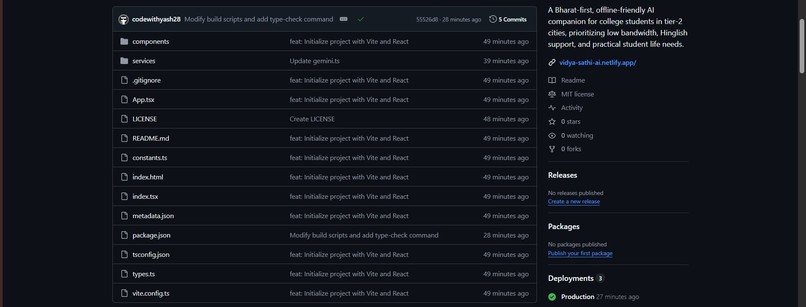
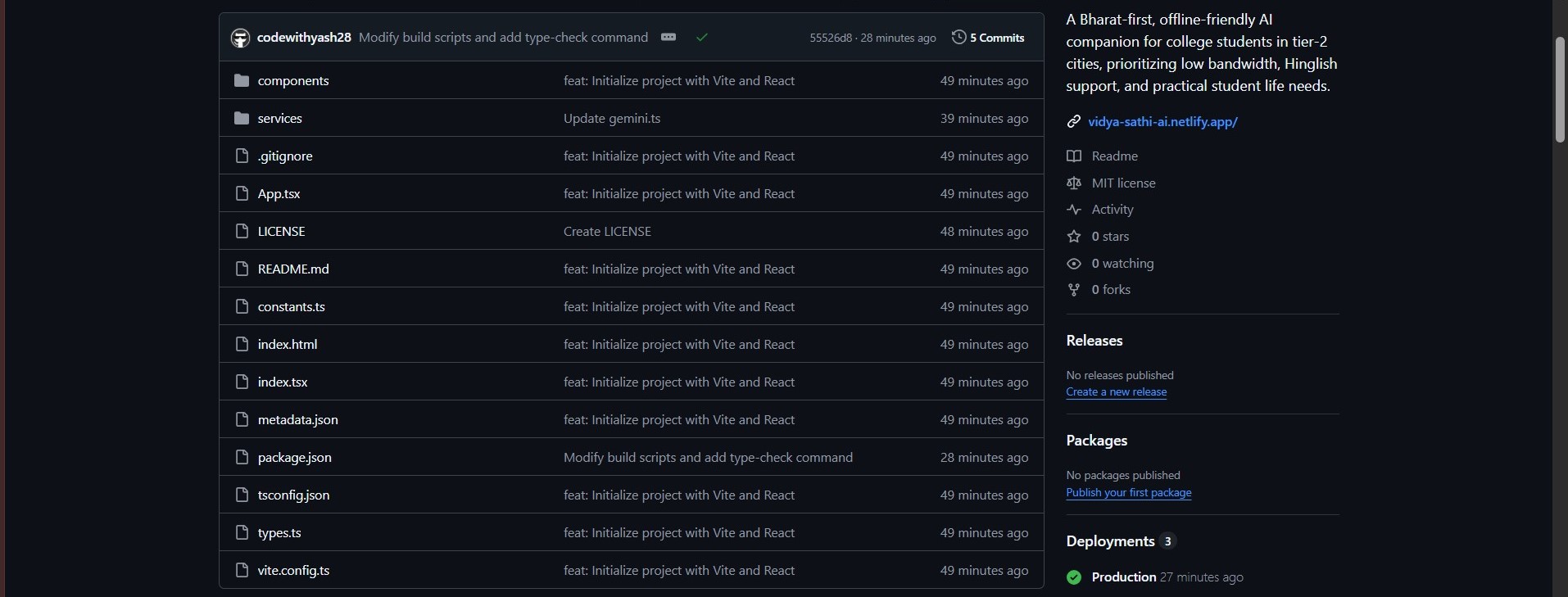
VidyaSathi AI is a Bharat-first, offline-friendly AI study companion designed for Indian students.
It helps students by:
Explaining academic concepts in simple English or Hinglish
Generating summaries, flashcards, and exam-style MCQs from PDFs
Creating smart study timetables based on real routines like college hours and hostel mess timings
Detecting early stress or burnout signals from interaction patterns and suggesting short recovery breaks
Supporting low-bandwidth and offline usage through cached content
The goal is to reduce stress, improve consistency, and make learning more practical and accessible.
How we built it
The project was built using a modern web stack focused on performance and usability.
Frontend: React for a responsive and interactive UI
Styling: Tailwind CSS with an Indigo & Slate theme for clarity and focus
AI Layer: Google Gemini API for tutoring, summaries, and study tips
Design: User-first UI inspired by real student workflows
Architecture: Modular components for chatbot, timetable, and trackers
Special care was taken to keep responses short by default and expandable on demand to support low-data usage.
Challenges we ran into
One of the biggest challenges was balancing intelligence with simplicity. We had to ensure the AI felt helpful without overwhelming the student.
Other challenges included:
Designing for low internet speeds
Making explanations work equally well in English and Hinglish
Avoiding generic AI responses and keeping everything context-aware
Structuring features so they fit real Indian student routines
These challenges pushed us to focus more on user empathy than just technical complexity.
Accomplishments that we're proud of
Building an AI system that feels human, supportive, and non-judgmental
Creating an offline-friendly and low-bandwidth-first experience
Designing features around real student life, not ideal conditions
Delivering a clean, production-ready UI suitable for real-world use
Most importantly, VidyaSathi AI feels usable, not experimental.
What we learned
This project taught us that:
Accessibility matters as much as intelligence
Local context can be a bigger differentiator than advanced features
Students need emotional support alongside academic help
Simplicity and clarity often outperform complex systems
Building for real users requires understanding their constraints deeply.
What's next for VidyaSathi AI
Next, we plan to:
Expand support for more Indian boards and universities
Improve offline capabilities further
Add anonymous peer doubt-sharing communities
Introduce multilingual support beyond Hinglish
Optimize the AI coach for long-term study tracking
Our long-term vision is to make VidyaSathi AI a trusted companion for every student in India, regardless of background, bandwidth, or location. If you want to check the app check it from here https://vidya-sathi-ai.vercel.app/
Built With
- css
- figma
- gemini
- html
- javascript
- react
- tailwind
- typescript

Log in or sign up for Devpost to join the conversation.