-
-
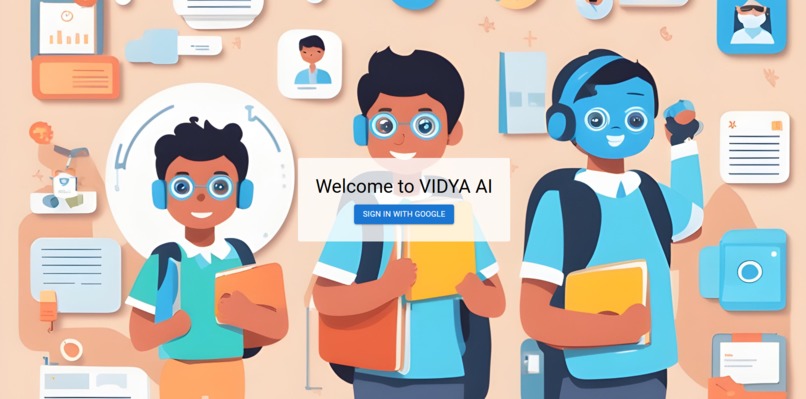
VIDYA AI: Now Self Study hui Asaan
-
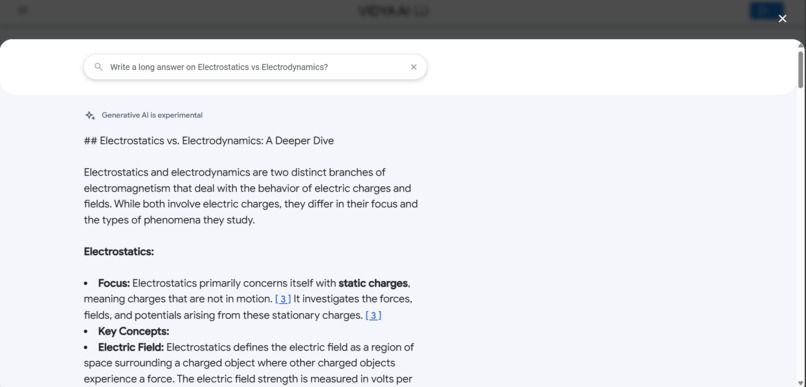
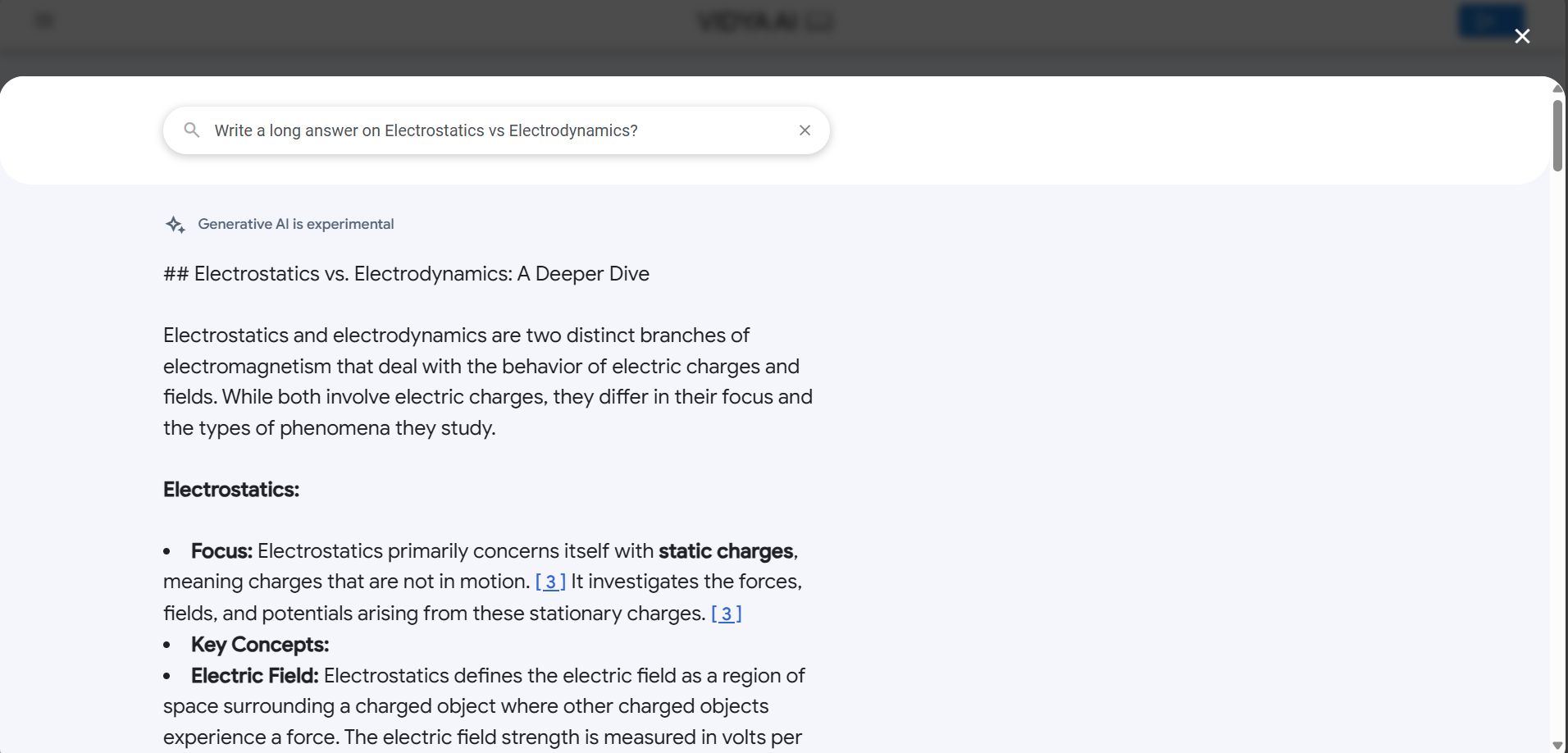
VIDYA AI SEARCH
-
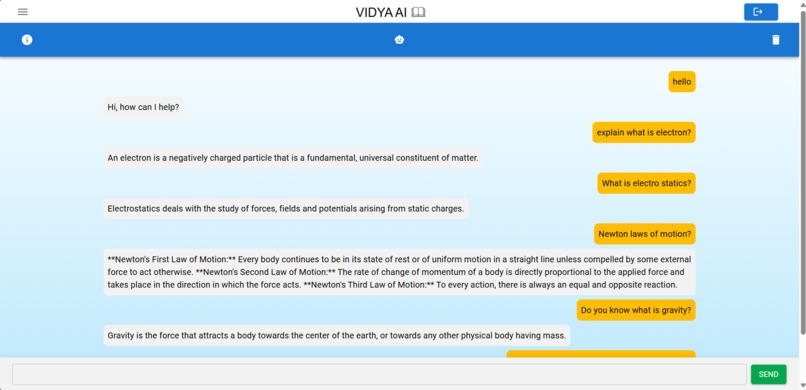
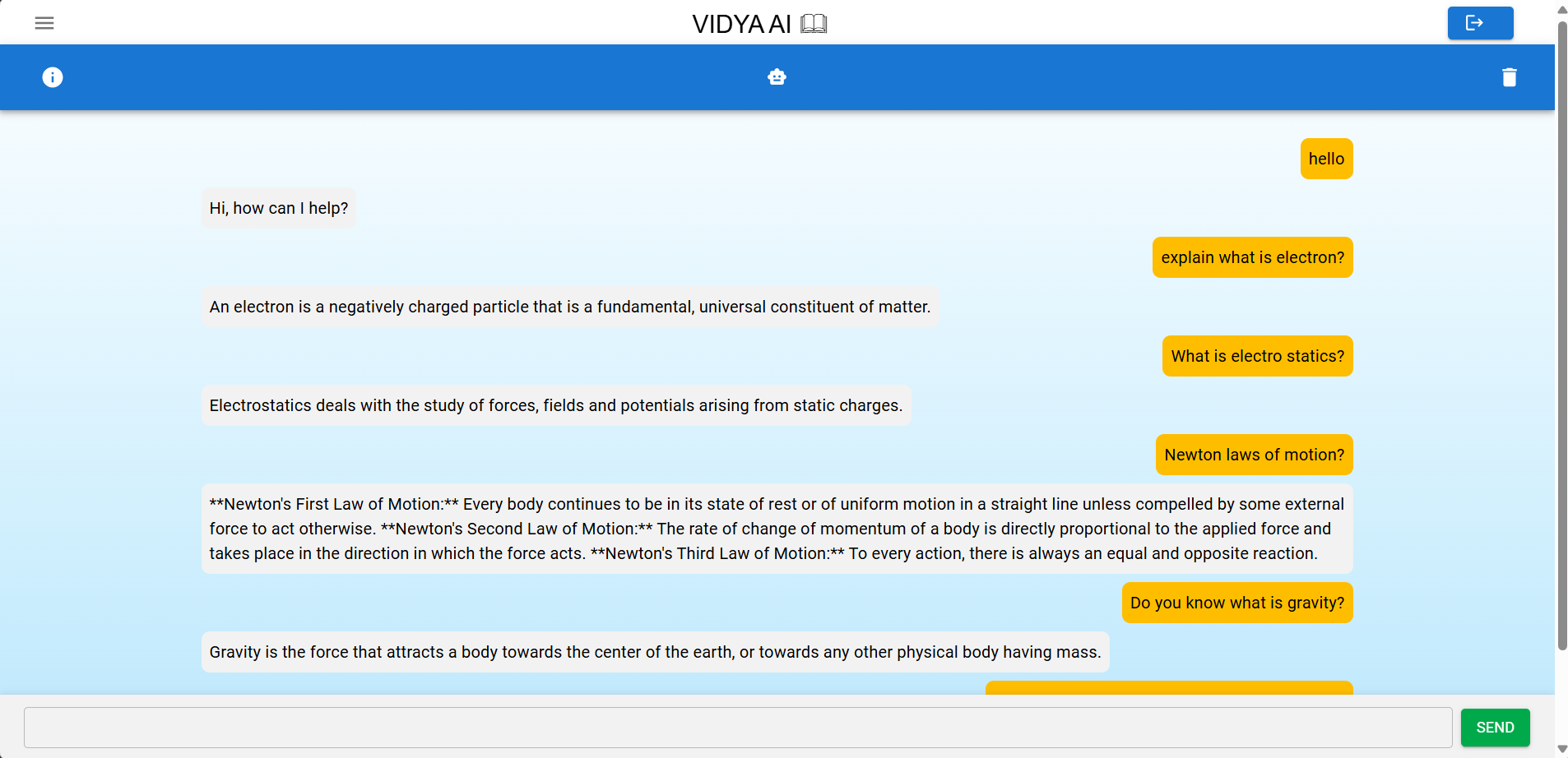
VIDYA AI CHAT
-
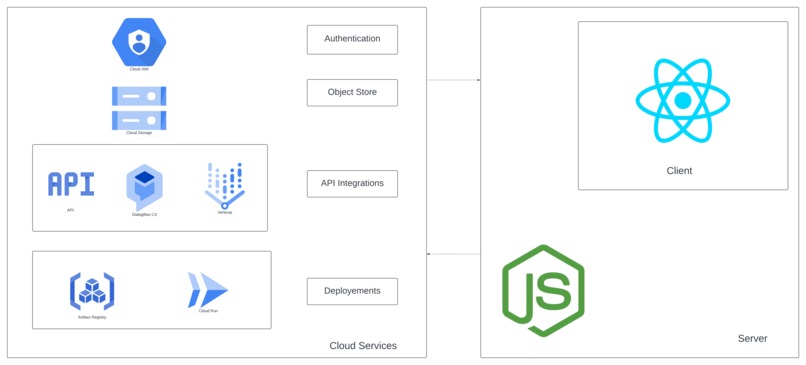
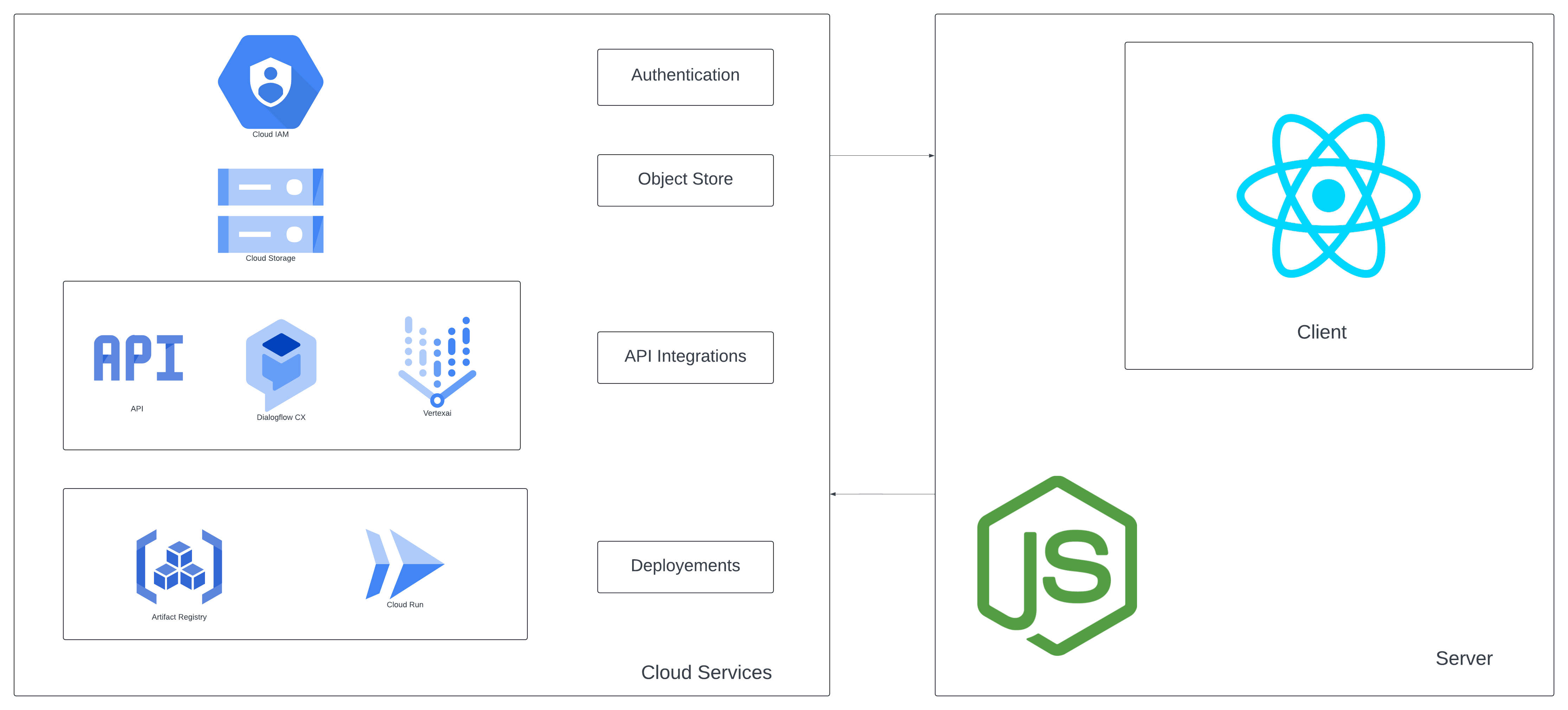
Architecture
Background:
The digital transformation in education has provided unprecedented access to resources and information. However, students often face challenges in finding accurate and relevant study materials. Additionally, the temptation of distractions on the internet can derail their focus, leading to inefficiency and wasted time. There is a critical need for a solution that helps students locate appropriate resources while minimizing distractions.
Problem Statement:
Develop an innovative digital solution that enhances the learning experience for school students by providing a focused, distraction-free platform for accessing educational resources. The solution should ensure that students can easily find accurate and relevant study materials while minimizing the likelihood of being distracted by non-educational content.
Solution Overview: Vidya AI
Vidya AI is set to revolutionize self-study for school students with cutting-edge technology. By harnessing the power of Vertex AI, Vidya AI offers a personalized learning experience like never before. Simply upload PDFs of schoolbooks, notes, and assignments, and watch as Vidya AI crafts custom embeddings and leverages Google's advanced language model to tailor its functionality to each student's unique curriculum.
Key Features:
- Personalized Learning: Vidya AI utilizes advanced AI algorithms to analyze and understand each student's learning patterns, allowing it to tailor its recommendations and explanations to individual needs, ensuring maximum comprehension and retention.
- Intelligent Search: With Vidya AI's powerful search capabilities, students can quickly find relevant information within their study materials, saving time and effort while ensuring they stay focused on the topics that matter most.
- Real-time Assistance: Vidya AI acts as an always-available study buddy, providing instant assistance whenever students encounter difficulties or have questions, enabling them to overcome challenges and progress at their own pace.
- Interactive Engagement: Through its chatbot interface, Vidya AI engages students in interactive learning experiences, fostering curiosity, exploration, and deeper understanding of complex concepts beyond what traditional study methods can offer.
- Secure Authentication: Vidya AI prioritizes student privacy by offering secure authentication via Gmail, ensuring that personal data remains protected. By integrating with Gmail accounts, Vidya AI establishes a trusted connection, granting access to study materials while safeguarding sensitive information, thus providing students with peace of mind regarding their privacy and data security.
Transform Your Learning: Vidya AI turns study time into an engaging and interactive experience, enhancing comprehension and retention. Say goodbye to frustration and confusion—mastering your syllabus is now just a conversation away. Step into the future of education with Vidya AI, your ultimate study companion.
For more details check my repository: Vidya AI
The Making of Vidya AI: A Journey from Concept to Reality
Vidya AI began with a simple yet powerful idea: creating a conversational chatbot to help students clarify their doubts. The journey from concept to a fully functional minimum viable product (MVP) involved four critical steps, each building on the last to bring this innovative educational tool to life.
Setups and Feasibility Check
The journey started with setting up the project on Google Cloud Platform (GCP) and enabling the necessary APIs. This phase was crucial for understanding the technical landscape and ensuring the feasibility of the project. I dove into technical documentation, exploring the capabilities and limitations of the APIs. With the basic infrastructure in place, I uploaded sample PDFs to test the AI Agent and Search functionalities. These initial tests validated the concept and provided a foundation for the next steps.
Prototyping and Design
With the feasibility confirmed, the next step was to design and prototype the application. I set up a repository and chose the JavaScript ecosystem for development, utilizing TypeScript for its robust type-checking and error reduction capabilities. For the frontend, I selected React.js and Material-UI (MUI) to create a sleek and responsive user interface. The backend was developed using Node.js and Express, ensuring a seamless interaction between the user interface and the underlying AI services. This phase resulted in a single-sourced web application, setting the stage for integration.
Integrations
In the integration phase, I focused on connecting the GCP services with the web application. This involved setting up environments to facilitate smooth communication between the different components of the system. I conducted extensive testing and debugging locally to ensure that the integrations worked seamlessly. This step was critical to ensuring that Vidya AI could leverage the full power of GCP's AI capabilities, providing students with accurate and timely assistance.
Deployment
The final stage of the journey was deploying the application. I chose Google Cloud's serverless Cloud Run for its scalability and ease of use. Utilizing Docker and containerization, I packaged the application into a container, allowing for efficient and consistent deployment across different environments. This deployment strategy ensured that Vidya AI could handle varying loads and provide reliable service to students.
Conclusion
From the initial concept to the deployment of the MVP, the development of Vidya AI was a meticulously planned and executed process. Each step was essential in transforming a simple idea into a powerful educational tool. Now, Vidya AI stands ready to revolutionize self-study for school students, offering a personalized, interactive, and engaging learning experience. Welcome to the future of education with Vidya AI!
Challenges
API Integration Issues:
Challenge: Difficulty in integrating various Google Cloud Platform (GCP) APIs smoothly with the web application. Solution: Thoroughly reading and understanding the documentation, conducting extensive testing, and possibly consulting with Google Cloud support for troubleshooting.
User Interface (UI) and User Experience (UX) Design:
Challenge: Creating an intuitive and engaging user interface that appeals to school students while being functionally robust. Solution: Using user-centered design principles, conducting usability testing with the target audience, and iterating on feedback to improve the design.
Deployment and Containerization:
Challenge: Successfully deploying the application using Docker and ensuring it runs smoothly on Google Cloud's serverless Cloud Run. Solution: Properly configuring Docker containers, thoroughly testing the containerized application locally before deployment.
Proud Moment
The moment I successfully deployed my application and tested it end to end, witnessing it work flawlessly, was a pinnacle of my hackathon journey and a true Eureka moment. This achievement encapsulated months of meticulous planning, coding, debugging, and perseverance.
Learnings
Embarking on the journey to create Vidya AI has been an invaluable learning experience, encompassing a wide range of skills and technologies. Here’s what I gained from this transformative project:
In-Depth Understanding of Google Cloud Platform (GCP):
Gained comprehensive knowledge of GCP services, enabling me to leverage cloud infrastructure effectively for scalable application development.
Enhanced Development Skills: Improved my proficiency in modern development technologies, particularly in the JavaScript ecosystem. Mastered the use of TypeScript for robust type-checking and error reduction, React.js and Material-UI (MUI) for creating intuitive and responsive user interfaces, and Node.js with Express for building a seamless back end.
Advanced Cloud Services and APIs: Learned to utilize Identity and Access Management (IAM) to ensure secure and controlled access to cloud resources. Implemented Cloud Storage for efficient handling and retrieval of large volumes of educational content. Integrated Vertex AI for creating custom embeddings and enhancing the AI’s understanding of educational materials. Leveraged Dialog flow CX to develop sophisticated conversational interfaces, ensuring smooth and effective communication between students and the AI.
Building and Integrating Applications: Developed expertise in building applications that integrate seamlessly with various GCP APIs. Conducted extensive testing and debugging to ensure smooth operation and reliable performance of the integrated services.
Prompt Engineering: Refined the art of prompt engineering to enhance the quality of AI responses, ensuring that Vidya AI provides accurate, helpful, and contextually relevant answers to student queries.
These experiences have significantly expanded my technical skill set and deepened my understanding of cloud-based application development. The journey of creating Vidya AI has equipped me with the tools and knowledge to tackle complex projects and deliver innovative solutions in the tech-driven world of education.
What's next for Vidya AI
The next exciting chapter for Vidya AI is its expansion to serve college students, professional learning curricula, and entrance examination preparations. With its flexible and scalable design, Vidya AI is poised to pivot seamlessly into these new use cases, offering personalized and interactive learning experiences across diverse educational landscapes. As we continue to innovate and enhance our platform, Vidya AI is set to become an indispensable tool for learners at every stage, empowering them to achieve their academic and professional goals with ease and confidence. Welcome to the future of education, where learning is just a conversation away.

Log in or sign up for Devpost to join the conversation.