-

-
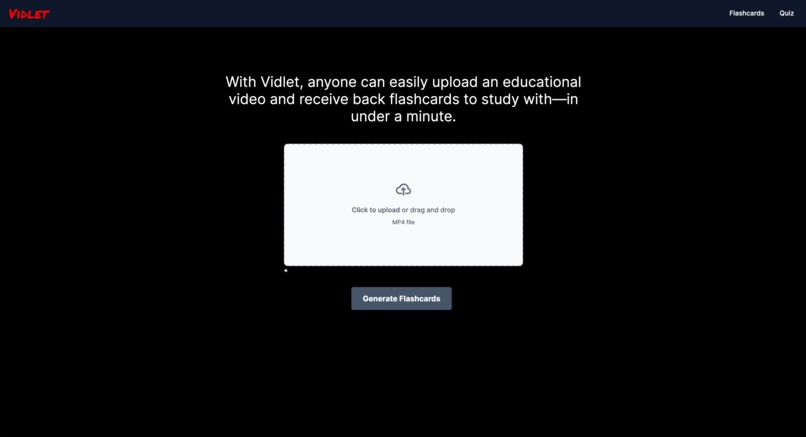
The Landing Page
-
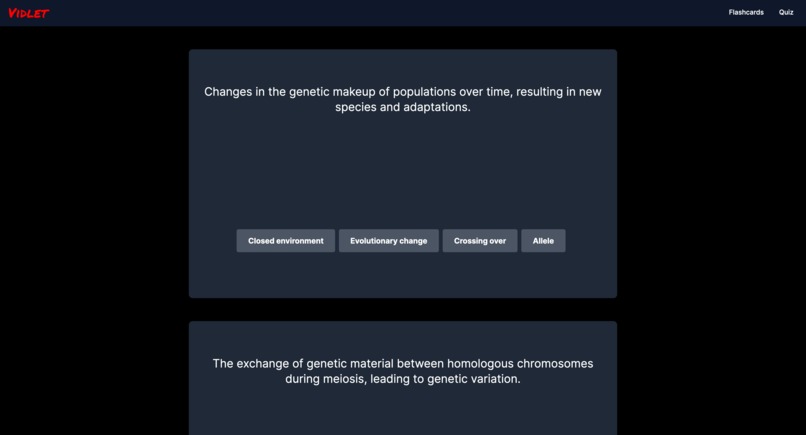
The Quiz Page

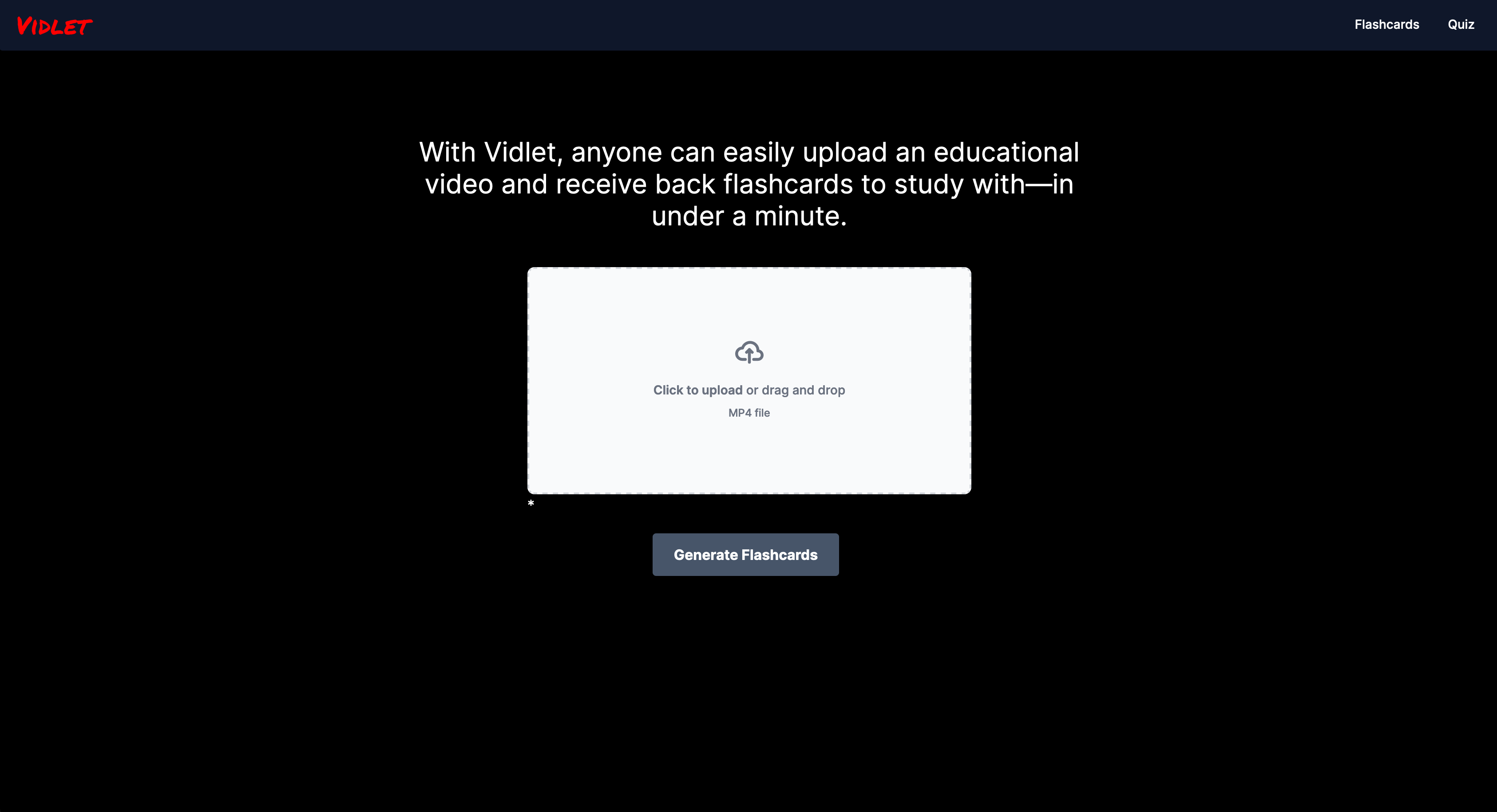

Vidlet
Maanav Rao (maarao) and Sammy Alashoush (samalash)
Inspiration
We both love using flashcards, but we felt that creating them took too long. Combining this sentiment with recent changes to popular flashcard generators and studying tools, we believed we could develop something superior for free users.
What it does
Vidlet allows users to input any type of video, whether it be YouTube videos or lecture recordings, and generates a transcript. It then utilizes this transcript to generate flashcards using AI.
How we built it
The backbone of the backend relies on utilizing OpenAI Whisper to transcribe audio from the submitted video into a transcript with remarkable accuracy. We then feed this transcript into a custom-prompted GPT-3.5 turbo model to intelligently create a number of flashcards based on the video's length.
Challenges we ran into
We encountered difficulties linking our frontend to our backend. It took a considerable amount of time to figure out how to pass a file to the backend and successfully trigger our Python scripts from the frontend.
Accomplishments that we're proud of
This marked our first experience working with the OpenAI API, and we were pleased with the results. We've developed one of the most accurate transcription generators as well as one of the most intelligent flashcard generators.
What we learned
- OpenAI API integration
- Next.js API hooks
- Tailwind CSS
What's next for Vidlet
Our aim is to evolve Vidlet into a feature-rich flashcard study tool by achieving at least feature parity with other major flashcard study tools. Our plans include:
- Implementing dynamic learning to facilitate increased repetitions on terms users might struggle to understand.
- Offering enhanced customization options for question types in tests.
- Providing increased flexibility in types of flashcards through difficulty and quantity adjustments.
- Incorporating mini-games to aid in learning the flashcards.
Built With
- ffmpeg
- flowbite
- next.js
- openaiapi
- python
- react
- tailwind
- typescript


Log in or sign up for Devpost to join the conversation.