-
-
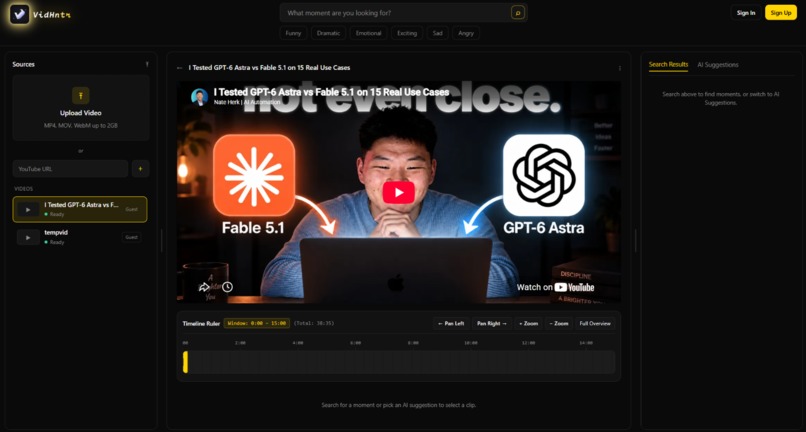
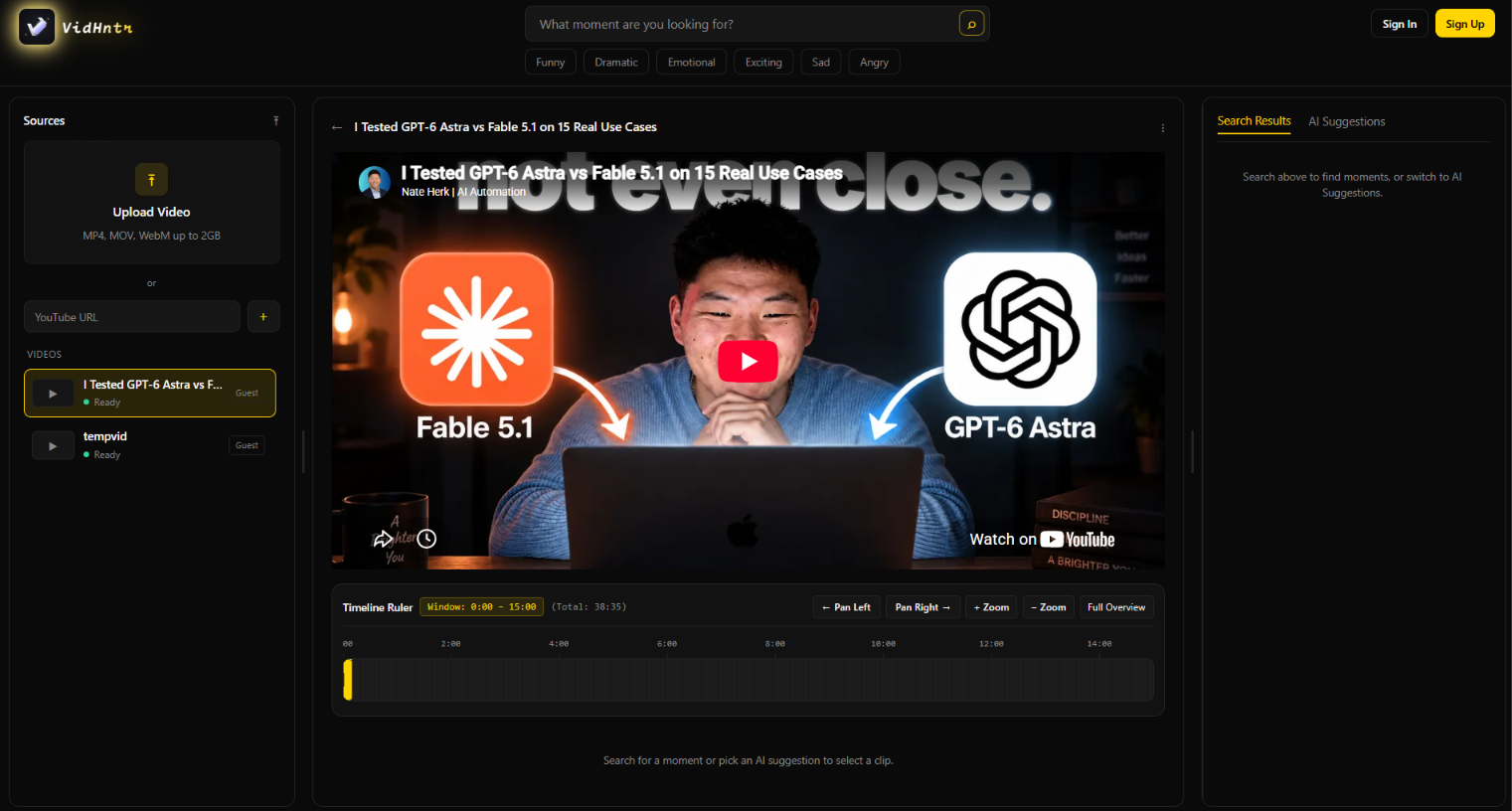
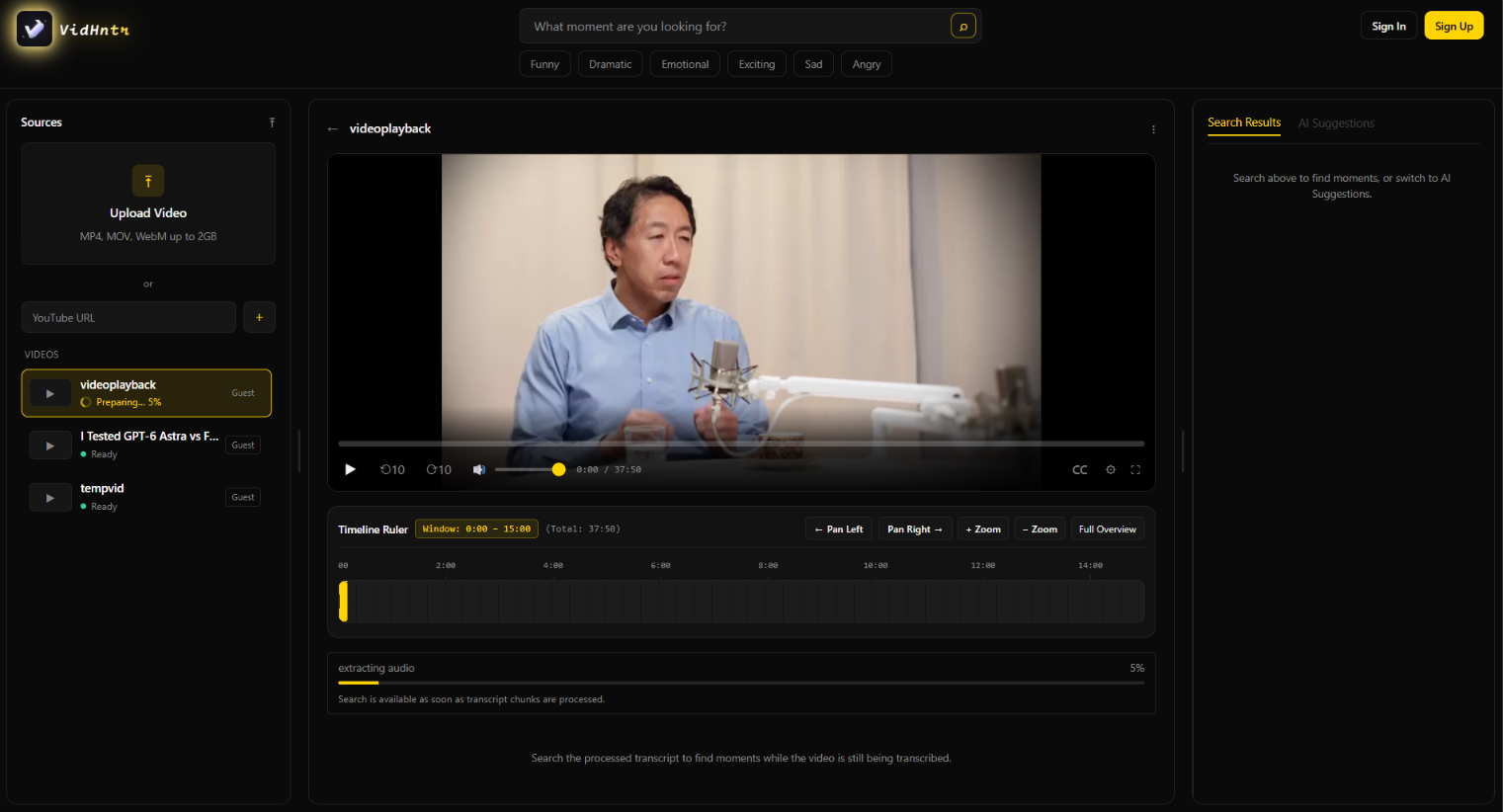
Main VidHntr Dashboard
-
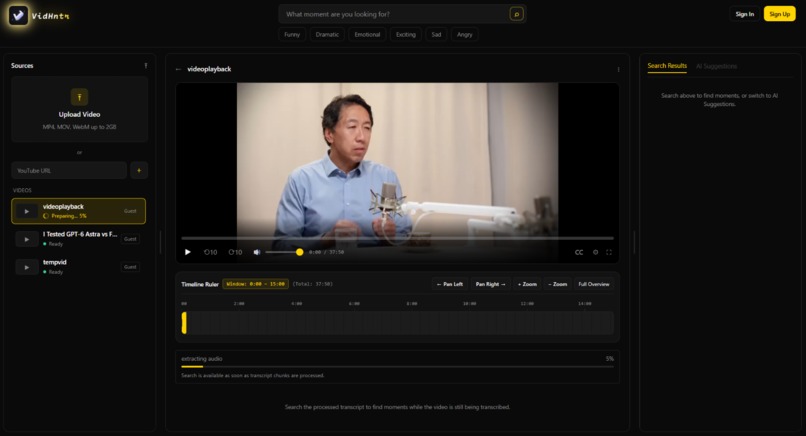
video uploading process
-
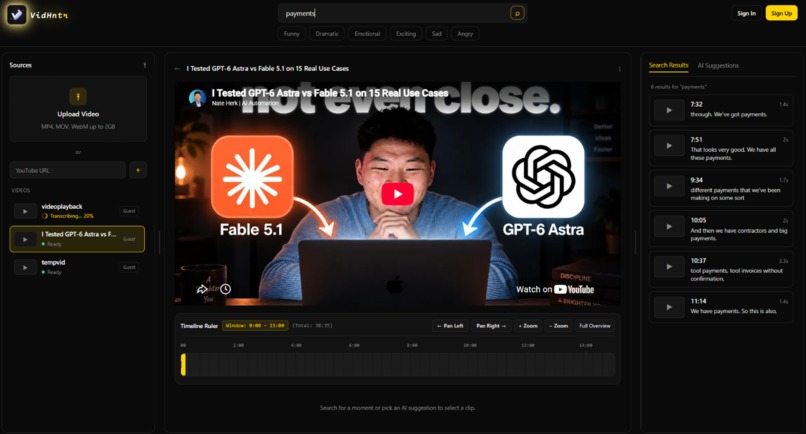
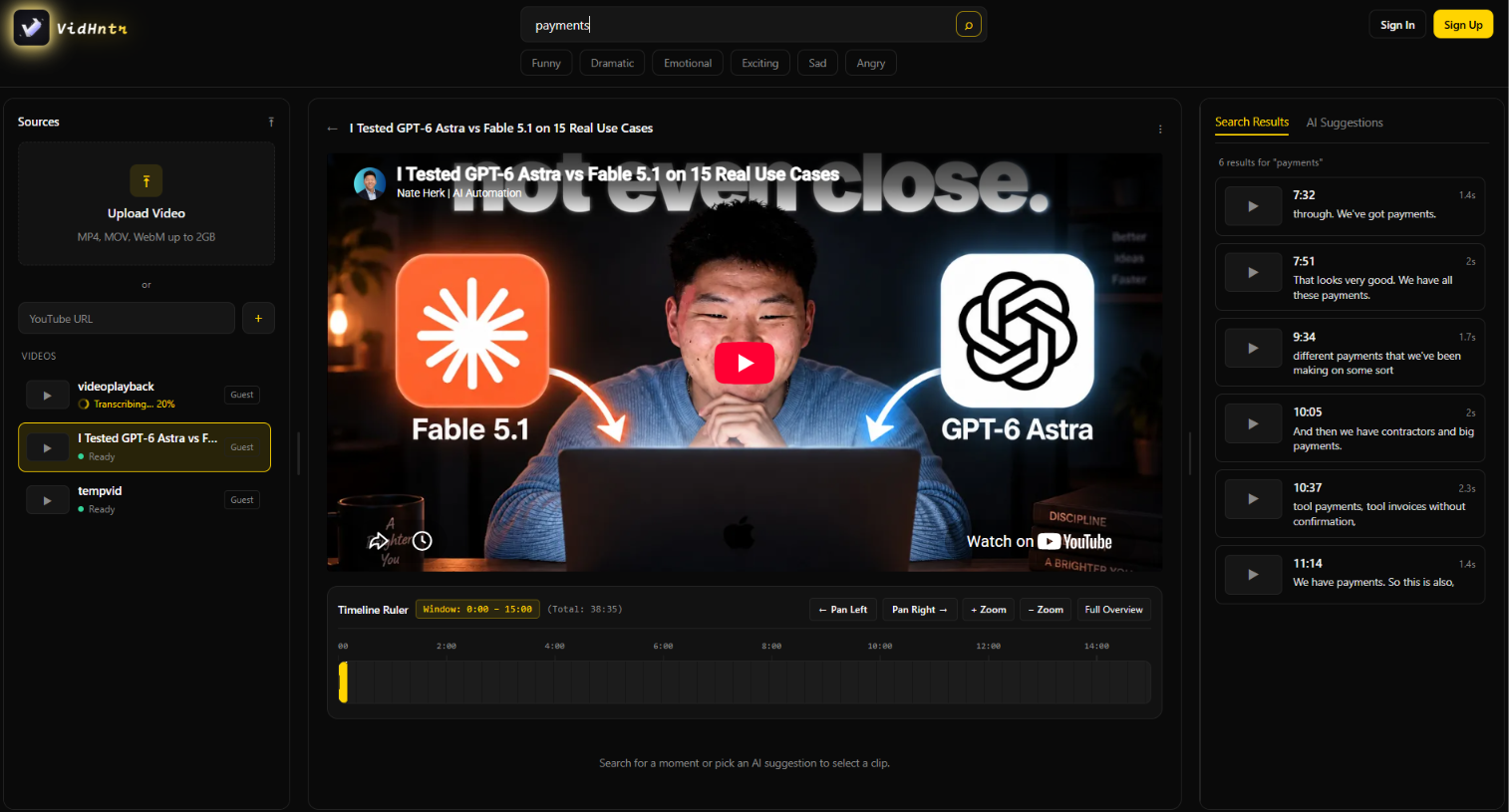
Search Results displayed on the right panel.
-
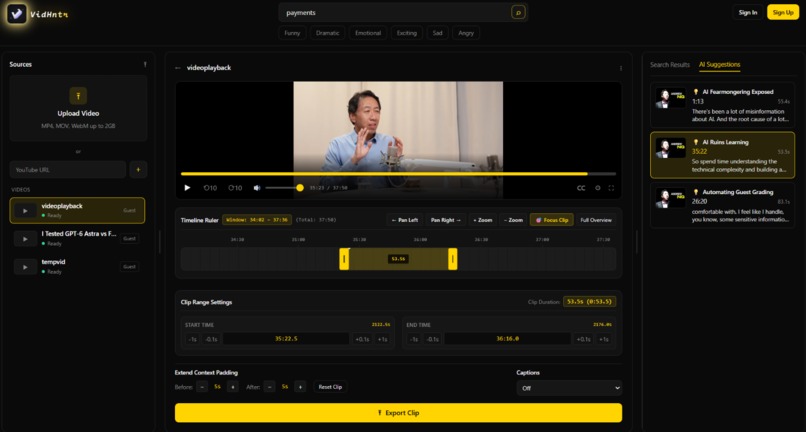
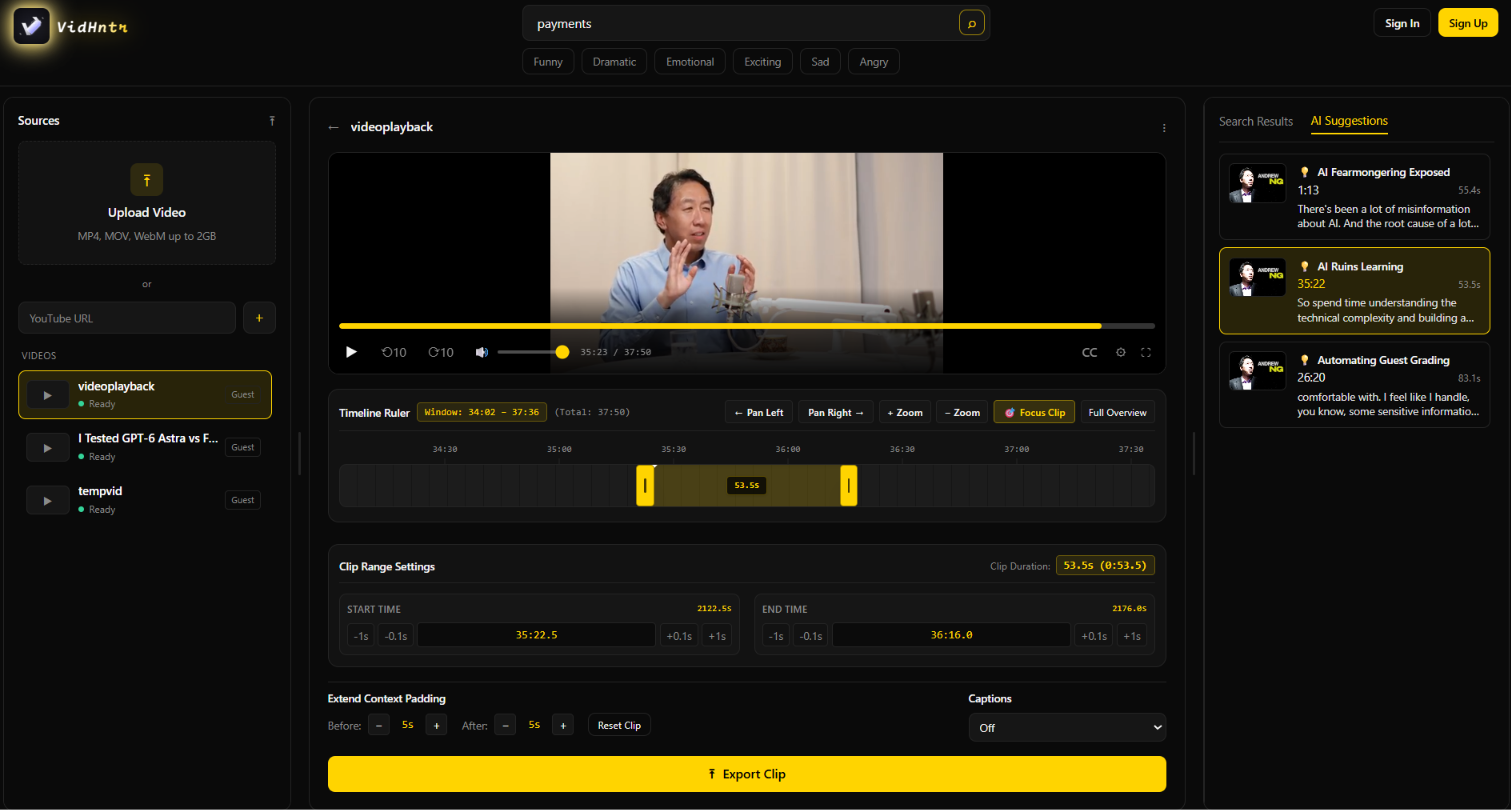
Live video clip editor along with AI suggestion on the right panel
-
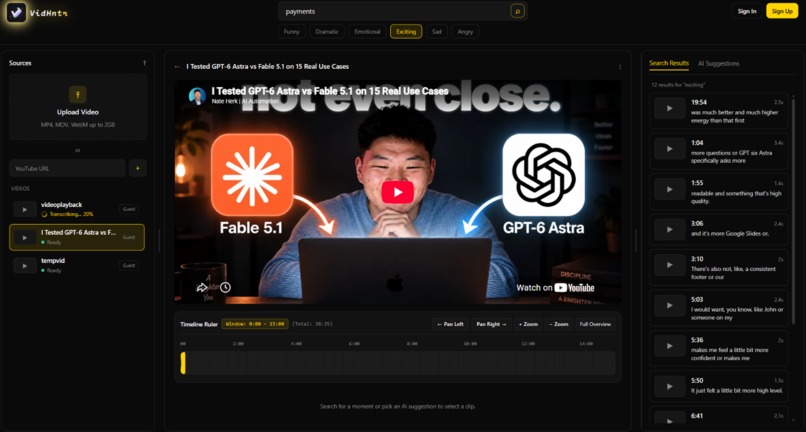
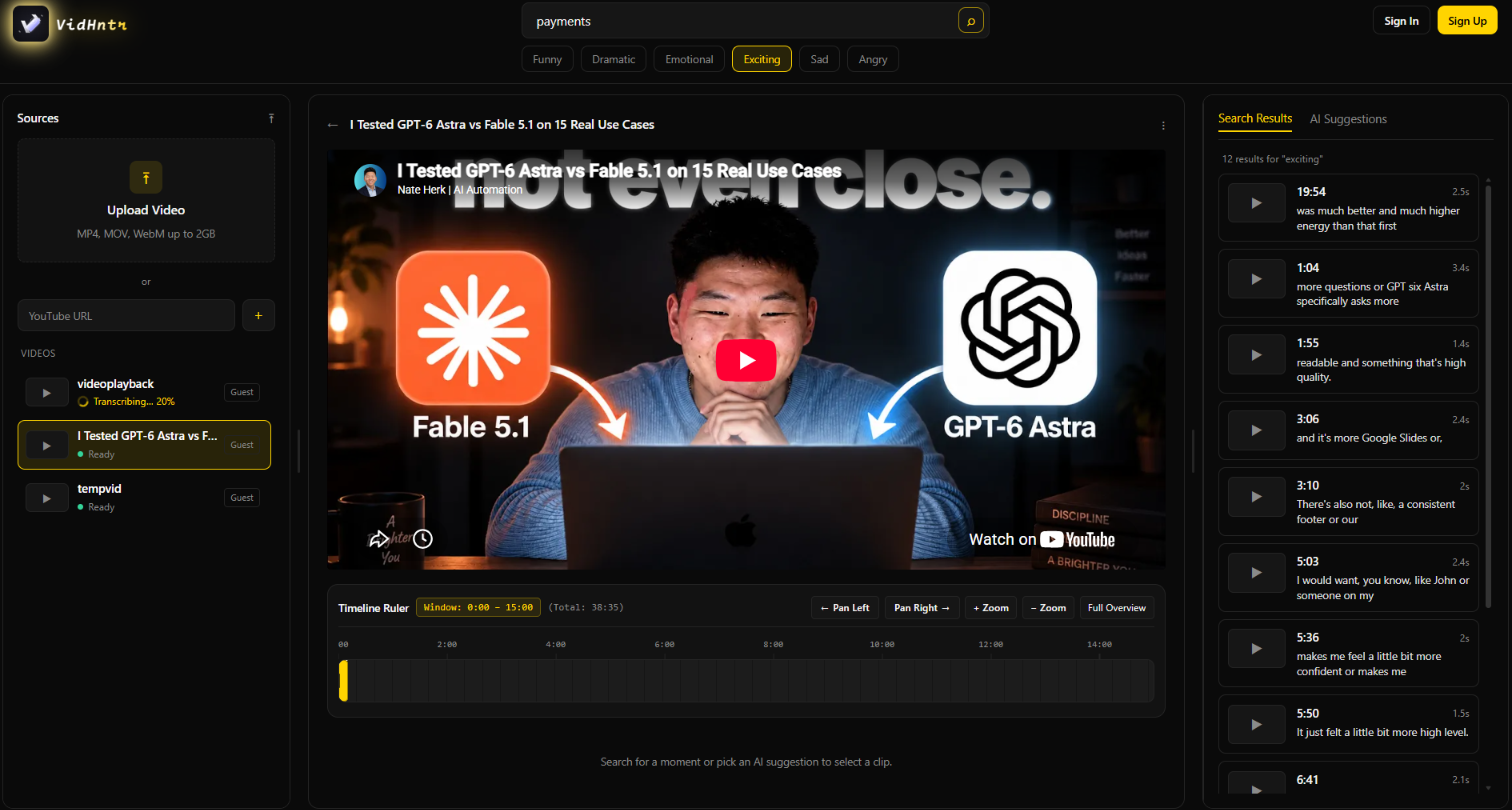
Mood Chip Results displayed on the right panel.
-
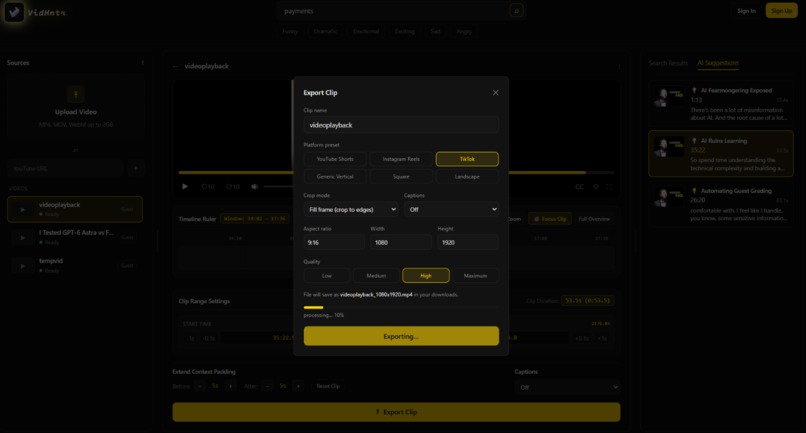
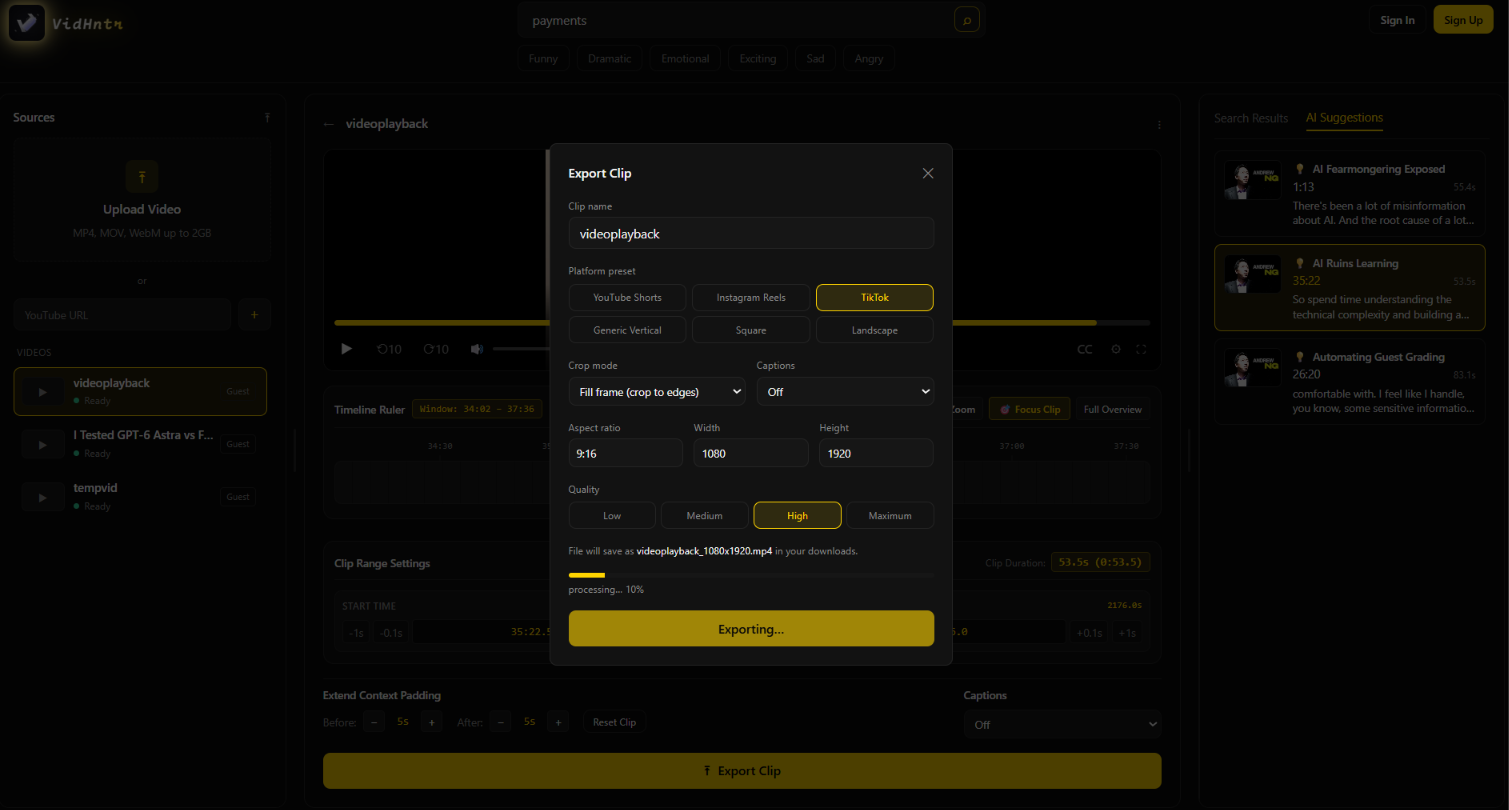
Export clip features modal
-
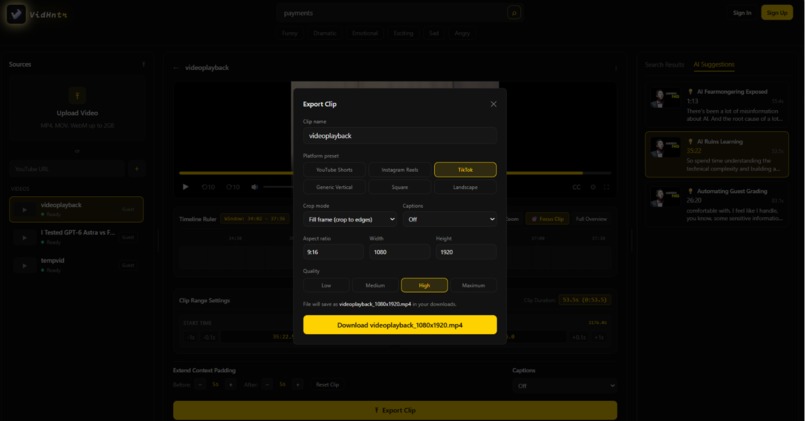
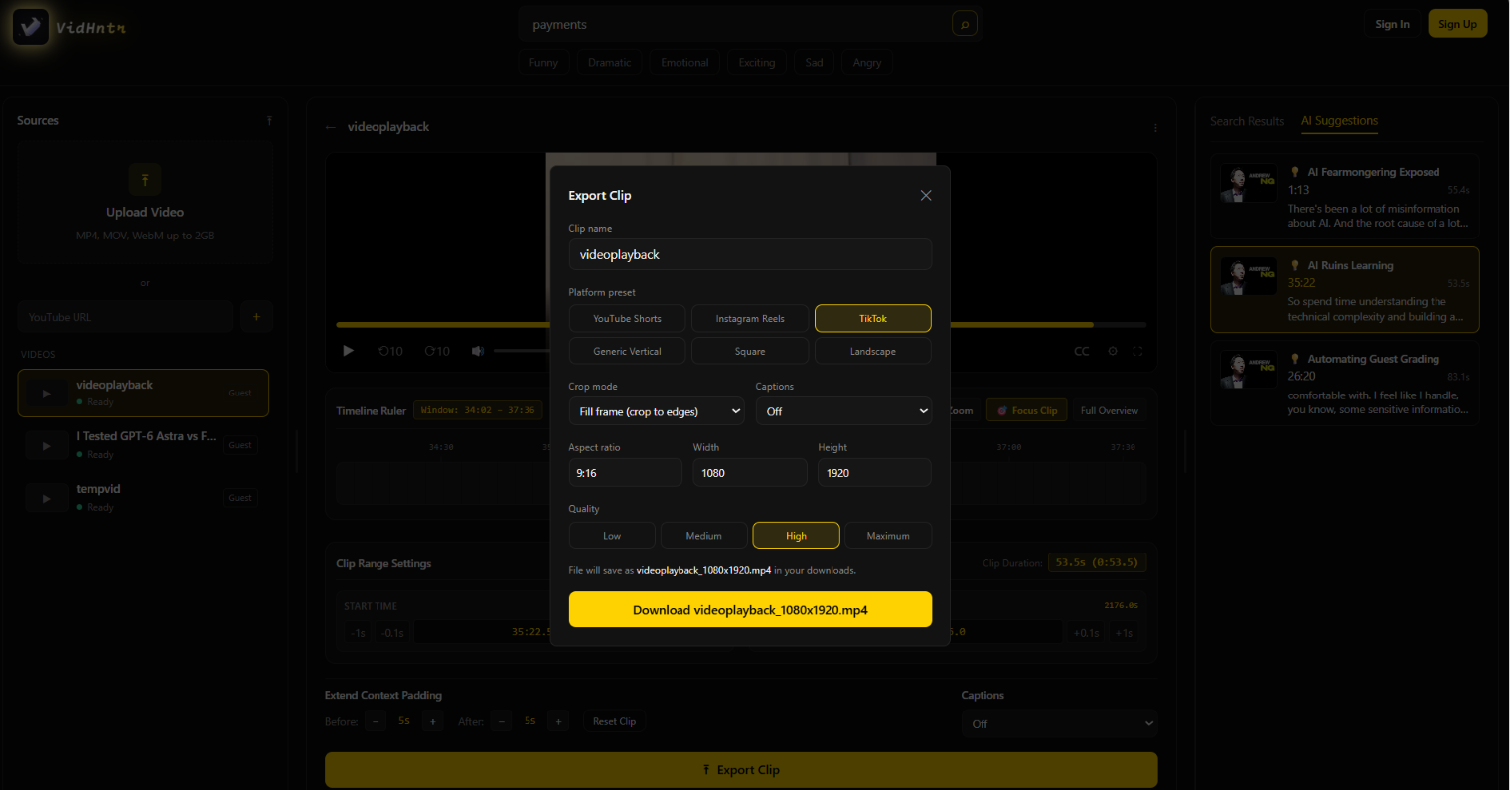
Final download option after the video clip has been generated with specified options
Inspiration
Cutting a single short-form clip from a long-form video shouldn't feel like a multi-app chore. Traditionally, creators juggle a frustrating chain of tools just to get content out the door: one to download the footage, another to endlessly scrub and hunt for the right soundbite, a third to trim, a fourth to generate captions, and a final one to reformat the aspect ratio.
That massive workflow friction kills momentum. We built VidHntr to eliminate the noise by bringing the entire pipeline into one seamless platform. Instead of forcing you to hunt down moments manually, VidHntr makes finding the right clip as intelligent as editing it—allowing you to search, clip, and export instantly without ever leaving your workflow.
What it does
VidHntr helps creators find moments inside long-form videos without having to watch the entire video again.
A creator might remember that someone said a particular sentence, talked about a certain topic, or made a specific joke. Instead of spending minutes or hours scrubbing through the timeline, they can search for the word, sentence, or idea they remember and jump directly to the relevant part.
VidHntr also lets creators search by mood or type of moment. Looking for something funny, emotional, inspiring, controversial, or interesting? The mood search helps surface those moments even when the creator doesn't remember exactly what was said.
And when the creator doesn't have anything specific in mind, VidHntr can analyze the video and suggest moments that could work well as clips.
Once a moment is found, the creator remains in control. They can choose exactly how much of the video they want to use — whether that's a few seconds, the entire conversation around the moment, or anything in between.
From there, they can trim, add captions, resize, and export the clip without moving to another tool.
VidHntr isn't just about automatically making clips. It's about making the content already inside your videos easy to find.
How we built it
I built VidHntr around the idea of making long-form video searchable and easier to explore.
Deepgram transcribes the video and provides the timing information needed to connect what was said with its exact place in the video. Gemini then helps VidHntr understand searches based on words, sentences, topics, and ideas rather than relying only on exact keyword matches.
The same understanding is used for the mood search, allowing creators to look for different kinds of moments instead of having to know exactly what was said. Gemini also analyzes the video to suggest potentially strong highlights when the creator wants recommendations.
Once a creator finds something worth using, they can manually select the exact section they want. FFmpeg then handles trimming, captions, resizing, and exporting, while yt-dlp handles bringing videos into the application.
The frontend is built with React, Vite, and Tailwind, with Node.js and Express handling the backend and processing. The frontend runs on Vercel and the backend on Render.
Challenges we ran into
The biggest challenge was making video search understand what a creator means, not just matching exact words. A creator might remember a sentence or only the general idea, like “when he talks about starting his company,” even if those exact words were never spoken.
The same applied to mood search. Finding genuinely funny, emotional, inspiring, or interesting moments requires understanding the context of the conversation.
Keeping everything fast and optimized was another major challenge. VidHntr handles large videos, transcription, AI processing, search, highlights, captions, and exporting, so I had to avoid unnecessary processing and reuse information across different features wherever possible.
Accurate timestamps were also critical because even a good search result is useless if it points to the wrong part of the video.
Since transcription powers both search and captions, transcription reliability was important too. Errors can affect multiple features, which made having backup providers valuable.
I also had to keep uploaded videos separate and private while allowing people to try VidHntr without creating an account.
Finally, I had to make the AI pipeline efficient. Running every analysis on every video would be slow and expensive, so I focused on processing information once and reusing it across search, mood discovery, highlights, and captions.
Accomplishments that we're proud of
- Built a search-first video experience that lets creators find specific moments inside long-form videos using words, sentences, topics, or ideas they remember.
- Built mood-based discovery, allowing creators to look for moments based on the kind of content they want, such as funny, emotional, inspiring, or interesting moments.
- Made it possible to find content without manually watching and scrubbing through an entire video.
- Built automatic highlight detection for creators who want VidHntr to discover potential clips for them.
- Kept the creator in control by allowing them to manually choose exactly how much content they want to turn into a clip.
- Built the complete workflow from finding → selecting → editing → captioning → resizing → exporting.
- Deployed a working application with the frontend on Vercel and backend on Render. Kept the application free to try without requiring an account.
What we learned
The biggest thing I learned is that finding content can be just as important as creating it.
A creator may already have hundreds of hours of content but remember that there was a great joke, an important statement, or an emotional conversation somewhere inside it. In that situation, automatically generating another clip isn't necessarily the answer. The first problem is being able to find the content you already know exists.
I also learned that understanding context matters much more than simply matching keywords. This is especially true for mood-based searches, where the meaning of a conversation matters more than the individual words being spoken.
Finally, I learned that AI shouldn't take control away from the creator. It should make the difficult parts faster while still letting the creator decide what actually becomes the final piece of content.
What's next for VidHntr
The biggest focus going forward is making video search and discovery even smarter.
I want creators to be able to search naturally for almost anything they remember from a video, even when they don't remember the exact words. I also want mood-based discovery to become more accurate at identifying the actual feeling and context of a moment.
Another focus is improving automatic highlight detection so VidHntr can surface moments a creator may have completely forgotten about, while still giving them full control over how much of the surrounding content they want to use.
I also want to add multilingual support so VidHntr can work with videos in different languages. This includes transcription, searching, subtitle generation, and exporting the final video with captions in the language the creator needs. The goal is for language to not become a limitation when searching through or turning long-form content into shorts.
I also plan to add backup providers for important services, improve the backend structure, make export settings clearer with actual resolutions, and continue improving upload privacy without making the product complicated.
The long-term vision for VidHntr is to make your entire video library searchable — not just searchable by words, but by ideas, moments, moods, memories, and languages.
Built With
- deepgram
- express.js
- ffmpeg
- gemini
- html5
- javascript
- node.js
- react
- tailwindcss
- vite
- yt-dlp


Log in or sign up for Devpost to join the conversation.