-
-
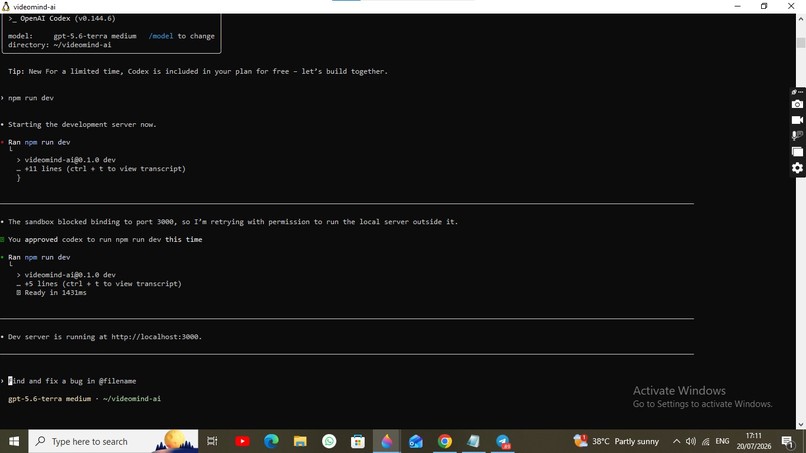
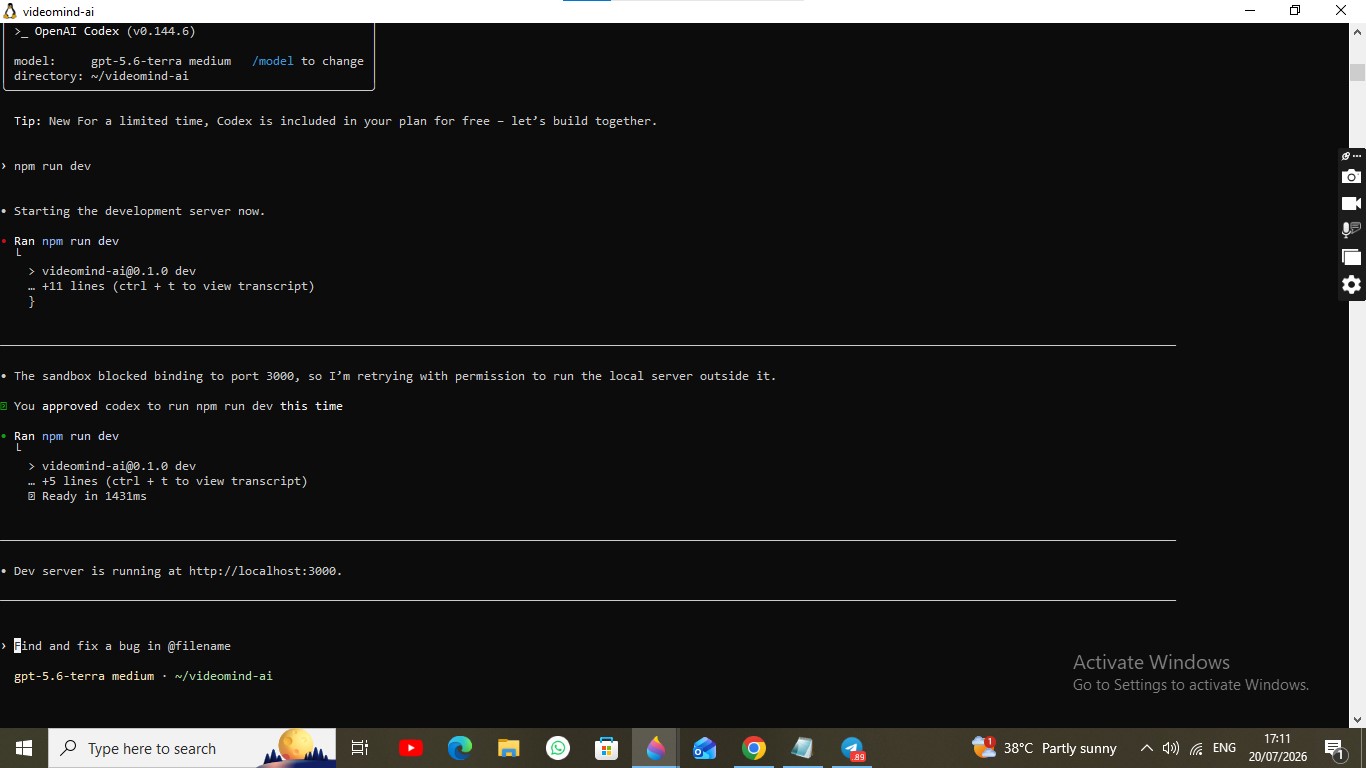
Run Frondend
-
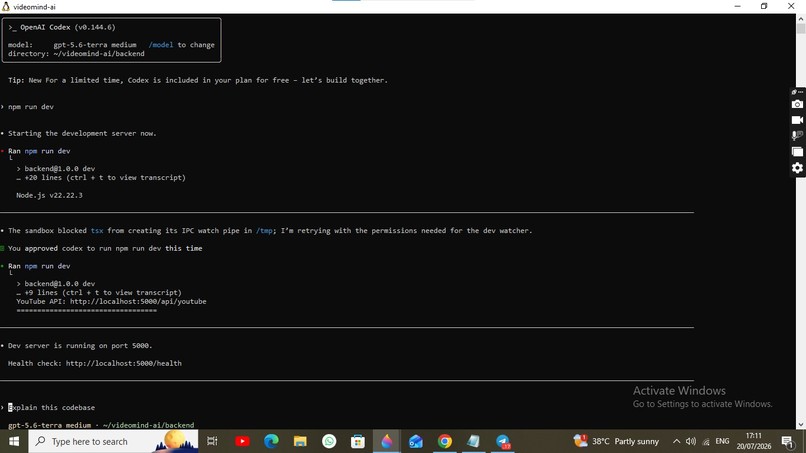
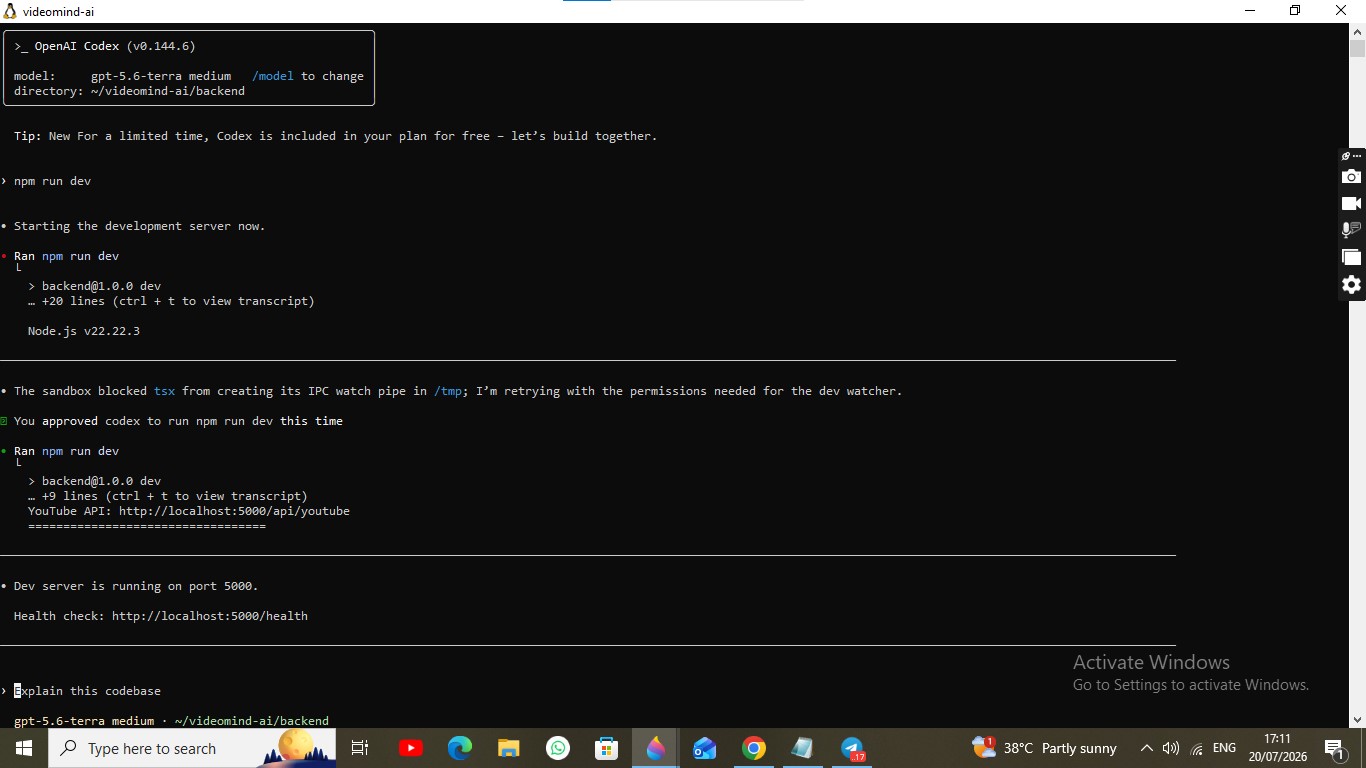
Run Backend
-
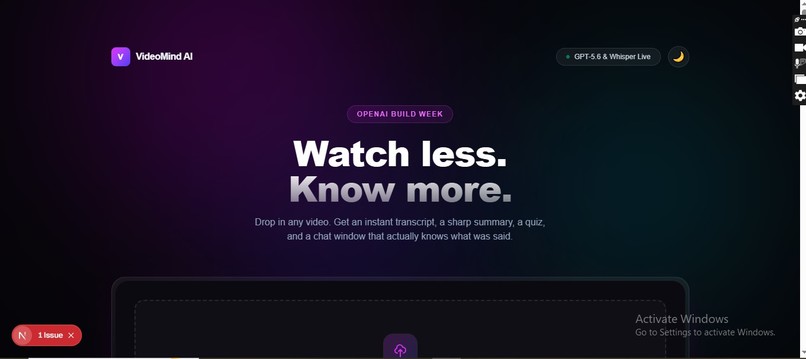
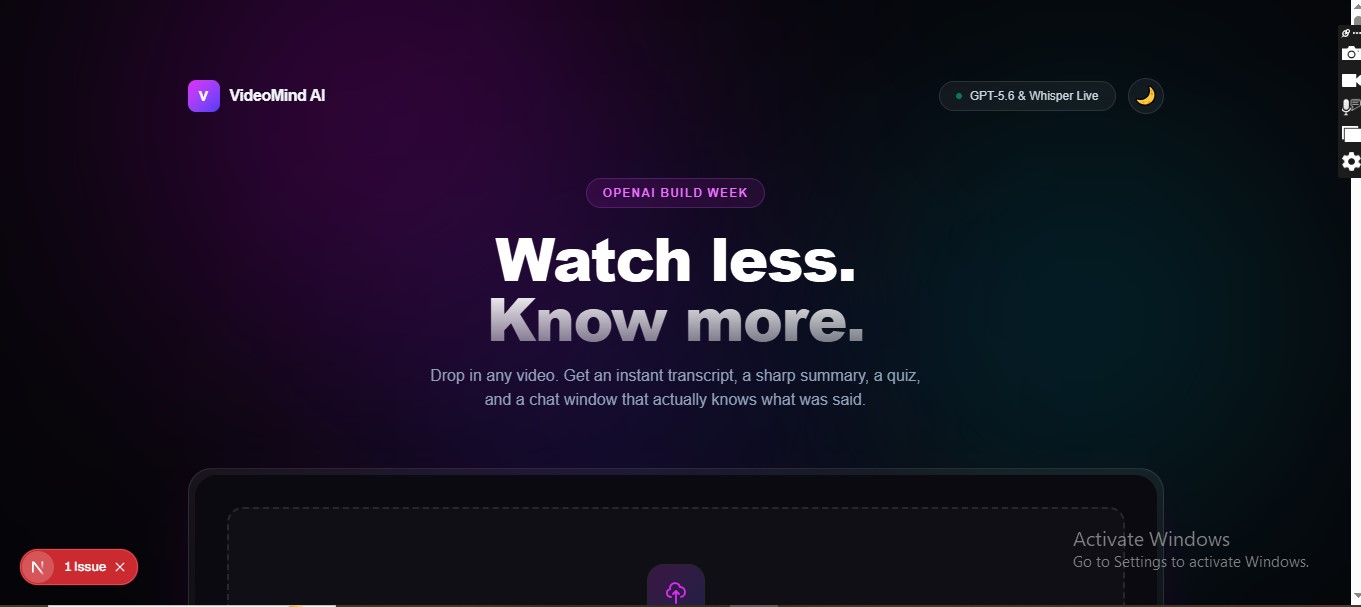
Web Page Black mode
-
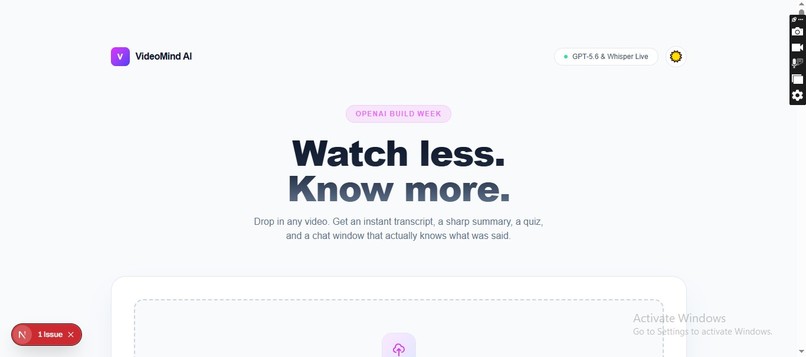
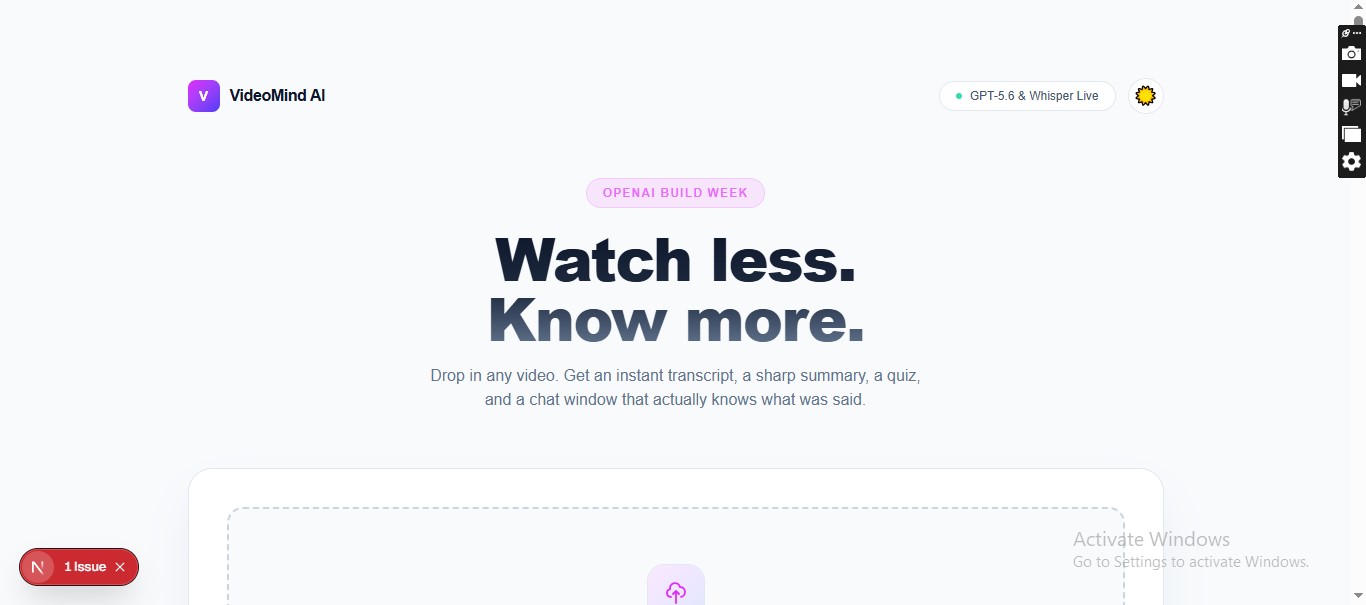
Web page Light Mode
-
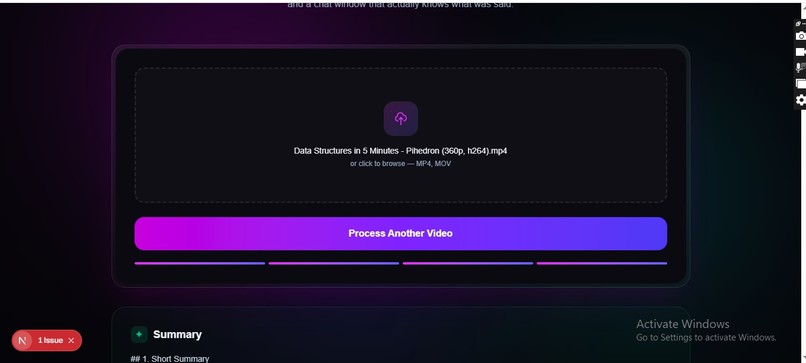
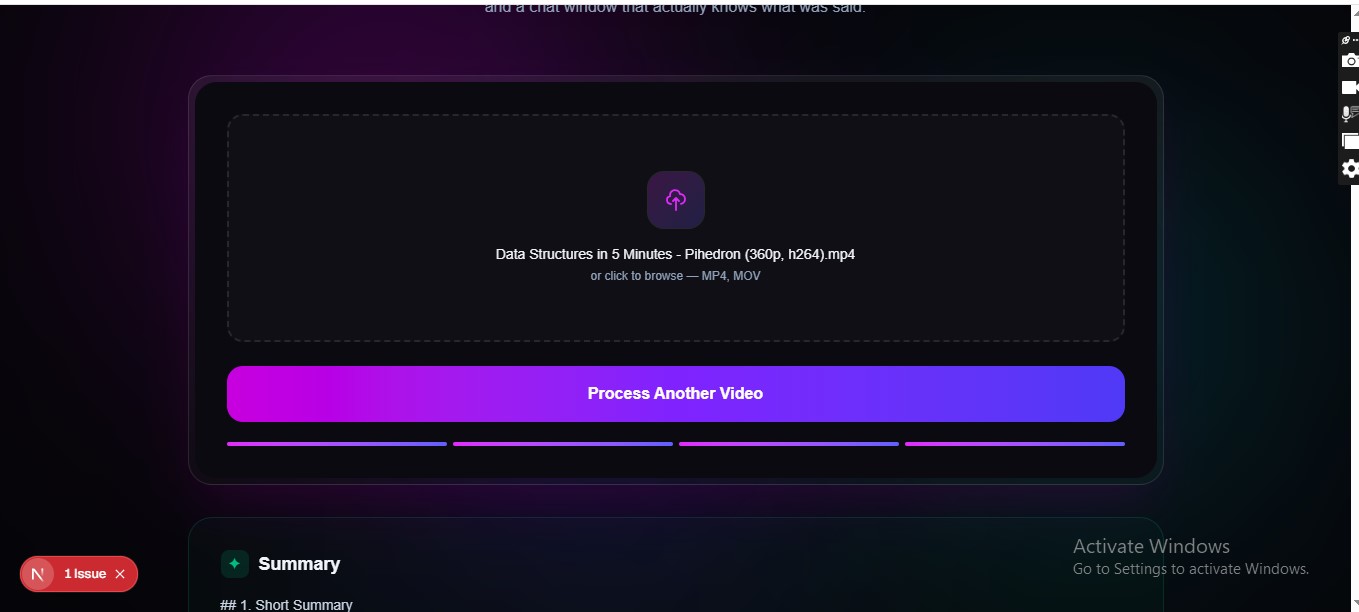
Upload File
-
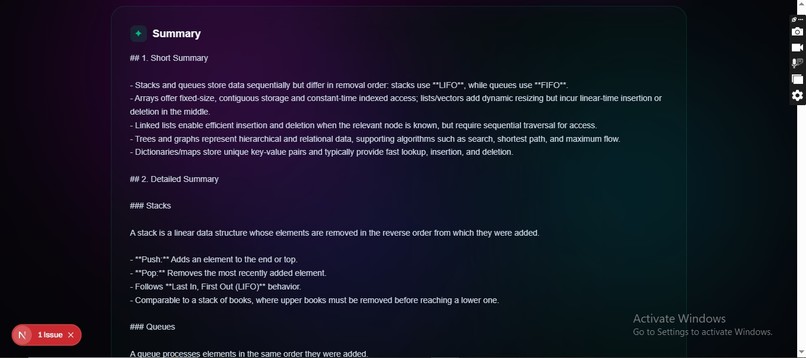
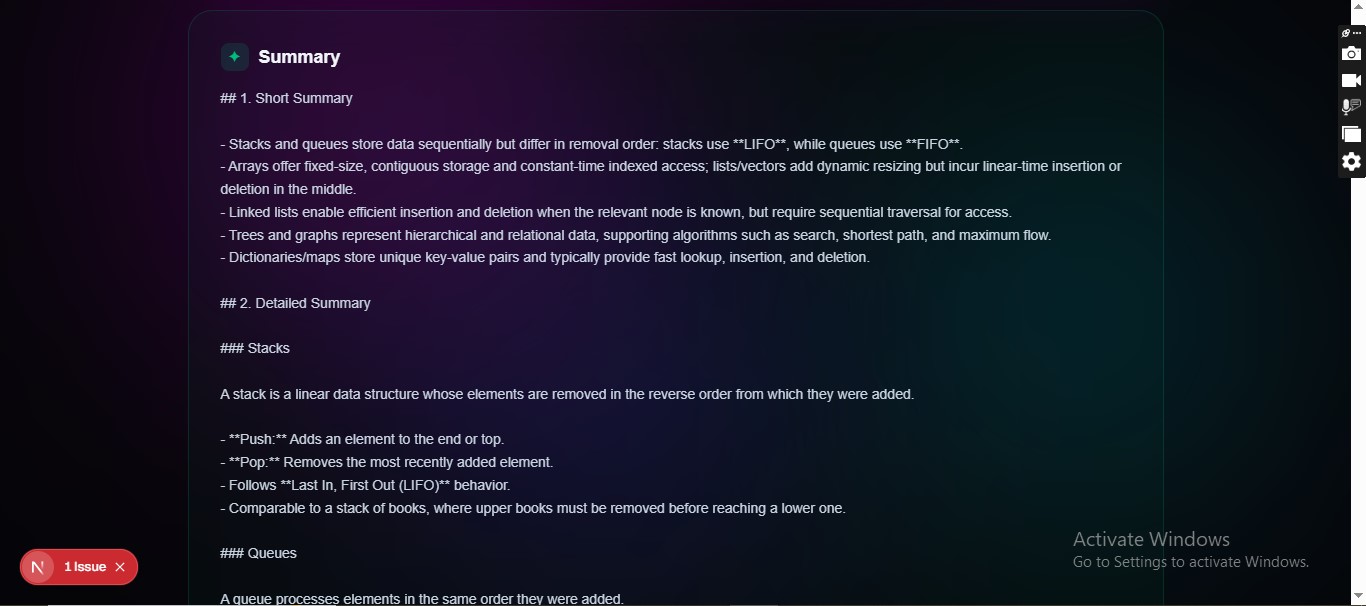
Detail Summary
-
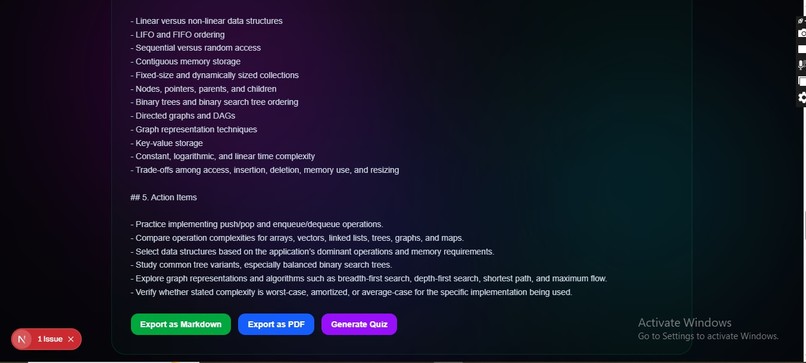
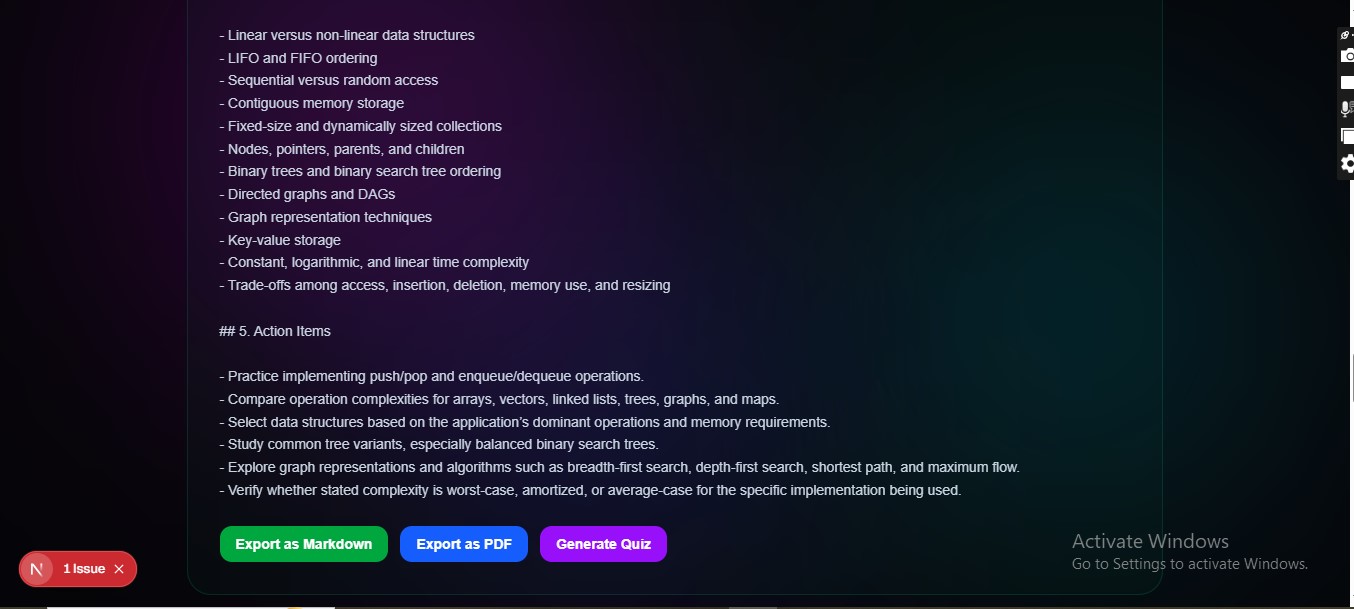
Markdown, Pdf and Quiz
-
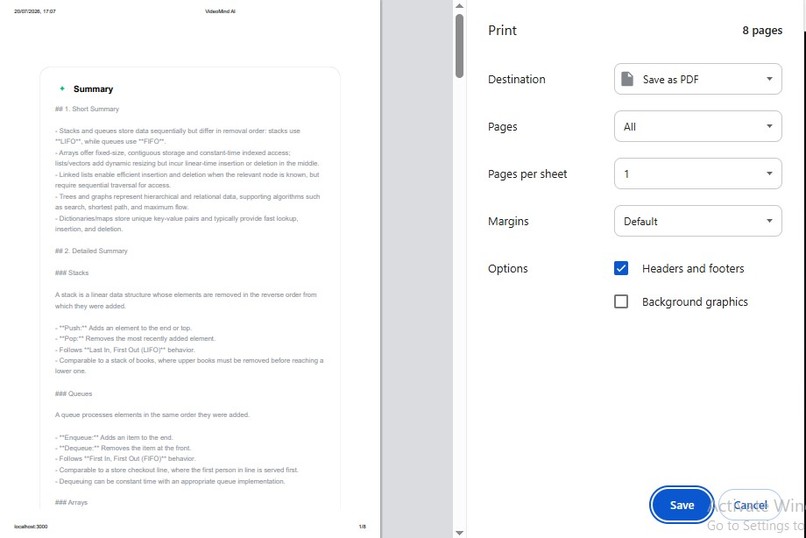
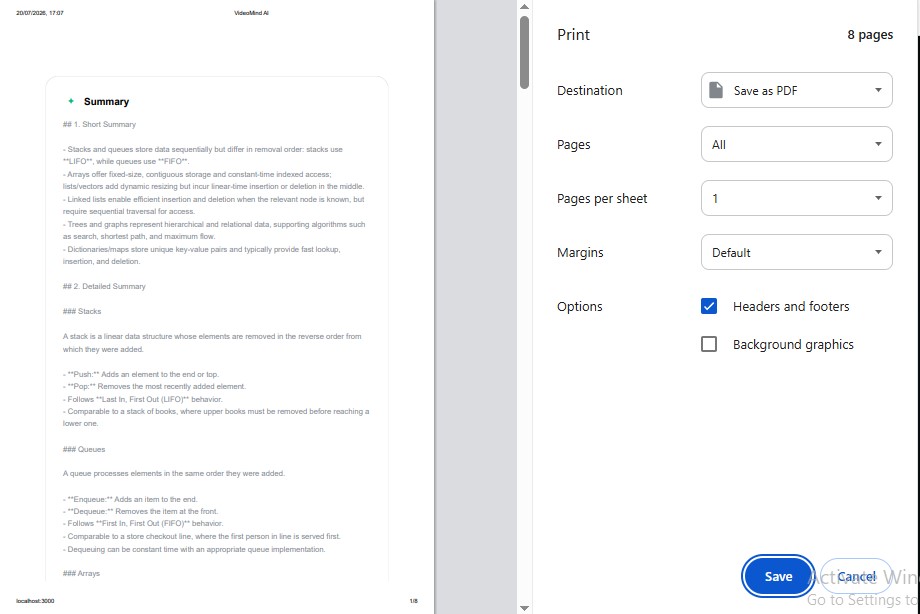
Pdf generate
-
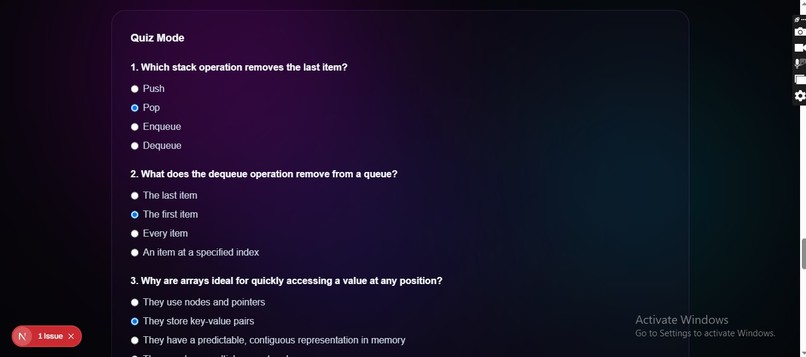
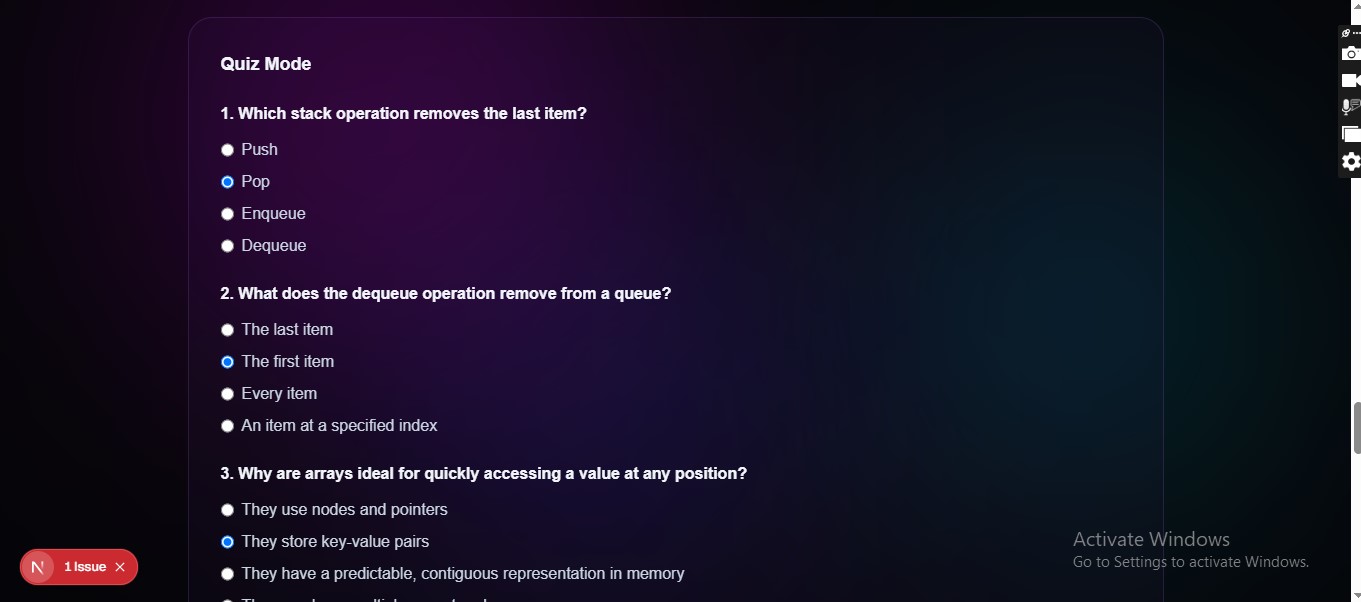
Quiz
-
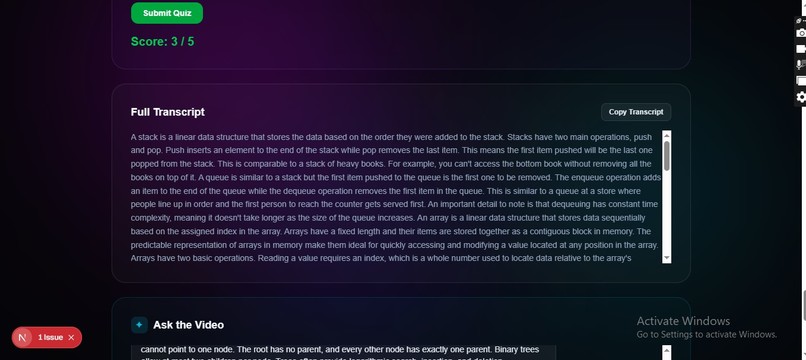
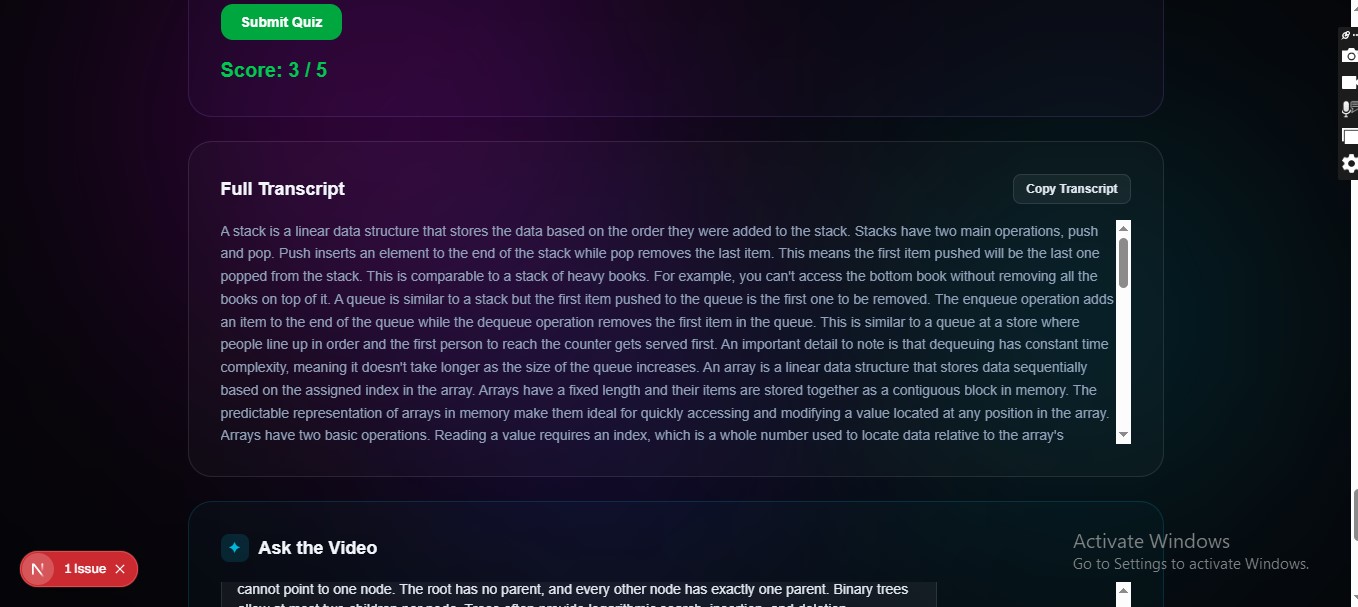
Full Transcript
-
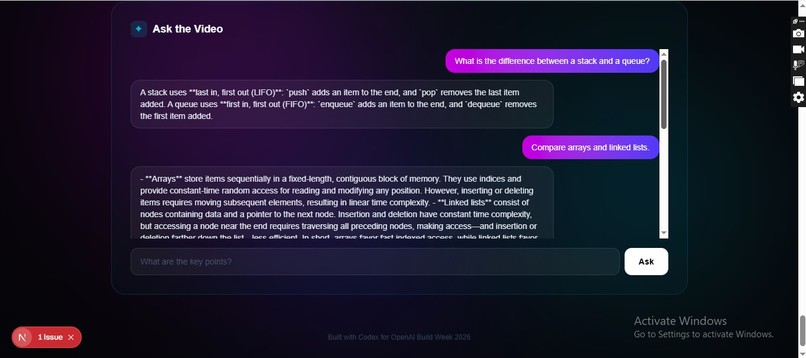
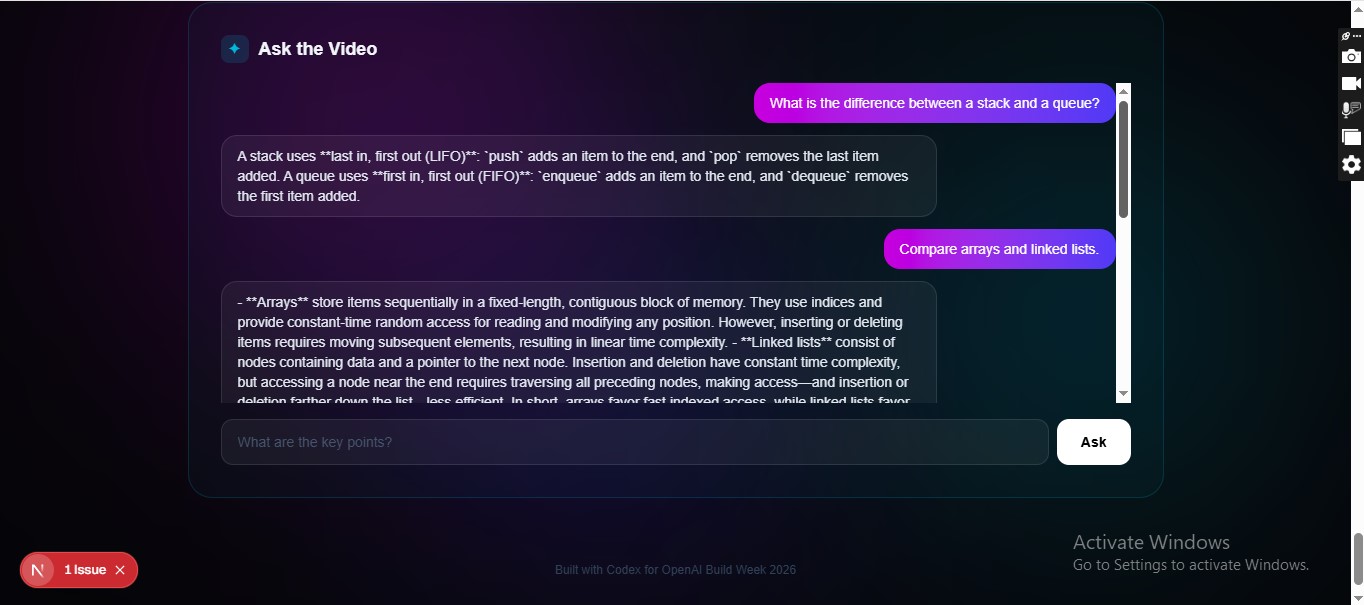
Ask Topic related question
-
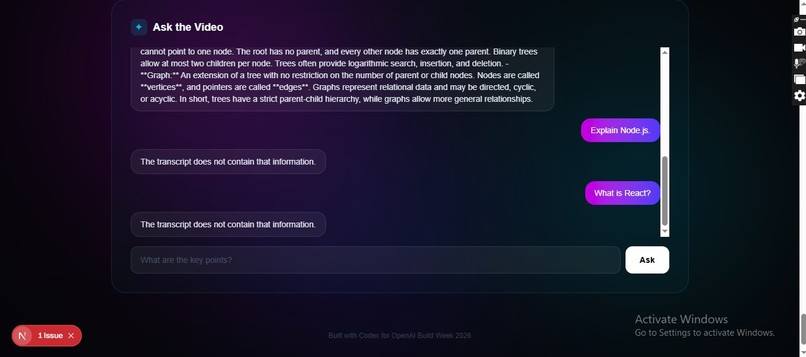
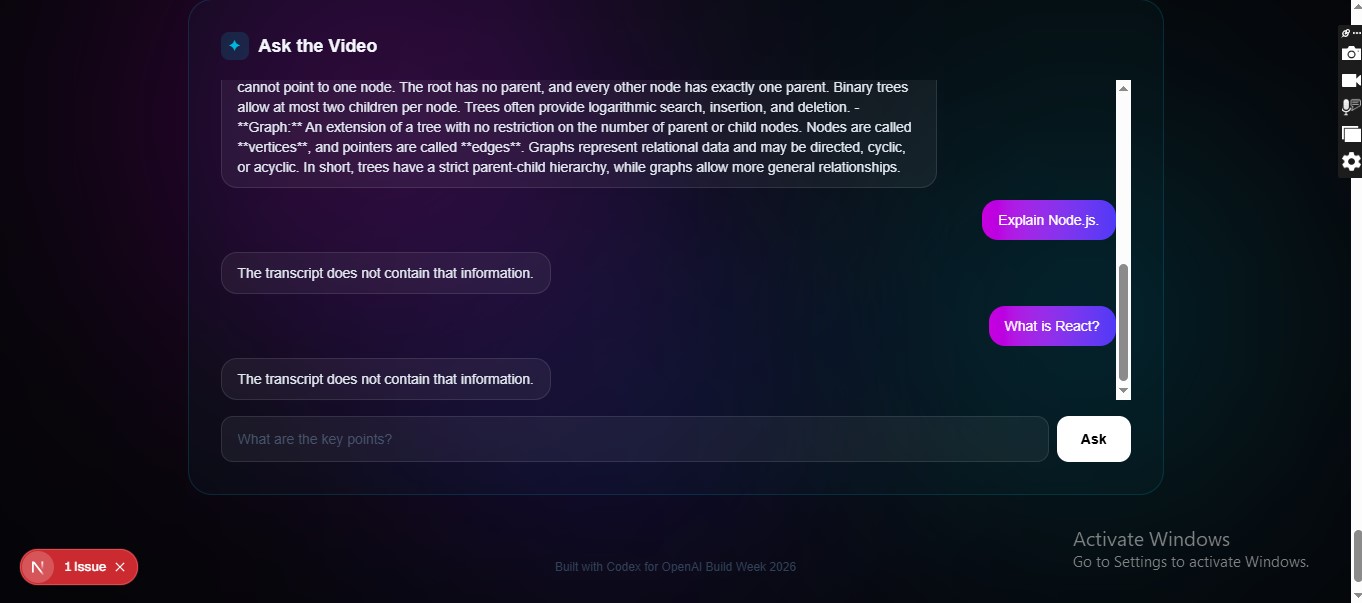
Ask Hallucinations question
Inspiration
As a student and developer constantly consuming educational content, lectures, and tutorials online, I found myself spending hours rewatching videos just to find one specific piece of information. I wanted to build a tool that could instantly transform any video into structured, searchable knowledge turning passive watching into active learning. With OpenAI Build Week giving access to GPT-5.6 and Codex, this felt like the perfect opportunity to bring that idea to life.
What it does
VideoMind AI takes any uploaded video (MP4/MOV) and transforms it into a complete knowledge package:
Transcription — Extracts audio using FFmpeg and generates an accurate, timestamped transcript using OpenAI Whisper Smart Summary — Uses GPT-5.6 to generate a structured summary with short/detailed breakdowns, key takeaways, and topics discussed Grounded AI Chat — Lets users ask questions about the video content, with answers strictly grounded in the transcript — the AI explicitly refuses to answer unrelated questions to prevent hallucination Quiz Generator — Automatically generates a 5 question multiple choice quiz from the video content, complete with scoring Export — One-click export of the summary and transcript as Markdown or PDF Copy Transcript — Quick clipboard copy for the full transcript Dark/Light Mode — A polished, responsive UI that adapts to user preference
How I built it
The stack is Next.js (React/TypeScript) for the frontend and Express (Node.js/TypeScript) for the backend, connected through a REST API.
The pipeline works like this:
Video Upload → FFmpeg Audio Extraction → Whisper Transcription → GPT-5.6 Summarization → GPT-5.6 Chat/Quiz Generation
I used the Devpost Guided Build assistant inside ChatGPT to plan the project generating a scope document, PRD and technical specification before writing any code. This kept the MVP focused and prevented scope creep given the tight timeline. For implementation, I used Codex directly in my terminal (Codex CLI, authenticated via ChatGPT) to build and iterate on features inside my actual project repository. Codex explored my existing codebase, added the "Copy Transcript" feature end to end, fixed a regression in the results panel, and added the premium dark-mode styling and animations verifying its own work with lint checks and TypeScript compilation before finishing each session.
Challenges we ran into
Billing/API access was by far the biggest obstacle. I hit multiple dead ends trying to fund my OpenAI API account from India failed card authentications, a rejected Codex credit request (due to a form filled out too briefly), and VPN interference with payment processing. I eventually resolved it by correcting my Codex credit application with the proper hackathon category, getting it approved, and separately funding a small OpenAI API balance to unblock Whisper and GPT-5.6 calls.
YouTube video import initially seemed like a must have feature, but the ytdl-core library kept failing with 403 errors due to YouTube's frequent streaming changes an issue outside my control. I made the call to deprioritize it and focus entirely on making file upload rock solid, which turned out to be the right decision for a hackathon timeline.
Iterating safely with Codex a couple of times, larger edits (like adding animations) accidentally broke working features. I learned to make smaller, more targeted Codex requests and always verify functionality immediately after each change, rather than bundling too much into one prompt.
Accomplishments that we're proud of
- Built an AI powered video analysis platform from scratch during OpenAI Build Week.
- Integrated OpenAI Whisper for accurate speech to text transcription.
- Implemented AI generated summaries and an interactive chat interface.
- Designed a modern, responsive UI with Next.js and Tailwind CSS.
- Successfully deployed the project and published the complete source code on GitHub.
What we learned
I learned how much of "AI assisted development" is really about scoping and prompting well Codex is powerful, but small, precise instructions with clear constraints ("don't break existing functionality") produced far more reliable results than large, vague requests. I also got hands on experience chaining multiple AI capabilities (speech to text, summarization, grounded Q&A, and generative quizzing) into a single coherent product, and learned to build in safeguards against hallucination by strictly grounding chat responses in source transcripts.
What's next for VideoMind AI
- Multi language transcript and summary support
- Timestamp linked transcript navigation (click a topic, jump to that point in the video)
- Bringing back YouTube URL import using a more resilient extraction method
- User accounts and a video history dashboard
Built With
- codex
- css
- express.js
- ffmpeg
- gpt-5.6
- next.js
- node.js
- openai
- react
- tailwind
- typescript
- whisper

Log in or sign up for Devpost to join the conversation.