-
-
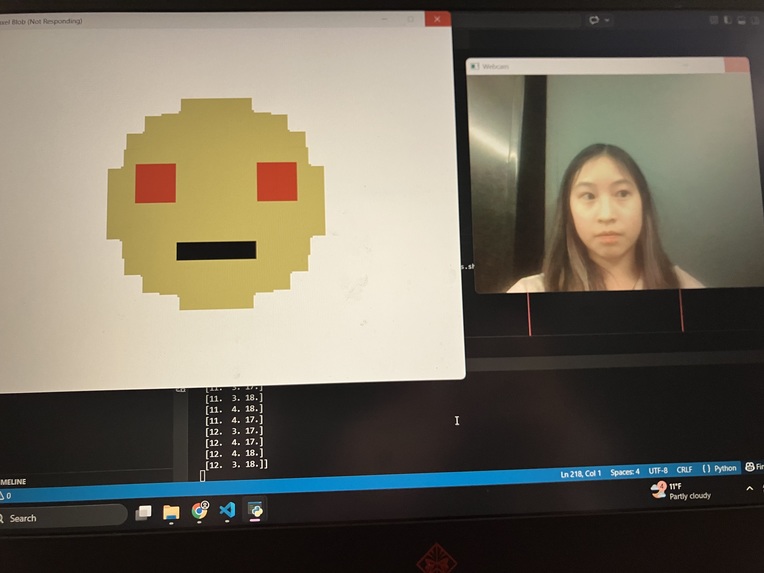
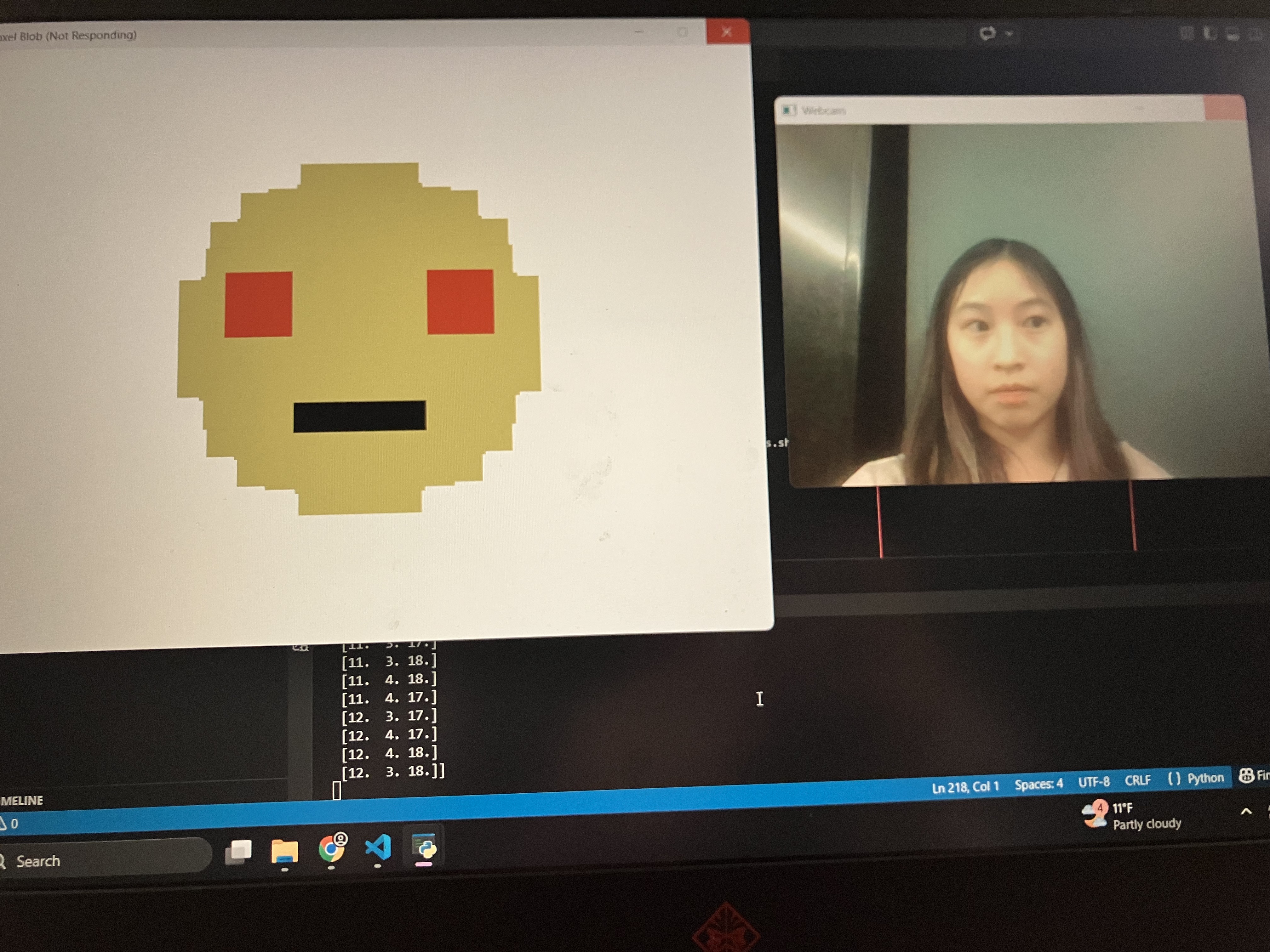
face_capturing
-
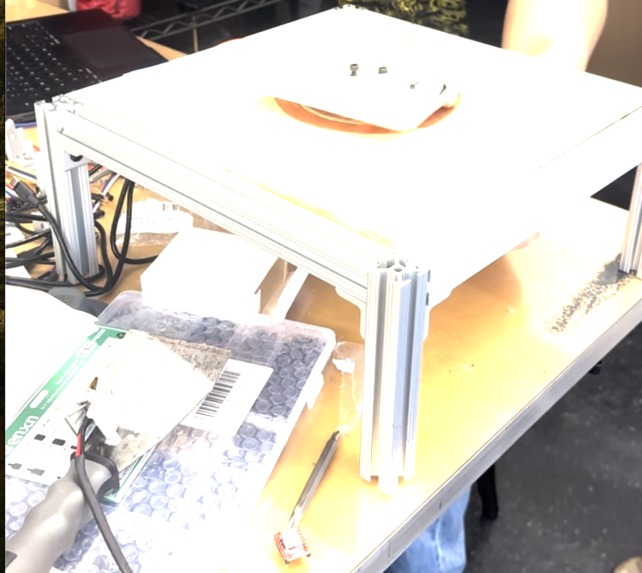
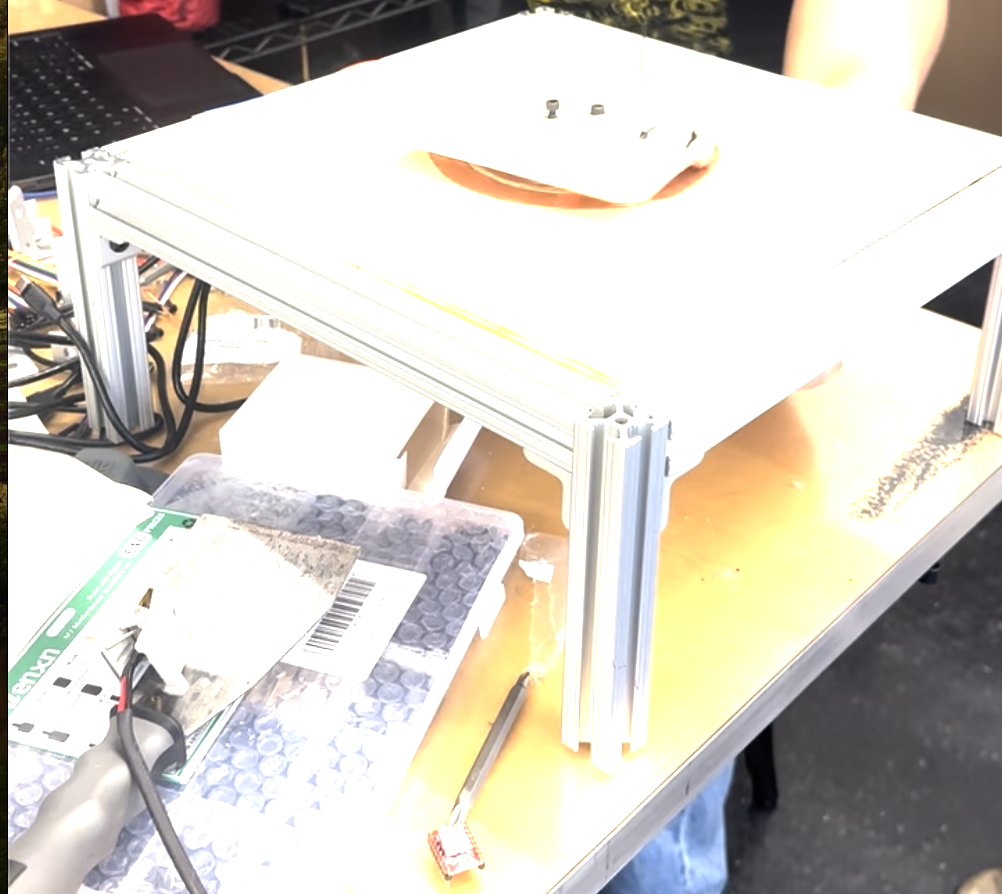
spinning_mechanism
-
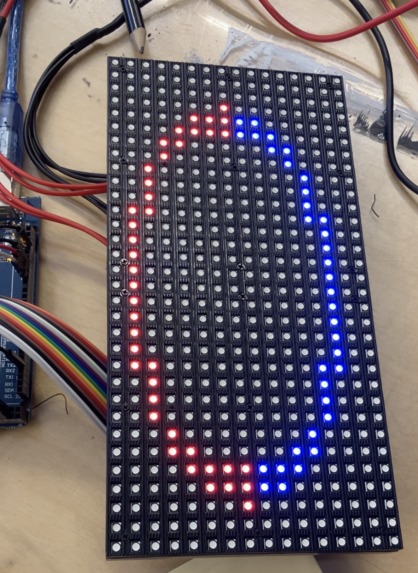
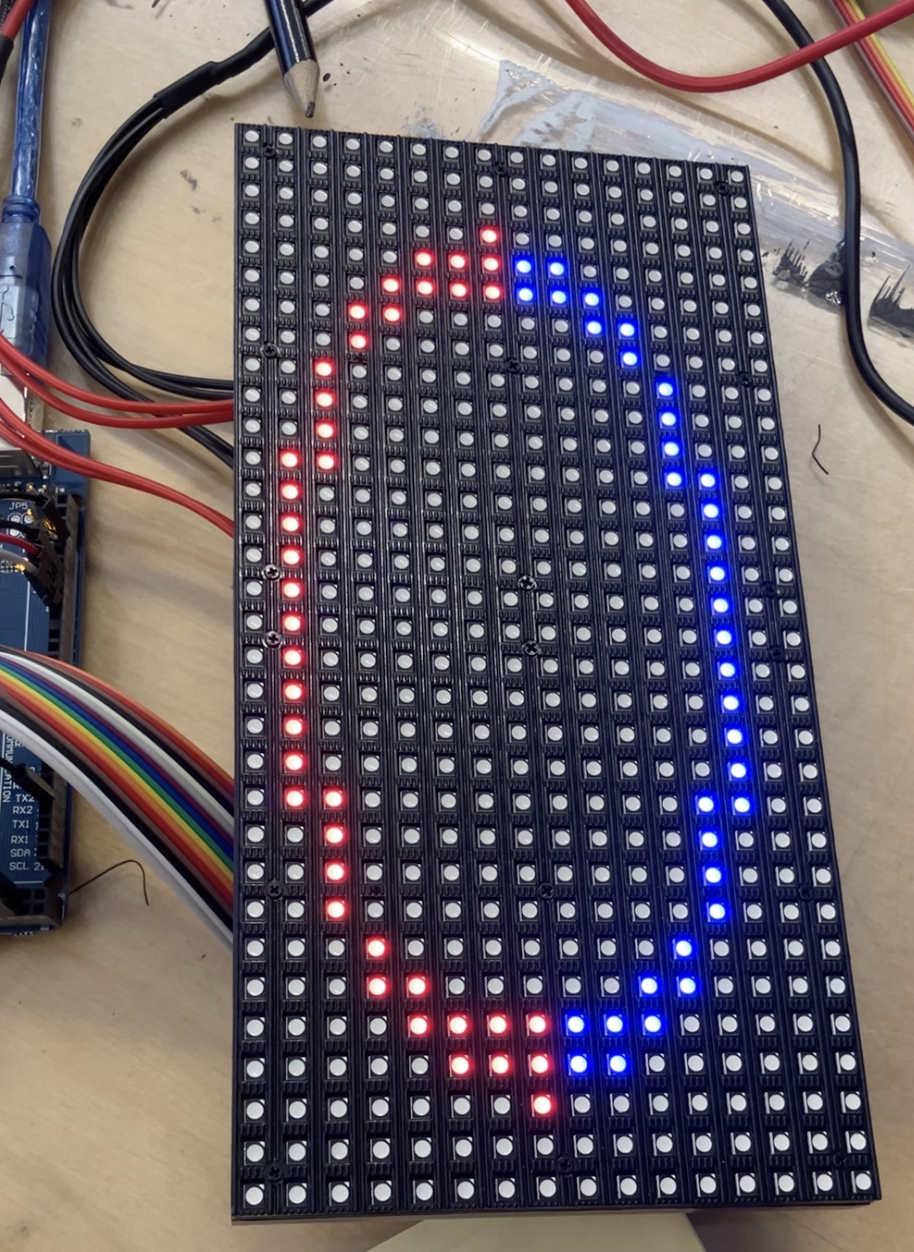
LED_display
-
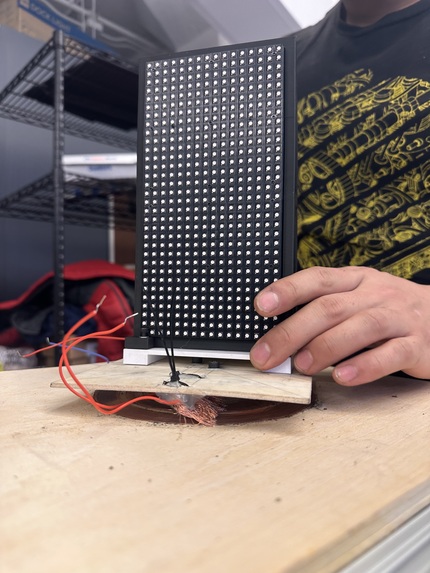
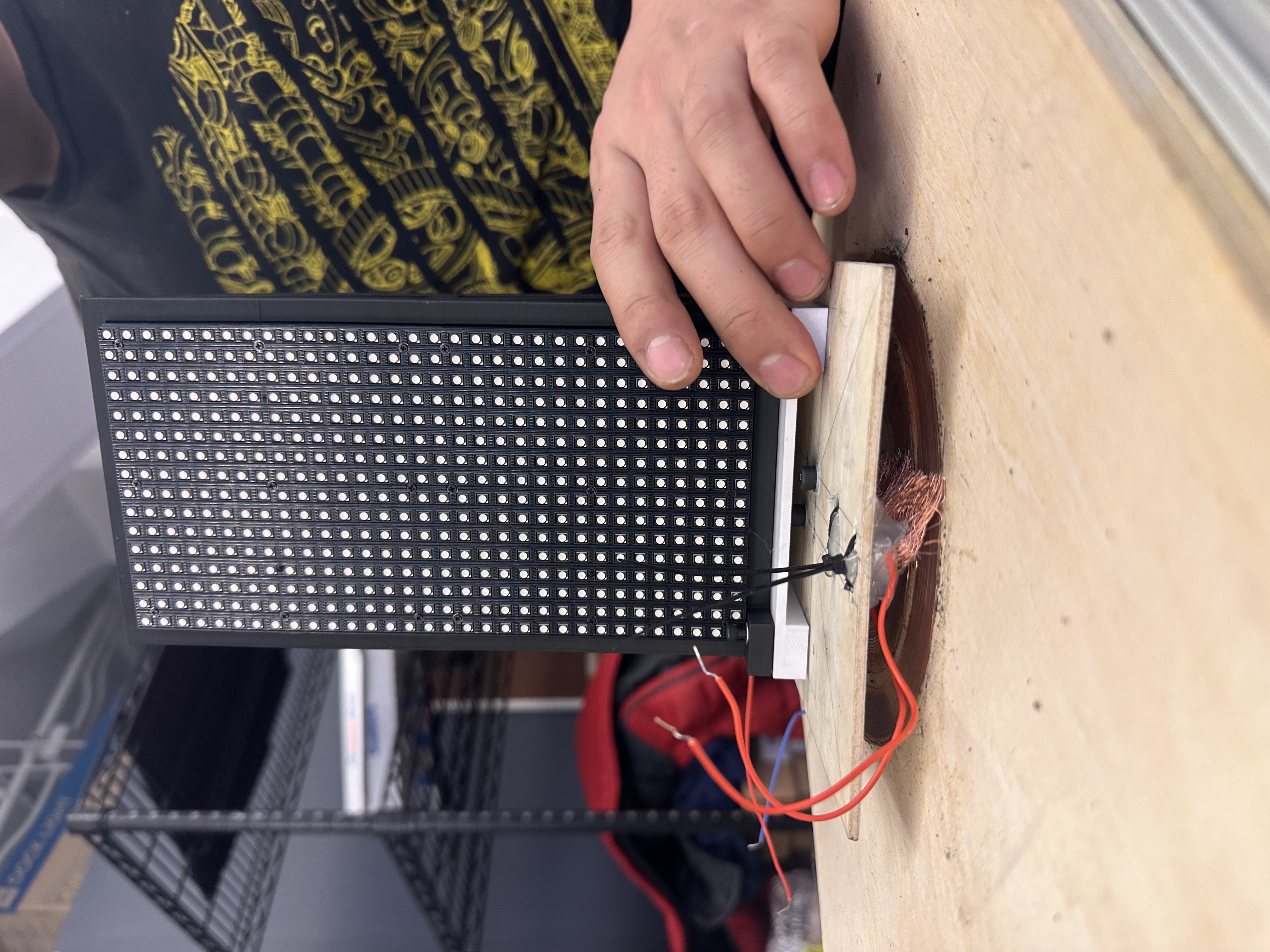
finished_product_front_view
Inspiration
We wanted to make some communication device that is not purely screen-based, but instead have a more physical elements to it. We wanted to create a "physical" hologram that can be viewed from 360 degrees and reacts to your own facial movements in real-time. We were inspired by a POV candle project linked here(https://mitxela.com/projects/candle). We choose the communication track because our project is a a 3d facetime! We alos choose entertainment because volumetric display is cool!
What it does
We made a swept-volume volumetric display. Our system can capture faces using a web cam and then live update the display's animation to match what we capture. The display is a high-speed rotating LED board and the principle of Persistence of Vision (POV),
How we built it
The LED display board is connected to a motor powered by two brass rings. We use a sensor to detect the speed that the display is spinning at, and calculate the LED display coordinate in voxel. The led board updates its display based on the face-cam data and the rotation angle/speed of the display.
Challenges we ran into
- One of the main engineering challenge that we ran into to how to power something that spins. We cut out two brass rings and sticked on the non-spinning bottom surface, then we attached connection pieces on the spinning pieces that will spin on top of the rings.
- Another challenge is making the entire pipeline from web-cam to voxel representation of a face on LED display as fast as possible. Through trail and error, we tested where to position the features on the display, and how the features will actually look like for them to updates for the physical rending. In the process, we had problem with sending data to the Arduino virtually.
- Because he Arduino Mega lacked the SRAM to store our high-resolution 3D voxel grid, we implemented a co-processing architecture, using both giga and mega.
Accomplishments that we're proud of
We are proud of the making the spinning mechanism. We are proud of coming up with solutions to all the problem/challenges we ran into as mentioned in the previous section. We are proud of being able to make everything from scratch in such a short time constraint.
What we learned
We learned about volumetric display.
What's next for VideoGlobe
this is three clips of our intermediate process: https://studio.youtube.com/channel/UC64fGuEs7UU0T7u-oYT1Htg/videos?d=ud for the video demo, we have a more completed product
Built With
- arduino
- lights
- spinning

Log in or sign up for Devpost to join the conversation.