-
-

Processing videos using FAISS-CPU to create vector clusters
-
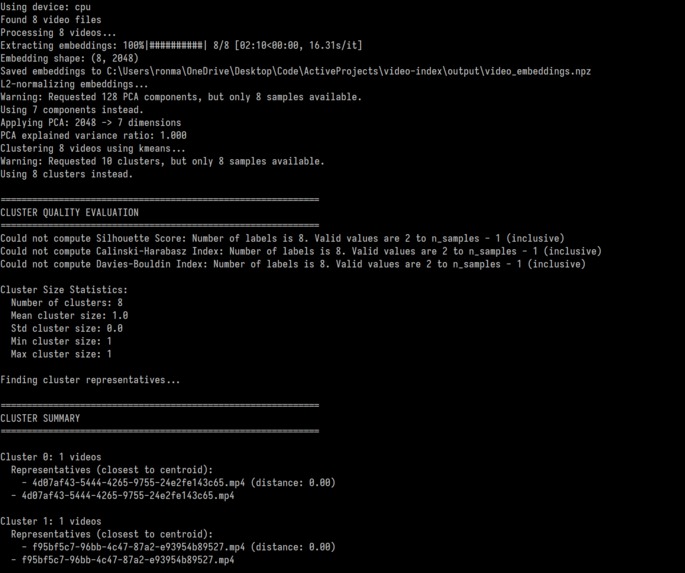
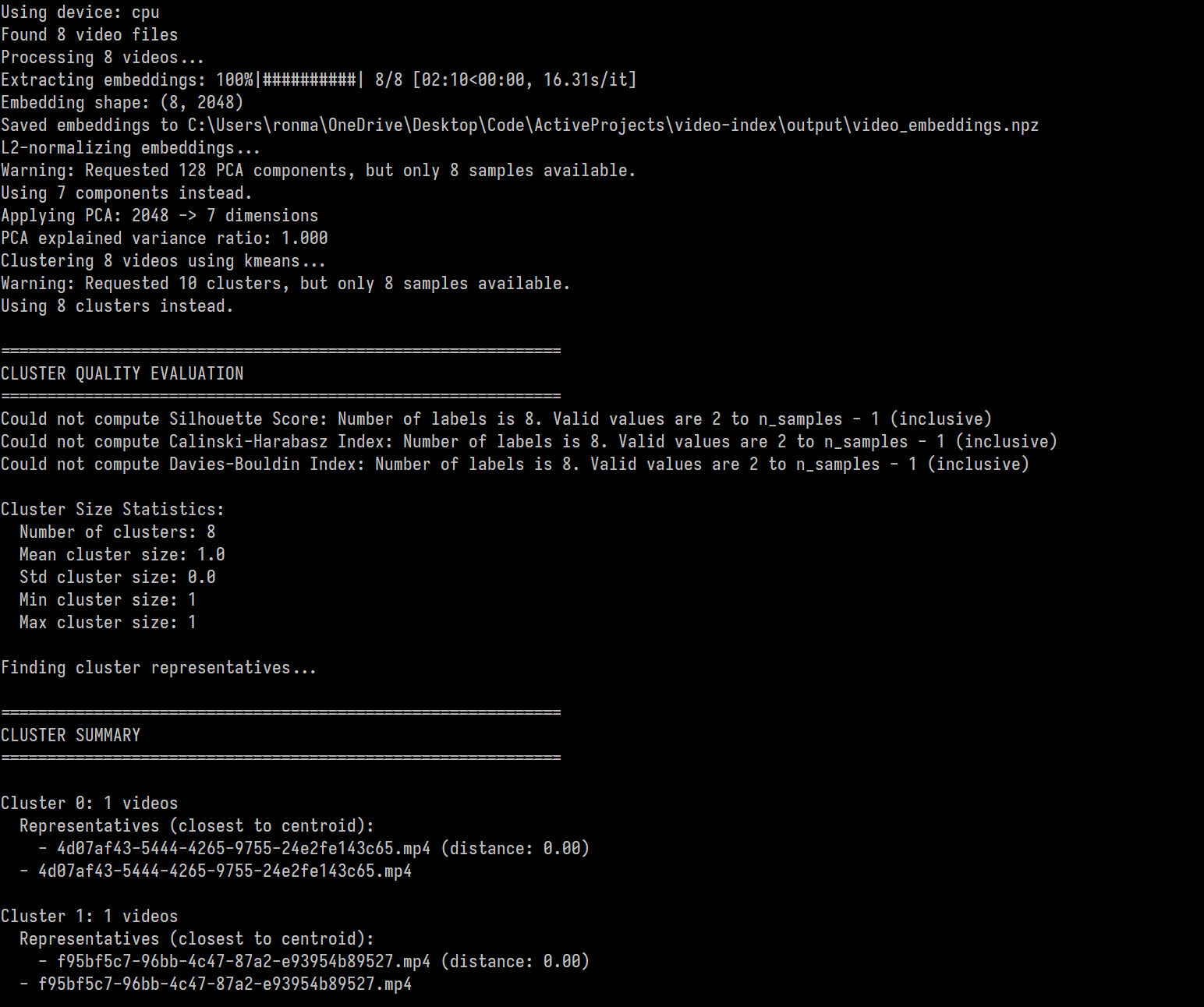
Videos clustered and embeddings created using FAISS-CPU + ResNet50
-
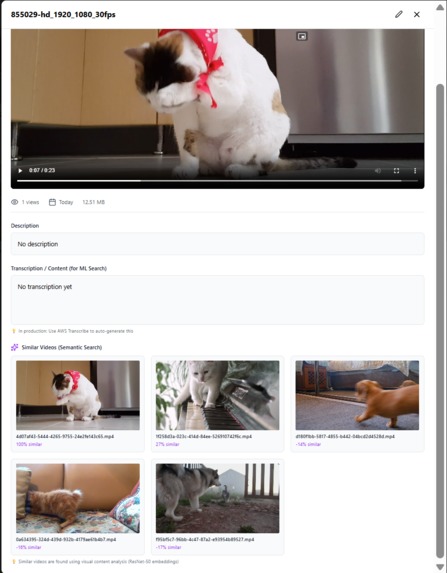
Similarity Search on Cat video - Most similar found, closest one also found.
-
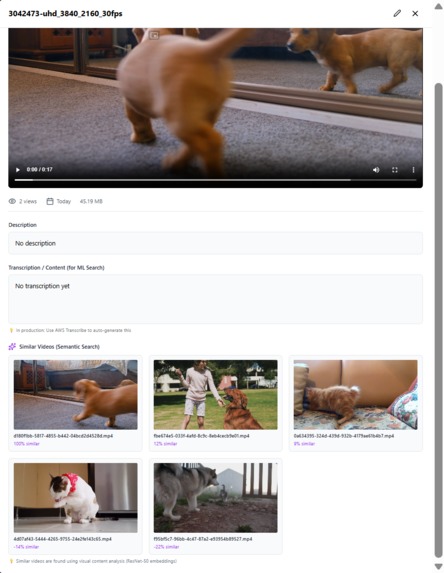
Similarity Search on Dog video - Most similar found, closest one also found.

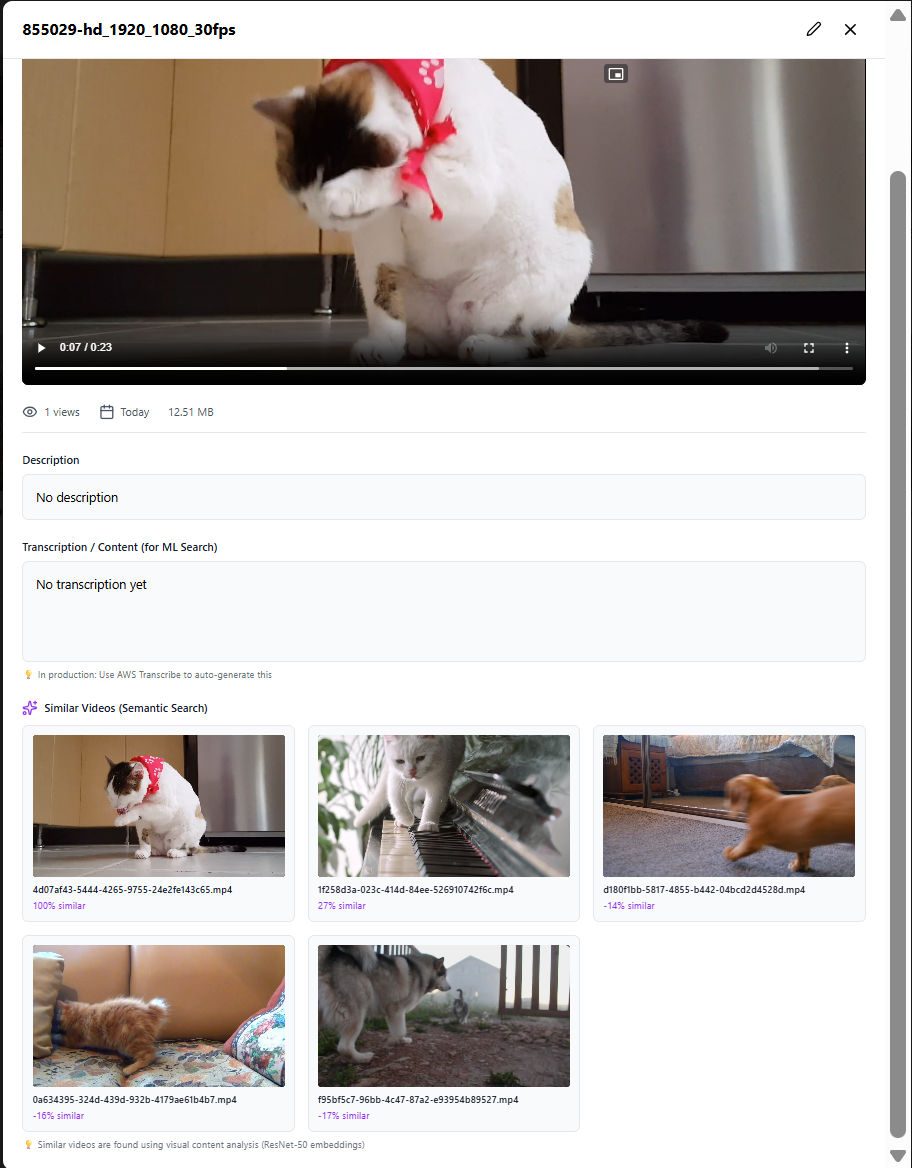
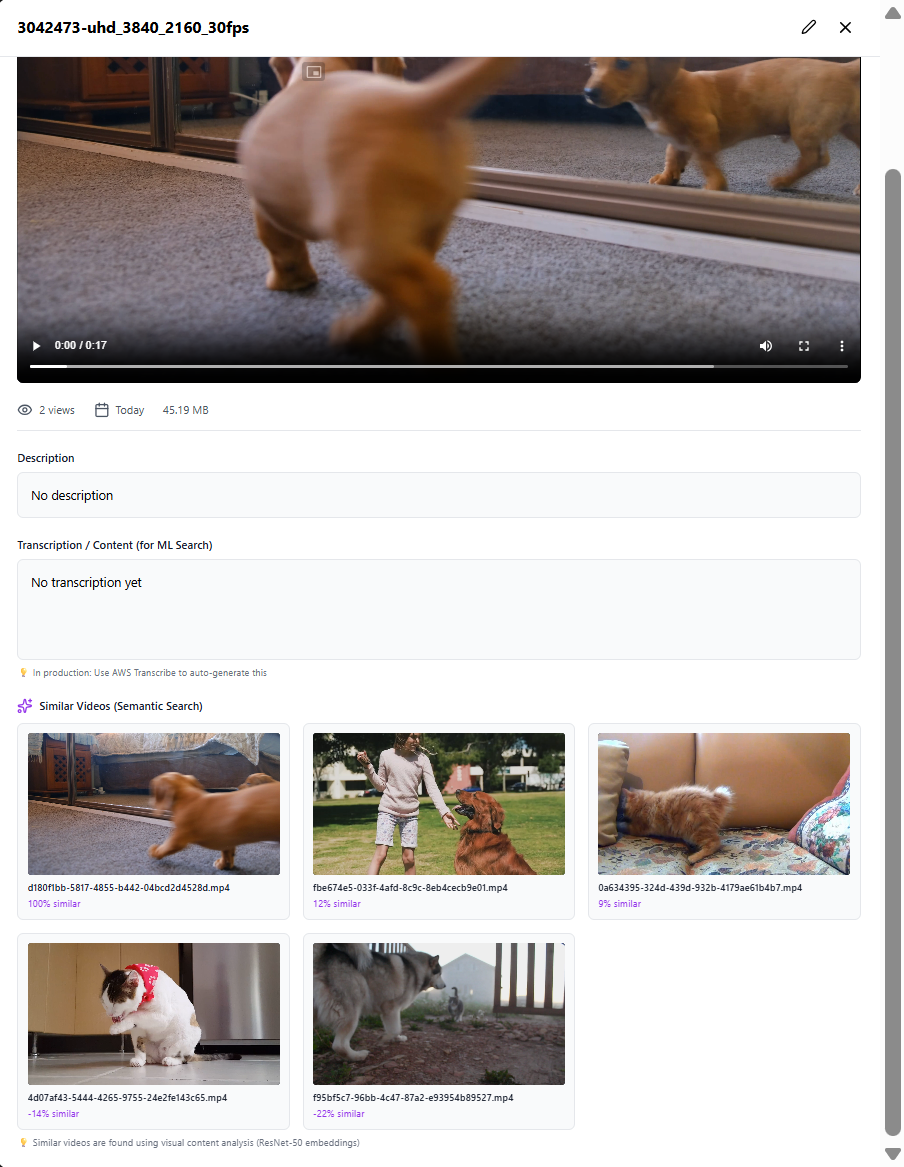
Video Index: AI-Powered Visual Video Search Searching large video libraries is difficult because most tools rely on filenames and metadata, not the visual content itself. We built Video Index, an AI-powered system that lets you search and organize your entire video library based on what's in the videos.
Key Features Visual Similarity Search: Find videos that look alike. Our system uses ResNet-50 to analyze video frames and find a match, regardless of the filename.
Automatic Clustering: Automatically groups your library into visual categories (using K-Means, DBSCAN, etc.) so you can discover related content.
Real-time Indexing: A file watcher automatically processes new videos as soon as you upload them.
Web Interface: A simple React UI to upload, search, and browse your videos.
Fast Search: Uses FAISS to deliver sub-second search results, even with many videos.
Technology Stack Backend API: Node.js (Express)
ML Pipeline: Python
Video Analysis: PyTorch & ResNet-50
Clustering: scikit-learn
Similarity Search: FAISS
Frontend: React & Tailwind CSS
Database: SQLite
Integration: The Node.js server orchestrates the pipeline by calling Python scripts as subprocesses to handle the heavy ML tasks.
Challenges & Accomplishments We're proud of building a fully functional, end-to-end pipeline that handles everything from upload to search.
The biggest challenge was integrating Node.js and Python. We had to solve complex issues with cross-platform command execution (especially on Windows), file path management, and ensuring our processing pipeline was consistent for both indexing and querying.
We also solved performance bottlenecks. Our initial "rebuild-on-upload" system was too slow, so we implemented a "debounced" file watcher that waits for a few seconds of inactivity before re-indexing.
What We Learned FAISS is fast: It's an incredibly powerful tool for high-speed vector search.
Hybrid Stacks are Hard (but Worth It): Bridging a Node.js API with a Python ML backend is complex but allows you to use the best tool for each job.
PCA is Key: Using PCA to reduce embedding dimensions was crucial for cutting down noise and speeding up the clustering process.
What's Next Action Recognition: Integrate temporal models (like TimeSformer) to understand actions in videos, not just static frames.
Multi-modal Search: Add audio analysis to search by both sound and visuals.
Text-to-Video Search: Implement a model like CLIP to allow searching with natural language text.
Scale: Migrate from a file-based index to a dedicated vector database like Milvus or Pinecone.
Built With
- axios
- css3
- express.js
- faiss
- html5
- javascript
- matplot
- node.js
- numpy
- python
- pytorch
- scikit-learn
- tdqm
- torchvision


Log in or sign up for Devpost to join the conversation.