-
-
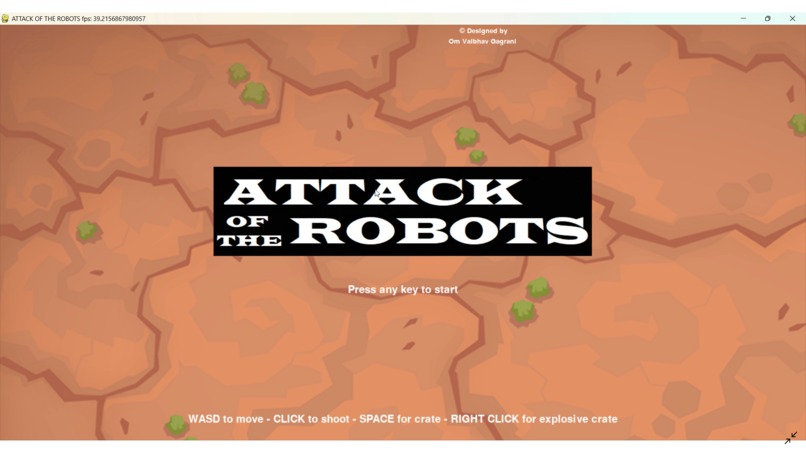
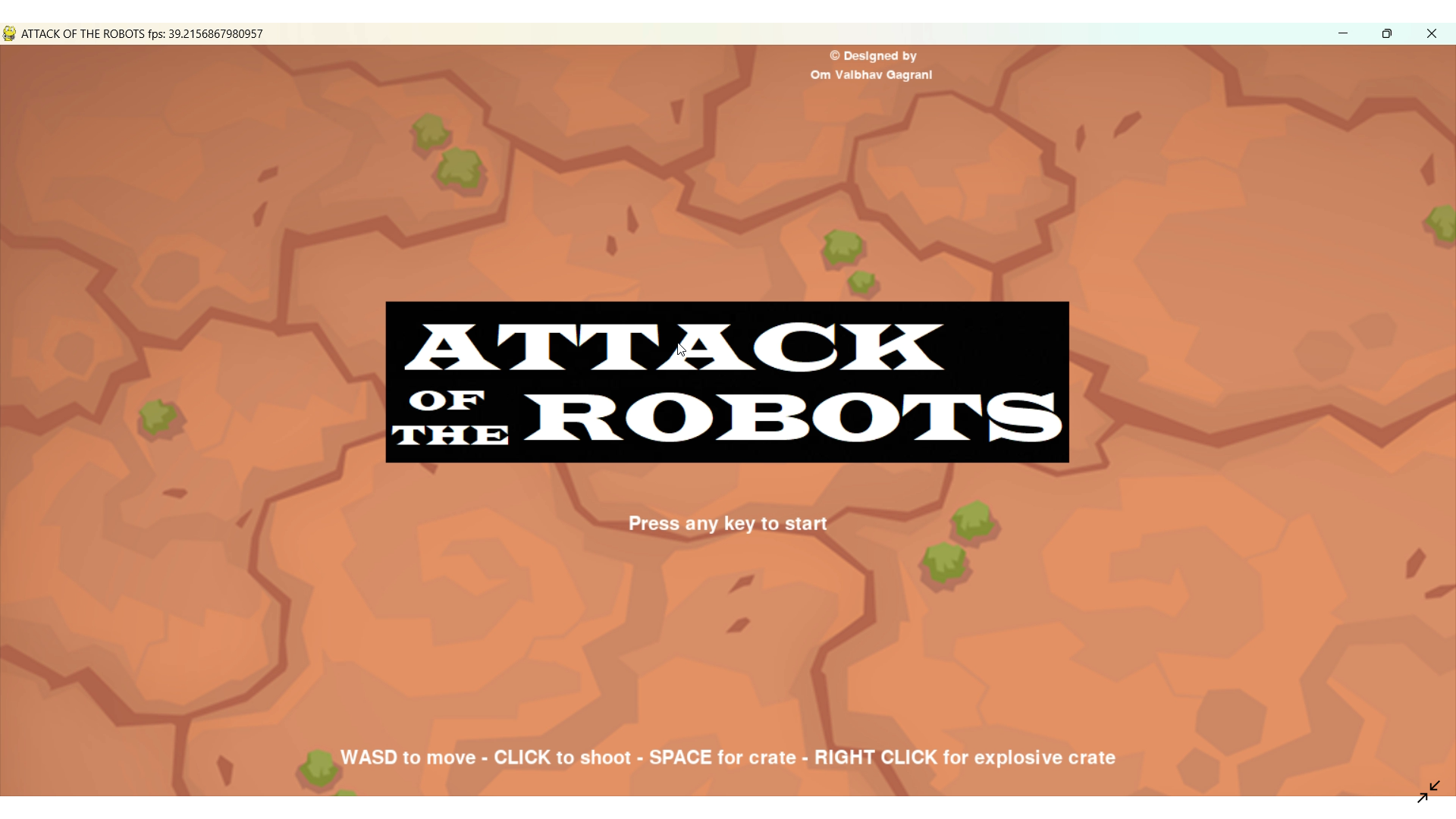
Home Screen of my Game
-
Title Card

Summary
Everyone likes playing games with their friends and family, and that includes video games. Visually impaired people want to be able to play games together with their sighted friends and family members, so they can also enjoy and feel connected. So, to solve this problem, I programmed a video game that is engaging and entertaining for both sighted and visually impaired players. To develop this game, I first researched about visually impaired people and how they can use sound effects and narrations to play the games. After my research, I programmed my game using the Python programming language. I validated proof of my concept by running two trials for my experiment. During the first trial, I chose my family members and a friend as testers by first making them play the game using a blindfold and then playing the same game as sighted players. The results from this first trial were encouraging. I modified my code and added new features based on the feedback received to make the game more user friendly. Then I conducted second trial on seven visually impaired students in a blind school and had other set of seven sighted players. I recorded two dependent variables – points scored and time for each player, while maintaining the same gaming conditions for each trial. After performing statistical analysis on data collected, I concluded that it is possible to make a fun game that both visually impaired gamers and sighted gamers can play together.
Inspiration
My parents always tell me and my three younger siblings to be thankful for Mother Nature’s grace for all resources, especially healthy body. This has given me different perspective and sensitivity to look at world around us. I lost both my grandparents when I was only 7 years old. I still remember good memories with my grandfather, who had developed visual imparity later in his life which was increasing over time. I have observed people with disabilities who are not included in basic activities like playing games with normal people. I thought it would be great if we could be inclusive and blur separation line in at least one area, enable sighted and visually impaired people play and enjoy video games together. With compassion and strong desire to help bridge gap, I questioned myself– what can I contribute towards society to make it happen? I first researched about visually impaired people, how they can use sound effects and narrations to play games. Upon research, I developed inclusive video game leveraging my programming skills. With promising research results, I plan to enhance game further and develop similar tools to positively impact people’s lives. This would be small tribute to my grandfather.
How I built it
I was game designer to devise videogame that both, visually impaired (VI) people and sighted people can play. My game’s name is “Attack of the Robots”, in which player saves self from attack of robots coming from different directions, shoots at robots by water balloons, acquires and uses different ammunitions, and gain points. Using computer, I researched about VI people and their reliance on sound for guidance. I planned game design, followed by programming with self-created narrations and sound effects. Audio elements help VI people know what is happening in game and give sighted players better experience. Upon satisfied initial testing, I asked family members and friend to test game, and collected trial #1 data using testing procedure described in Table 1. I had sample size of 5 testers play game for 4 rounds with blindfolded first to mimic VI experience (as shown in Chart 1), and then 4 rounds as sighted players (as shown in Chart 2). I collected their scores (8 readings each, 40 readings total) along with feedback from their experience. I implemented design modifications using trial #1 feedback, to make game easy to follow for VI people and enhance overall gaming experience. I added detailed audio narrations (e.g., game start, intermittent scores, keep shooting, move right, move up, move around) during game to inform player to move to specific directions, and updated game starting directions to be clear and concise. I added feature to play game using arrow keys like previously programmed “WASD” keys. I disabled mouse right click and shift key functionalities to avoid confusion for players. I made game window resizable to avoid cursor moving out of game window, and be compatible with any screen size; added ‘game pause’ feature for players to listen instructions any time, included ‘timer’ feature to track time. Then, I worked on trial #2 with bigger sample size comprising of actual 7 VI(100% blind) players studying at Blind School, and sought additional 7 sighted players – my school and community friends. With sample size of total 14 players and 5 readings per player, I collected 70 readings total as shown in Table 2. In experiment, Controlled Variables (What I kept the same) were Game Conditions (speed, randomness, number of balloons, number of robots, spawn rate). Independent Variables (What I changed) were Sighted Players and Visually Impaired Players. Dependent Variables (What I observed) were Points Scored and Time per Game.
What I learned
I performed multiple calculations with collected experimental data for statistical analysis, and computed parameters - minimum, maximum, average, median, standard deviation of scores - to draw quantitative conclusions. Conclusions supported my hypothesis that aptly designed videogame with different sound elements including audio narrations can be played by visually impaired (VI) people using their enhanced auditory abilities, along with sighted people. Minimum, maximum, average and median scores for VI players increased with each round, meaning they gained proficiency as they played more rounds. Average and median time to score 1000 points taken by VI players generally decreased with lower consistency as compared to sighted players; and these values for VI players remained always lower than that of sighted players. This implies that sighted players had clear advantage playing game as they could reach out to ammunition boosters and escape strategically from robot attacks compared to VI players. To make field fair and consistent for both sighted and VI players, code should be modified to normalize scores for sighted players. Moreover, I collected qualitative feedback from players. Sighted players enjoyed playing game with graphics and audio elements, want to play game often using other devices too. VI players in my sample were happy to play first ever videogame and enjoyed it; they found audio directions and narrations very useful; and appreciated freedom to navigate through game on their own. Teacher working at blind school mentioned that “this is great initiative; it will help mental and intellectual growth in our visually impaired students.”


Log in or sign up for Devpost to join the conversation.