Inspiration Organizations often manage large amounts of internal documents that must align with specific standards and maintain accuracy and relevance. We were inspired to create a solution that leverages historical data and LLM technology to ensure documents are filled correctly and consistently. By integrating human feedback, we aim to validate the quality of the documents and provide a baseline for improving future AI recommendations.
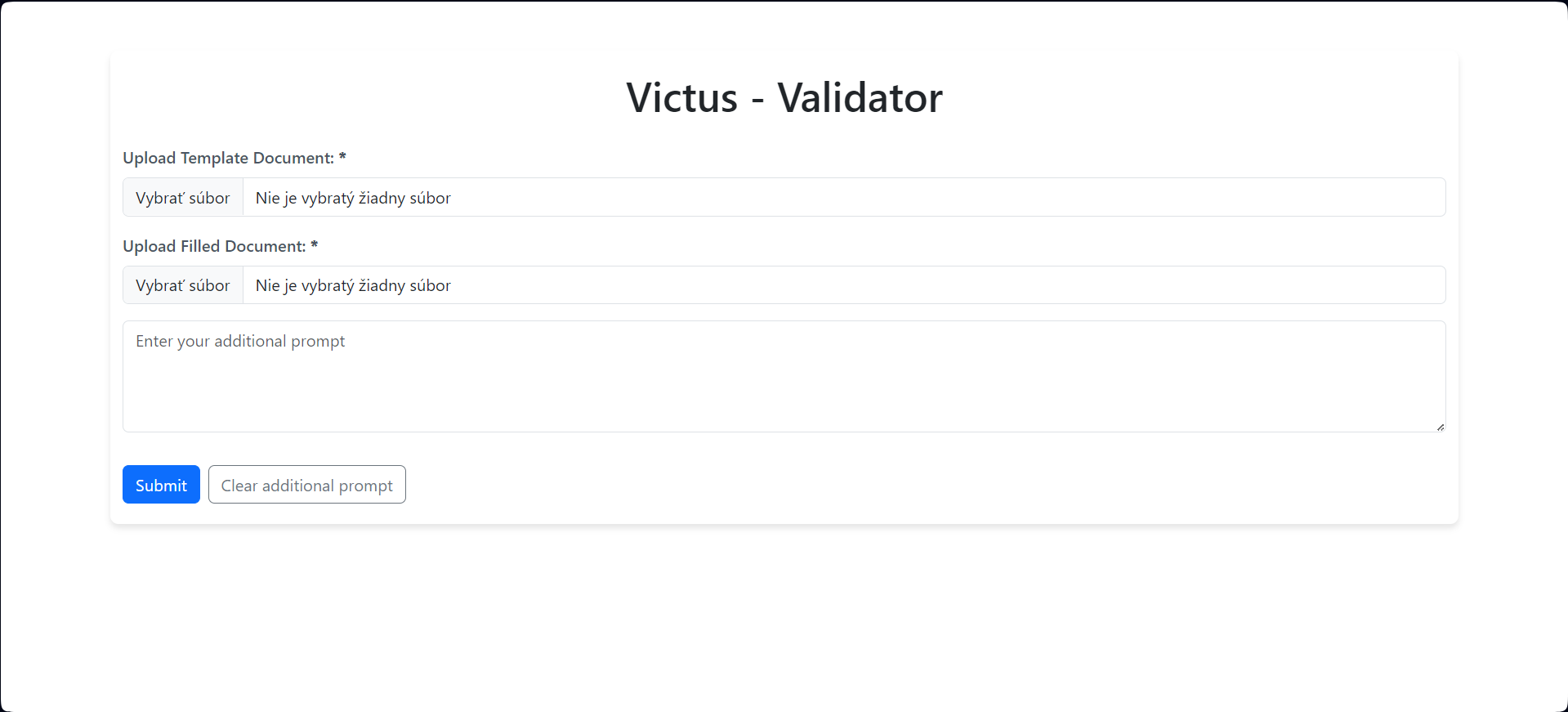
What it does Our application, VICTUS-3, ensures that internal documents are accurate, relevant, and adhere to specific standards. It uses historical data and LLM technology to analyze and validate documents, integrating human feedback to enhance the quality and accuracy of the AI's recommendations.
How we built it We built VICTUS-3 using Python for data processing and machine learning tasks, and React for the frontend interface. Python's robust libraries and frameworks allowed us to efficiently handle data analysis and model training, while React provided a dynamic and responsive user interface. The combination of these technologies enabled us to create a seamless and efficient application.
What we will learn Throughout this project, we learned the importance of balancing automation with human oversight to achieve optimal results. We also gained valuable experience in using Python and React to build a robust and scalable application. The project reinforced the significance of user experience in the development process.
What's next for VICTUS-3 Moving forward, we plan to enhance VICTUS-3 by incorporating more advanced machine learning models and expanding its capabilities to handle a wider range of document types. We also aim to improve the user interface based on feedback from users to make the application even more intuitive and efficient.


Log in or sign up for Devpost to join the conversation.