



Inspiration
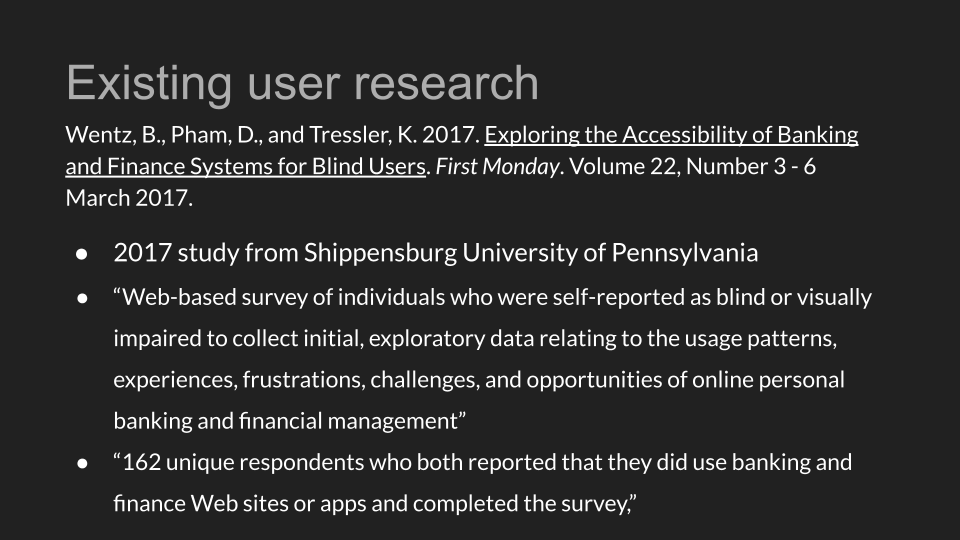
The WHO estimates there are over one billion people worldwide with some type of mental, physical, or sensory limitation that could impact their ability to fully use technology. Worldwide nearly 300 million people experience moderate to severe vision impairment, and countries like the U.S. and Japan with ageing populations will see a significant percentage of their population acquiring a disability like low vision and blindness that affects their ability to use the technology they are accustomed to.
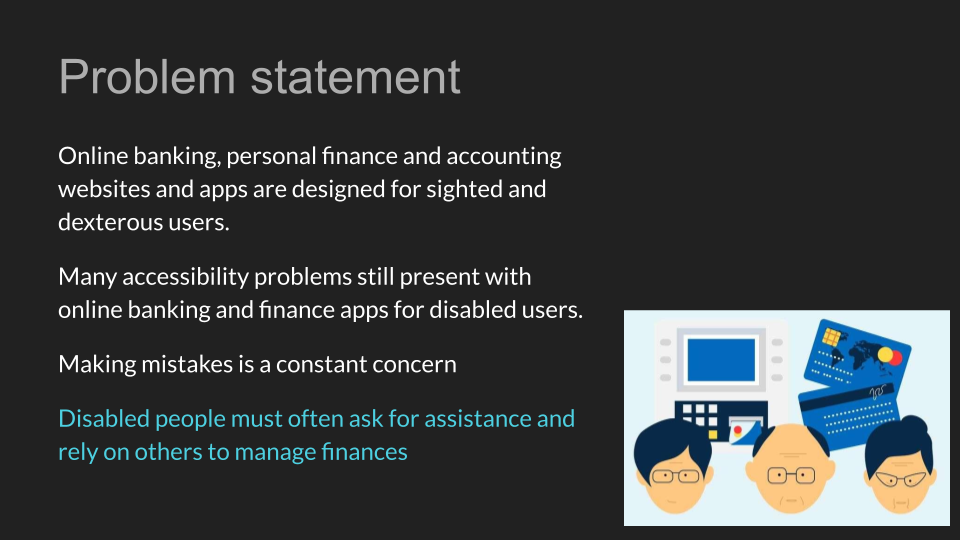
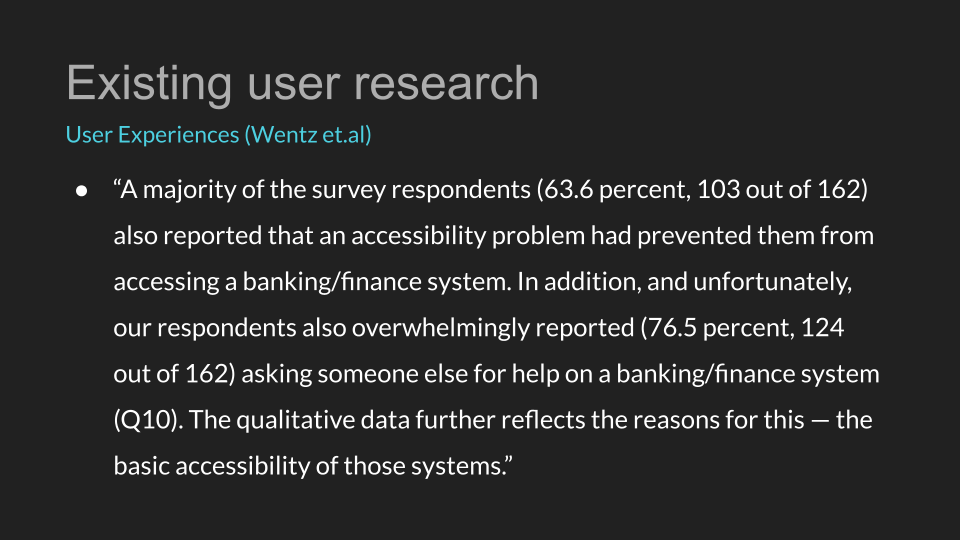
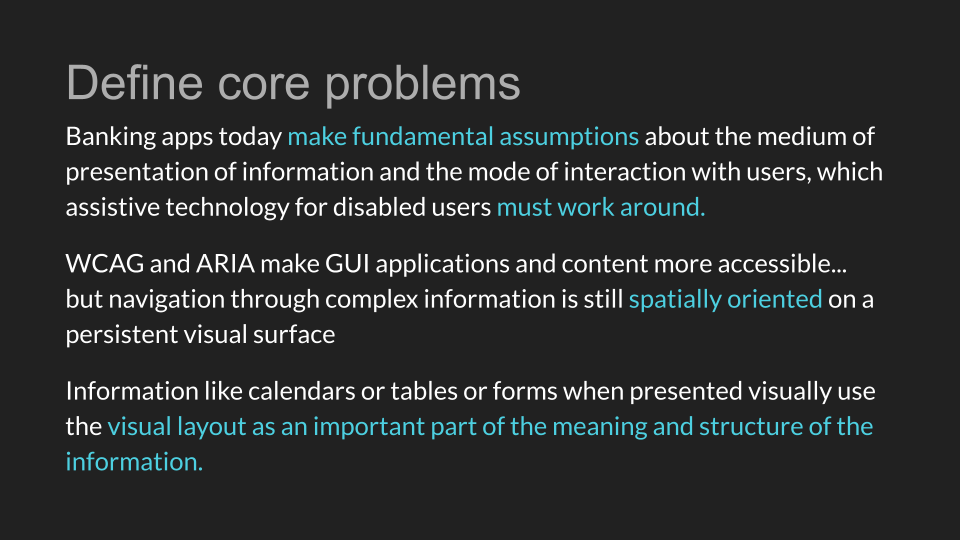
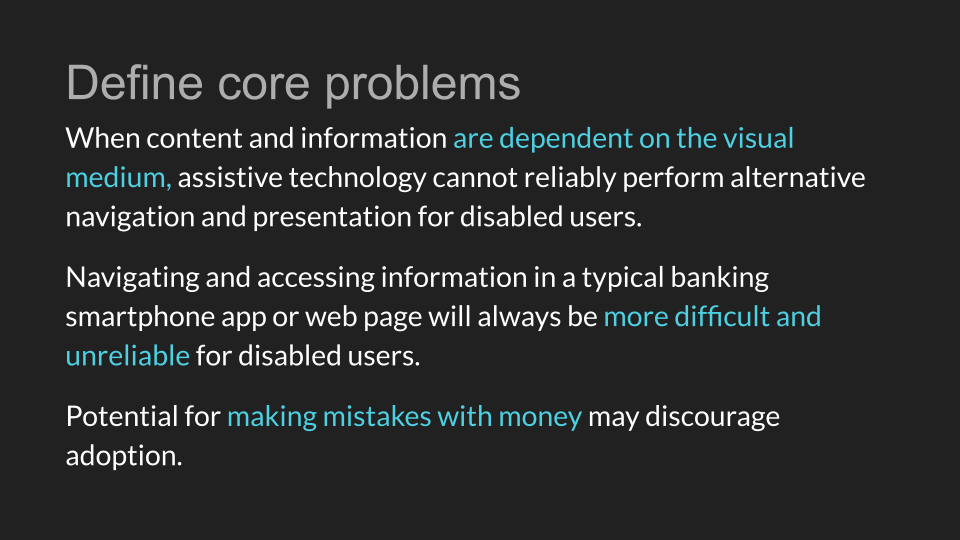
The vast majority of adults with Internet access use online banking - estimates are nearly 1.9 billion active users of online banking in 2020. People with vision disabilities cannot easily read paper statements like bank account statements or paper checks without the help of potentially expensive assistive technology. There is a higher likelihood that individuals with vision disabilities will desire to conduct their personal finances online from a computer or mobile device. But accessibility problems remain a severe challenge with most online banking sites.
インターネットにアクセスできる成人の大多数がオンラインバンキングを利用しています。2020年にはオンラインバンキングのアクティブユーザーが約19億人になると試算されています(https://www.statista.com/statistics/1228757/online-banking-users-worldwide/)。視覚障がい者は、高価な支援技術を使わなければ、銀行口座の明細書や小切手などの紙の明細書を簡単に読むことができません。視覚障がい者は、パソコンや携帯端末を使ってオンラインで金銭のやりとりをしたいと考える可能性が高くなります。しかし、多くのオンライン・バンキング・サイトでは、アクセシビリティの問題が深刻な課題となっています。
There has been a worldwide trend towards open banking and the opening up of financial services APIs to third-party APIs . Platforms like Plaid allow programmers to build apps that connect users to their bank accounts in the U.S. and Europe. Recently Israel passed legislation that requires the banking sector to become more competitive and banks to share customer data with third-party companies to offer fintech services.
There is an opportunity for accessible solutions that allow people with disabilities to take advantage of advances in fintech and overcome challenges in using existing online banking apps and websites.
世界的な傾向として、金融サービスのAPIをサードパーティのAPIに開放するオープンバンキングが注目されています。米国や欧州では、Plaidのようなプラットフォームにより、プログラマーがユーザーと銀行口座をつなぐアプリを構築することができます。最近イスラエルでは、銀行部門の競争力強化と、銀行がフィンテックサービスを提供するために顧客データをサードパーティ企業と共有することを求める法案が可決されました。
障がい者がフィンテックの進歩を利用し、既存のオンラインバンキングのアプリやウェブサイトを利用する際の課題を克服できるようなアクセシブルなソリューションが求められています。
What it does
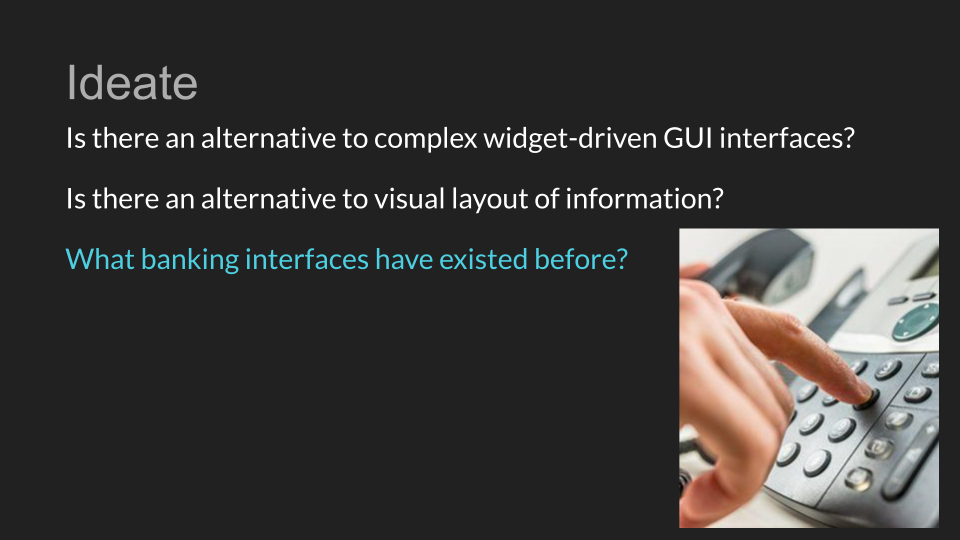
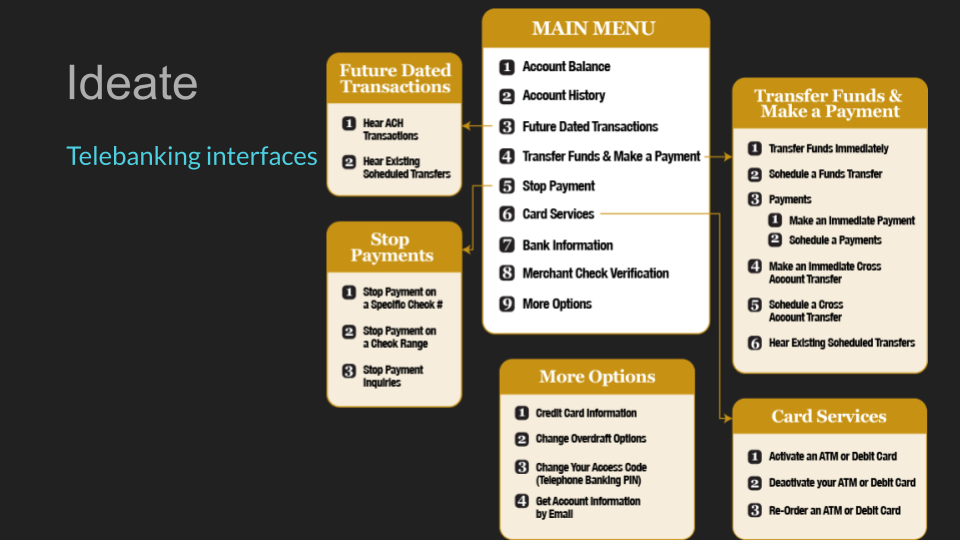
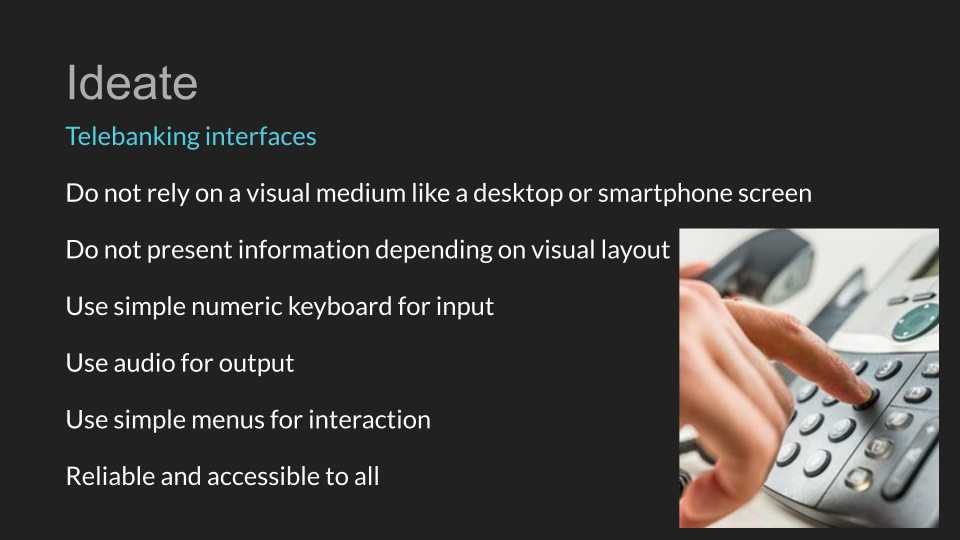
Victor FN provides an auditory user interface for accessing financial services through modern banking APIs like Plaid or through open banking API standards like PSD2 that is designed to be accessible to people with vision and other disabilities. Inspired by telebanking interfaces, Victor FN lets users navigate through the system using a simple menu system and natural language understanding. Victor FN will also let users read and understand documents using Google's Document Understanding AI.
Victor FNは、Plaidのような近代的な銀行APIや、PSD2のようなopen banking API規格を通じて金融サービスにアクセスするための聴覚的なユーザーインターフェースを提供し、視覚やその他の障害を持つ人々がアクセスできるように設計されています。テレバンキングのインターフェースにヒントを得て、Victor FNでは、ユーザーはシンプルなメニューシステムと自然言語理解を用いてシステムをナビゲートすることができます。また、「Victor FN」では、Googleの「Document Understanding AI」を利用して、ユーザーがドキュメントを読んで理解することができる。

Log in or sign up for Devpost to join the conversation.