Inspiration
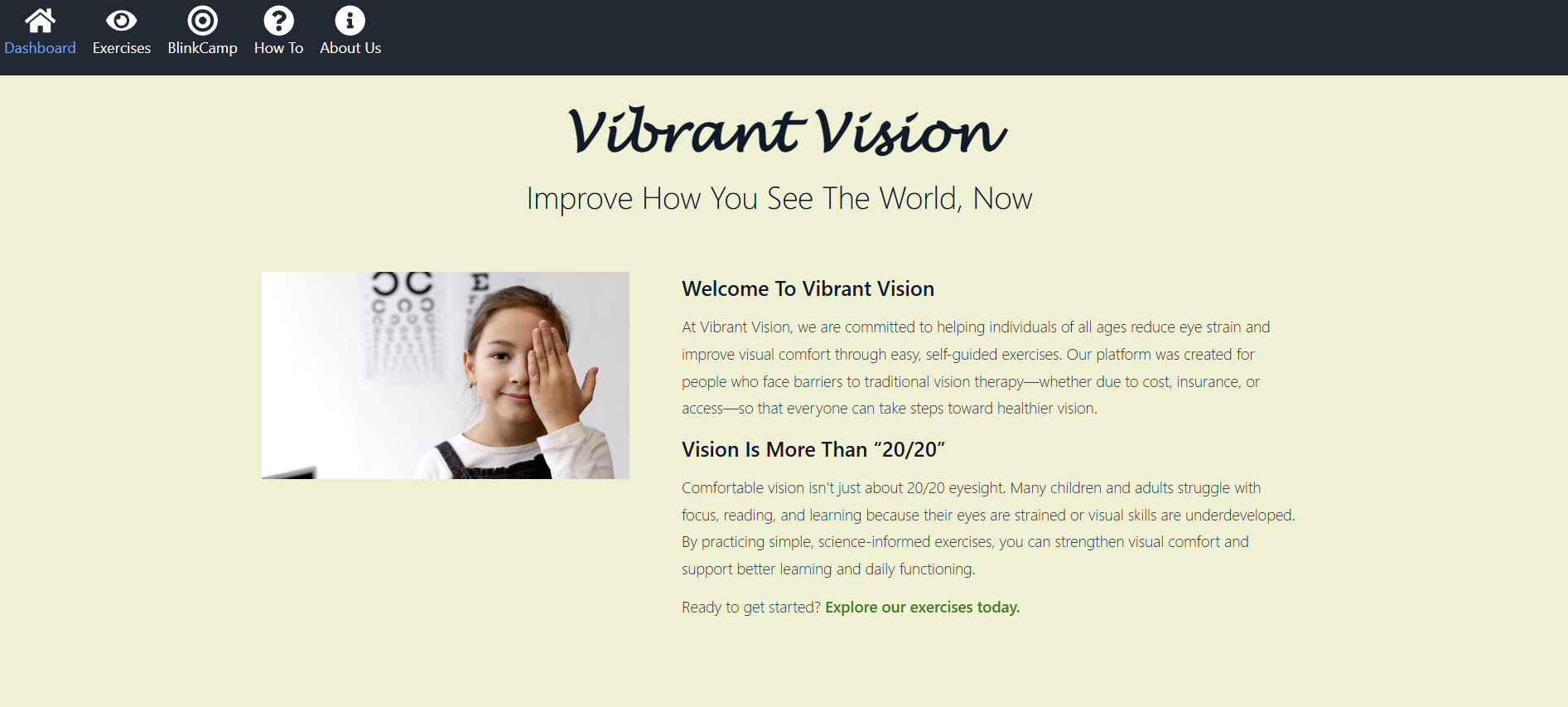
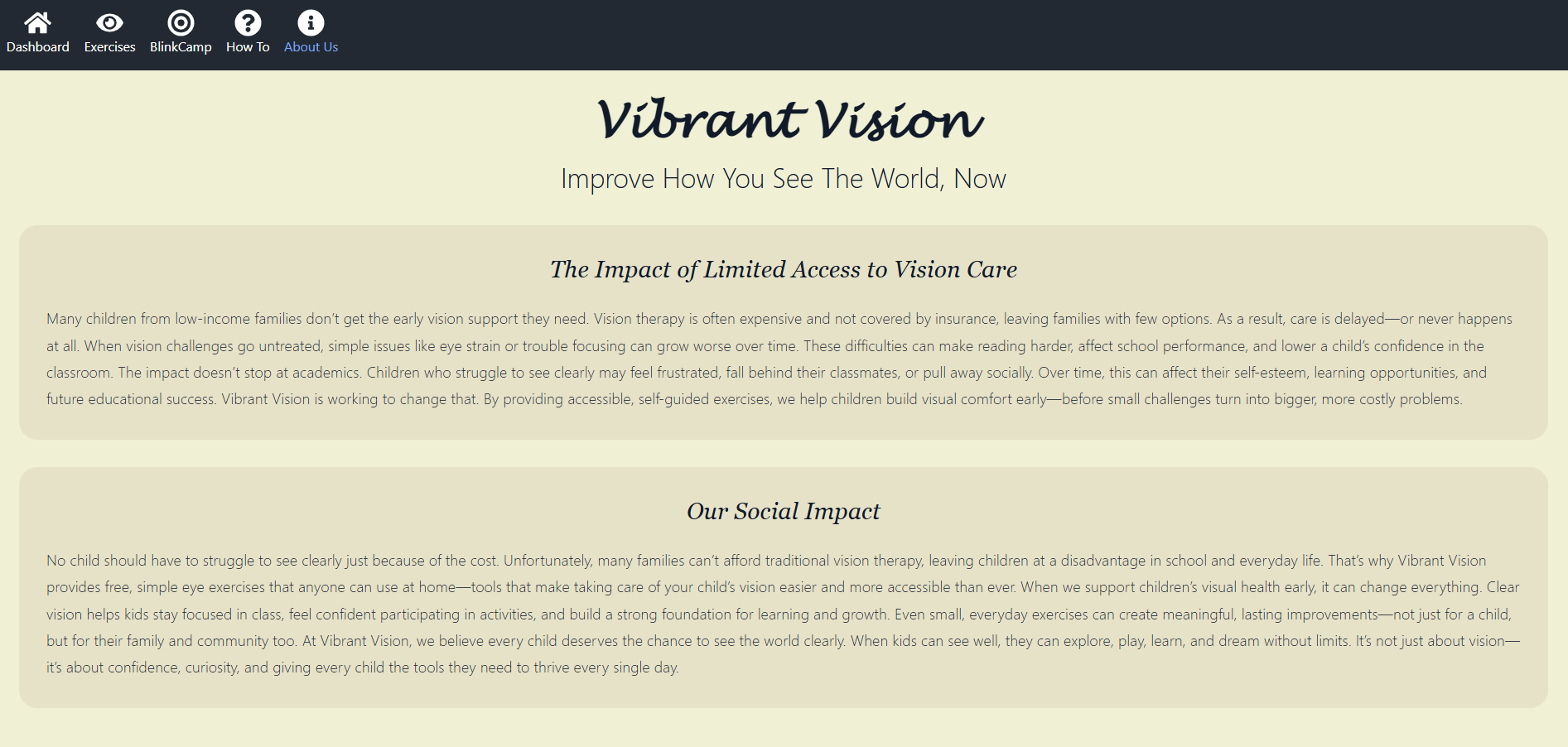
Vision is often reduced to a number on an eye chart, but for millions of children, vision challenges affect far more than eyesight alone. The World Health Organization reports that over 2.2 billion people worldwide live with vision impairment, and at least 1 billion of those cases could be prevented or addressed with early care. Yet many children, especially those from low-income families, never receive that support. When vision issues go unnoticed or untreated, everyday tasks like reading, focusing in class, or following along at school become frustrating obstacles, quietly shaping a child’s confidence, learning, and long-term well-being.
Vibrant Vision was inspired by this gap between need and access. Vision therapy is often costly, difficult to obtain, and not covered by insurance, leaving families with few options and children waiting for help that may never come. We created Vibrant Vision to bring attention to vision health early and to provide guided, self-directed exercises that can be practiced anywhere. By removing barriers to care, we aim to support children’s visual comfort before small challenges grow into larger ones, helping them feel more confident, engaged, and capable as they learn and grow.
What it does
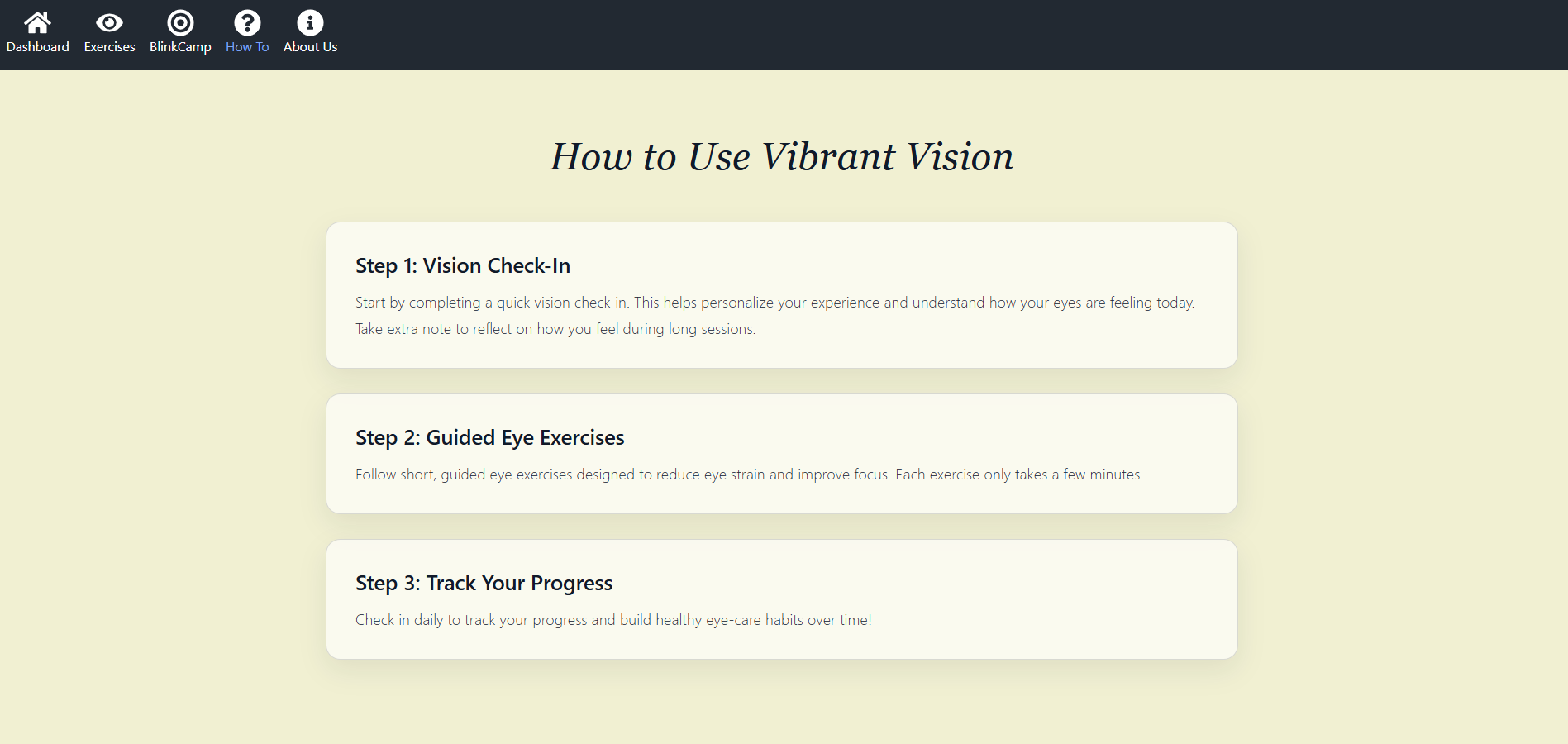
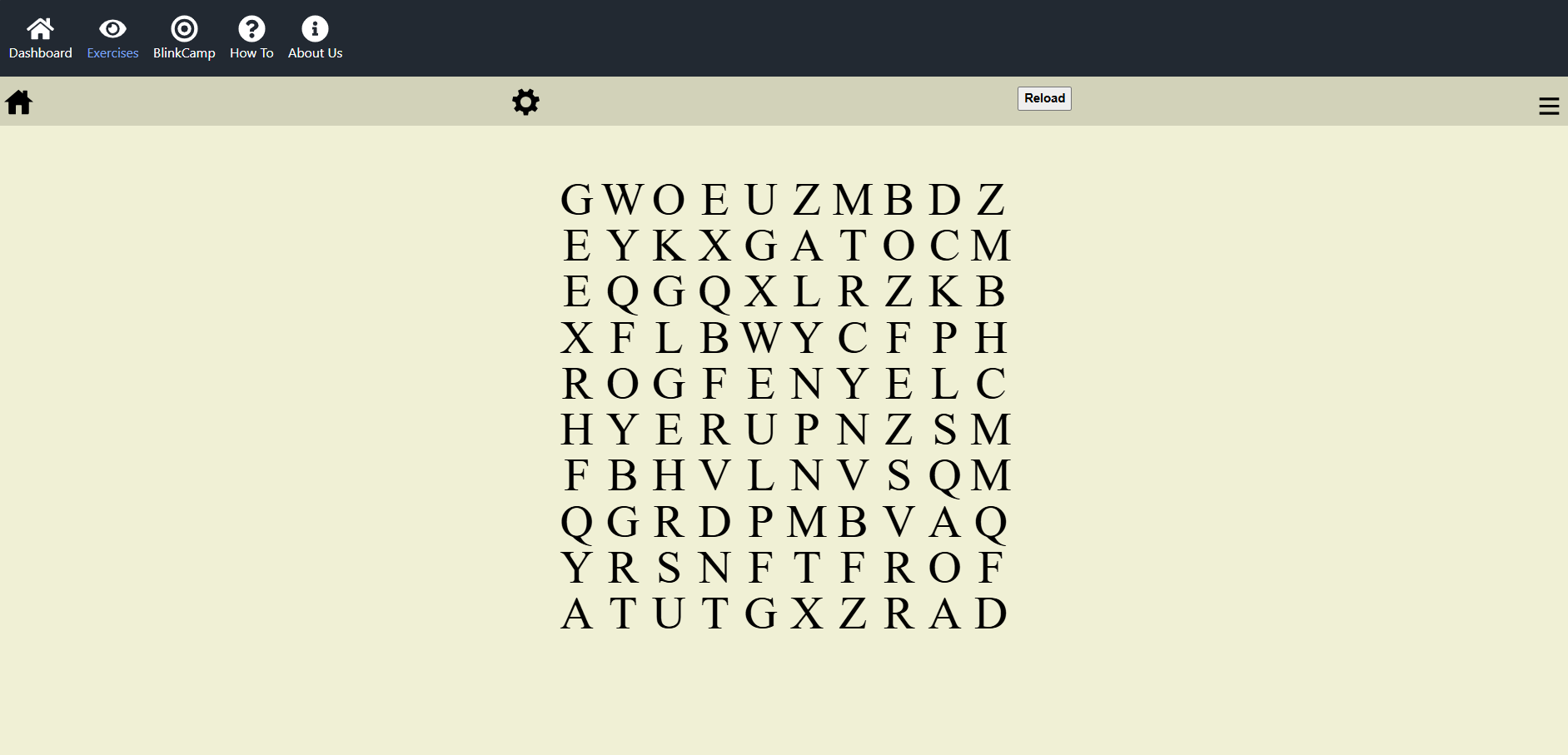
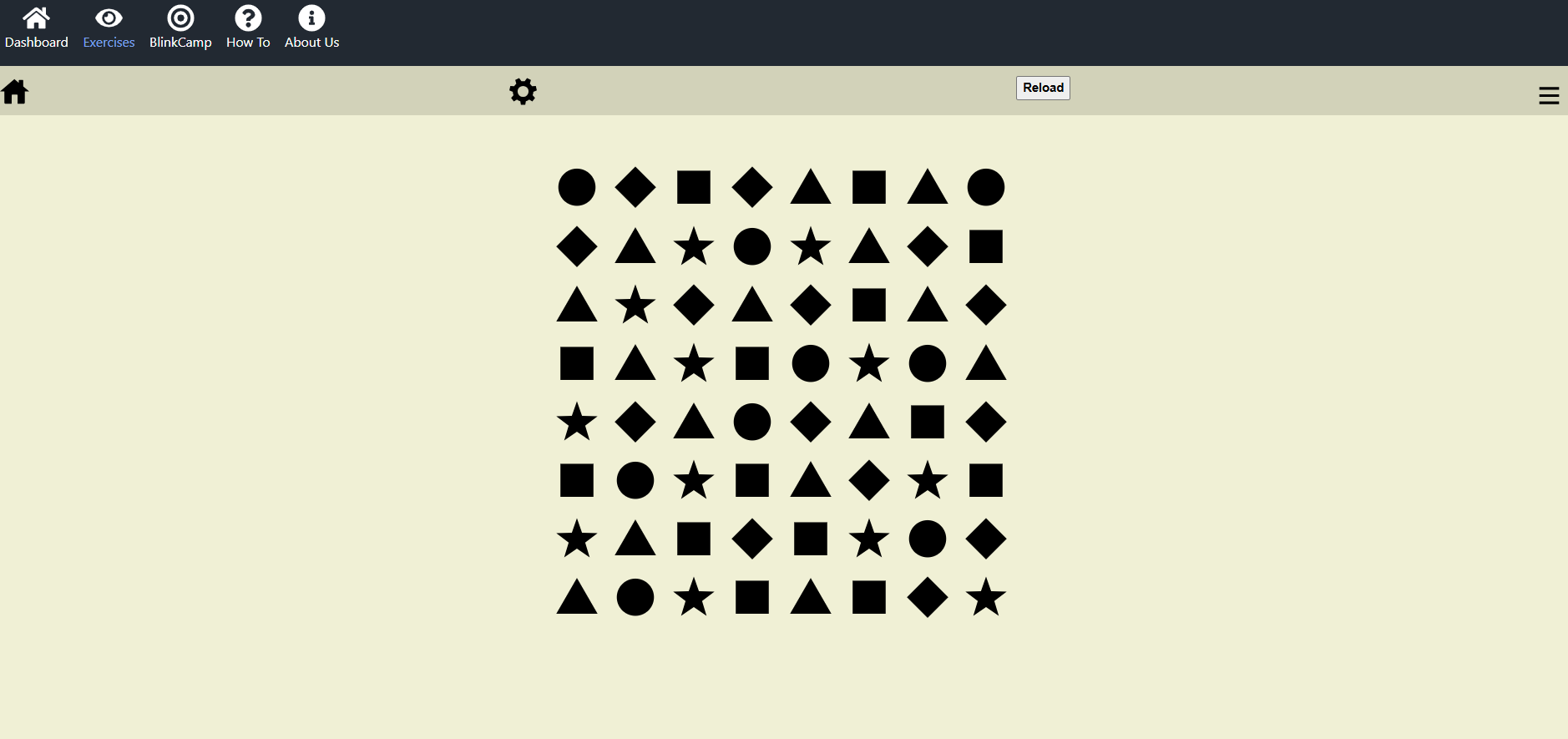
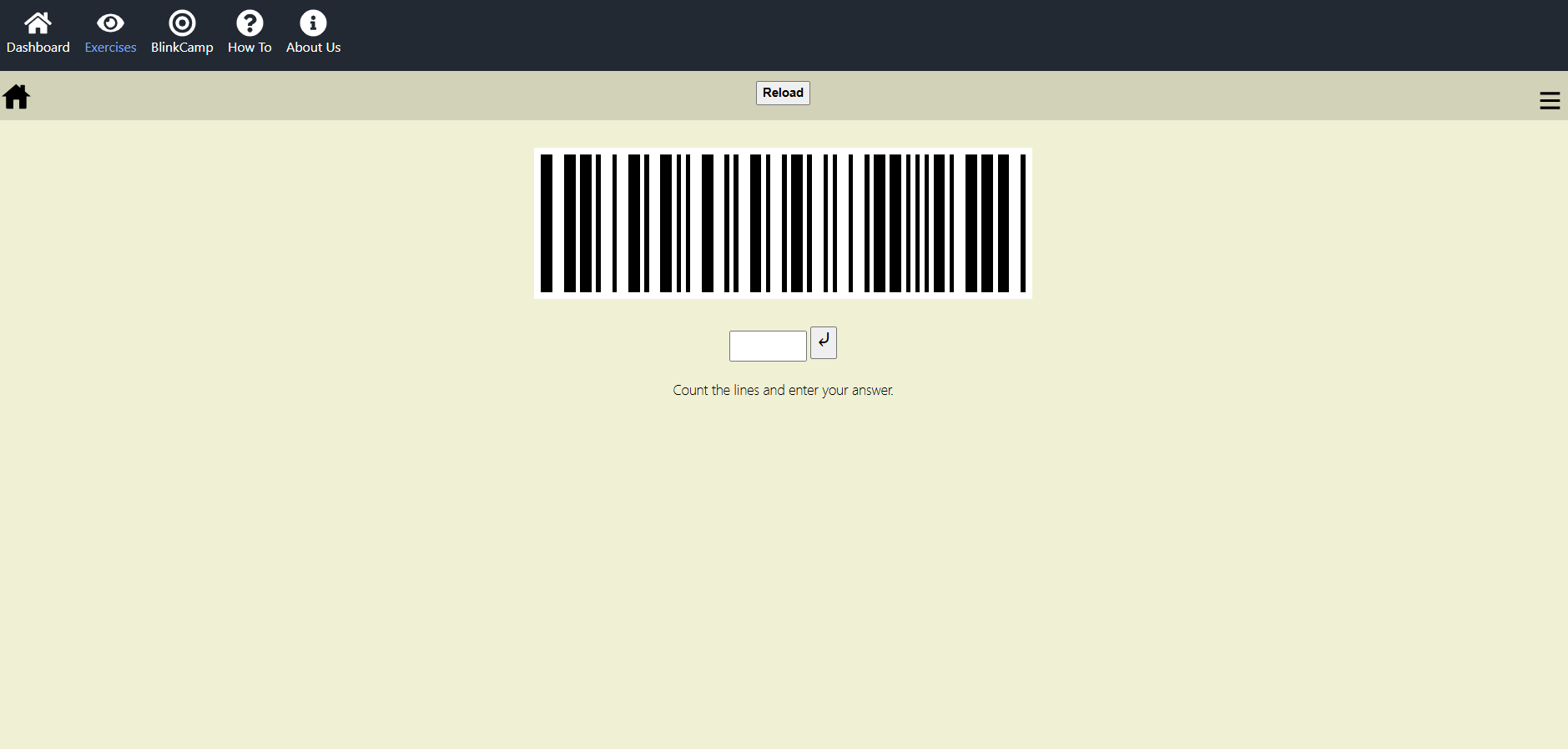
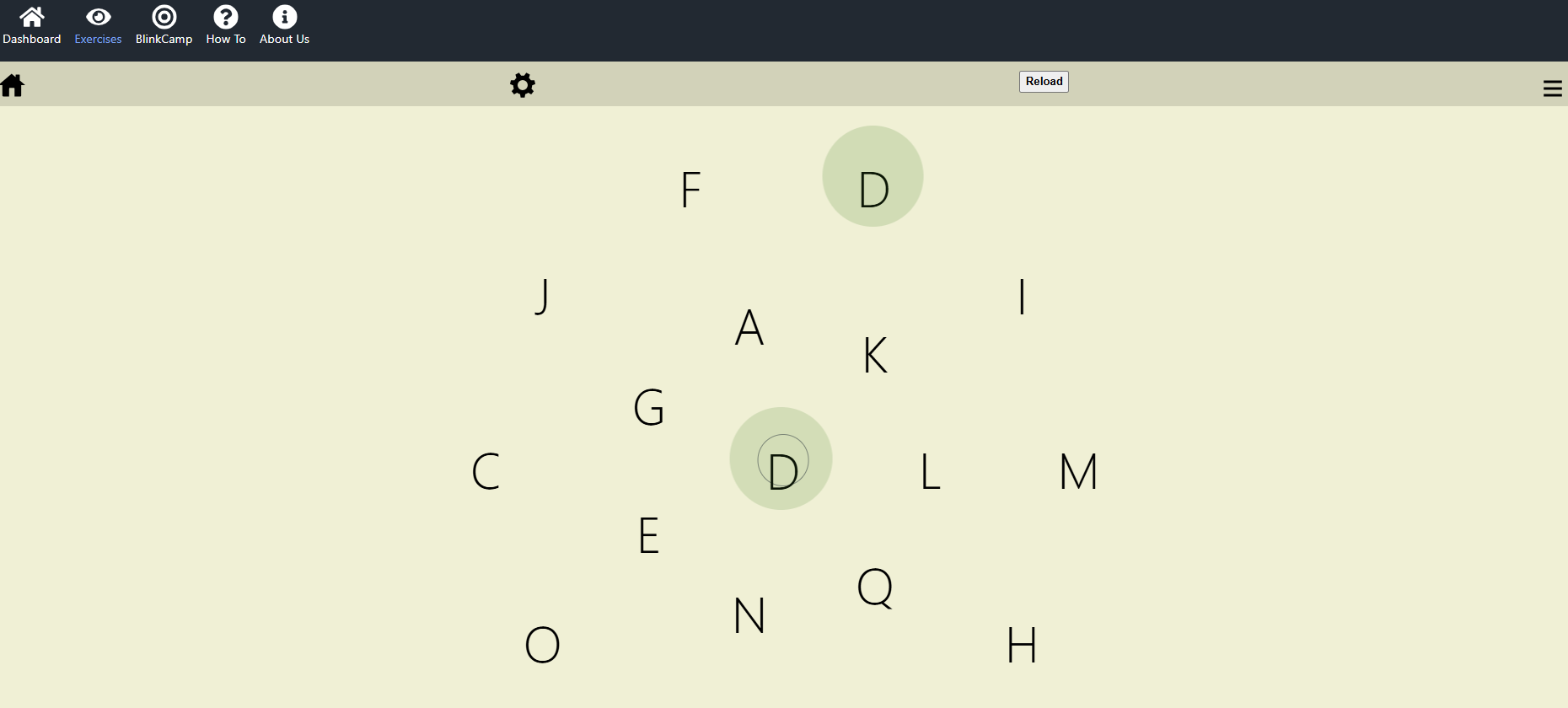
Vibrant Vision helps users care for their vision through self-guided exercises that can be done anytime, at home or on the go. The app also includes an eye coordination exercise powered by a third-party tool (BlinkCamp), giving users an interactive way to practice tracking and coordination skills. Together, these features support healthier vision habits, reduce visual strain, and make it easier for users to pay attention to their visual comfort in everyday life.
How we built it
We started by using React and TypeScript to build most of Vibrant Vision’s interactive screens, making it easy for kids and adults to follow the exercises step. On the backend, we used Node.js keeps everything running smoothly, connecting the exercises and feedback. Then, we used HTML, CSS, and JavaScript to bring the exercises and instructions to life, making them clear, colorful, and easy to understand. To make the coordination exercises more engaging, with BlinkCamp we integrated MediaPipe, which tracks users’ eyes and gives real-time feedback. Throughout the process, our choices were guided by research into simple, self-led exercises, so practicing vision feels natural, fun, and actually helpful.
Challenges we ran into
One of the biggest challenges we faced was time. We had ideas for features like text-to-speech that we couldn’t implement within the project’s timeframe. Despite this, we focused on what we could achieve and made sure the core exercises and functionality worked smoothly, creating a prototype that still reflects our vision for the app.
Finding an API that already included preset information about exercises was another challenge. MediaPipe and other tools required careful testing to integrate properly, and we had to adapt to what was available. In the future, we hope to expand the app using Firestore to store and create more personalized exercises for users, making the experience even more tailored.
Accomplishments that we're proud of
We’re really proud of what we accomplished with Vibrant Vision. Along the way, we picked up new tools and programming languages like React, TypeScript, Node.js, and MediaPipe, and got to put them into practice while building the app. We also collaborated closely as a team, designing screens in Figma, debriefing during our stand ups, and making sure the exercises were clear and engaging. Most of all, we’re proud to have created a working prototype that brings our idea of self-guided vision exercises to life and can actually help kids and adults practice their vision.
What we learned
Working on Vibrant Vision taught us a lot about collaboration and problem-solving. Not everyone on the team had all the answers, and we learned it is okay to ask for help when debugging tricky issues or figuring out how to make a feature work. We also discovered that passion is the best motivation. When we cared about the project and the social impact behind it, we were willing to learn new tools and languages, experiment with React, TypeScript, Node.js, MediaPipe, and Figma, and figure out solutions together. On a technical level, we learned how to combine frontend and backend systems, integrate APIs for real-time feedback, and design interactive exercises that are both functional and engaging. Overall, the experience showed us that curiosity, teamwork, and persistence can turn challenges into meaningful lessons.
What's next for Vibrant Vision
Moving forward, we plan to make Vibrant Vision even more interactive and personalized. We want to integrate an advanced eye-tracking system across all exercises using MediaPipe, add a text-to-speech feature, and implement authorization flows with Firestore. This will allow us to track users’ progress, show a visual progress bar, and provide customized exercise recommendations.
We also hope to add a chat feature so users can communicate with the us the developers and certified orthoptic therapist. This way, children and adults practicing vision exercises won’t feel isolated or worried about managing their vision challenges on their own.

Log in or sign up for Devpost to join the conversation.