-
-
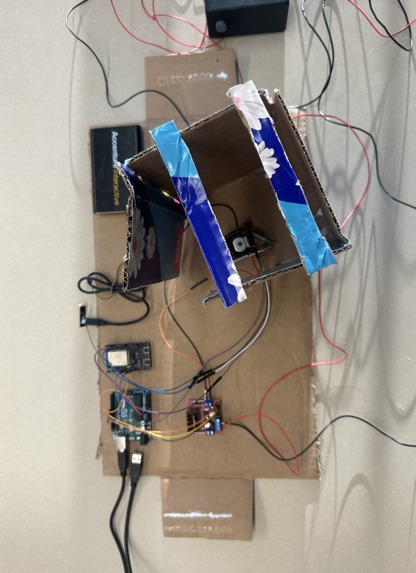
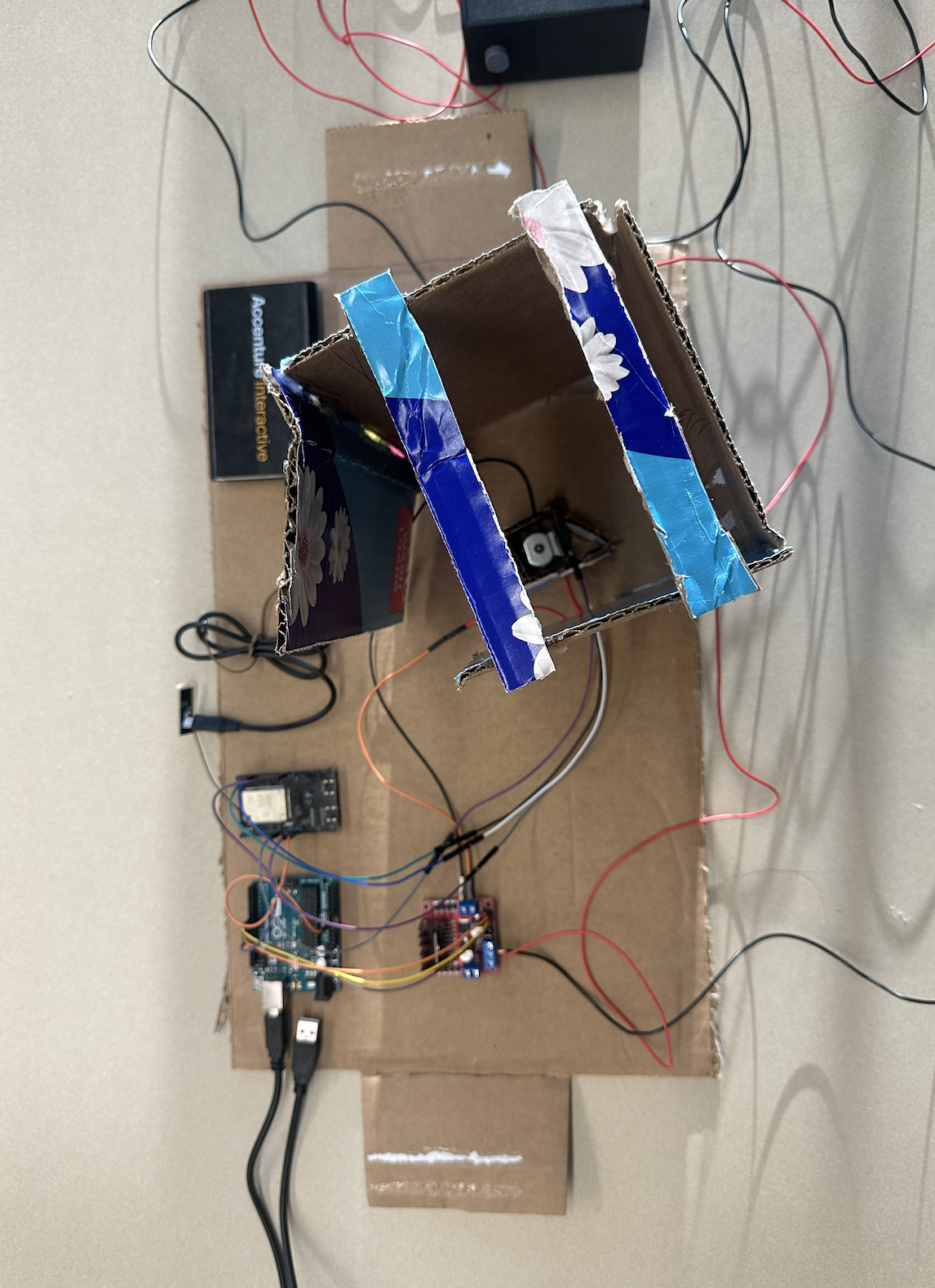
Testbed Setup
-
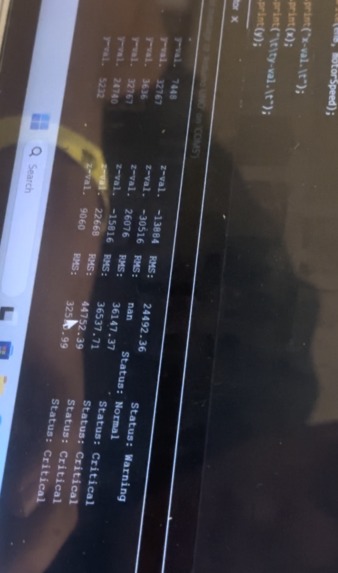
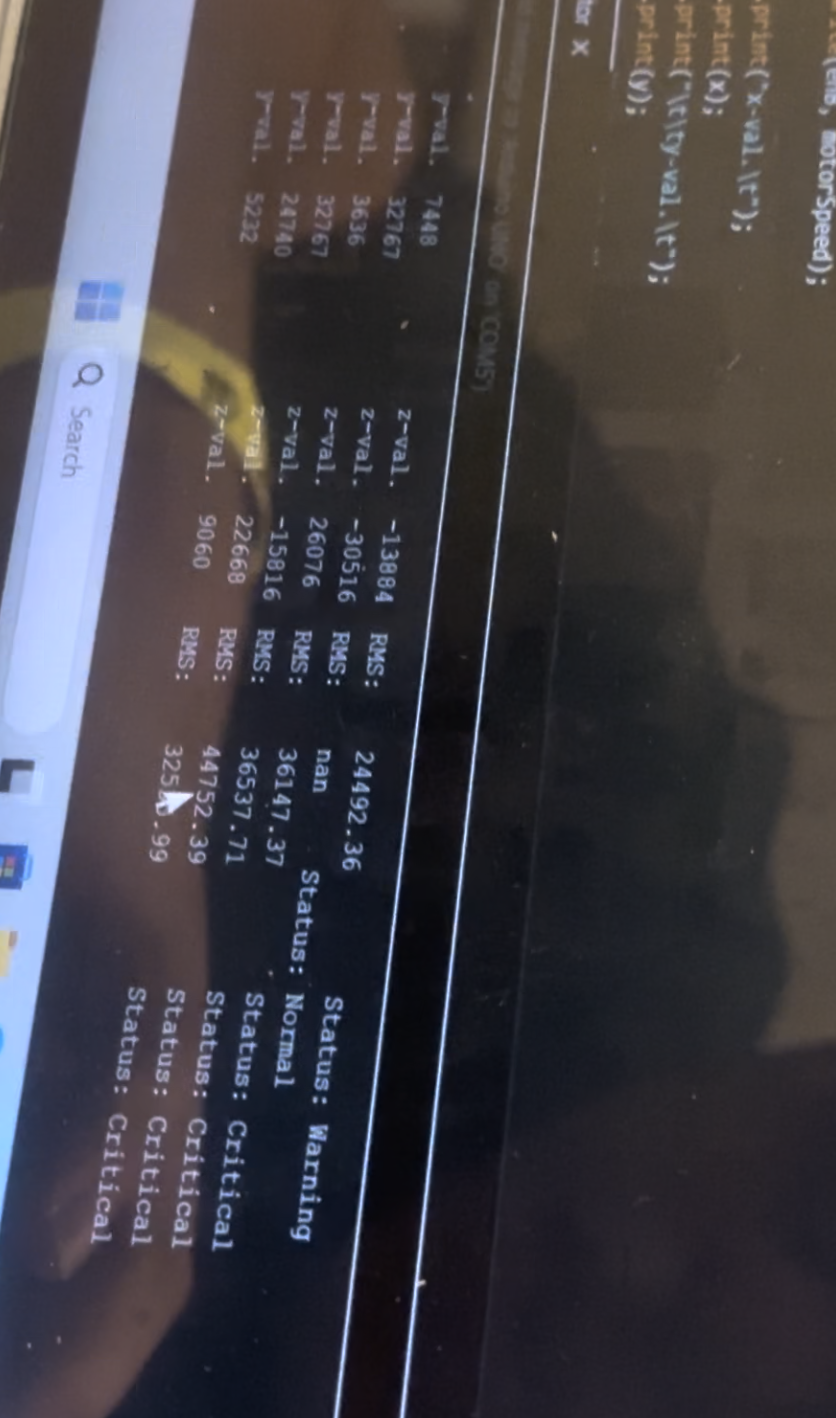
Vibration Data Updating in Real-Time
[Personal Pronouns reference Aarav Upadhyay (I, me, my)]
Inspiration
What’s the Problem? Before considering a solution, Nolan and I talked on Friday and began discussing what we both wanted to work on. Since I am interested in Mechanical Engineering and he is interested in Electrical, we knew we wanted to work on something hardware-related. To ensure we were solving a real problem, we called multiple HVAC and Motor-Related companies; two responded.
After speaking about the issues they face in their day-to-day, they told us that current motor-monitoring solutions (called Variable Frequency Drives) are costly ($300-1000) and not technically competent, controlling the motor only at start/stop cycles (not in between). We wanted to solve this problem.
What it does
Vibrant is a hardware and software solution that lets users create workspaces to track all of their motors in one place. The user is first prompted to sign in with their phone number and a username, and then to create their "workspace." This could be especially useful for manufacturing business owners with multiple locations, who can organize their motors by location. After this, they can add motors to their workspace. An accelerometer sensor must be attached to the motor (our example uses foam tape), and it can connect to an Arduino over Wi-Fi to enable real-time transfer of gyroscopic data anywhere in the facility.
Calibration Process and Motor Use: The motor runs for 200 data cycles to establish a baseline, as every motor has a different natural frequency at which it vibrates. A loading screen shows on the front end, while data collection begins on the backend. Trained on historical data in MongoDB, the dashboard on our website provides crucial, easy-to-digest information for people of all ages and technical experience levels. FFT and visual graphs are shown for each motor, including Voltage Levels, threshold values, and vibration data, while the Gemini API provides advice and information to the user in Plain English.
The testbed shows a physical implementation of our program, in which Arduino threshold values are used to reduce unwanted vibration by slowing the motor down. Users can also opt in to receive phone calls and text messages to alert them when a motor is in a CRITICAL state, as determined by vibration thresholds, and when it crosses these thresholds.
How we built it
As we did not know how to code, we utilized prompt engineering for much of our programming
Nolan: Vercel V0 and ChatGPT prompting the frontend
Aarav: Claude, GitHub Copilot, and ChatGPT for prompting the backend
Hardware: We utilized online documentation as well as the following books to help us in making the circuit:
- Encyclopedia of Electronic Components by Platt and Jansson
- Arduino Cookbook by Margolis, Jepson, and Weldin
We also soldered the sensor and motors, as well as used multimeters in order to measure current across the circuit.
Challenges we ran into
We spent the first couple of hours troubleshooting pure hardware, which was not working as expected and would have a range of errors (Motor Stalling, motor not responding to code, etcetera).
Our biggest mistake was trying to integrate everything at once: Gemini, MongoDB, ElevenLabs, and Twilio simultaneously. We burned hours trying to force it all together instead of understanding what we could actually build. Around 3 AM, we made the call to pivot and double down on the hardware implementation.
We were not able to add everything, only pushing Gemini and MongoDB to the repository.
Accomplishments that we're proud of
I never believed I would say the words "backend" or "frontend," as I had always struggled to learn to code. I am proud of how much I learned this weekend, including how to use Copilot and post on a localhost account. This weekend we built a full hardware-software pipeline, made live API calls, protected API keys, and shipped something that actually works.
Nolan built a professional frontend and handled most of the hardware troubleshooting. Aarav pushed to his first GitHub repo and learned backend development in a single night.
We are proud of everything that we built, and everything we tried to build!
What we learned
We came in with almost no programming experience and left knowing how to prompt engineer, iterate fast, protect API keys, and make real API calls. More importantly, we learned how to pivot effectively under pressure. That 3 AM decision to refocus is something we'll carry way beyond this hackathon.
What's next for Vibrant
We’re calling the companies back on Monday to show them what we built.
We first plan to connect the frontend to the backend to create a cohesive program, then perform a wide variety of qualitative and quantitative tests to ensure its reliability at both small and large scales.
Though we currently implement accessibility features such as inverted color schemes, we ran out of time to implement Elevenlabs for audio-based informational updates, which we would have included in our first update.
We hope to take this idea as far as possible, as it could become an awesome solution for a widespread issue in many different sectors (safety, manufacturing, consumer devices, etcetera).
VIBRANT: SEE THE INVISIBLE

Log in or sign up for Devpost to join the conversation.