-
-
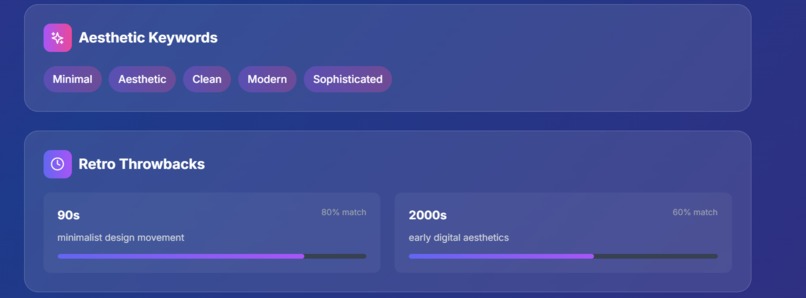
Vibe check on you
-
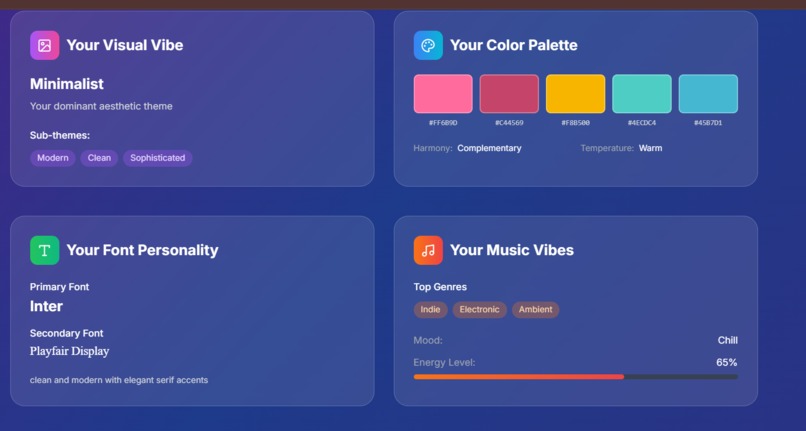
Analysis of your given input
-
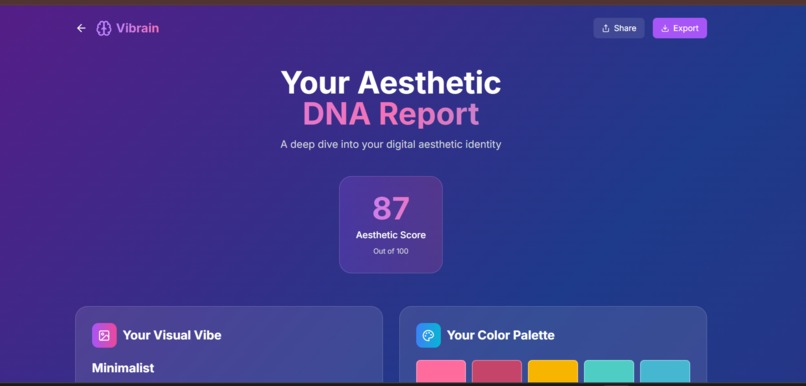
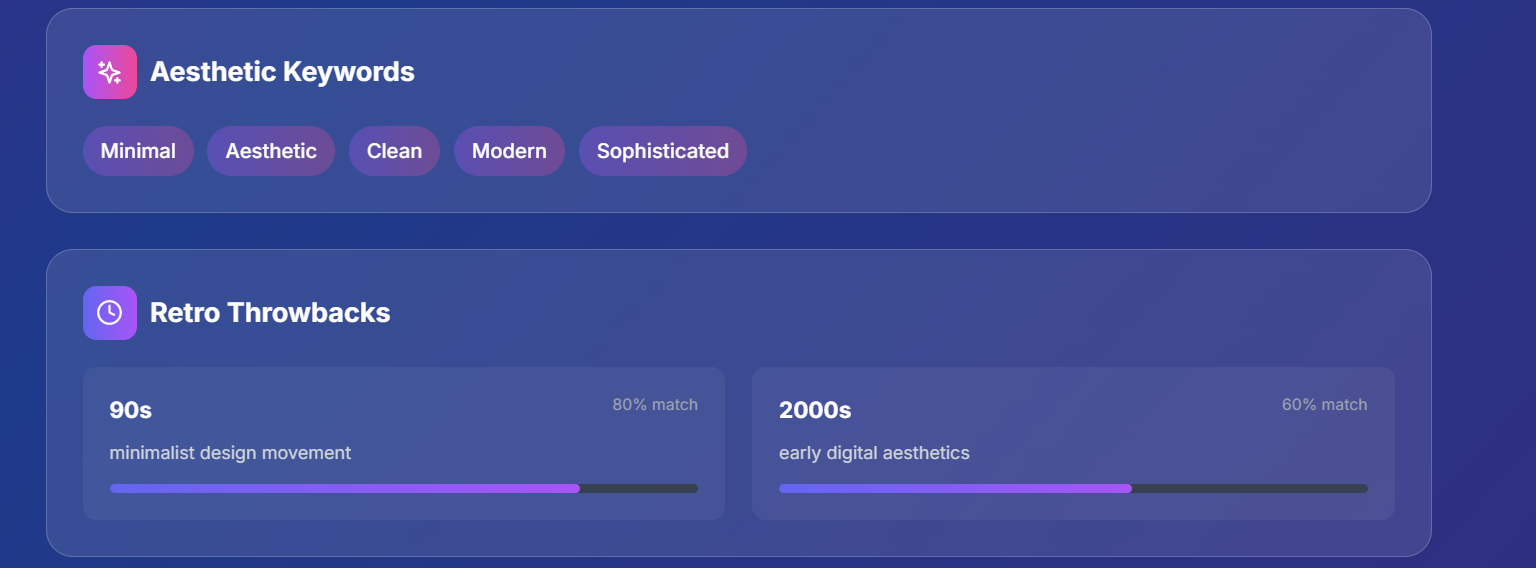
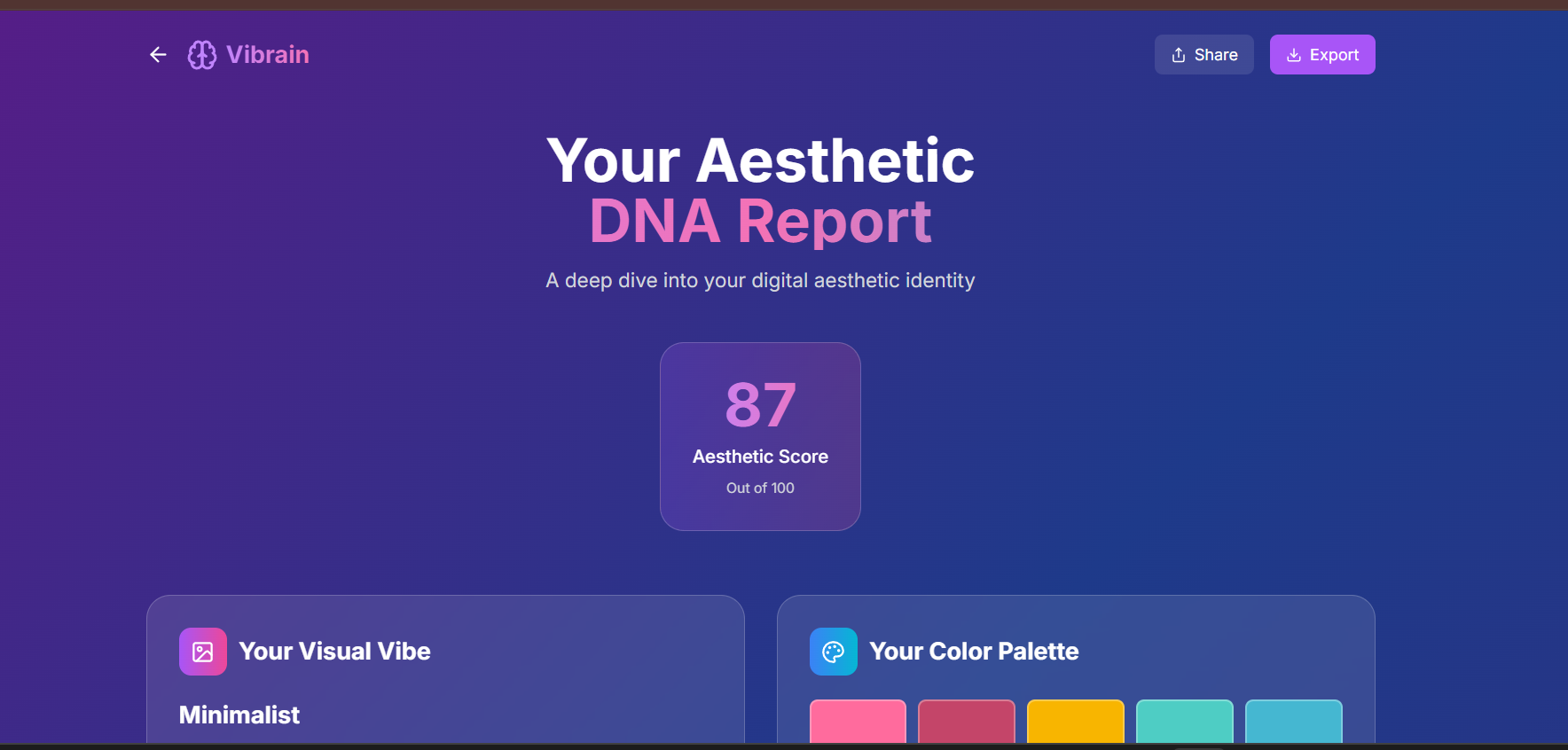
Your personalised report on the basis of the given files.
-
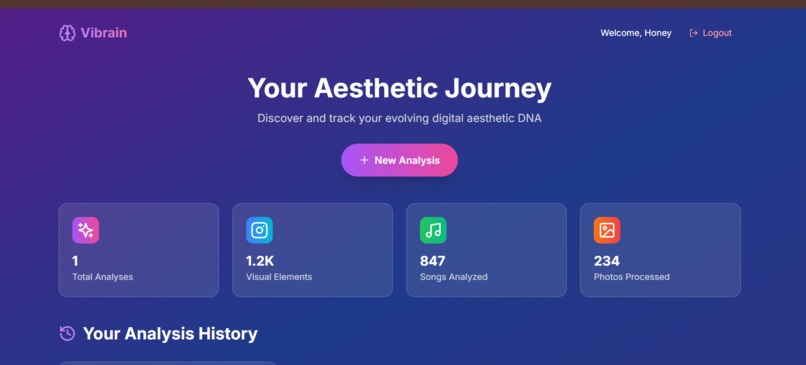
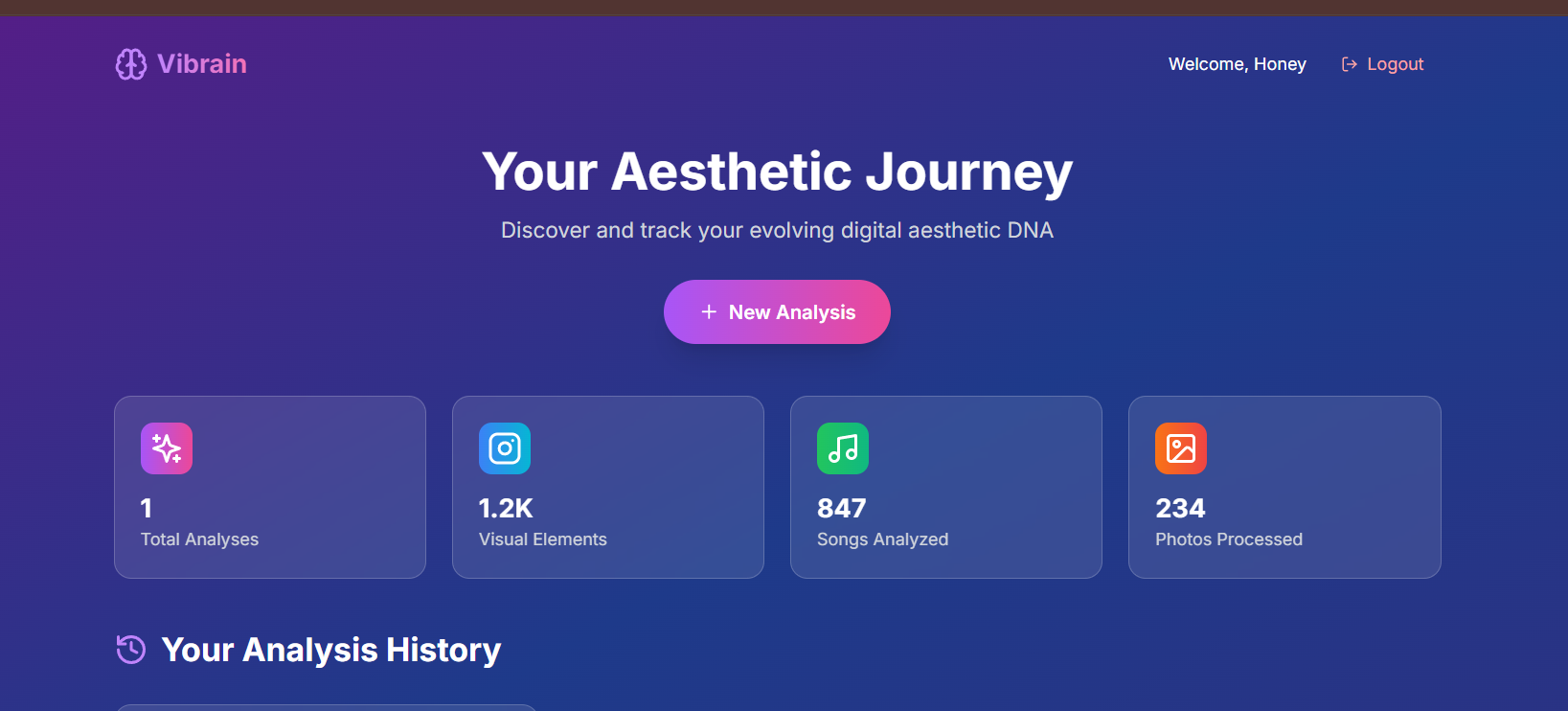
Dashboard
-
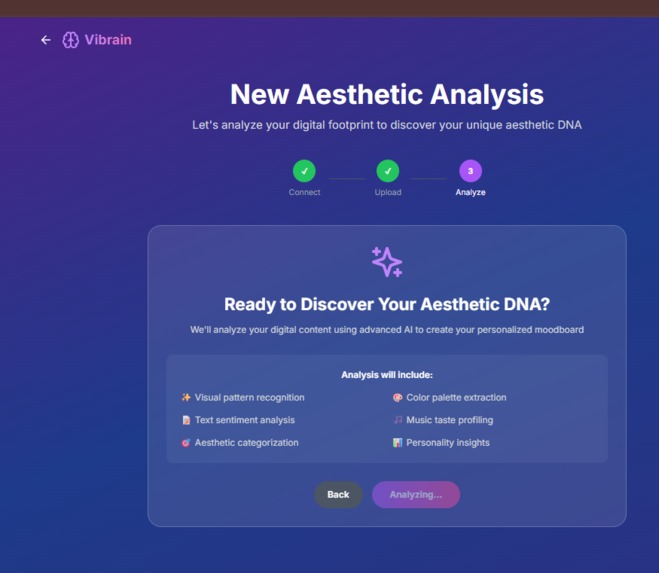
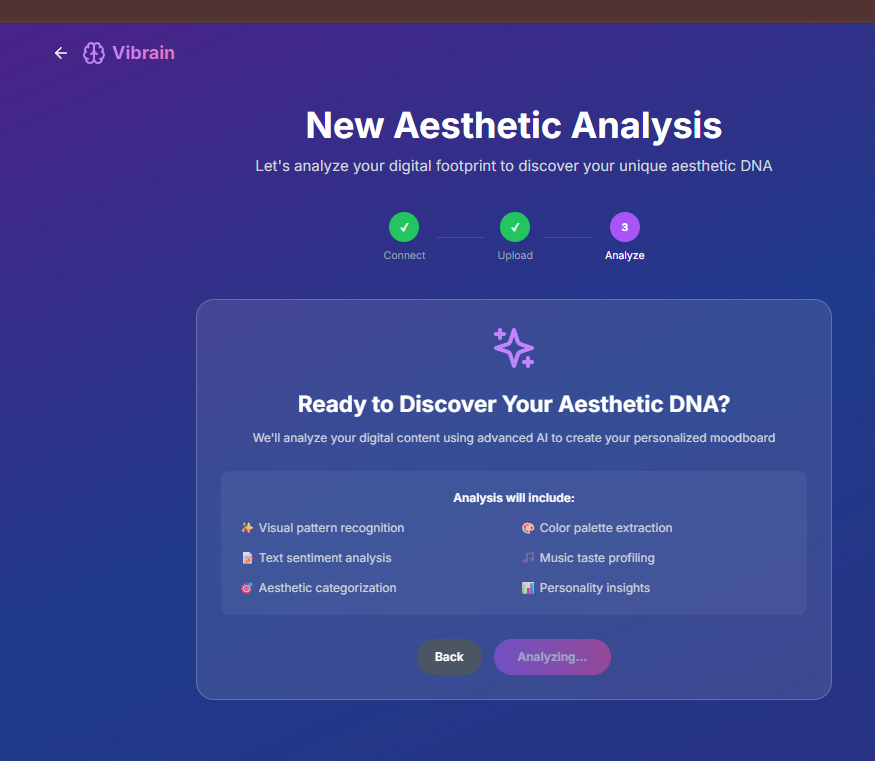
Step 3(Get analysed)
-
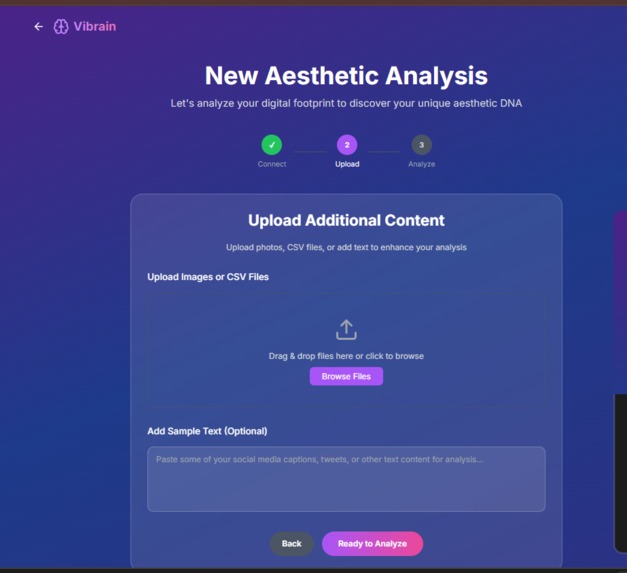
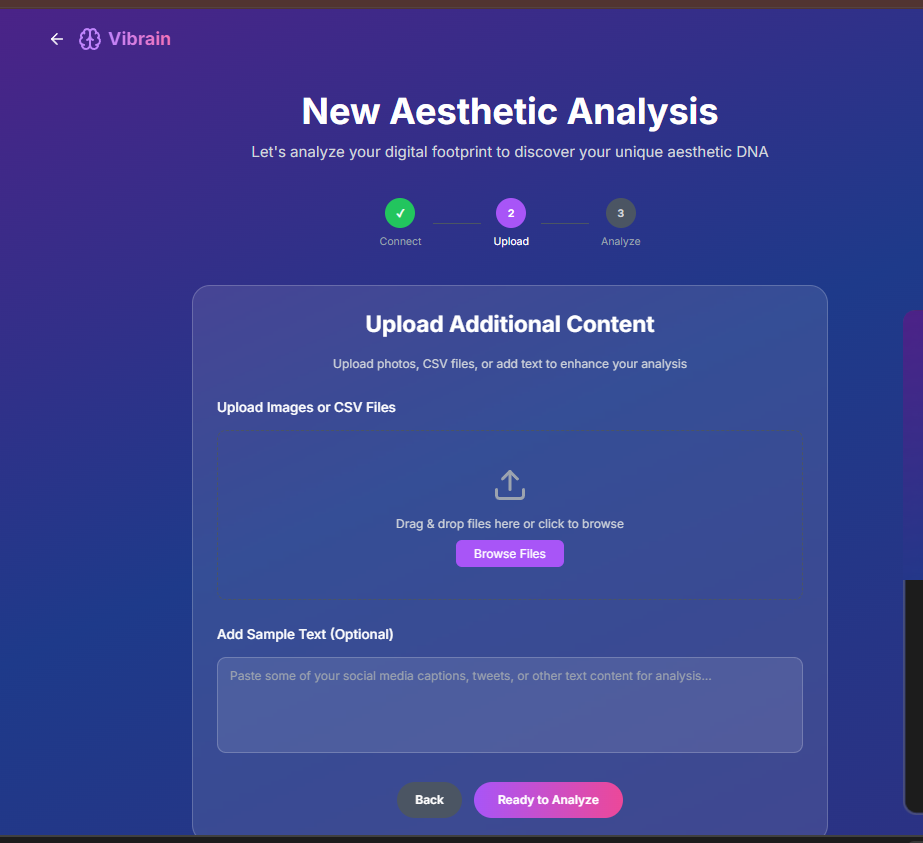
Step 2(Upload your own documents)
-
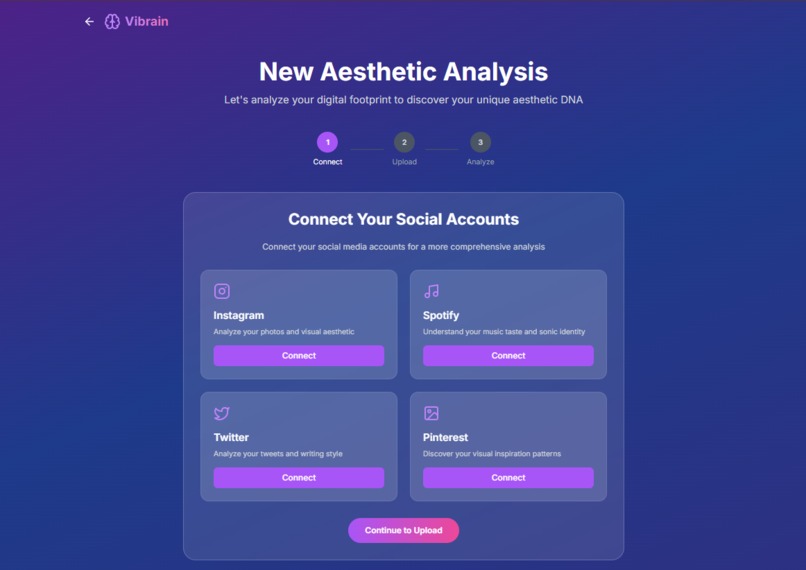
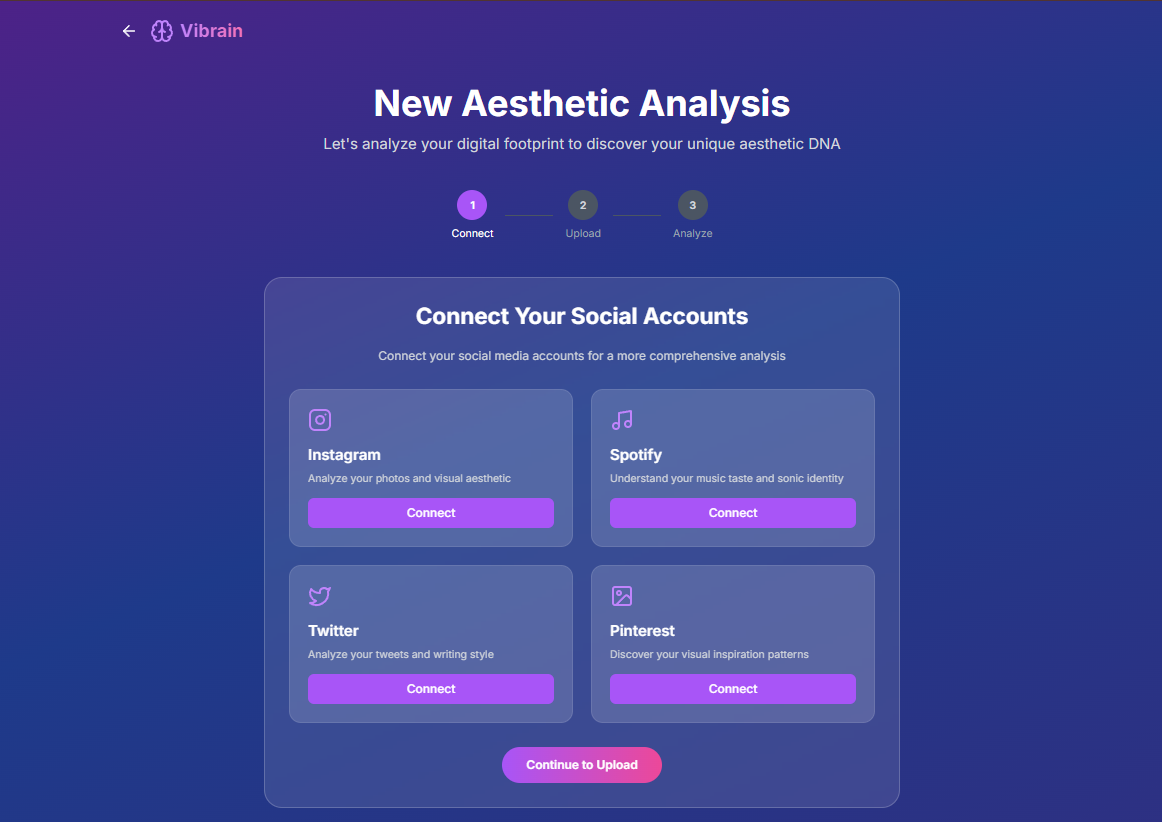
Step 1 (Decide what to connect and what not to)
Inspiration
We noticed that people, especially Gen Z and creatives, often struggle to express their true identity online. Whether it's choosing the right Instagram filter, building a personal brand, or designing a portfolio, it always comes down to one thing—how do I visually represent myself? That’s where Vibrain started. We wanted to build something that doesn’t just tell you about your style—it knows it, through your life, your data, your story.
What it does
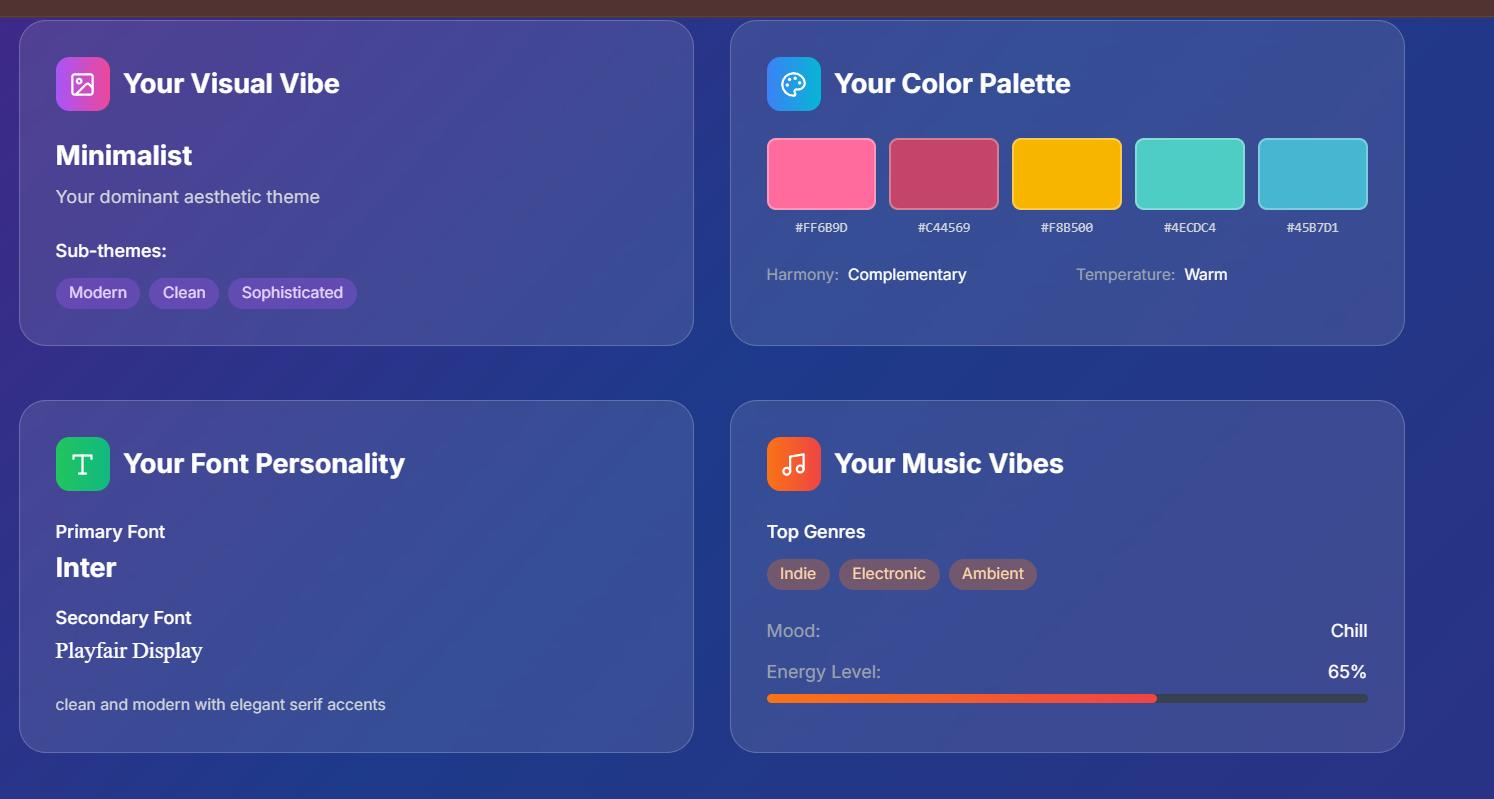
Vibrain is an AI-powered engine that creates a personalized visual moodboard based on your digital footprint. It analyzes your photos, captions, playlists, saved pins, aesthetic preferences, and even location data to generate a unique palette, typography set, pattern language, and moodboard that captures the essence of your personal visual identity. Whether you’re creating a resume, designing merch, building a portfolio, or revamping your social presence, Vibrain gives you a visual brainprint—an identity that feels like you.
How we built it
We combined computer vision and NLP techniques using models like CLIP and BERT to extract emotional tone, aesthetic cues, and semantic meaning from images and text. For color profiling, we implemented k-means clustering to detect dominant hues across media. The frontend was built with React, while the backend used Flask and Python APIs for processing, along with MongoDB for storing user preferences and generated outputs. We also integrated with Spotify, Pinterest, and Instagram Graph APIs to pull user content with consent.
Challenges we ran into
Understanding aesthetic from data isn't trivial. Translating images and text into coherent moodboards required a hybrid approach of machine learning and human curation. Maintaining privacy while processing sensitive personal content was another challenge. We also faced issues tuning the models to reflect consistent visual styles rather than generic outputs.
Accomplishments we’re proud of
We built a fully functional prototype that converts user data into an intuitive, editable, and sharable visual identity. Our tool captures not just colors or photos, but an emotional fingerprint. Vibrain doesn’t feel like a tool—it feels like a creative companion.
What we learned
Design is more than pixels, and identity is more than data. We learned how to combine deep learning with human-centered design to build a system that interprets meaning, not just metrics. We also explored how users perceive authenticity when it comes to AI-generated content.
What’s next
We aim to expand Vibrain with more integrations (Snapchat Memories, Google Photos, Threads), allow users to generate branded templates, and even suggest content themes for creators and designers. We also want to make it mobile-first and scalable for personal branding platforms.

Log in or sign up for Devpost to join the conversation.