-
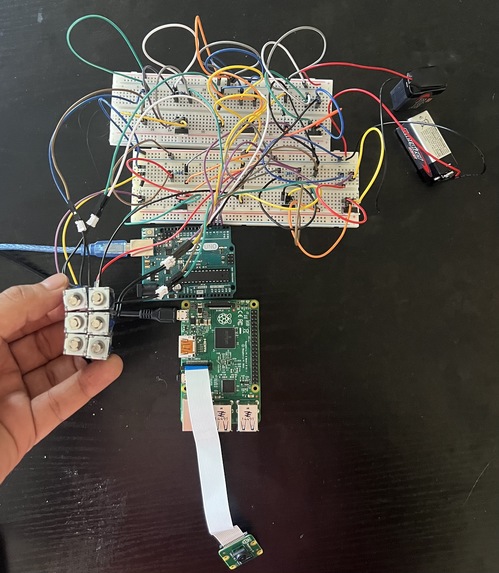
The 2x3 solenoid sensation grid along with the raspberry pi 2, Arduino, power supply and circuit

About the ViBraille Project
Inspiration
The inspiration behind ViBraille stemmed from a desire to bridge the gap between the visually impaired community and the rapidly evolving world of technology. We recognized the need for innovative solutions to make written text more accessible for those who rely on Braille. Our goal was to create a tool that not only serves a practical need but also empowers visually impaired individuals by providing them with greater independence in accessing printed information.
What We Learned
Throughout the development of ViBraille, we delved deep into the realms of OCR (Optical Character Recognition), mechanical engineering for the Braille sensation machine, and the intricate system of Braille itself. We gained valuable insights into the challenges faced by the visually impaired community and how technology can play a crucial role in addressing these challenges. This project also enhanced our skills in Python programming, Arduino development, and integrating hardware with software.
How We Built It
The journey of building ViBraille involved several key stages:
- Designing the Braille Display: We started by designing a custom Braille display using solenoids to create tactile output.
- Integrating OCR with Raspberry Pi: Utilizing a Raspberry Pi and its camera module, we set up an OCR system to capture and convert printed text into digital form.
- Developing the Conversion Algorithm: We wrote a Python script to translate the digital text into Braille code.
- Arduino Programming: An Arduino was programmed to receive the Braille code and control the solenoids in the Braille display.
- Testing and Iteration: The entire system underwent multiple rounds of testing and iteration to ensure accuracy and reliability.
Challenges Faced
Our journey was not without its challenges. Key hurdles included:
- Optimizing OCR Accuracy: Achieving high accuracy in text recognition, especially in varying lighting conditions, was a significant challenge.
- Solenoid Control: Precisely controlling the solenoids to accurately represent Braille characters required meticulous programming and hardware adjustments.
- Integration: Seamlessly integrating the OCR system with the Braille display posed both software and hardware challenges.
- Accessibility Considerations: Ensuring the system was easily usable and accessible for visually impaired individuals was paramount and guided many of our design decisions.
Despite these challenges, our passion for making a difference in the lives of visually impaired individuals kept us motivated and driven throughout the project.
This story of ViBraille not only shares our journey but also reflects our commitment to using technology for social good. We hope it inspires others to innovate and think inclusively.

Log in or sign up for Devpost to join the conversation.