-
-
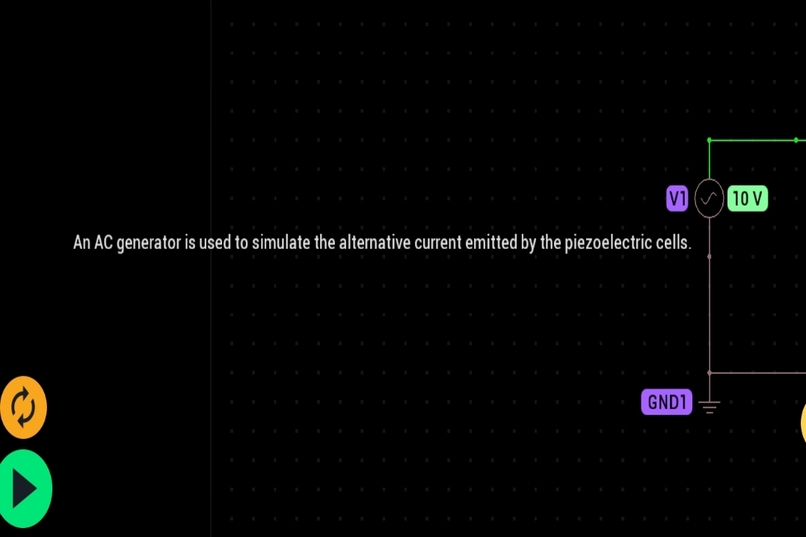
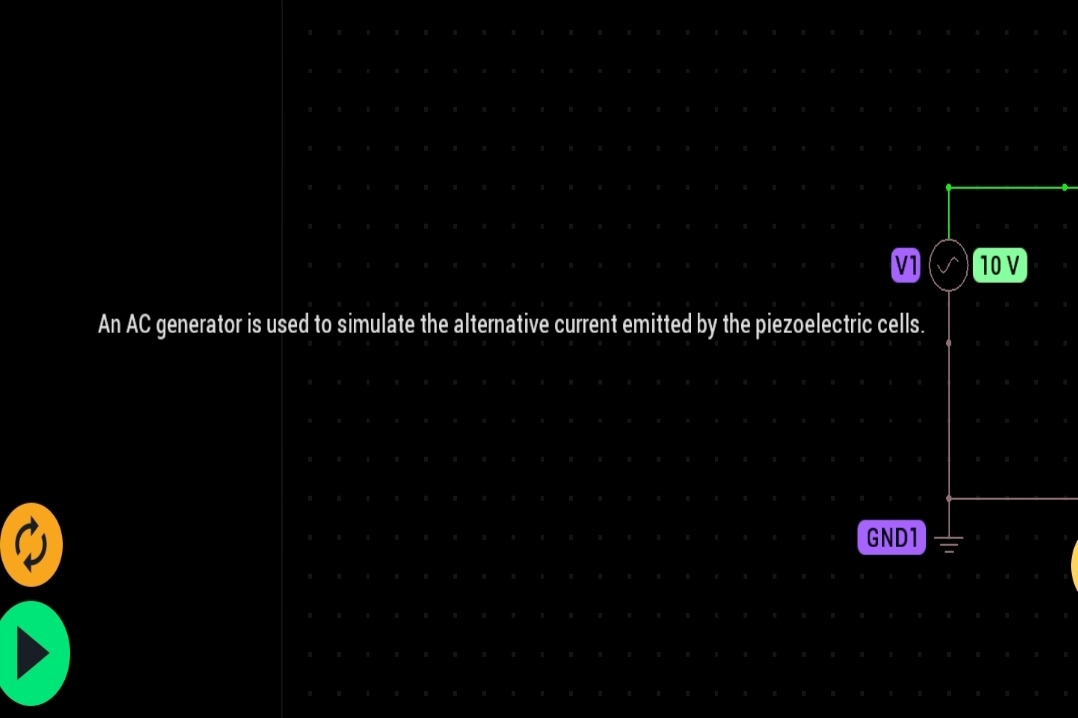
Piezoelectricity equivalent
-
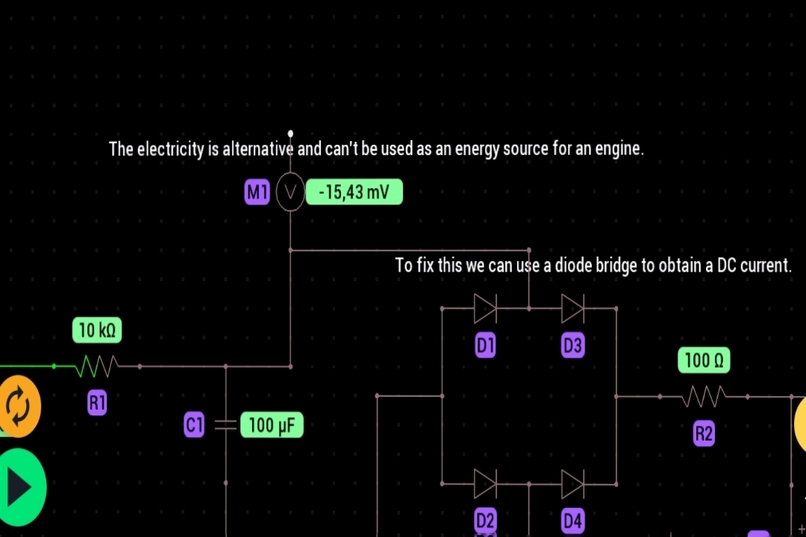
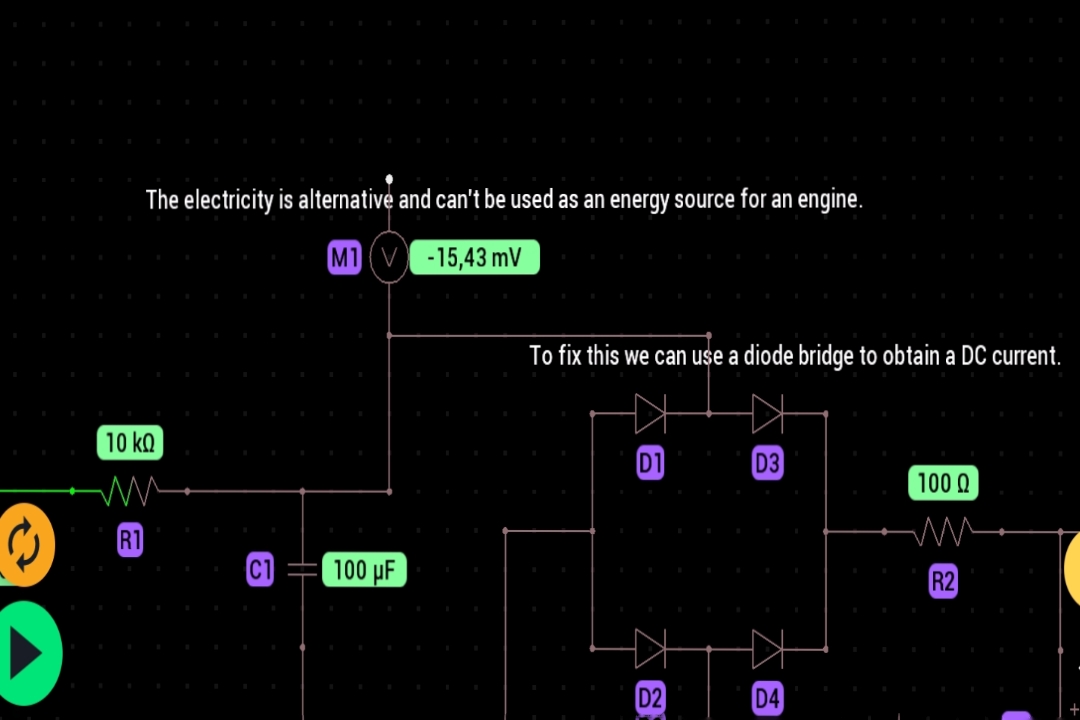
Conversion from AC current to DC current
-
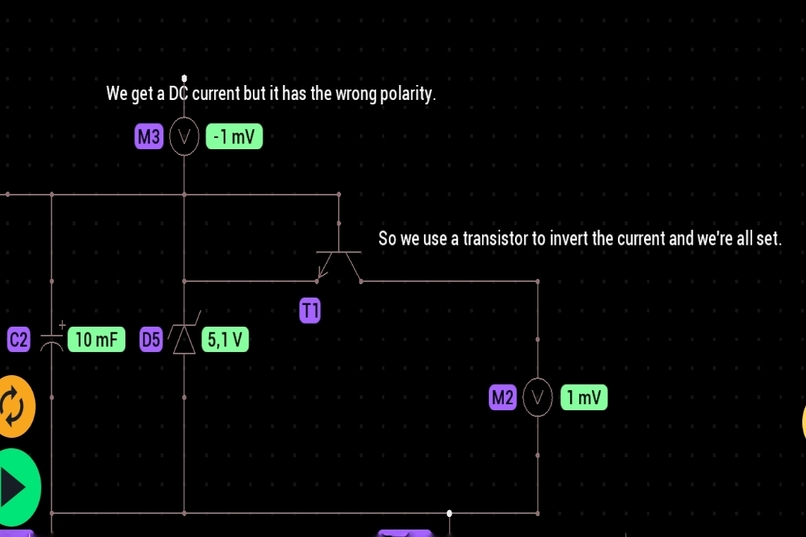
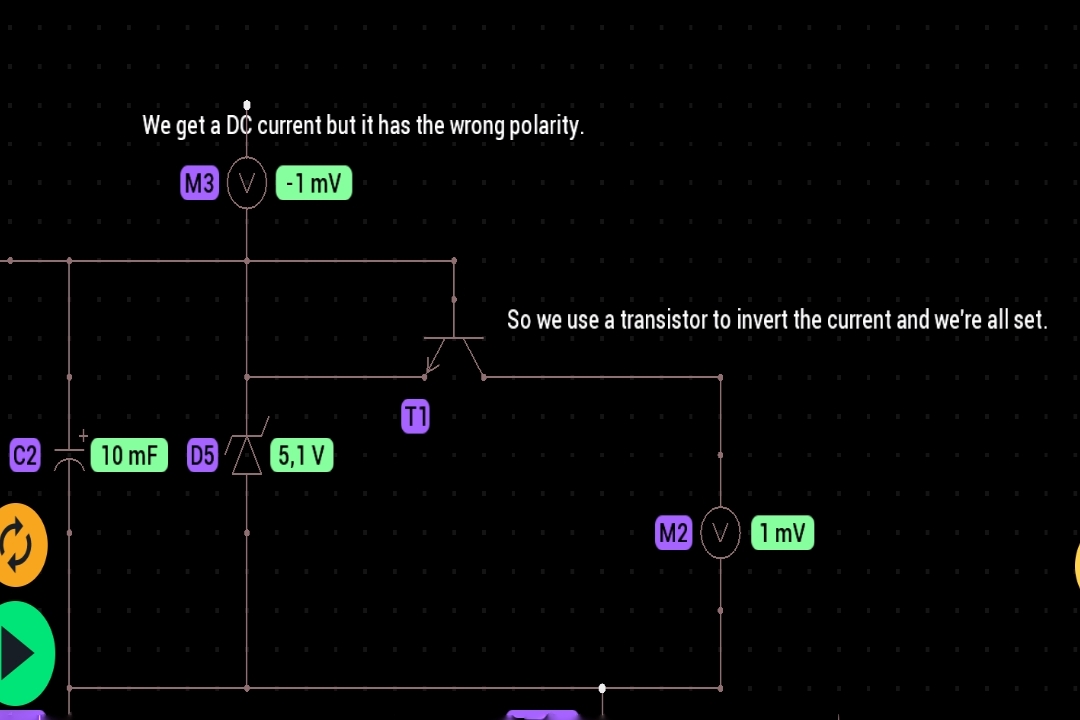
Flip from a negative to a positive current
-
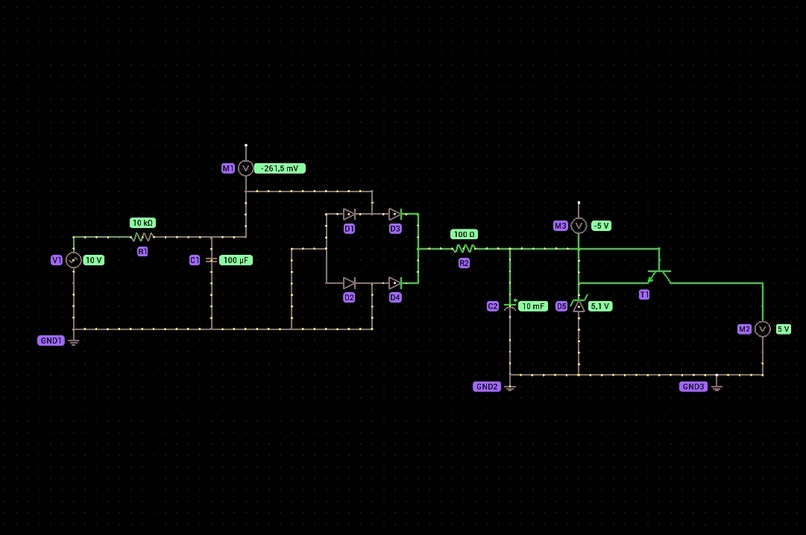
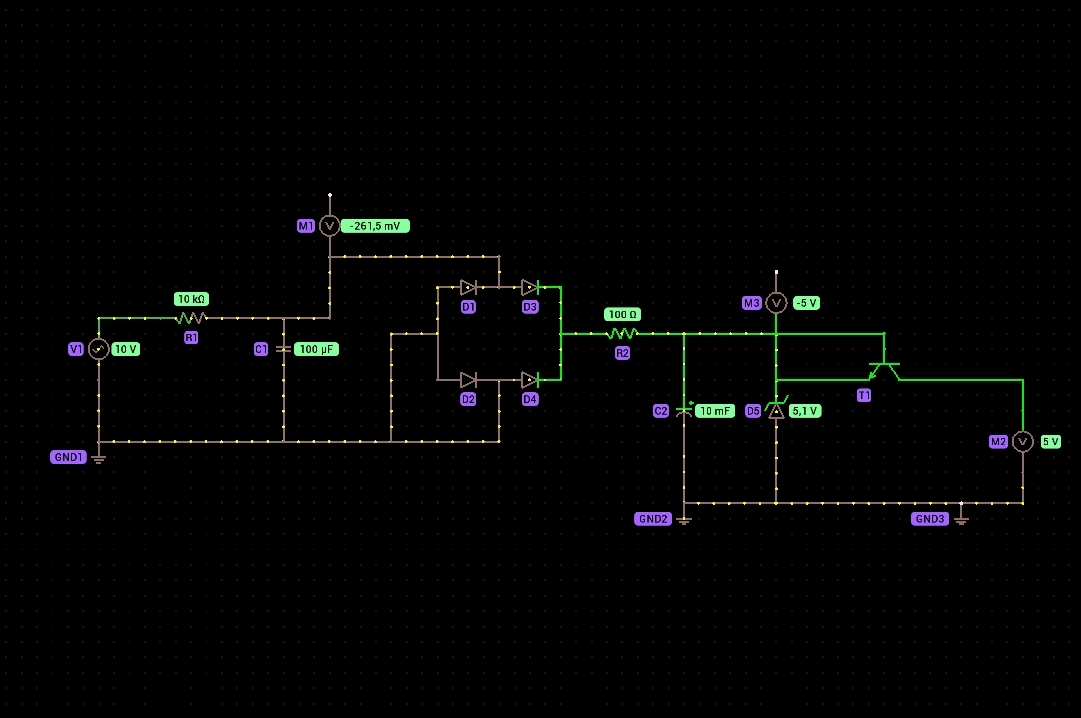
Final aspect of the project while working.
Inspiration
The electric vehicle market is growing fast, but a major challenge remains: driving range and overall energy efficiency. When studying electric vehicles (EVs), we see a clear physical fact: these cars are very heavy because of their batteries, which creates massive compression forces on the suspensions during road irregularities. Currently, all this vertical kinetic energy is completely lost as heat. The inspiration for Vibra-Charging came from this fact: instead of suffering from road defects, what if we harvested them to extend vehicle range?
What it does
Vibra-Charging is a passive and continuous micro-regeneration system. By integrating piezoelectric modules (PZT-5H ceramics) directly into the suspensions, the system converts the mechanical energy of road vibrations into electricity.
Unlike classic regenerative braking, which works intermittently (only on the horizontal axis during deceleration) and relies on the electromotive force $$e = -\frac{d\Phi}{dt}$$ where $$\Phi$$ is the magnetic flux, Vibra-Charging works continuously on the vertical axis. The recovered energy is rectified and injected directly to power the onboard electronics (GPS, safety sensors, screens). By handling these auxiliary consumptions, the system relieves the main battery, creating a true "autonomy shield".
How we built it
The project relies on a solid architecture combining mechanics and power electronics:
- Piezoelectric transduction: Modeling the electrical charge generated by the mechanical force on the suspensions using the physics formula $$Q = d_{33} \cdot F$$ where Q is the electrical charge in Coulombs, $$d_{33}$$ is the piezoelectric coefficient, and F is the applied mechanical force.
- Power Management Unit (PMU): Designing a rectification circuit (Graetz bridge) combined with an ultra-efficient Buck-Boost converter to stabilize high-voltage peaks into usable direct current for the vehicle network. The output voltage is governed by the converter duty cycle D: $$V_{out} = -V_{in} \cdot \frac{D}{1-D}$$
- Eco-design approach: Choosing a 100% solid-state electronic solution, eliminating any need for fluids or heavy mechanical maintenance.
Challenges we faced
The biggest challenge was optimizing the energy chain. Harvesting vibrational energy means managing very low continuous power with high transient voltages. We had to size the electronic circuit correctly to minimize losses and maximize the total harvested power P(t): $$P(t) = \eta \cdot |F(t) \cdot v(t)|$$ where $$\eta$$ represents the system efficiency and v(t) is the vertical velocity of the suspension. Furthermore, we made a major strategic pivot during the project: originally planned as a complex hydrogen thermal system, we simplified and redirected the concept toward "native electric" to guarantee a zero-maintenance system and a much cleaner environmental impact.
What we learned
We learned that in engineering, the quest for efficiency is not always about creating new energy sources, but often about recycling existing wasted energy (the system's entropy). This project also allowed us to deepen our skills in power electronics and physical modeling of smart materials.
What's next for Vibra-Charging
- Physical prototyping: Integrating real sensors on an actual shock absorber cup to measure efficiency in real conditions.
- Industrial partnerships: Offering the technology as a retrofit solution or directly factory-integrated for manufacturers of heavy vehicle fleets (electric buses and trucks), where the scale effect is most massive.


Log in or sign up for Devpost to join the conversation.