Inspiration
People often know how they want to feel before they know which makeup to choose.
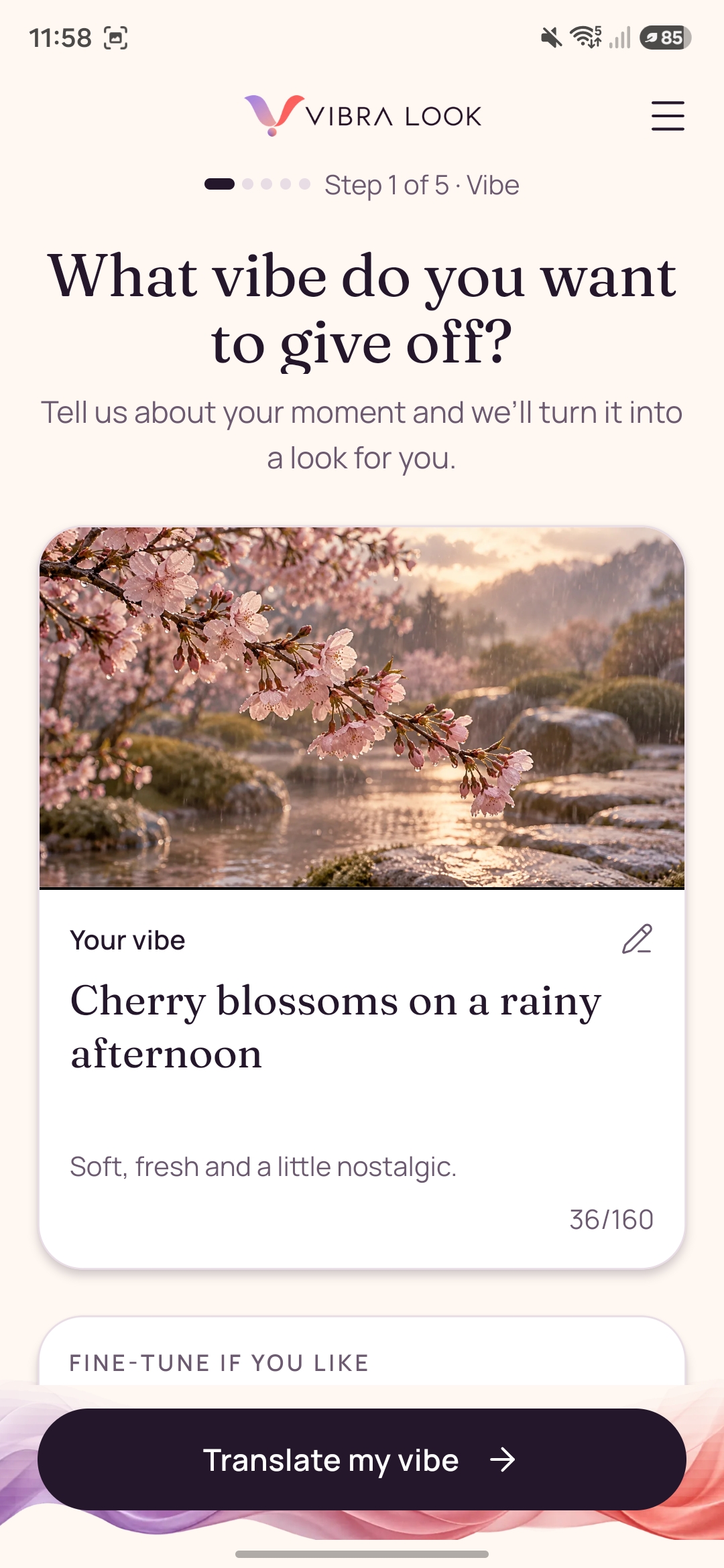
“I want something that feels like jazz on a rooftop.” “Confident enough for an important meeting, but still relaxed.” “Soft, like cherry blossoms on a rainy afternoon.”
These are meaningful creative directions, but they are difficult to express through shade selectors and product catalogs.
That inspired VIBRA LOOK: a makeup experience that starts with your imagination.
Accomplishments that we're proud of
We’re proud of turning an abstract idea—describing how you want to feel—into a clear, personal makeup experience.
We developed three complementary interpretations of the same vibe, giving people creative options and control over their eyes, lips, and cheeks.
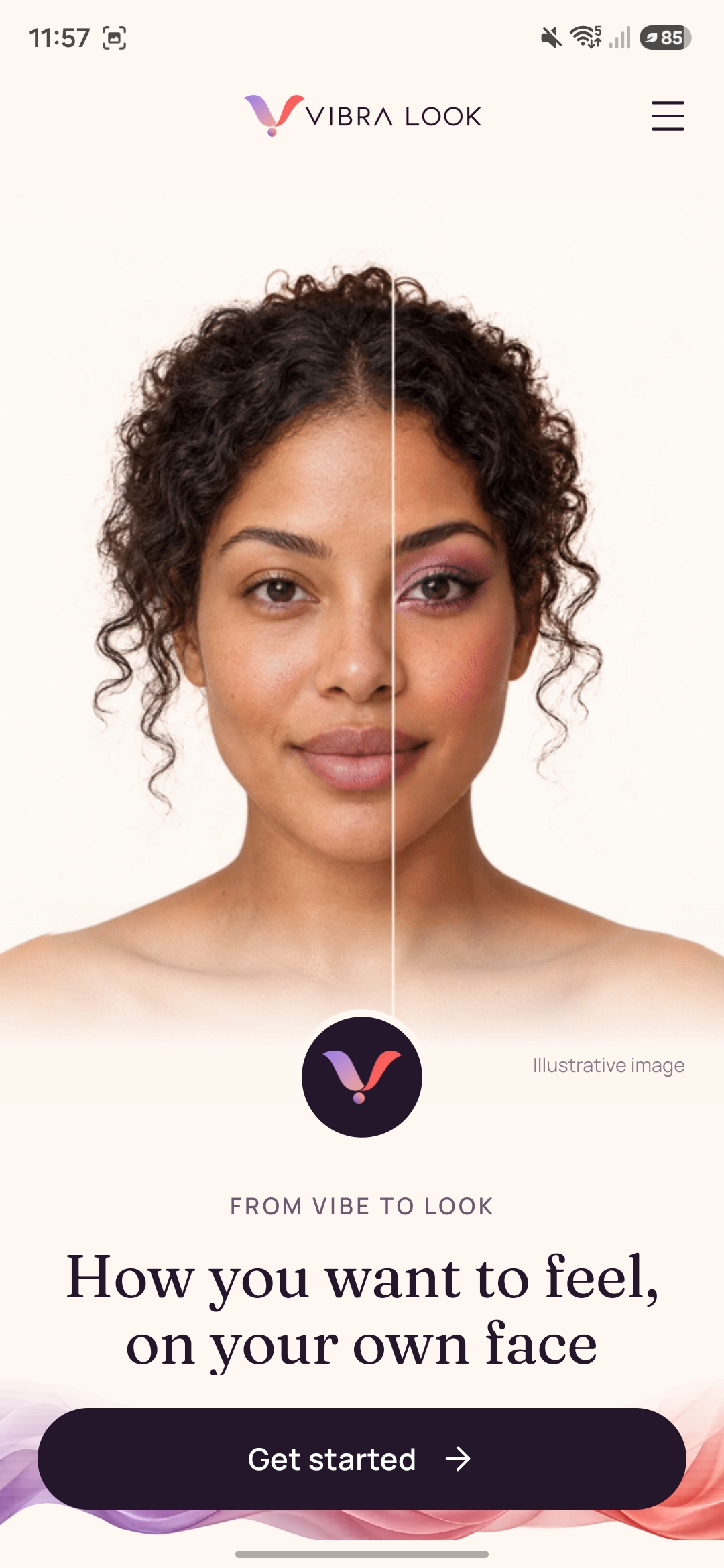
We also created a cohesive visual identity and an animated before-and-after introduction that makes the concept immediately understandable.
Throughout the experience, we kept self-expression at the center: helping people explore their choices while preserving their identity.
What it does
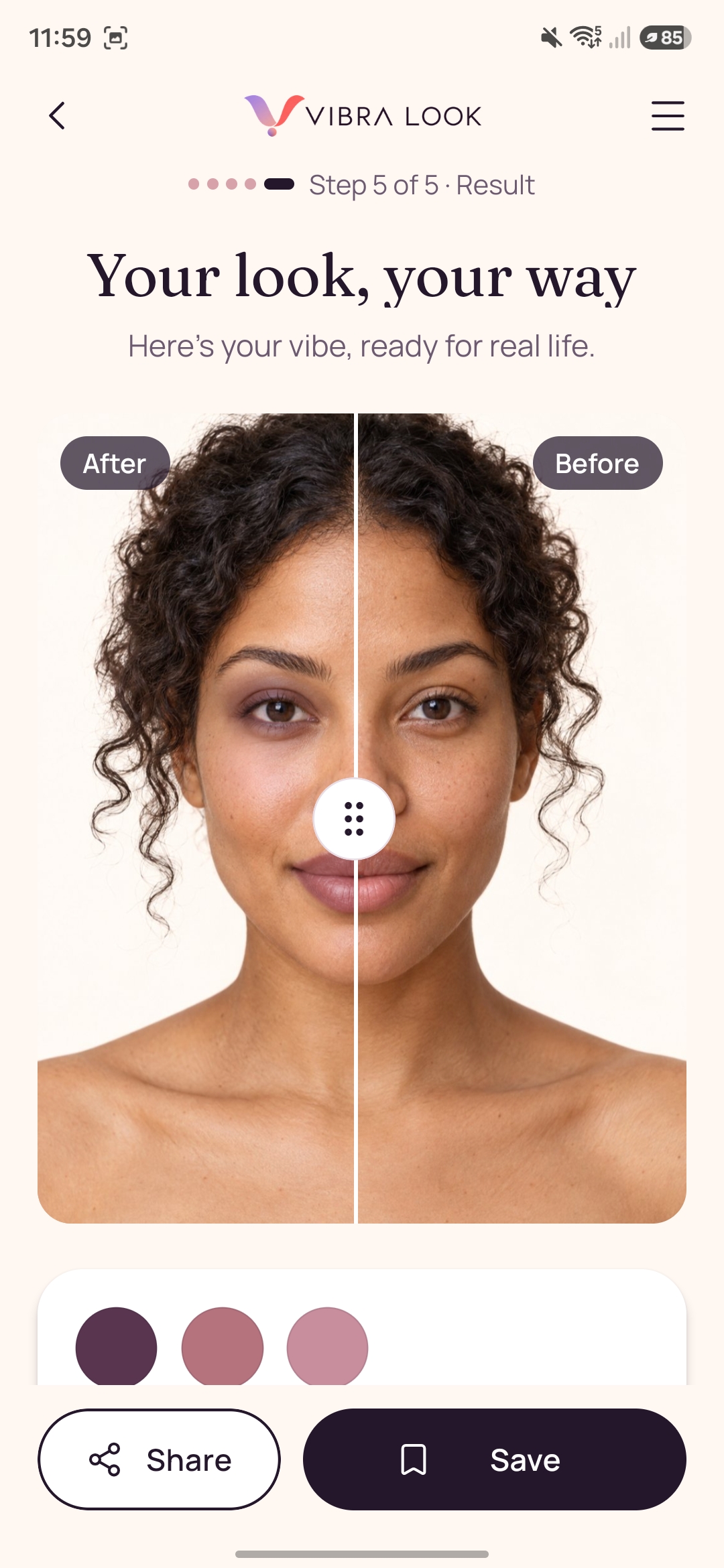
VIBRA LOOK turns a mood, emotion, or scene into makeup directions you can explore on your own selfie.
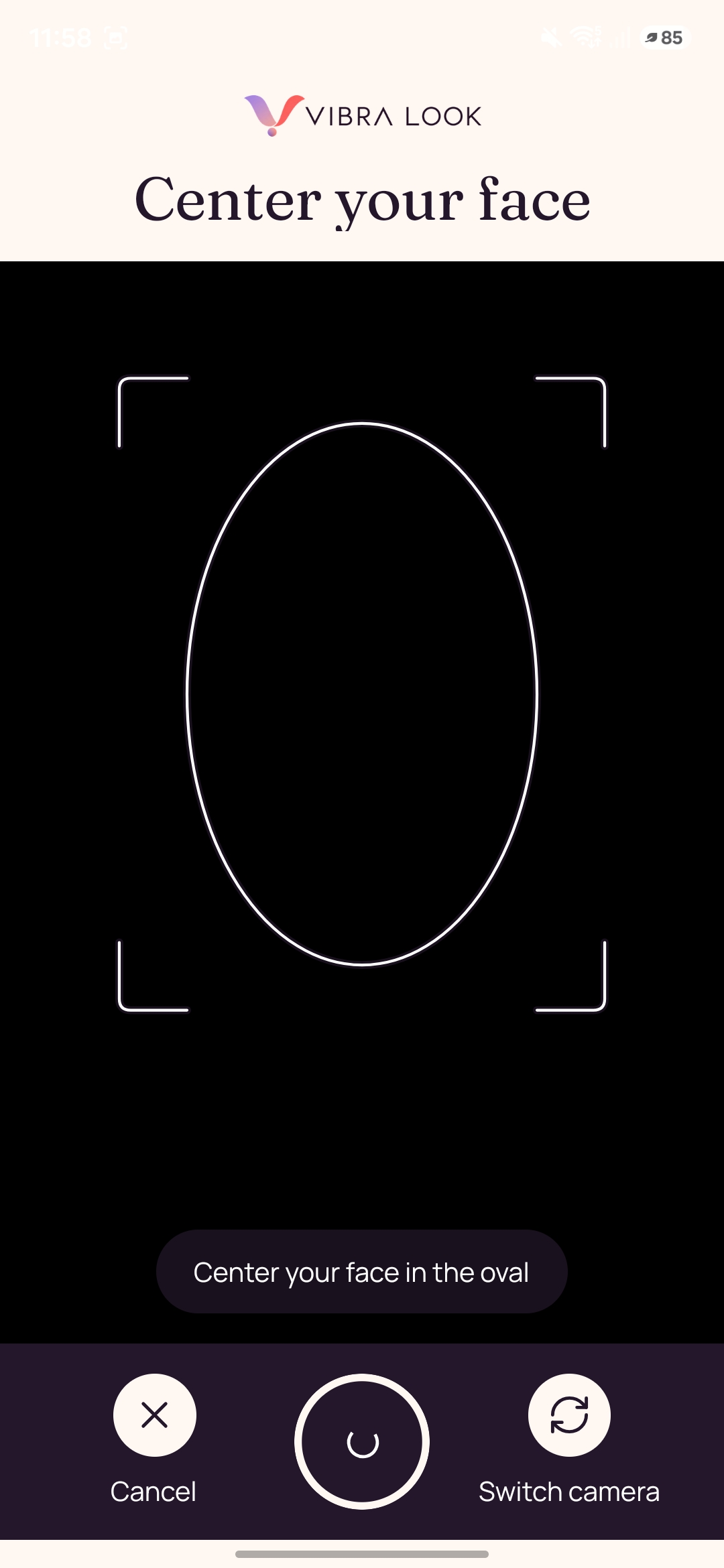
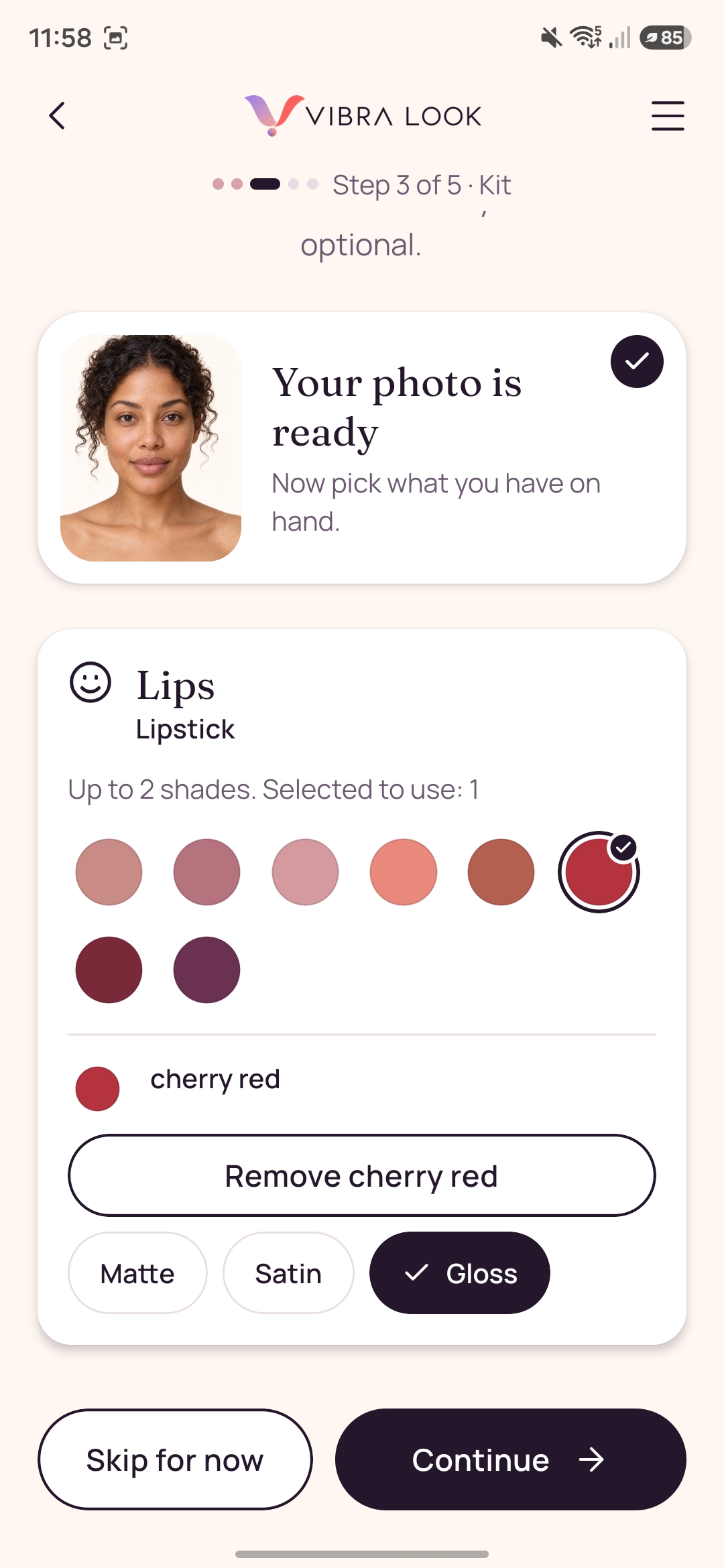
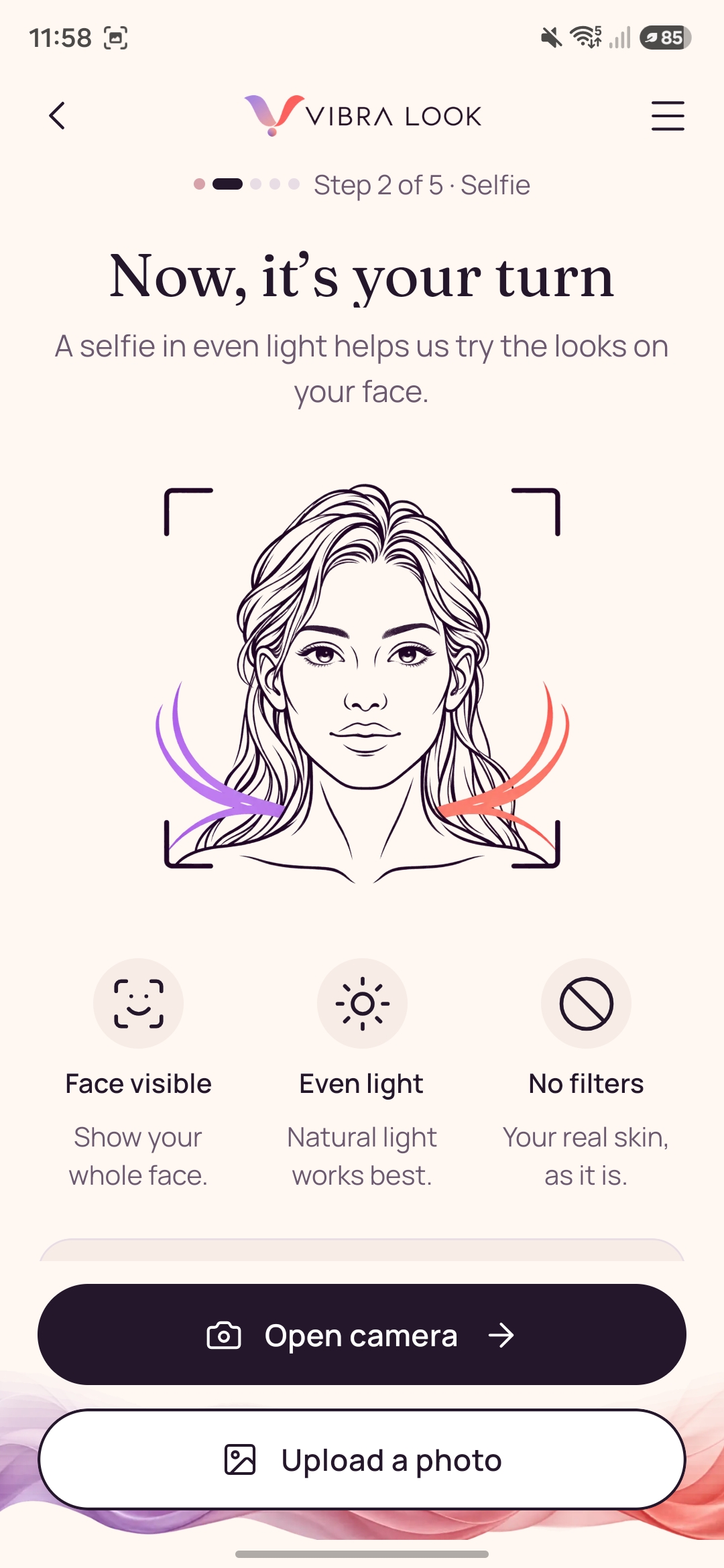
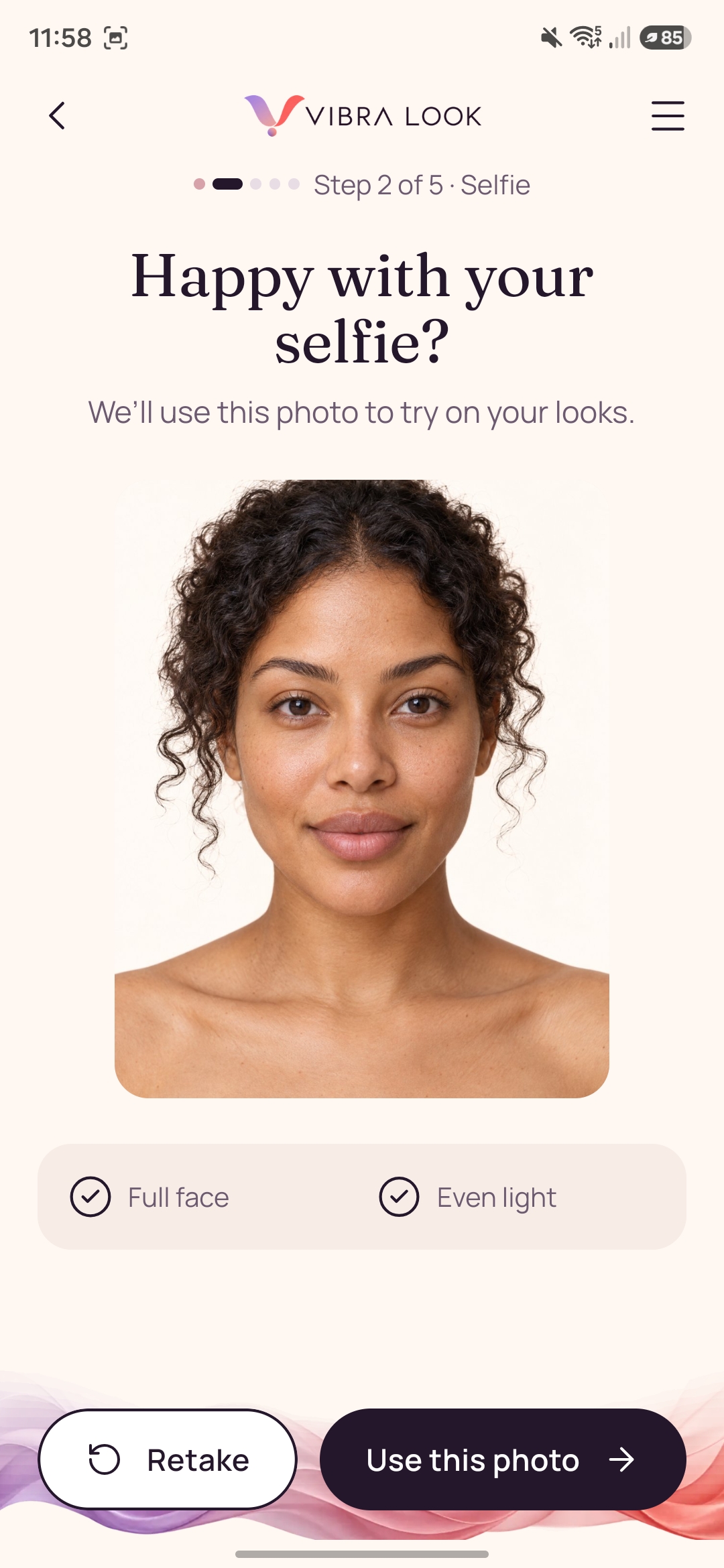
You describe your vibe, choose your preferred intensity and available time, and capture or upload a photo. You can also share the colors and types of makeup you already have.
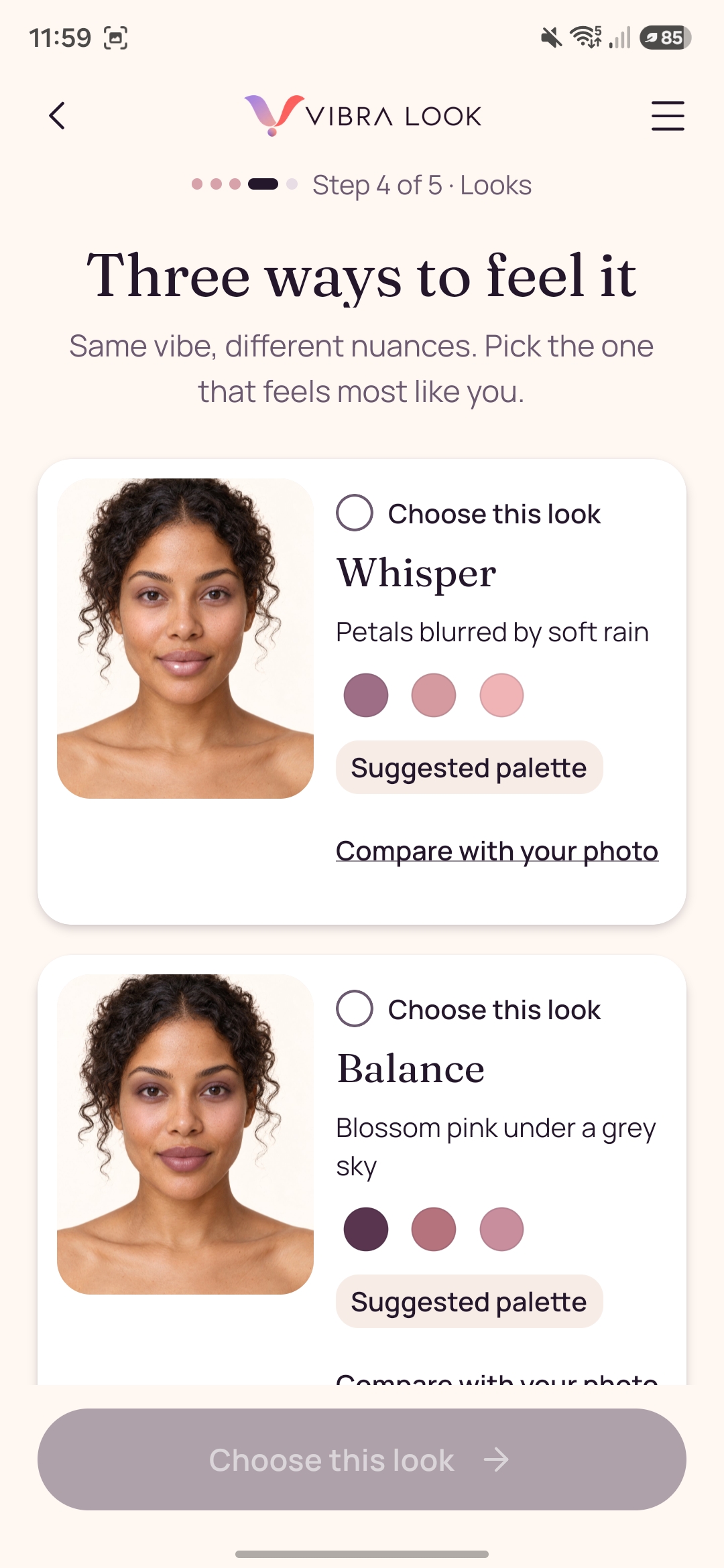
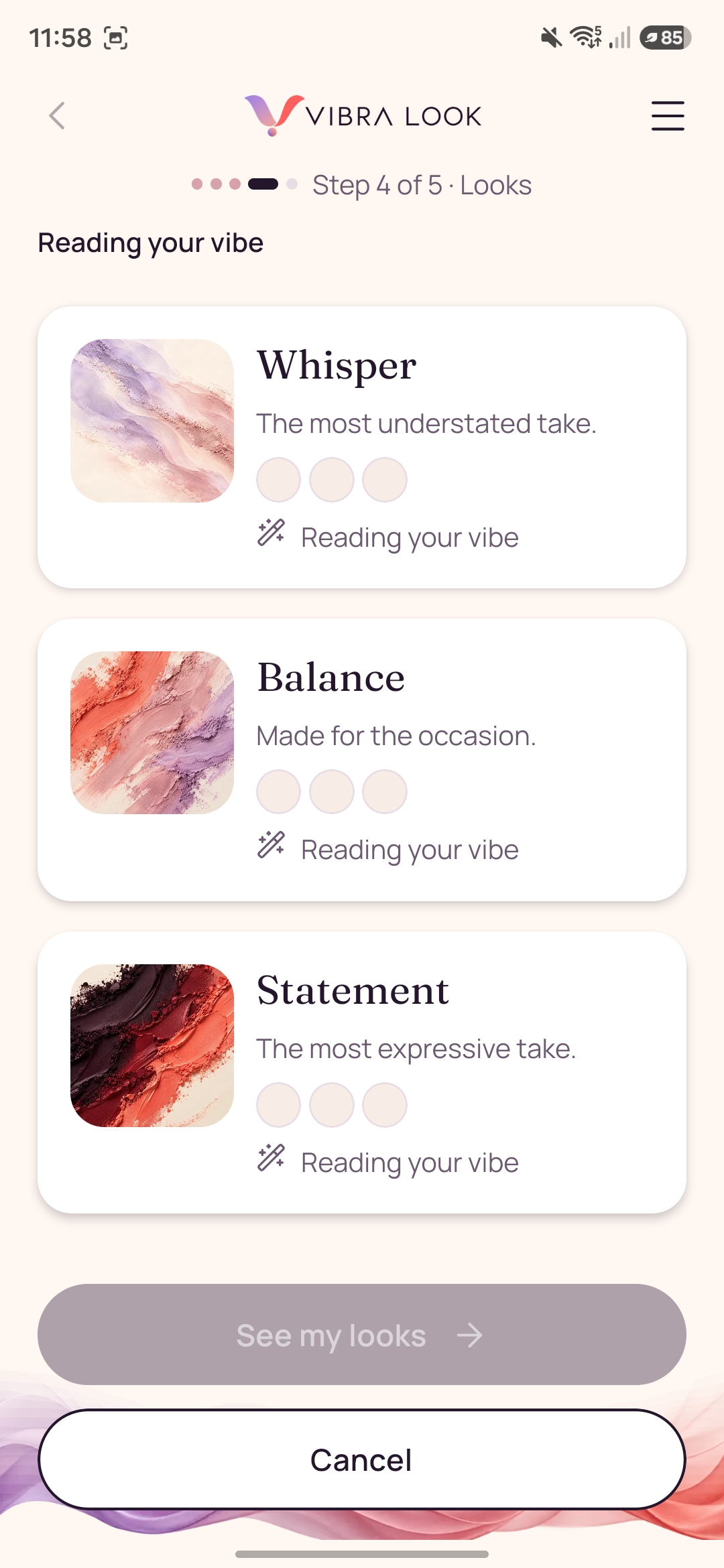
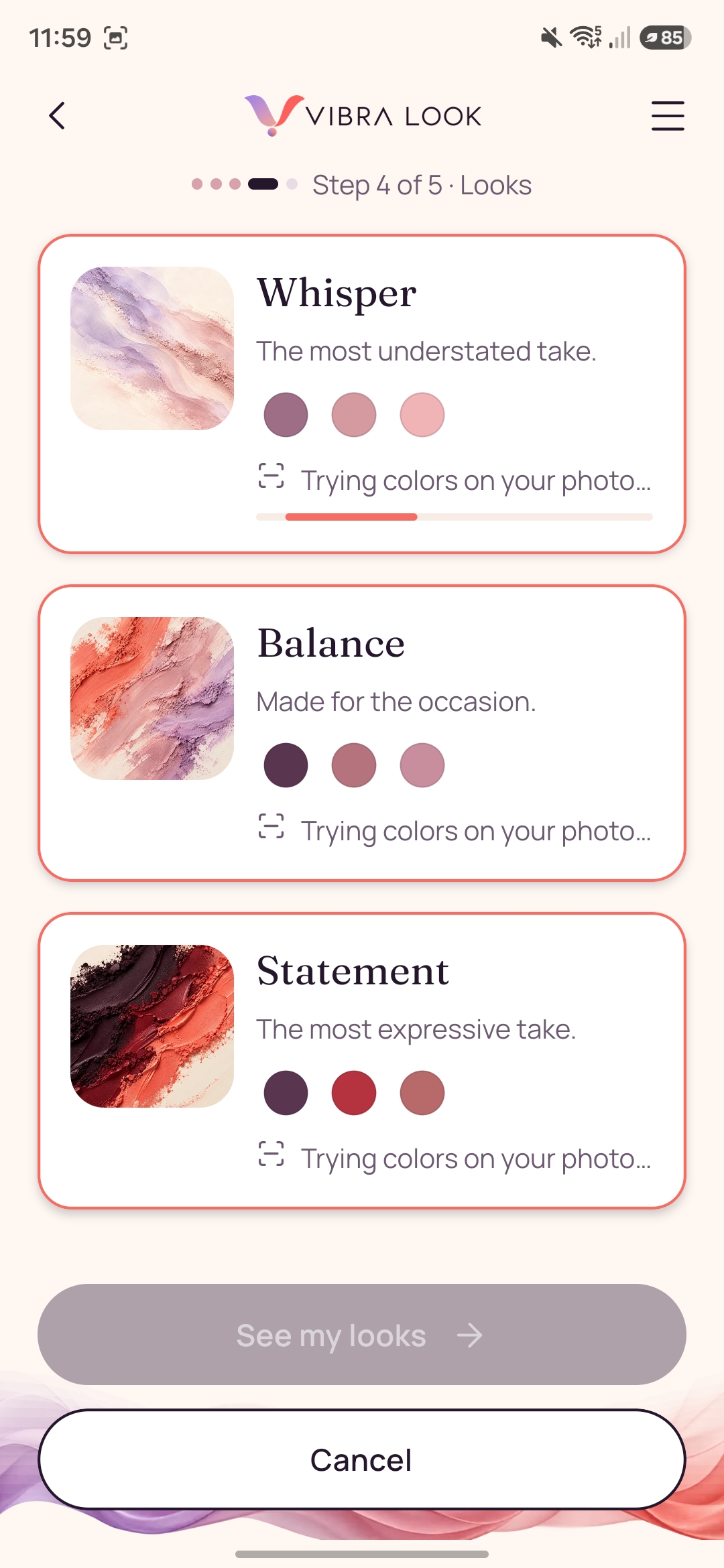
The experience presents three interpretations of your intention:
- Whisper: a subtle expression of your vibe.
- Balance: a more defined, harmonious interpretation.
- Statement: a more expressive use of color.
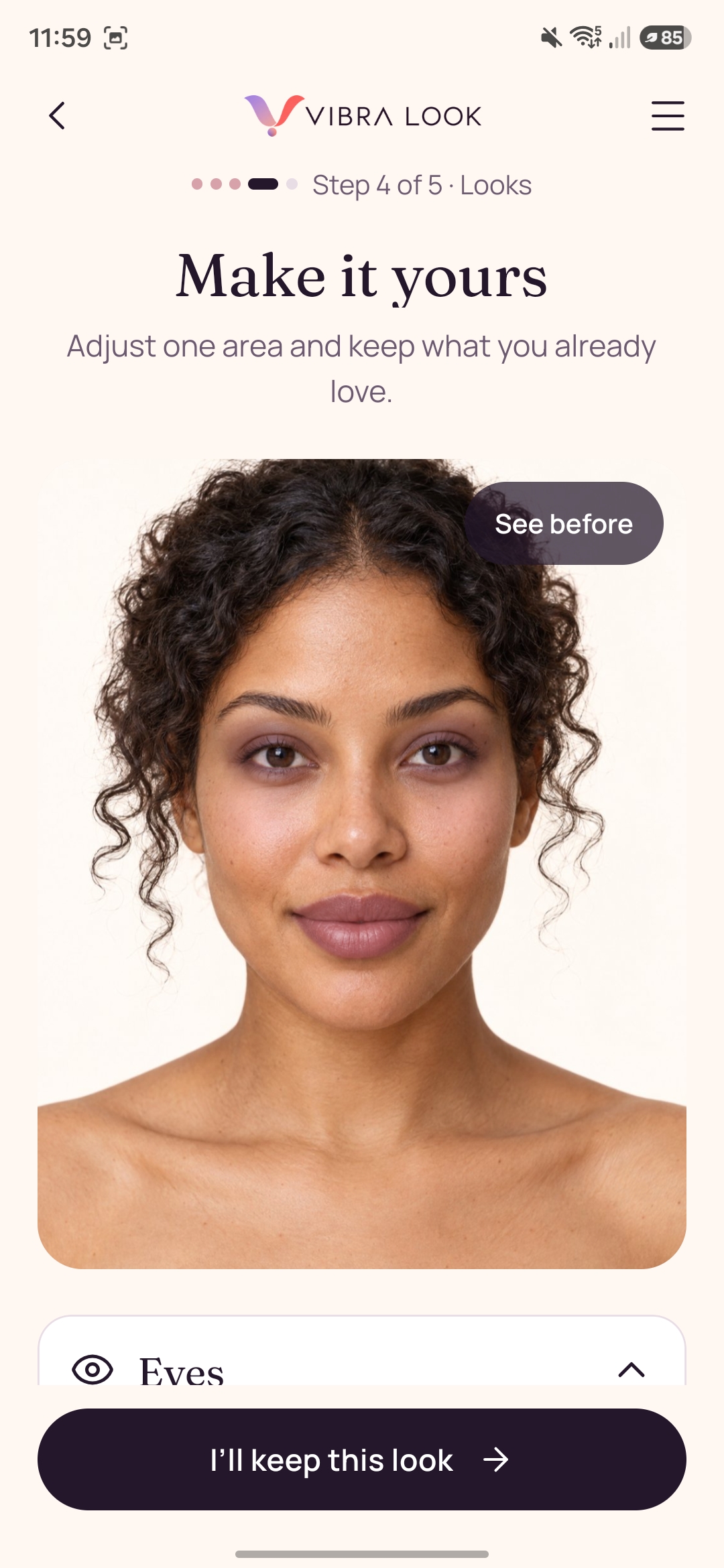
You can choose a direction and make it your own by adjusting eyes, lips, and cheeks individually. The final experience connects the virtual look with a practical guide for recreating it.
The goal is to make creative makeup choices feel approachable, personal, and achievable.
How we built it
We designed VIBRA LOOK around a guided journey: describe your intention, prepare a selfie, explore interpretations, refine your choice, and recreate the result.
The technical approach combines language-based interpretation with YouCam’s makeup virtual try-on capabilities. The interpretation defines a concrete makeup direction, while virtual try-on makes that direction visible on the person’s photo.
A central design decision was to use the same original selfie across all interpretations. Consistent framing helps people compare the makeup itself and understand what changes when they adjust a particular area.
We also developed a dedicated visual identity and a reusable interface system for the mobile experience. Warm cream surfaces, plum typography, orchid and coral accents, and subtle motion give the product the feeling of a personal beauty studio.
Animation supports the experience through selection feedback, transitions, and a moving before-and-after divider. Reduced-motion behavior is part of the design.
Challenges we faced
One challenge was translating an abstract phrase into specific visual choices. “Jazz on a rooftop” needs to become a coherent combination of colors, finishes, and intensity while leaving room for personal interpretation.
Another was making the three interpretations meaningfully different. They should offer distinct ways to express the same intention, without suggesting that one version makes someone more attractive than another.
We also worked on making the experience immediately understandable. Our initial onboarding artwork communicated emotion and color, but did not clearly explain makeup. We refined it into a before-and-after portrait with a moving divider, then improved the makeup’s visibility and adjusted the framing to show the complete head.
Finally, we wanted the experience to remain useful beyond the screen. Considering available time and the user’s own makeup helps connect inspiration with something they can actually try.
What we learned
We learned that explaining an AI-powered experience visually requires as much care as explaining it in words. A clear before-and-after interaction communicates the idea much faster than an abstract illustration alone.
We also learned that personalization needs visible controls. Letting someone adjust one area while preserving the rest makes the experience easier to understand and gives them more ownership of the result.
Throughout the design process, we kept returning to one principle: the person should remain the author of their look. We want VIBRA LOOK to truly offer a personalized, intuitive experience and an extraordinary result.
What’s next
Our next priorities are validating the experience with users, improving how emotional descriptions become makeup directions, and making the recreation guide more useful with the products people already own.
Over time, we want VIBRA LOOK to remember explicit preferences—such as colors someone likes or rejects—so that future suggestions become more personal.
Built With
- ai
- beauty-tech
- expo.io
- react-native
- typescript
- virtual-try-on

Log in or sign up for Devpost to join the conversation.