Inspiration
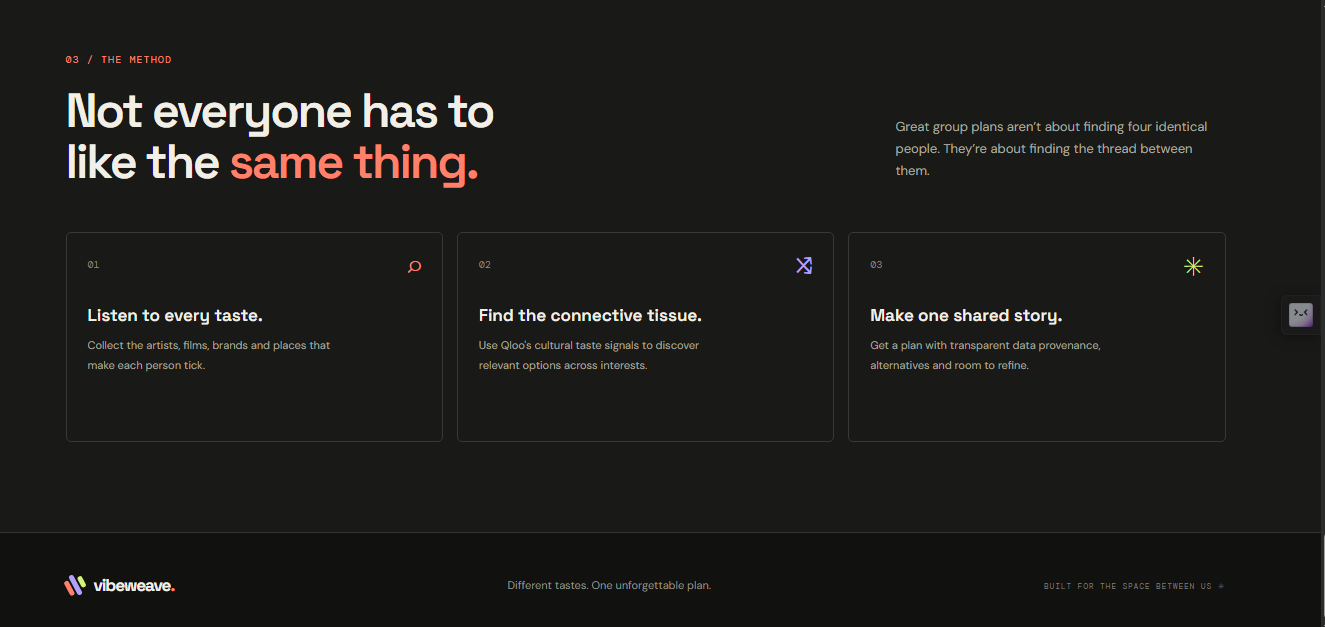
Planning a group outing can be difficult because everyone has different interests, preferences, and tastes. We wanted to make group planning easier by helping people discover places and activities that better match the group's shared interests.
What it does
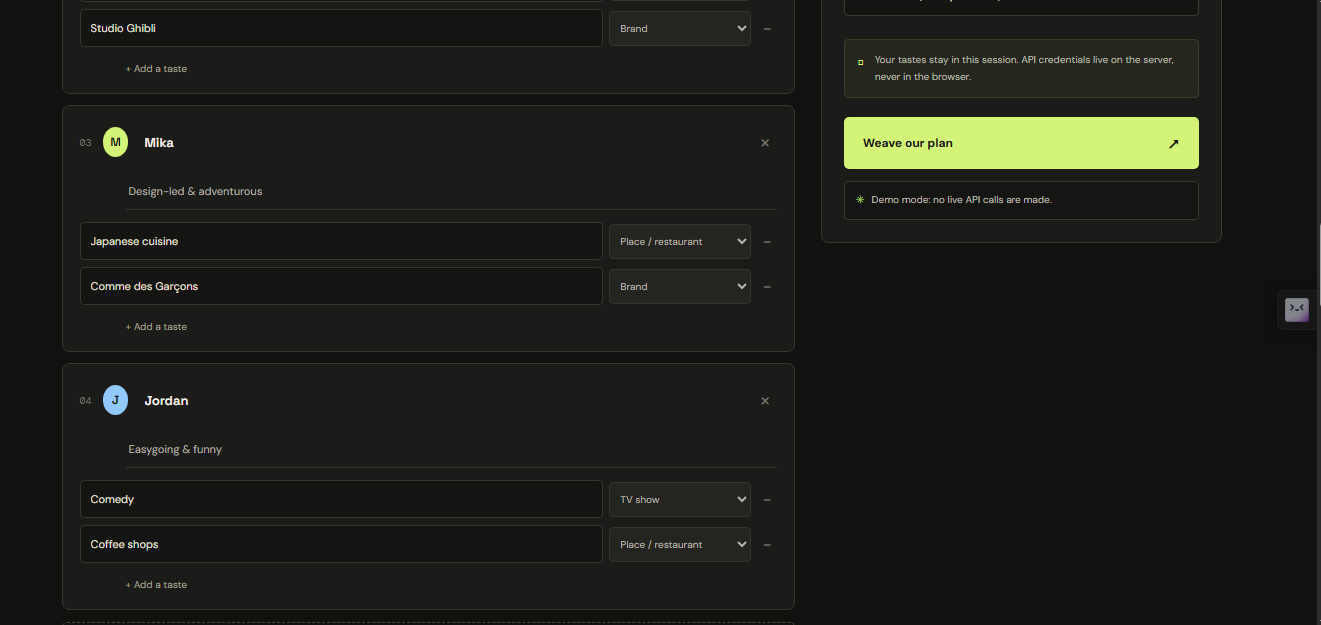
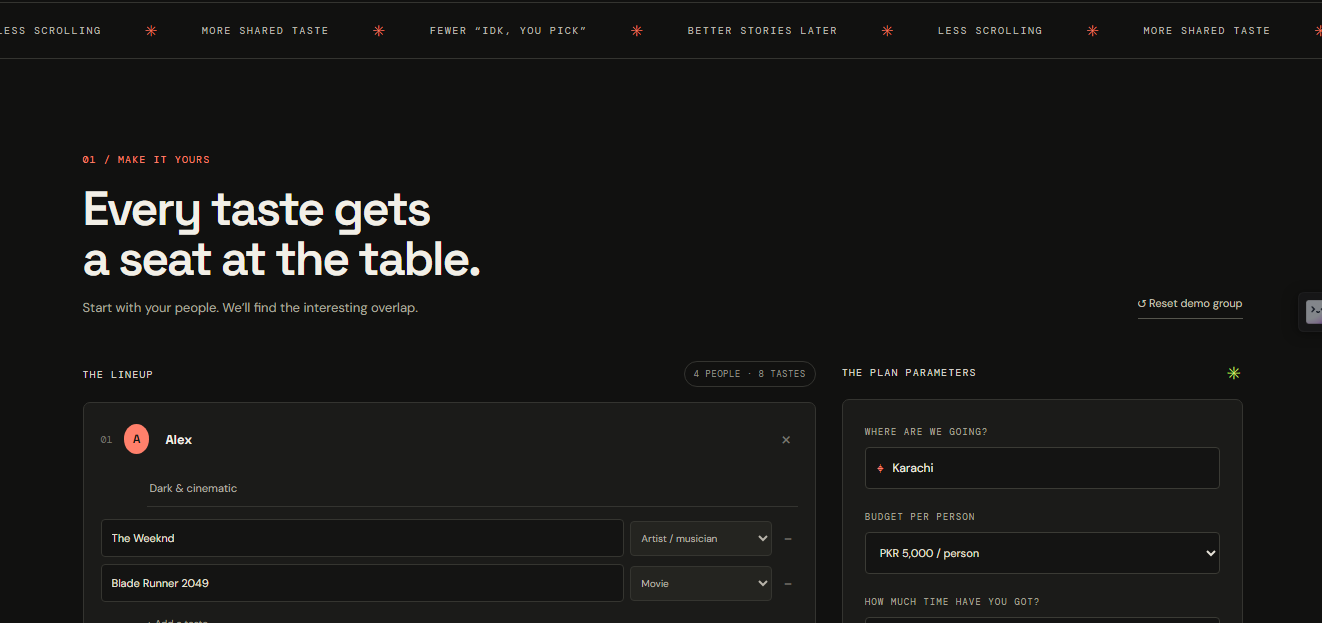
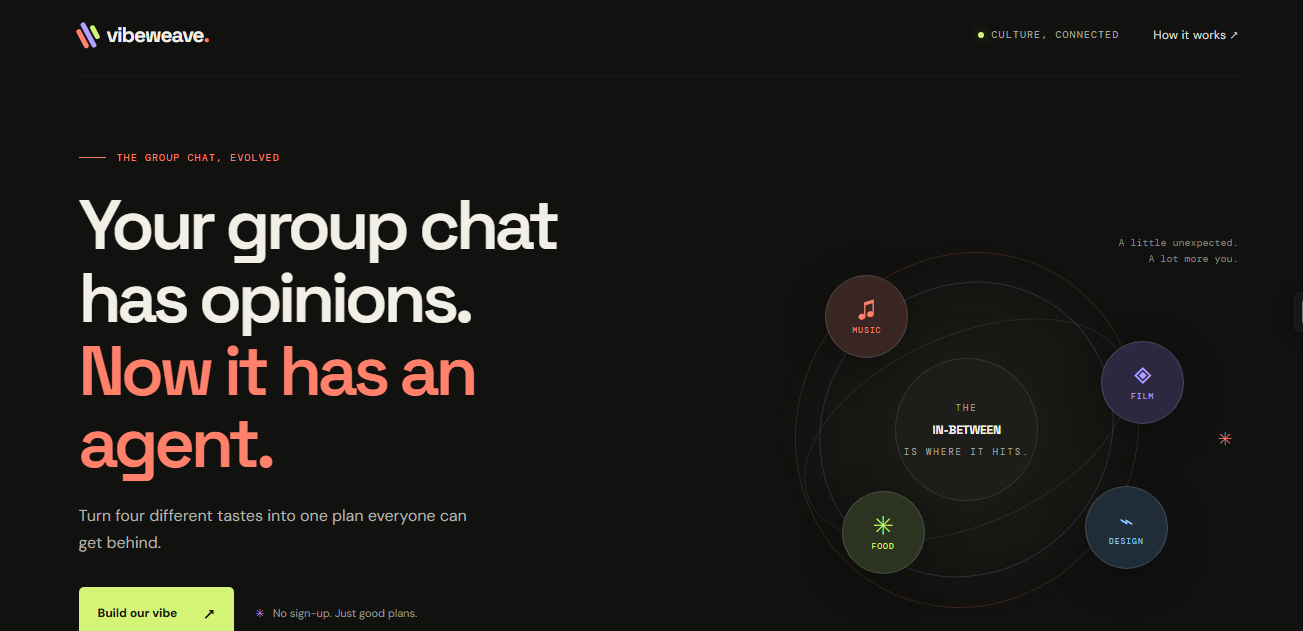
VibeWeave is a group-planning web application that uses cultural preferences to help users discover suitable places and activities.
Key features:
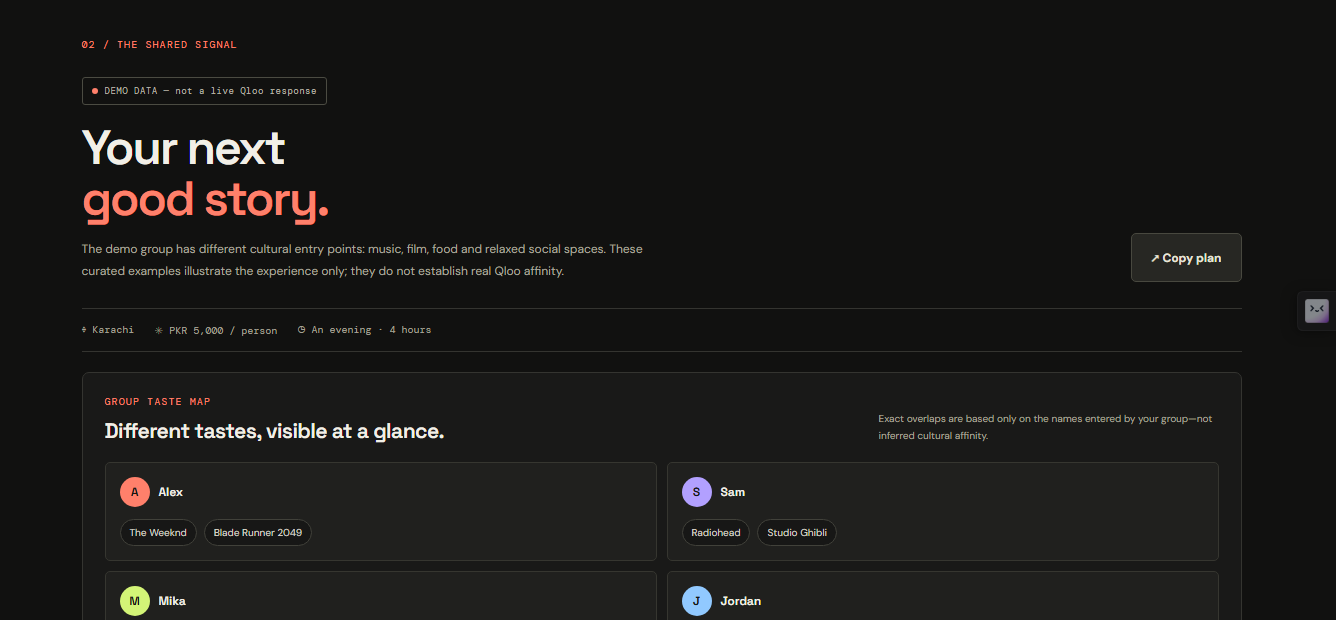
Group Taste Mapping: Brings different preferences together to understand a group's interests.
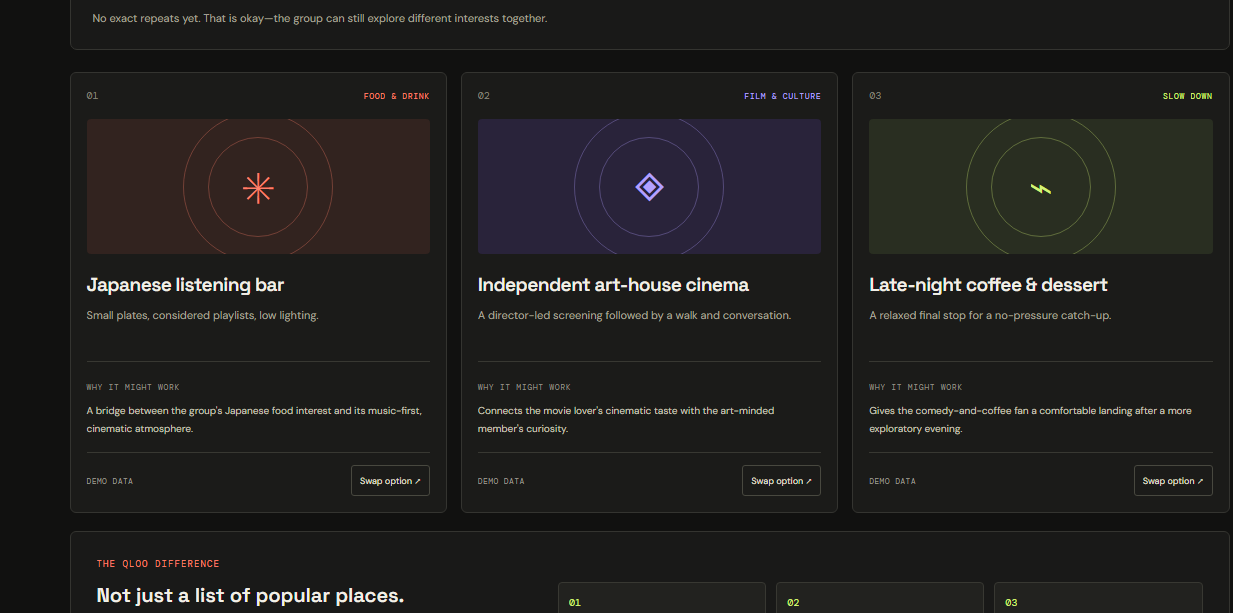
Personalized Recommendations: Uses Qloo data to discover places that may match the group's tastes.
Why This Works: Helps users understand why a recommendation may suit their group.
Alternative Options: Gives users flexibility to explore other recommendations.
Demo and Live Modes: Clearly distinguishes demo results from live API-powered results.
How we built it
We built VibeWeave as a web application using Next.js and a server-side API architecture.
Frontend and framework: Next.js
Recommendation data: Qloo API
API integration: Qloo Search and Insights endpoints
Deployment: Vercel
Source code: GitHub
The backend resolves user preferences into Qloo entities, then uses the resolved entities to request relevant place recommendations. The Qloo API key is kept on the server side rather than exposed in the browser.
Challenges we ran into
One challenge was integrating different types of cultural preferences with a place-recommendation workflow. We also worked on handling API failures transparently so that demo results are not mistakenly presented as live recommendations.
During testing, the Qloo Search endpoint began returning HTTP 429 rate-limit responses. This is a known limitation being investigated.
Accomplishments that we're proud of
Built a complete web application flow for group-based planning.
Integrated Qloo entity search and place-insight recommendations.
Added explanations and alternative recommendations to improve usability.
Implemented explicit demo/live status handling.
Deployed the application on Vercel and verified the local build and smoke tests.
What we learned
We learned how to connect a recommendation API to a web application, resolve entities from user preferences, handle external API errors, and distinguish a working prototype from a fully verified live integration.
What's next for VibeWeave
Resolve Qloo rate-limit issues and verify live recommendations.
Improve the relevance of recommendations for groups with different tastes.
Add more preference categories and richer group comparisons.
Improve testing, reliability, and recommendation explanations.
Built With
- api
- next.js
- qloo
- react
- rest
- typescript
- vercel


Log in or sign up for Devpost to join the conversation.