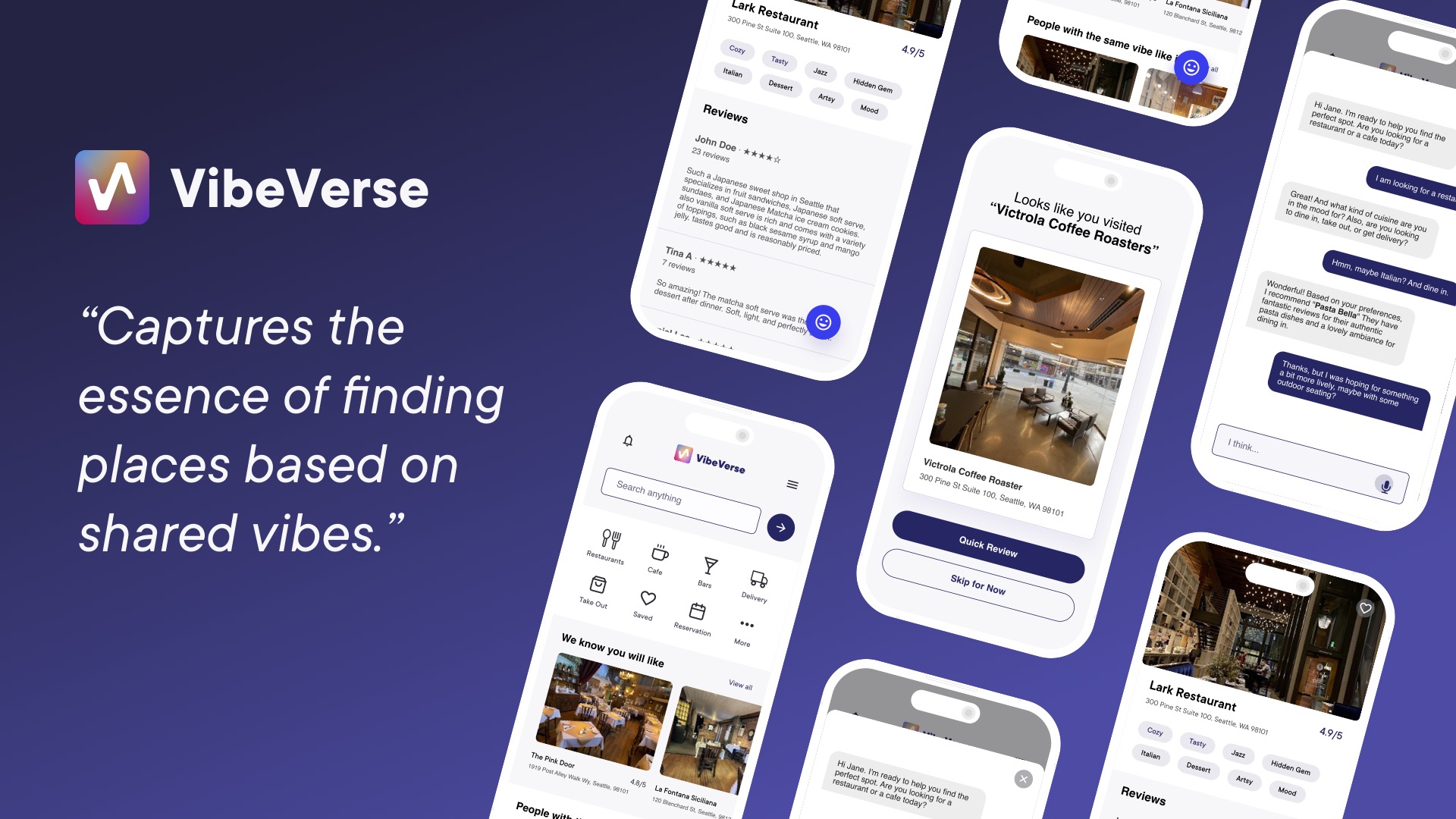
Vibeverse: Personalized Location Discovery
Inspiration & Problem Statement
Finding places that truly match your personal taste is surprisingly difficult in today's digital world. We identified three core problems that most people face:
New to Area
When moving to a new city or area, it's challenging to discover coffee shops, restaurants, and bars that align with your personal preferences. Generic "best of" lists often lead to touristy spots rather than hidden gems you'd actually enjoy.
Unreliable Reviews
Mainstream platforms like Google, Yelp, and Instagram often provide generic recommendations based on popularity rather than compatibility with your taste. Many reviews are unreliable, coming from users with completely different preferences than yours.
Different Taste
What works for someone else might not work for you. Everyone has unique preferences, and a five-star review from someone with different taste might lead you to a disappointing experience.
These problems lead to wasted time, money, and disappointing experiences when trying new places. We wanted to create a solution that understands your unique preferences and connects you with places you'll genuinely enjoy.
Our Hypothesis
We approached this challenge with two key hypotheses:
Reviews from individuals who match users' preferences lead to better recommendations. When recommendations come from people with similar tastes and preferences, they're more likely to be relevant and enjoyable for the user.
Users will create more reviews when the process is made simpler and easier, such as through a conversational format. Traditional review platforms require significant effort from users. By simplifying the process with conversational interactions, we can increase participation and gather more valuable data.
How We Built It
We developed Vibeverse as a modern web application with a focus on user experience and intelligent recommendations. Here's how we approached the build:
Technology Stack
- Frontend: Built with Next.js 15 and React 19 for a fast, responsive user interface
- AI Integration: Implemented AI-powered chat interface using AI SDK with Google and OpenAI integrations
- Data Storage: Used Orama database with persistence plugin for efficient data management
- UI/UX: Created a mobile-optimized layout with Tailwind CSS and enhanced animations using Framer Motion
- Development: Leveraged Turbopack for faster development iterations and TypeScript for type safety
User Validation
To validate our idea and better understand potential users, we conducted an interview with Jenny Noh, a UX Designer and self-described "true bar-hopping enthusiast, always chasing the next hidden gem and never missing a chance." Her insights confirmed many of our assumptions about the current state of location discovery:
Current User Behavior
- Users primarily rely on Google Reviews but supplement with other platforms like YouTube, Instagram, and Yelp
- When deciding where to go, users prioritize (in order): 1) Vibe, 2) Reviews and photos, and 3) Specific amenities (like patio availability in summer)
Pain Points with Existing Solutions
- Google Reviews: Takes too much time to read through multiple reviews to confirm whether a place is good or bad
- Instagram: Contains excessive marketing content and lacks reliability
Response to Our Solution
- Would definitely use our platform, though initially would cross-check with Google Maps during the first few uses (expected adoption behavior)
- Particularly liked the idea of having a second recommendation source that suggests the right place at the right time
This validation process gave us confidence that our solution addresses real pain points and would be valuable to users who are passionate about discovering new places aligned with their preferences.
Monetization Strategy
In addition to our end-user facing features, we've designed a sustainable business model through business-focused offerings. As we gather a substantial database of high-quality reviews, we'll provide valuable services to businesses:
Business Insights Businesses can subscribe to receive regular email updates with actionable insights on how to improve their offerings based on user reviews and feedback patterns.
Premium Review Licensing Businesses will have the opportunity to purchase rights to genuine, high-quality reviews from users to use in their marketing materials and social media.
User Incentive System This monetization approach creates a virtuous cycle by incentivizing users to create many high-quality reviews, knowing they might be compensated if businesses license their content.
Our monetization strategy creates value for all stakeholders in the ecosystem: users get better recommendations and potential compensation, businesses gain valuable insights and authentic marketing content, and we generate sustainable revenue while continuing to improve the platform.
What We Learned
Through building Vibeverse, we discovered that:
- Conversational interfaces significantly lower barriers to creating detailed reviews
- "Vibe" is the primary decision factor for users—something mainstream platforms often miss
- Users will initially cross-validate with familiar tools, requiring a gradual trust-building approach
Built With
- gemini
- nextjs
- orama
- react
- typescript


Log in or sign up for Devpost to join the conversation.