-
-
Vibeus.app
Inspiration
Facebook Instagram has a common problem and pain, when they share their projects or achievements on familiar social networks such as Threads, Facebook and Instagram, many face a haunt. Casual third-party users who are far from developing, coding, projects, and vibcoding can ridicule other people's ideas and practices simply because they are used to being negative about everything.
Vibeus is a place where everyone belongs. They understand what this is about, because everyone will be infected with a love of vibcoding and creating projects using AI. Users can show their projects and developments, learn something new, receive feedback from those who do similar things, and be understood.
On the platform, you can find the first users for your project, publish paid materials, and sell your own developments and projects directly inside Vibeus.
It is a place that unites vibcoders from all over the world, giving them a space for self-realization, self-expression, professional growth and monetization of their products.
What Vibeus is
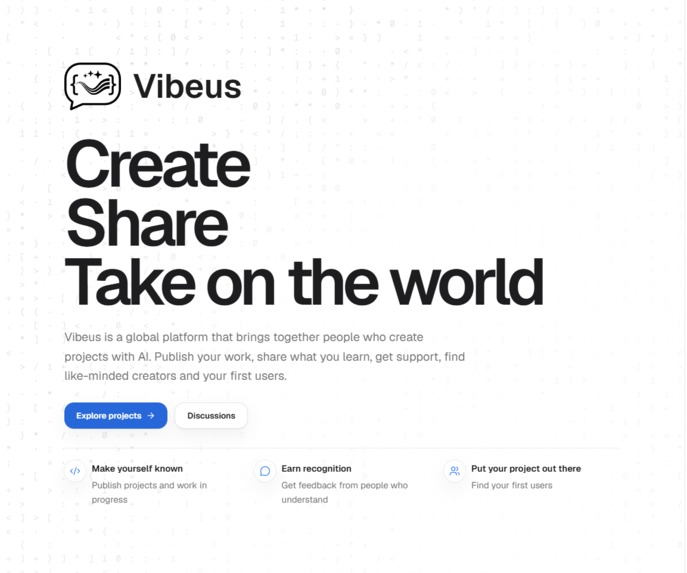
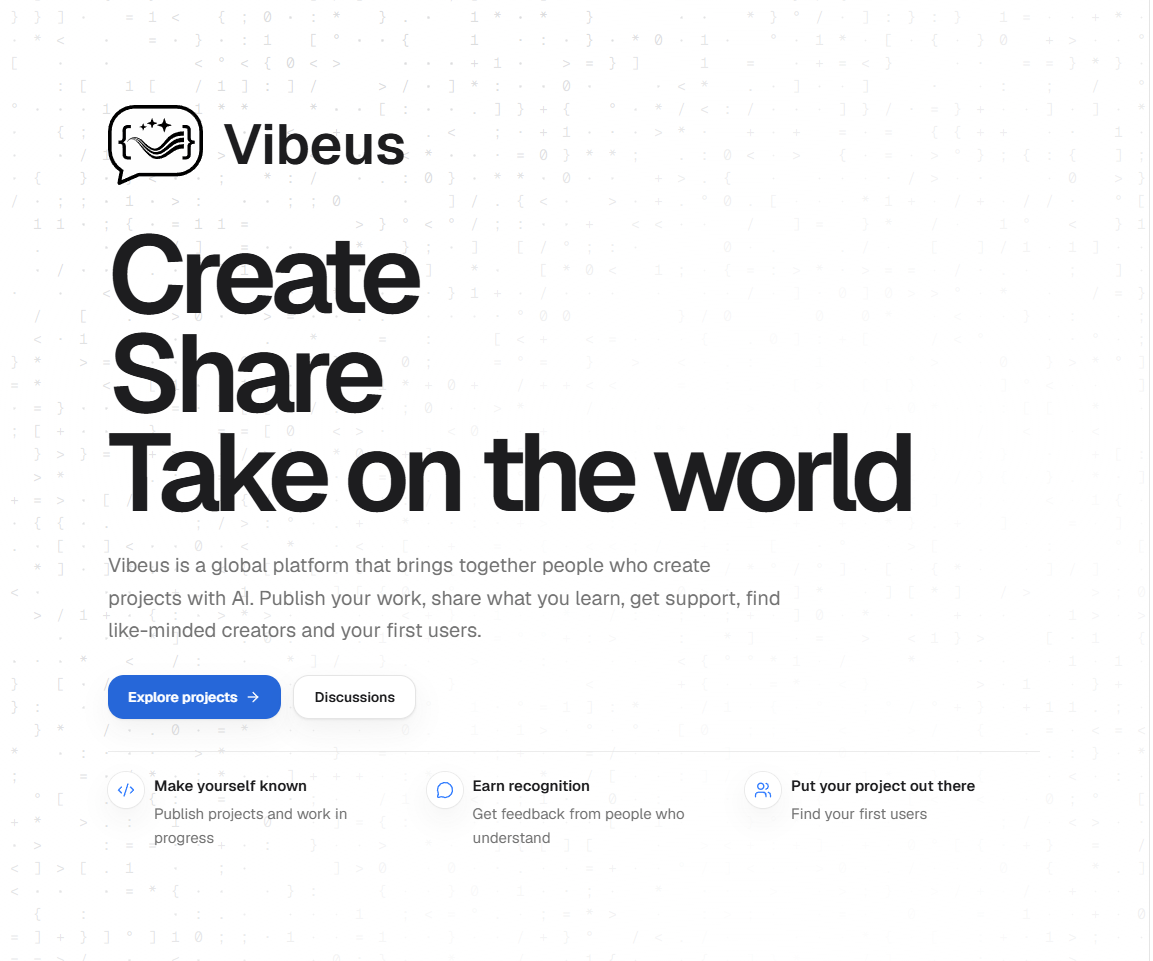
Vibeus is a social platform for people who create with AI. It brings community, project discovery, feedback, early users, and creator earnings together in one place.
People can share projects, posts, prompts, scripts, automations, and ideas; discuss their work; follow other builders; and support the creators they value. Creators can publish paid content, receive donations in Vibe, earn Creator Rewards, and request payouts. Direct sales of complete projects and reusable assets are planned next.
Vibeus is already live at https://vibeus.app. It combines a polished responsive interface with a real backend, financial system, moderation, media, and production infrastructure. It is built to remain fast and easy to use as it grows into a global home for millions of vibe coders.
What we built during OpenAI Build Week
Vibeus existed before the hackathon. During Build Week, I focused on making it faster, easier to use, and ready for a wider international community.
With Codex and GPT-5.6 Sol, I:
- polished the interface across desktop, tablet, and mobile;
- made the website load and respond faster;
- created a new landing page and improved registration;
- improved feeds, profiles, and the overall user experience;
- improved financial features for top-ups, donations, paid content, creator rewards, and payouts;
- added a complete English and Russian experience;
- strengthened security and production reliability;
- released and verified these improvements on the live website.
How I used Codex and GPT-5.6 Sol
Codex with GPT-5.6 Sol was my main development partner throughout Build Week. I used it to turn product ideas into working features, improve the design and performance, develop financial flows, test changes, review the code, and prepare safe production releases.
It helped me move much faster across the whole product. I remained responsible for the vision, priorities, design choices, and final decisions.
The challenge
The main challenge was improving many connected parts of a real platform in one week while keeping the live product stable. The interface, accounts, content, finance, moderation, and mobile experience all had to work together.
The result
Vibeus is now faster, cleaner, easier to join, better on mobile, and ready for an international community. The improvements are already running at https://vibeus.app — they are not mockups or a separate demo.
What's next
Next, I plan to improve discovery, help builders find the right audience and collaborators, add more languages and regional communities, and expand creator profiles and monetization.
The long-term goal is to make Vibeus the place where millions of vibe coders can share their work, be understood, find their first users, grow professionally, and earn from what they create.
Built With
- bullmq
- codex
- digitalocean
- fastify
- gpt-5.6
- nestjs
- playwright
- postgresql
- react
- tailwind-css
- typescript
- valkey
- vite