-
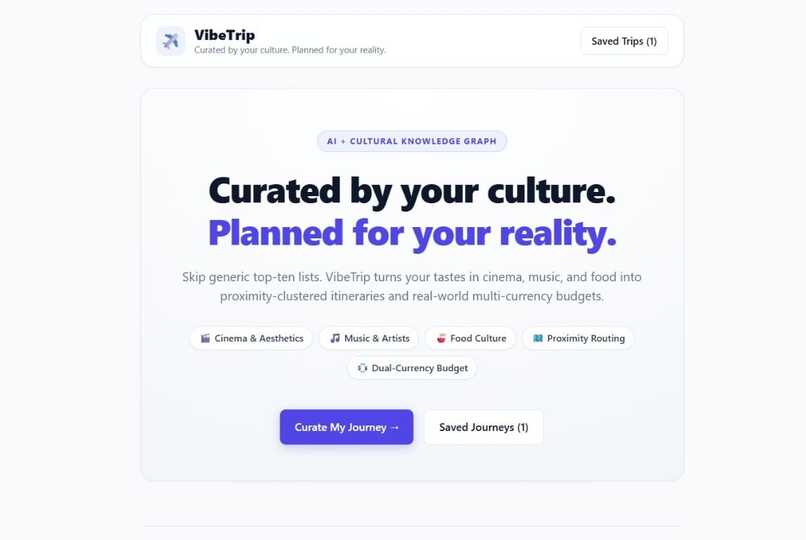
Title Page
-
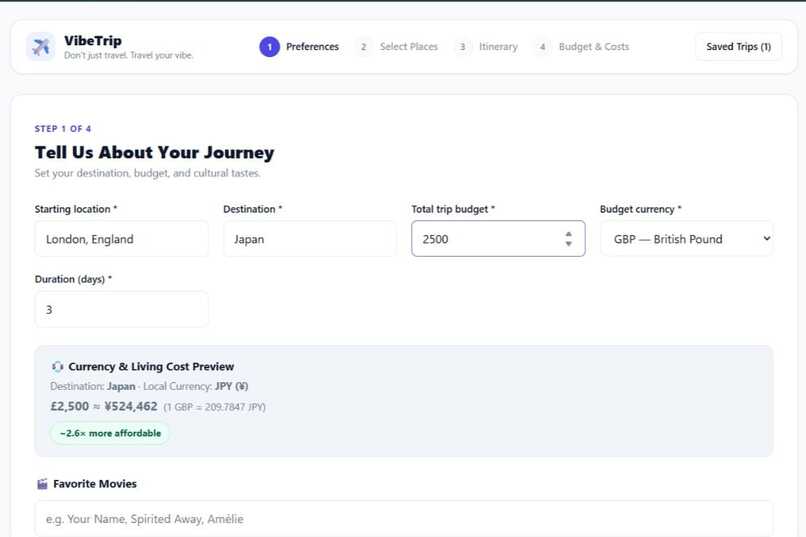
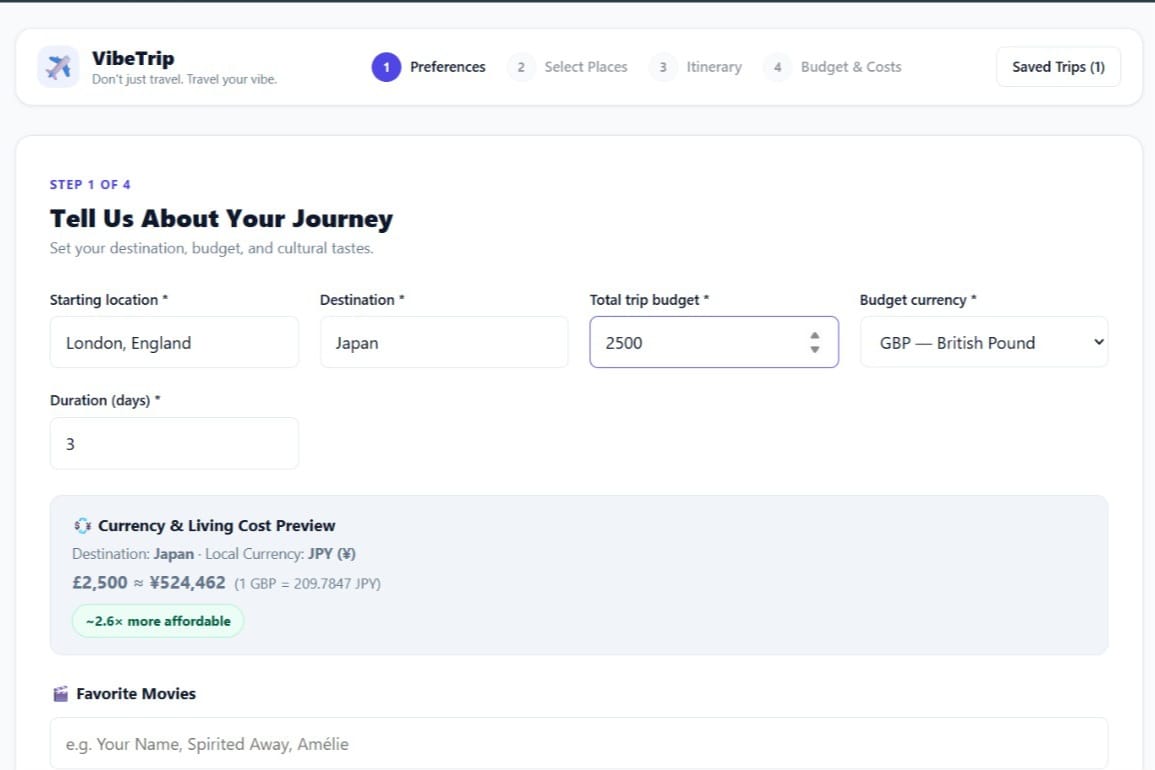
Getting Preferences
-
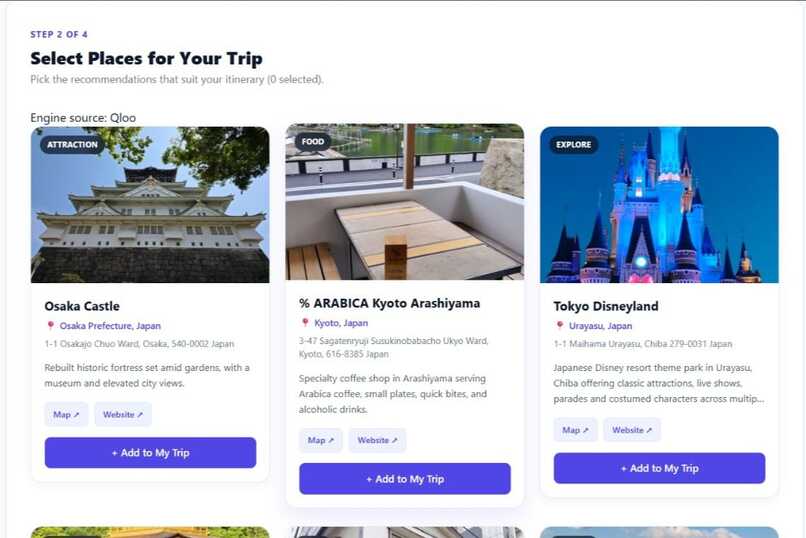
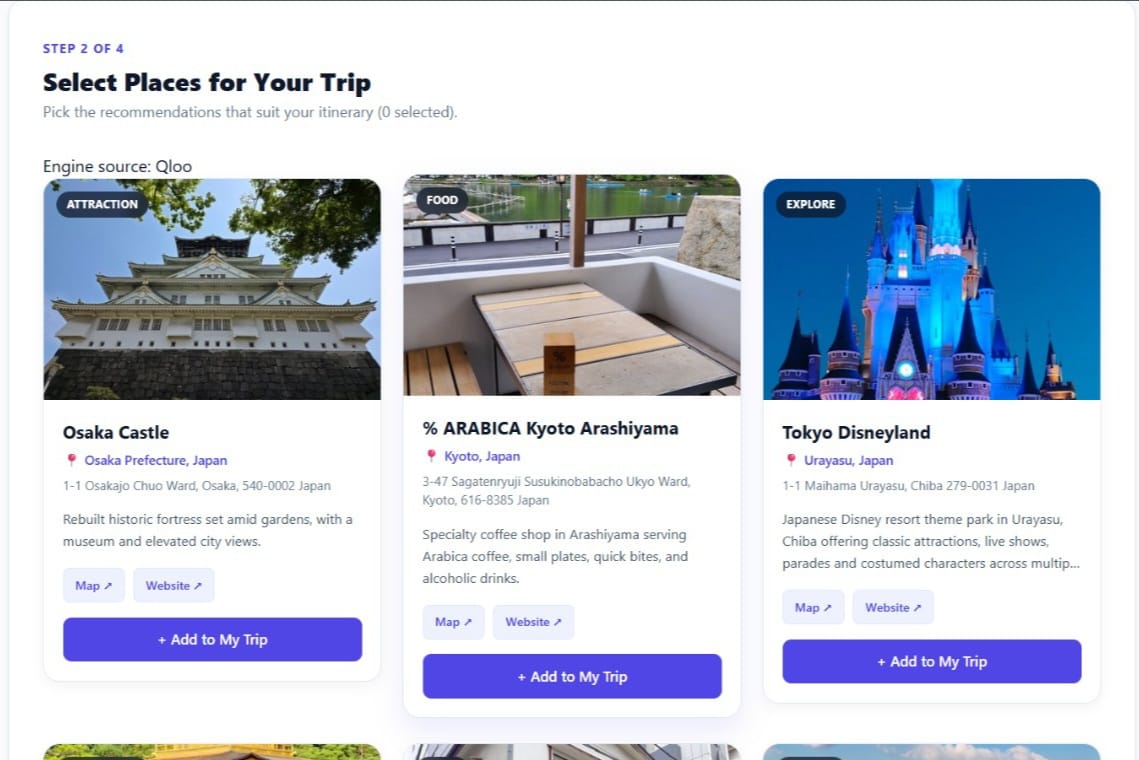
Recommendation Cards from Qloo
-
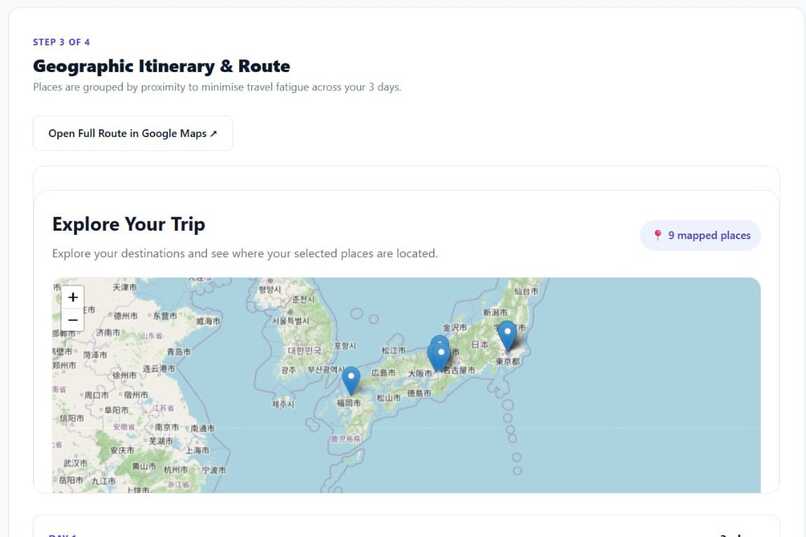
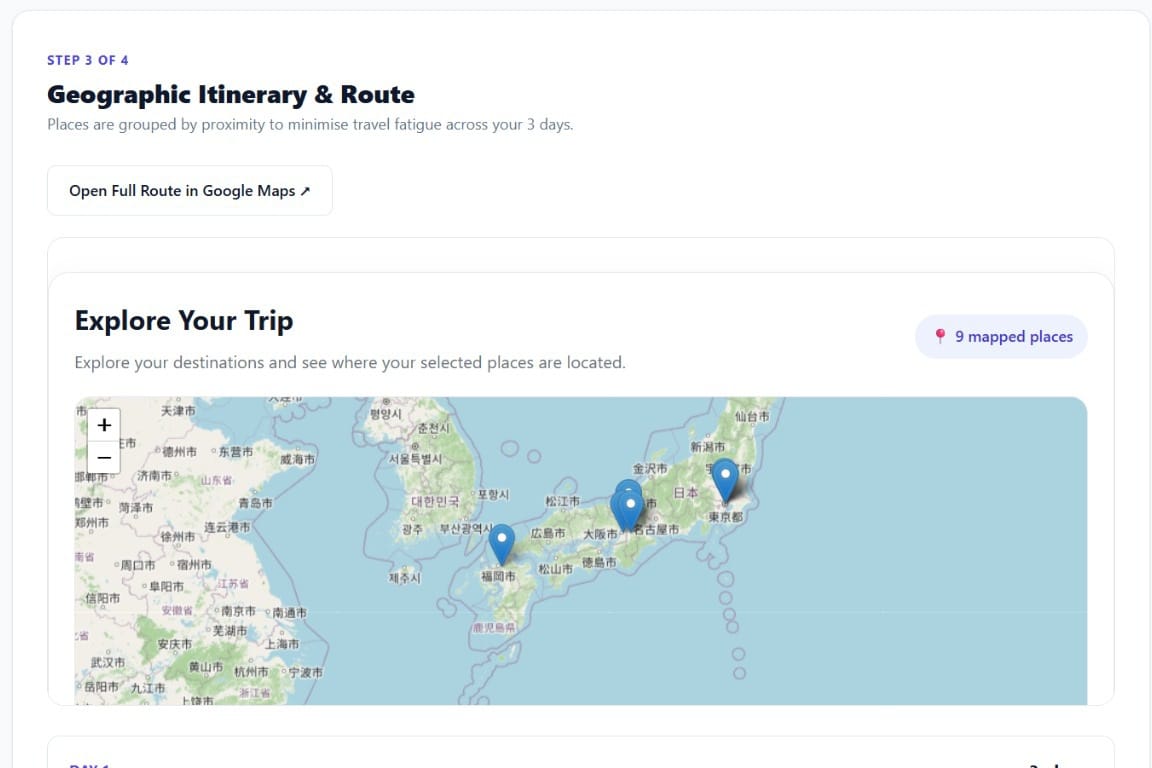
Geographical Mapping
-
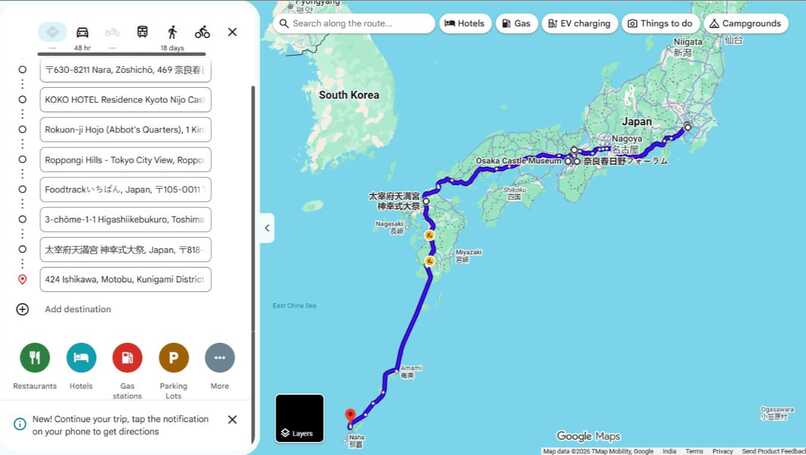
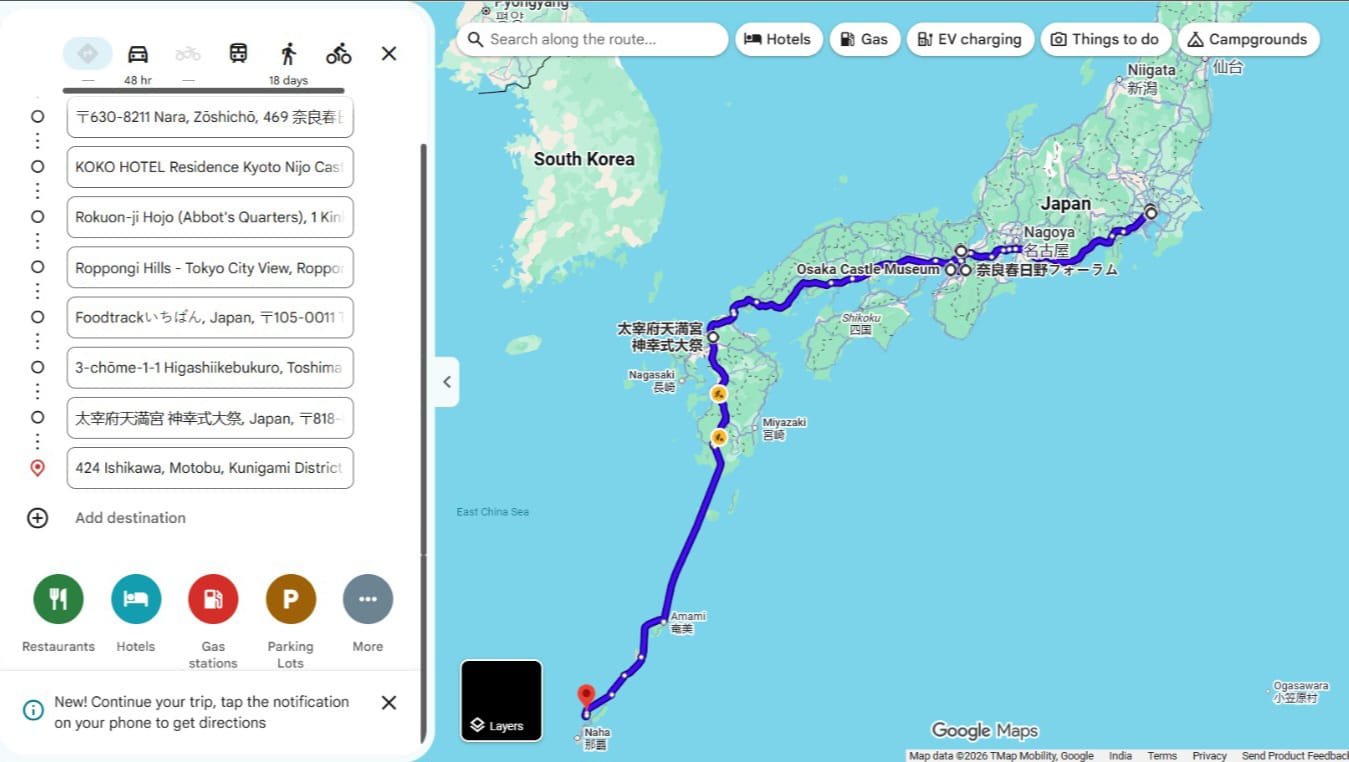
Google Map Route
-
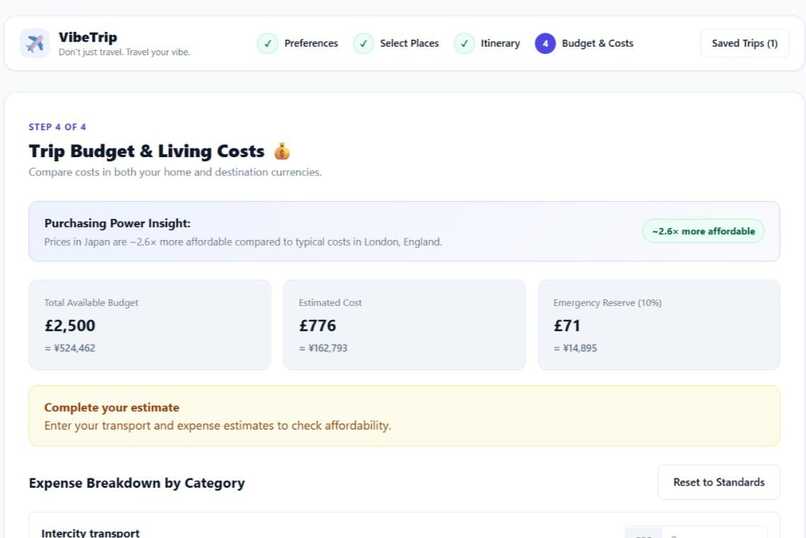
Budget Planner
-
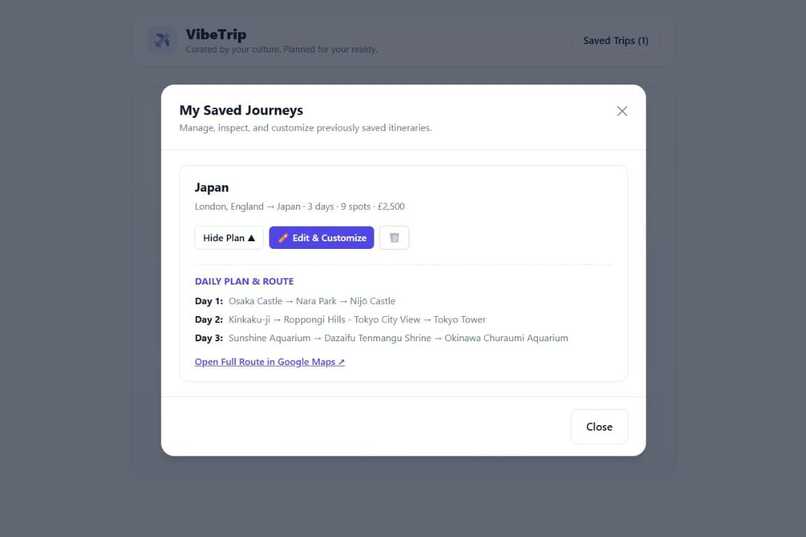
Saved Trips
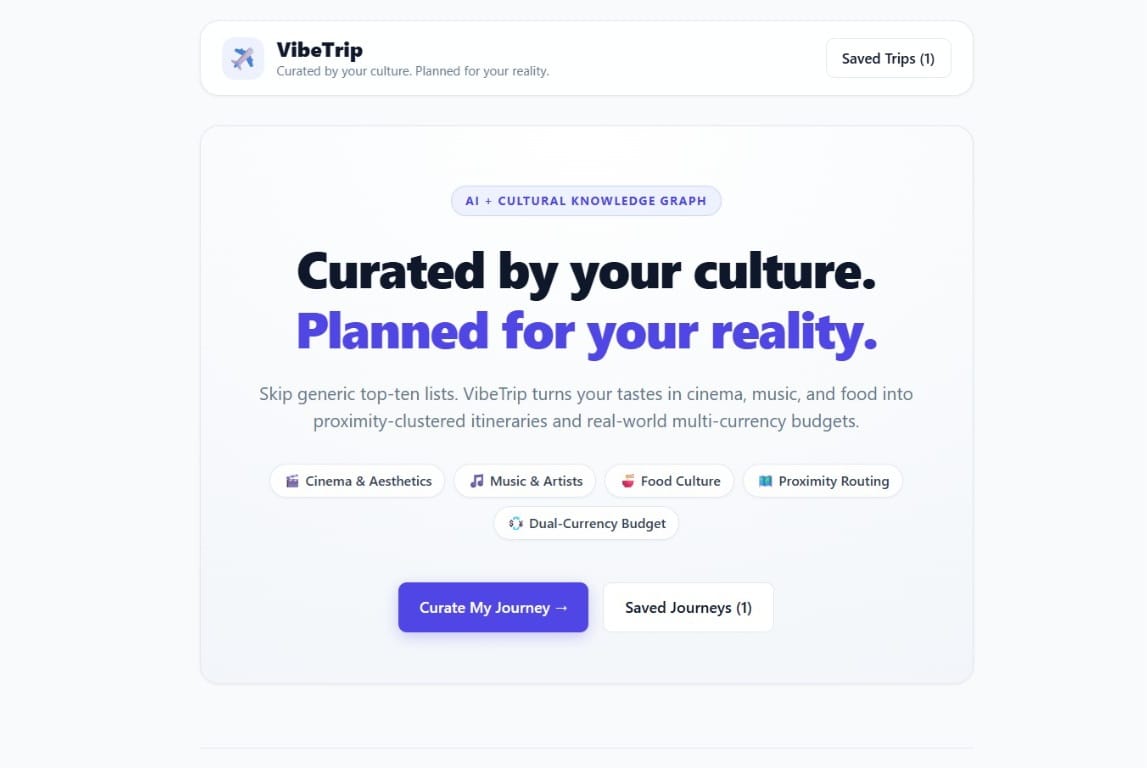
VibeTrip — Your Interests. Real Places.
Inspiration
Travel planning often involves searching through countless websites, browsing popular tourist attractions, and spending hours deciding where to go. But travel is more personal than simply visiting famous places. Our interests, favorite movies, music, artists, and cuisines can influence the experiences we want to discover.
This inspired us to build VibeTrip, a travel-planning application that connects cultural preferences with real-world place discovery.
We wanted to experiment with Qloo's cultural intelligence technology and explore how it could make travel recommendations more personal and useful in real life. Rather than building another conventional travel planner, we wanted to create an experience that helps people discover places that match their interests and travel preferences.
What It Does
VibeTrip combines culturally informed place discovery with practical travel-planning features.
- Cultural Personalization: Users can provide preferences such as favorite movies, artists, cuisines, and interests to help personalize their travel experience.
- Location-Based Recommendations: Users enter their starting location and destination to discover relevant places.
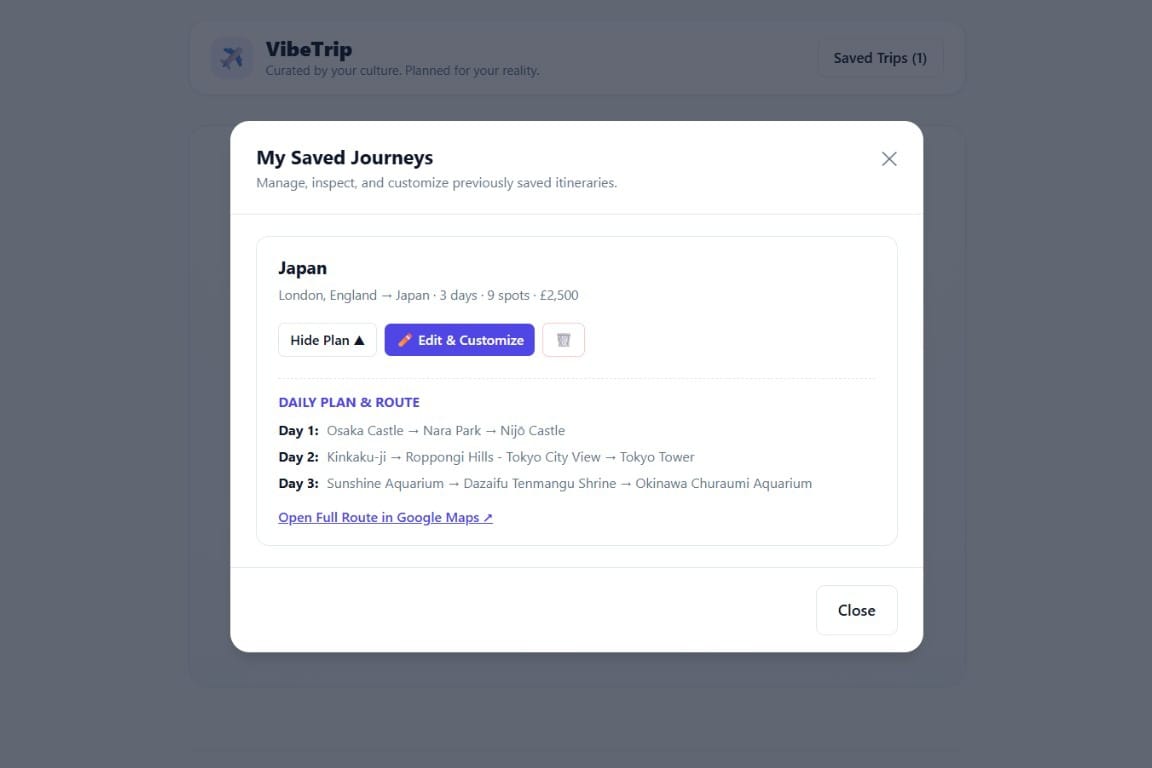
- Personalized Itinerary: VibeTrip helps organize recommended places into a travel itinerary, connecting discovery with trip planning.
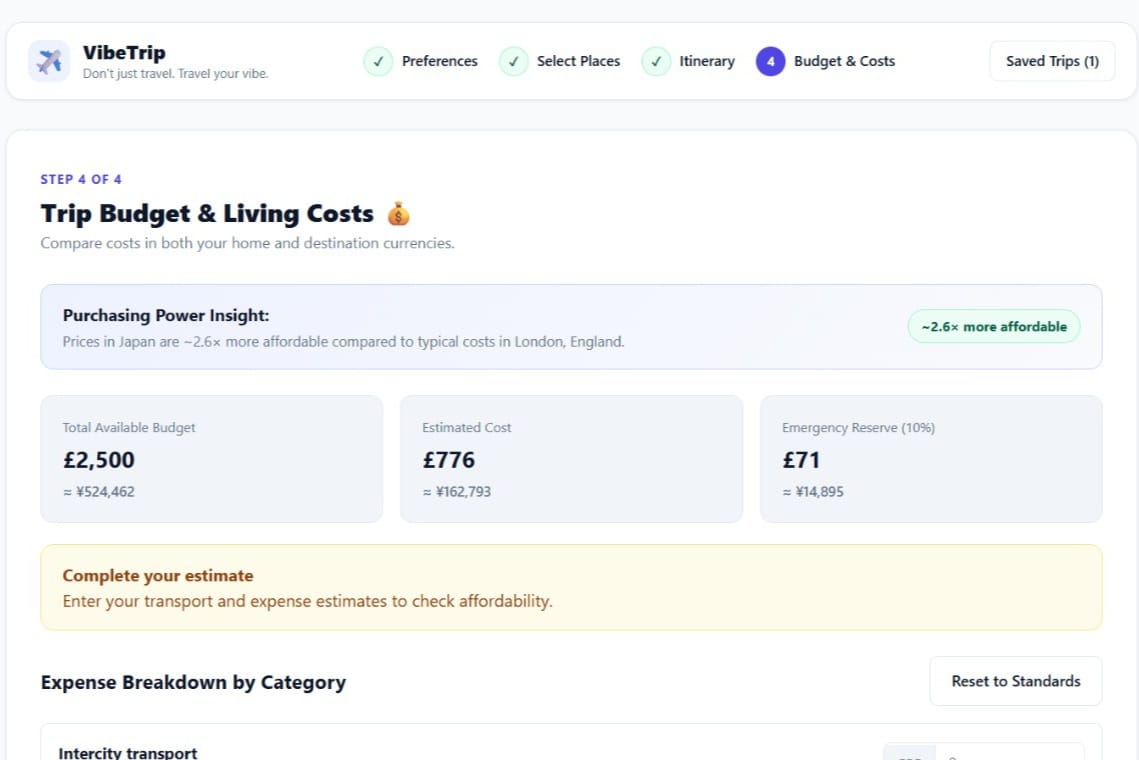
- Budget Planning: Users can plan their travel expenses.
- Currency Conversion: Users can convert currencies to support their travel budgeting.
The goal is to bring cultural discovery and practical planning together in one application, helping users spend less time searching and more time exploring.
How We Built It
We developed VibeTrip as a full-stack web application, integrating Qloo's cultural intelligence capabilities with a custom frontend and backend.
Technology stack:
- React + Vite: Built the interactive frontend and user interface.
- Python + FastAPI: Developed the backend and connected the application to external APIs.
- Qloo API: Powered the place-discovery experience through its cultural intelligence and location-based recommendation capabilities.
- Vercel: Hosted the frontend.
- Render: Hosted the backend.
The application connects the frontend to the backend, which communicates with Qloo to retrieve place recommendations. We then integrated the results into the user experience alongside the application's travel-planning features.
What makes VibeTrip Qloo-powered is its use of Qloo's API to connect the travel-discovery experience with cultural intelligence. Instead of treating travel planning as a list of destinations alone, we explored how cultural preferences could help make place discovery more relevant to individual users.
What We Learned
Building VibeTrip was an opportunity to learn by developing and deploying a real application.
Some of our most important learning experiences included:
- API Integration: Learning to integrate the Qloo API, understand its responses, and use the returned data in our application.
- Cultural Intelligence: Exploring how cultural preferences can be incorporated into a travel-discovery experience.
- Full-Stack Development: Connecting a React frontend with a FastAPI backend and coordinating communication between different components.
- Deployment: Publishing the frontend and backend separately so users can access the application online.
- Debugging and Problem-Solving: Investigating API timeouts, unexpected behavior, and data-flow issues while improving the application's reliability.
This project helped us understand that building an application involves much more than making individual features work. The different components must work together to deliver a consistent and useful experience.
Challenges We Faced
One of our biggest challenges was ensuring that the itinerary was based on actual retrieved recommendations rather than randomly selected places. We wanted the travel-planning experience to remain connected to the places the application had discovered.
We worked on aligning itinerary generation with the retrieved recommendations so that the application could provide a more coherent travel-planning experience.
Another challenge was improving the user interface. We wanted VibeTrip to feel intuitive and visually appealing while presenting recommendations and travel information clearly. This required refining the interface and improving the way information was organized and displayed.
We also encountered API timeouts during development. Troubleshooting these issues helped us better understand external API behavior, request handling, and the importance of making an application resilient to failures.
These challenges taught us to investigate problems systematically, test changes carefully, and improve the application without losing sight of its core purpose.
What Makes VibeTrip Special?
VibeTrip brings together two ideas: cultural personalization and practical travel planning.
Its central idea is simple: the places people want to explore can be influenced by what they love.
By integrating Qloo's cultural intelligence capabilities into a travel-planning application, we explored a different approach to discovering places—one that connects cultural interests with real-world experiences.
Rather than stopping at recommendations, VibeTrip combines discovery with itinerary planning, budgeting, and currency conversion to create a more complete travel-planning experience.
What's Next?
VibeTrip represents our exploration of how cultural intelligence can make travel discovery more personal and engaging.
Through this project, we gained hands-on experience with API integration, full-stack development, debugging, and deployment while working toward a real, publicly accessible application.
Our vision is to continue improving VibeTrip so that discovering places and planning a trip can feel less like searching through endless options and more like finding experiences that match who you are.
VibeTrip — Your Interests. Real Places. Plan Less. Feel More.


Log in or sign up for Devpost to join the conversation.