-
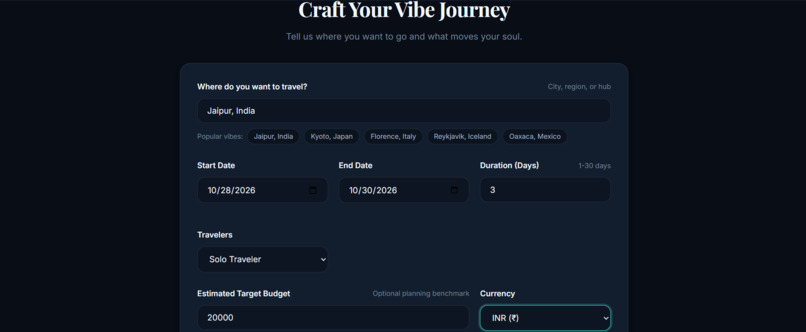
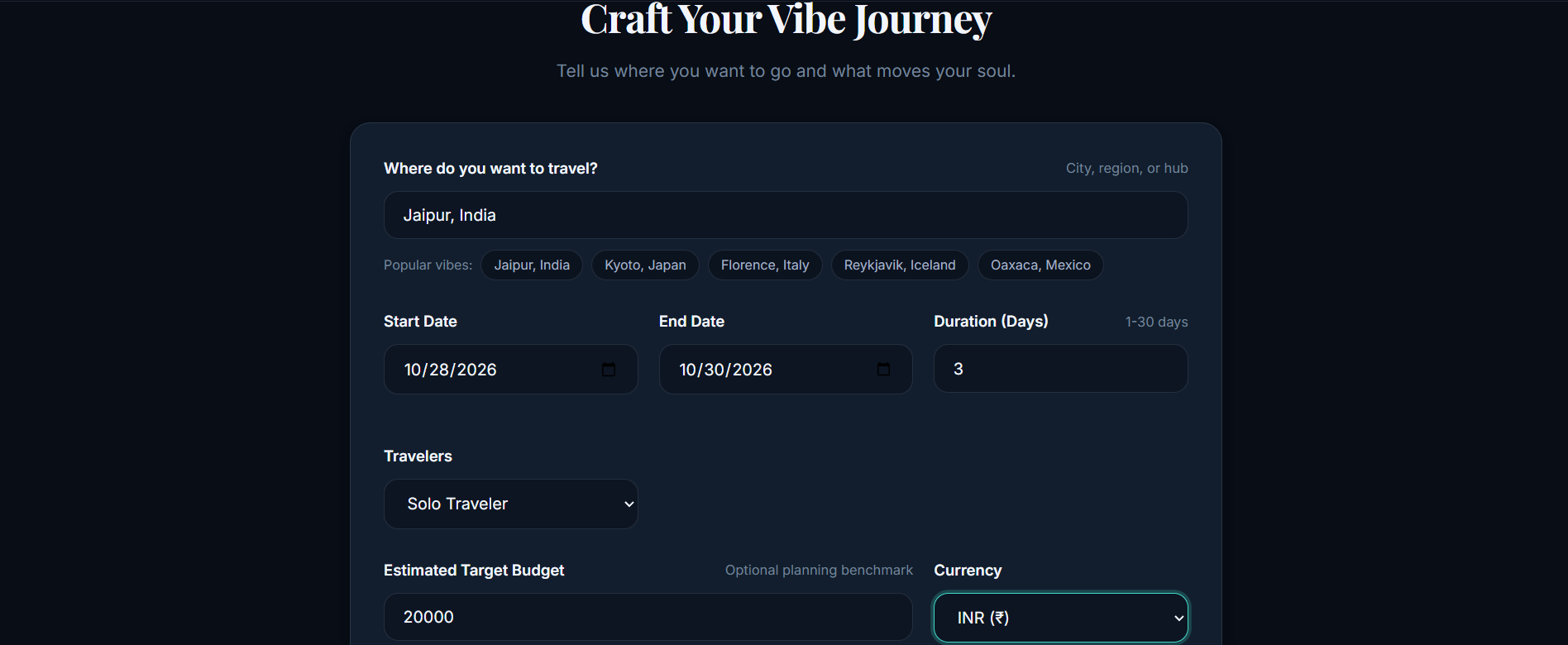
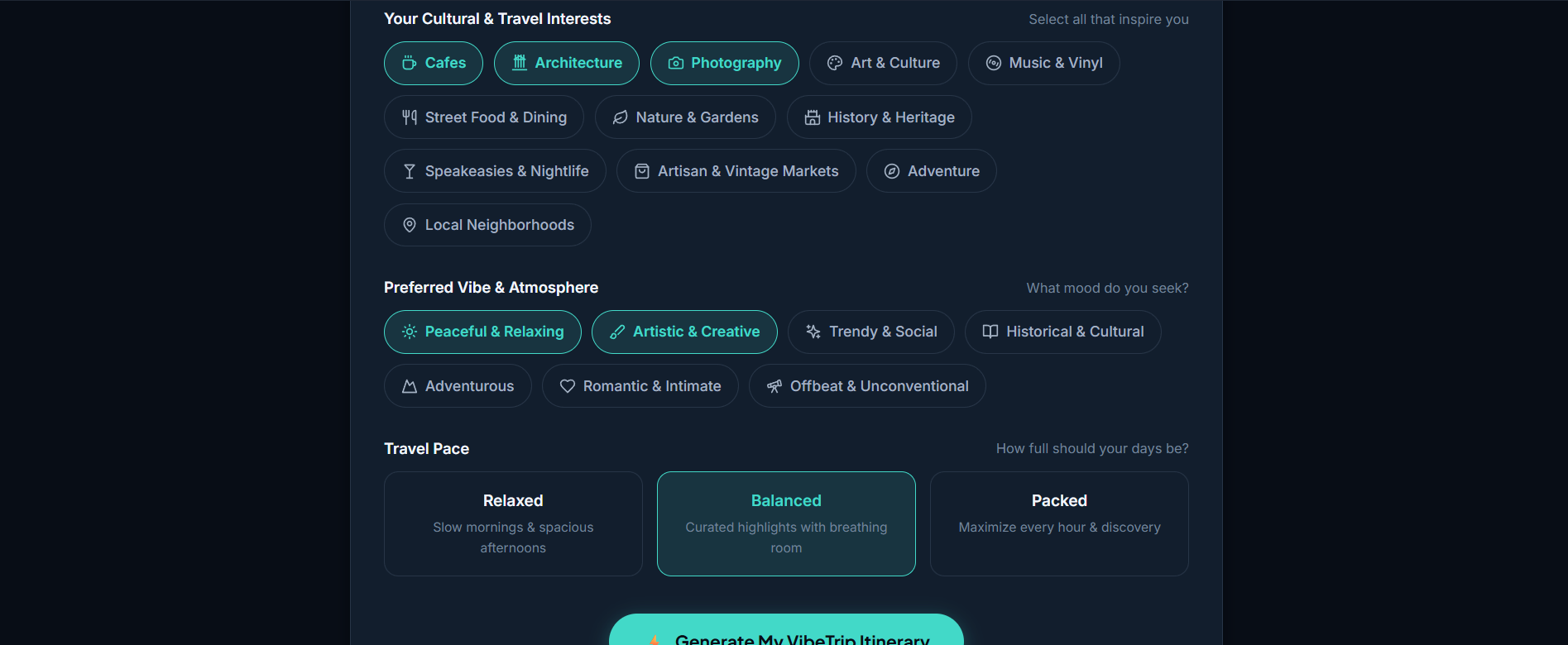
User form for input
-
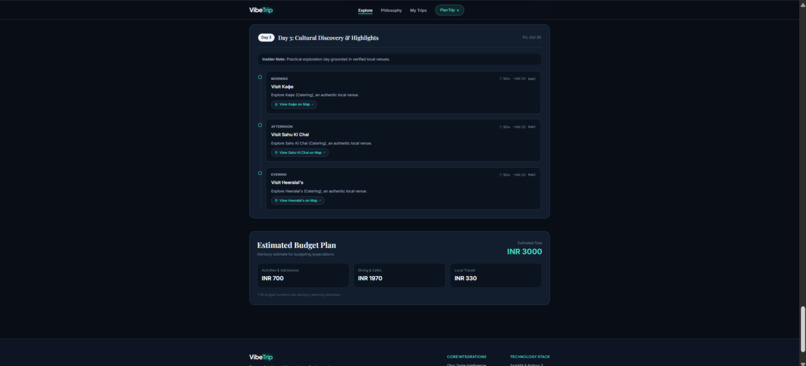
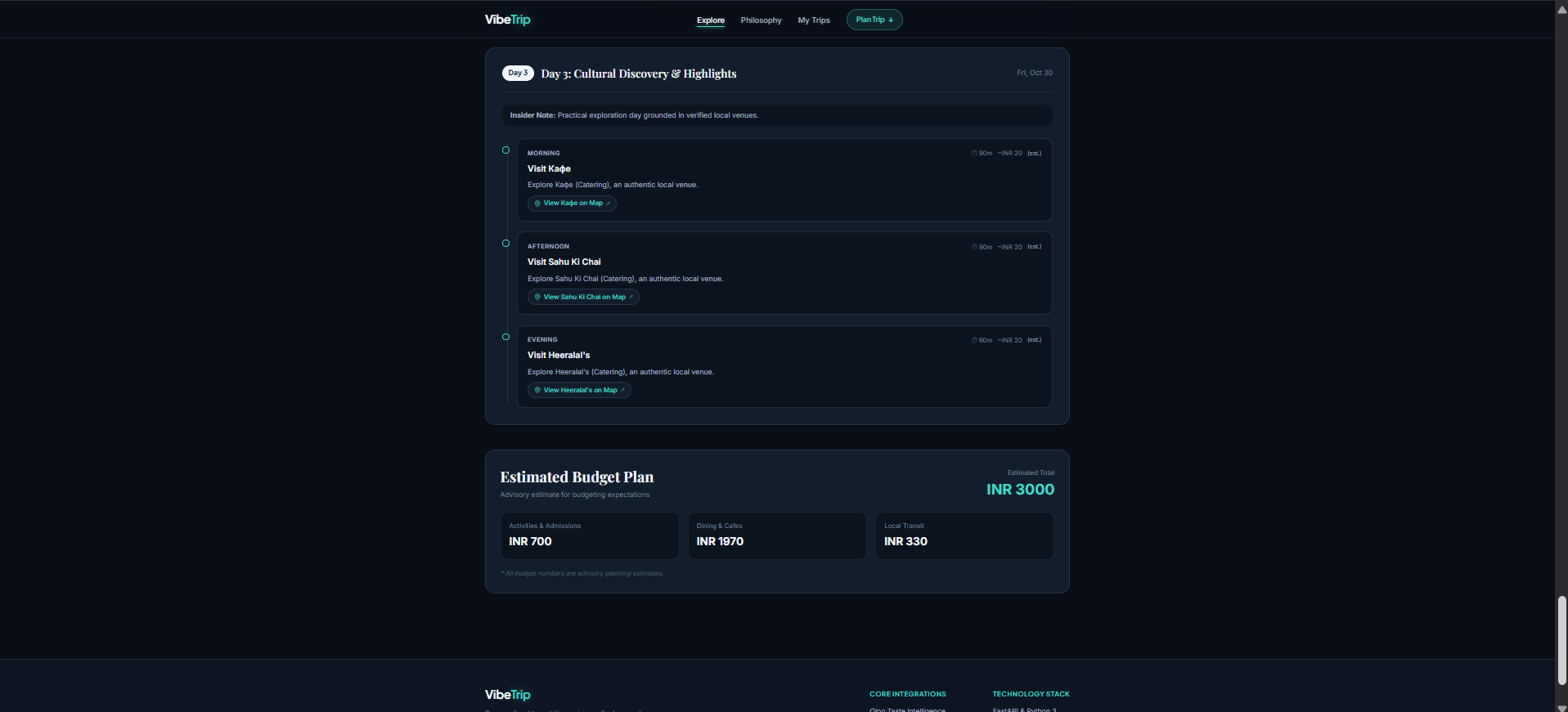
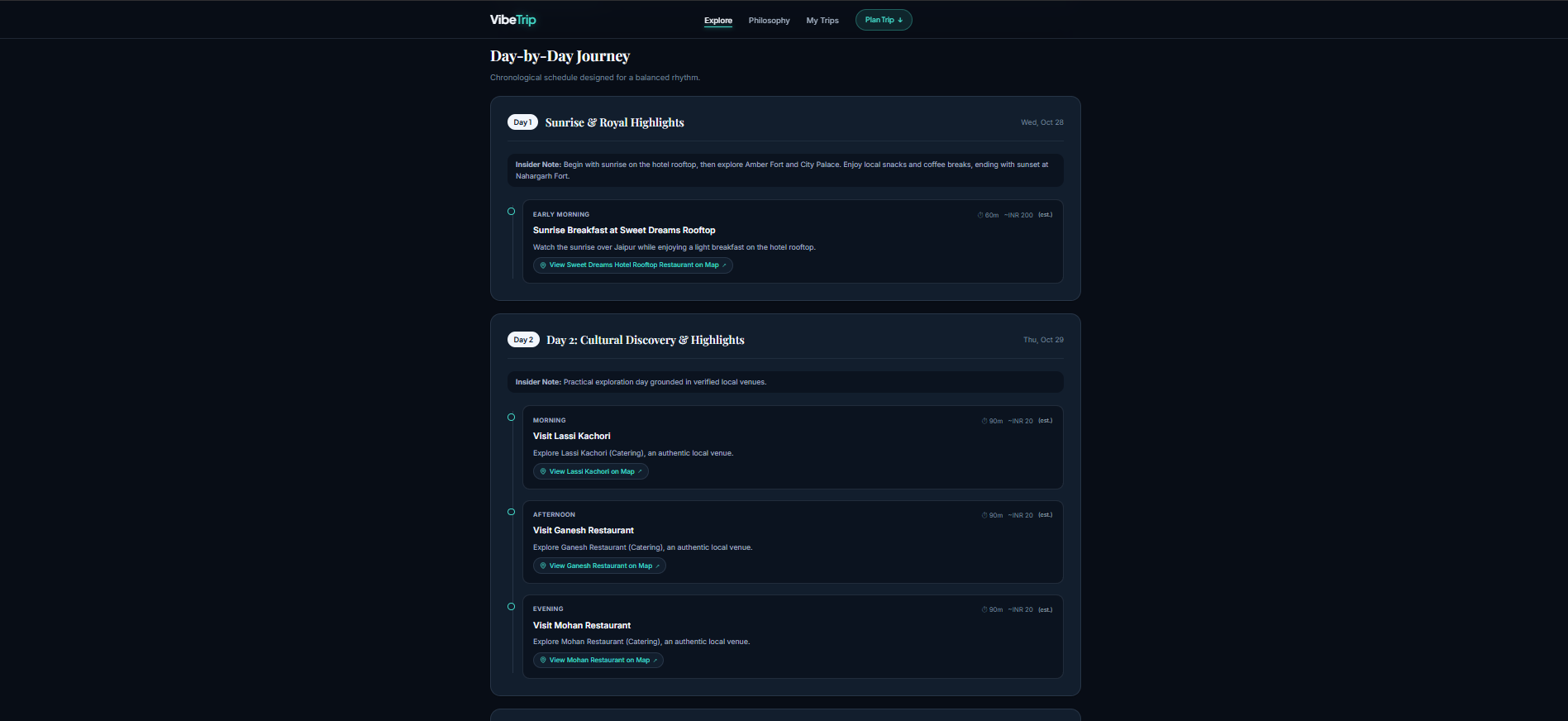
Itinerary
-
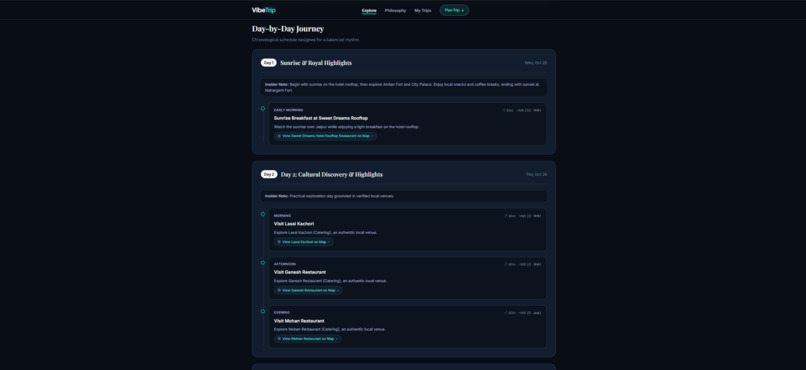
Itinerary
-
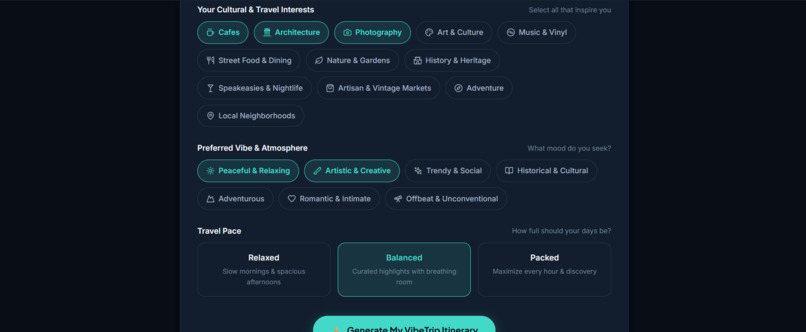
User form for input
-
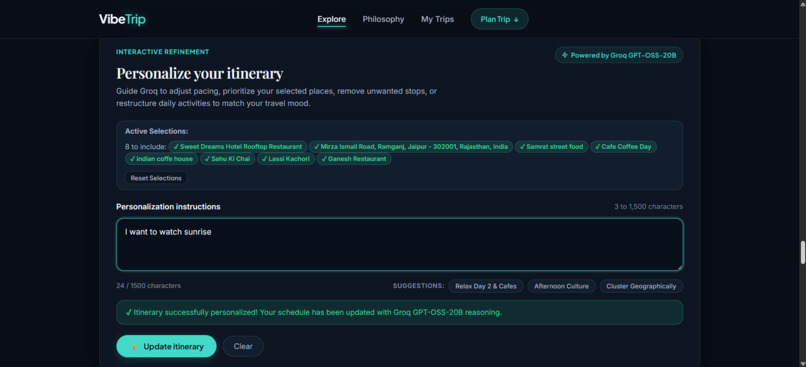
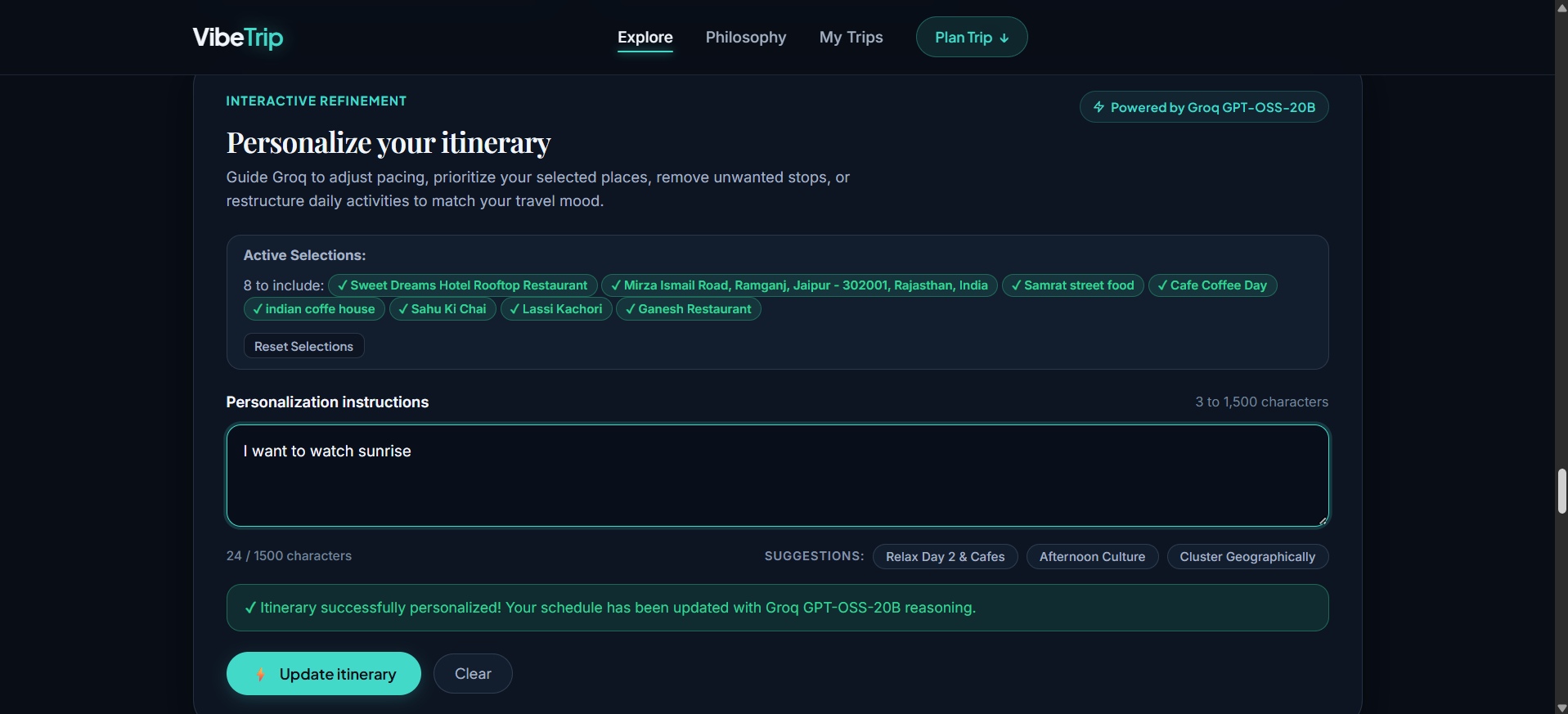
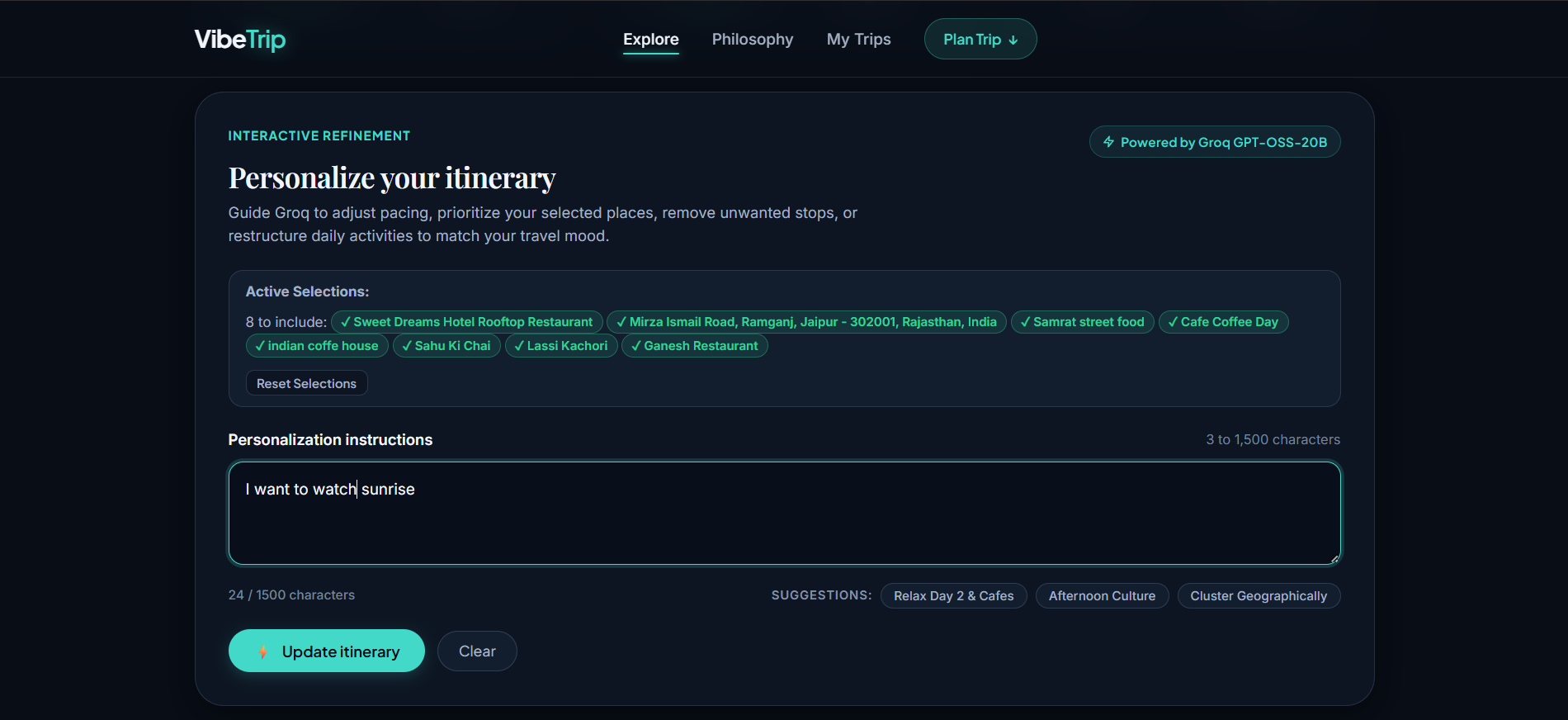
Customization of Itinerary by user
-
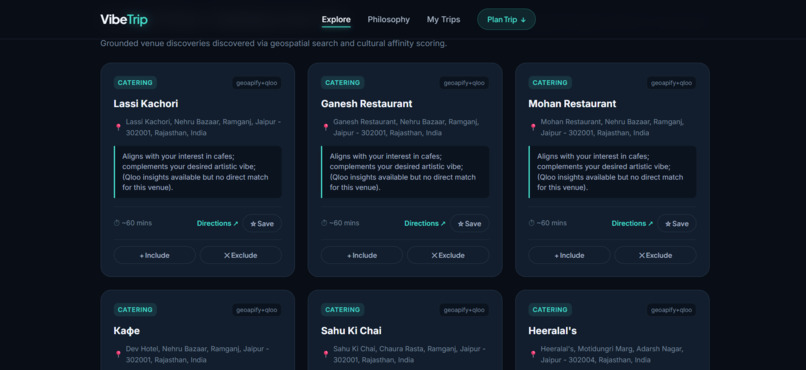
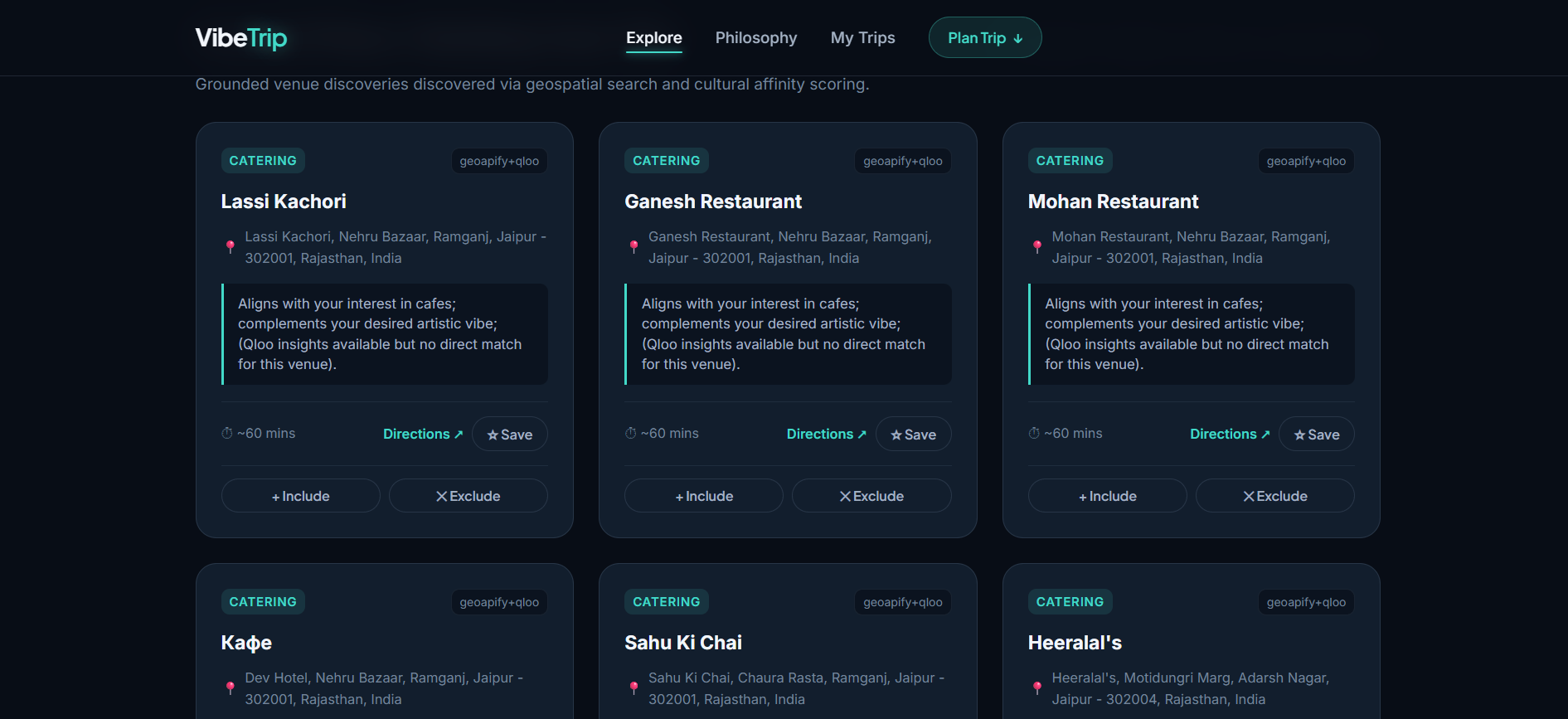
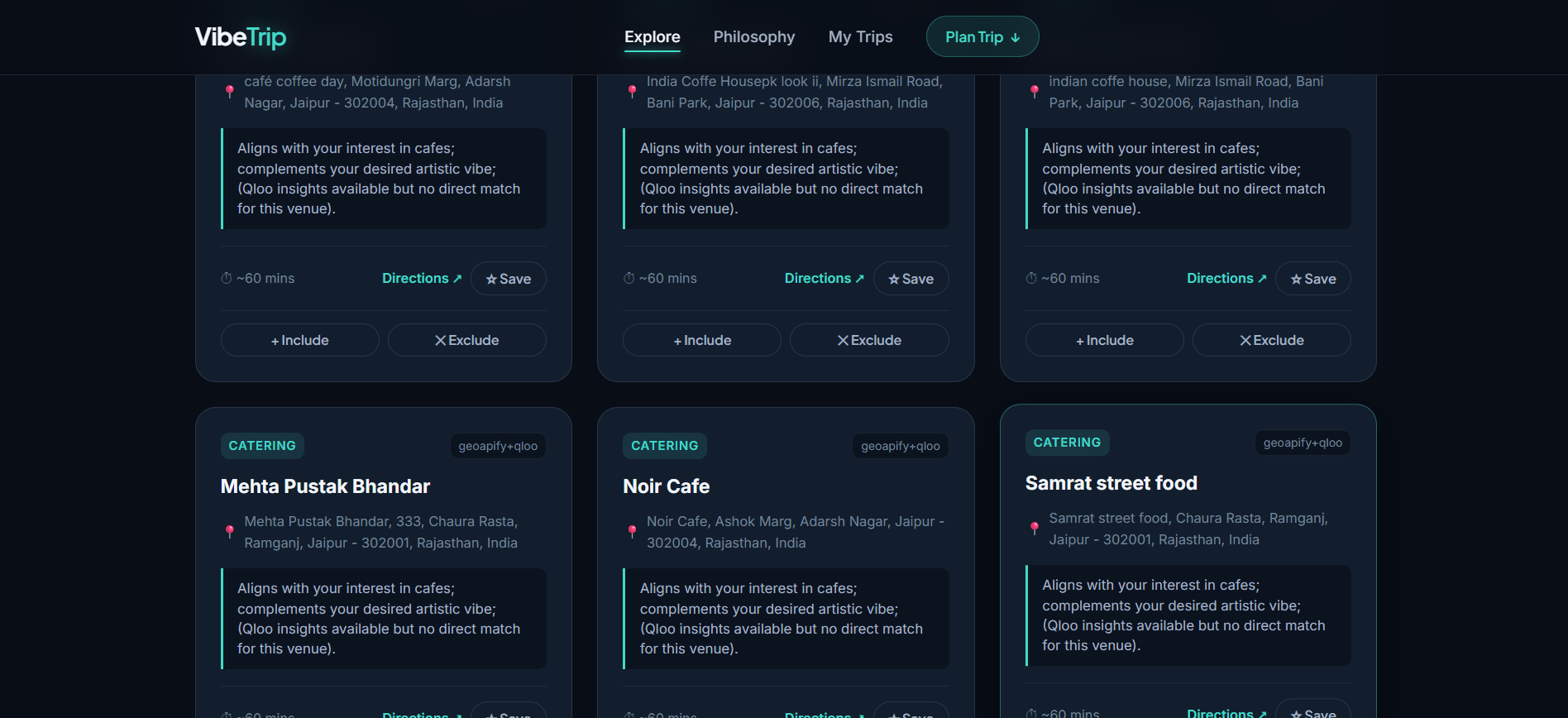
Places retrieved
-
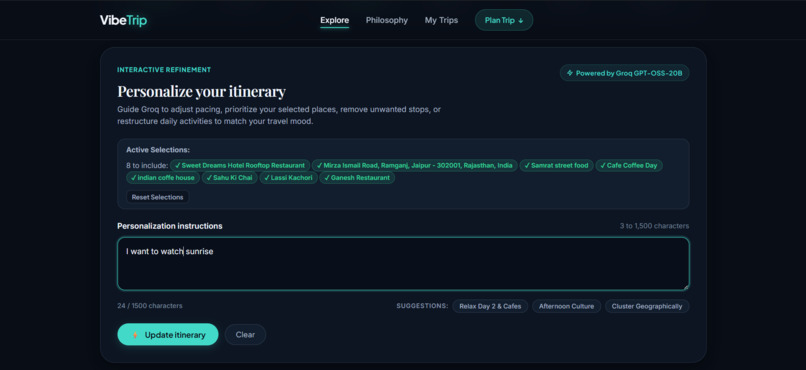
Customization of Itinerary by user
-
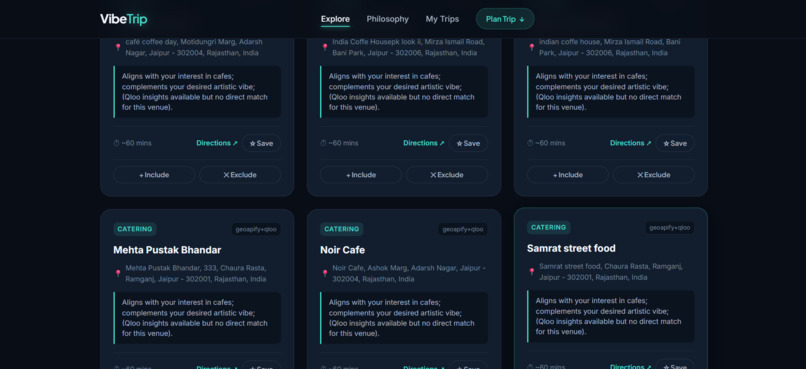
Places retrieved
-
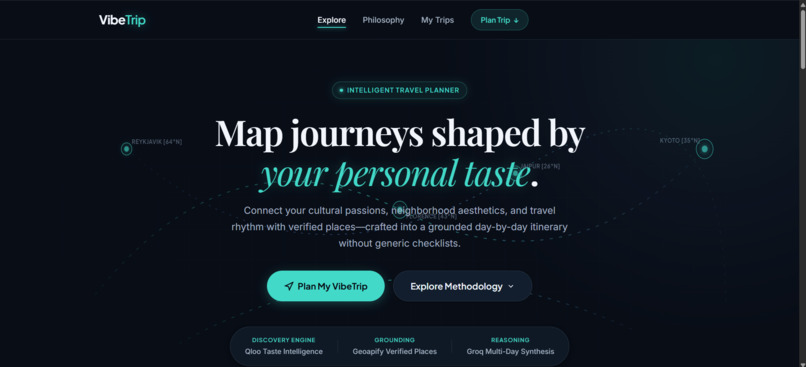
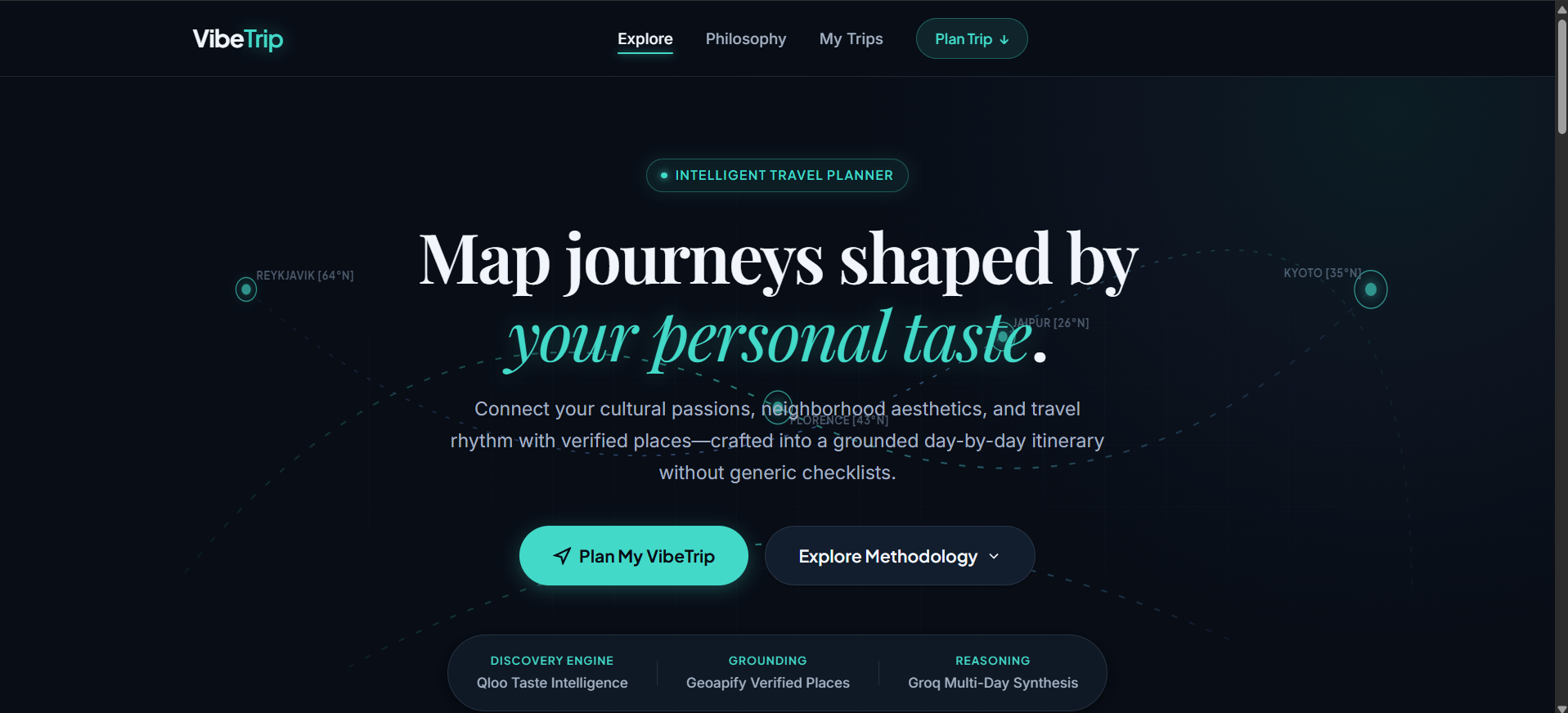
Landing Page
Inspiration
Traditional travel planners often recommend popular tourist attractions, but they don't always understand a traveler's personal tastes. Someone who loves indie music, cinema, unique cafés, architecture, or local culture might want experiences beyond the usual tourist checklist.
This inspired us to build VibeTrip, an AI-powered cultural travel planner that helps people discover experiences based on their interests, preferences, and travel style.
What it does
VibeTrip creates personalized travel itineraries based on a user's destination, budget, cultural interests, and preferences.
Users can select interests such as music, movies, food, and culture or describe their ideal trip in their own words. AI interprets their preferences and helps generate an itinerary tailored to their vibe.
By combining cultural taste intelligence with real-world location discovery, VibeTrip aims to make travel planning more personal and meaningful.
How we built it
We built VibeTrip using a combination of AI, cultural intelligence, and location-based services.
- Qloo API: Provides cultural taste intelligence to help guide recommendations based on users' interests.
- Groq API: Powers AI-driven preference interpretation and itinerary generation.
- Geoapify API: Helps discover real-world places and location information.
- Frontend: HTML, CSS, and JavaScript for the user interface.
- Backend: Python and FastAPI to process requests and coordinate API integrations.
- Deployment: Vercel for the frontend and Render for the backend.
The workflow begins with the user entering a destination, budget, and interests. The application interprets these preferences, uses cultural insights to guide recommendations, retrieves relevant location information, and generates a personalized travel itinerary.
Challenges we ran into
One of our biggest challenges was integrating multiple APIs into a single travel planning workflow. Cultural taste intelligence, AI-generated itineraries, and real-world location discovery each serve different purposes, so coordinating their outputs required careful integration.
We also worked on interpreting natural-language inputs, managing API responses, connecting the frontend and backend, configuring CORS, and testing the application to improve the reliability of itinerary generation.
Accomplishments that we're proud of
We are proud to have built a working prototype that brings cultural taste intelligence and AI-powered travel planning together.
Some key accomplishments include:
- Integrating Qloo's cultural taste intelligence into our travel planning concept.
- Allowing users to express their preferences through interest selections and natural-language input.
- Combining AI-generated itineraries with real-world place discovery.
- Building a complete frontend and backend workflow.
- Developing a travel experience focused on personal taste rather than only conventional tourist popularity.
What we learned
We learned that meaningful personalization requires more than simply asking an AI model to generate recommendations. Cultural preferences, relevant location data, and AI reasoning need to work together to create a useful experience.
We also gained practical experience integrating multiple APIs, building a FastAPI backend, handling natural-language preferences, troubleshooting integration issues, and preparing an application for deployment.
What's next for VibeTrip
We want to make VibeTrip an even smarter and more personalized travel companion.
Our future plans include:
- Improving the relevance and accuracy of cultural recommendations.
- Making itineraries more adaptable to users' budgets, schedules, and travel preferences.
- Enhancing real-world place discovery with richer location details.
- Adding interactive maps and easier itinerary exploration.
- Improving personalization so travelers can discover hidden gems and experiences that match their unique tastes.
Our vision is simple: help people explore the world in a way that feels uniquely theirs.
VibeTrip — Travel Beyond Your Taste.


Log in or sign up for Devpost to join the conversation.