-
-
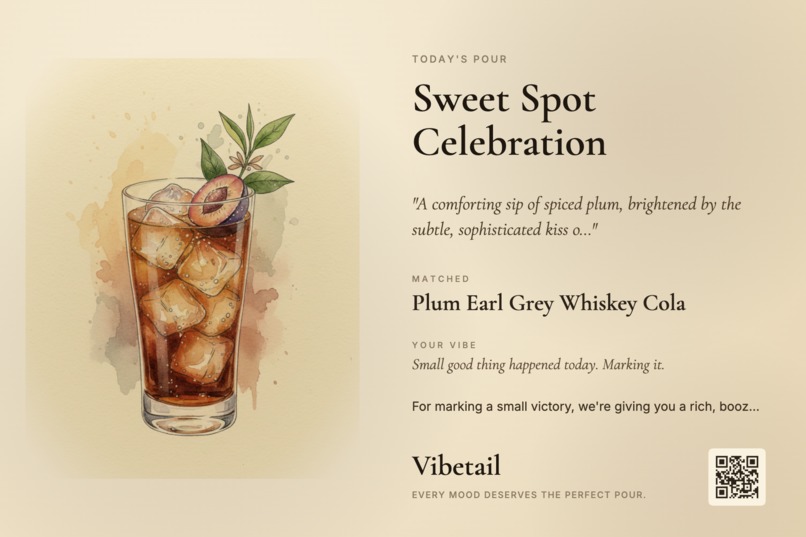
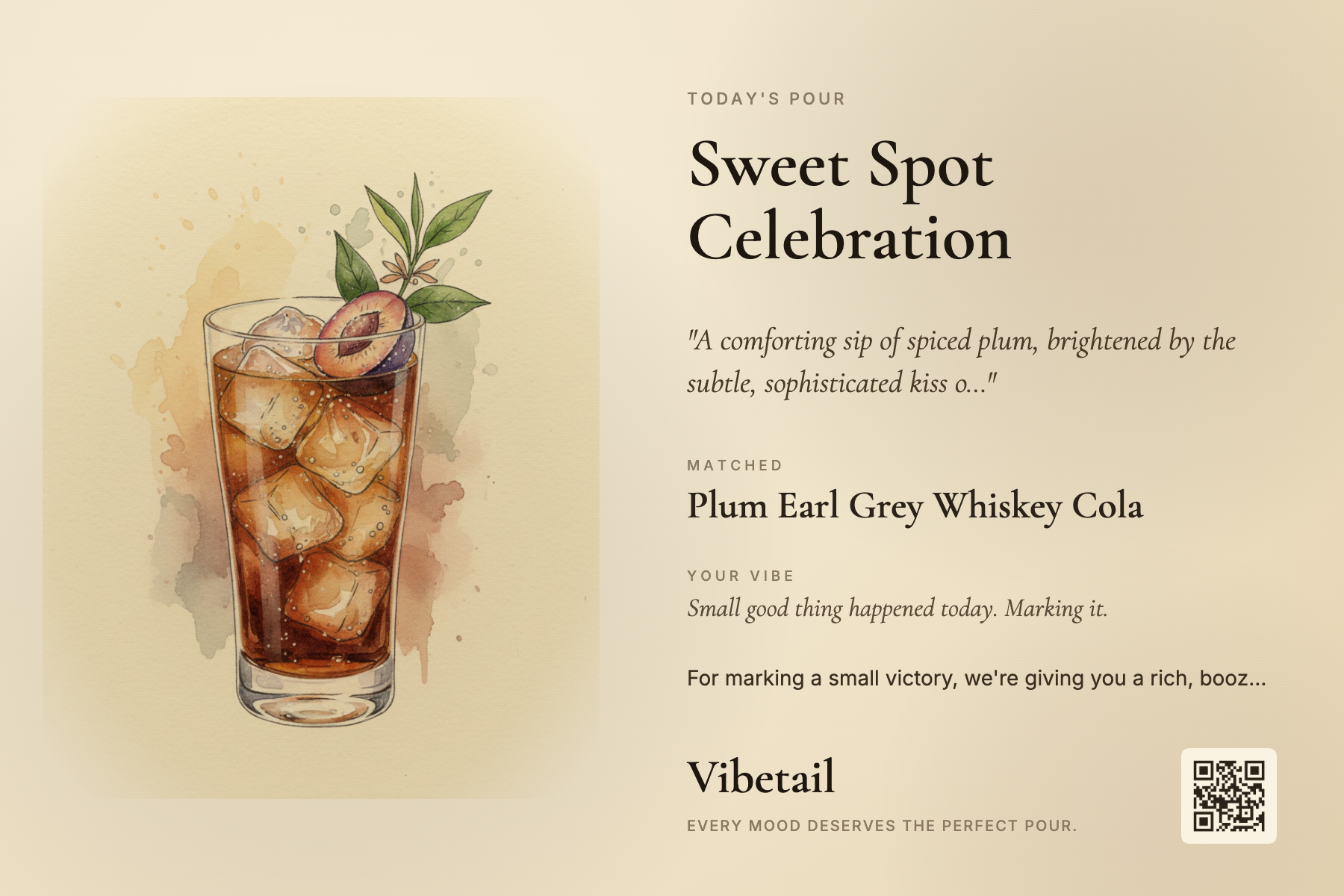
vibetail card for print in event
-
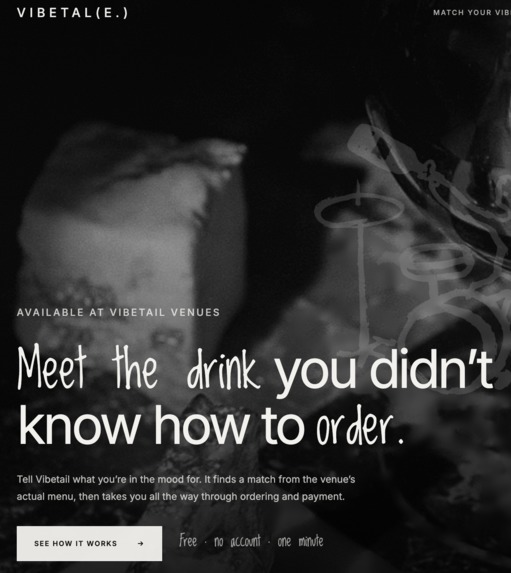
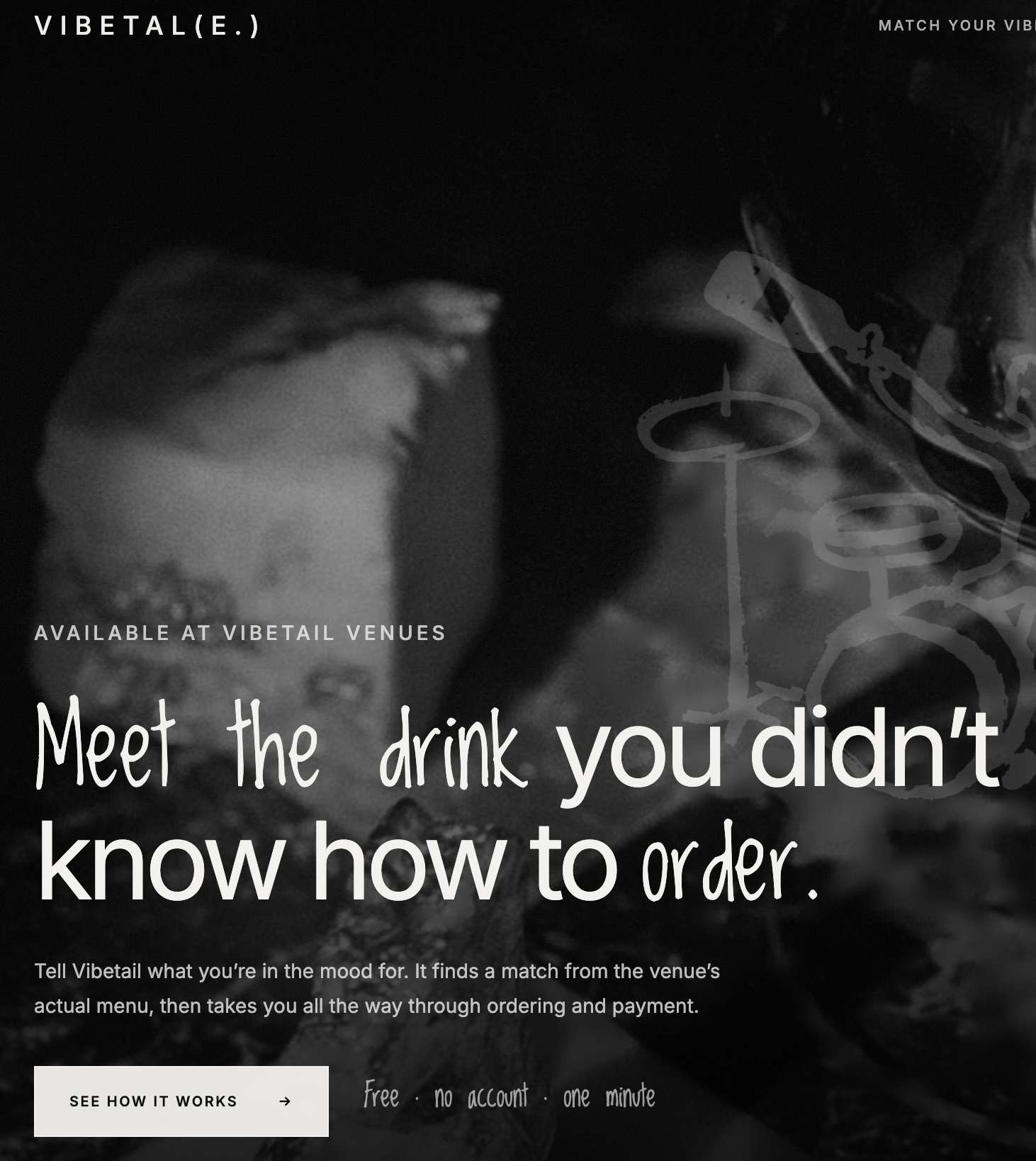
vibetail new landing page
Inspiration
Vibetail began on May 23, 2026, at an offline hackathon with a simple question: What cocktail matches our debugging vibe? We knew how we felt, but not how to translate that feeling into cocktail terminology. Static menus showed ingredients and prices; they could not understand the experience we wanted.
We built an MVP that matched mood and taste to a cocktail. It won third place at a hackathon with hundreds of participants and revealed a broader problem: guests often know the feeling they want, while independent venues lack the technology and staff capacity to personalize every decision.
What it does
Vibetail starts with independent bars, giving them an AI Tasting Agent that personalizes drink discovery and turns ordering into a social experience. Over time, the same model can expand across hospitality. A guest scans a QR code, shares their mood, flavor preferences, occasion, and constraints, and receives one recommendation from the venue's currently eligible menu items.
The fun is not only in which drink the agent chooses, but in how it describes the match. Vibetail turns the guest's own words into a short, vivid, and playful explanation that connects their vibe to real qualities of the drink. The result should feel like a small story about their moment—personal enough to resonate, funny or charming enough to share, and useful enough to order from. The server still verifies availability and restores names, ingredients, prices, and allergens from venue-controlled records.
The experience is designed to improve across visits, not restart from zero. With the guest's permission, Vibetail's next personalization layer will record explicit preferences, selections, ratings, rejections, and corrections in a user-controlled taste profile. The Tasting Agent can then combine what it has learned about the person's long-term tastes with their current mood and occasion, making each next recommendation more accurate without repeatedly asking the same questions.
The interaction also works as a social icebreaker. It turns ordering into something guests can compare, photograph, and discuss, helping the venue create a memorable offline experience without new hardware, a downloaded app, or a replacement POS.
How we built it
We combined product development with field research. We interviewed approximately 30 bars across the Bay Area and New York and spoke with bartenders about how they interpret incomplete guest language, balance familiarity with discovery, and work from changing inventory.
The product uses a React and TypeScript interface with a Node and Express API. The production Tasting Agent uses Gemini 3.5 Flash through Vertex AI Express Mode. Its prompt treats Gemini as both a cocktail matcher and a playful recommendation copywriter: it selects from a server-generated allowlist, then writes a vivid explanation connecting concrete drink facts to the guest's vibe. Deterministic services revalidate the selection and fail closed on hidden, sold-out, stale, or cross-menu items.
Challenges we ran into
Our main challenge was turning a memorable recommendation feature into a measurable small-business service. We had to serve guests while proving value to venues and sponsors, constrain AI to real inventory, and keep the screen interaction brief enough to improve rather than interrupt the room.
Real venue data created another challenge: menus and availability change, while generated mistakes can damage trust. We therefore separated Gemini's interpretation from venue-controlled facts and added allowlisting, validation, and fail-closed behavior.
Accomplishments that we're proud of
We won the third place in the offline Eazo Global Hackathon that involved hundreds of people.
We tested Vibetail through a World Cup Final Watch Party on July 19. All 30 spaces filled in three days, with approximately 10 additional people waitlisted. Twenty-five guests purchased tickets and five attended complimentary. More than half tried the sponsored baijiu despite never having tasted it before. Almost everyone photographed and shared the printed recommendation card, based on onsite observation, and feedback indicated high satisfaction.
The event also produced two sponsors, more than 100 community members, follow-up planning with a local bar, and conversations with corporate event organizers. Beyond the event, we acquired 124 app users and deployed a live Gemini-powered Tasting Agent through Vertex AI.
What we learned
We learned that social AI works best when it produces human outcomes: a confident order, an unfamiliar product tried, or a conversation started. Personalization must also distinguish stable tastes from a temporary mood and remain transparent and user-controlled.
We also learned that events can serve as distribution, customer research, and revenue generation at the same time. That makes live venue activations our practical starting point for earning trust before asking an independent business to adopt a recurring service.
What's next for Vibetail AI Social Experience
Next, we will run a larger pilot with a local bar, test corporate gathering packages, and measure the full path from recommendation to order. We will also add permission-based taste memory so returning guests can build a correctable preference profile and receive better recommendations over time.
Our goal is to turn one successful event and a working Tasting Agent into a repeatable service that helps independent venues create more personal, measurable, and social guest experiences.
Built With
- claude
- codex
- gemini
- lovable
- vertex-ai


Log in or sign up for Devpost to join the conversation.