VibeSpec — Cultural Intelligence for Hospitality
Turn your guests' taste into a hotel experience you can defend.
Inspiration
Boutique hotels promise distinctive experiences, but translating a brand identity into the right music, books, amenities, and local experiences requires countless subjective decisions.
Traditional AI can suggest things that sound aesthetically appropriate. But cultural similarity alone isn't enough. An artist may appeal to your target guests without being suitable for a peaceful lobby. A culturally relevant restaurant may no longer be operating.
We built VibeSpec to bridge that gap.
What it does
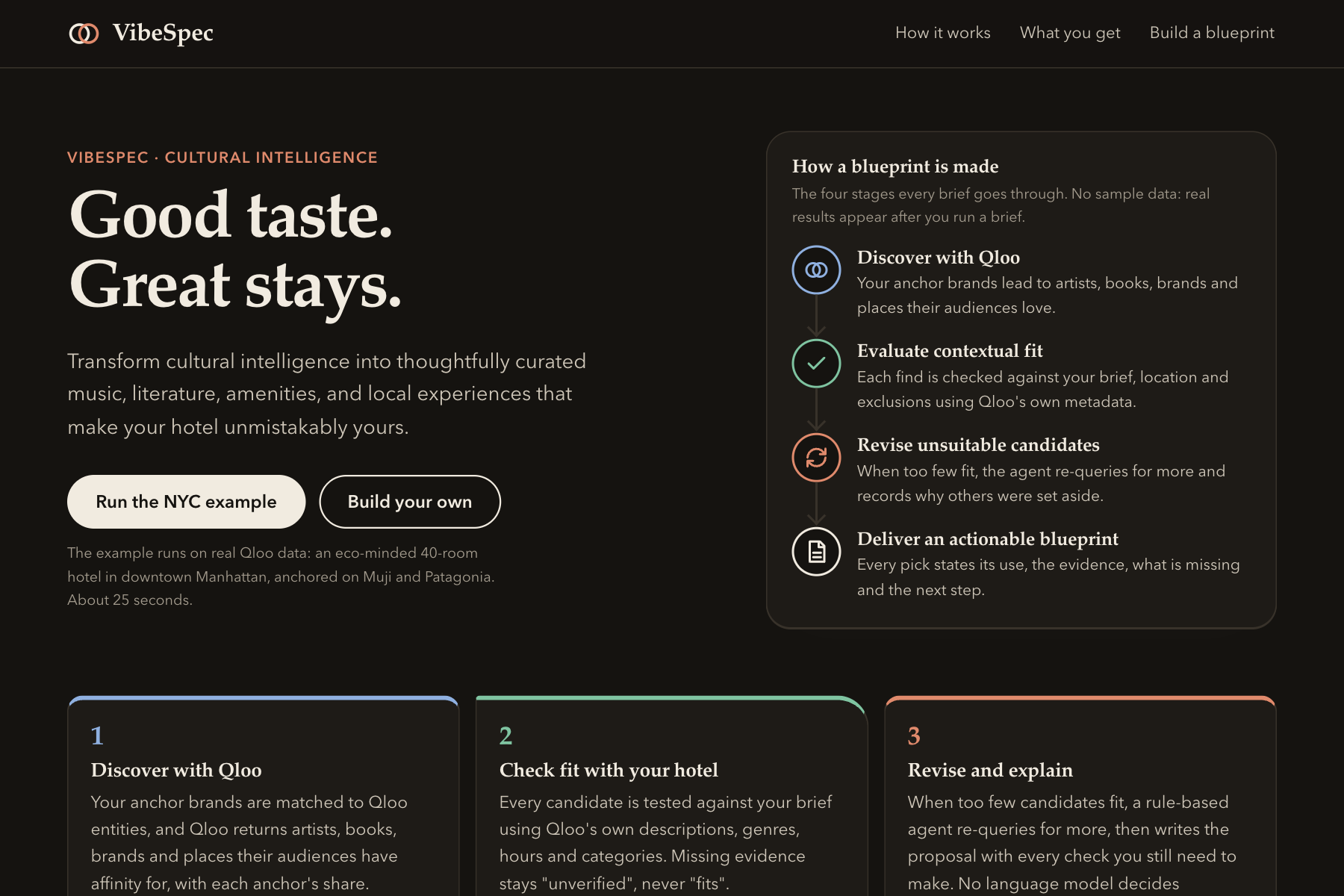
VibeSpec is a Qloo-powered cultural experience planning agent for boutique hospitality operators.
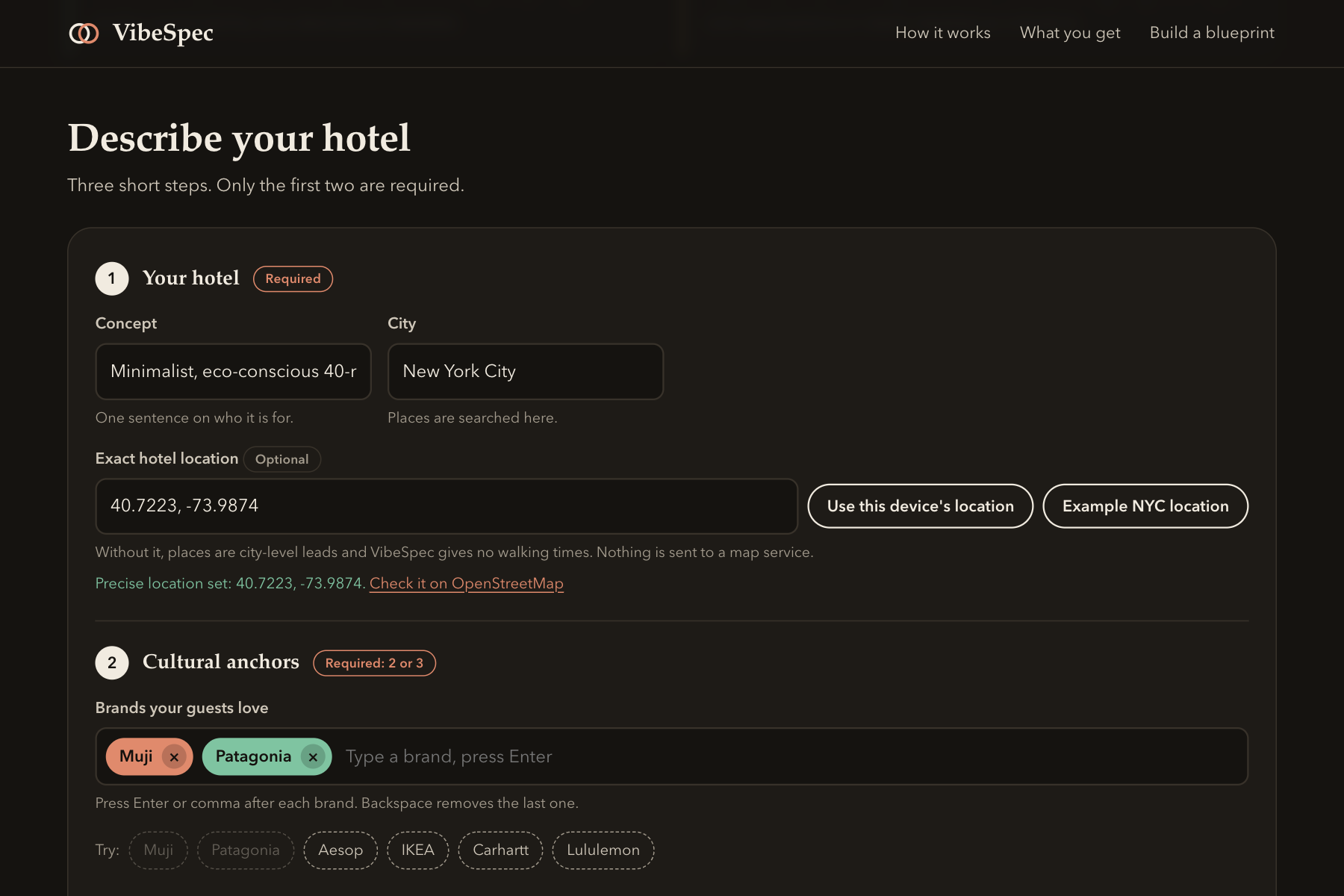
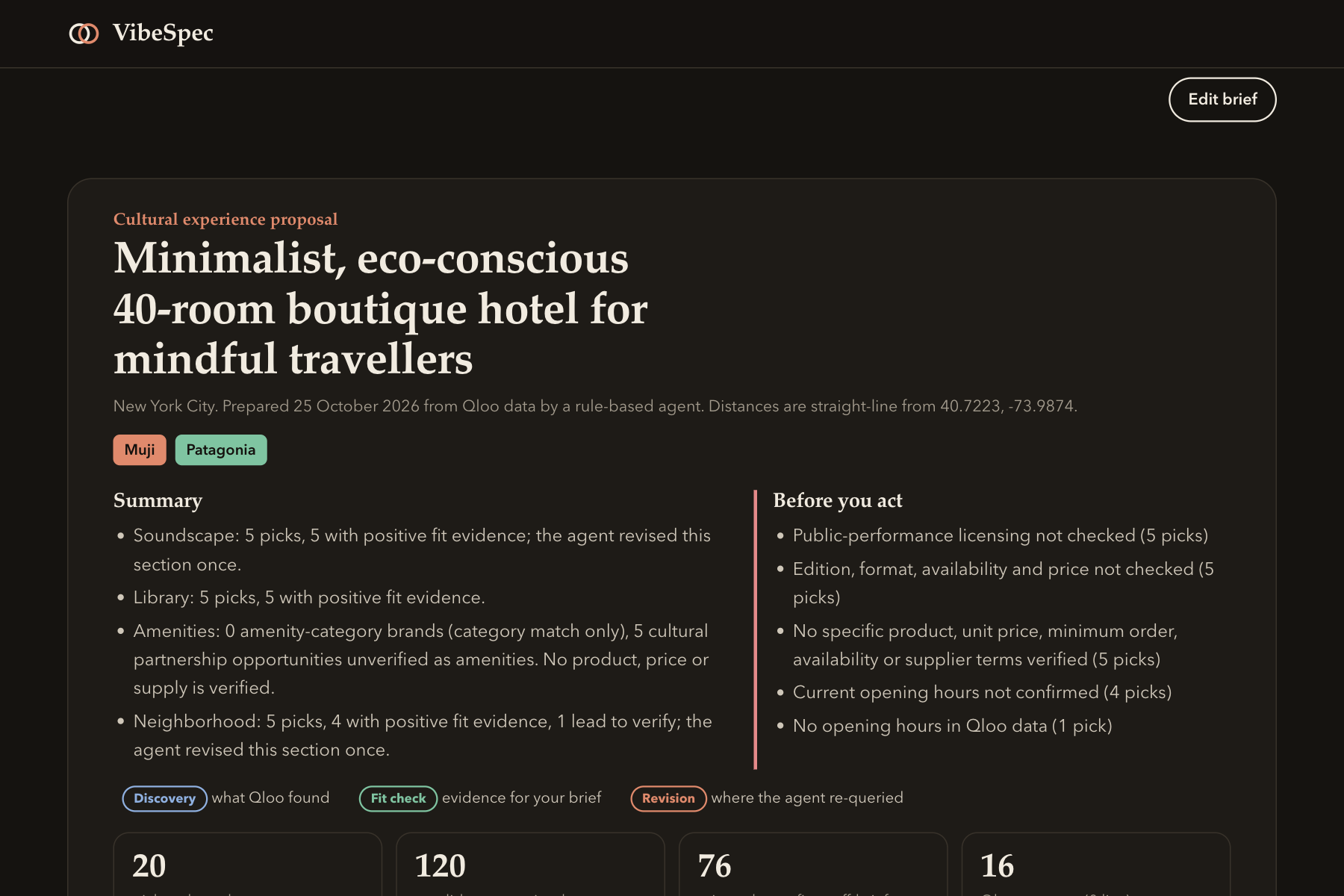
Hotel owners describe their property, choose two or three cultural reference brands, specify their location, and define the experience they want guests to have.
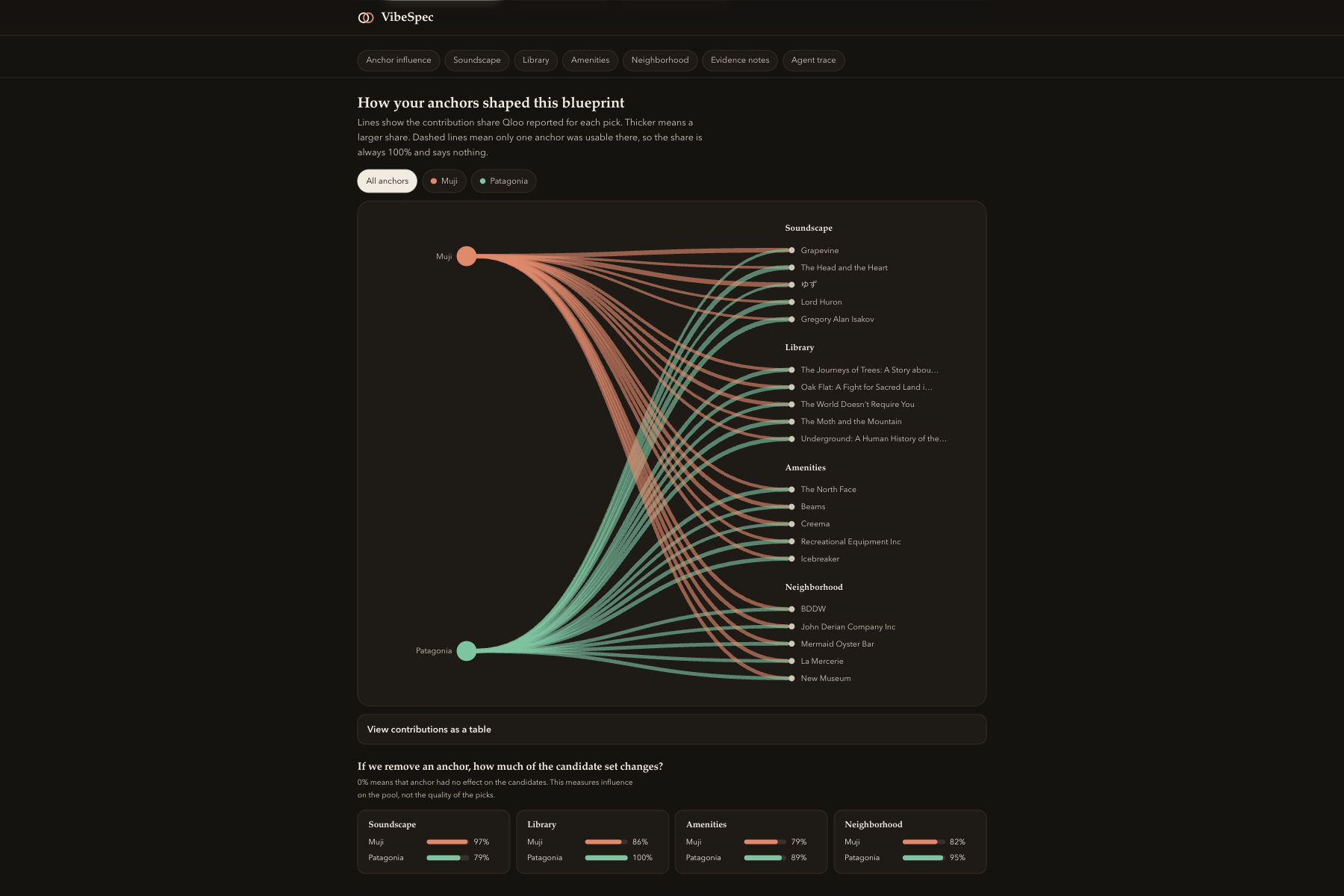
VibeSpec discovers related artists, literature, lifestyle brands, and physical places using Qloo's cultural taste graph.
Then it goes further.
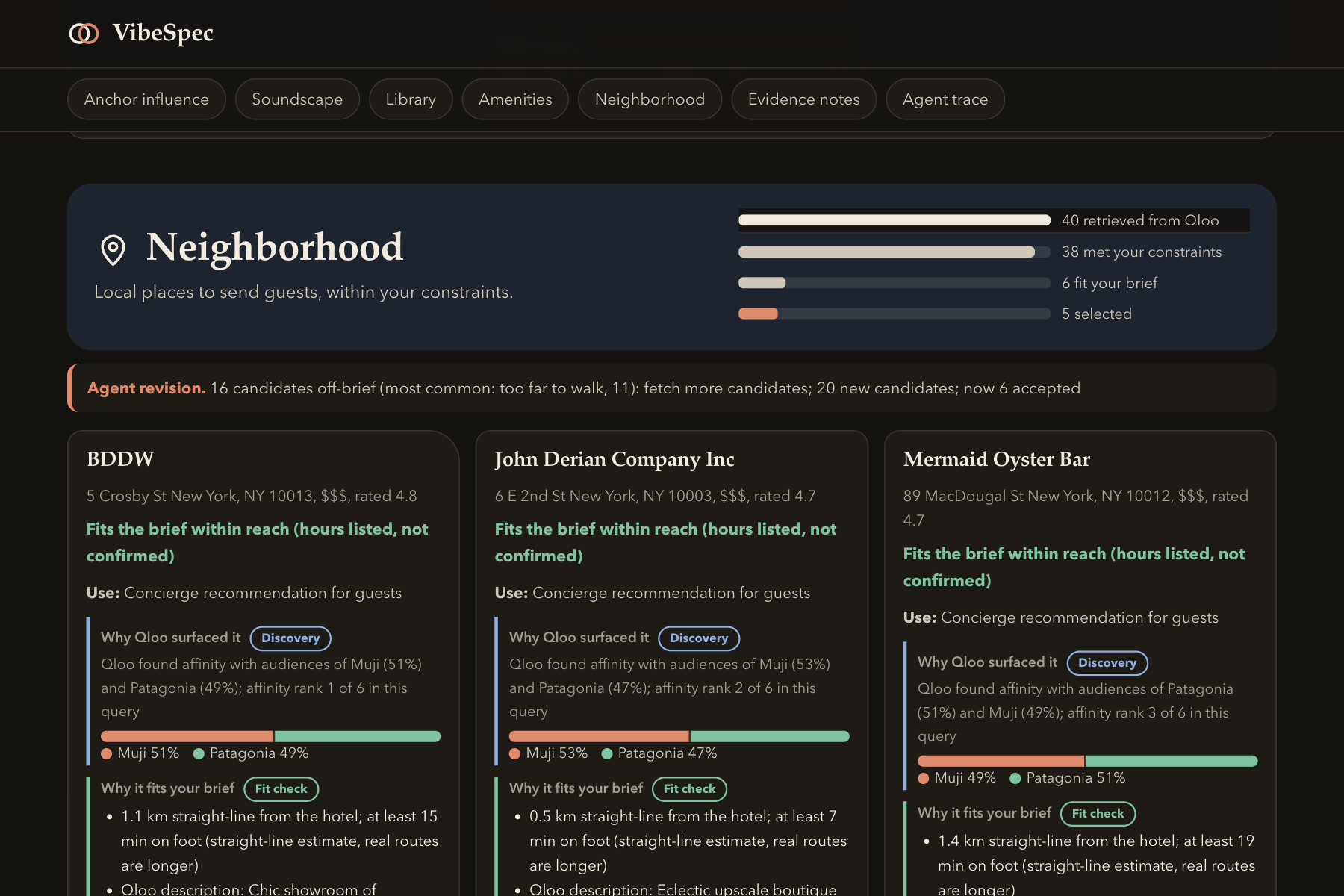
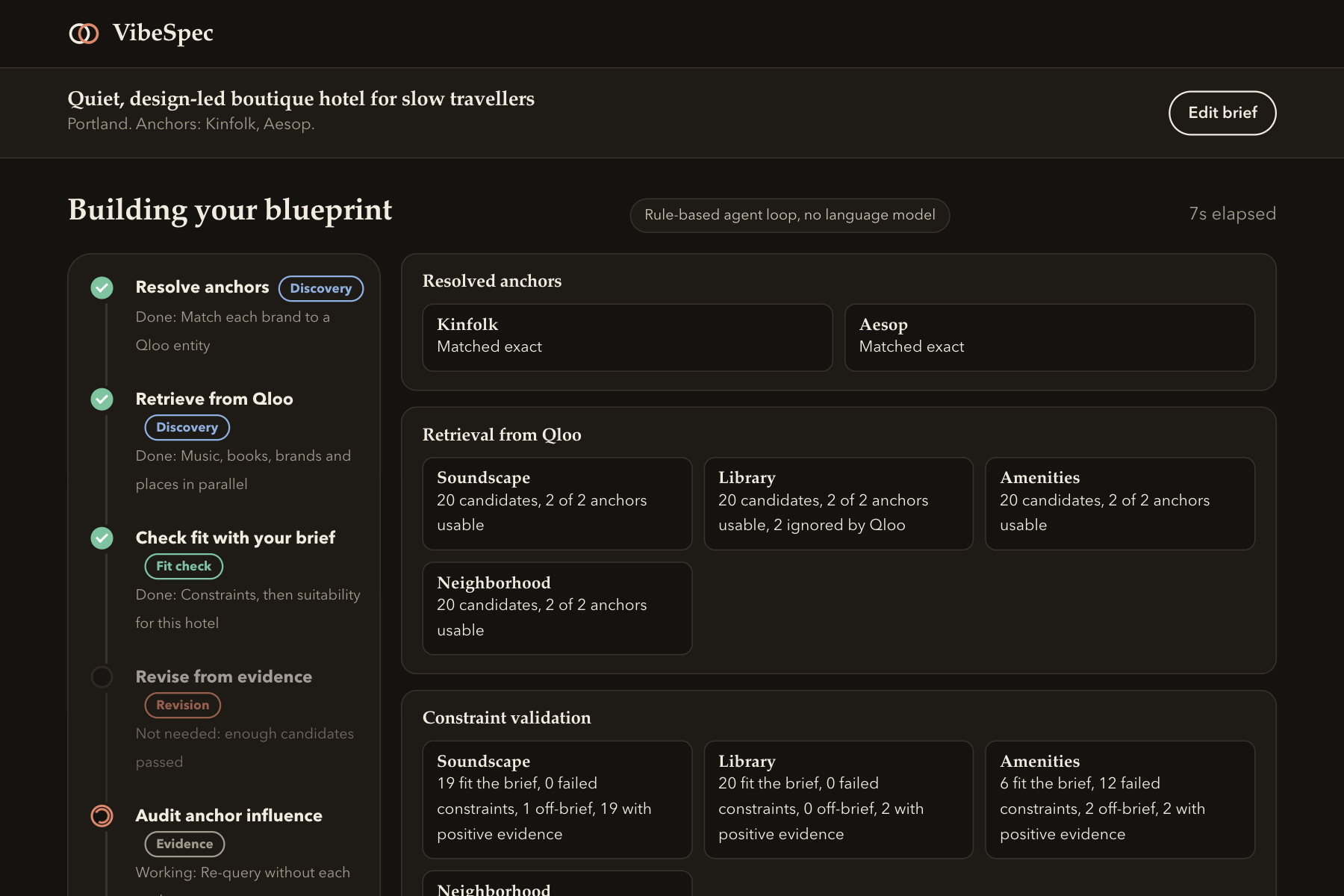
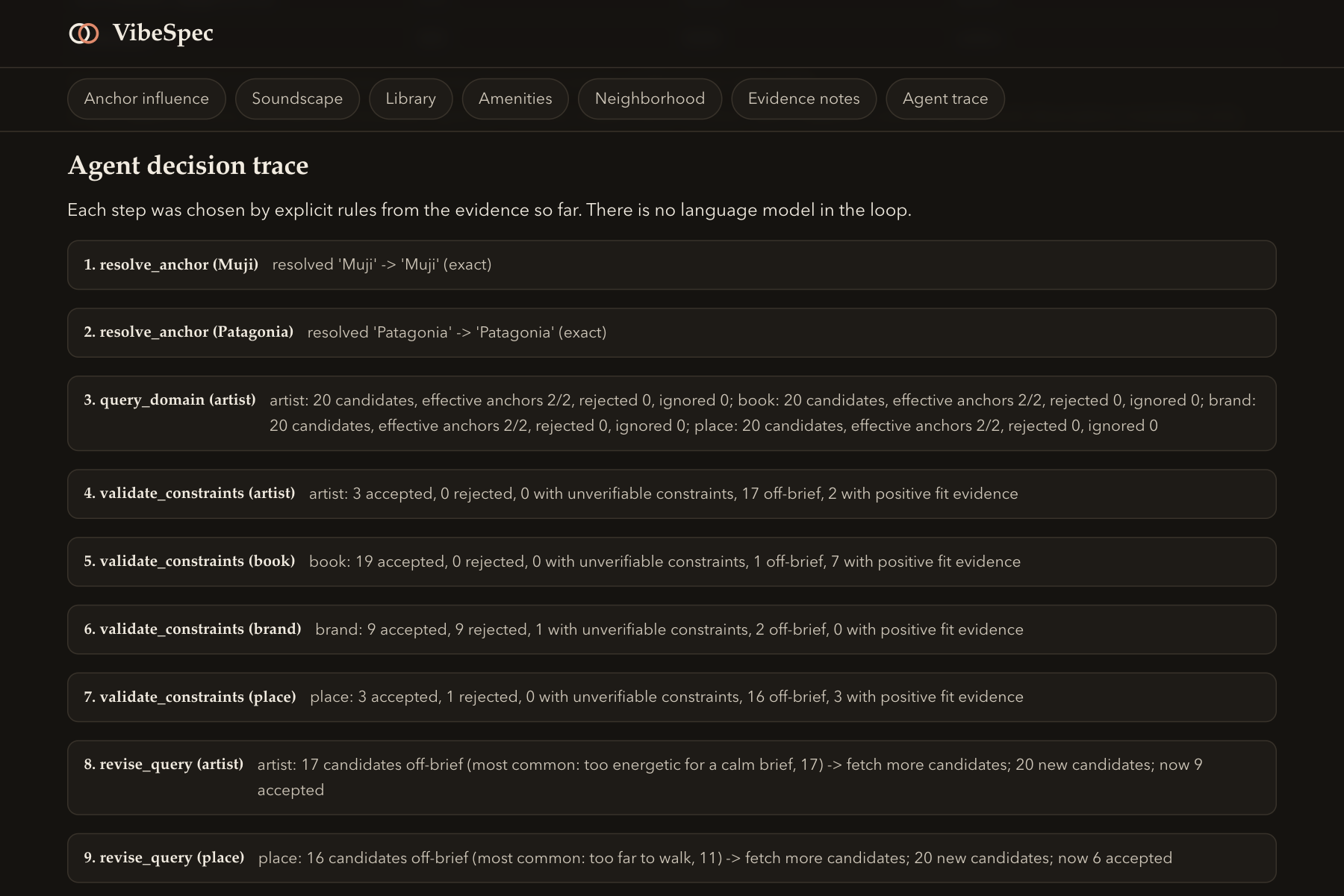
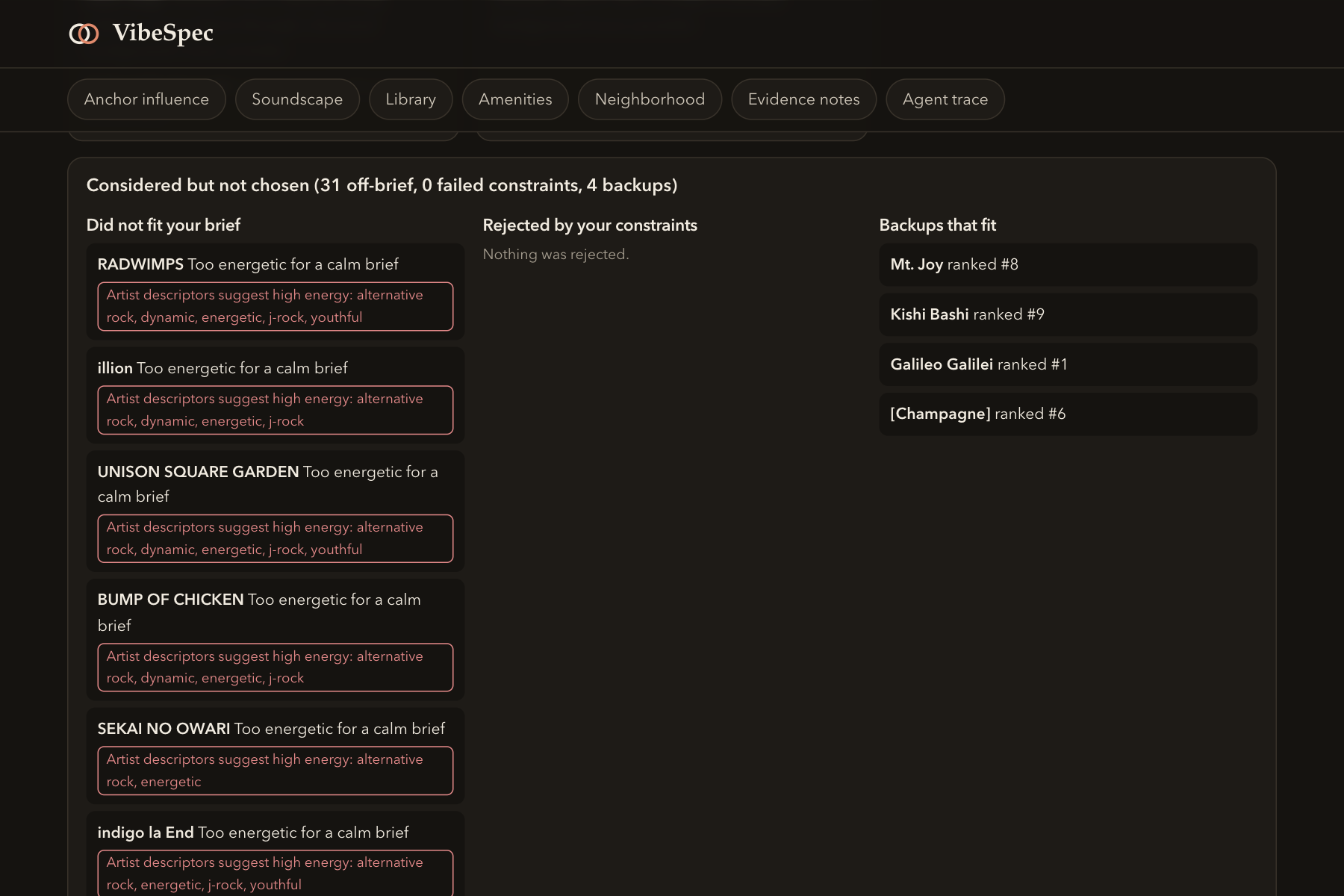
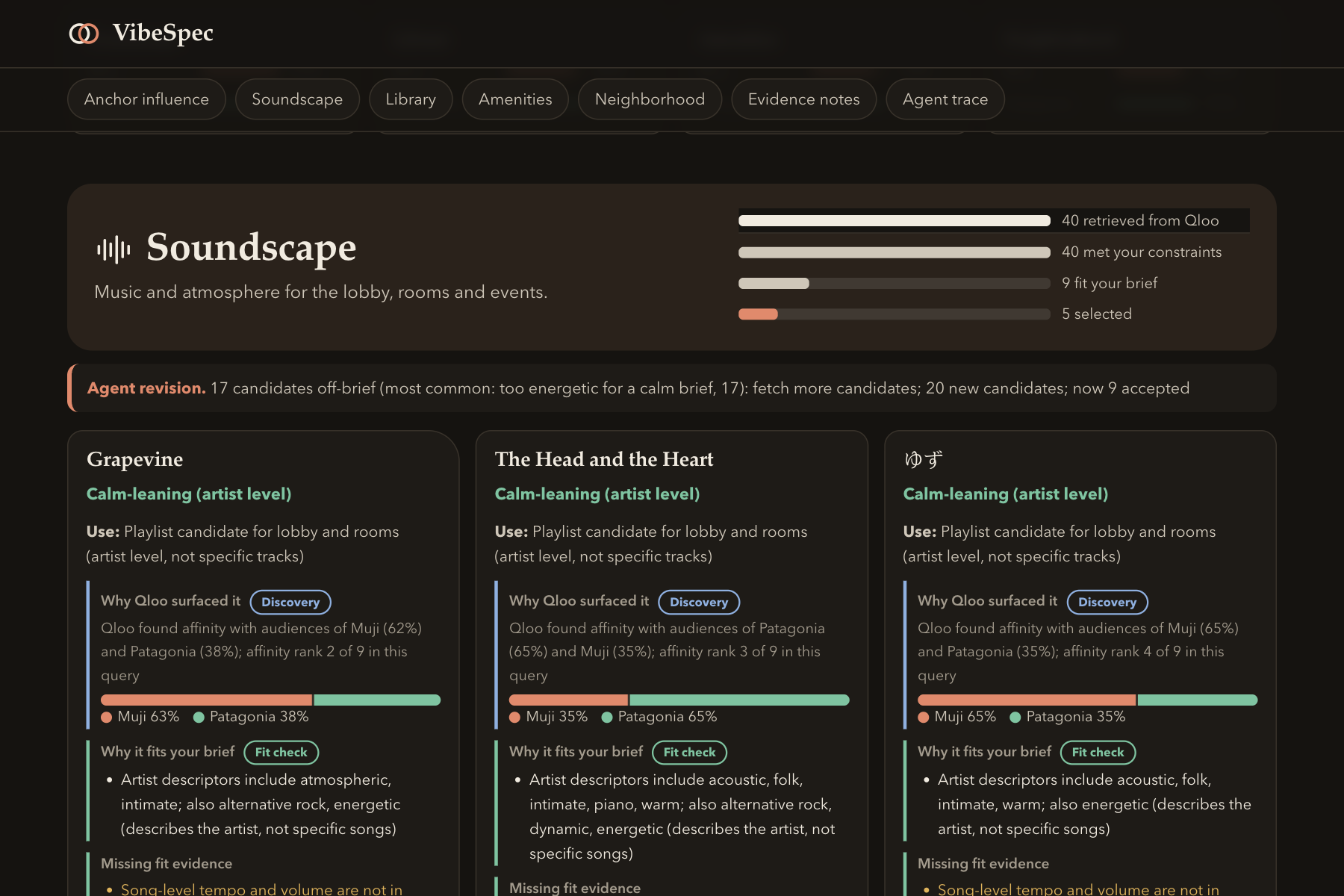
A context-aware decision engine evaluates candidates against the hotel's specific goals, checks available evidence, rejects unsuitable options, and revises its searches when necessary.
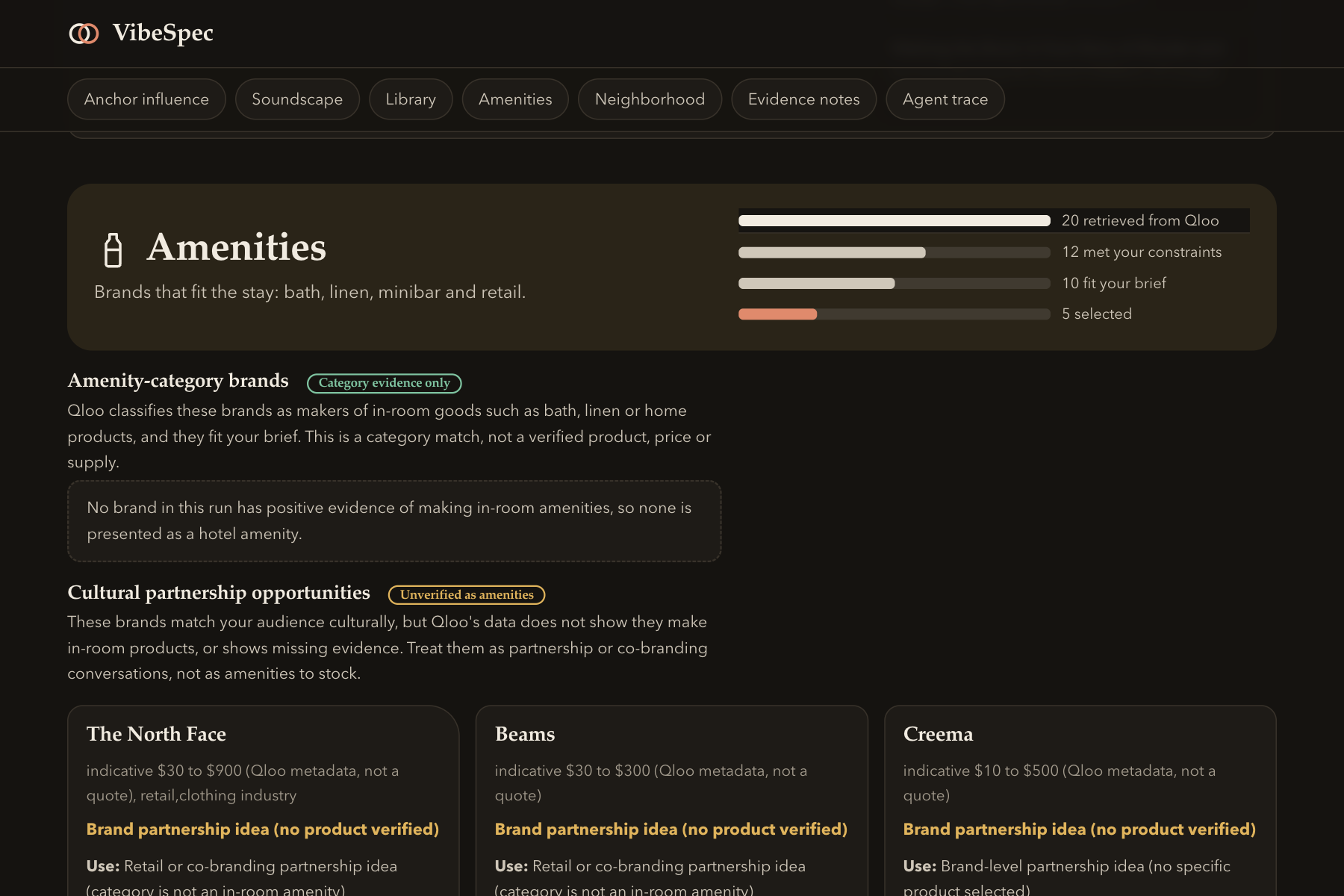
The result is an exportable cultural experience proposal showing what was selected, why it was discovered, how well it fits, which alternatives were rejected, and what still needs verification.
How we built it
VibeSpec uses Python, Qloo's Search and Insights APIs, and a bounded, state-driven agent workflow.
Qloo provides cross-domain cultural discovery and per-anchor explainability. VibeSpec adds contextual suitability evaluation, constraint handling, evidence-triggered query revision, and transparent decision traces.
The application runs as a publicly hosted web service on Render. It includes background-job progress, private caching, request-budget controls, structured evidence cards, and Markdown/JSON exports.
The agent is rule-based rather than an LLM planner. Its decisions and tool calls are inspectable.
What makes it different
VibeSpec separates three concepts often confused by recommendation systems:
Cultural affinity: What the intended audience is connected to.
Contextual suitability: Whether a discovered candidate actually fits the hospitality experience.
Operational verification: What must still be confirmed before implementation.
This separation lets the agent acknowledge uncertainty rather than turn incomplete data into confident recommendations.
Challenges and lessons
Our biggest challenge was turning Qloo's powerful cultural intelligence into an agent that could make meaningful real-world decisions.
Qloo's taste graph opened up possibilities that traditional recommendation approaches struggle to replicate: discovering non-obvious relationships between brands, music, literature, and physical experiences through cultural affinity.
The engineering challenge was bringing those different cultural signals together into one coherent hospitality experience.
What's next
We envision VibeSpec evolving into a cultural experience planning platform for independent hotels, hospitality designers, and boutique property operators.
Future development could include verified supplier catalogs, richer track-level music assessment, current venue validation, and structured feedback from hospitality professionals.
VibeSpec does not claim verified supplier prices, purchasing availability, music licensing, or revenue improvements.
Built With
- css3
- github
- html5
- javascript
- python
- qloo-api
- qloo-insights-api
- render
- rest-apis

Log in or sign up for Devpost to join the conversation.