🧠 Inspiration
Industrial systems and human operators often face failures and health risks that start with subtle, invisible changes — tiny vibrations, slight motion shifts, or micro-color variations that go unnoticed by the naked eye.
Our team wanted to create a unified intelligence system that could detect these micro-level patterns before they become major issues.
Inspired by predictive maintenance, contactless health monitoring, and AI-powered video magnification, we built VibeSight — a solution that bridges human safety and machine reliability under one intelligent ecosystem.
⚙️ What It Does
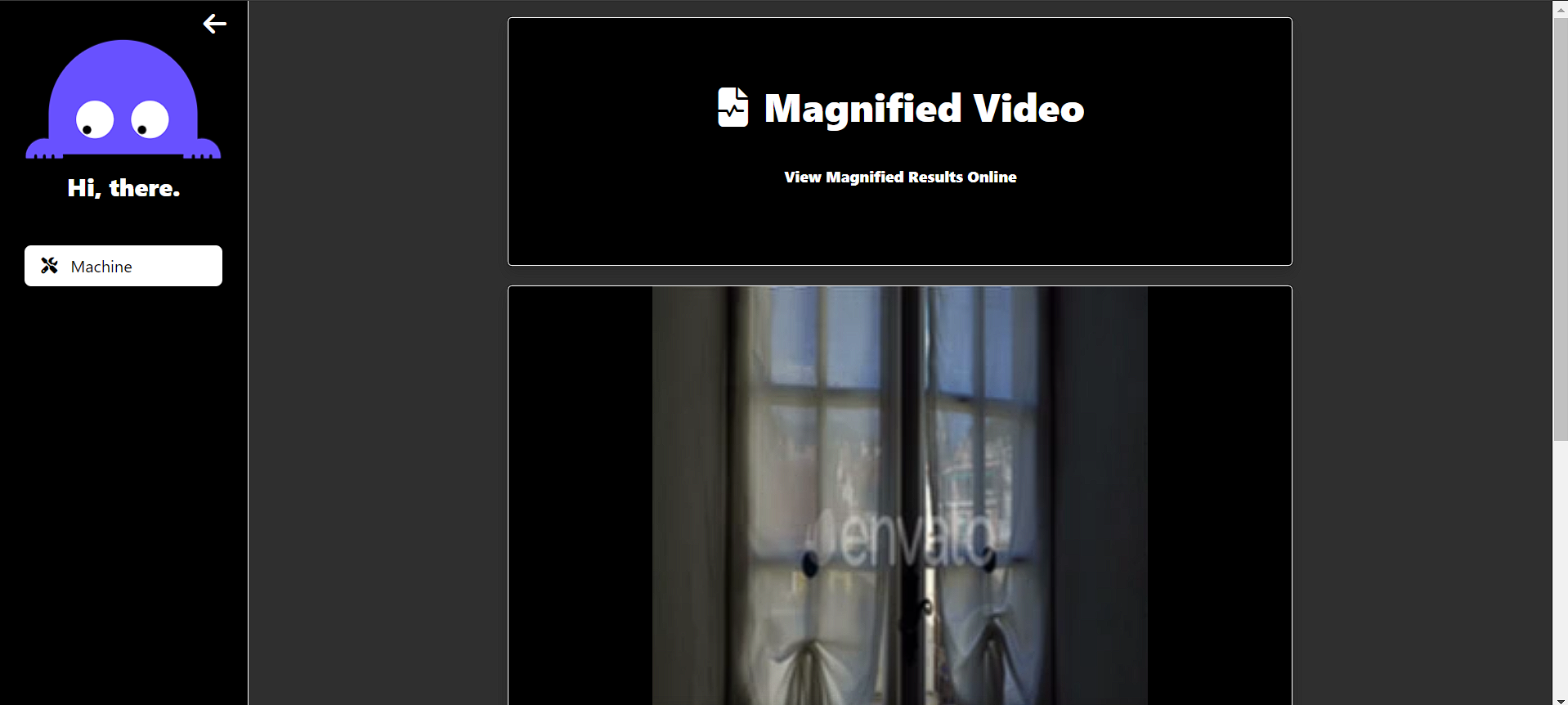
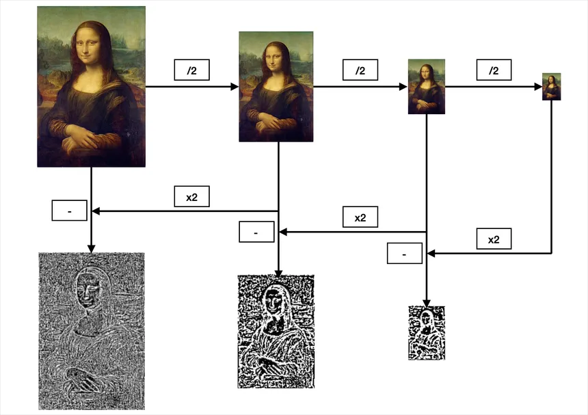
VibeSight uses Eulerian Video Magnification, computer vision, and machine learning to analyze video footage of humans or machines.
It amplifies micro-motions and vibrations to detect:
- Early-stage machinery faults such as imbalance or wear.
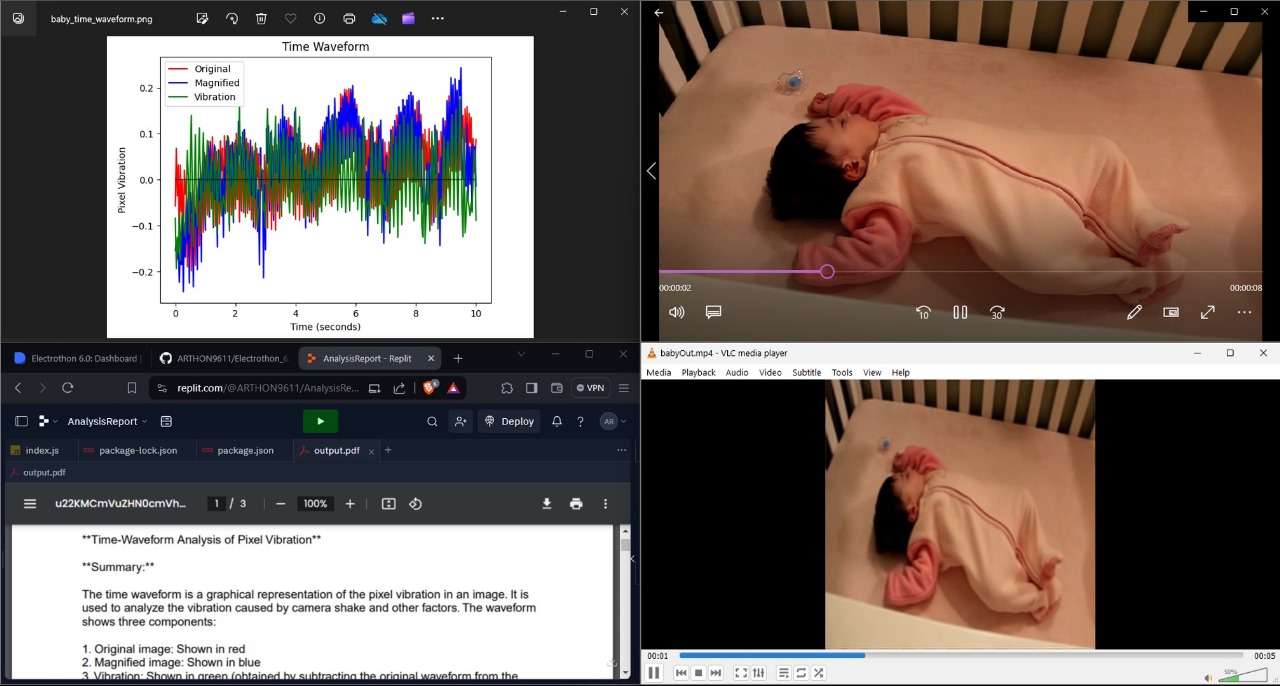
- Human health indicators like heart rate, breathing rate, and fatigue.
The processed data is analyzed, visualized, and transmitted into the supOS Unified Namespace via MQTT, where real-time dashboards display health and vibration metrics.
Through supOS Event Flows, alerts and automation are triggered instantly when anomalies are detected — enabling predictive maintenance and proactive safety monitoring.
🧩 How We Built It
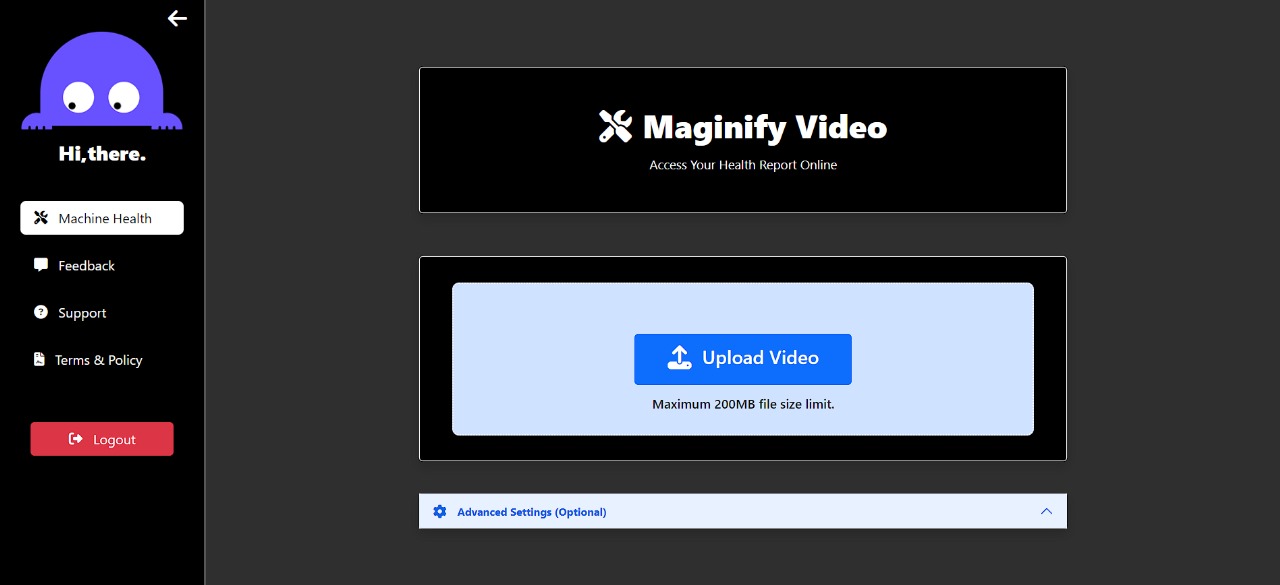
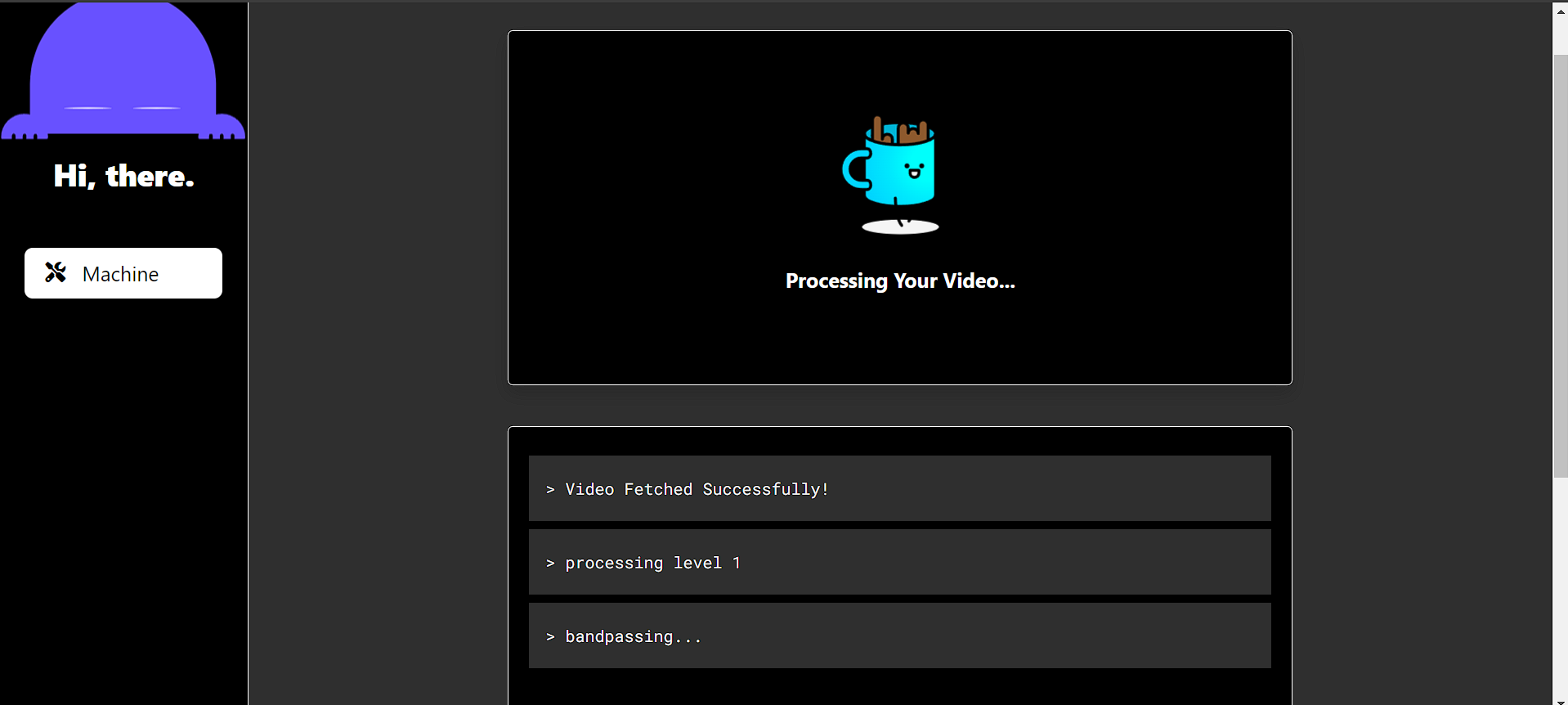
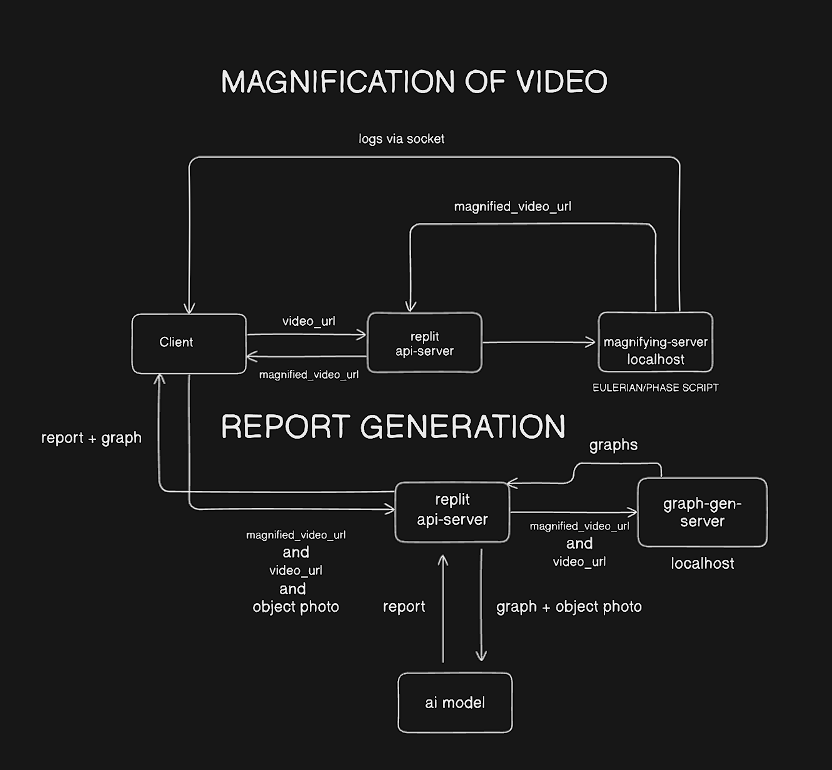
- Frontend: Built using React.js for user interaction, video upload, parameter adjustment, and real-time WebSocket logs.
- Magnification Server (Flask): Uses OpenCV and custom Eulerian/Phase-based filters to reveal subtle motion changes frame by frame.
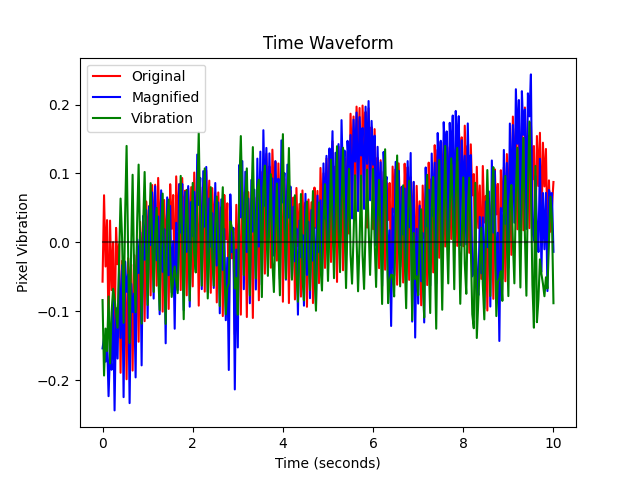
- Graph Generation Server (Python): Extracts motion data and generates analytical graphs using IO Net Intelligence.
- Report Generator (Node.js): Calls AI models, aggregates responses, and produces human-readable summaries.
- AI Models: TensorFlow/Keras for classifying human and machine health states.
- Integration: Sends analyzed metrics to supOS via MQTT for dashboards and automation.
🚧 Challenges We Ran Into
- Implementing real-time video magnification efficiently without GPU acceleration.
- Achieving cross-device compatibility (Web, Windows, Android).
- Debugging MQTT data flow between multiple servers and supOS.
- Calibrating ML models to distinguish natural and abnormal vibrations.
🏆 Accomplishments We're Proud Of
- Built a complete AI-driven system for detecting both human and machine anomalies through video.
- Seamlessly integrated analytics with supOS Unified Namespace for real-time monitoring and event automation.
- Developed a working live magnification prototype.
- Created a modular, scalable architecture combining Flask, Node.js, and Python services.
📚 What We Learned
- How to combine AI, computer vision, and IoT orchestration into one functioning platform.
- Deep understanding of supOS Unified Namespace and Event Flow for automation.
- The importance of data standardization and modular architecture for predictive industrial AI systems.
🔮 What’s Next for VibeSight
- Integrate supOS AI Toolkit for anomaly detection inside the supOS interface.
- Add GPU acceleration and edge deployment for real-time factory monitoring.
- Build low-code dashboard templates for quick supOS adoption.
- Expand to multi-factory orchestration and operator fatigue analytics.
- Evolve into a plug-and-play AI assistant for industrial health monitoring powered by supOS.
Built With
- cloudinary
- flask
- flask-socketio
- gemini
- javascript
- keras
- mqtt
- node.js
- opencv
- python
- react.js
- replit
- supos
- tensorflow


Log in or sign up for Devpost to join the conversation.