-
-
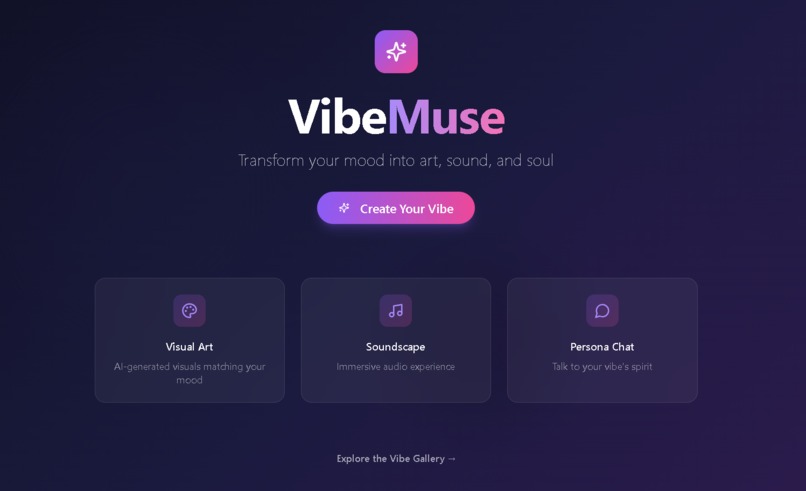
Home Page
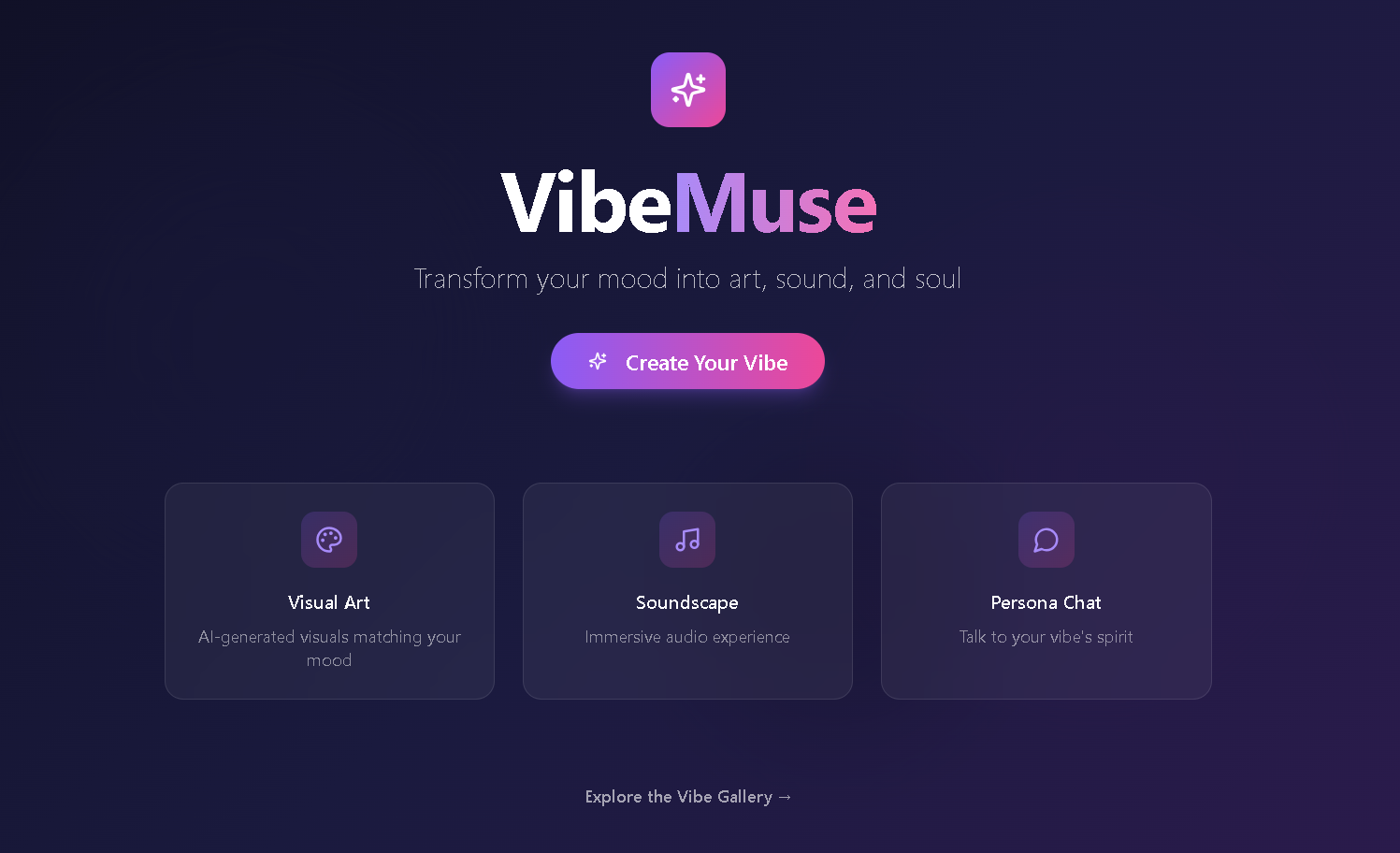
Inspiration
Emotions are often hard to explain, but easy to feel. We wanted to build something that lets people express how they feel without overthinking it. VibeMuse was inspired by the idea that moods don’t need labels — they can be turned into art, sound, and personality. The goal was to create a space where feelings become something tangible and shareable.
What it does
VibeMuse turns a user’s mood into a short, immersive creative experience.
Users describe how they feel using text or voice. VibeMuse analyzes the input and generates:
- a mood classification
- a custom color palette
- animated visuals or imagery
- a short music loop
- a poetic AI persona that responds in the same emotional tone
Each generated vibe can be saved, shared, and explored in a public gallery where others can engage with and upvote different vibes.
How we built it
VibeMuse combines AI-driven mood analysis with real-time visual and audio generation to create a seamless experience.
User input is processed to extract emotional and aesthetic signals, which are converted into structured data used to drive visuals, sound, and personality. The interface renders dynamic visuals based on color palettes and mood parameters, while audio playback adapts to the generated vibe. A persona chatbot is created for each vibe to maintain consistent tone and expression throughout the interaction.
Challenges we ran into
One of the biggest challenges was translating abstract emotions into consistent outputs across visuals, sound, and text. Small changes in AI behavior could dramatically affect the feel of the experience, so a lot of iteration went into refining prompts and constraints.
Another challenge was balancing speed and quality — making sure the experience felt instant without losing emotional depth.
Accomplishments that we’re proud of
- Creating a complete multi-modal experience from a single user input
- Designing an interface that feels intuitive and emotionally expressive
- Delivering a polished, demo-ready project within a short timeframe
- Building something users immediately understand and connect with
What we learned
We learned that AI is most effective when used as a creative partner rather than just a generator. Clear intent, constraints, and aesthetic direction make a huge difference in emotional impact.
We also learned how important polish and user experience are when building creative tools — how something feels matters just as much as what it does.
What’s next for VibeMuse
Next, we want to expand VibeMuse by adding real-time voice-based vibe detection, collaborative vibes between multiple users, and more advanced visual and music generation. We’re also interested in letting users remix and evolve vibes over time, turning VibeMuse into a living canvas for emotion.

Log in or sign up for Devpost to join the conversation.